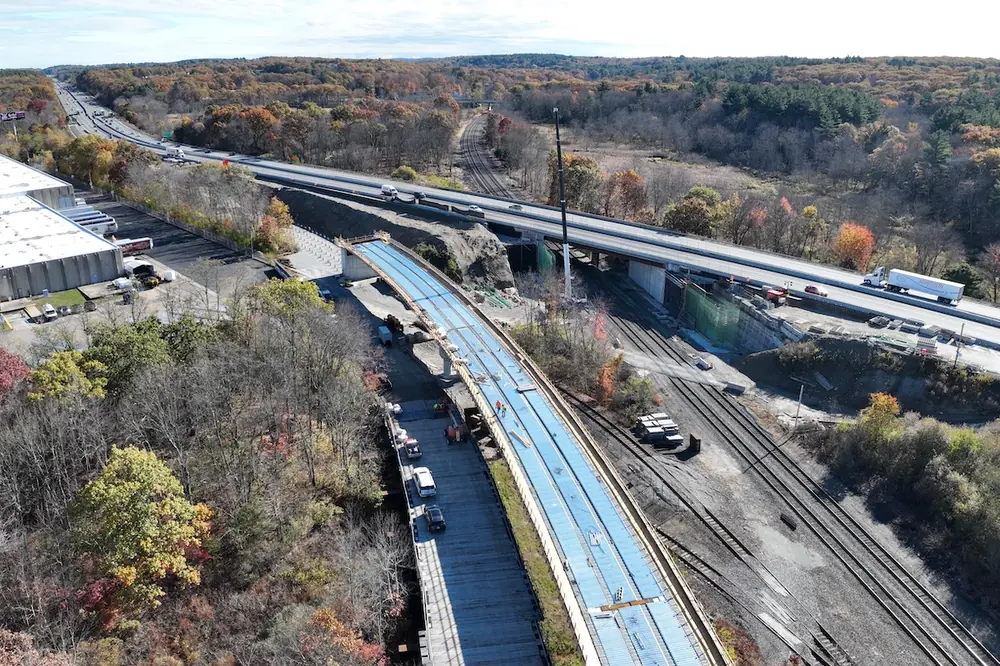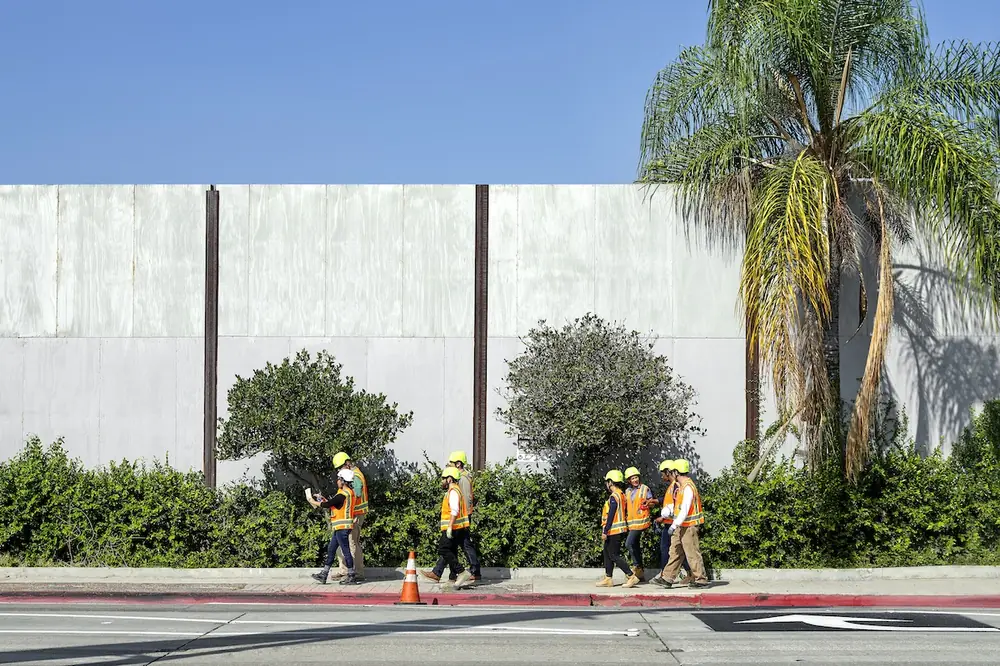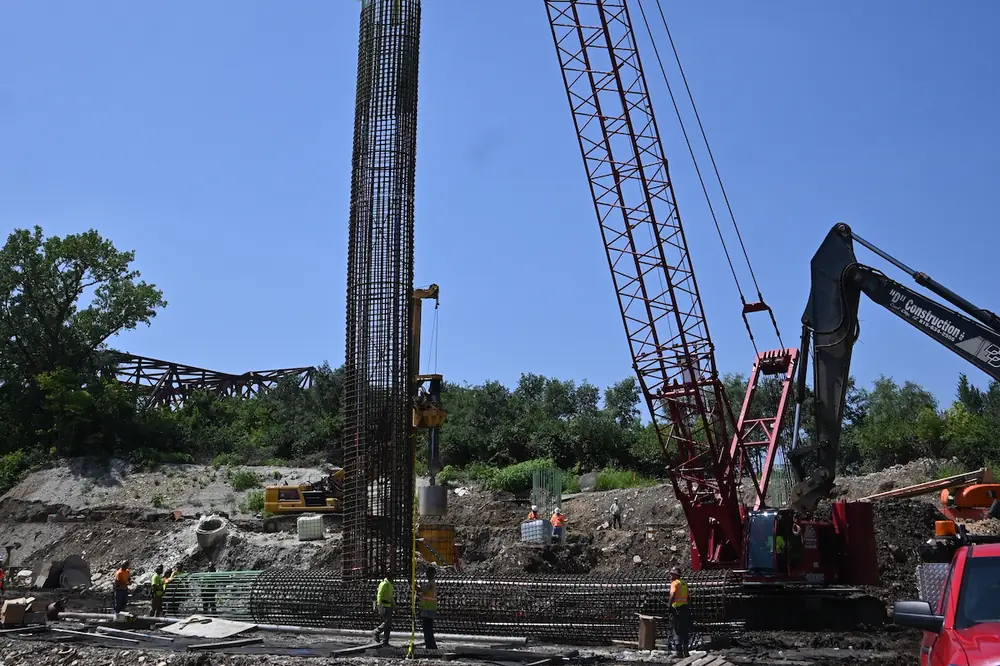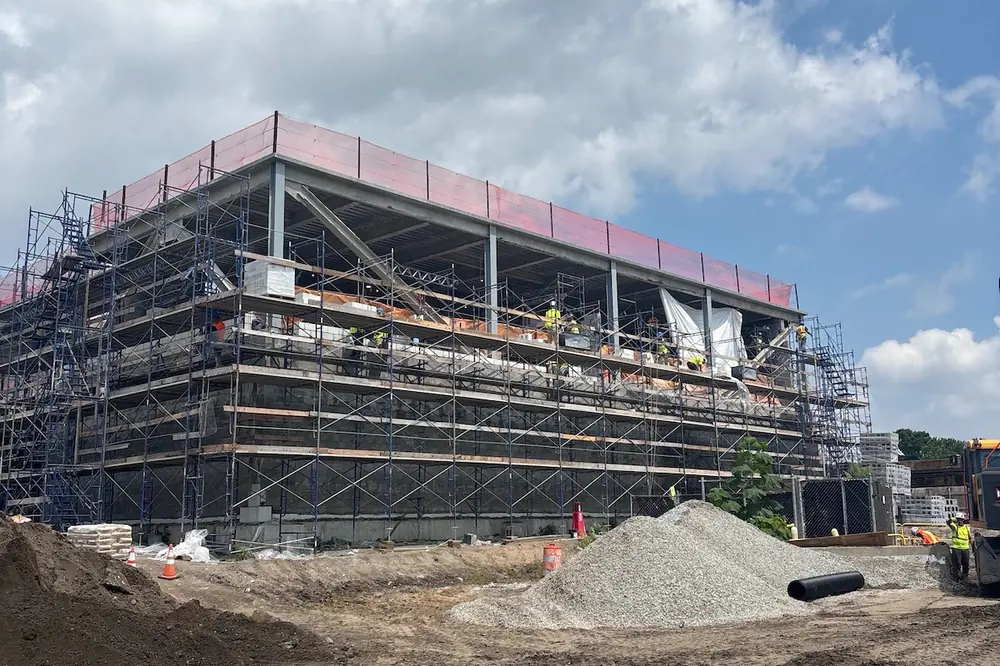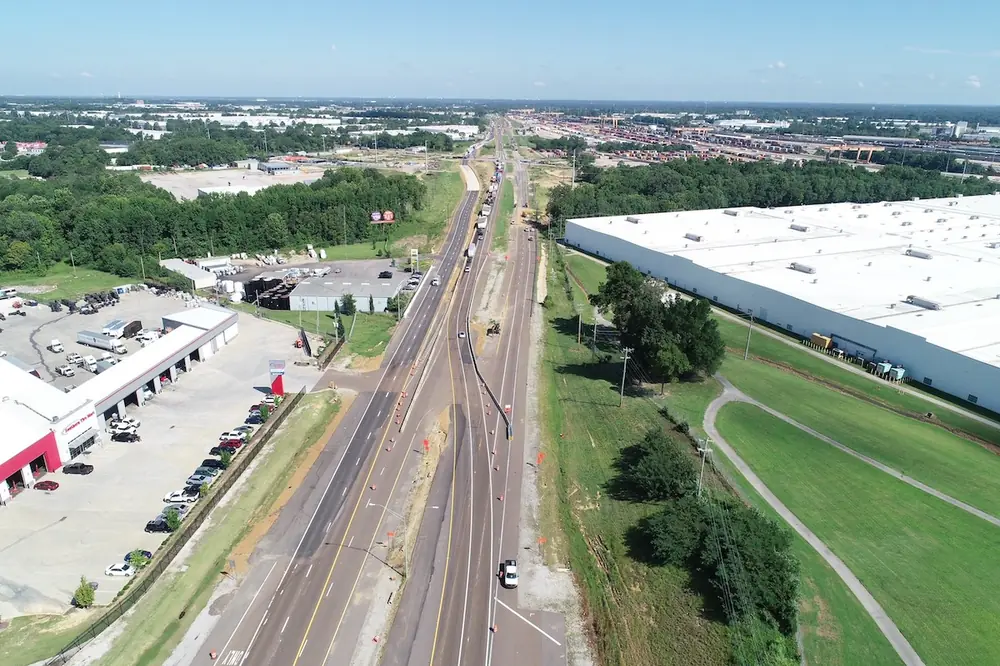
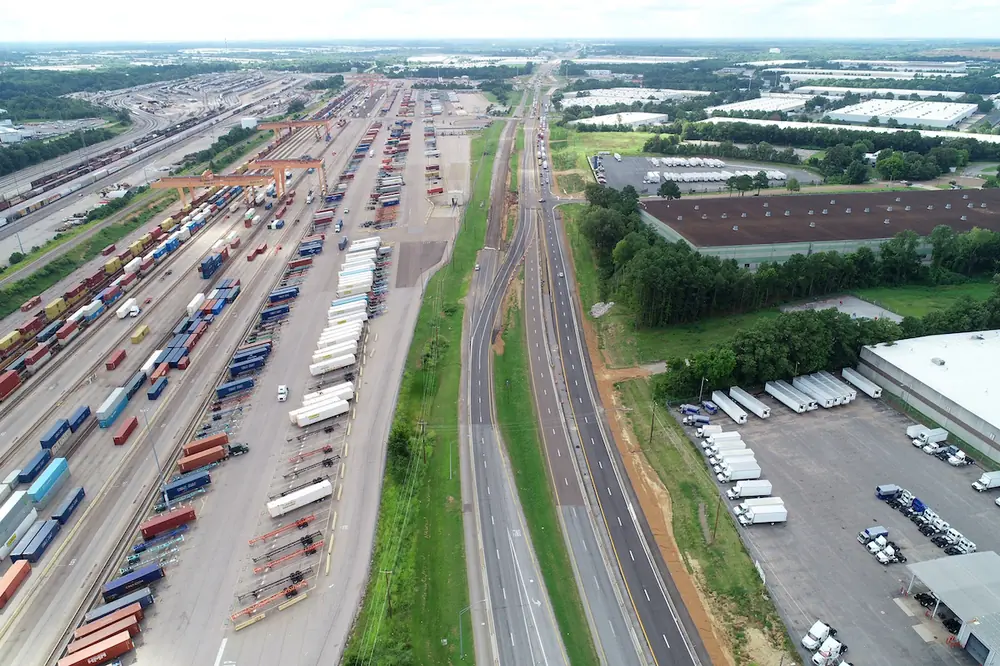


Reconstructing a major roadway can be difficult, even when crews have room to work. Along Lamar Avenue in Memphis, Tennessee, the project team is working in a constrained work area to widen the corridor, construct six bridges, build a new grade-separated interchange, relocate major utilities, and complete extensive drainage and paving work — all while keeping one of the state’s busiest freight routes open.
The Tennessee Department of Transportation’s (TDOT) $149.8 million Lamar Avenue Phase 2 project covers nearly 2 miles between Shelby Drive and the Raines Road/Perkins Road interchange. Dement Construction serves as general contractor for the design-bid-build project, which began in July 2024 and is scheduled for completion by July 31, 2028.
The work is the middle segment of a three-phase effort to improve approximately 5.1 miles of Lamar Avenue, also designated State Route 4 and U.S. 78. Phase 1, extending from the Mississippi state line to Shelby Drive, is complete. Phase 2 continues the widening north toward the Raines/Perkins interchange, while the final segment is included in TDOT’s 10-Year Project Plan.
Although the overall objective is straightforward — expand Lamar Avenue from a four-lane divided highway to a six-lane divided highway — delivering that improvement within an active industrial and freight corridor requires constant coordination.
Lamar Avenue provides an important connection between the BNSF Memphis Intermodal Facility, Memphis International Airport, the Interstate Highway System, and numerous warehouses, trucking operations, and distribution centers.

| Your local Trimble Construction Division dealer |
|---|
| SITECH Northeast |
Thousands of commercial vehicles use the route each day. Congestion affects local commuters, but it also influences the movement of goods through a supply chain that extends well beyond Memphis.
Phase 1 relieved congestion between the Mississippi state line and Shelby Drive. However, traffic continuing north still encounters a capacity reduction between Shelby Drive and the Raines/Perkins interchange.
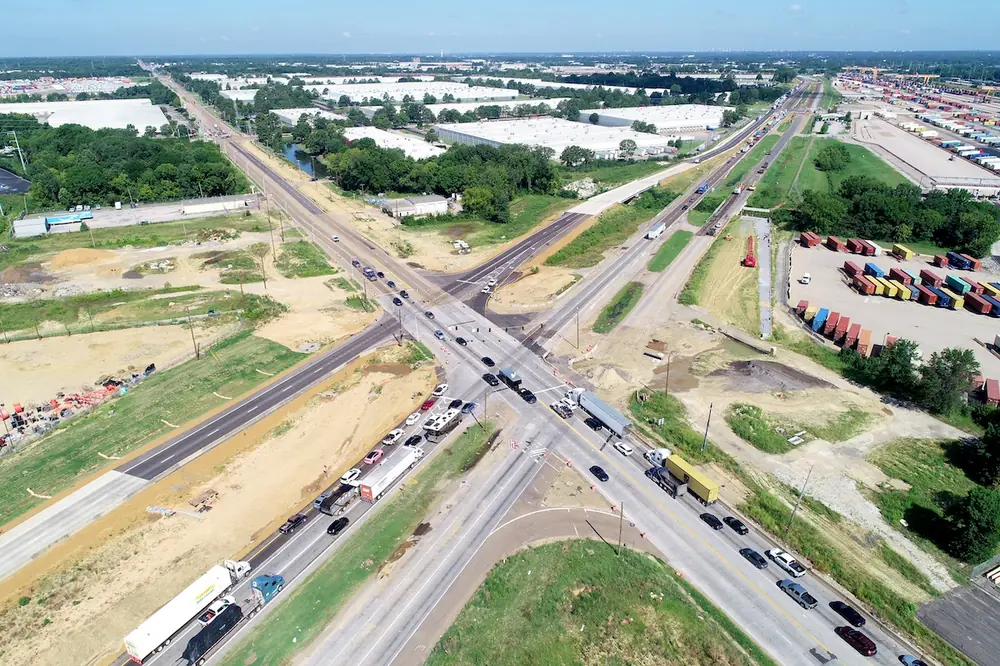
Phase 2 is intended to remove that bottleneck by adding a third lane in each direction and separating Lamar Avenue traffic from the existing Shelby Drive intersection.
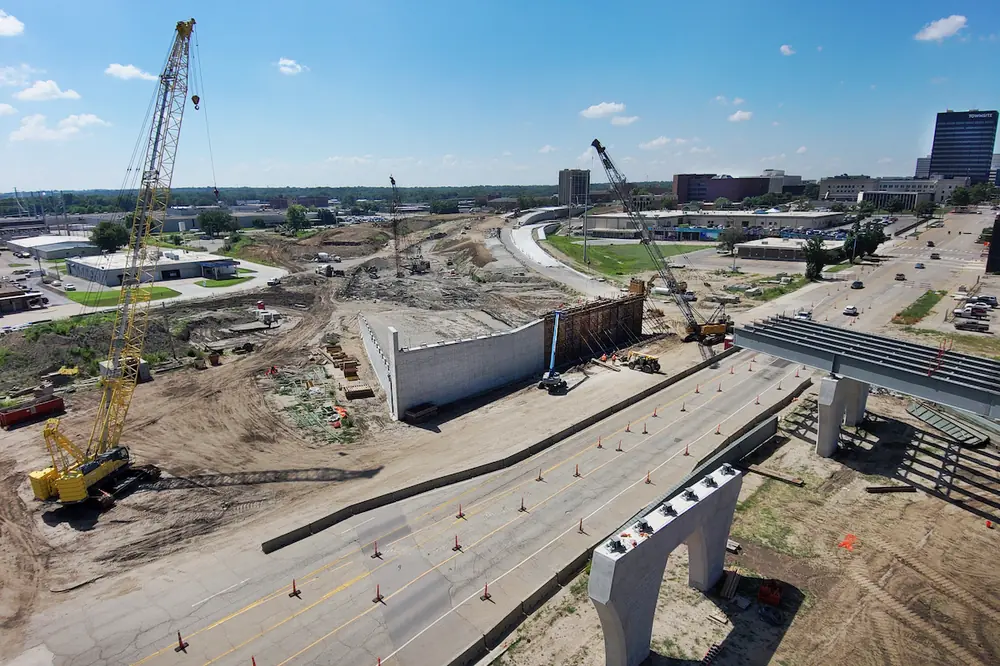
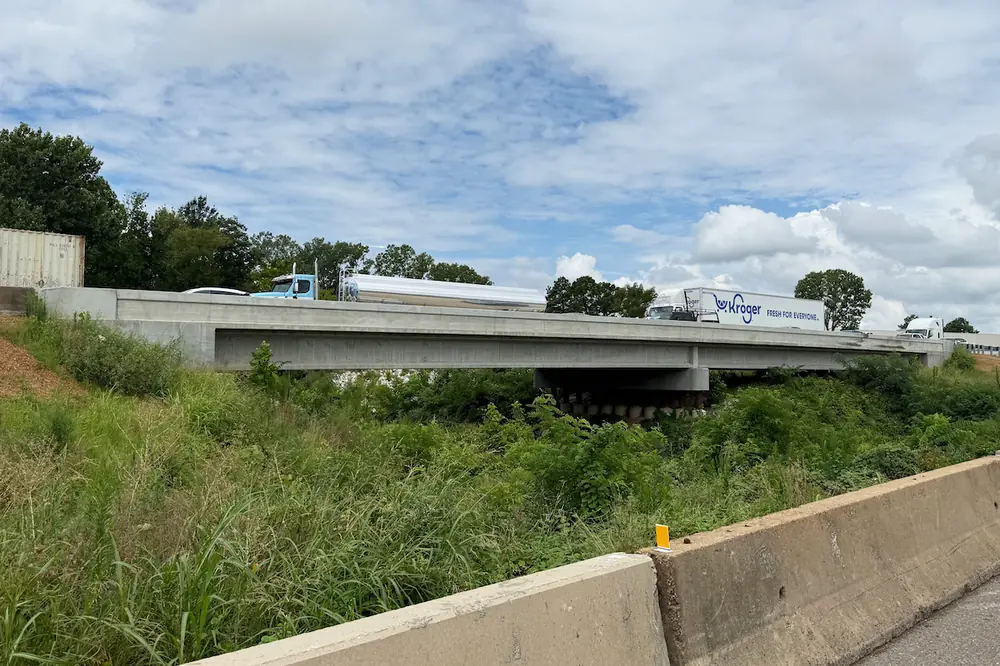
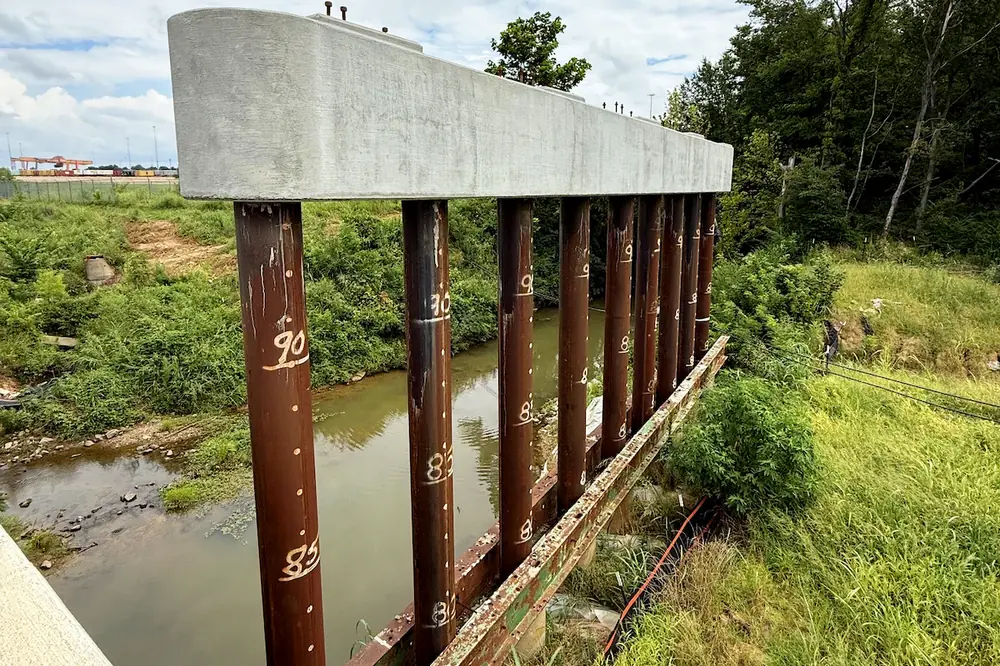
The project includes westbound and eastbound bridges over Shelby Drive, along with four bridge structures near John’s Creek: a westbound on-ramp bridge, a westbound Lamar Avenue bridge, an eastbound off-ramp bridge, and an eastbound Lamar Avenue bridge.

| Your local Hyundai dealer |
|---|
| Equipment East |
“One fact that surprises people is that two superstructure bridges will allow Lamar Avenue to bypass the existing intersection with Shelby Drive,” said Michael Tetleton, Construction Technician for Smith Seckman Reid Inc., the project’s construction engineering and inspection firm.
Once the interchange is complete, through traffic will no longer have to pass through the existing signalized intersection. The added lanes and grade separation are expected to improve travel reliability for freight carriers and local motorists while reducing the bottleneck at Shelby Drive.
Of all the construction issues encountered on Phase 2, utility relocation has created the greatest challenge.
Major urban corridors often contain extensive water, electrical, communications, and other utility infrastructure within or near the right of way. Before Dement Construction can advance portions of the new roadway, utilities must be relocated to accommodate the proposed grades, bridges, ramps, drainage systems, and pavement.

| Your local Wirtgen America dealer |
|---|
| United Construction & Forestry |
| WI Clark |
| Dobbs Equipment (SC) |
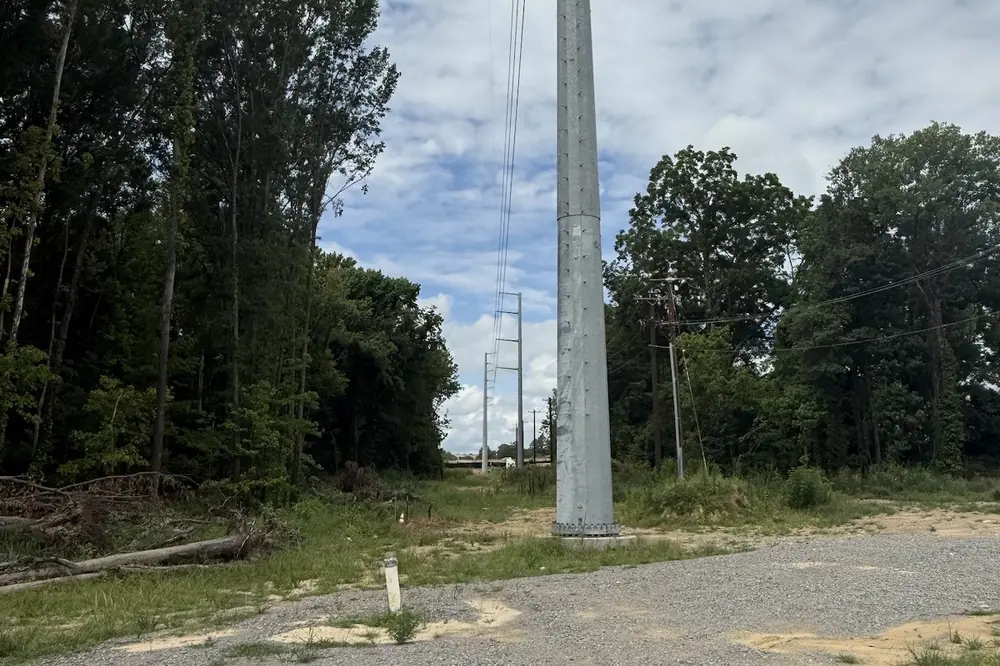
The concentration of utilities around the Lamar Avenue and Shelby Drive intersection has made that work especially demanding. Close coordination with Memphis Light, Gas, and Water has been required for both water and electrical relocations, including planning associated with major electrical transmission towers.
Electrical distribution work has required more planning than any other individual construction activity, according to the project team.
Another substantial component is the construction of a 24-inch water main along the north side of Shelby Drive and across Lamar Avenue. The line cannot be installed in one continuous operation because traffic must remain open in both directions.
Instead, crews are completing the water main in sections, coordinating each phase with the roadway staging plan. The sequence allows the utility work to advance while preserving travel through the intersection.

| Your local Esco Corporation dealer |
|---|
| Genalco |
The volume and type of traffic on Lamar Avenue shape nearly every construction decision.
Commercial trucks require more room to maneuver, take longer to stop, and can create greater risks around temporary lane shifts than smaller vehicles. At the same time, extended closures would disrupt access to freight facilities and industrial businesses that depend on the corridor.
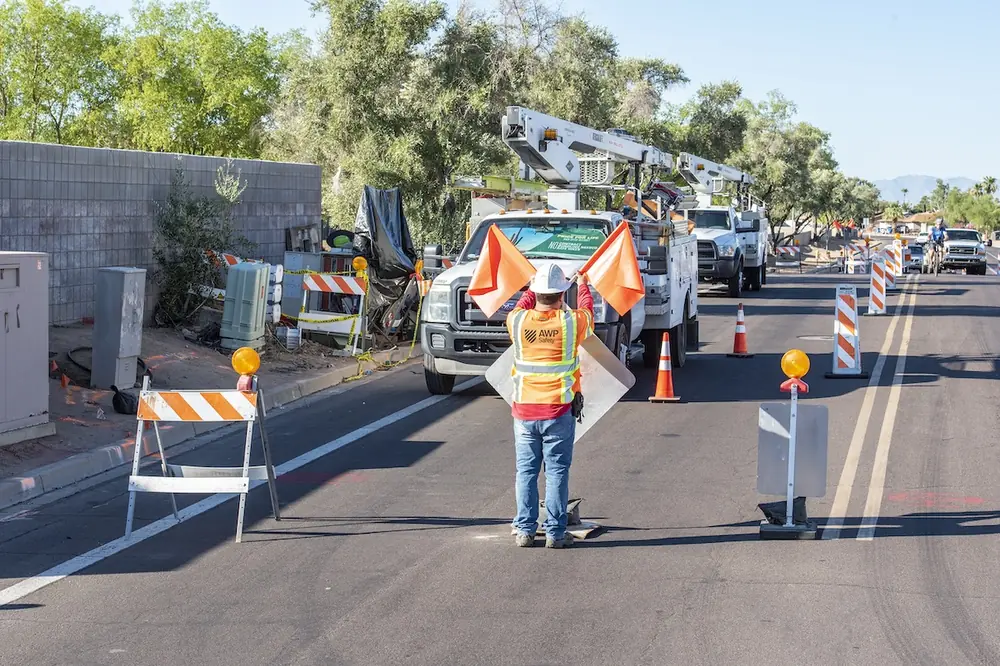
The project team has therefore scheduled lane closures and major traffic shifts overnight, generally between 7 p.m. and 6 a.m. Even during those operations, at least one lane in each direction remains open.
“Maintaining traffic through one of Tennessee’s busiest freight corridors has required careful planning to keep both workers and drivers safe,” said Justin McGill, Team Lead for TDOT Region 4, District 49 Operations, Unit 4922.

| Your local Case Construction Equipment Inc dealer |
|---|
| Beauregard Equipment |
| Monroe Tractor |
“While traffic itself hasn’t changed our overall construction approach, it has reinforced the need for clearly marked work zones, consistent communication with motorists, and carefully timed lane shifts,” McGill added. “These measures help protect crews, minimize delays, and keep freight and local traffic moving safely throughout the project.”
Conducting the most disruptive work overnight avoids the busiest daytime periods and limits impacts on commercial carriers. It also gives crews a defined window to modify barriers, pavement markings, signs, and channelizing devices before morning traffic returns.
The project’s traffic plan builds on temporary improvements constructed during an earlier stage. An eastbound Lamar Avenue off-ramp and on-ramp at Shelby Drive were built to temporarily accommodate eastbound traffic. Westbound Lamar Avenue traffic could then be shifted onto the former eastbound lanes, opening the old westbound lanes for reconstruction during Phase 2.
Phase 2A began June 30, 2026, marking the latest major traffic and construction stage.

| Your local Volvo Construction Equipment dealer |
|---|
| Tyler Equipment |
This sequence allows Dement Construction to create work areas within the existing corridor without closing Lamar Avenue. It also requires each new pavement section, ramp, barrier alignment, and traffic shift to be ready before vehicles are moved.
Keeping workers separated from moving vehicles is the project’s primary safety concern.
Concrete barrier rail provides the main physical separation between traffic and active construction zones. The barriers help protect crews working near the roadway while guiding motorists through changing alignments.
Traffic control has also been adjusted in the field when the team identifies an opportunity to improve safety. Additional warning and regulatory signs have been installed even where they were not specifically shown in the original plans.
| Your local Trimble Construction Division dealer |
|---|
| SITECH Northeast |
At intersections, crews added “Do Not Enter” and “Wrong Way” signs to reduce the risk of motorists entering construction areas or traveling against the temporary traffic pattern.
Those measures are relatively simple compared with the project’s bridges and utility relocations, but they address one of the persistent risks of phased urban roadway construction: driver confusion.
As lanes move and familiar turning patterns change, signs must communicate the new configuration clearly, particularly at night and around ramps serving heavy truck traffic.
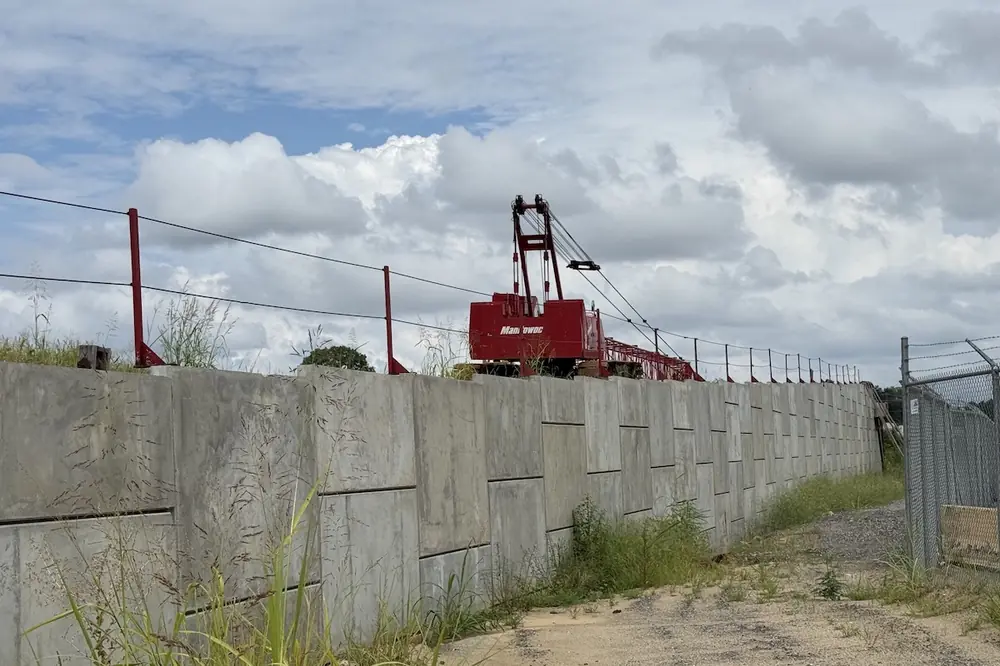
One of the project’s most notable construction modifications involves a temporary retaining wall planned along Ramp B3, which currently carries eastbound Lamar Avenue traffic.
| Your local Trimble Construction Division dealer |
|---|
| SITECH Northeast |
The original plans called for the wall to be constructed with sheet piles. Under the project’s phasing sequence, however, the contractor would not have been able to return later and remove the sheet piling safely, particularly with traffic operating nearby.
The team instead developed a value engineering change proposal (VECP) to replace the sheet pile wall with an earthen wall that can remain in place.
The revision significantly reduced the amount of temporary wall construction required and produced savings for the state. It also eliminated a future removal operation beside active traffic.
The change illustrates how temporary works must be evaluated against the complete phasing plan, not only the stage in which they are installed. A system that appears practical during early construction can become difficult or impossible to remove after traffic is shifted and later work begins.
| Your local Trimble Construction Division dealer |
|---|
| SITECH Northeast |
By resolving that conflict through the VECP process, the project team simplified construction and reduced future exposure for both workers and motorists.
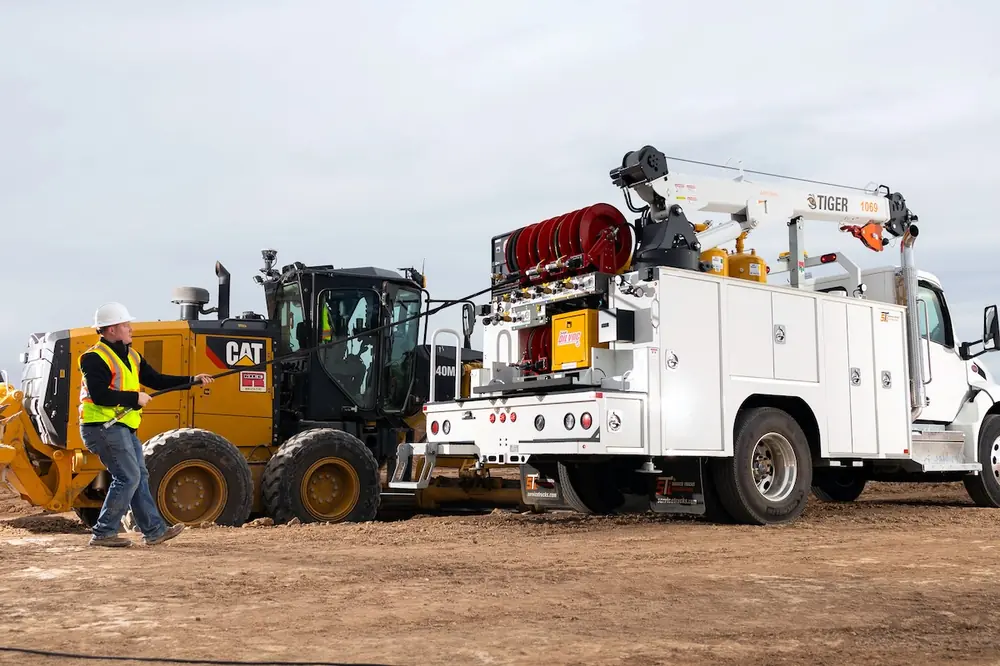
Approximately 10 to 12 major pieces of equipment are active during peak construction, supported by smaller machines and traffic control equipment.
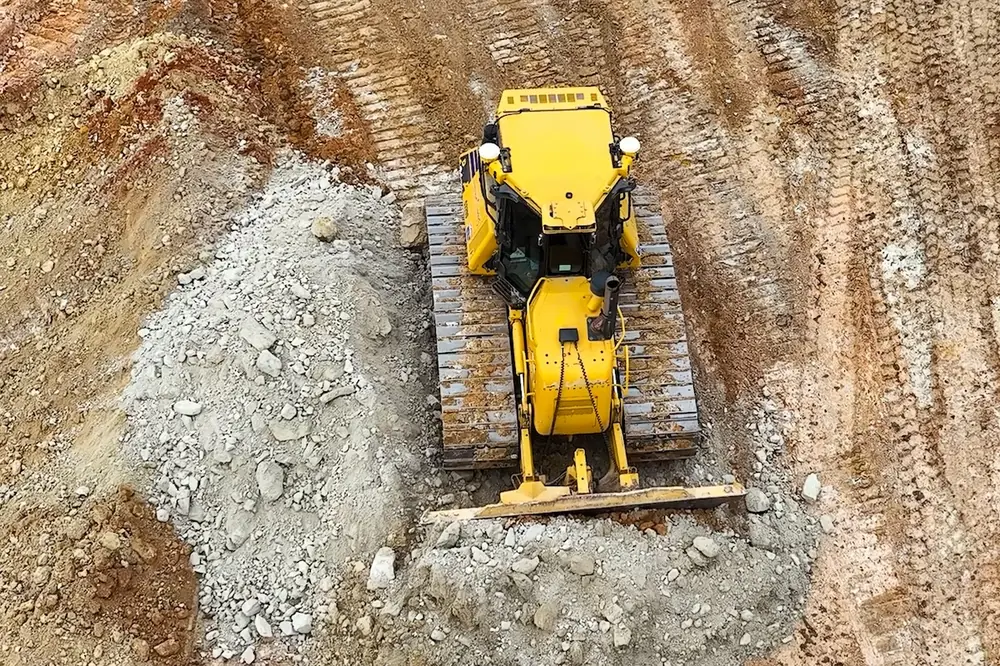
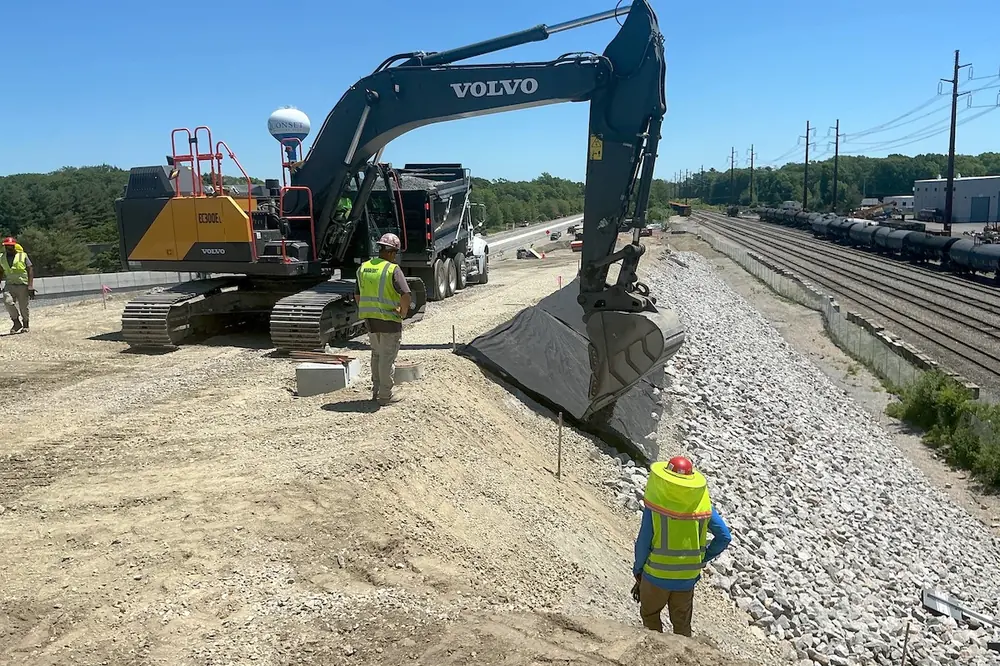
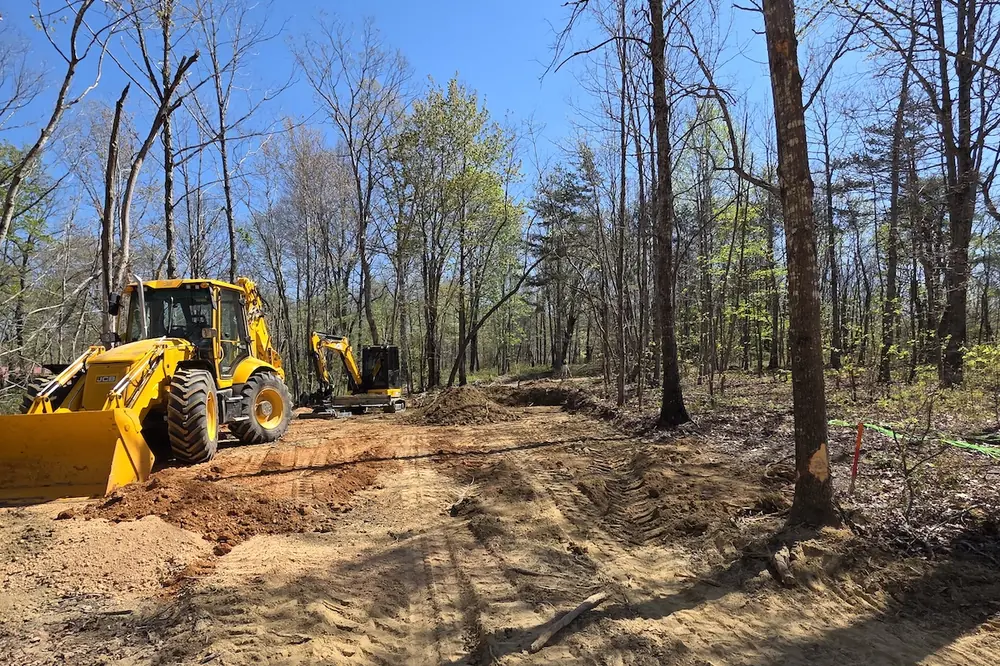
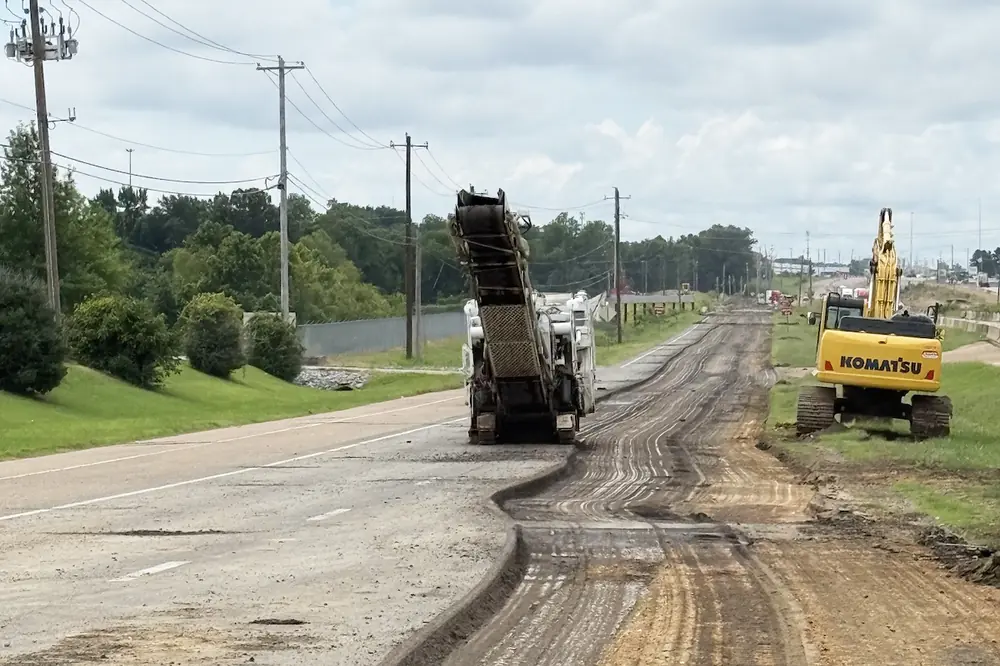
Excavation work includes two Komatsu PC360LC Excavators, a Komatsu PC290LC Excavator, and a Caterpillar M318F Wheeled Excavator. Grading equipment includes a Caterpillar D6N Dozer, a Caterpillar D5G Dozer, and a Komatsu D39PXi Dozer.
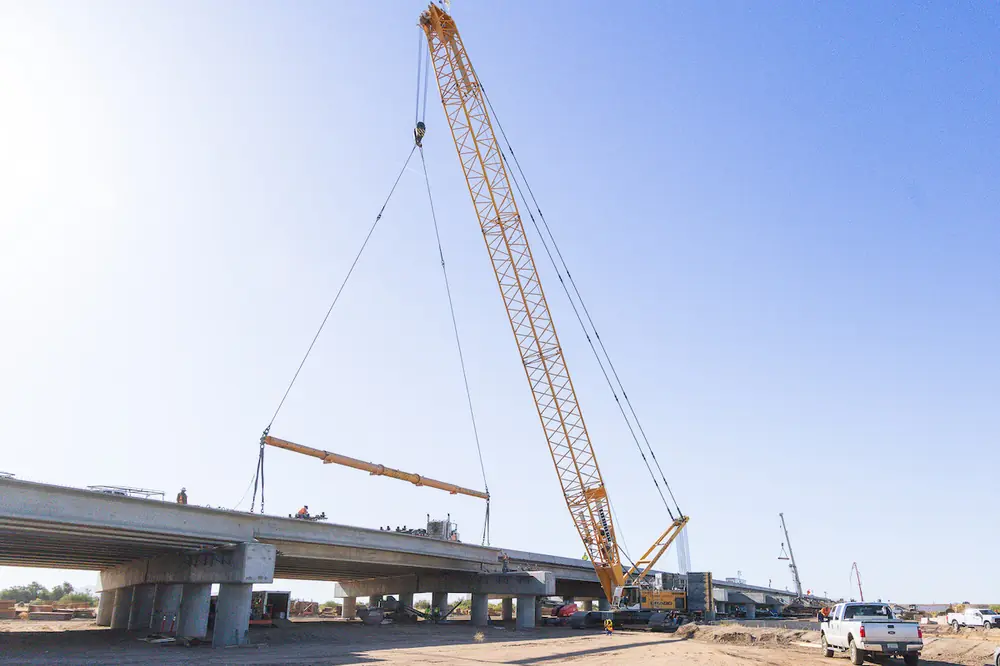
A Manitowoc 222 Crawler Crane supports structural operations, while a Roadtec RX-600e Milling Machine is used for pavement removal. Compaction work includes a Caterpillar CS-563C Roller.
| Your local Trimble Construction Division dealer |
|---|
| SITECH Northeast |
Concrete paving is performed with a GOMACO GP-2600 Paver. Mechanical sweeping is handled by Broce Broom RJ350 and RJ300 Sweepers, and a Case 9370 Tractor is also part of the project fleet.
The equipment must move between constrained work areas while remaining separated from traffic. That makes staging and access planning especially important, particularly near bridge construction, ramps, utility operations, and temporary lane configurations.
Phase 2 includes substantial quantities of roadway, drainage, structural, and earthwork materials.
The project calls for approximately 87,500 cubic yards of compacted earth, 31,000 tons of asphalt, and 36,600 tons of roadway aggregate. Concrete roadway construction totals approximately 5,066 square yards.
| Your local Trimble Construction Division dealer |
|---|
| SITECH Northeast |
Drainage work includes approximately 5,335 linear feet of pipe in various sizes. Retaining wall construction covers approximately 13,383 square feet.
Bridge quantities include approximately 430 cubic yards of concrete, 21,100 pounds of reinforcing steel, and 59,700 pounds of structural steel.
The absence of rock excavation has allowed earthwork to proceed without the drilling, blasting, and material processing operations common on some highway projects. Even so, coordinating the roadway quantities with utility relocations, bridge construction, and traffic phases remains a significant scheduling challenge.
Each section must reach the appropriate stage before traffic can be shifted and the next work area opened.
| Your local Trimble Construction Division dealer |
|---|
| SITECH Northeast |
TDOT is targeting summer 2028 completion, with the current contract completion date set for July 31, 2028.
“The project is currently approximately 2 percent over the contracted award price due to unforeseen utility adjustments,” said Nichole Lawrence, Regional Communications Officer for TDOT Region 4. “Although the original cost estimate was $155,390,934.58 and the awarded bid totaled $149,823,832.50, the increase remains within a manageable range. With the project only about 50 percent complete, this overage may balance out as work progresses and final quantities are established.”
Maintaining progress will continue to depend heavily on utility coordination. Once relocation work clears an area, roadway, drainage, bridge, and paving activities can follow. Delays to those relocations can affect multiple downstream operations.
The team’s experience has also highlighted the need to establish sufficient erosion control quantities early. Tetleton recommended that future DOT projects include additional quantities for erosion control items at the beginning rather than waiting for field needs to develop.
| Your local Trimble Construction Division dealer |
|---|
| SITECH Northeast |
Although no unusual environmental measures have been necessary, standard protections remain in place for receiving waters of the state. Those controls must be maintained and adjusted as work areas, drainage patterns, and traffic stages change.
Tetleton said that utility planning has been the project’s clearest lesson to date. He recommended allowing more time for utility relocations and working to keep them on track whenever possible.
The project team said relocation of the 24-inch water main, electrical distribution systems, and transmission infrastructure must be coordinated with the traffic staging plan before affected roadway work can advance.
The team also reported that the planned temporary retaining wall along Ramp B3 was revised after the original sheet pile design presented difficulties for later removal. Through the value engineering change proposal process, the sheet pile wall was replaced with an earthen wall that can remain in place. The revision reduced temporary wall construction, produced savings for the state, and eliminated removal work beside active traffic.
| Your local Trimble Construction Division dealer |
|---|
| SITECH Northeast |
McGill said maintaining traffic through the corridor has required careful planning, clearly marked work zones, consistent communication with motorists, and carefully timed lane shifts. The project team has scheduled major traffic shifts overnight while keeping at least one lane open in each direction.
When Phase 2 is complete, motorists and commercial carriers will have three lanes in each direction, a grade-separated interchange at Shelby Drive, and a more reliable connection between major freight facilities and the regional highway network.
- Owner: Tennessee Department of Transportation
- General Contractor: Dement Construction, Jackson, Tennessee
- Designer/Utility Coordination: Fisher & Arnold Inc., Memphis, Tennessee
- Construction Manager/Construction Engineering and Inspection: Smith Seckman Reid Inc., Nashville, Tennessee
- Major Subcontractors: Ferrell Paving, Memphis; Shelby Electric, Memphis
- Traffic Control: Superior Traffic Control, Christiana, Tennessee
- Survey: Sullivan Surveying, Ripley, Mississippi
- Materials Testing: UES, Orlando, Florida
- Erosion Control Inspection: Buchart Horn, York, Pennsylvania Photos courtesy of Smith Seckman Reid (SSR)