
Every day thousands of trucks move through the northern entrance of the Port Newark-Elizabeth Marine Terminal, carrying cargo earmarked for businesses and consumers across the Northeast.
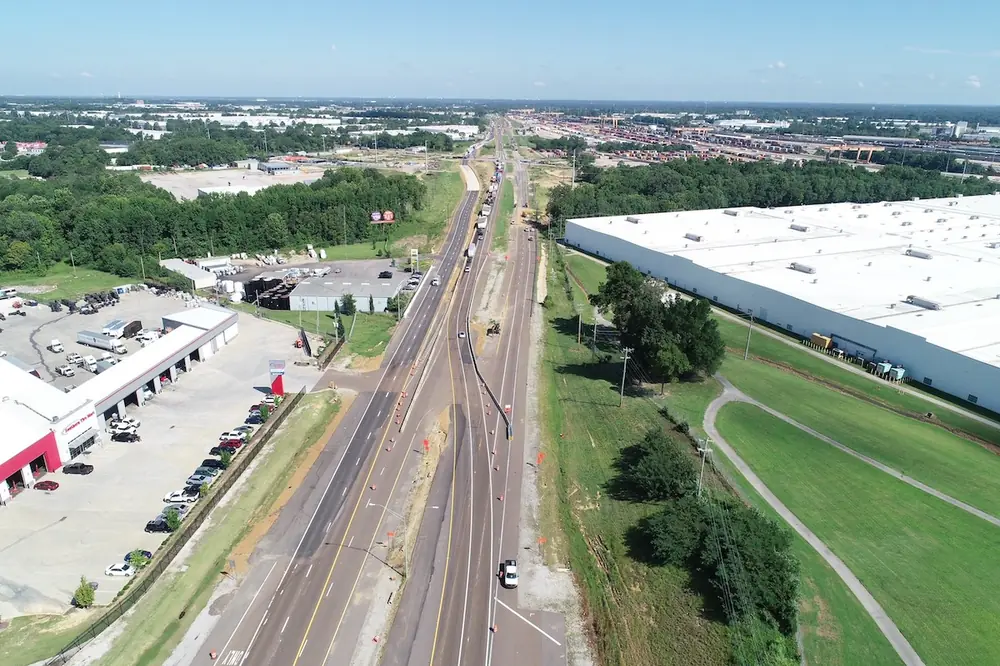
That particular gateway has served the Port of New York and New Jersey for decades, but its aging roadway network was built for a different era — one characterized by smaller trucks, lighter traffic, and fewer demands on one of the nation’s busiest seaports.
That was the catalyst for the $220 million Port Street Corridor Improvement Project, led by the Port Authority of New York and New Jersey and constructed by Conti Civil. This sweeping infrastructure project, which broke ground in 2023, is transforming that gateway into a safer, more efficient corridor capable of supporting the continued growth of East Coast freight movement.
“This project will modernize the northern roadway interchange and access point at Port Newark and the Elizabeth Port Authority Marine Terminal,” said Charlie Bontempo, Senior Program Manager for the Port Authority of New York and New Jersey. “Its goals are to create a safer entrance to the port complex, provide a more efficient roadway network, and streamline the movement of freight connecting the port to regional highways and local communities.”
The importance of the corridor extends well beyond northern New Jersey. The Port of New York and New Jersey ranks as the busiest seaport on the East Coast and among the three busiest ports in the nation, serving approximately 44 million consumers within a four-hour drive. The northern entrance alone accommodates roughly 3,600 vehicles during peak hours, with trucks accounting for approximately 40 percent of that traffic.

| Your local Hyundai dealer |
|---|
| Equipment East |
“The Port Street interchange complex was built decades ago,” Bontempo said. “Its roadway geometry was antiquated and wasn’t designed for the size of modern trucks. Tight turning movements, reduced sightlines, and aging infrastructure no longer met today’s roadway design standards.”
One of the corridor’s most significant limitations involved the Corbin Street Ramp, which had previously been reduced to a single travel lane because of structural concerns. Flooding throughout portions of the corridor also regularly affected operations.
The reconstruction, Bontempo noted, addresses each of those deficiencies through a complete redesign of the roadway network.
The plan calls for replacing outdated roadway infrastructure with modern ramps, wider roadways, improved drainage, and redesigned intersections that will nearly double roadway capacity while significantly improving safety throughout the port complex.

| Your local Esco Corporation dealer |
|---|
| Genalco |
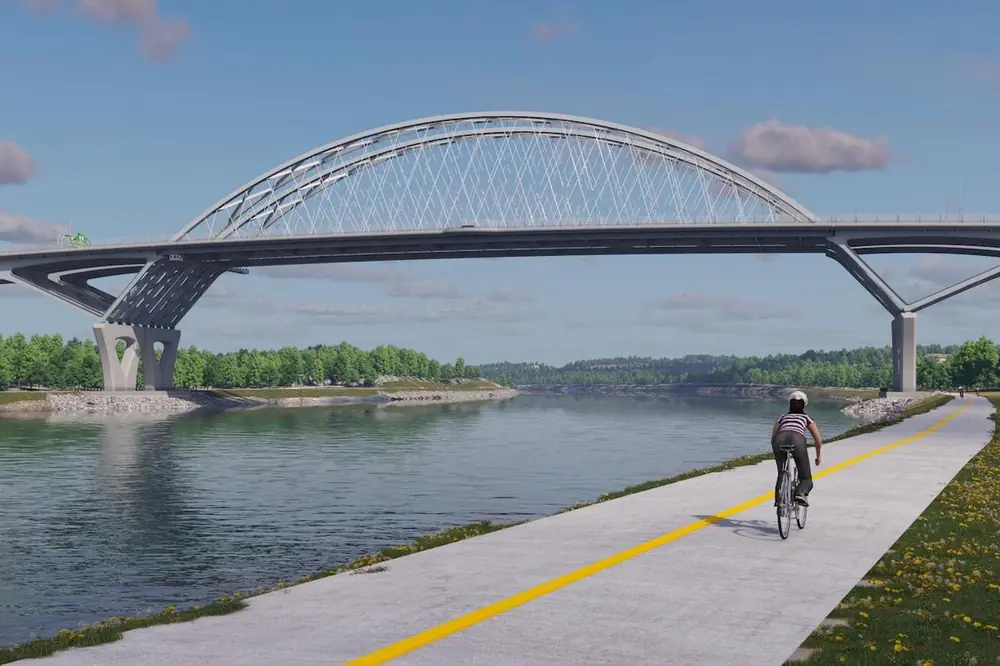
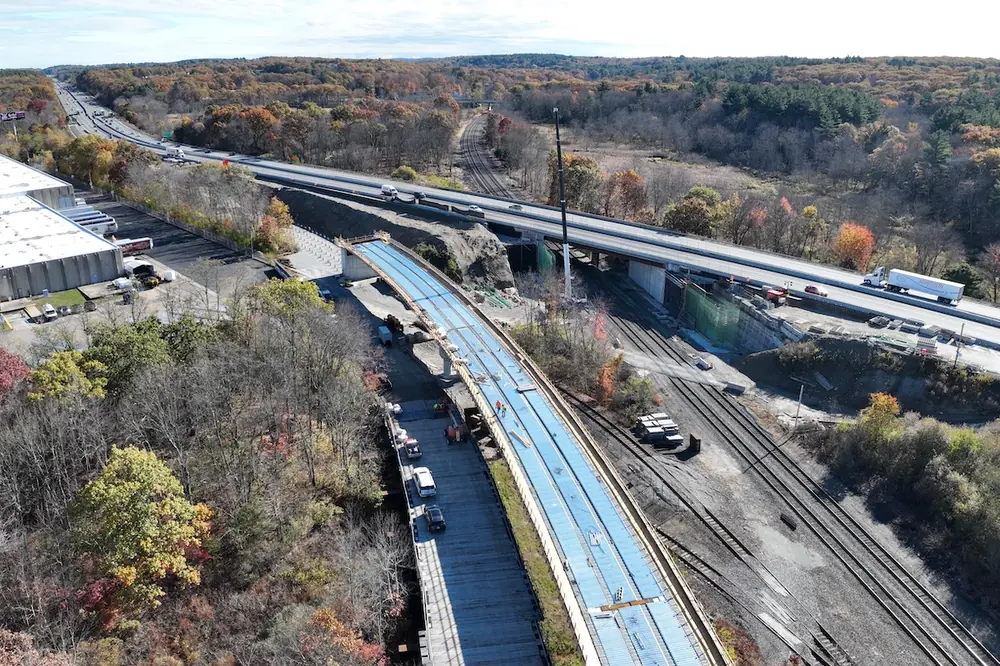
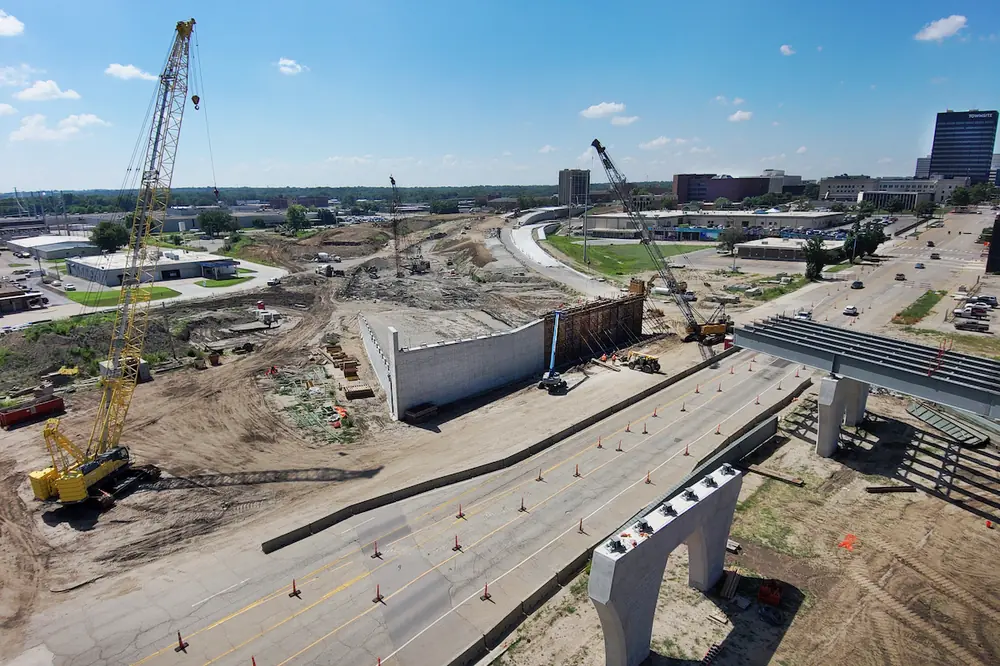
At the center of the project is construction of the new Corbin Street Ramp, replacing the original structure with a wider, two-lane bridge designed to accommodate today’s larger trucks while improving safety and operational efficiency.
“The new structure is wider, carries two lanes of traffic, and features improved turning radii designed specifically to accommodate longer and heavier trucks,” Bontempo said.
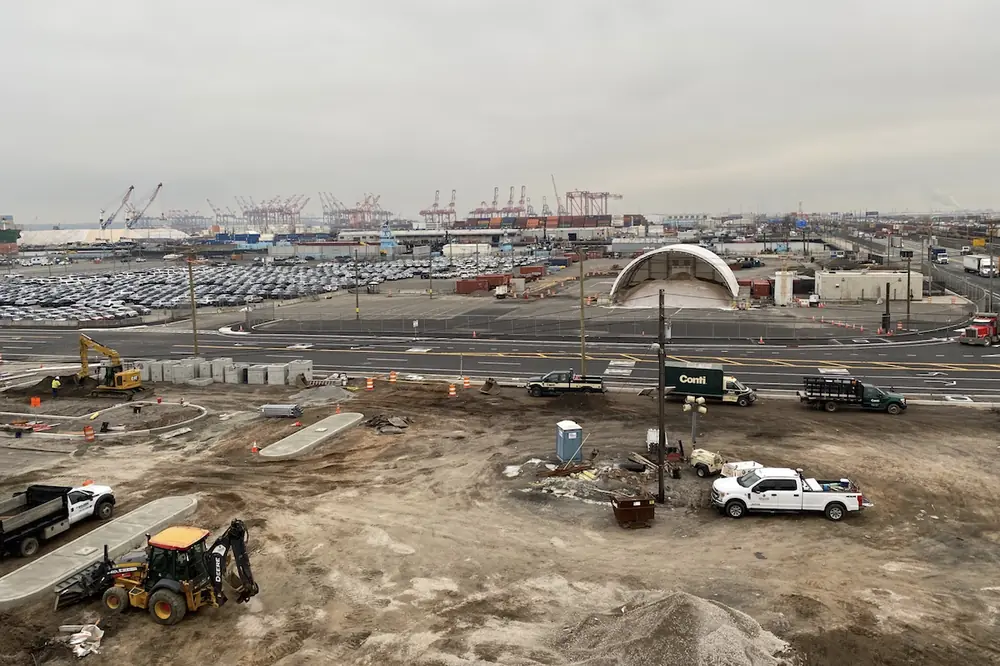
The improvements extend well beyond the new bridge. For instance, Kellogg and Marlin streets are being relocated and widened to improve circulation throughout the port complex. Outer Port Street is being reconstructed with larger turning radii, while the interchange itself is being elevated to reduce flooding. A new storm drainage system, upgraded traffic signals, improved lighting, and railroad realignment will further modernize the transportation network serving the marine terminal.
Once complete, the Port Authority estimates roadway capacity entering and leaving the port will nearly double while significantly reducing crashes and congestion.

| Your local Wirtgen America dealer |
|---|
| United Construction & Forestry |
| WI Clark |
| Dobbs Equipment (SC) |
Despite the big changes, work on the Port Street Corridor cannot simply divert traffic around the construction zone. That is why every phase must accommodate continuous freight movement through one of the nation’s most important supply chain hubs.
Maintaining that operational continuity became one of the project’s defining priorities long before construction began.
“Keeping the port operational through a multi-year roadway reconstruction was central to the project’s design from the outset,” Bontempo said. “Before the Corbin Street Ramp came down, a new roadway detour was built on Kellogg Street to create a new entrance specifically engineered to handle the additional traffic volume.”
Rather than serving only as a temporary bypass, that detour has become a permanent component of the completed roadway system, expanding capacity even before the remainder of the corridor is finished.

| Your local Trimble Construction Division dealer |
|---|
| SITECH Northeast |
Traffic operations continue to be managed through a combination of technology and field personnel.
“The port’s Operations Control Center monitors all traffic signals, allowing traffic engineers to make real-time adjustments based on observed conditions,” Bontempo said. “Port Authority police officers are stationed at key intersections throughout the complex, and a dedicated traffic management playbook guides rerouting procedures, signage, and contingency plans.”
A project website featuring live traffic cameras, interactive maps, and daily construction updates also helps port tenants and trucking companies plan around changing conditions.
Although the owner established the project’s operational framework, executing construction inside an active port has required extensive planning from the contractor.

| Your local Case Construction Equipment Inc dealer |
|---|
| Beauregard Equipment |
| Monroe Tractor |
Greg Kerrigan, Project Executive with Conti Civil, said the company’s experience working within active transportation facilities has proven essential throughout the project.
“Building heavy civil infrastructure in active facilities and roadways is an environment that Conti Civil is very familiar with,” he said. “This project combines heavy truck traffic, major utilities, and neighboring transportation facilities including Newark Liberty International Airport, the New Jersey Turnpike, and Conrail’s Port Newark Yard, creating a long list of stakeholders that can be affected by even relatively minor construction activities.”
That environment demands a different approach than traditional highway construction. Because of that, Conti Civil and the Port Authority have relied on detailed long-range planning while maintaining the flexibility to respond quickly as field conditions evolve.
“Intensive planning and communication are essential,” Kerrigan said. “You also have to prepare for the inevitable unknowns and maintain the ability to quickly respond to changing needs.”

| Your local Volvo Construction Equipment dealer |
|---|
| Tyler Equipment |
Construction sequencing on the project has followed the same philosophy. Traffic patterns and staging continue to evolve throughout, based on ongoing coordination with terminal operators and the trucking community.
“The Port Authority designed the project with safety and operations as the primary focus,” Kerrigan said. “As changing needs are identified through constant outreach with port tenants and the trucking community, staging and execution are modified where necessary. Activities with the greatest impact are scheduled outside peak traffic periods whenever possible.”
Those adjustments have allowed crews to maintain construction progress while preserving the capacity needed to keep freight moving through one of America’s busiest maritime gateways.
Before crews could begin building the new Corbin Street Ramp, the existing ramp had to be demolished while protecting the transportation infrastructure surrounding it. That work proved particularly challenging because the bridge crossed active New Jersey Turnpike lanes and Conrail freight tracks while remaining within the airspace surrounding Newark Liberty International Airport.
| Your local Hyundai dealer |
|---|
| Equipment East |
The unique conditions required demolition techniques that varied from span to span.
“To accommodate the transportation facilities below and the active flight paths above, demolition means and methods varied throughout the structure,” Kerrigan said. “The work utilized multiple cranes and excavators of different sizes depending on the location and constraints.”
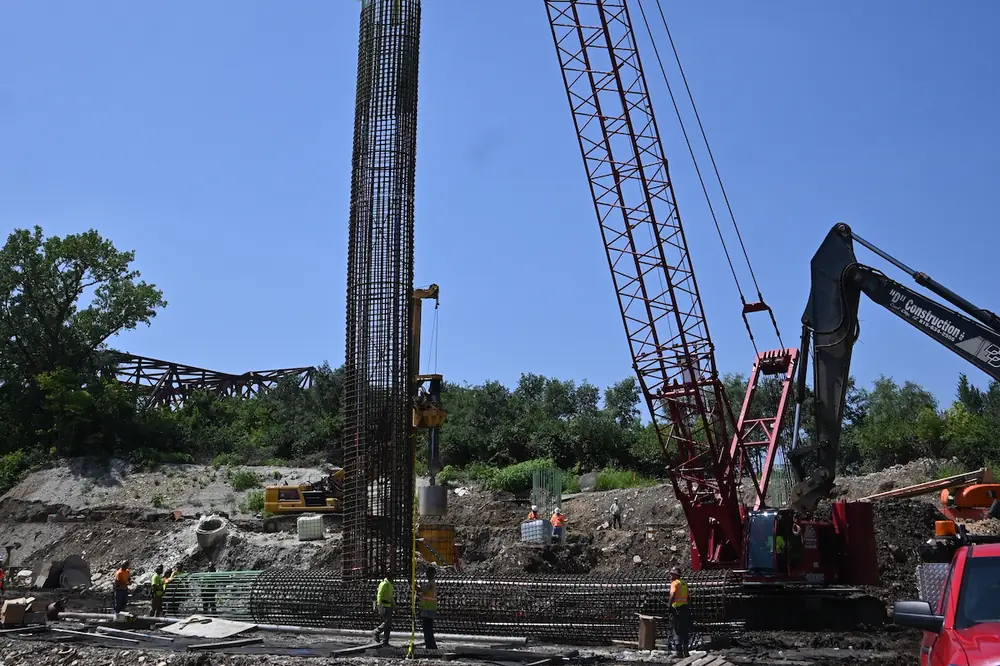
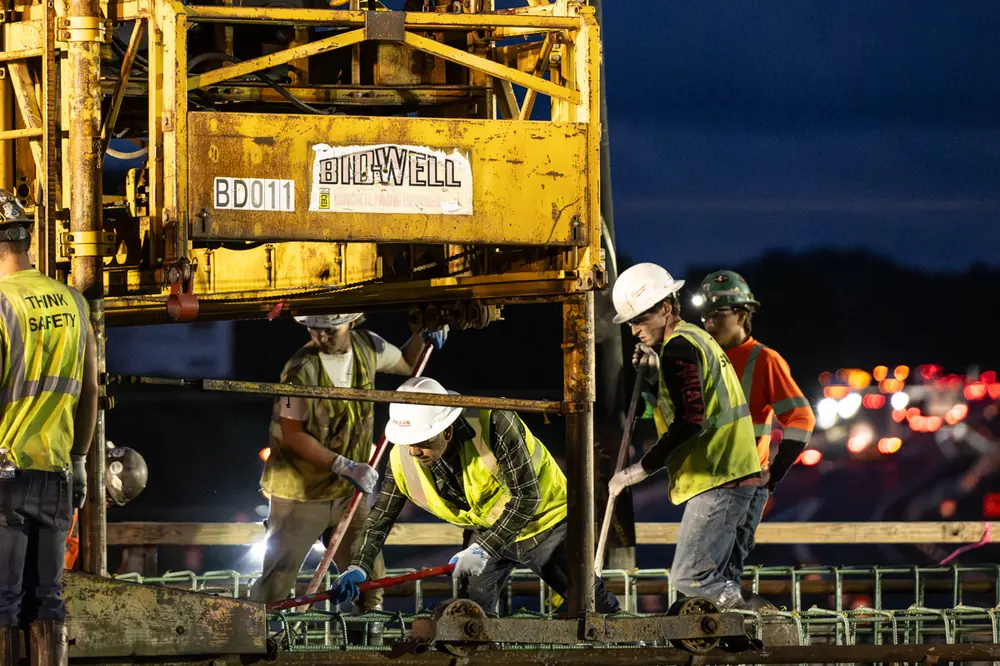
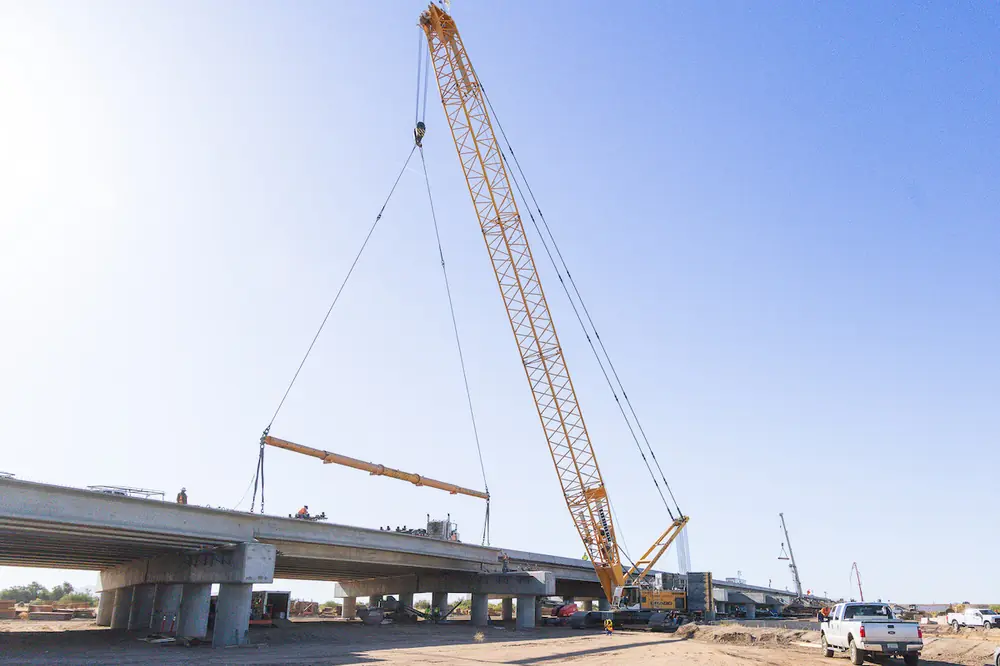
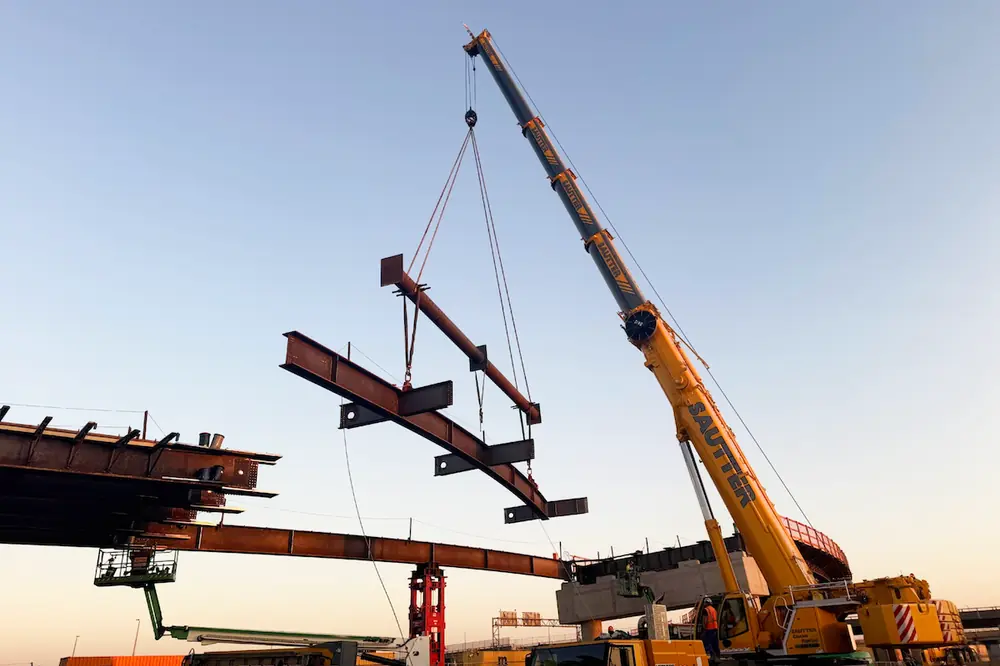
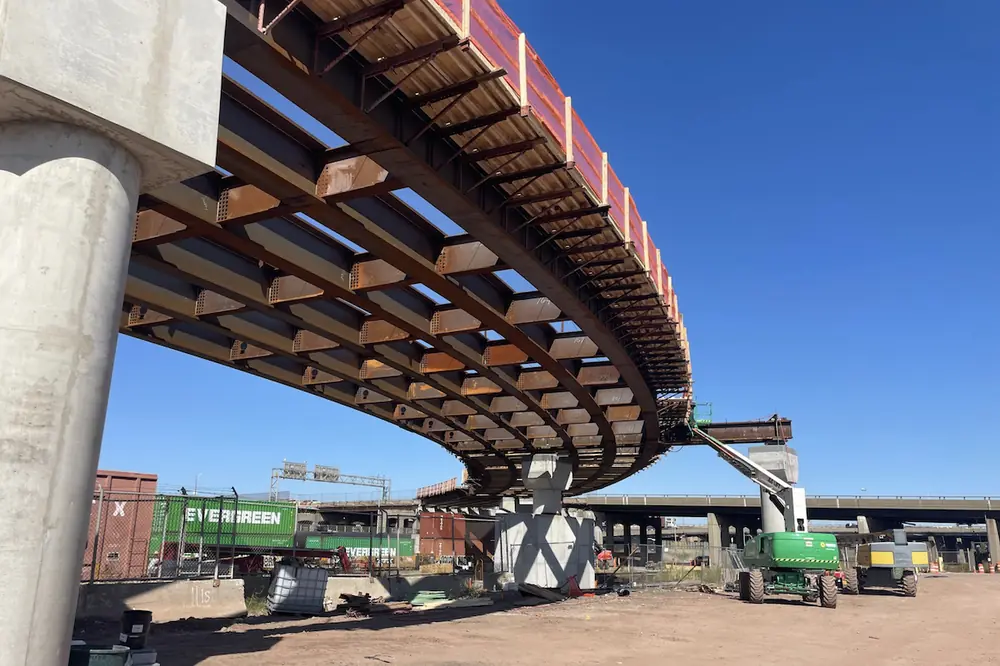
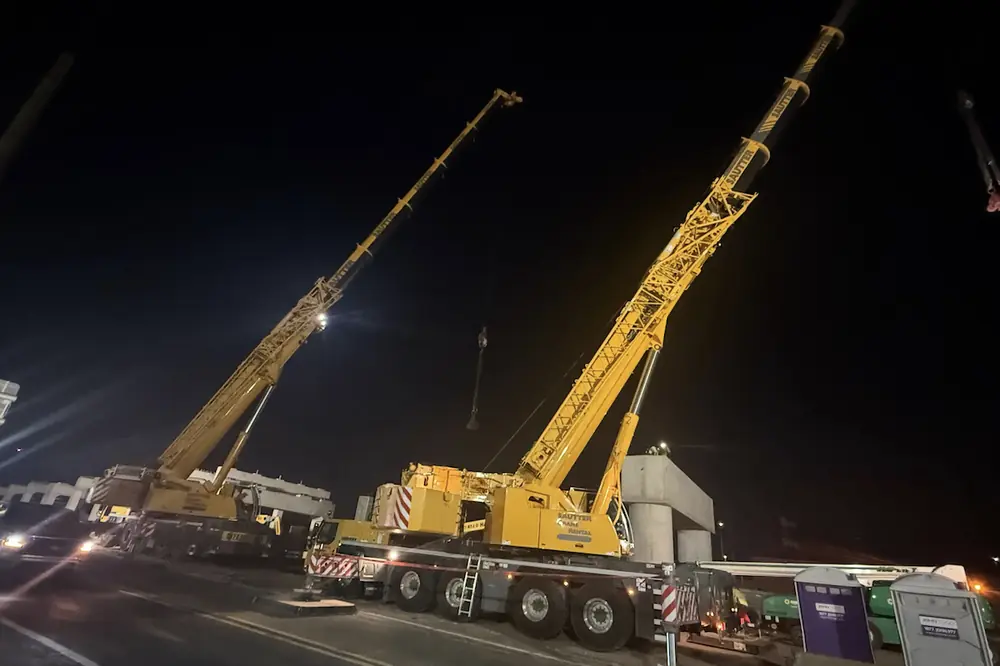
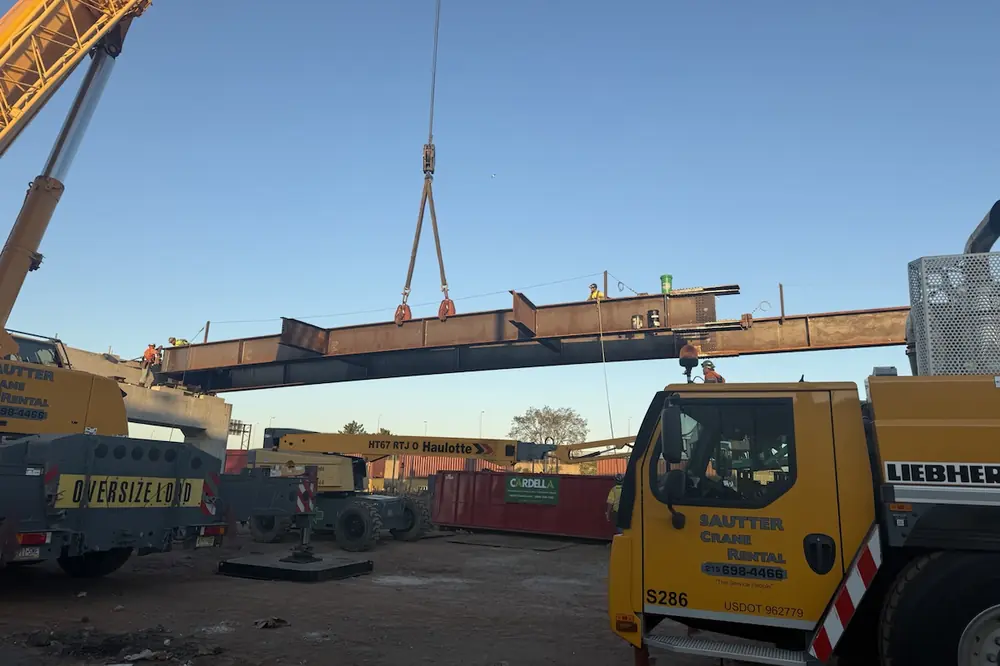
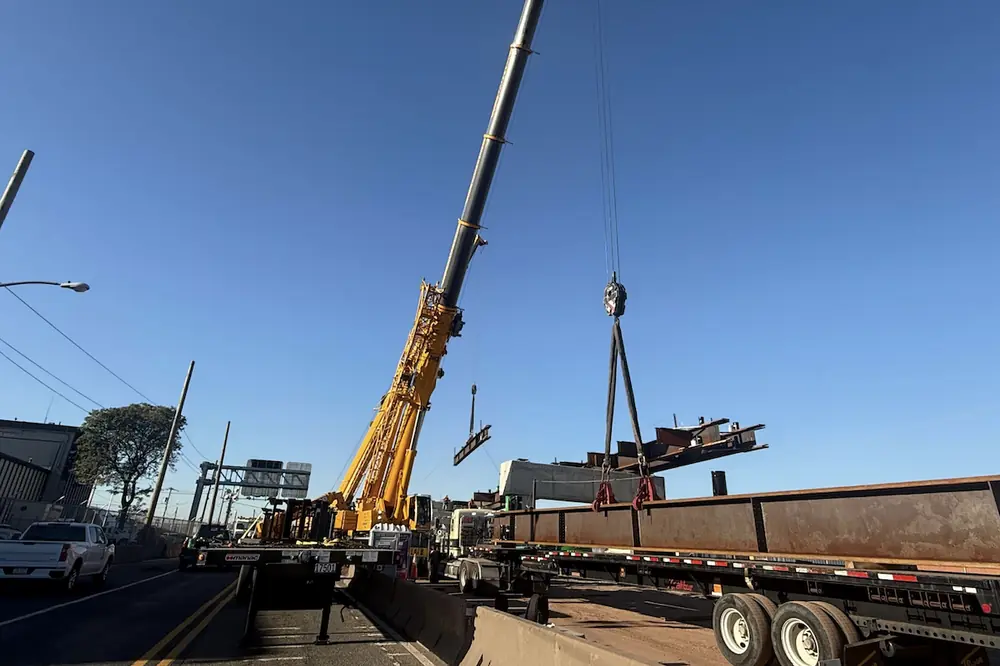
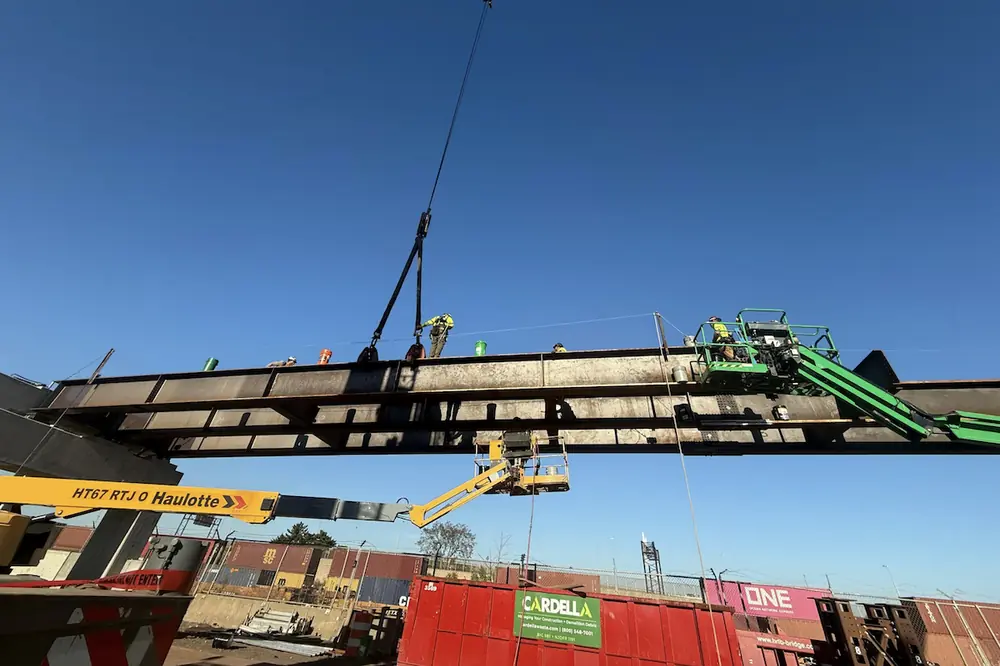
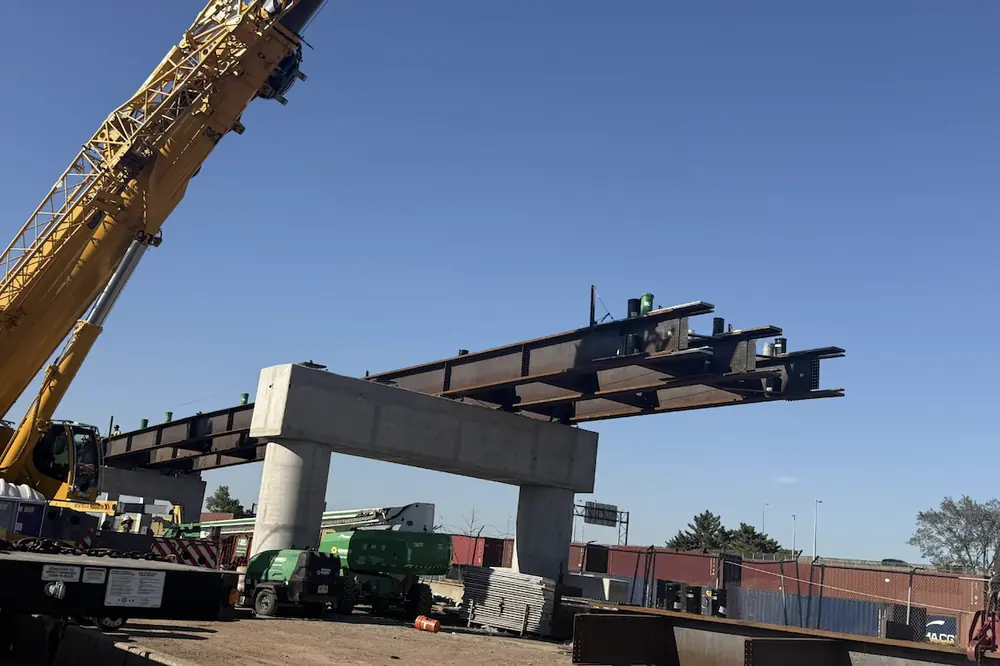
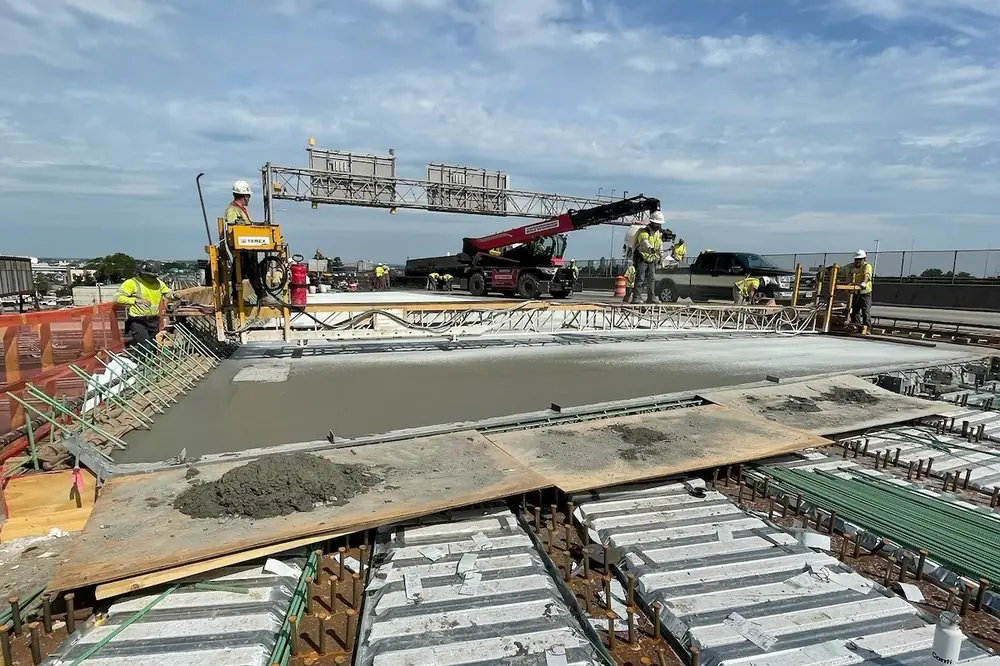
Following demolition, crews installed drilled shaft foundations measuring up to 8 feet in diameter and nearly 100 feet deep, many constructed between active railroad tracks and turnpike lanes. Nearly 2 million pounds of curved structural steel girders were then erected before placement of the concrete bridge deck.
“The work frequently operated on a 24-hour-a-day, seven-day-a-week schedule,” Kerrigan said. “That allowed construction activities to fit around the varying peak traffic periods of the different facilities surrounding the project.”
| Your local Hyundai dealer |
|---|
| Equipment East |
While long-range planning established the project’s framework, maintaining flexibility has become one of the team’s most valuable construction tools.
“The project has more than 75 stakeholders,” Bontempo said. “Communicating project impacts, negotiating adjustments to sequencing, and maintaining regular opportunities for stakeholder feedback have remained a sustained focus throughout construction.”
Coordination with outside agencies has also influenced how work progresses across the corridor.
“Coordination with the New Jersey Turnpike Authority, Conrail, and utility companies has directly shaped the construction sequence,” Bontempo said. “When work cannot proceed in one area because of external coordination requirements, the contractor shifts operations elsewhere, creating a fluid staging approach.”
| Your local Hyundai dealer |
|---|
| Equipment East |
That adaptability has proven equally valuable from the contractor’s perspective.
“The most valuable tool we’ve been able to exercise is maintaining a hyper-flexible approach to scheduling and sequencing,” Kerrigan said. “Projects like this cannot rely on rigid schedules because crews must constantly pivot around changing traffic conditions, unexpected utility conflicts, and operational needs.”
Beyond improving traffic flow, the project also advances broader environmental and economic objectives throughout the region.
Raising roadway elevations, reconstructing drainage infrastructure, and reducing congestion are expected to generate measurable environmental benefits once the corridor is complete.
| Your local Hyundai dealer |
|---|
| Equipment East |
“Projected environmental benefits include reducing annual fuel consumption by approximately 70,000 gallons while avoiding roughly 750 tons of carbon emissions each year,” Bontempo said.
The corridor also supports the Port Authority’s transition toward zero-emission freight movement.
An electric truck charging station opened within the project limits in 2025, providing infrastructure intended to encourage greater adoption of battery-electric drayage trucks serving the port.
“The Port Authority has established a goal of achieving net-zero carbon emissions across all of its facilities and operations by 2050,” Bontempo said.
| Your local Hyundai dealer |
|---|
| Equipment East |
Economic benefits are expected to extend well beyond the port itself.
The project received a $44 million federal INFRA grant and is projected to save approximately 700,000 vehicle hours during its first full year of operation while reducing crashes by more than 35 percent. Officials also estimate the work will generate approximately $171 million in regional economic activity during construction.
As of summer 2026, several major milestones have already been achieved, including completion of the Kellogg and Marlin Street detour, demolition of the original Corbin Street Ramp, and erection of structural steel for its replacement. Construction continues to advance toward several significant upcoming phases.
“Completion of the new Corbin Street Ramp is targeted for early in the third quarter of 2026,” Bontempo said. “Additional intersection improvements, reopening of Inner Port Street, and reconstruction of Outer Port Street will follow before final work concludes in 2028.”
| Your local Hyundai dealer |
|---|
| Equipment East |
As those phases are completed, the corridor will begin delivering the operational improvements envisioned during years of planning.
Truck drivers will benefit from wider lanes, improved turning radii, upgraded traffic signals, and a new two-lane entrance into the port complex. Roadway capacity entering and leaving the marine terminal will nearly double while crashes are expected to decline by more than 35 percent.
“The upcoming opening of the newly constructed Corbin Street Ramp will significantly increase inbound capacity to the port from the north,” Kerrigan said. “The thousands of man-hours and years of planning that went into building a structure that will serve the facility and the region for decades is exactly the type of tangible result that inspires people to work in heavy civil construction.”
Attention will then shift to the next phase of corridor improvements.
| Your local Hyundai dealer |
|---|
| Equipment East |
“The upcoming reconfiguration of Outer Port Street and widening of Port Street will provide additional safety improvements and the capacity needed to accommodate continued cargo growth,” Kerrigan said.
Once complete, the Port Street Corridor Improvement Project will do more than replace an aging roadway. It will create a modern freight gateway capable of supporting one of the nation’s most important ports for decades to come, improving safety, reliability, and efficiency for the trucks, businesses, and communities that depend on the uninterrupted movement of goods every day.
- Owner: Port Authority of New York and New Jersey
- General Contractor: Conti Civil LLC, Edison, New Jersey
- Lead Design Consultant: GPI, Bridgewater, New Jersey
- Subcontractors: Munoz Engineering P.C., HBC Company Inc., KAS Construction Consultants LLC, Linde-Griffith Construction Co., Atlas Evaluation & Inspection Services (AEIS), Discover Construction LLC, Structural Services Inc., ANS Consultants Inc., Bay Crane Service of New Jersey Inc. Photos courtesy of the Port Authority of New York and New Jersey