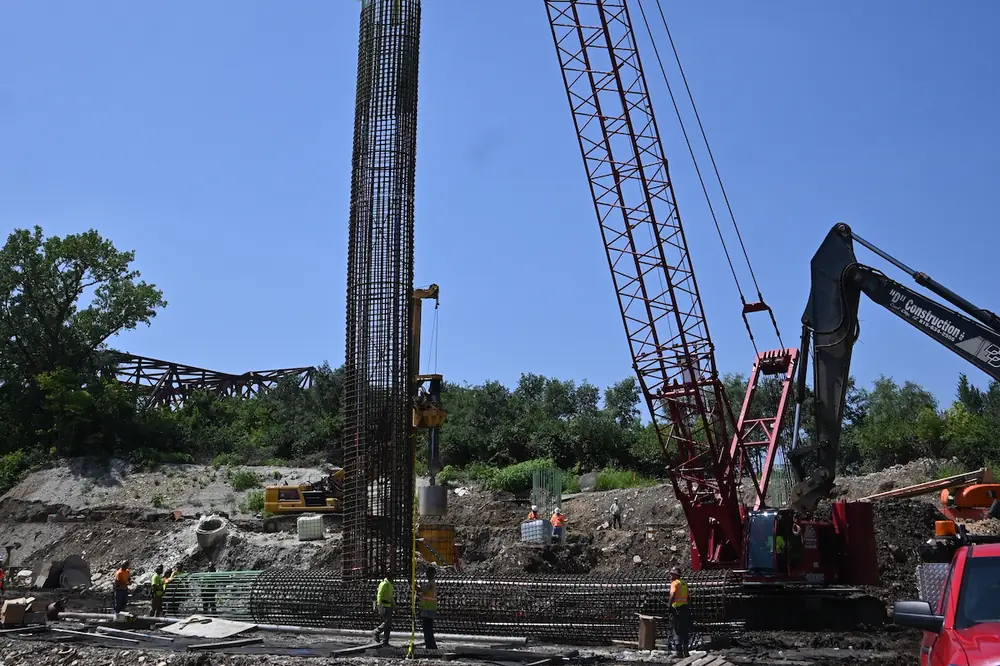

Faced with a growing population and an aging wastewater treatment facility nearing capacity, the City of Redmond, Oregon, decided to build the environmentally friendly Redmond Wetlands Complex, combining natural treatment technology with recreational amenities for the community.
The decision has led to the largest infrastructure project in Redmond’s history: an $88.8 million wastewater treatment complex encompassing lagoons, engineered wetlands, support facilities, and approximately 3 miles of new gravity interceptor pipeline.
Construction began in July 2025 and is scheduled for completion in late 2027. Rather than expand its existing mechanical treatment plant, the city is developing a natural system that will use engineered lagoons and wetlands to polish treated wastewater.
The additional capacity is intended to support continued residential and commercial growth through at least 2045 while protecting public health and the environment.
“The Redmond Wetlands Complex is the largest infrastructure project in the city’s history and one of the most innovative wastewater projects currently underway in Oregon,” said Julie Thiessen, Project Engineer for the City of Redmond. “As Redmond has grown, more than tripling in population since 2000, our existing wastewater treatment system is approaching capacity.”

| Your local Volvo Construction Equipment dealer |
|---|
| Tyler Equipment |
The new facility is being constructed at a separate location, allowing Redmond’s existing wastewater plant to remain operational throughout the work. Once construction is complete, the new interceptor pipeline will connect the existing collection system with the wetlands complex.
The overall project includes approximately 36 acres of treatment lagoons, 90 acres of treatment wetlands, and another 60 acres of disposal wetlands. It also includes new headworks and disinfection facilities, maintenance and operations buildings, and the interceptor pipeline.
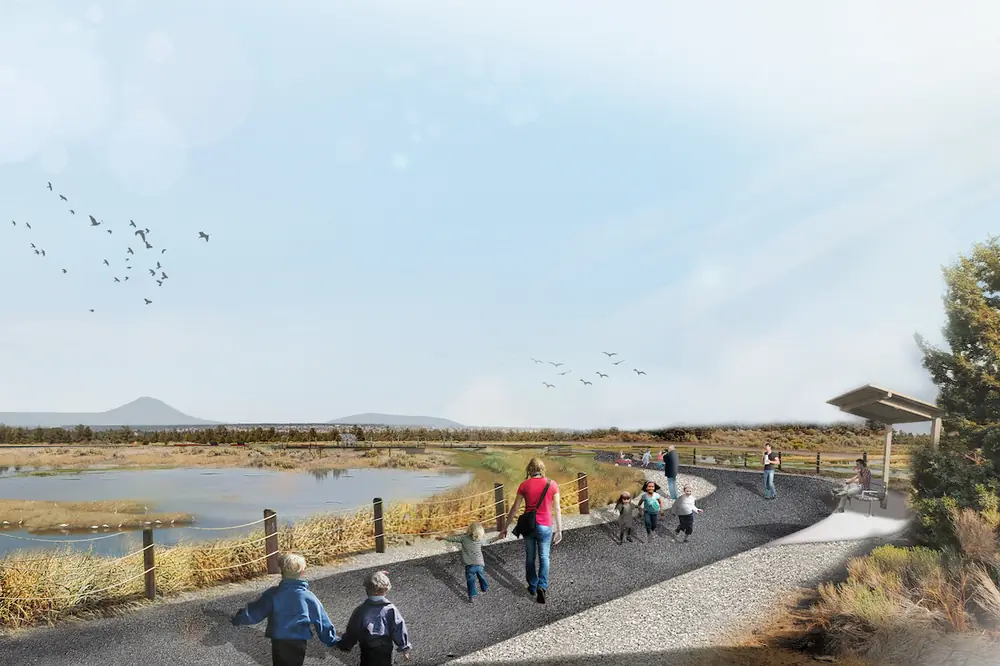
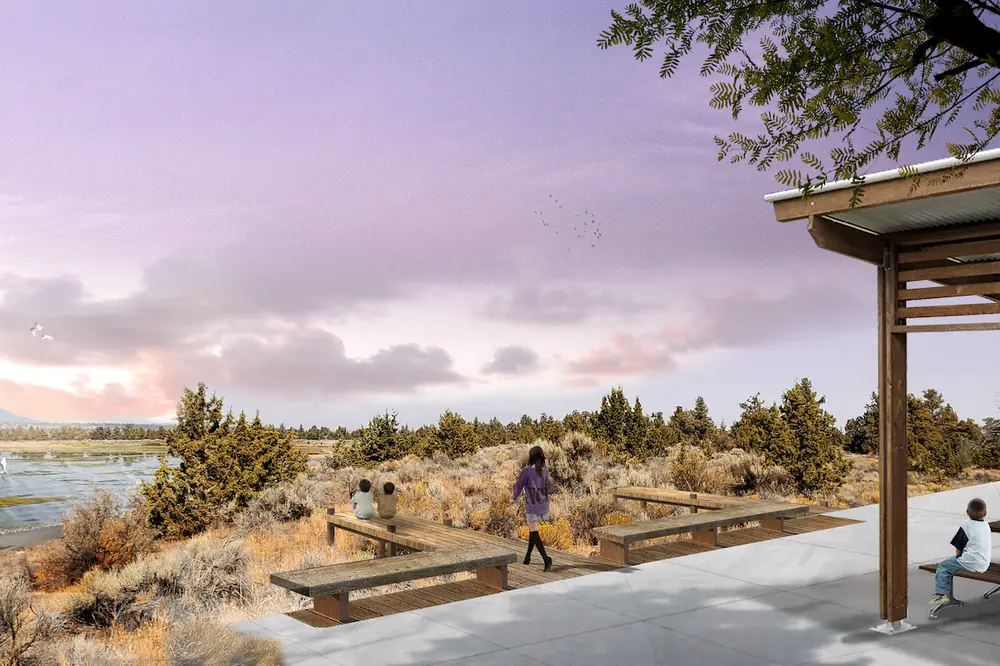
Future public improvements will add approximately 6.5 miles of ADA-accessible trails, along with educational opportunities and public open space.
The project is being designed with room for future expansion, giving Redmond the flexibility to respond to additional growth beyond its immediate needs. The regional system may also create opportunities for neighboring communities to connect in the future.

| Your local Esco Corporation dealer |
|---|
| Genalco |
“The city is transitioning to a natural treatment system that uses engineered lagoons and wetlands to polish treated wastewater,” said ShanRae Hawkins, Public Outreach and Communications Specialist for the Redmond Wetlands Project. “It not only expands wastewater capacity but also creates wildlife habitat, recreational opportunities, and long-term community benefits.”
Those overlapping objectives influenced the project from its earliest planning and design stages. Engineers, environmental specialists, landscape architects, and other project partners had to coordinate the treatment system with habitat, public access, and educational features.
“The city viewed this as much more than a wastewater project,” Hawkins said. “The goal was to create infrastructure that serves multiple community purposes by expanding treatment capacity while restoring habitat, creating public open space, and providing educational opportunities.”
Given the project’s scale and technical complexity, the city selected a best value alternative procurement process. The method allowed Redmond to evaluate proposers on more than price. Qualifications, technical expertise, project approach, and experience delivering complex infrastructure projects were also considered.

| Your local Case Construction Equipment Inc dealer |
|---|
| Beauregard Equipment |
| Monroe Tractor |
The city determined that selecting the contractor offering the strongest overall value would provide greater long-term benefits than making an award based solely on the lowest bid.
Taylor Northwest of Bend, Oregon, serves as general contractor. Anderson Perry of La Grande, Oregon, is providing design, civil and environmental engineering, construction management, and construction engineering and inspection services.
The project is financed through the Clean Water State Revolving Fund, administered by the Oregon Department of Environmental Quality. Construction remains on schedule and within budget, according to the city, which continues to monitor progress and costs.
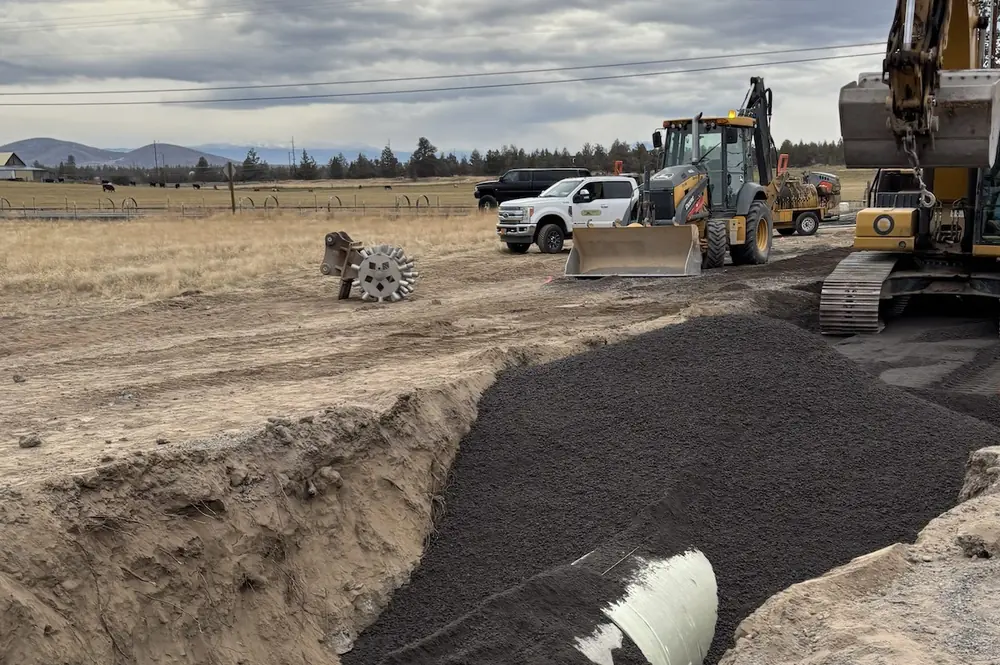
Several major milestones have already been achieved. Crews completed the drilling and blasting required to prepare the site and installed approximately 75 percent of the new 48-inch gravity interceptor pipeline.

| Your local Hyundai dealer |
|---|
| Equipment East |
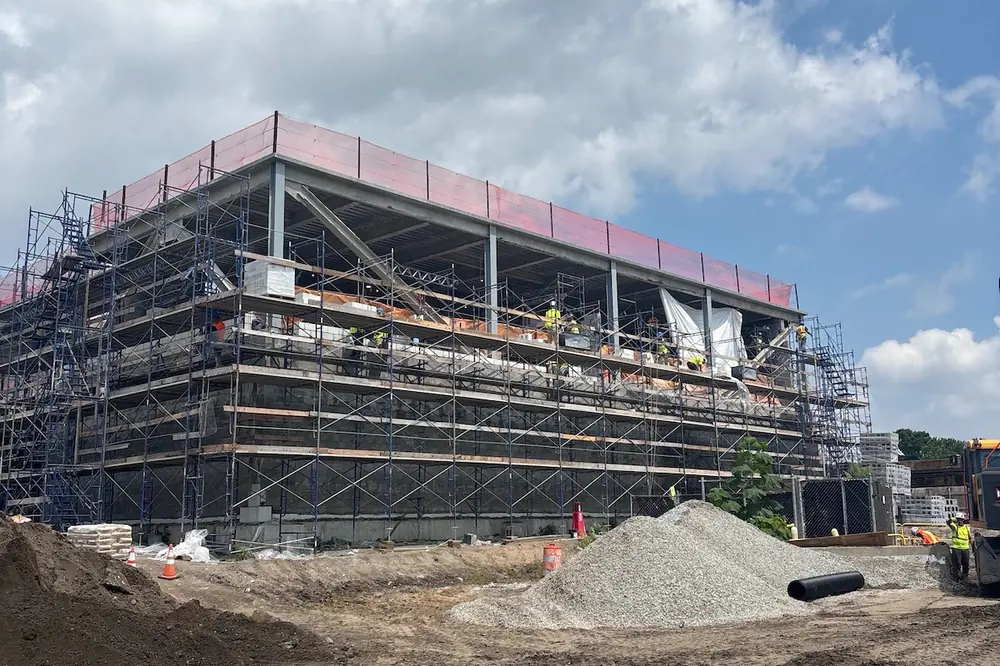
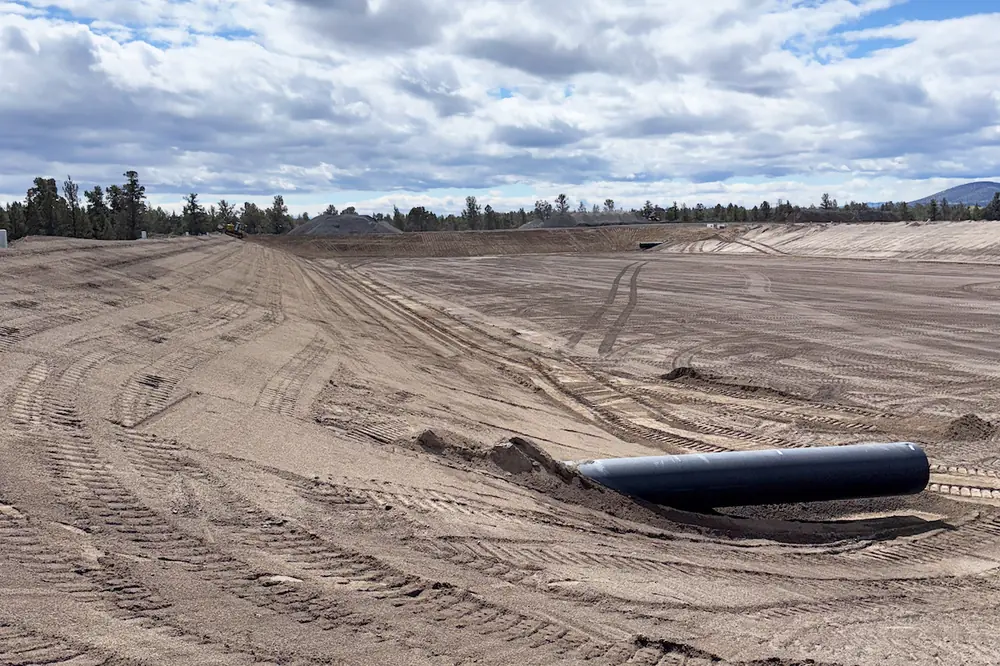
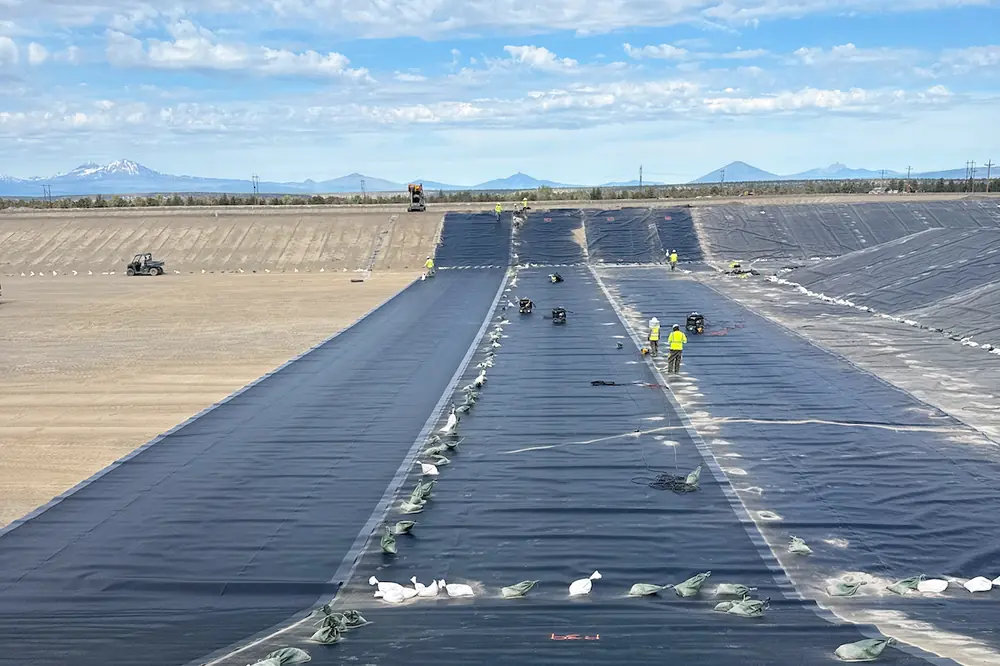
The Main Division Building has been enclosed, exterior siding is complete, and interior construction is underway. At the treatment site, crews are preparing the lagoons for liner installation while continuing to shape the engineered wetlands and construct dikes.
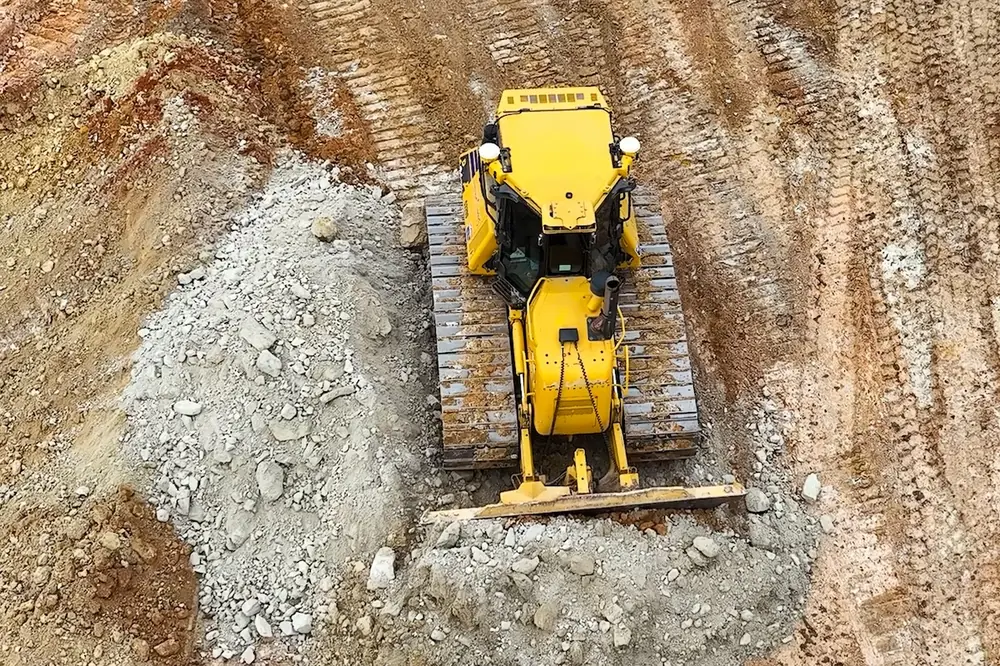
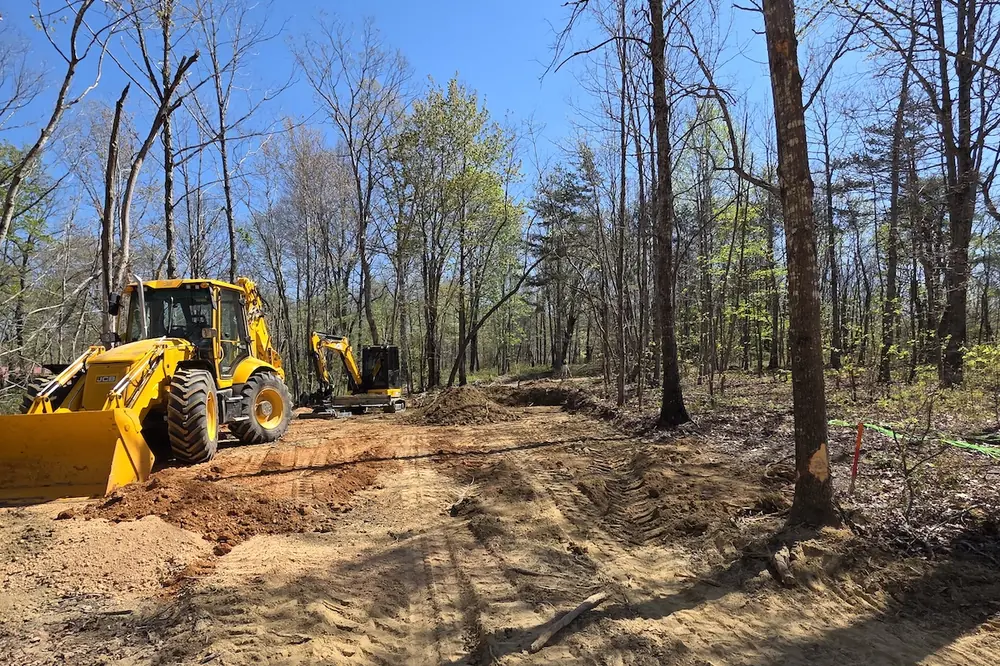
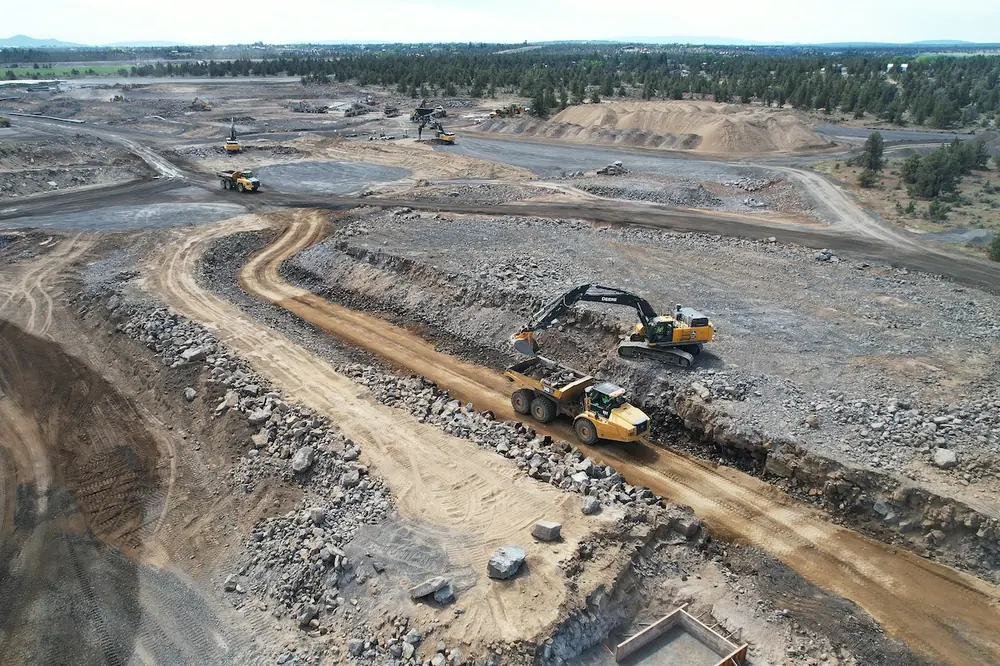
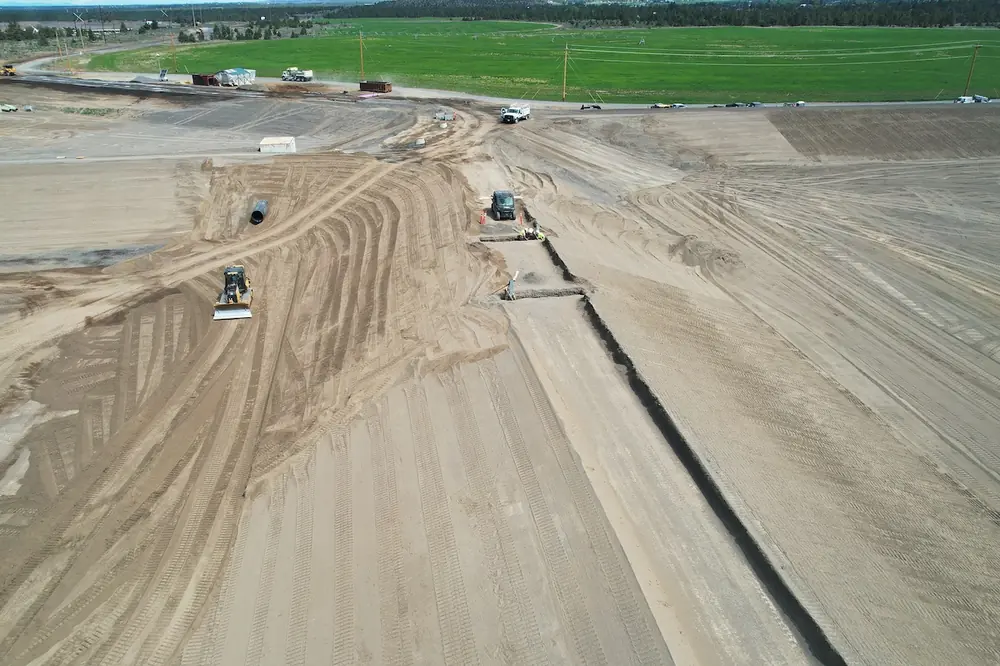
The underlying geology has presented one of the project’s defining construction conditions. Much of the central Oregon site consists of rock, requiring drilling and blasting before crews could excavate and grade the lagoon and wetland areas.
Instead of treating the excavated rock solely as material to be removed, the project team developed a balanced earthwork plan that allows it to be processed and reused.
“The site is almost all rock, as most of central Oregon is,” Thiessen said. “While it requires drilling and blasting, the site is able to produce all the aggregate products needed for everything from lagoon and wetland dikes to road base and trench backfill.”

| Your local Trimble Construction Division dealer |
|---|
| SITECH Northeast |
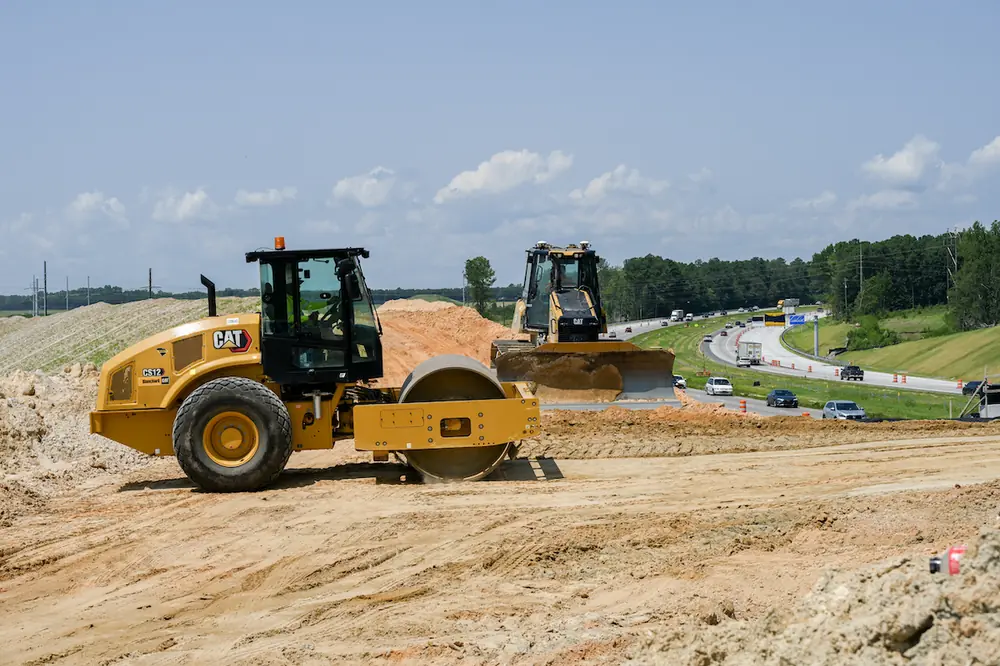
Aggregate produced from the excavated pond areas is being incorporated into construction throughout the site. The material is used to form wetland and lagoon dikes, build road base, and backfill utility trenches.
Designing the site around balanced earthwork means aggregate does not need to be imported for those applications. It also reduces the amount of excavated rock that must be hauled away.
For the contractor, the approach converts a difficult subsurface condition into an onsite supply of construction material. Although drilling, blasting, crushing, and processing add work during the early phases, the resulting aggregate supports later stages and limits dependence on offsite material sources.
The strategy also contributes to the project’s environmental goals by reducing hauling activity and making productive use of material generated by the excavation.

| Your local Wirtgen America dealer |
|---|
| WI Clark |
| Dobbs Equipment (SC) |
| United Construction & Forestry |
Although the completed wetlands will eventually resemble a natural landscape, their construction depends on controlled grading, engineered materials, and precise hydraulic relationships.
Crews begin by shaping the individual wetland cells and constructing dikes with aggregate produced on site. Once the ponds and dikes reach the required elevations and configurations, a bentonite liner is installed. Topsoil is then placed over the liner before wetland vegetation is planted.
Bentonite serves as an important component of the treatment cells by limiting seepage and helping retain water within the designed system.
The wetlands are connected by a network of pipes and control structures. Weirs regulate the depth of water in each cell while maintaining the hydraulic grade line needed to move flow from the treatment lagoons through the wetland system and into the disposal wetlands.
| Your local Volvo Construction Equipment dealer |
|---|
| Tyler Equipment |
Elevation control is critical because each cell must be built in relation to the cells before and after it. Variations in dike elevations, final grading, piping, liner placement, or weir installation could affect water movement and treatment performance.
Unlike a conventional mechanical plant, much of Redmond’s treatment process will depend on the shape of the land, controlled water movement, and established vegetation. The project therefore combines heavy civil earthwork with environmental construction, with the dikes, liners, pipes, control structures, topsoil, and plants functioning together as treatment infrastructure.
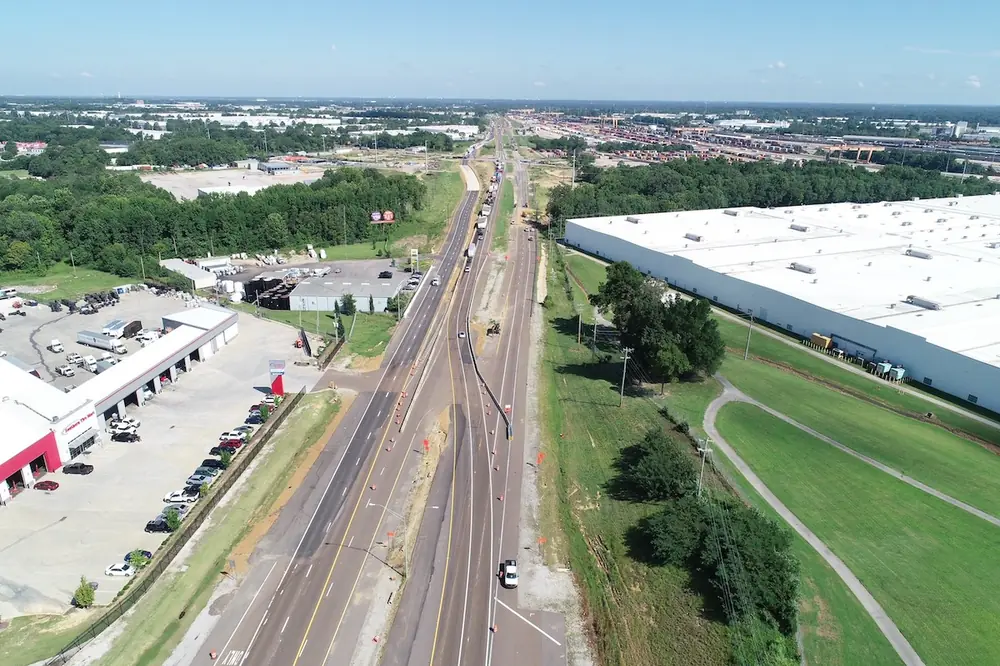
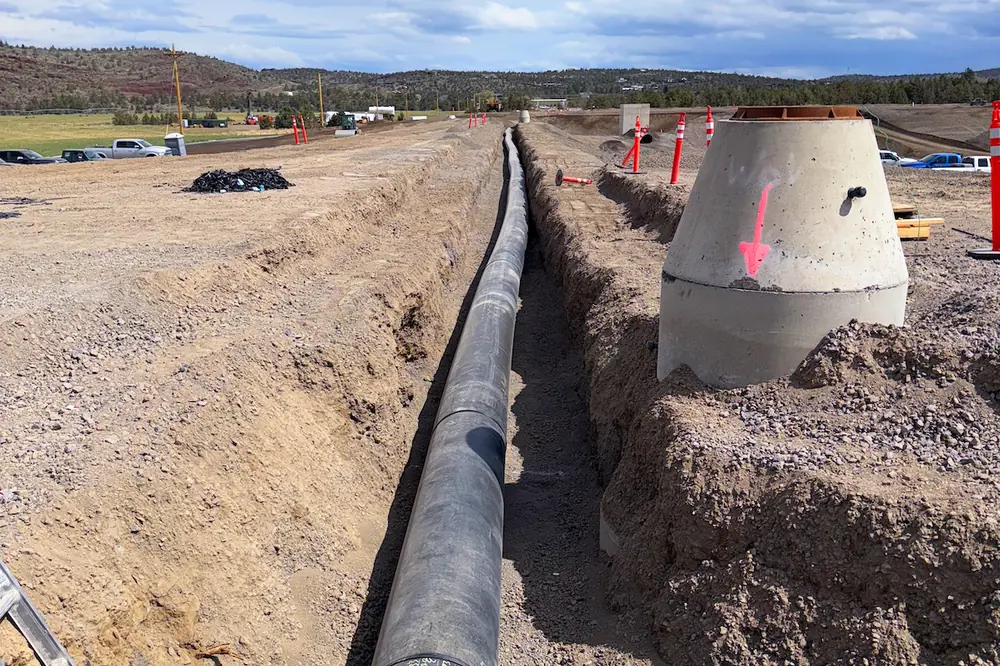
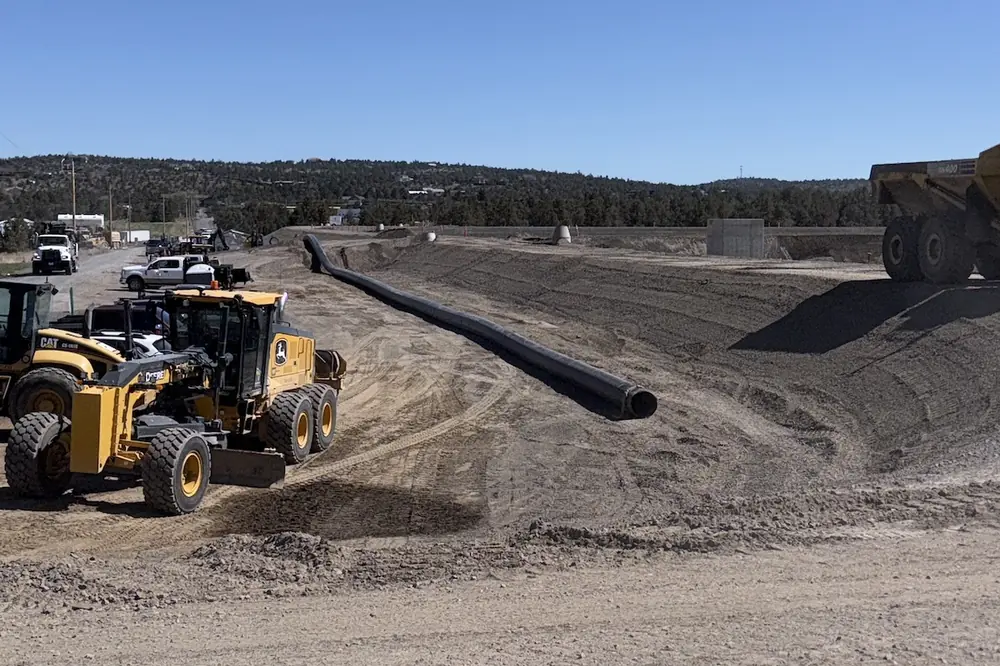
Away from the main wetlands site, crews are installing approximately 3 miles of 48-inch gravity interceptor pipeline. The new line will provide the critical connection between Redmond’s existing wastewater collection system and the new treatment complex.
Its installation has been among the project’s most demanding construction elements.
| Your local Volvo Construction Equipment dealer |
|---|
| Tyler Equipment |
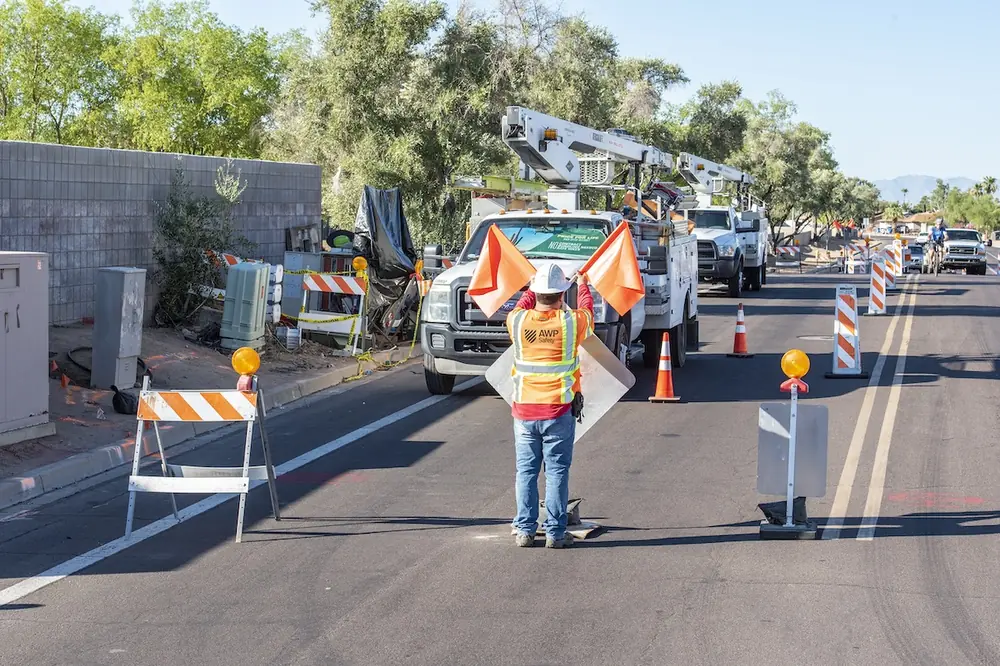
“One of the biggest construction challenges has been installing the new 48-inch gravity interceptor pipeline through high-traffic areas while minimizing impacts to nearby residents, businesses, and the public,” Hawkins said.
Careful sequencing and traffic management have been necessary to maintain access as pipeline construction advances. Crews have also coordinated the installation with roadway improvements, existing utilities, and infrastructure that must remain operational.
Because the interceptor relies on gravity, its alignment and elevation must be controlled throughout the 3-mile route. Existing utility conflicts could not simply be avoided by raising or lowering the new line without considering the required hydraulic grade.
Several crossing locations therefore required vertical realignment of existing utilities before the 48-inch pipe could be installed. Crews also reworked portions of existing piping where the new alignment conflicted with lines serving the active wastewater system.
| Your local Volvo Construction Equipment dealer |
|---|
| Tyler Equipment |
These adjustments allowed the existing facilities and pipelines to remain in service while making space for the new interceptor.
The city provided the contractor with a list of approved pipe materials evaluated for long-term durability, performance, and life cycle value. Taylor Northwest selected fiberglass pipe based on its availability and relative cost compared with the other approved materials.
The combination of large-diameter fiberglass pipe, gravity-flow requirements, utility crossings, roadway work, and traffic constraints has required close coordination among the contractor, engineers, utility owners, and the city.
With approximately 75 percent of the pipeline installed, work is continuing on the remaining sections and future connections.
| Your local Volvo Construction Equipment dealer |
|---|
| Tyler Equipment |
Constructing the wetlands complex at a separate location has allowed the existing wastewater facility to continue operating while the new system takes shape.
The interceptor will not be placed into service until the wetlands complex is complete and ready to receive flow. Until then, the existing plant and its associated pipelines will continue serving Redmond.
This arrangement avoids many of the restrictions that would come with rebuilding a treatment system inside an active plant. Crews can advance the lagoons, wetlands, buildings, and pipeline concurrently without working around ongoing treatment activities at every stage.
The strategy provides crews with greater working room while placing added importance on careful planning for the final interceptor connection and commissioning of the new system.
| Your local Volvo Construction Equipment dealer |
|---|
| Tyler Equipment |
The project team highlighted several practical considerations that have shaped the work to date.
At the treatment site, extensive rock conditions required drilling and blasting, but the balanced earthwork design allows excavated material to be processed and reused as aggregate for lagoon and wetland dikes, road base, and trench backfill. According to the team, the approach eliminates the need to import material for those applications.
Hydraulic control has also been a central construction consideration. Project representatives explained that a network of pipes and control structures connects the wetland cells, while weirs maintain the required water depth and hydraulic grade as flow moves through the system.
The interceptor work has required close coordination with existing infrastructure. The team reported that several utility crossings had to be vertically realigned before installation of the 48-inch pipe. Portions of existing piping were also reworked so the active facility and its associated pipelines could remain in operation.
| Your local Volvo Construction Equipment dealer |
|---|
| Tyler Equipment |
The team also noted that constructing the new complex at a separate location has allowed Redmond’s existing wastewater plant to continue operating throughout the project. When construction is complete, the interceptor will connect the new complex to the existing system and will be placed into service.
During the remaining construction period, crews will continue installing the interceptor, complete construction of the facility buildings, place lagoon liners, finish shaping the wetland cells and dikes, and advance the control structures and piping that will guide water through the system.
Wetland vegetation and future public improvements will further transform the property as the project approaches anticipated completion in late 2027. Once operational, the complex will provide the wastewater capacity needed to support Redmond through at least 2045, while allowing for future expansion and potential regional connections.
The completed facility will also create habitat, public open space, trails, and educational opportunities, demonstrating how difficult geology, heavy civil construction, environmental design, and long-term community planning can come together in one infrastructure project.
| Your local Volvo Construction Equipment dealer |
|---|
| Tyler Equipment |
- Owner: City of Redmond, Oregon
- General Contractor: Taylor Northwest, Bend, Oregon
- Construction Manager: Anderson Perry, La Grande, Oregon
- Design Engineer: Anderson Perry
- Civil Engineer: Anderson Perry
- Environmental Engineer: Anderson Perry
- Construction Engineering and Inspection: Anderson Perry
- Major Subcontractor: Kirby Nagelhout, Bend, Oregon
- Landscape Architect: Walker Macy, Portland, Oregon
- Public Outreach Consultant: StingRay Communications, Oregon
- Architect: Steele Associates Architects, Bend, Oregon
- Educational Exhibits and Wayfinding: Aldrich Pears Associates, Vancouver, British Columbia, Canada Editor’s Note: This story is in memory of Debra Wood, longtime writer for Associated Construction Publications (ACP).