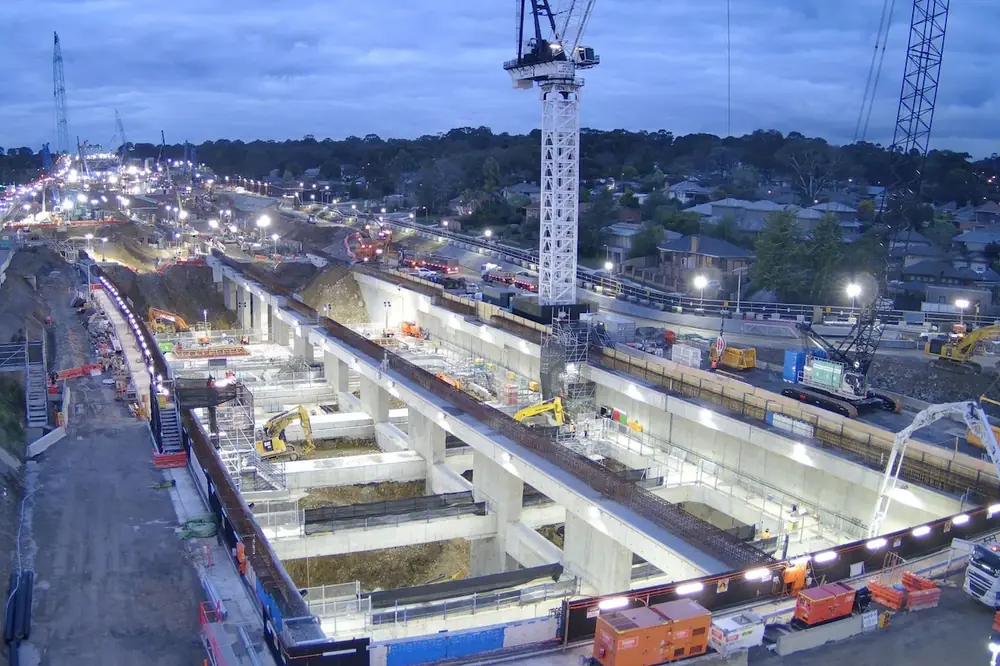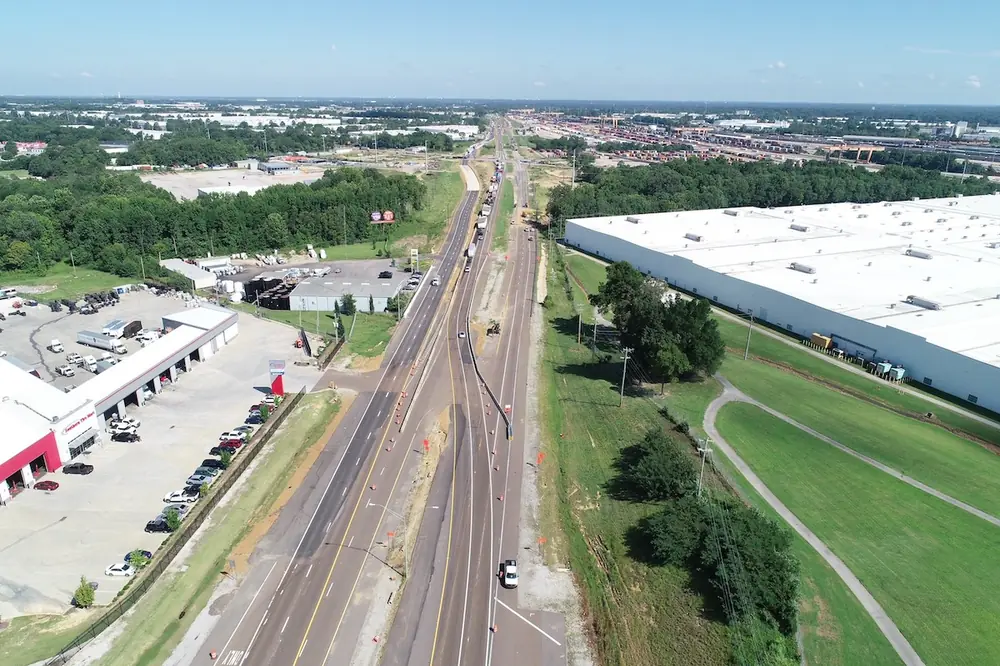
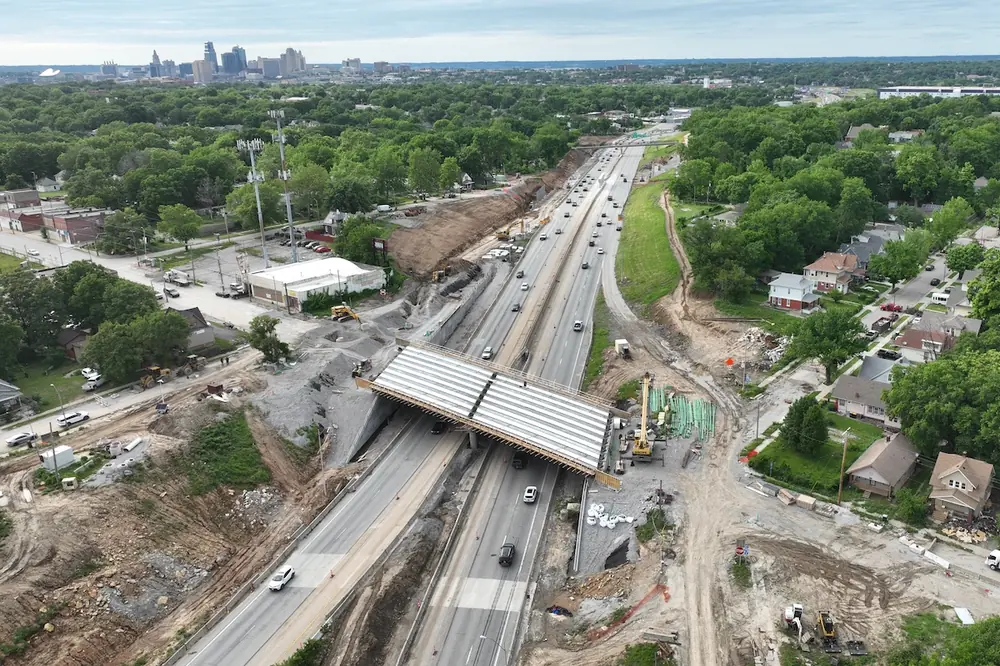
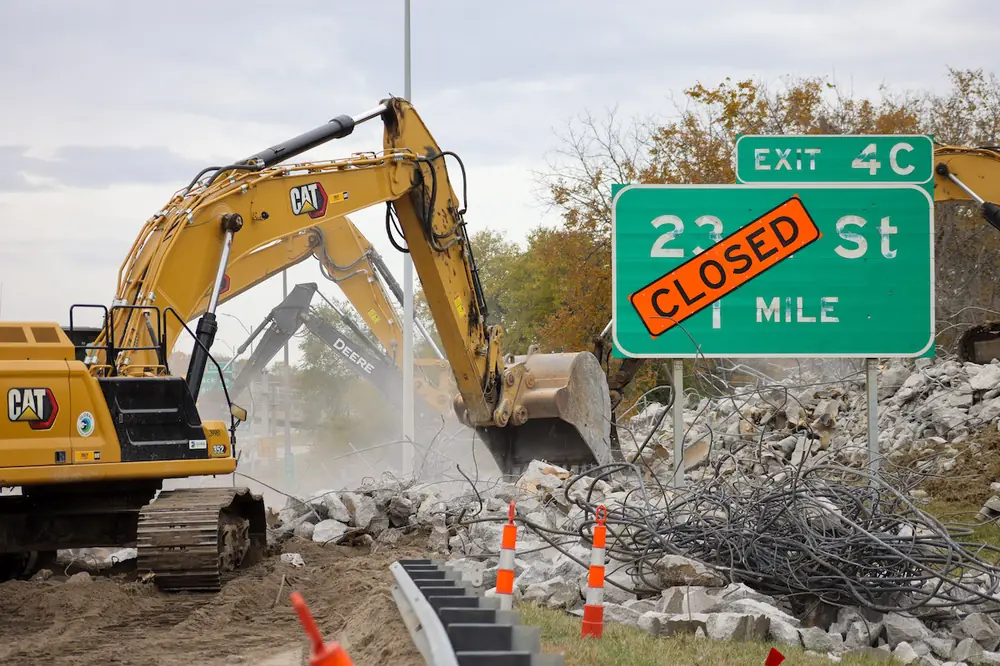
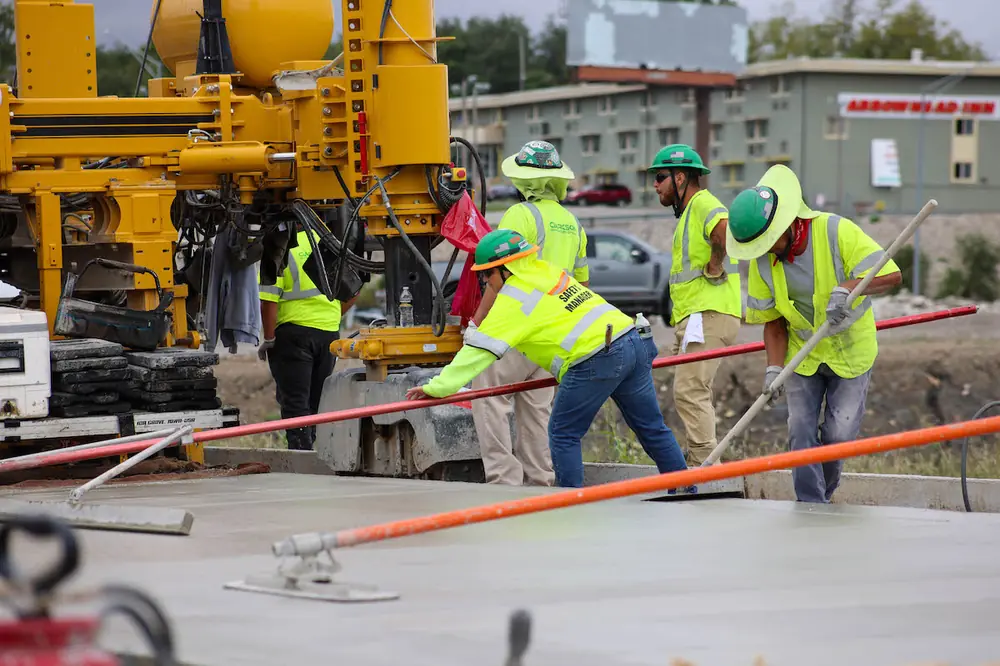
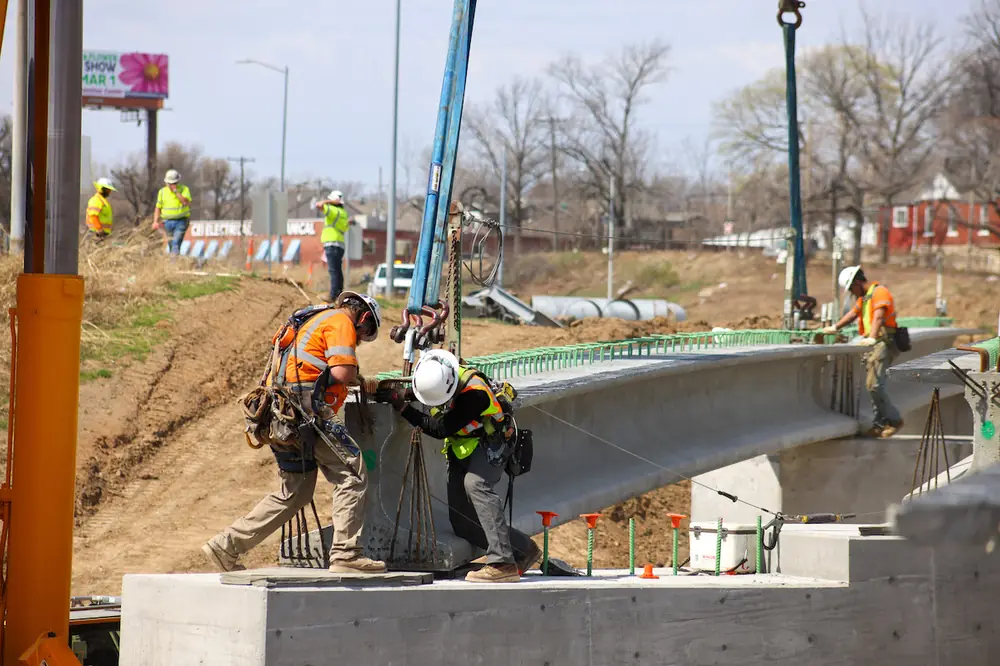

Interstate 70 (I-70) stretches more than 2,000 miles from Maryland to Utah, passing through major cities including Kansas City, Missouri. In the Kansas City region, the interstate dates back to the late 1950s and early 1960s. To modernize this aging infrastructure and accommodate the needs of today’s traveling public, the Missouri Department of Transportation (MoDOT) and the joint venture of Clarkson Construction and Radmacher Brothers Excavating are advancing the Improve I-70 KC project.
The I-70 corridor around Kansas City has an average daily traffic of approximately 105,000. Those using the interstate include locals, regional traffic driving to and from Kansas City, and drivers passing through to points farther east and west.
On Sundays in the fall and early winter, the traffic also includes Kansas City Chiefs football fans, as the team’s home — Arrowhead Stadium — is just off of I-70.
Much of the infrastructure in the corridor is at the end of its life span and was not designed to accommodate today’s traffic demands.
“The geometrics were designed for the 1960s, and the corridor has narrow shoulders,” MoDOT Project Director James Pflum said. “The crash rate is elevated, and there have been pedestrian fatalities as people attempt to cross the six-lane interstate.”

| Your local Volvo Construction Equipment dealer |
|---|
| Tyler Equipment |
MoDOT expects the project to improve neighborhood connectivity, in addition to updating the infrastructure.
The project scope includes multiple major elements.
The team is adding a fourth eastbound lane for roughly 5 miles. MoDOT would have liked to add a fourth lane in the westbound direction as well, but there were not enough funds to add that lane.
“Our goal was to maximize the improvements within the funds we had,” Pflum said. “This is one of the reasons we wanted the project to be delivered via design-build [DB]. The DB team was able to develop a plan that offered the best value.”

| Your local Case Construction Equipment Inc dealer |
|---|
| Beauregard Equipment |
| Monroe Tractor |
“There was more value in adding an eastbound lane due to the logistics of the site, as it offered more short- and long-term impact,” said Clarkson-Radmacher Joint Venture Project Manager Jonathan Baker, who is serving as the lead for the design-build team.
I-70 west goes toward downtown Kansas City. Widening the interstate in that area would have brought fewer benefits to the traveling public.
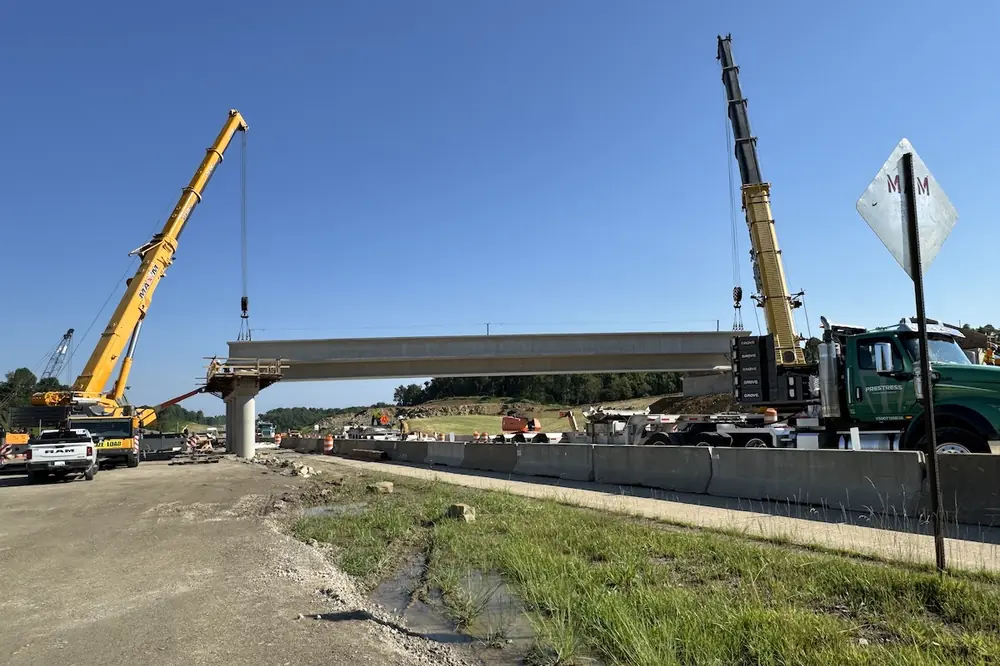
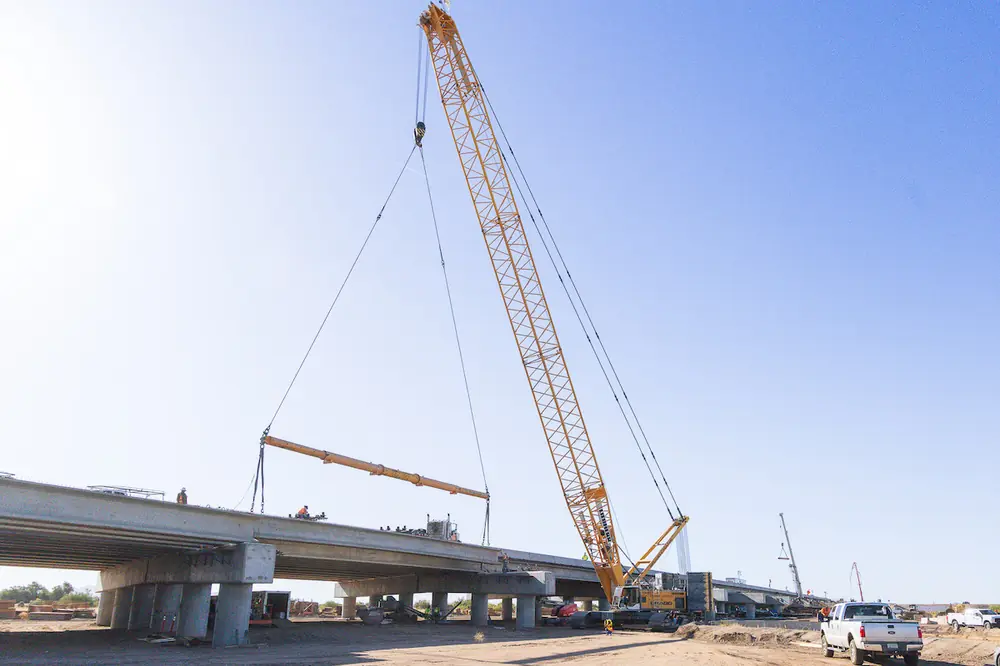
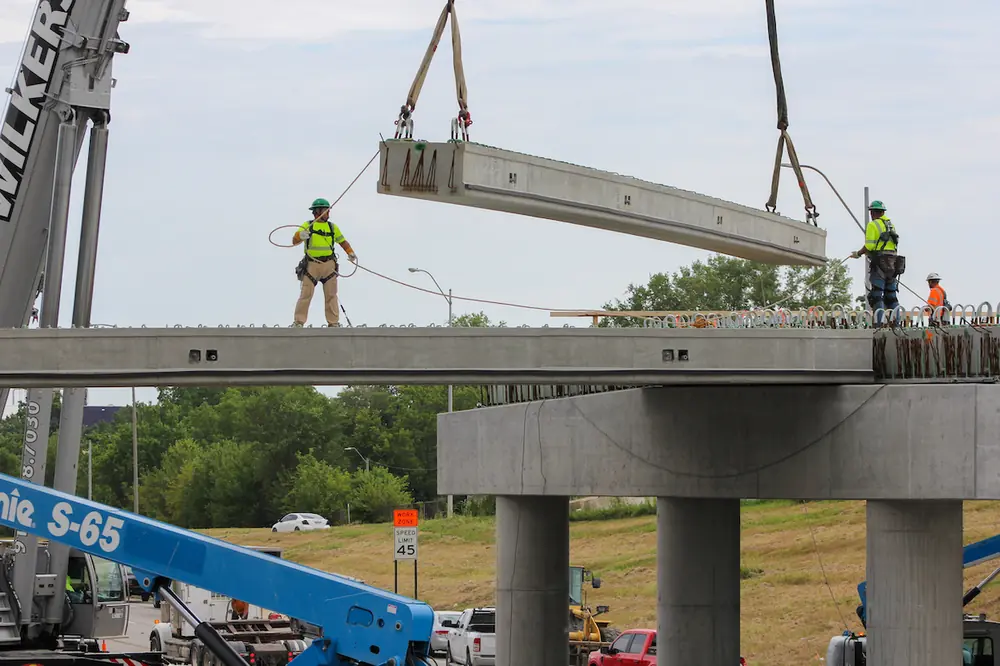
The project also includes replacing 15 bridges and rehabilitating another seven bridges.
All of the bridges are old and near the end of their life cycle, according to Baker. The team is also realigning the road, which affected some bridges. Others did not meet existing clearance requirements.

| Your local Hyundai dealer |
|---|
| Equipment East |
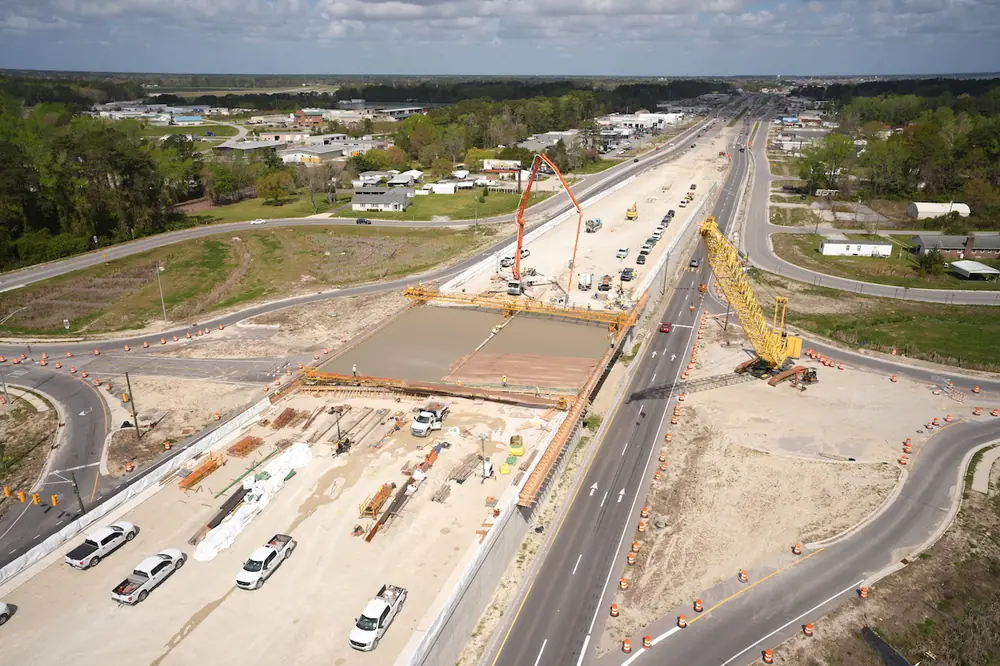
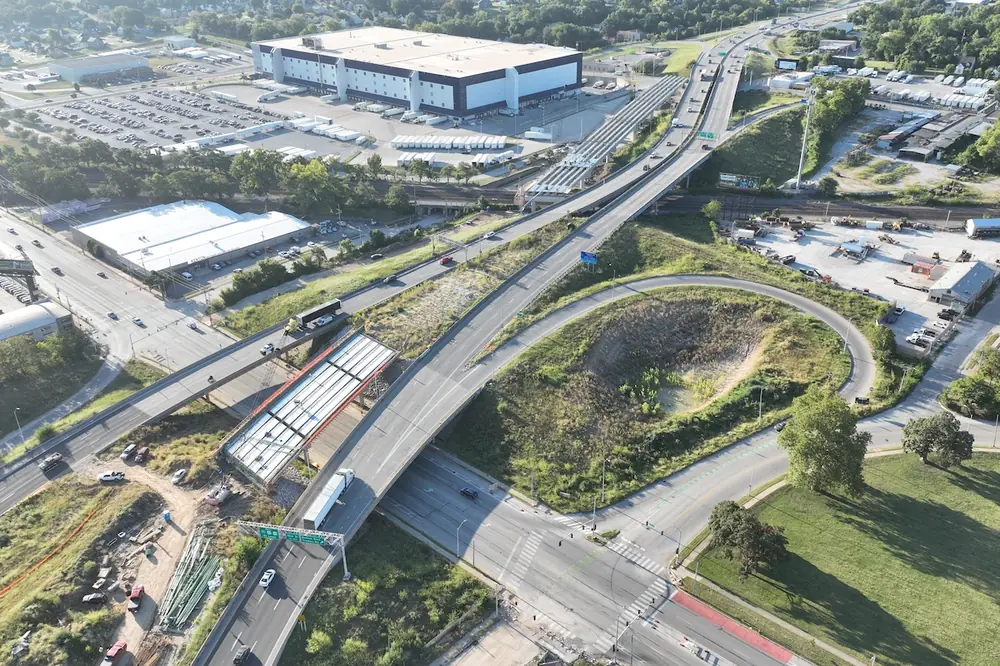
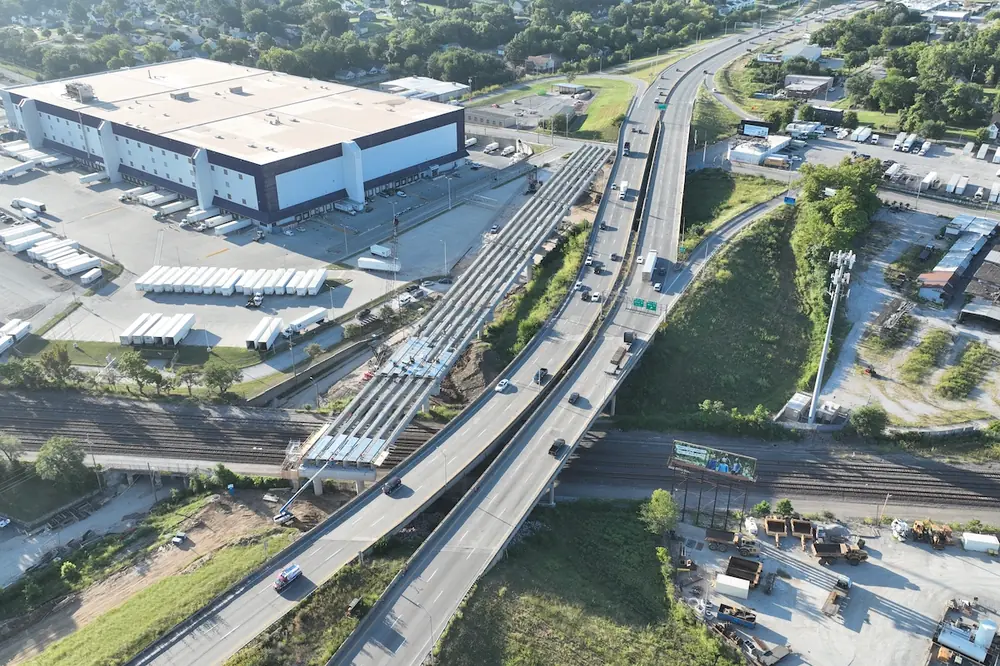
Two bridges are being converted into a single 1,000-foot-long bridge that will go over two roads and a railroad.
In that area, the team is changing the alignment to eliminate two significant curves that do not meet today’s standards. The change is expected to improve traffic flow and efficiency.
“There was a dirt plug previously but it didn’t fit the new alignment,” Baker said. “We considered putting in retaining walls but elected to install a continuous span based on the alignment and constructability.”
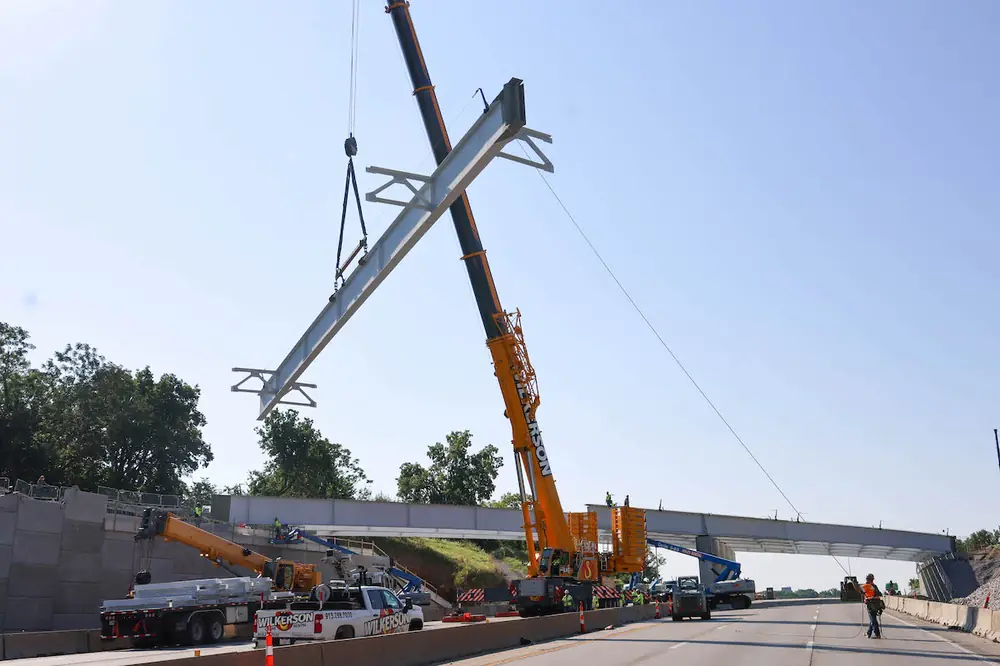
The work will also improve pedestrian and bicycle connectivity throughout the project area. Residential areas line both sides of I-70 through much of the corridor. To improve connections to and on both sides, the team is widening sidewalks and adding pedestrian paths on bridges. The team is adding some pedestrian bridges at strategic locations to improve connectivity where city streets are farther away.

| Your local Trimble Construction Division dealer |
|---|
| SITECH Northeast |
The team will also reconstruct sections of I-70 known as the Benton Curve and Jackson Curve.
“These curves are known for being tight based on how fast people drive through them,” Pflum said. “We’re softening the curves, which will make them safer to navigate at higher speeds.”
The joint venture anticipated needing to drill deep to reach suitable foundation material for the Truman Bridges. However, during the design phase, the team used investigative coring to get better information about underground materials.
“We got to 150 feet and still didn’t find rock,” Baker said. “This was unexpected and led our design team to reconsider how to develop a design foundation.”

| Your local Wirtgen America dealer |
|---|
| United Construction & Forestry |
| WI Clark |
The team found a dense sand layer at 100 to 120 feet down, which the geotechs were confident could be a good bearing foundation. After consulting with MoDOT to ensure the procedure would meet their criteria and standards, the joint venture moved forward and installed a large pipe pile foundation.
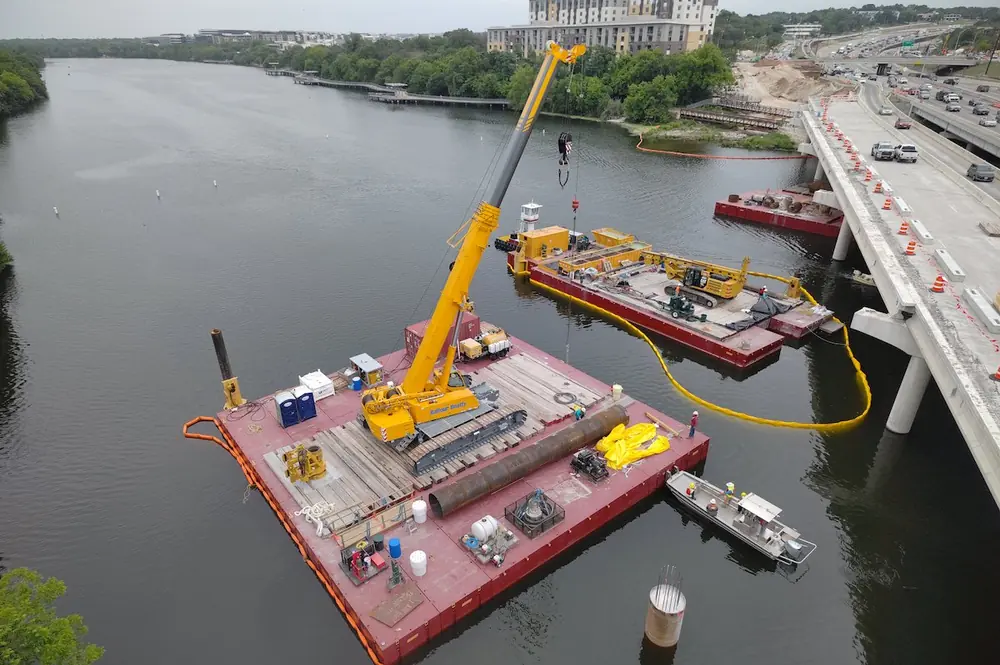
They drove a 48-inch steel pipe pile 100 feet into the ground. Meanwhile, they had to maintain traffic, which meant working in a confined space.
To drive the pipe, the team used an 87,000-pound ICE 110C Vibratory Driver/Extractor, which is a diesel hammer that they brought in from across the country.
According to the International Construction Equipment (ICE) website, the ICE 110C Vibratory Driver/Extractor was “selected for its ability to handle large‑diameter piles and perform reliably in Kansas City's notoriously tough subsurface conditions. … The ICE 110C is being used to drive [48‑inch] steel pipe piles, which will later be filled with concrete and rebar to form the deep foundations supporting the new and rehabilitated bridges.”

| Your local Esco Corporation dealer |
|---|
| Genalco |
Another challenging aspect of the project occurred around the Benton Curve area. It required a significant amount of fill for the new alignment.
“Our geotechs were concerned about the 6 to 12 inches of settlement, which they anticipated could take 20-plus years to occur,” Baker said. “To speed up the timeframe, we used wick drain to absorb the mixture.”
The drains sped up the settlement process dramatically, as settlement time in most cases was a matter of weeks.
Building over a railroad has also been a challenge. From the early stages of the project, the team has engaged with the Kansas City Terminal Railway.
| Your local Volvo Construction Equipment dealer |
|---|
| Tyler Equipment |
“We have to coordinate track windows and share plan submittals for review,” Baker said. “Coordinating with third parties is an ongoing challenge.”
Finally, working in a tight urban corridor has posed a challenge. The team has striven to maximize the existing right of way for work areas and laydown areas.
“We have to plan ahead in terms of material deliveries,” Baker said. “We’ve taken deliveries off site when needed.”
The tight area also leads to a need for tight traffic control. The team is closing I-70 for 11 months, starting January 2027.
| Your local Volvo Construction Equipment dealer |
|---|
| Tyler Equipment |
“We felt this would make construction proceed more efficiently and impact the public less so than if we continued to work around live traffic,” Pflum said.
Clarkson Construction and Radmacher had not worked together before this project. However, Baker noted that Clarkson was familiar with Radmacher, as both local contractors have completed a fair amount of MoDOT projects.
“They bring good attributes and have made the JV beneficial,” Baker said. “It’s been a good partnership and has allowed us to combine resources to get the job done.”
The construction budget for the project is $222 million. The project is on budget, though the city of Kansas City has added water and sewer work, which has increased costs.
| Your local Volvo Construction Equipment dealer |
|---|
| Tyler Equipment |
The project was originally being financed via a 90/10 split, with the federal government paying the bulk of the tab and the state government paying the remainder.
“We applied for and received a grant from the federal government due to the innovations we’re using on this project, so they’re paying 95 percent of the costs,” Pflum said.
“We vetted this project thoroughly in the pursuit phase,” Baker said, “and as we went through design work with MoDOT, we came up with solutions for things that were unknown.”
This has enabled the team to keep the project on budget, according to Baker.
| Your local Volvo Construction Equipment dealer |
|---|
| Tyler Equipment |
Work on the project began in spring 2025 and is scheduled to conclude on time in spring 2028. The project has a three-season schedule, with 2028 focusing primarily on closeout. So far, keeping the project on schedule has been challenging.
A fair number of elements cannot be constructed until the highway is closed. In addition, Kansas City hosted the World Cup, and MoDOT did not want to interfere with the event. So, the project team ensured there would be no interstate impacts during that time.
Work is expected to take place through the winter, presuming there are no blizzards.
When the project is complete, Pflum said the corridor's maintenance cycle will reset for the next 20 years. Plus, drivers will experience increased reliability and less congestion, while pedestrians will have more options to cross the interstate.
| Your local Volvo Construction Equipment dealer |
|---|
| Tyler Equipment |
- Owner: Missouri Department of Transportation
- General Contractor (Joint Venture): Clarkson Construction, Kansas City, Missouri; Radmacher Brothers Excavating, Pleasant Hill, Missouri