
The postmortem has long been a standard way for construction teams to learn from a project. Once the work is complete, a team gathers to look back at what went well, what didn’t, and what should be done differently next time. That makes sense. But what if the project lasts two or three years?n
On a long construction project, waiting until the end to formally consider what could have been done better means accepting that mistakes, inefficiencies, and poor practices may continue far longer than necessary.
By the time lessons are captured in a postmortem, many of the people involved may have moved on. Memories are sometimes faulty, particularly when trying to recall the early phases of a multiyear project. And, more importantly, the opportunity to improve the process and outcome for that particular project has passed.
The issue isn’t whether postmortems are valuable. It’s whether the end of a project is the right time to conduct the review and learn.
When should construction teams conduct a review?

| Your local Astec dealer |
|---|
| Closner Equipment Co Inc |
The answer depends on what they’re trying to learn. Some lessons become apparent only when a project is complete. Others can be identified within months, weeks, or even days. If something can be learned today and used to improve tomorrow’s work, there’s little benefit in waiting until the project is over to apply a fix.
Construction projects generate information constantly. Plans are made. Work is completed or isn’t. Constraints appear. Commitments prove realistic or unrealistic. Teams discover better ways to coordinate and sequence work. Assumptions are tested against what actually happens on the job site.
Each of these experiences creates an opportunity to learn. The challenge is to build review points into the work frequently enough that teams can correct course while there’s still time to do so.
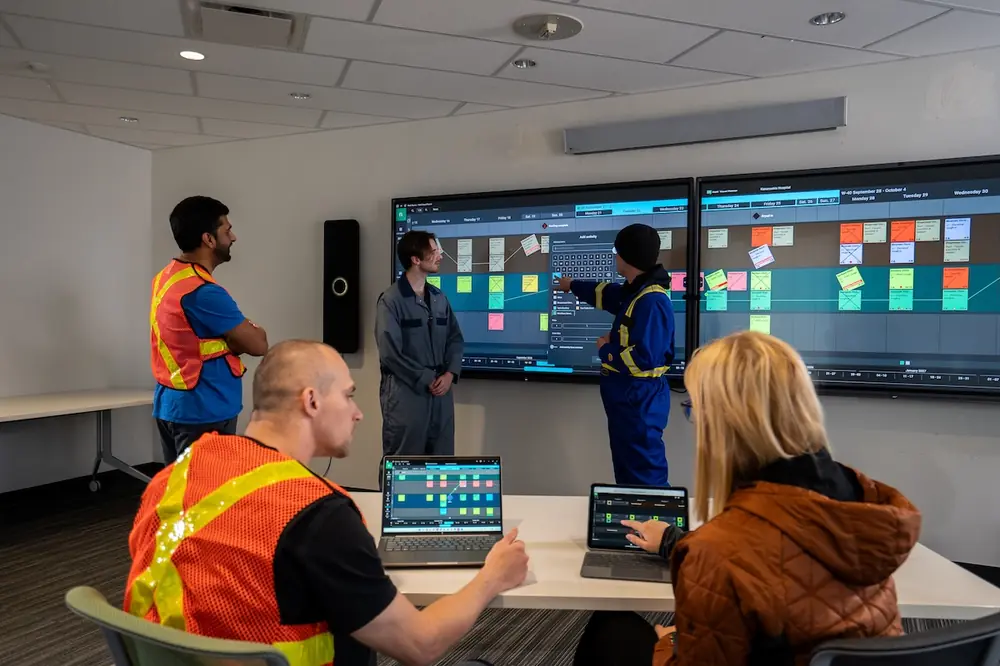
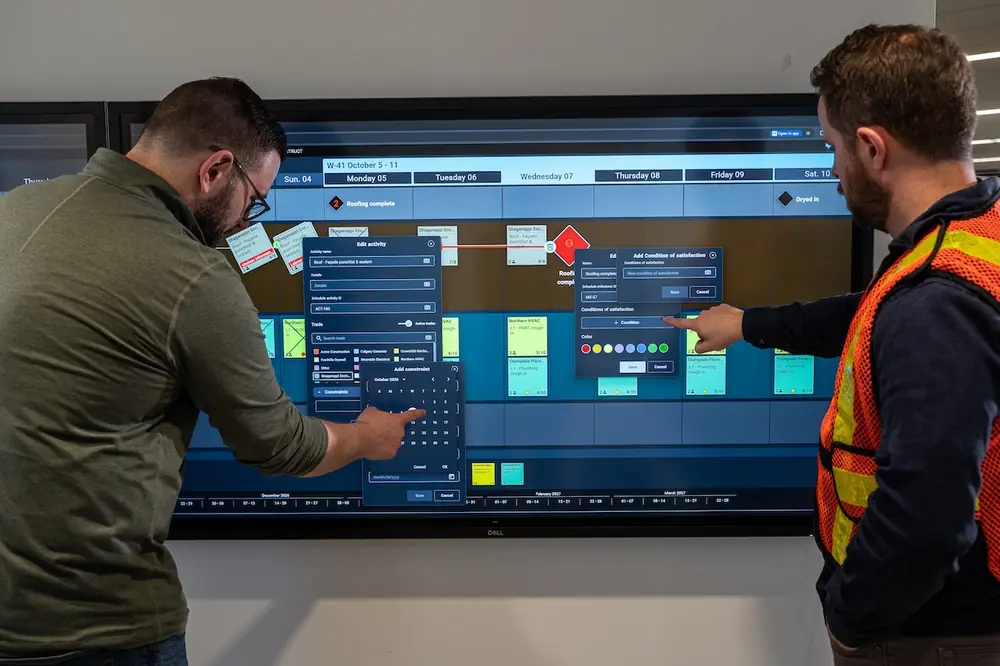
Regular collaborative planning creates a natural cycle of planning, doing, reviewing, and adjusting.

| Your local Atlas Copco CMT USA dealer |
|---|
| Cooper Equipment Co |
| Romco Equipment Co |
| Bane Machinery |
| Closner Equipment Co Inc |
| Central Texas Equipment |
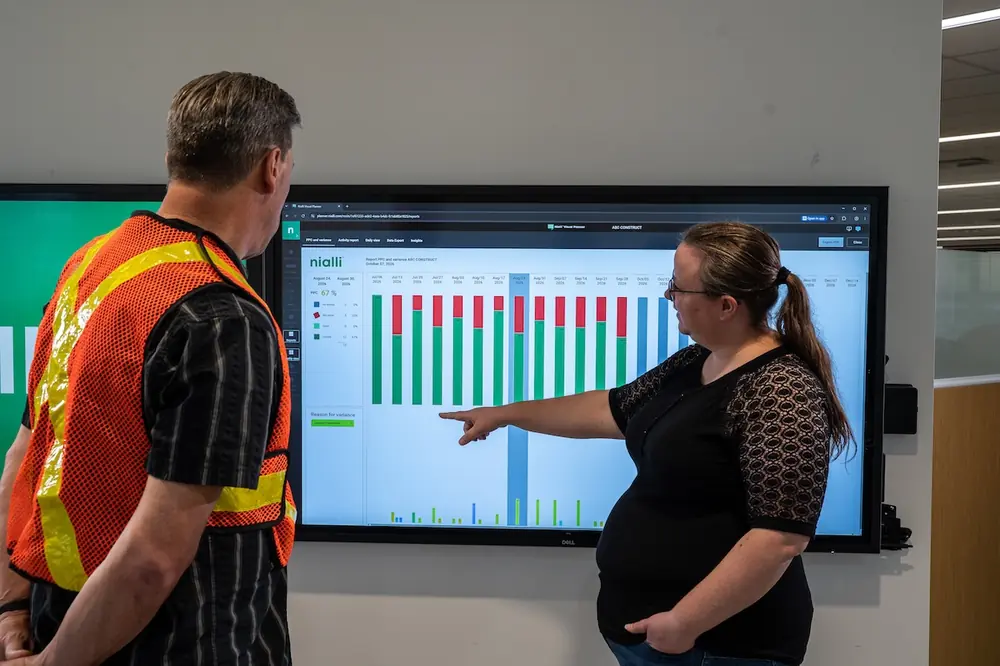
The Last Planner System is a good example of a framework for this process. Its regular planning cadence allows teams to compare what they expected to happen with what actually happened, understand the reasons for differences, and use that knowledge to improve subsequent plans.
The important point is that the planning process itself creates repeated opportunities for reflection and early course correction. If a team discovers six months into a three-year project that something in its approach isn’t working, there’s potentially enormous value in making a change then, rather than documenting the problem two-and-a-half years later. This changes learning from something that happens after the work into something that happens as part of the work.
Every improvement doesn’t need to be significant. In fact, one of the benefits of frequent review is that improvement can become everyone’s responsibility rather than something reserved for major initiatives.
The people closest to the work may be in the best position to see an unnecessary step, a recurring constraint, a coordination problem, or simply a better way of doing something. They need to be taught to look for those opportunities and encouraged to act on them.

| Your local Takeuchi Mfg Ltd dealer |
|---|
| Kirby-Smith Machinery |
| Nueces Power Equipment |
Small wins matter. An improvement that saves a little time, eliminates a source of frustration, or makes a plan more reliable may not transform a project on its own. But a steady stream of small improvements, made by many people over the course of a long project, can add up to substantial gains.
The objective is to make project improvement part of everyone’s work rather than something periodically imposed upon them.
There shouldn’t be just one review point.
Some things can be reviewed almost immediately. Did what we expected to happen actually happen? If not, why not? Is there something we can change in the next plan?

| Your local Broce Broom dealer |
|---|
| Nueces Power Equipment |
Other lessons will only become apparent over a longer period. A problem that looks like an isolated incident one week may reveal itself as a pattern when it occurs repeatedly over several weeks or months. And some opportunities for improvement really are best considered at the end of the project, when the team can step back and assess the experience as a whole.
Having multiple review points provides multiple opportunities to act on what’s learned. If something can be improved now, learn about it and act on it now. Don’t wait for the postmortem.
Postmortems still have an important role to play because some things can only be fully understood in hindsight. At the end of a project, teams can step back, consider the experience as a whole, and identify lessons that may not have been apparent while the work was underway.
But the postmortem shouldn’t be the only review point for learning. On a project that lasts several years, there are simply too many opportunities to learn and improve along the way. Some lessons need to be acted on immediately. Others become visible as patterns emerge over weeks or months. And some are best considered once the project is complete.

| Your local Yanmar dealer |
|---|
| CLM Equipment Co |
| WPI |
That’s why both continuous learning and the traditional postmortem are valuable. Construction teams need different review horizons for different kinds of learning. The goal should be to learn as much as possible as the work is being done, while there is still an opportunity to put that learning to use.
A postmortem can tell you what you would do differently next time. Continuous learning gives you the opportunity to do something differently this time.
By having multiple review points, you can correct course while there’s still time for the correction to matter.
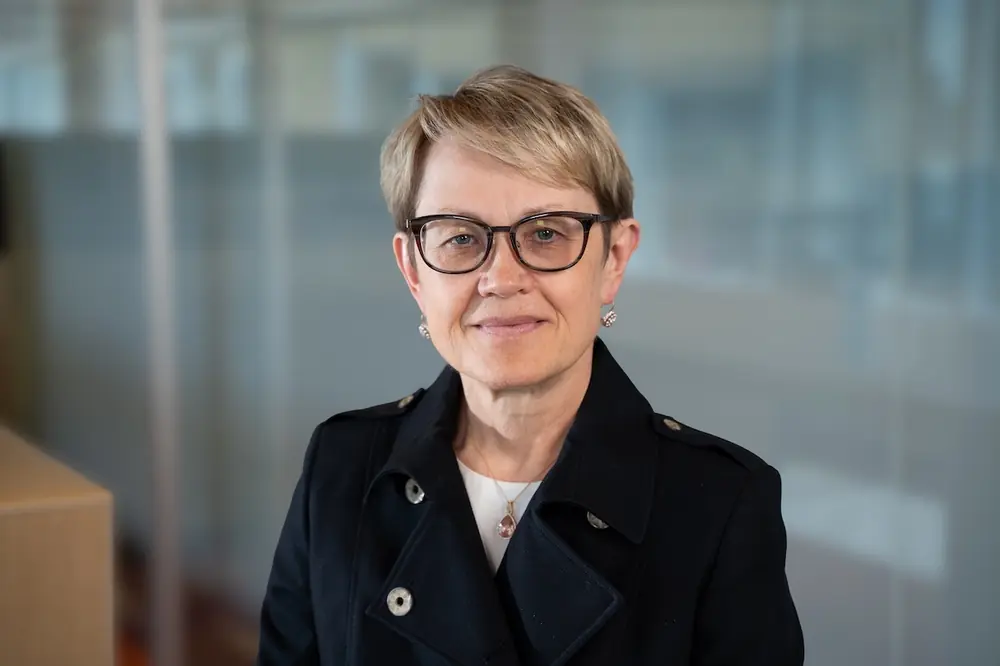
Nancy Knowlton is President and CEO of both Nialli Inc. and Nureva Inc., companies she co-founded with her husband David Martin. She has earned numerous awards for her work in technology, business, and education.