
Lookahead planning is arguably the most important routine on a project. Yet more often than not, this routine gets quietly abandoned the moment the week gets busy.
I've watched this pattern repeat as a commercial lead on megaprojects around the world. Week one of a new phase, the lookahead gets built properly: trade managers around a screen, walking the next six weeks together, flagging clashes before they're locked in.
By week five or six, it's one person alone at a laptop on a Sunday night, rebuilding the plan from a dozen conflicting updates so there's something to present Monday morning. The meeting happens, everyone nods, and the plan goes back to being background noise until the cycle repeats.
Technology vendors (like ourselves) often frame this as a tech issue ("replace spreadsheets"). But while technology can definitely solve some headaches, the real solutions almost always come down to the routines the team uses to capture updates, share information, and solve problems before they hit the job site.
A lookahead is a routine, not a document. Ideally, it is a rolling four- to six-week window where the team screens upcoming work for constraints, coordinates across trades, and makes sure nothing starts before it's actually ready.

| Your local Leica Geosystems Inc dealer |
|---|
| Laser Specialist inc |
The problem is that keeping a lookahead alive — genuinely updated, genuinely reflecting site reality — is more of an administrative burden than most teams can sustain in the middle of running a live project. So it gets built once, presented in a meeting, and left to drift until someone rebuilds it from scratch.
Every trade manager or engineer ends up keeping their own version of the plan, so handovers get missed. Engineers spend hours chasing updates, copying data between systems by hand, and reformatting tables — time that should be spent on site solving engineering problems.
A spreadsheet can tell you what task is scheduled, but it rarely tells you what's actually stopping it from happening, so teams end up reacting to constraints instead of catching them early.
What does actually fixing this look like? I've pulled together five practices from real project teams that I keep seeing work.

| Your local Case Construction Equipment Inc dealer |
|---|
| ASCO Equipment |
The first practice is one we saw Mace apply on London's Heathrow Terminal 4 (T4) baggage system project: give the delivery team ownership of the lookahead, rather than handing them a plan someone else built for them.
That means suppliers and trade teams build their own section of the plan themselves, instead of receiving a schedule drawn up by a planner who isn't doing the work. Each team plans its own tasks, flags its own constraints, and turns up at coordination meetings ready to talk through what it has planned.
Ownership changes how people show up. When a team builds its own plan, it can stand behind it in a coordination meeting instead of nodding along to someone else's version. On T4, suppliers started spotting and flagging their own clashes before they reached site, because the plan was something they made and owned.
Second is a practice we saw applied on BAM's work at London's Victoria Station: make constraint management the central discipline of the lookahead routine, not something that happens on the side while everyone's chasing milestones.

| Your local Wirtgen America dealer |
|---|
| Kirby-Smith Machinery |
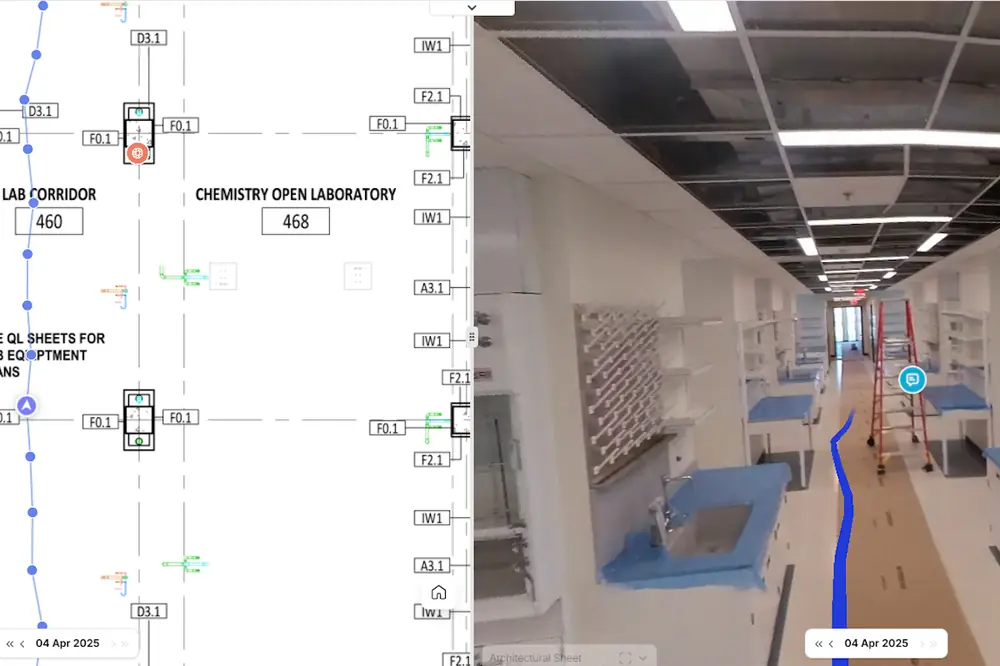
On this project, BAM was coordinating parties it had no contract with, inside one of the region’s busiest stations where there was no tolerance for delay. Rather than relying on meetings and emails to catch clashes between the many teams working in the same space, BAM built a visual, shared record of what was happening where. This meant that a scaffold crew and an electrical contractor could see they were about to clash before either of them turned up on site.
As a result, across the entire job, BAM never had a single clash of work — something the project team said had never happened before on a station of that scale.
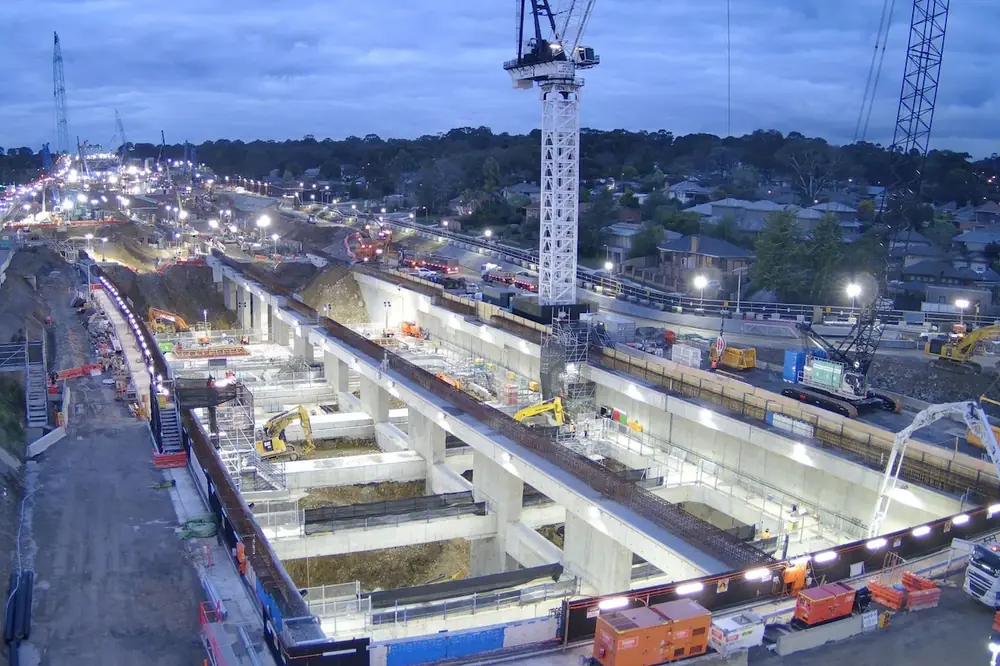
The best teams also connect the weekly lookahead directly to the daily coordination rhythm. On the North East Link (NEL) project, delivered by the Spark North East Link Design & Construct joint venture in Victoria, Australia, we saw what that looks like in practice.
On a segment of tunneling work, teams from CPB Contractors and GS Engineering & Construction ran their daily meetings around a shared, live view of the plan used like a digital whiteboard.

| Your local Hitachi dealer |
|---|
| ASCO Equipment |
Because the digital board view and the six-week lookahead are the same live plan, just in different views, anything changed in a daily catch-up showed up in the lookahead immediately, with nothing to reconcile afterward.
The fourth practice is one we saw applied as McConnell Dowell constructed the Outer Harbor Berth 6 project in Port Adelaide, Australia: capture what happened on site the moment it happens and add it automatically to the lookahead.
On Berth 6, supervisors log a voice note and a photo against each task as they walk the site, while they're standing in front of the work. The diary stays as its own record, but every entry attaches directly to the task it relates to in the lookahead, so what happened on site is never sitting in a separate place from what was scheduled to happen.
This keeps the lookahead honest. Nothing about the day gets left in a diary, a notebook, or someone's memory, disconnected from the plan it's meant to inform.

| Your local Iowa Mold Tooling Co Inc dealer |
|---|
| Nichols Fleet Equipment |
The final practice is admittedly about the software. The lookahead needs to be a single, live view of the entire plan that everyone can access, and that is not possible in a spreadsheet.
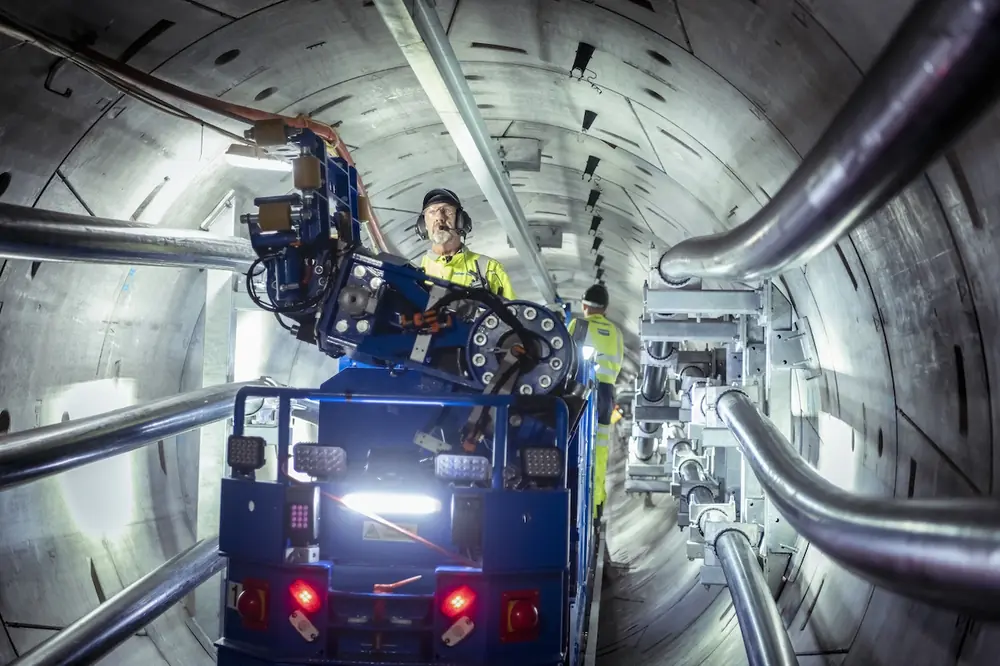
We saw this first-hand on Balfour Beatty's London Power Tunnels 2 project. On other projects, the team ran their six-week lookahead first in Excel, then Microsoft Project. In Excel, tasks couldn't be linked, so moving one activity meant manually finding and updating every task that depended on it. Microsoft Project solved that, but was complex enough that the work fell to the planners alone because nobody else on the team could really run it.
A connected, live plan removes these limitations. Tasks are linked, so moving one automatically moves what depends on it. Every trade manager, engineer, and supervisor works inside the same plan rather than their own copy, so a change is visible to everyone the moment it's made, not at the next weekly reissue. And it's simple enough for anyone on the project to use.
New tools from software companies are coming thick and fast at construction projects, and more are on the way. But none of them will make a difference without the disciplined routines that go alongside them.

| Your local Gomaco dealer |
|---|
| Clark Machinery |
Carlos Carvalho is Co-Founder and Chief Revenue Officer of Aphex, a daily execution platform, and Co-Host of the Off Site podcast.