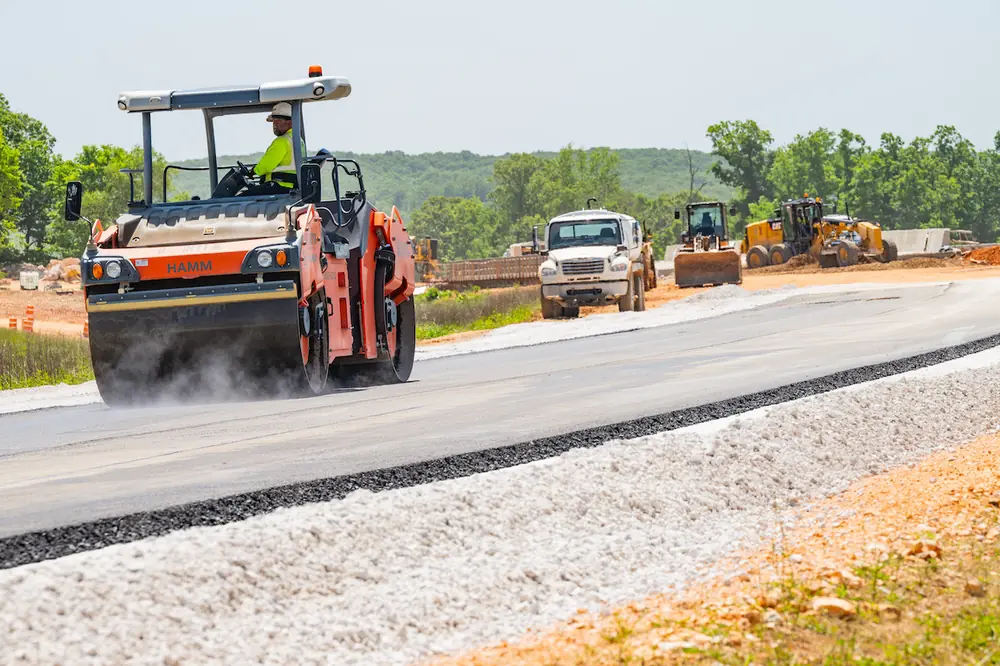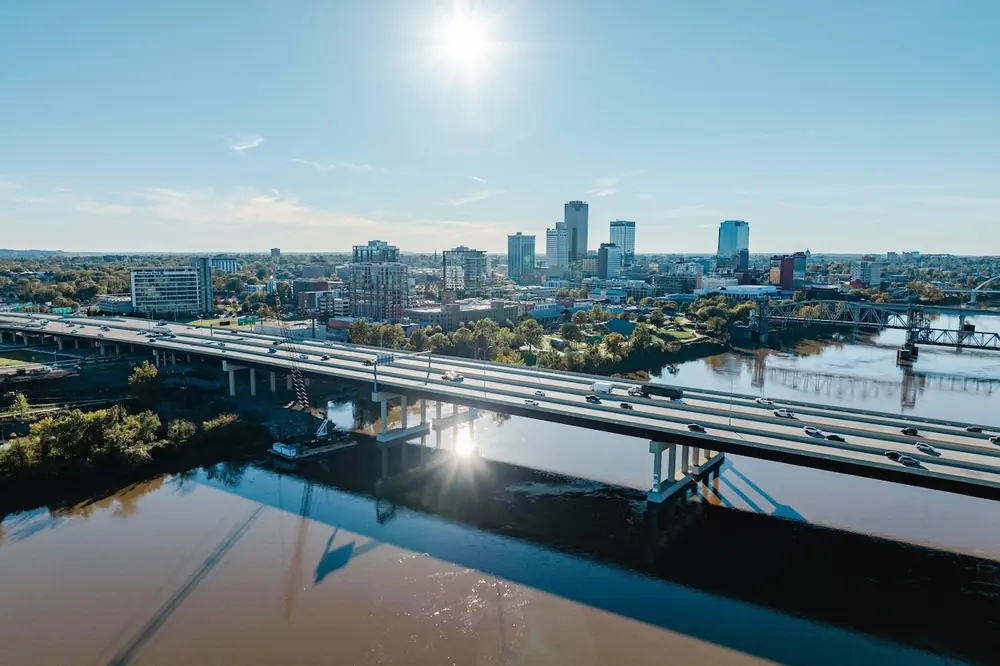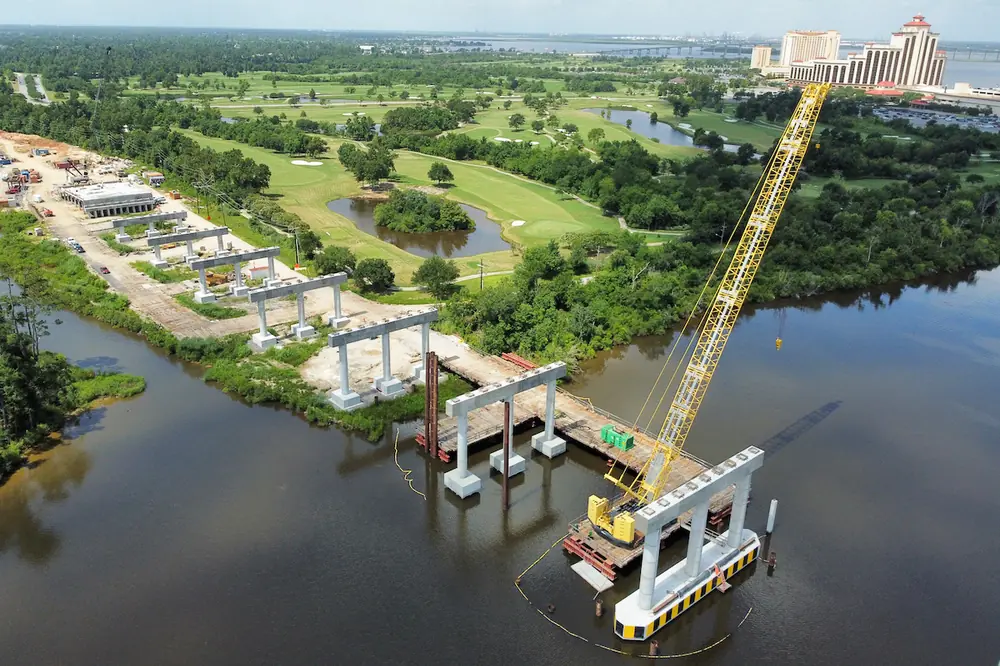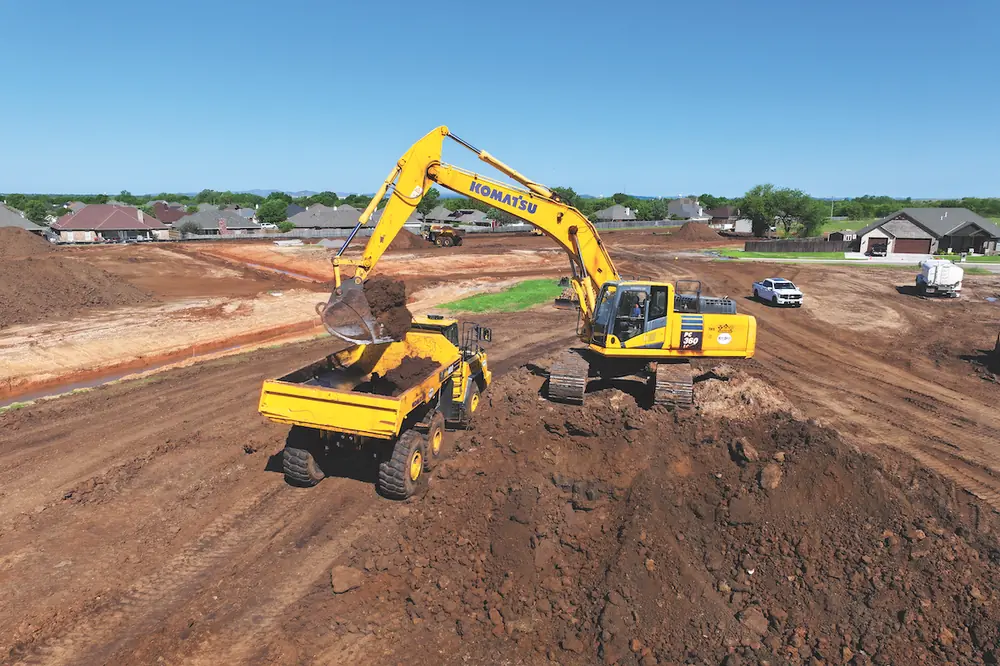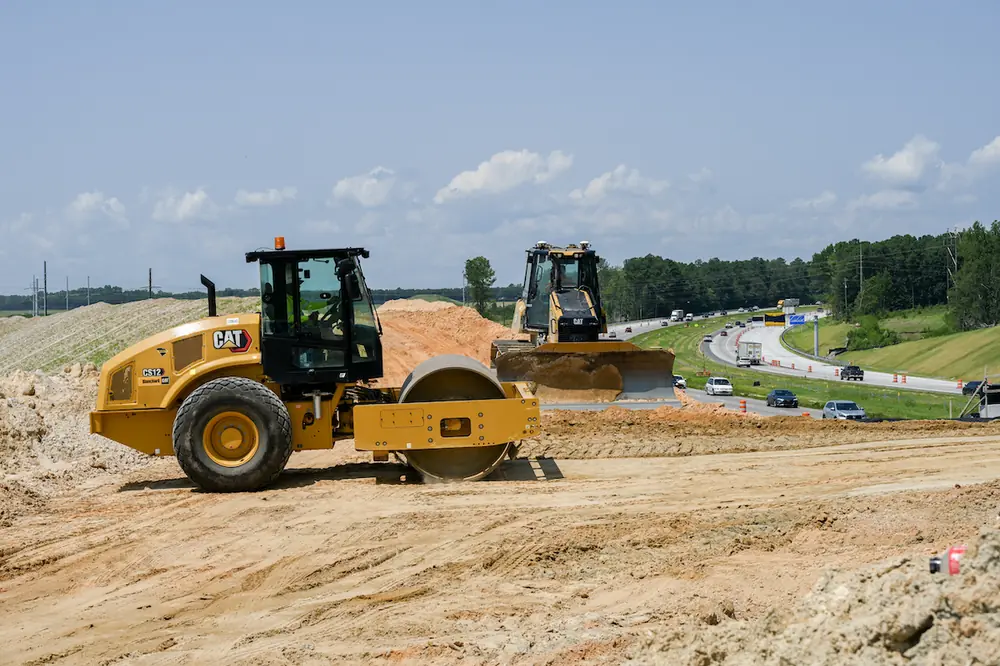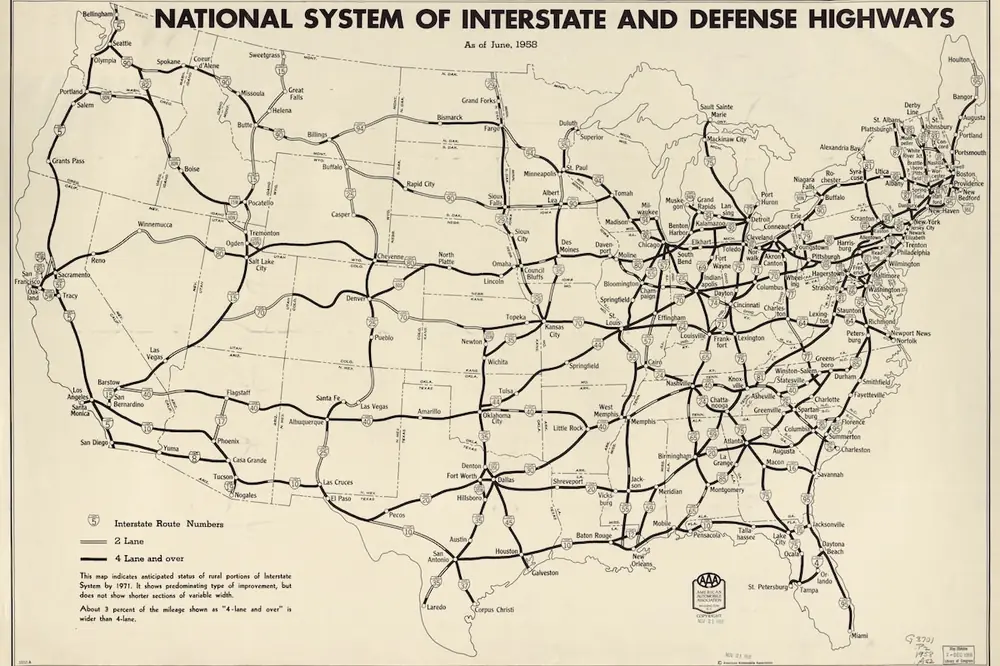
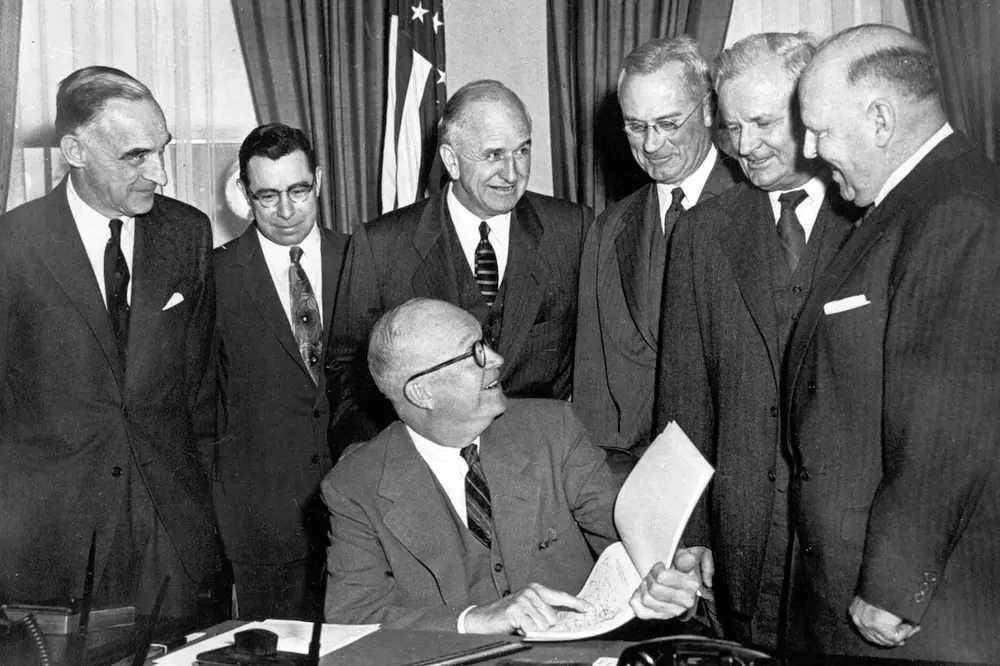

Initiated by the Federal-Aid Highway Act of 1956 under President Dwight D. Eisenhower, the Interstate Highway System is widely considered one of the greatest public works projects in the first 250 years of United States history. For the heavy civil construction industry, it represented an unprecedented era of standardized road building, requiring all routes to be freeways with at least four lanes, controlled access, and no at-grade crossings.
“Our highways badly need modernization and expansion to accommodate today’s vastly increased motor traffic,” Eisenhower said when signing the legislation.
Seventy years later, that statement rings just as true.
Authorized at an initial $25 billion — equivalent to $300 billion today — for the construction of 41,000 miles over a 10-year period, the massive construction undertaking ultimately spanned 35 years and cost approximately $114 billion, or $937 billion in 2026 dollars.
Today, the sprawling network spans 48,890 miles and serves as the main arteries for much of the U.S., generating an estimated economic benefit of $65 billion annually considering fuel savings, road safety improvements, and congestion reduction, according to research by the Washington, D.C.-based nonprofit TRIP.

| Your local Bomag Americas dealer |
|---|
| WPI |
“The Interstate Highway System has been the backbone of economic growth across Oklahoma, Arkansas, Louisiana, and the nation for seven decades,” said Shelley Hammond, TRIP’s Research & Communications Staff Member. “It has created opportunities for businesses to expand, strengthened supply chains, connected communities of every size, and provided the dependable transportation network that Americans rely on every day. Continuing to invest in this system is essential to keeping our economy competitive and our transportation infrastructure prepared for the future.”
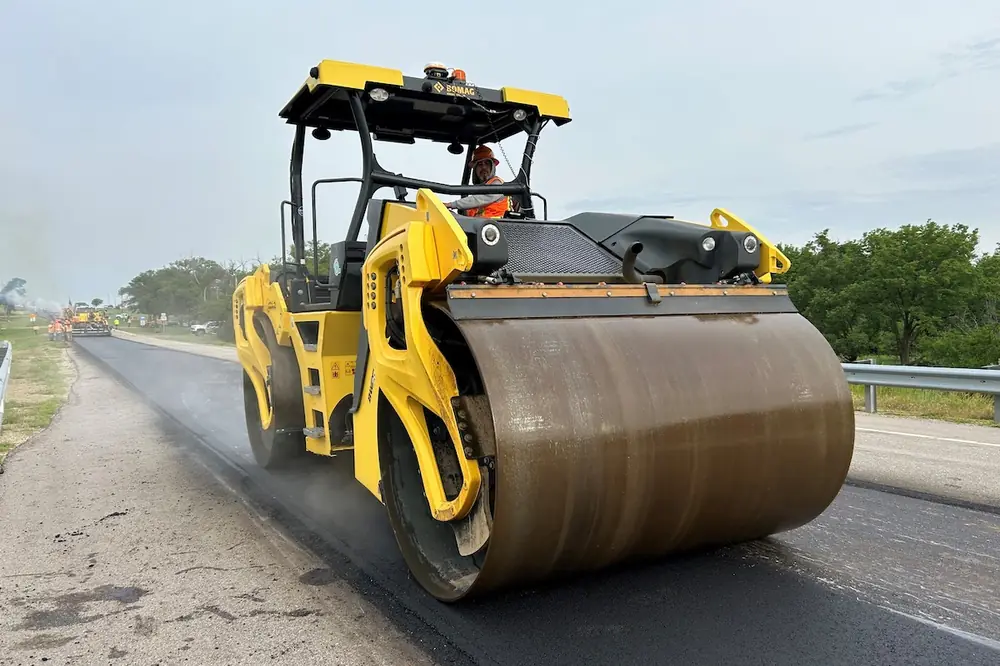
Celebrating its 70th birthday this year, the Interstate Highway System’s infrastructure is showing severe signs of its advanced age. A critical issue for modern roadbuilders is that most interstate segments still retain their original underlying foundations, meaning repeated pavement resurfacing yields diminishing returns and increasingly shorter periods of pavement smoothness.
In the South Central region, intense utilization has heavily strained this aging network:
- In Oklahoma, 48 percent of major locally and state-maintained roads and highways are currently in poor or mediocre condition. Driving on these rough roads costs the average Oklahoma driver $925 annually in additional vehicle operating costs. Furthermore, 8 percent of the state’s bridges are rated in poor or structurally deficient condition, and 41 percent of Oklahoma’s bridges were built in 1969 or earlier.
- In Arkansas, vehicle miles of travel increased by 37 percent between 2000 and 2025. Today, 42 percent of the state’s major roads are in poor or mediocre condition, costing drivers $839 annually in extra vehicle operating costs. Additionally, 5 percent of Arkansas’ bridges are in poor condition, and 35 percent of the state’s bridges were built in 1969 or earlier.
- In Louisiana, 50 percent of all major locally and state-maintained roads and highways are currently in poor or mediocre condition. This deterioration costs the average Louisiana driver $858 annually in extra vehicle operating costs. Louisiana also has the seventh-highest share of poor or structurally deficient bridges in the nation at 11 percent, and 31 percent of the state’s bridges were built in 1969 or earlier.

| Your local Hitachi dealer |
|---|
| ASCO Equipment |
For contractors, modernizing the network will require a massive pipeline of upcoming work. Beyond simply replacing aging pavements, roadbuilders will be tasked with completely upgrading outdated interchanges, “right-sizing” lane capacity, and fundamentally overhauling safety features to handle the influx of both passenger and commercial freight. Freight moved by trucks is expected to increase substantially by 2050 — growing 53 percent by weight in Oklahoma, 56 percent in Arkansas, and a massive 75 percent in Louisiana.
“The Interstate Highway System has reached a point where preserving the status quo is no longer enough,” said Jay Winford, TRIP Board Member and President of Prairie Contractors LLC in Louisiana. “As traffic demands continue to grow, we must focus on delivering projects that improve safety, expand capacity where it’s needed, and keep freight moving efficiently across Oklahoma, Arkansas, Louisiana, and the nation. Consistent, strategic investment will help ensure this vital network continues to support economic growth for decades to come.”
“The Interstate Highway System is more than concrete and steel; it is a living symbol of American ambition, ingenuity, and unity,” TRIP Executive Director Dave Kearby said. “Built by a generation that believed in creating something bigger than themselves, these roads connected families, fueled commerce, strengthened national defense, and opened the country to endless opportunities. As we reflect on its 70th anniversary and America’s 250th, rebuilding this system is not just an investment in infrastructure; it is a chance to honor that legacy and ensure future generations inherit an America that still believes in building boldly for tomorrow.”
For more information and access to all TRIP reports, go to www.tripnet.org.

| Your local NPK Construction Equipment Inc dealer |
|---|
| WPI |