
A Rhode Island Department of Transportation (RIDOT) highway project, currently underway and scheduled for completion next year, will provide a direct, uninterrupted freeway link between I-95, Route 4, and the Quonset Business Park, including the Port of Davisville (a public port located within the business park).
The $144 million I-95 “Missing Move” and Quonset Ramps Construction Project, which had been discussed for decades, is so named because it is constructing two critical highway ramps that were planned but never built when Route 4 — a 5.4-mile freeway linking Route 102 to the I-95 merge — was constructed in the 1960s. The current project will afford direct highway connections between I-95 North and Route 4 South, and Route 4 North and I-95 South, allowing drivers to transition between the two highways without having to exit onto local roads. This eliminates an estimated 15 to 20 minutes of daily commuting time and stops industrial trucks from having to drive through neighborhoods in towns like North Kingstown, Warwick, and East Greenwich, Rhode Island.
The project also will make numerous improvements at and near the Quonset Business Park — an important and rapidly growing economic growth center — including new ramps on Route 403 (the Quonset Freeway) and a roundabout at Compass Circle.
The Quonset Business Park is a 3,200-acre industrial and commercial hub located on Narragansett Bay in North Kingstown, Rhode Island. Over 260 companies operate out of the park, creating more than 15,000 jobs. It generates over $7 billion in economic output every year. The Port of Davisville is a multi-use maritime facility, strategically located near the mouth of Narragansett Bay. The port offers five terminals with 4,500 feet of berthing space and 235 acres of operating capacity, and is one of the top 10 automobile importers in the U.S.
RIDOT Spokesperson Heidi Gudmundson said that connecting I-95 North to Route 4 South and Route 4 North to I-95 South has been a long-term goal for RIDOT and the people of Rhode Island.

| Your local Topcon Positioning Systems Inc dealer |
|---|
| Linder Industrial Machinery |
“The installation of these new ramps will provide relief from excessive congestion on local roads that traffic uses to make the connection from one highway to the other,” she said. “In particular, the intersection of Route 401 [Division Street] and Route 2 [Quaker Lane/South County Trail] has significant congestion and safety concerns, which have steadily increased as commercial development and expansion of the adjacent New England Institute of Technology campus has blossomed. Consequently, this intersection is the site of 60 crashes per year.
“The current average daily traffic count for I-95 is approximately 130,000 vehicles. For Route 4 it is approximately 63,000 vehicles, and for Route 403 approximately 20,000 vehicles. All these new ramps will give passenger vehicles, heavy trucks, and other freight traffic freeway access without using local roads while reducing emissions from idling vehicles. The improved access also will make the Business Park more attractive to companies who wish to locate there.”
Gudmundson added that in addition to improvements in safety and reduction of emissions, the project will generate considerable travel-time savings.
“Through our cost benefit analysis, we anticipate the improved access to I-95, Route 4, and Route 403 will result in 2,400 hours in reduced travel delay daily over a 30-year period,” she said. “On the Quonset/Route 403 side, it’s a projected daily reduction in delay of 1,020 hours over the same 30-year period.”

| Your local Komatsu America Corp dealer |
|---|
| Linder Industrial Machinery |
Manafort Brothers Inc. of Cumberland, Rhode Island, is the primary contractor on the design-build project, which began construction in the winter of 2025 and is expected to be completed in the fall of 2027. The project is funded by a $4 million 2020 Better Utilizing Investments to Leverage Development (BUILD) grant, an $81 million Infrastructure for Rebuilding America (INFRA) grant, $2 million from the Quonset Development Corporation, and other federal and non-federal funds.
Major components of the I-95 “Missing Move” and Quonset Ramps Construction Project include:
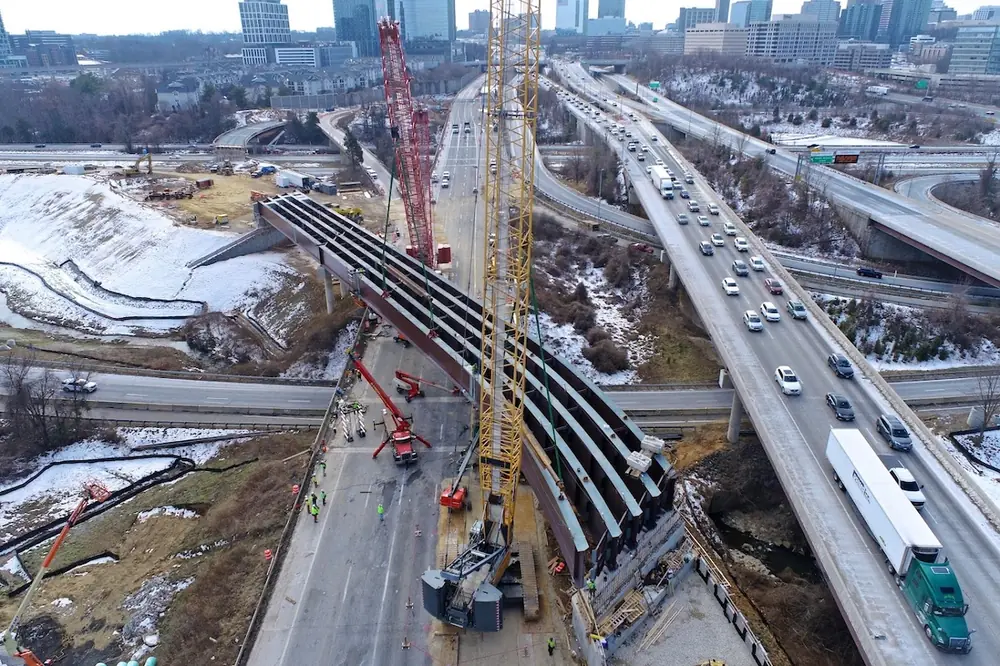
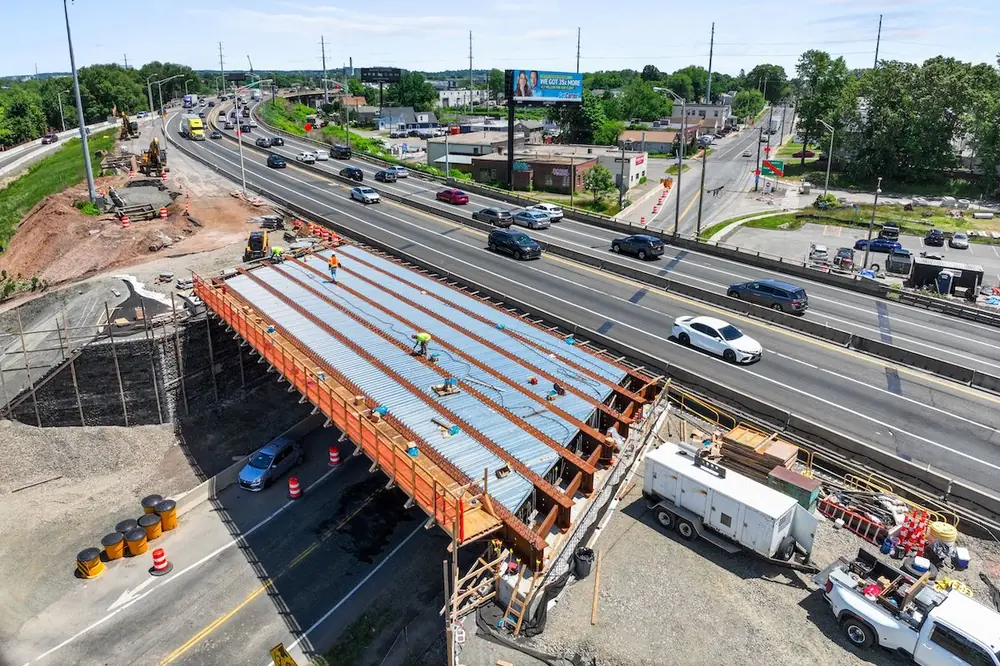
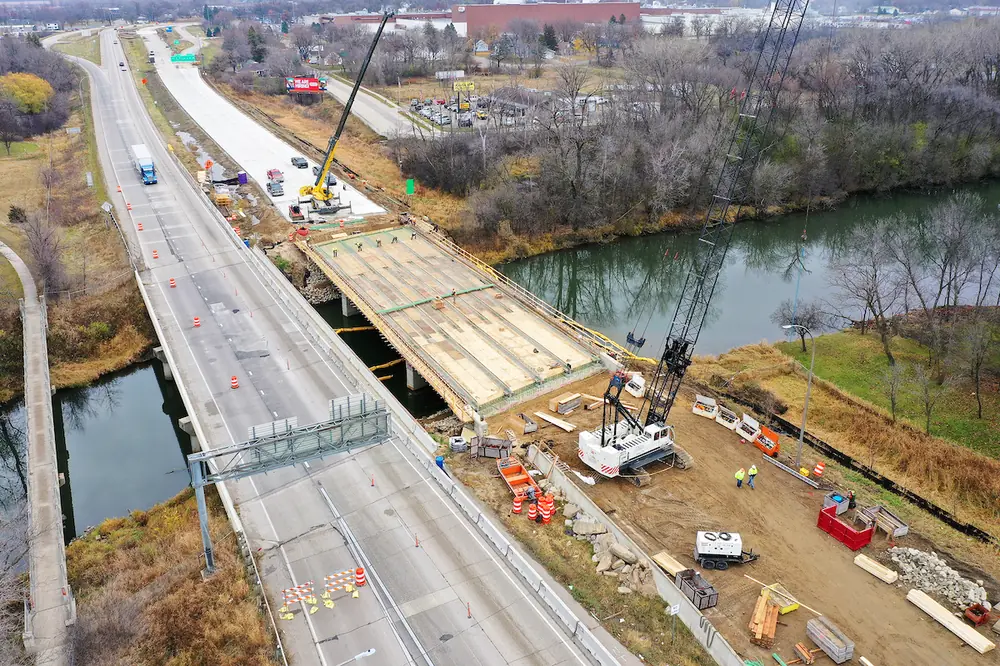
- A 675-foot-long tub girder flyover bridge over Route 4 and I-95 to complete the “missing move” from Route 4 North to I-95 South
- A new on-grade ramp connecting I-95 North to Route 4 South
- Three on-grade ramps linking Route 403 directly to West Davisville Road and Post Road
- A new roundabout at Compass Circle to improve local traffic flow
- Roadway reconstruction and new retaining structures
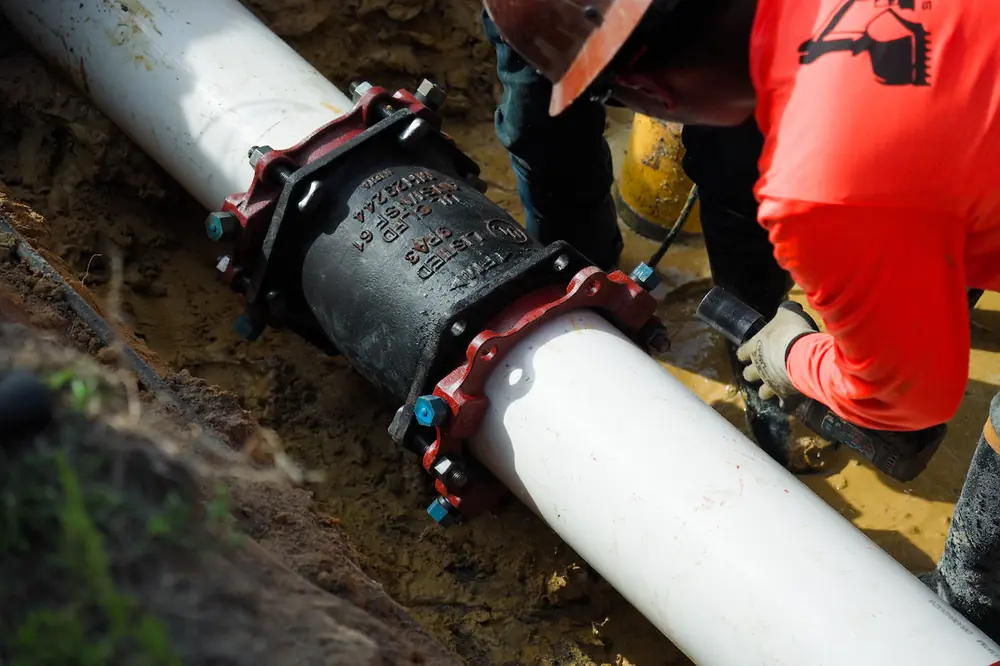
- Extensive drainage and utility upgrades
- New lighting and signing
- Intelligent transportation system enhancements
The project has been geographically divided into two segments: the Quonset Business Park and the I-95/Route 4 interchange.

| Your local Volvo Construction Equipment dealer |
|---|
| Richmond Machinery & Equipment |
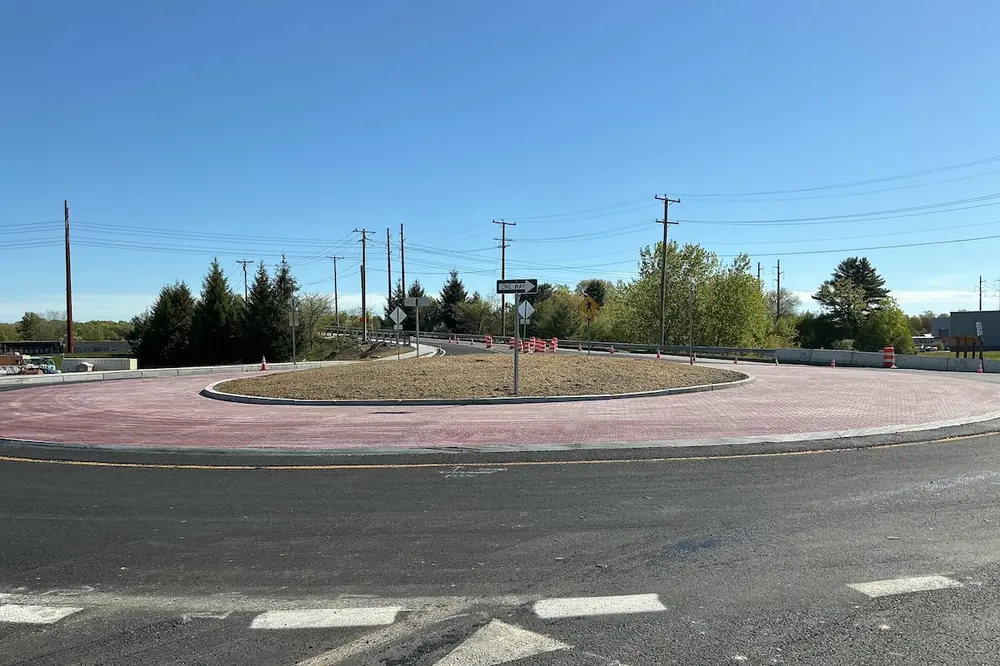
“The first portion includes three ramps on Route 403 in North Kingstown to connect the Quonset Business Park's West Davisville Road district,” Gudmundson said. “This part of the project also includes a new roundabout south of Route 403 at Compass Circle. Recently opened to the public, this roundabout replaced a three-way intersection and provides a safer and more efficient connection to the Quonset Development Corporation.
“The second component includes the missing moves at the I-95/Route 4 interchange in Warwick. RIDOT will build a new flyover bridge to link Route 4 North to I-95 South. The ramp will use an existing right of way for an at-grade link between I-95 North and Route 4 South.
“We have completed permitting, including NEPA, and utility relocations, including major transmission lines over I-95. The successful coordination and completion of these relocations early in the project, including transmission facilities crossing the I-95 corridor, has helped position the project for continued progress toward its completion goals.
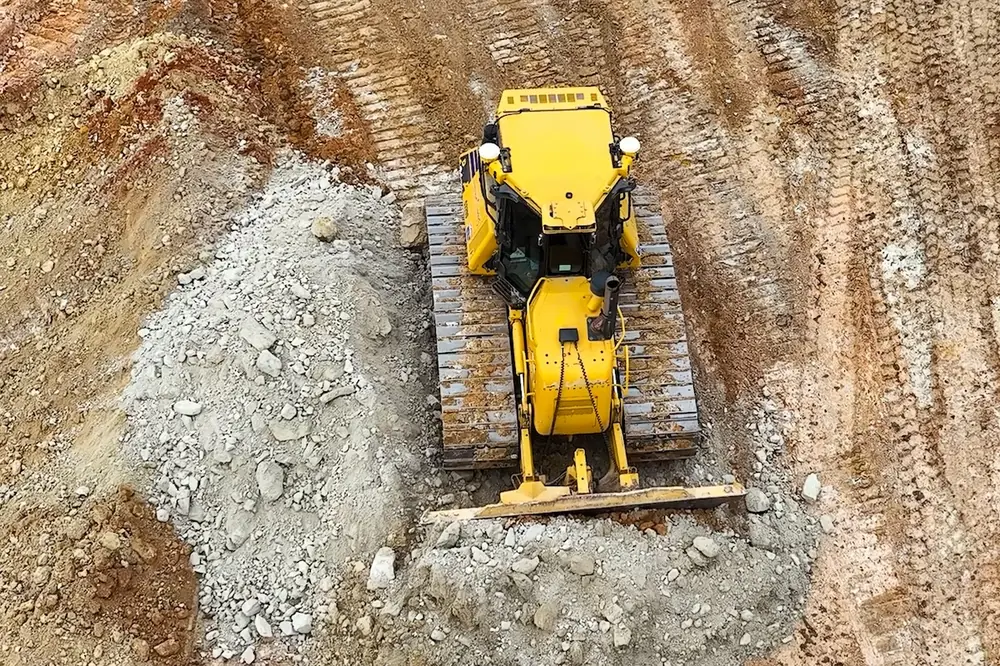
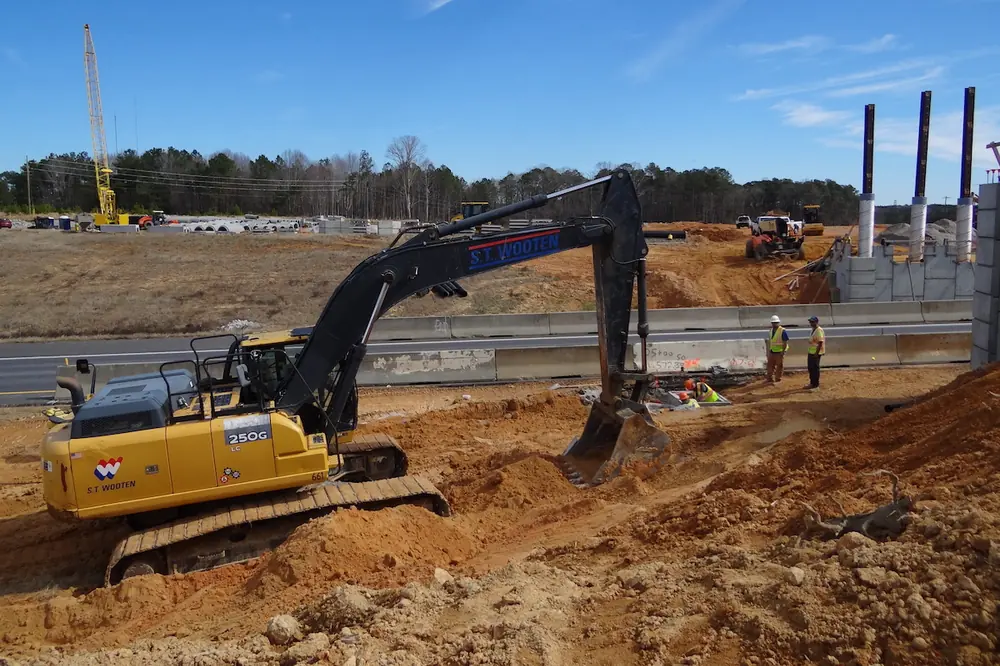
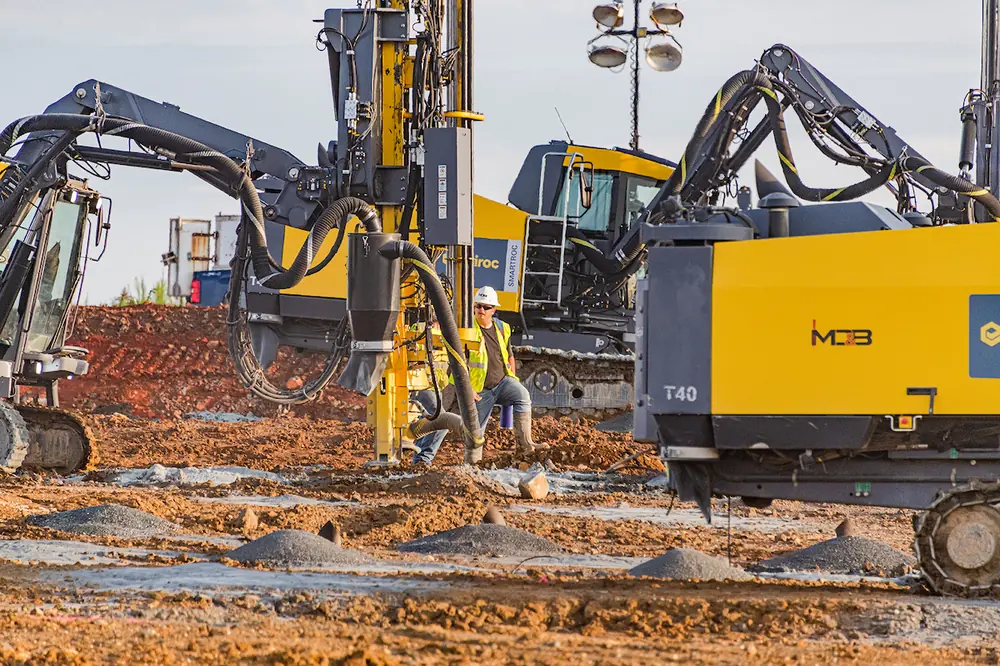
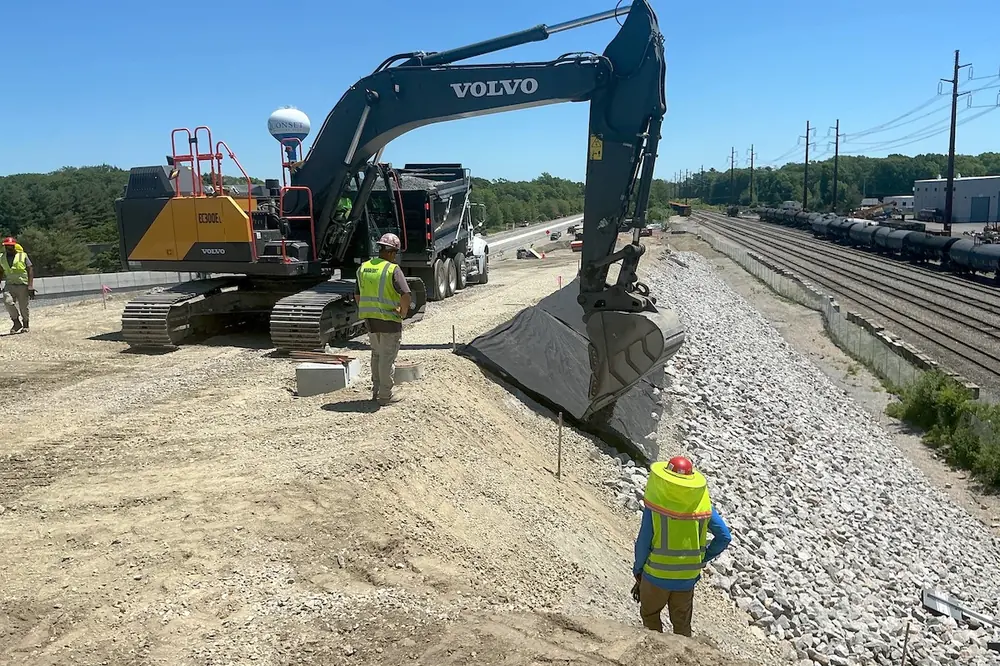
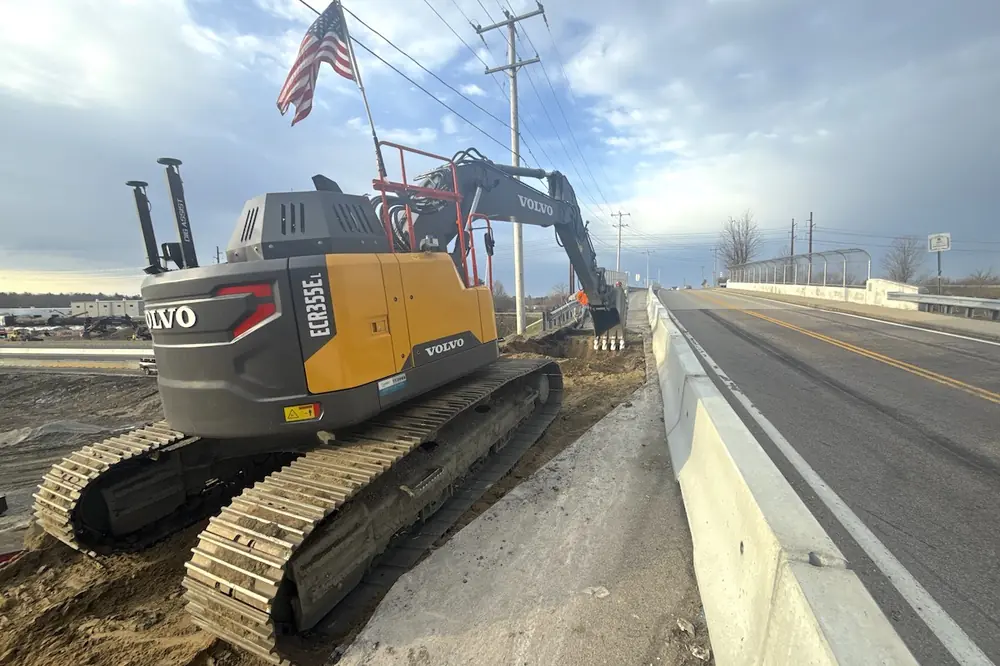
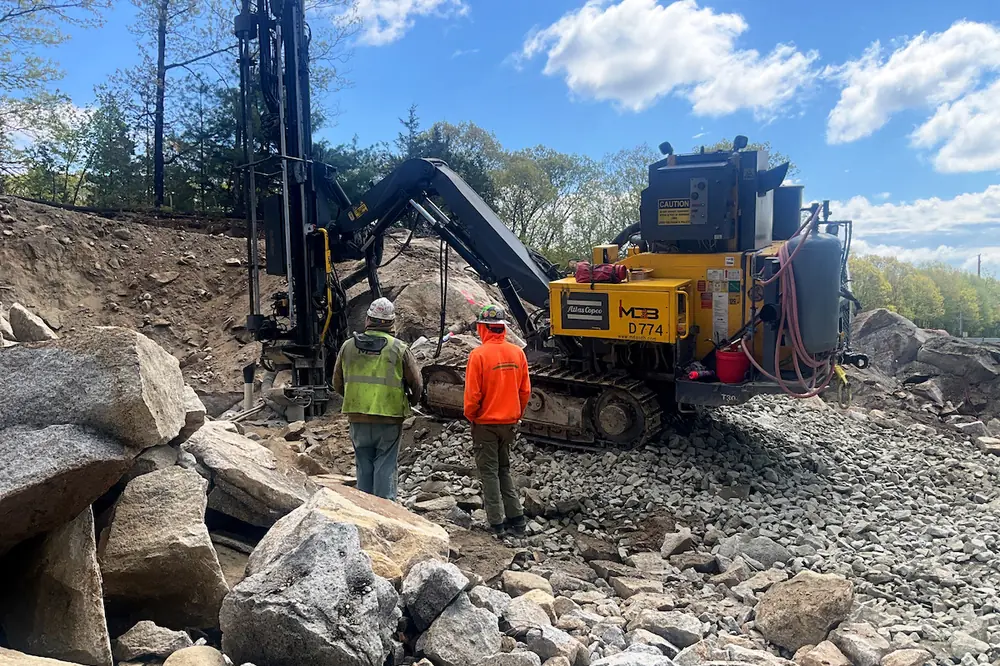
“We also completed blasting necessary to remove bedrock along the pathway to the new ramp we are building between I-95 North and Route 4 South. Rather than mechanical excavation, we used controlled explosive demolition [blasting] to reduce the time to build the project and to have a reduced noise impact on nearby residents. Suitable blasted rock is processed and reused within project embankments and roadway construction whenever practical — reducing truck traffic, minimizing waste, and improving overall project sustainability.”

| Your local Bomag Americas dealer |
|---|
| Linder Industrial Machinery |
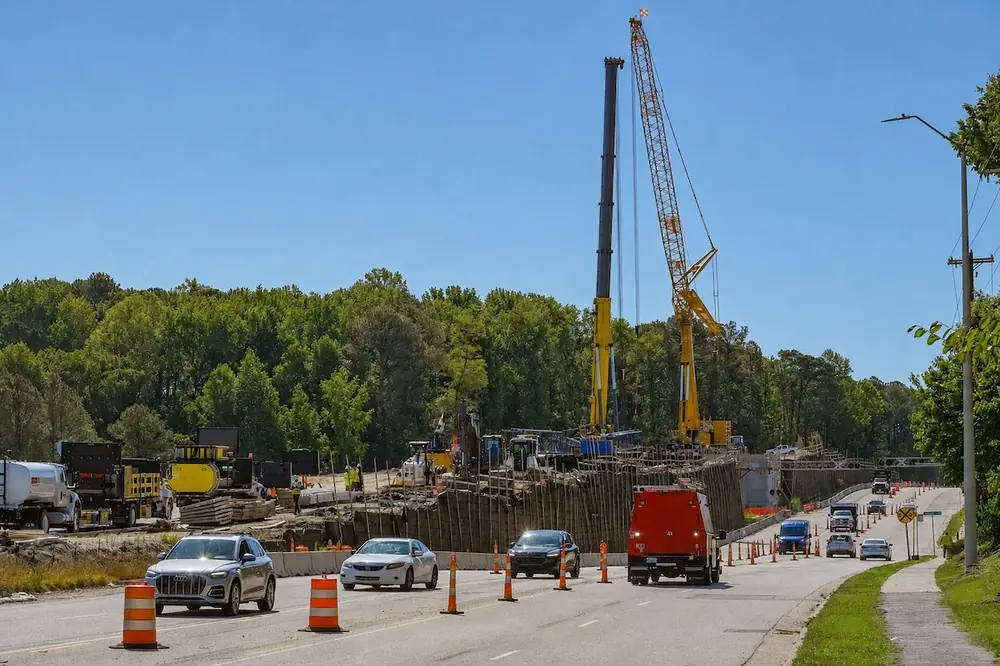
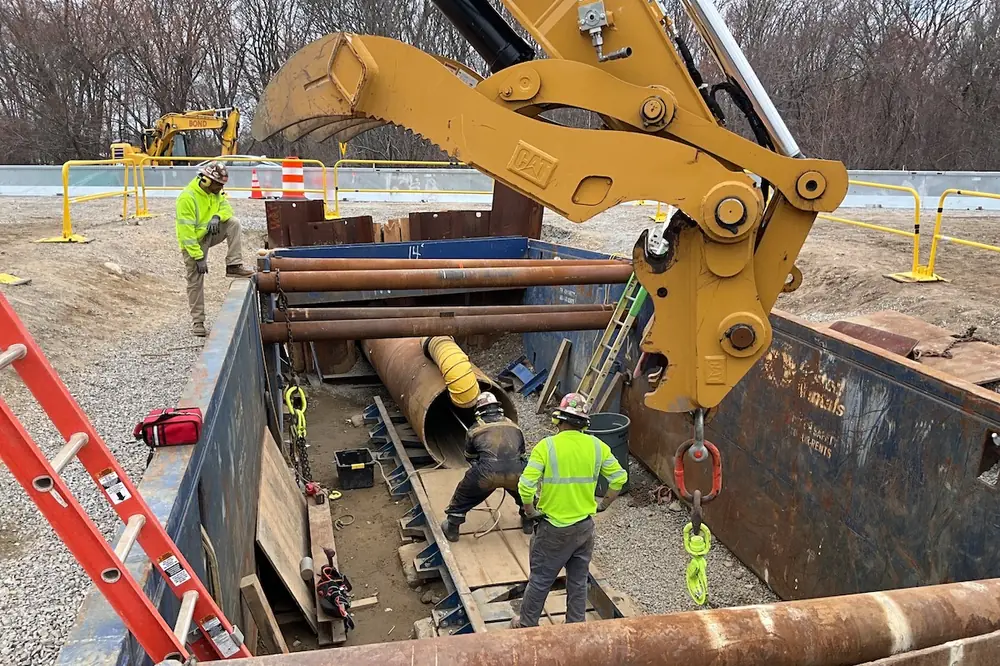
Gudmundson noted that work currently underway includes building the ramp from I-95 North to Route 4 South; performing substructure work on the ramp from Route 4 North to I-95 South; and completing the Quaker Lane connections from Route 2 (Quaker Lane) to I-95, and the ramps to and from Route 403.
To accommodate the new highway connections, approximately 3,800 feet of I-95 South is being shifted to create space for the new freeway-to-freeway ramp system. More than 14,000 cubic yards of bedrock have been excavated and processed as part of the project.
Gudmundson said that one of the most significant challenges associated with the project has been constructing major new transportation infrastructure within one of Rhode Island’s busiest highway corridors while maintaining safe and efficient traffic operations.
“The project involves work adjacent to three major routes and several local roadways that serve commuters, freight operators, businesses, and residents throughout the region,” she said. “Our ongoing operations have required extensive planning, environmental monitoring, public outreach, and coordination with nearby businesses and communities to minimize impacts.

| Your local Trimble Construction Division dealer |
|---|
| SITECH Mid-South |
“The most challenging area of the project to date has been building the Compass Circle roundabout, as it required continued access to the Quonset Business Park during its construction. Fortunately, the project team anticipated these challenges and developed their design to maximize the amount of work to be performed offline, with minimal to no impacts on traffic.”
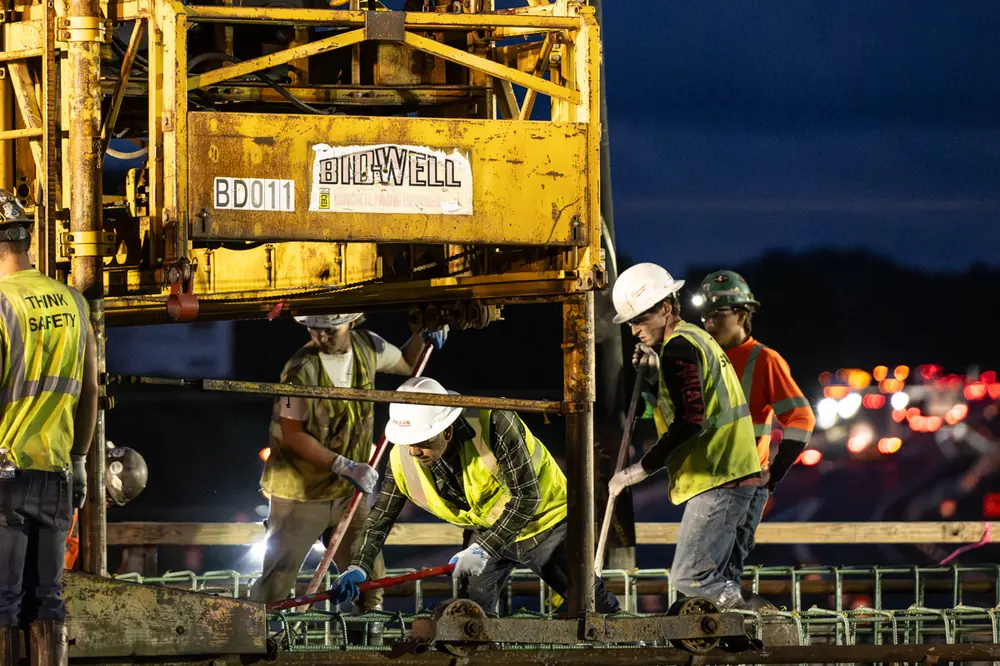
The construction of the online portion of the roundabout approaches was completed over a five-week period of nighttime operations. Throughout this period, the existing traffic pattern was maintained, Gudmundson pointed out, ensuring continued access to the Quonset Business Park while work progressed. These approaches required construction across a 6-foot elevation increase to connect with the new roundabout, adding complexity to the staging and construction efforts.
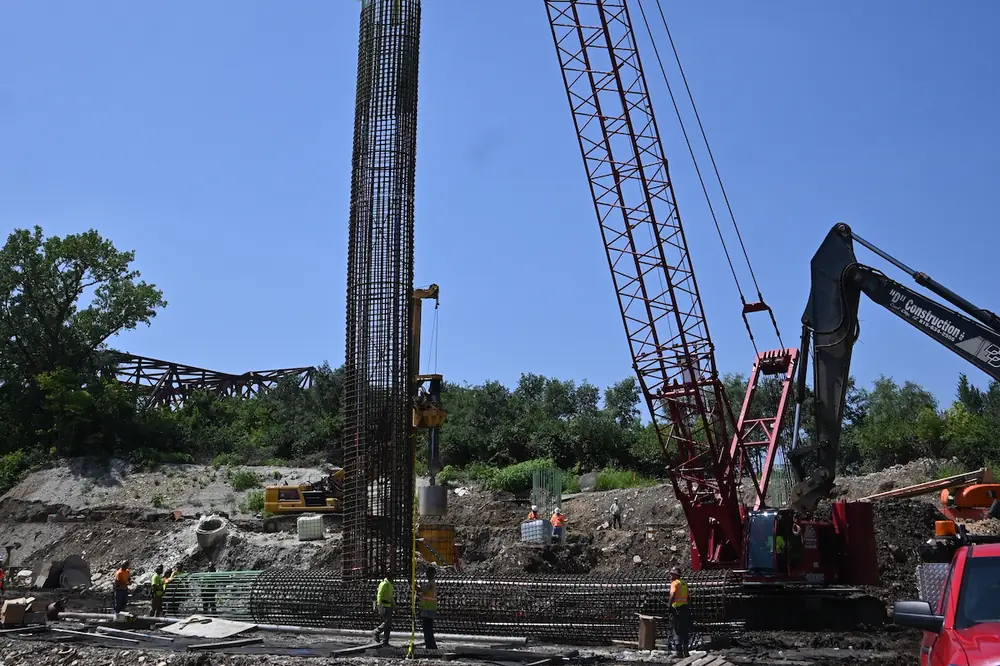
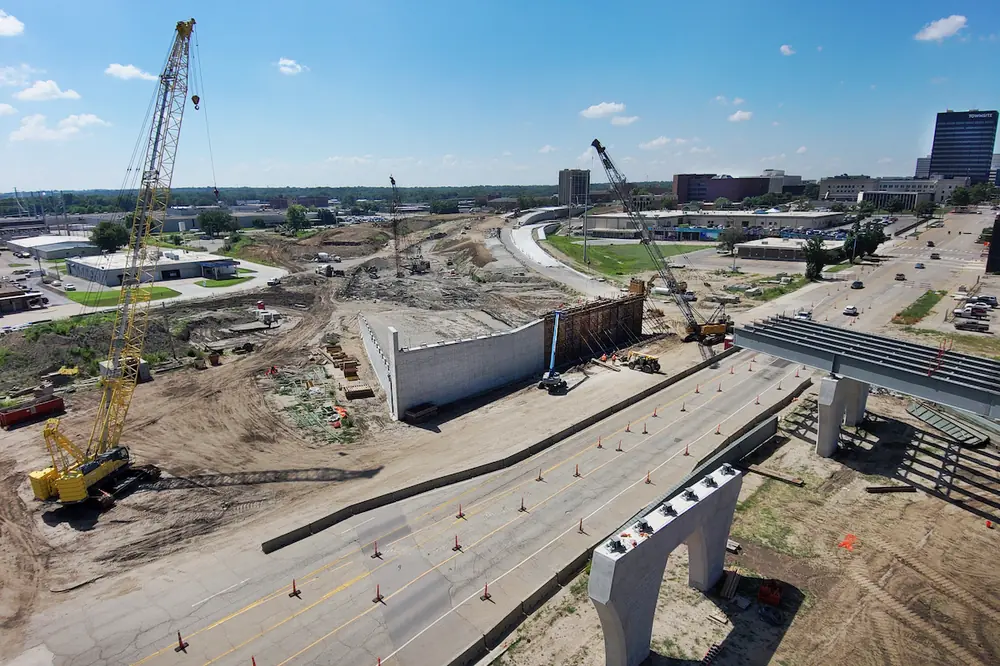
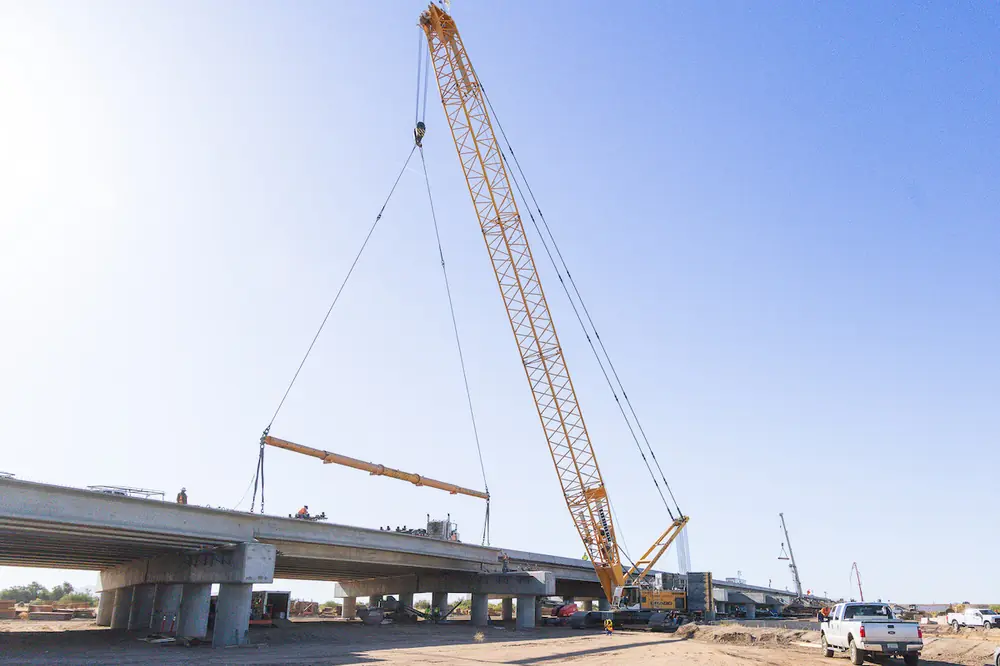
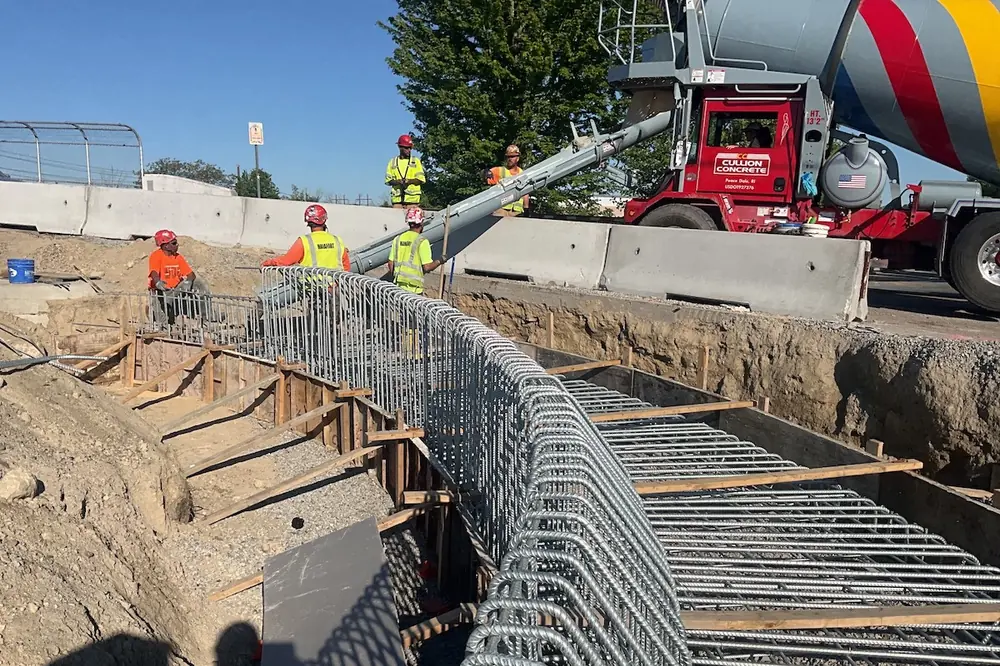
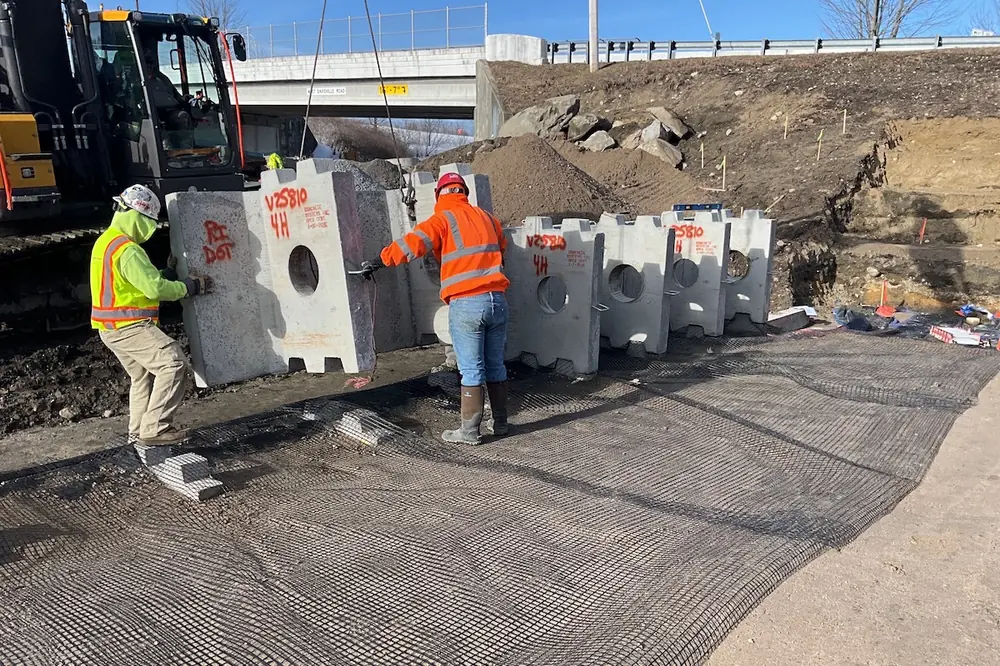
“The project is being delivered using the design-build method, which allows designers and constructors to work collaboratively throughout the design and construction process,” Gudmundson said. “This integrated approach has improved schedule efficiency, enhanced constructability, and enabled the team to respond quickly to field conditions as work progresses. They are using Accelerated Bridge Construction [ABC] techniques by employing the use of precast pier columns and caps to expedite substructure construction.
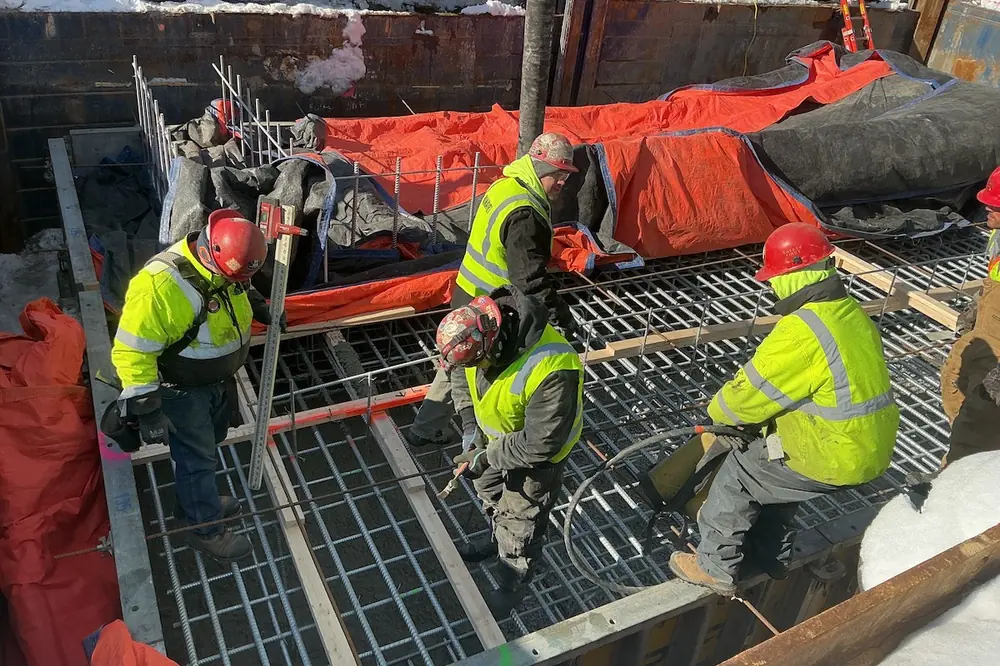
“Under this method, the pier footings are excavated first, followed by the erection of the precast columns. Concrete is then placed around the columns within the footing to secure them in position. Once the columns are in place, the precast pier cap is installed and connected to the columns using grouted duct connections. This construction technique significantly reduces onsite construction time, helping to accelerate the project schedule while also enhancing the quality and consistency of the finished structural elements.”
| Your local Topcon Positioning Systems Inc dealer |
|---|
| Linder Industrial Machinery |
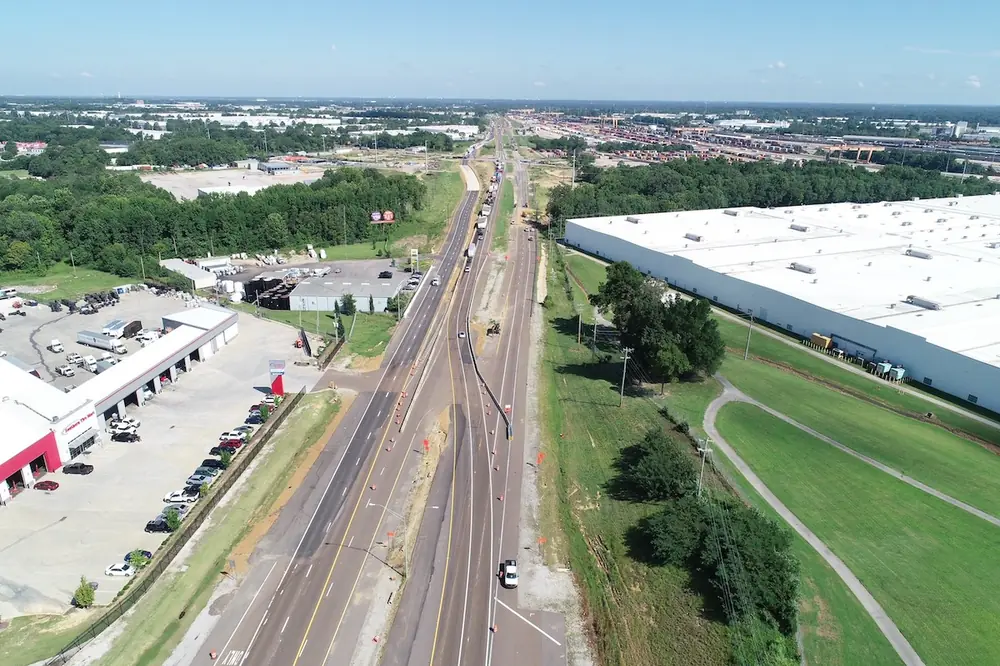
Traffic impacts have been minimal, even during rolling roadblocks for blasting operations, according to Gudmundson. Most work that would create traffic restrictions has been performed at night. Construction was sequenced to allow all travel lanes of each major highway to remain open.
“Through our Traffic Management Plan, we recognized shift timing at a major employer in the area, General Dynamics Electric Boat,” she said. “They employ approximately 8,000 workers at their Quonset Point facility. We’ve prevented lane restrictions during timeframes these workers commute to/from this facility via Route 403.”
When completed, the I-95 “Missing Move” and Quonset Ramps Construction Project will eliminate long-standing missing highway connections and improve mobility throughout the region. It will significantly reduce interchange-related traffic congestion, freight use on local roads, and travel times, while improving safety and air quality.
By improving access to growth areas in southern Rhode Island, the project will support economic competitiveness. Making the movement of freight and goods more efficient will also incentivize the continued development of the Quonset Business Park, the Port of Davisville, and the Quonset State Airport.
| Your local Topcon Positioning Systems Inc dealer |
|---|
| Linder Industrial Machinery |
Figures provided by RIDOT illustrate the scale of this large-scale initiative:
- More than 14,000 cubic yards of bedrock
- 53,460 cubic yards of earth excavation
- 120,000 cubic yards of fill
- 1,530 cubic yards of concrete
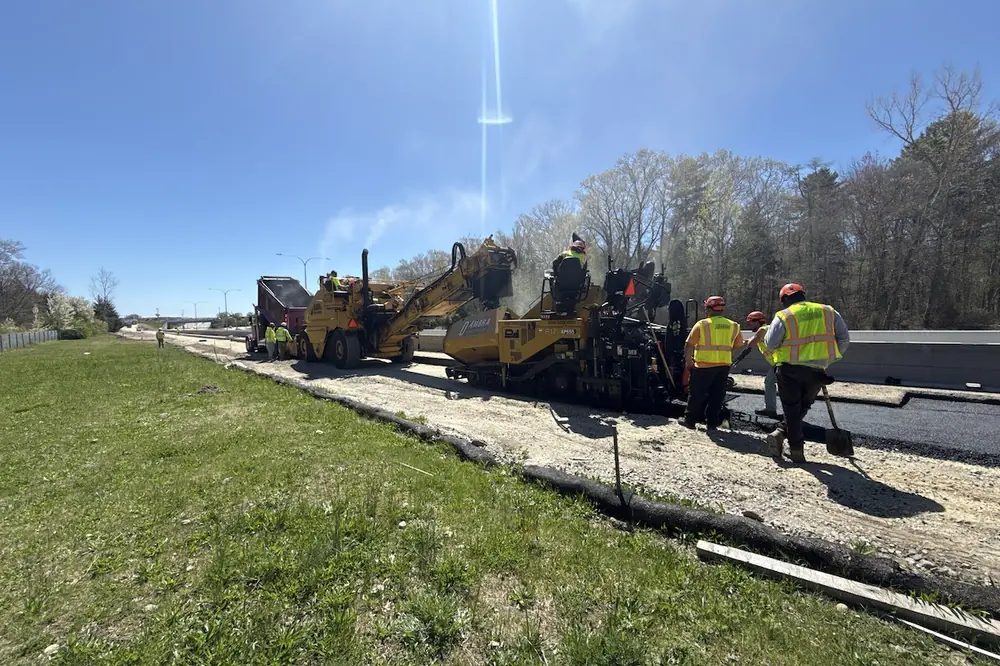
- 47,380 tons of asphalt
- 2.46 million pounds of structural steel and rebar
- 114 drainage structures
- 8,902 linear feet of pipe
- 21,880 square feet of retaining walls
- Project Owner: Rhode Island Department of Transportation
- Prime Contractor: Manafort Brothers Inc., Cumberland, Rhode Island
- Designer: CHA Consulting Inc., Providence, Rhode Island
- Base Technical Concept Designer/Owner’s Representative Engineer: GM2 Associates, Pawtucket, Rhode Island
- Construction Engineering and Inspection Services: HW Lochner, East Hartford, Connecticut Photos courtesy of Rhode Island Department of Transportation