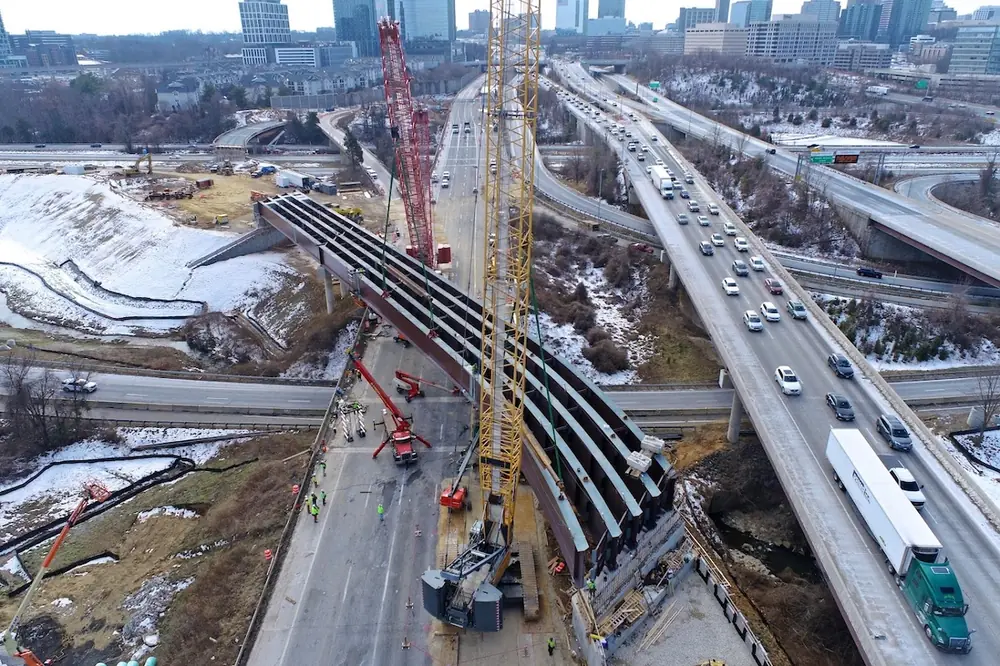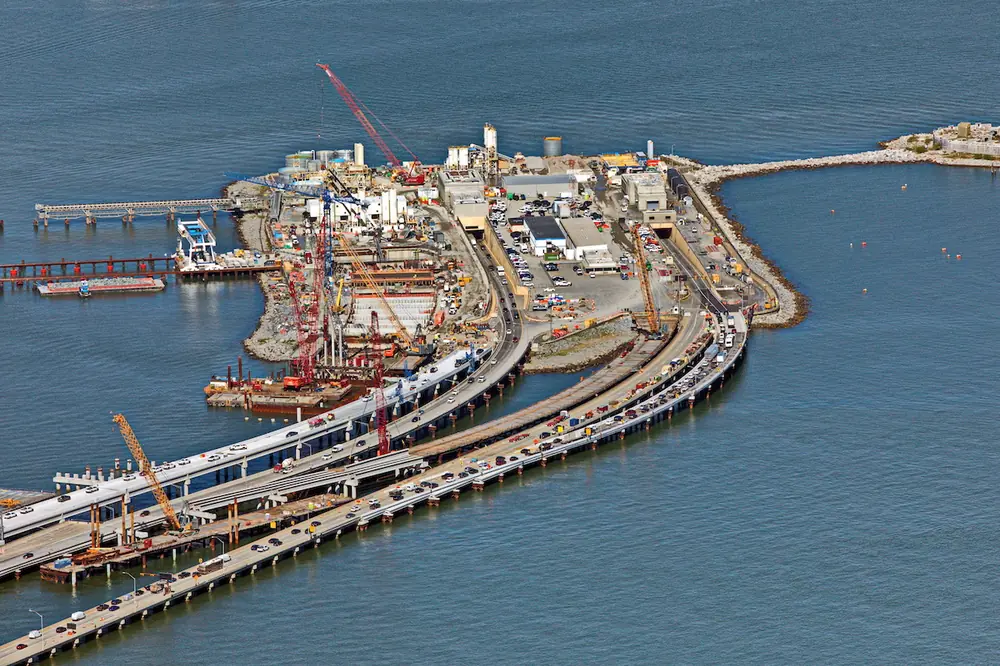
New England states — Connecticut, Maine, Massachusetts, New Hampshire, Rhode Island, and Vermont — are demonstrating robust letting momentum and solid capital programming across transportation and industrial sectors, despite grappling with labor shortages, rising prices, and longer material lead times.
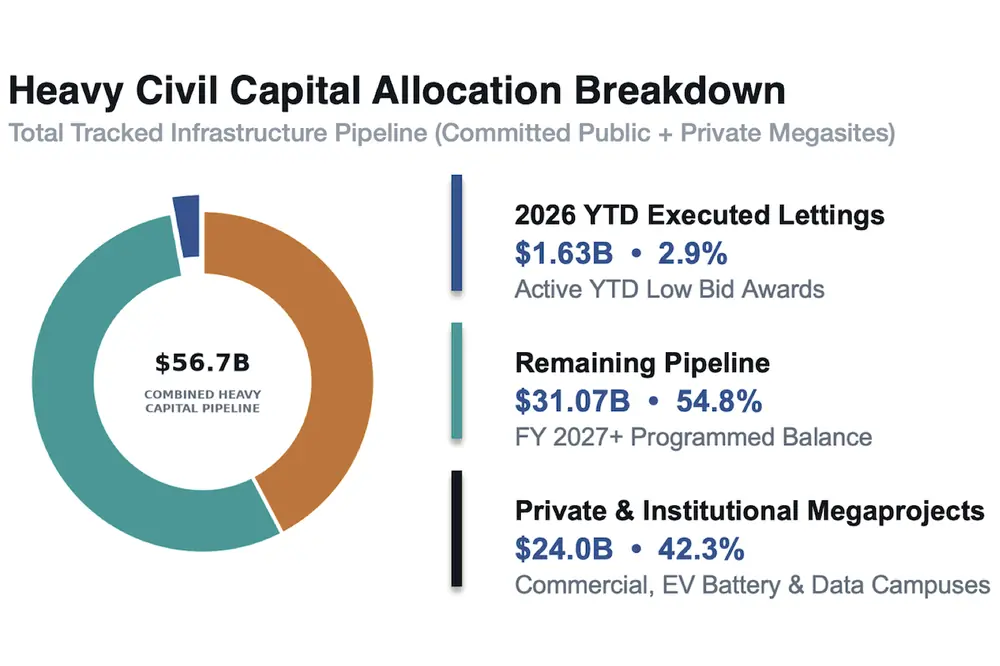
The region’s $56.7 billion capital pipeline is supported by two distinct engines:
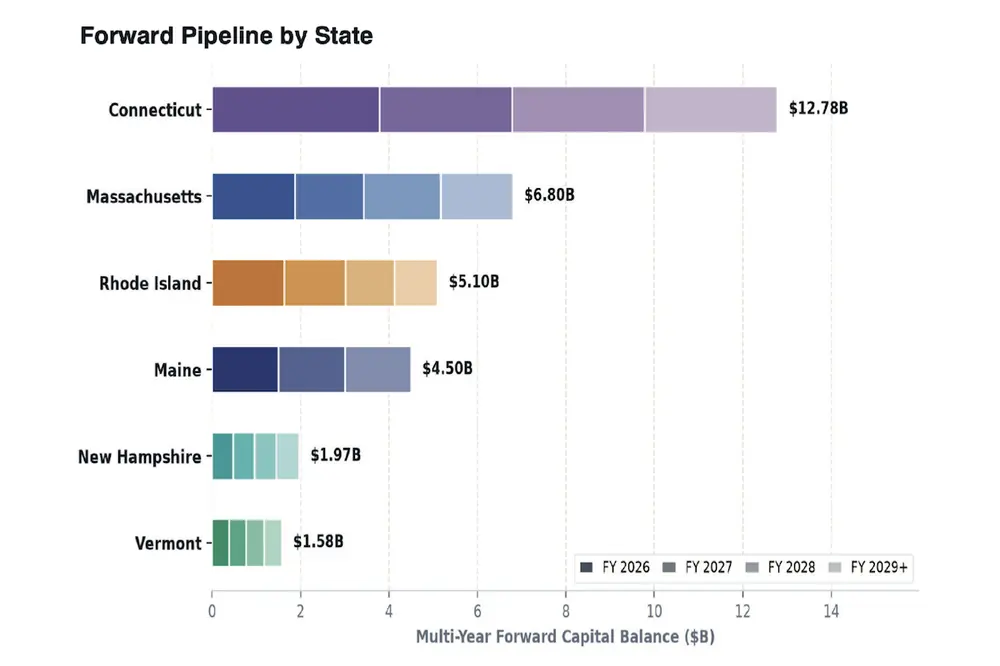
- Public transportation projects ($32.7 billion): Multiyear programs backed by federal formula funds, including $1.63 billion (349 contracts) executed January through August 2026, plus $31.1 billion in forward Statewide Transportation Improvement Program (STIP) balances across all six New England states.
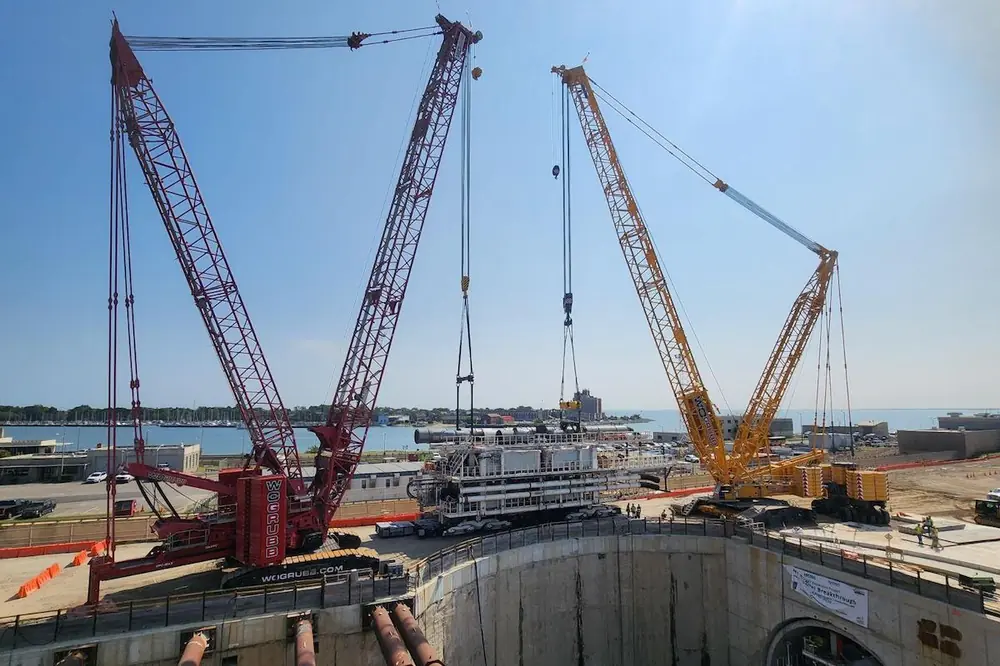
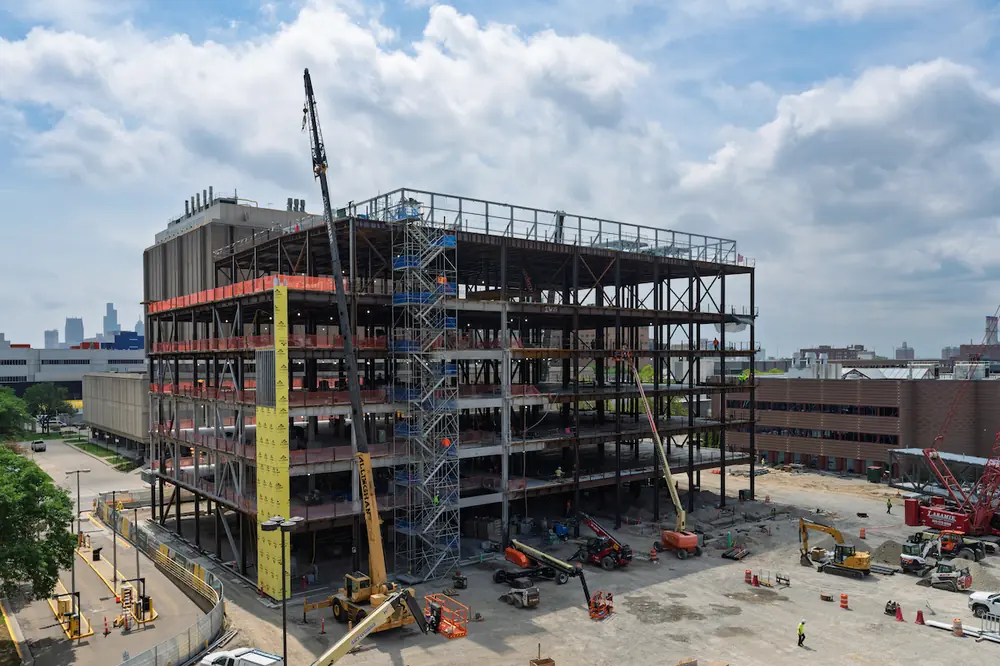
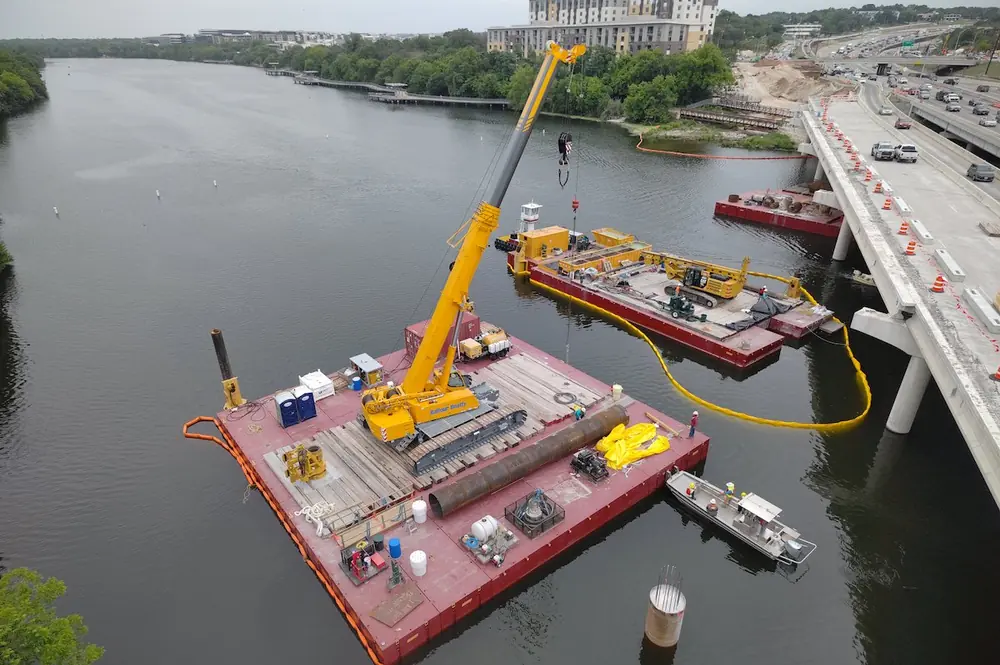
- Private and institutional megaprojects ($24 billion): Non-highway developments requiring substantial earthmoving, deep foundations, and structural iron, including offshore wind farms, life sciences and health care campuses, water treatment plants, and industrial and defense facilities.
As federal legislators work on new long-term transportation funding, committed public and private projects provide a steady flow of work — both supporting business growth and creating challenges with competition for labor and other resources.
For work with state departments of transportation, over 97 percent of letting dollars across the six New England states are awarded in contested environments averaging 3.6 bidders per project. Among individual states, the numbers top out at 4.4 average bidders in Connecticut and, at the lowest, 3.2 average bids in Maine. This puts pressure on every bidder and contradicts the perception that rural or outlying projects face single-bidder environments.

| Your local Topcon Positioning Systems Inc dealer |
|---|
| Linder Industrial Machinery |
Data from current year letting activity through August 2026 provides additional insight into market competition among the 250 active bidding prime contractors in New England:
- Average margin of victory: The regional average spread between the winning (first low) bidder and second-lowest bidder stands at 11.5 percent, while the average spread between the winning bid and third-lowest bid rises to 19.5 percent.
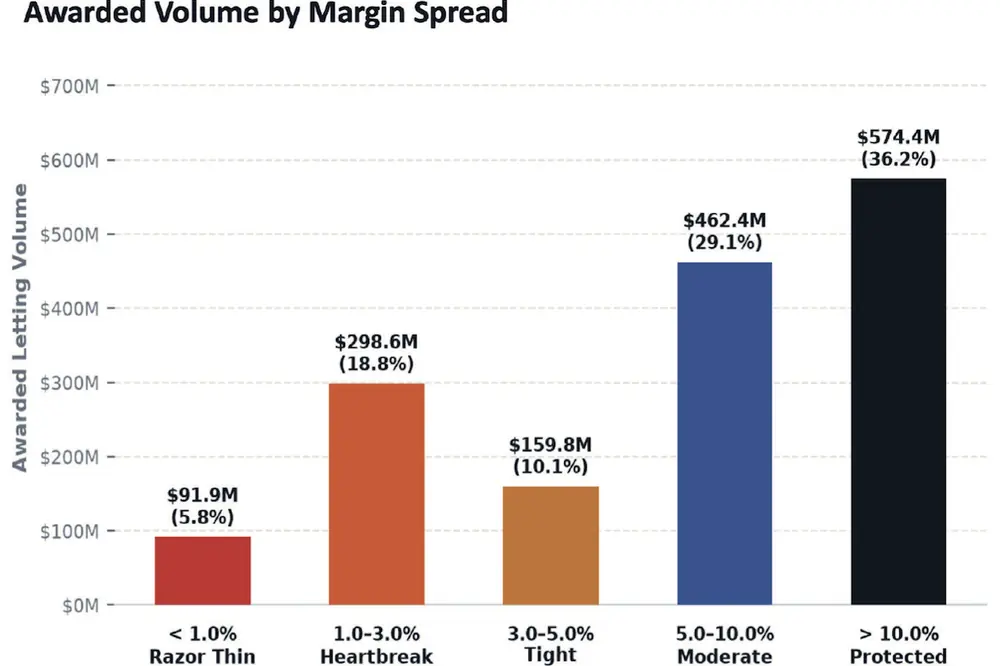
- Razor-thin margin cluster: However, nearly a quarter of all competitive volume (24.6 percent, or $390.5 million across 74 lettings) is decided within a 3 percent margin spread, requiring aggressive pricing and estimating precision.
- Competitive corridor: 39.2 percent ($622.1 million across 105 lettings) of competitive volume was awarded within a 3 percent to 10 percent spread.
- Specialized wins: A healthy 36.2 percent of awards ($574.4. million across 147 lettings) saw a spread of over 10 percent, reflecting specialized scope typically seen on complex structural steel, deep foundations, or marine engineering contracts with limited qualified bidders.
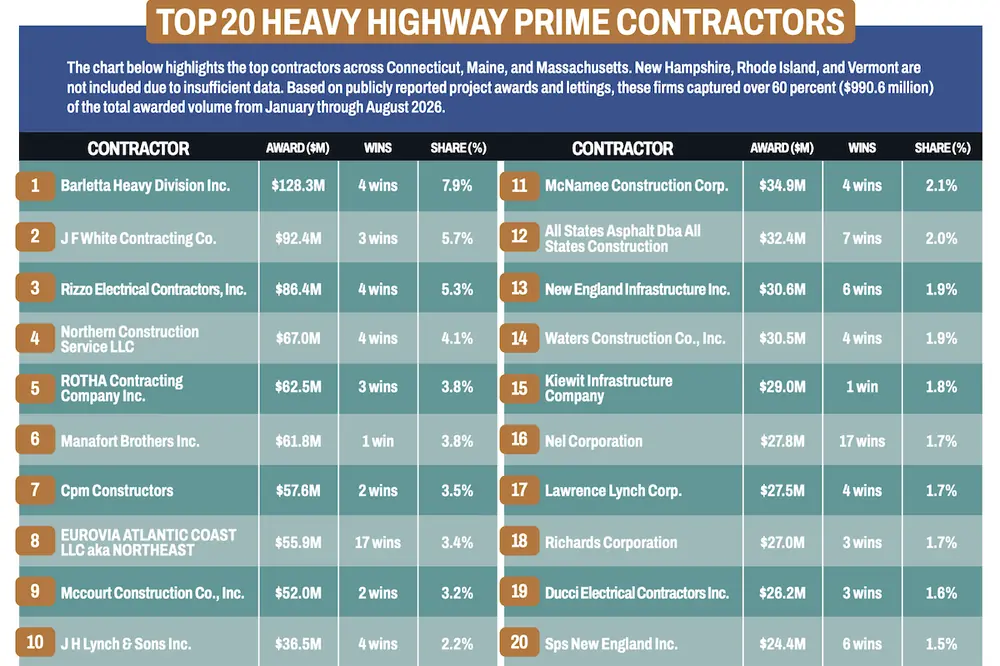
In Connecticut, Maine, and Massachusetts, regionally domiciled contractors captured 85.2 percent of contract volume, supported by established local asphalt, aggregate, and equipment resources. Out-of-state prime penetration generally occurred in large-scale, specialized structural bridge packages and complex joint ventures. (Other states were not included due to insufficient data.)
Each state budgeted billions of dollars in multiyear commitments for highway and other infrastructure work, signaling ongoing opportunities.

| Your local Bomag Americas dealer |
|---|
| Linder Industrial Machinery |
Complementing STIP planning, the Connecticut Department of Transportation’s (CTDOT) five-year Capital Plan includes more than $15 billion in transportation projects during federal fiscal years (FFY) 2026-2030. The state leads the region in transit prioritization. In FY 2026 alone, Connecticut programmed $2.16 billion (57 percent of its budget) for bus and rail, including the MOVE New Haven Bus Rapid Transit System, upgrades along the Waterbury Branch Line and Hartford Line, and replacing the Devon Railroad Bridge between Milford and Stratford.
In summer 2026, CTDOT broke ground for the three-phase, $1.6 billion TIME-1 project to modernize the New Haven Line running between New Haven and New York City, the busiest individual commuter rail line in the U.S. Completion is expected in 2035.
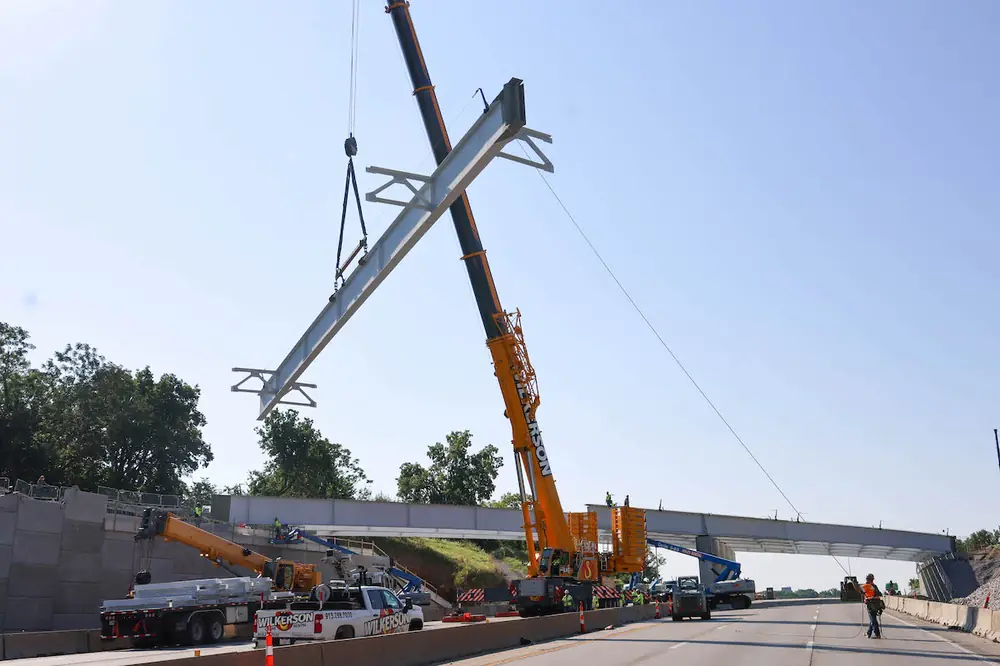
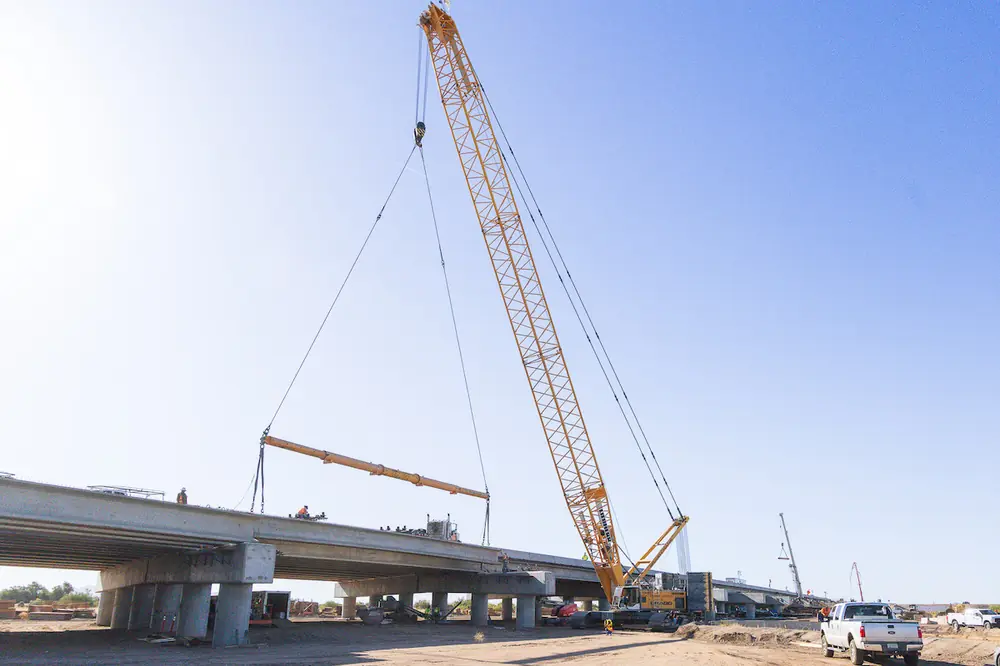
The state’s FY 2026 Capital Plan also allocated $1.6 billion for roadway and bridge infrastructure, including I-91/I-691/Route 15 interchange improvements in Meriden and Middletown, I-95 Gold Star Memorial Bridge rehabilitation and multimodal improvements in Groton and New London, and rehabilitation of the Putnam Bridge in Glastonbury and Wethersfield.

| Your local Komatsu America Corp dealer |
|---|
| Linder Industrial Machinery |
Maine’s 2026-2028 Work Plan outlines 2,798 planned transportation projects totaling $4.5 billion. For highways and bridges, that includes:
- $975 million for 235 bridge construction and 121 bridge engineering projects
- $465 million for 147 miles of highway construction and rehabilitation
- $558 million for 1,030 miles of preservation paving
- $213 million for highway safety and spot improvements
- $120 million for 2,100 miles of light capital paving to extend roadway life
The Work Plan also provides $292 million for transit and $177 million for aviation, as well as investments in active transportation projects, ports, and ferries.

| Your local Trimble Construction Division dealer |
|---|
| SITECH Mid-South |
Priority corridors include I-95, I-295, and U.S. Route 1 coastal freight arterials.
The Massachusetts Department of Transportation Board of Directors recently approved the fiscal year 2027-2031 Capital Investment Plan. The $20.7 billion plan includes:
- $7.1 billion for the state’s bridge program encompassing more than 300 projects
- $2.1 billion for roadway reconstruction designed to improve safety, mobility, and resiliency
- $2 billion for Chapter 90 and other municipal grant programs, including Complete Streets, Shared Streets and Spaces, and the new Community Culverts grant program
- $1.77 billion in investments for the Massachusetts Bay Transportation Authority
- $1.3 billion for pavement programs on interstates and non-interstates
- $746 million for intersection and safety improvements to address top crash locations
- $731 million for bicycle and pedestrian infrastructure

| Your local Volvo Construction Equipment dealer |
|---|
| Richmond Machinery & Equipment |
Priority projects include replacement of the Cape Cod Bridges, the Allston Multimodal Transportation Project, the Storrow Drive Tunnel in Boston, and the I-93/I-95 interchange in Woburn and Reading.
New Hampshire’s $4.7 billion 10-year transportation plan covers highways, bridges, paving, transit, airports, and rail. Facing a funding shortfall due in part to rising costs and stagnant gas tax revenue, the state had to cut roughly $300 million from their initial plan. Thirty-four projects were eliminated, 15 were delayed, and no new major projects were added in the outer years of the plan.
Priority corridors include I-93, I-293, NH 101, and the F.E. Everett Turnpike.

| Your local Wirtgen America dealer |
|---|
| Dobbs Equipment (SC) |
The state’s 10-year STIP program includes over $10 billion in funding for FFY 2026-2035. In FFY 2026-2029, noted as fiscally constrained, 69 percent of funds are dedicated to asset management. That work is designed to boost the state’s economic competitiveness by addressing structurally deficient bridges and poor pavement conditions, improving safety, and elevating resiliency through expanded stormwater and drainage systems.
Priority corridors in the state include I-95, Route 10, and the RI 146 Providence Metro Corridor.
| Your local Topcon Positioning Systems Inc dealer |
|---|
| Linder Industrial Machinery |
The FY 2027 program development budget for the Vermont Agency of Transportation includes:
- $149.9 million for paving
- $51.3 million for interstate bridges
- $85 million for state highway bridges
- $53.9 million for roadways
- $53.9 million for traffic and safety improvements
- $24.6 million for bike and pedestrian facilities
The FY 2027 budget also includes $60.3 million for rail, $57.9 million for the public transit program, and $13 million for aviation.
In the state’s STIP program, priority corridors include I-91, I-89, U.S. Route 7, U.S. Route 2, and VT Route 100.
| Your local Topcon Positioning Systems Inc dealer |
|---|
| Linder Industrial Machinery |
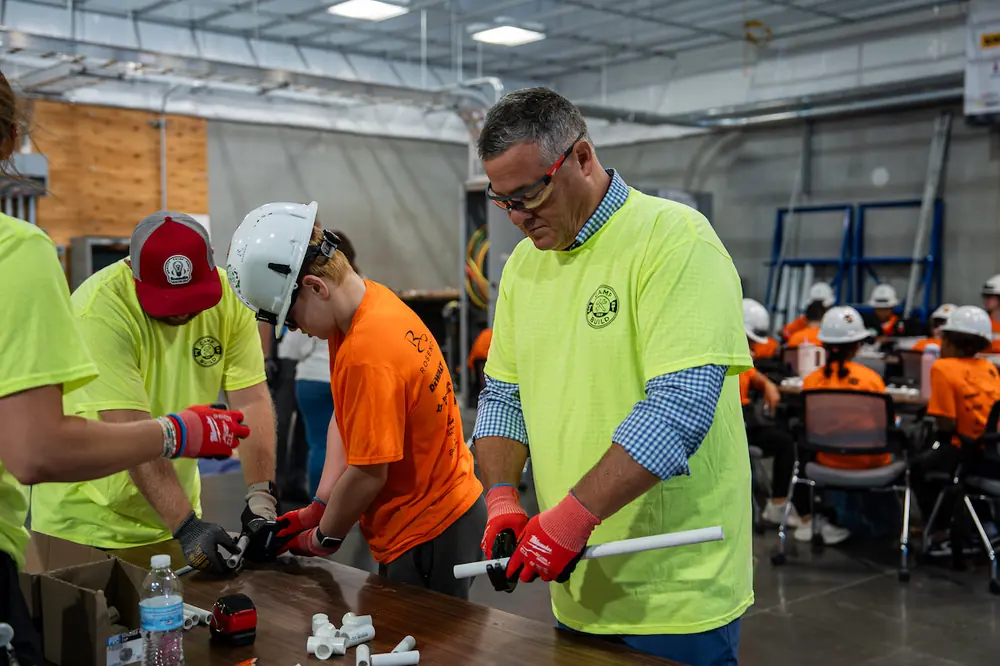
Beyond funding, one of the biggest challenges to timely project completion is the ongoing labor shortage. In the 2026 Workforce Survey from Associated General Contractors of America (AGC) and the National Center for Construction Education and Research, 43 percent of respondents from northeastern states had experienced project delays due to a shortage of workers (their own or subcontractors’).
That does not come from a lack of trying. Thirty-nine percent of firms in northeastern states said they increased their headcount in the past 12 months, but 86 percent still had openings for hourly craft professionals and 90 percent had openings for salaried positions. Over 40 percent of firms reported that filling those positions was harder than a year ago.
To find more qualified workers, firms turned to new avenues including:
- Social media or targeted digital ads to connect with younger applicants
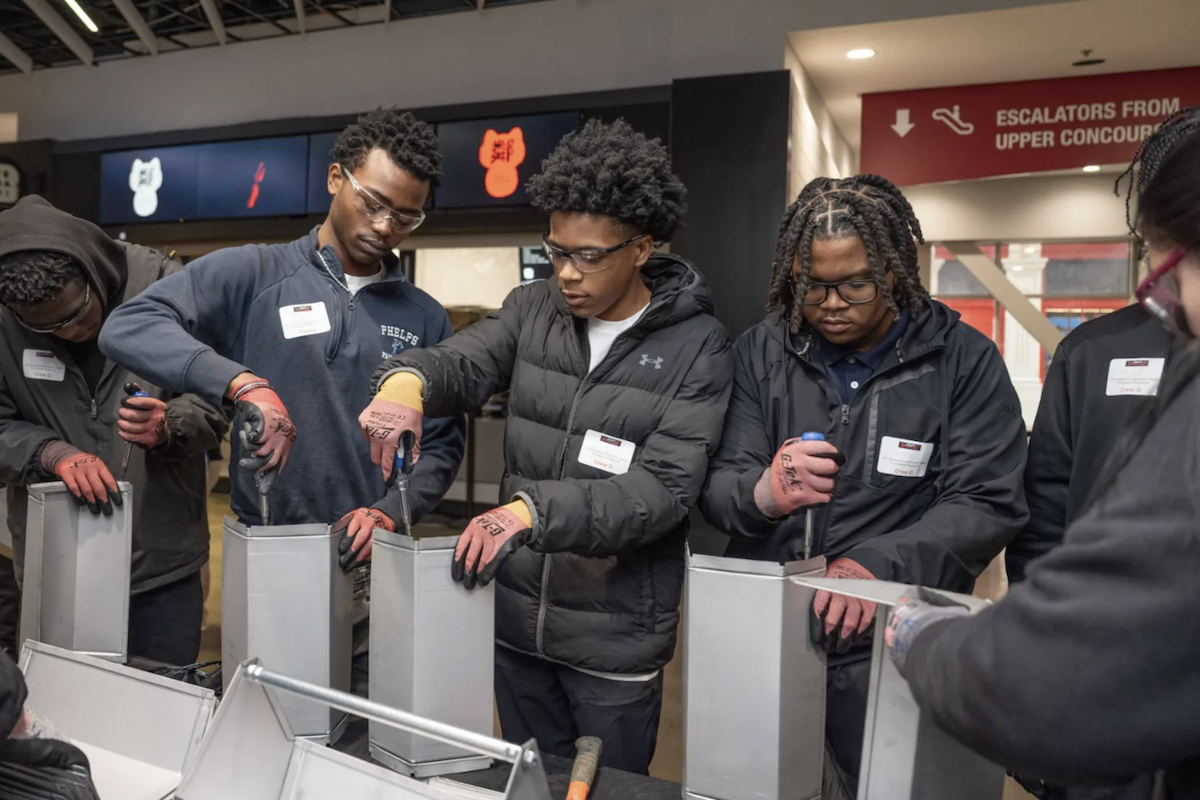
- Engaging with high schools, colleges, and other career and technical education programs
- Outreach programs directed at women and minorities
- Engaging with government workforce development or unemployment agencies
- Implementing software to distribute job postings and manage applications
| Your local Topcon Positioning Systems Inc dealer |
|---|
| Linder Industrial Machinery |
To retain and upskill employees, 31 percent of northeastern firms responding to the survey had increased spending on training and professional development. Upskilling efforts included:
- Technology to deliver and track training
- Partnering with third parties for training courses
- Implementing visible, defined career paths
- Strengthening performance review
In addition, 53 percent of respondents in the Northeast increased base pay rates for both hourly craft and salaried personnel.
The New England construction market remains strong — but not without complexity.
| Your local Topcon Positioning Systems Inc dealer |
|---|
| Linder Industrial Machinery |
In addition to workforce challenges, AGC recently reported that some steel component manufacturers say their order books are full through spring 2027. Prices continue to rise across the country. The producer price index for inputs to new nonresidential construction jumped 11.9 percent from September 2025 to September 2026, the most in four years, according to an AGC analysis of government data.
As the region moves into less activity due to seasonal weather restrictions, firms should consider implementing these steps in 2027:
- Workforce development efforts: Skilled labor gaps pose the most immediate risk to timely project delivery. Partnerships, training, and retention strategies will be critical to success.
- Early project coordination: Work with owners and designers to identify needed materials, equipment, and other resources and ensure their availability.
- Expanded supplier partnerships: Explore alternatives for long-lead items — before problems hit the job site.
- Technology options: For contractors looking to boost competitive bidding and meet rising DOT standards, a capital, subscription, or rental investment in automated machine guidance, grade control, telematics, or other technology could be worth a look to maintain profitability on tightly priced bids.
Transportation agencies across the region concentrate prime highway project lettings in the spring and early summer. Firms that act now to overcome market challenges will be best positioned to thrive and capture high-margin opportunities.