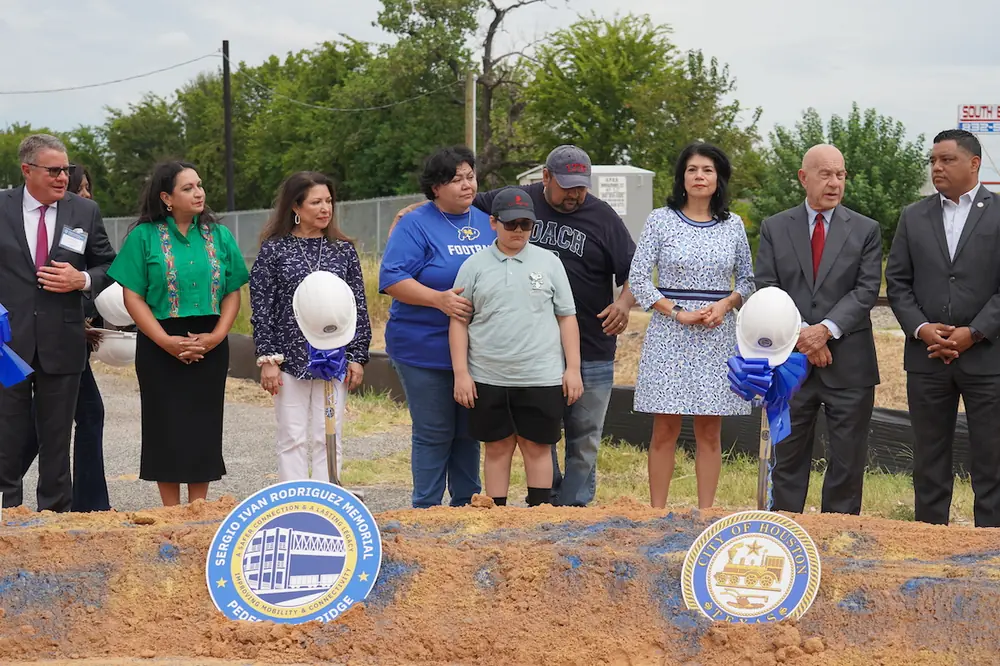

Slated for completion in November 2026, Harris Health’s new Holly Hall Operations Center will add a new pharmaceutical filling and distribution station near South Houston’s Texas Medical Center, the world’s largest medical complex.
The centralized pharmacy hub will include automated, robotic pharmaceutical refill capabilities — supplemented by the expertise of onsite, human pharmacists — to streamline and expedite prescription filling for Harris Health’s numerous hospitals, clinics, and outpatient pharmacies across Harris County.
Capsa Healthcare, the design and installation partner for the new facility’s pharmaceutical automation, noted that the new robotic refill system will enable Harris Health to increase its pharmaceutical filing volume from its current rate of 5,000 scripts a day to 15,000 prescriptions daily, once the new 145,000-square-foot facility is complete.
Skanska is serving as the general contractor on the four-story, $54 million project.
In addition to its innovative use of pharmaceutical automation, the project also represents a pioneering use of tilt-wall construction, thanks to its adoption of some of the highest tilt-wall panels in the region.

| Your local Liebherr Construction Eq dealer |
|---|
| Nueces Power Equipment |
Baker Construction, a longtime partner of Skanska, poured the building’s concrete foundations and serves as its tilt-wall concrete subcontractor. MSD Building Corp., another partner on numerous Skanska projects, serves as the project’s tilt-wall erector and structural steel fabricator/erector.
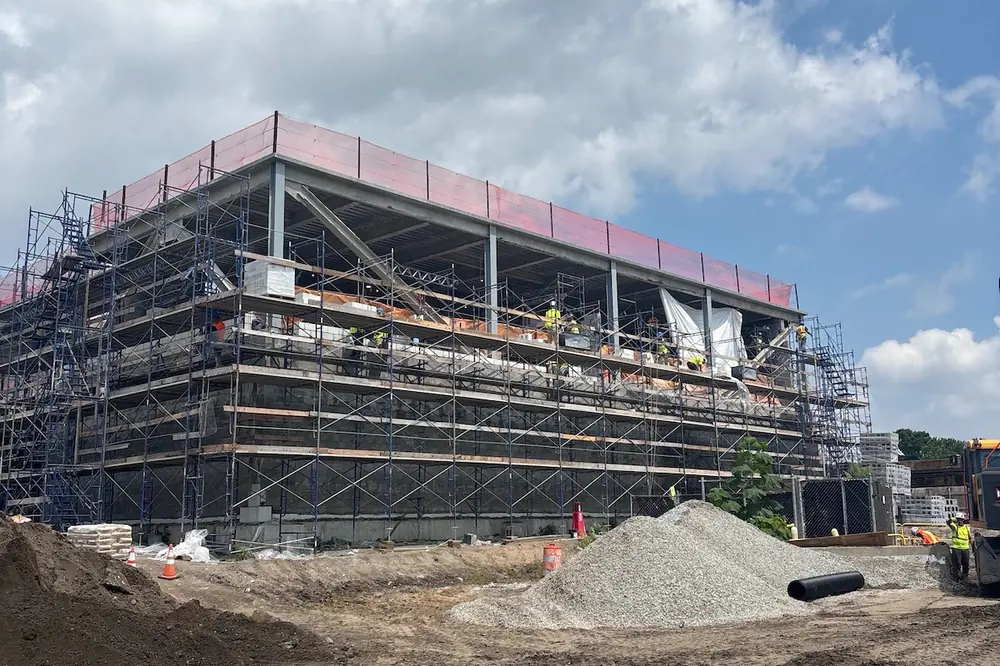
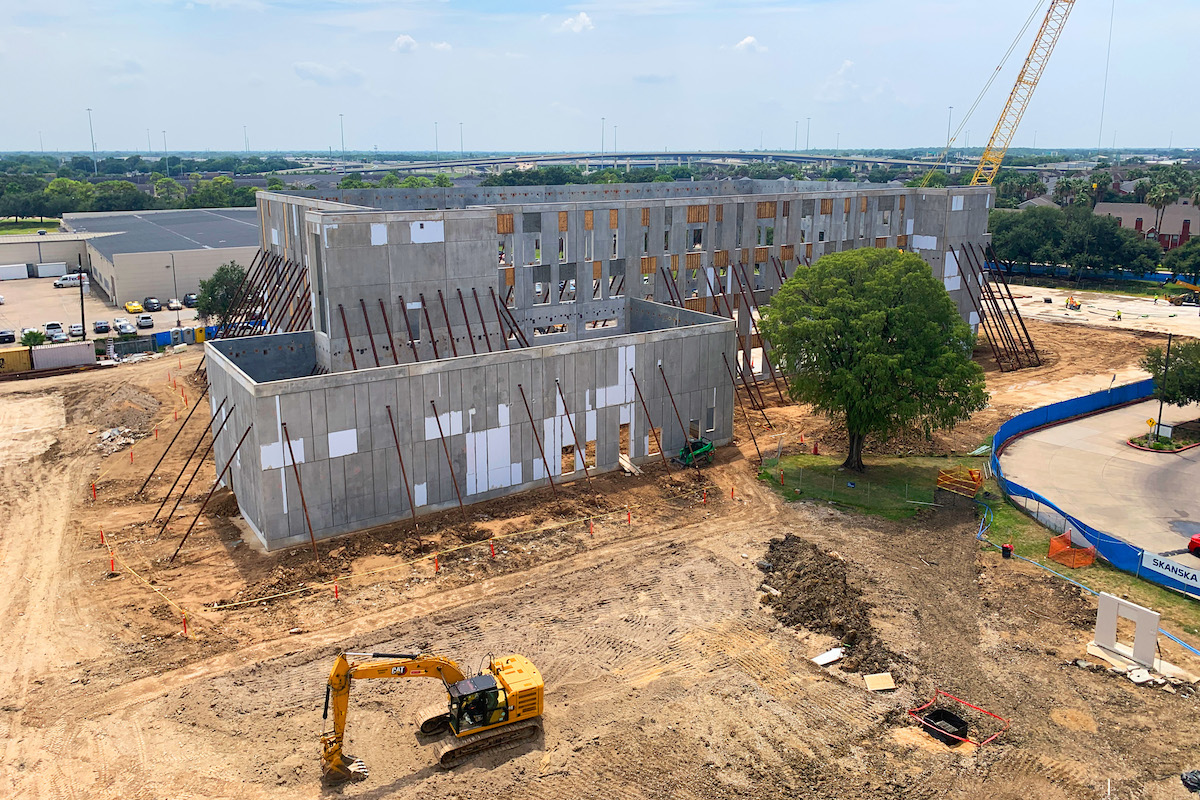
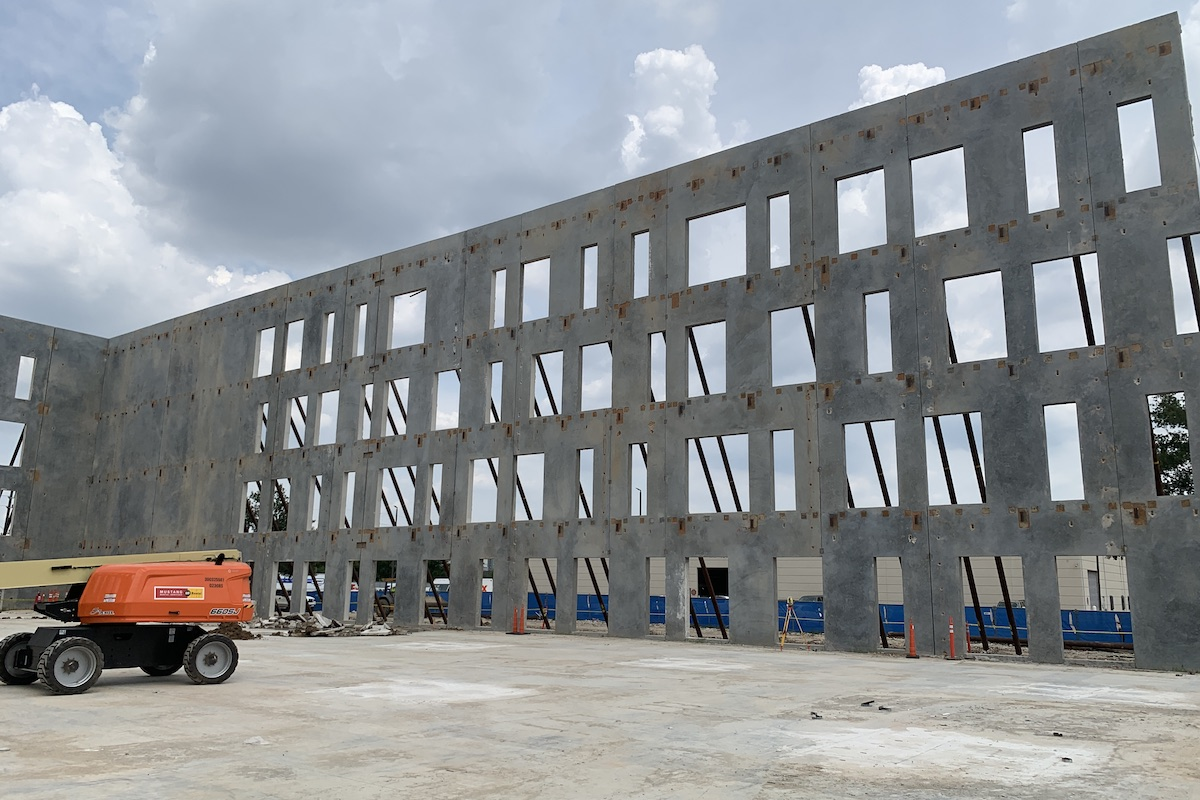
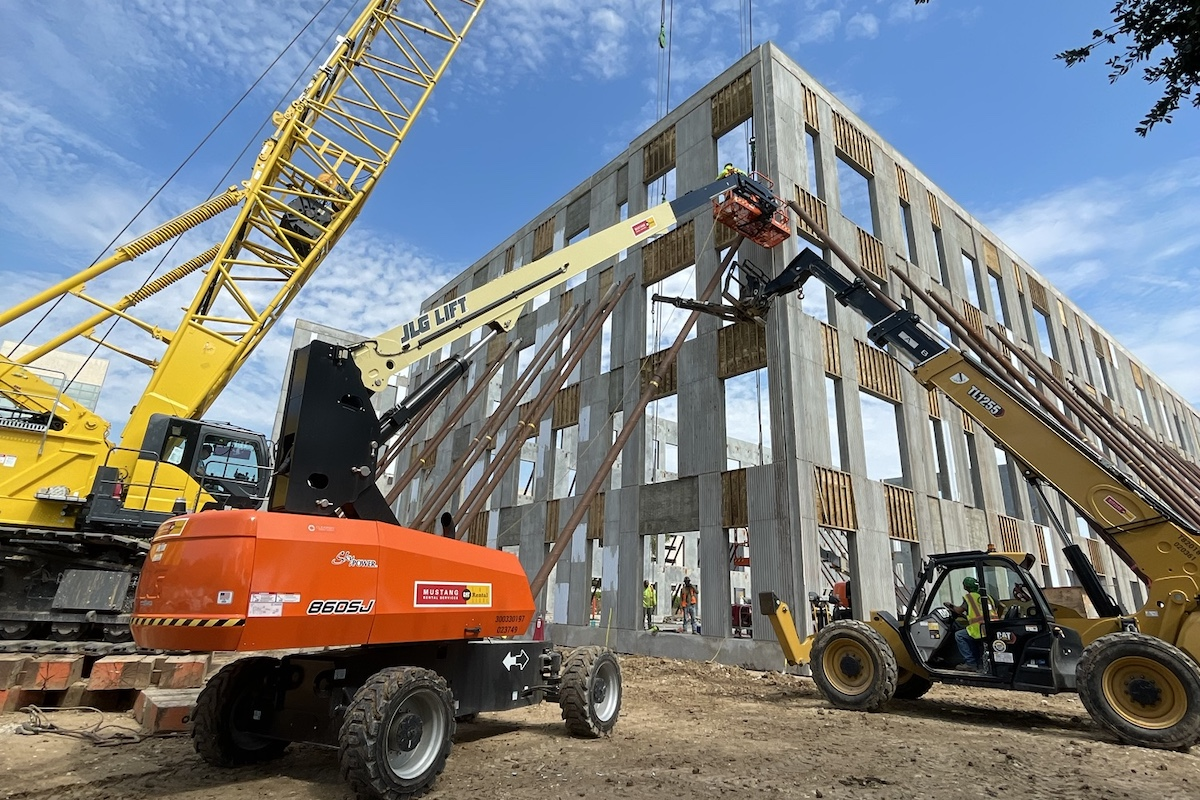
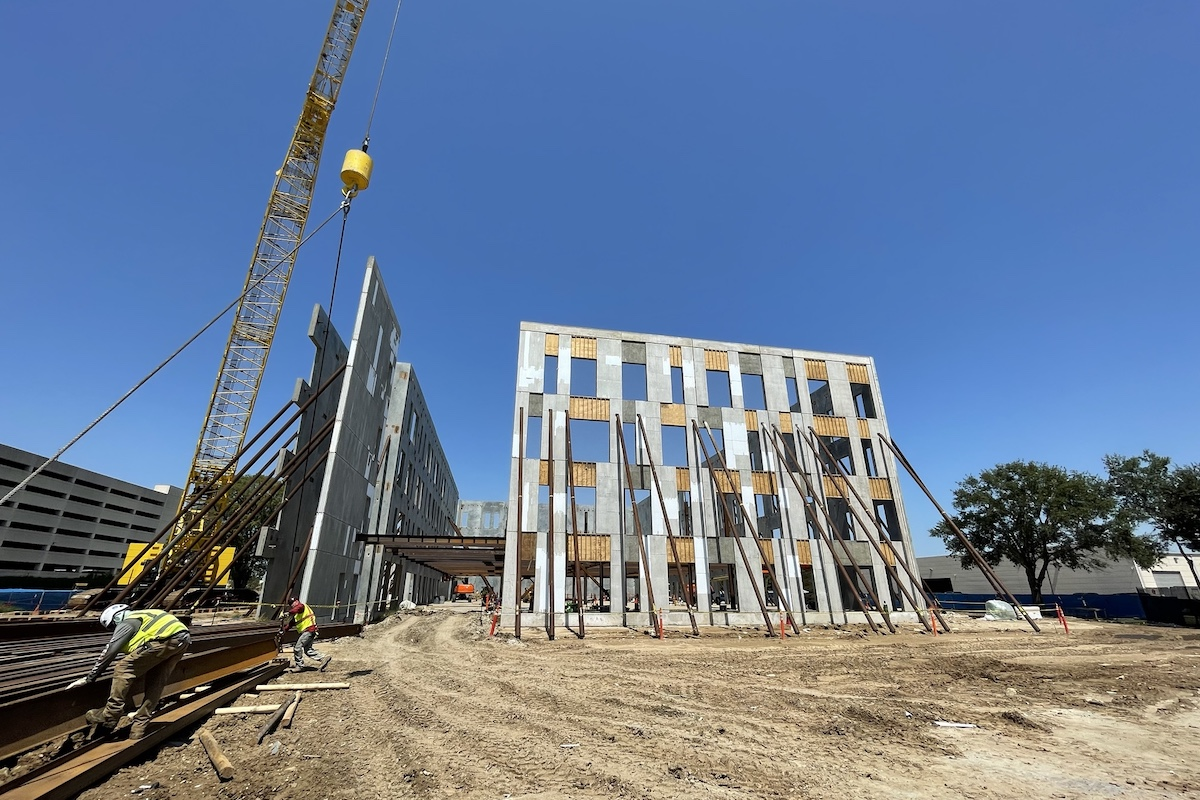
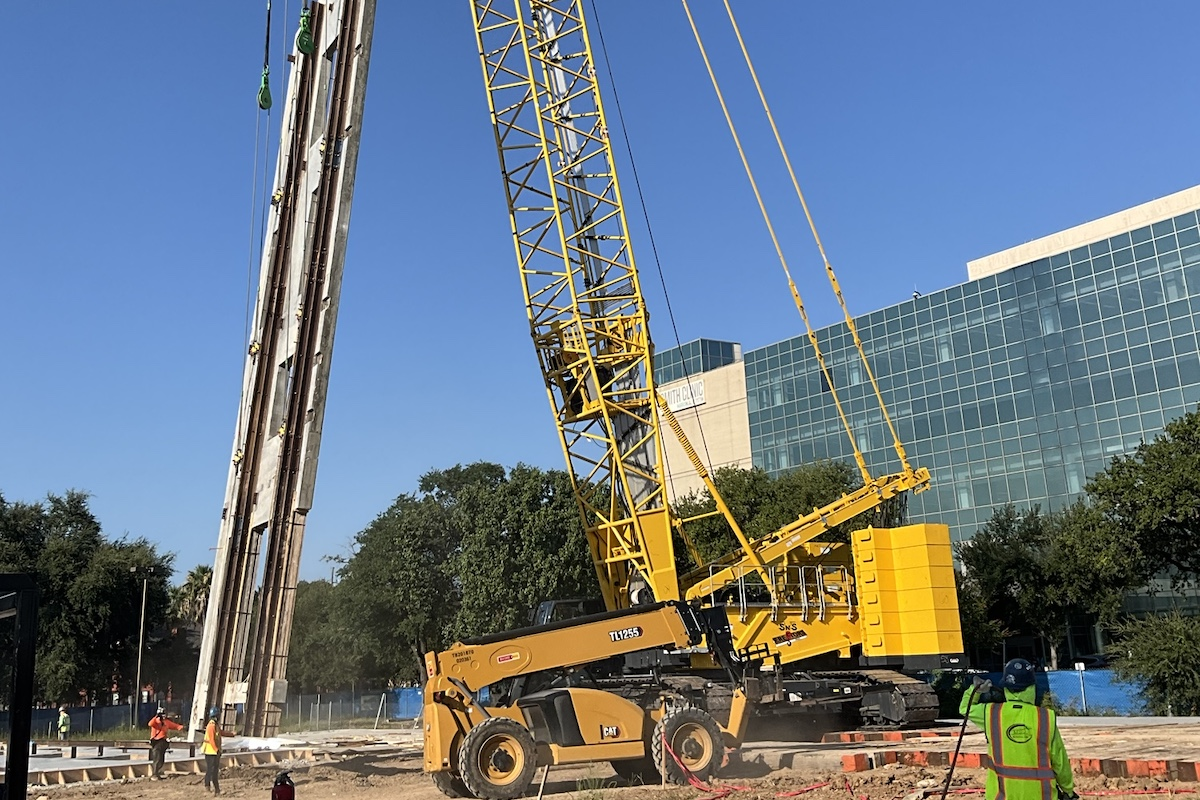
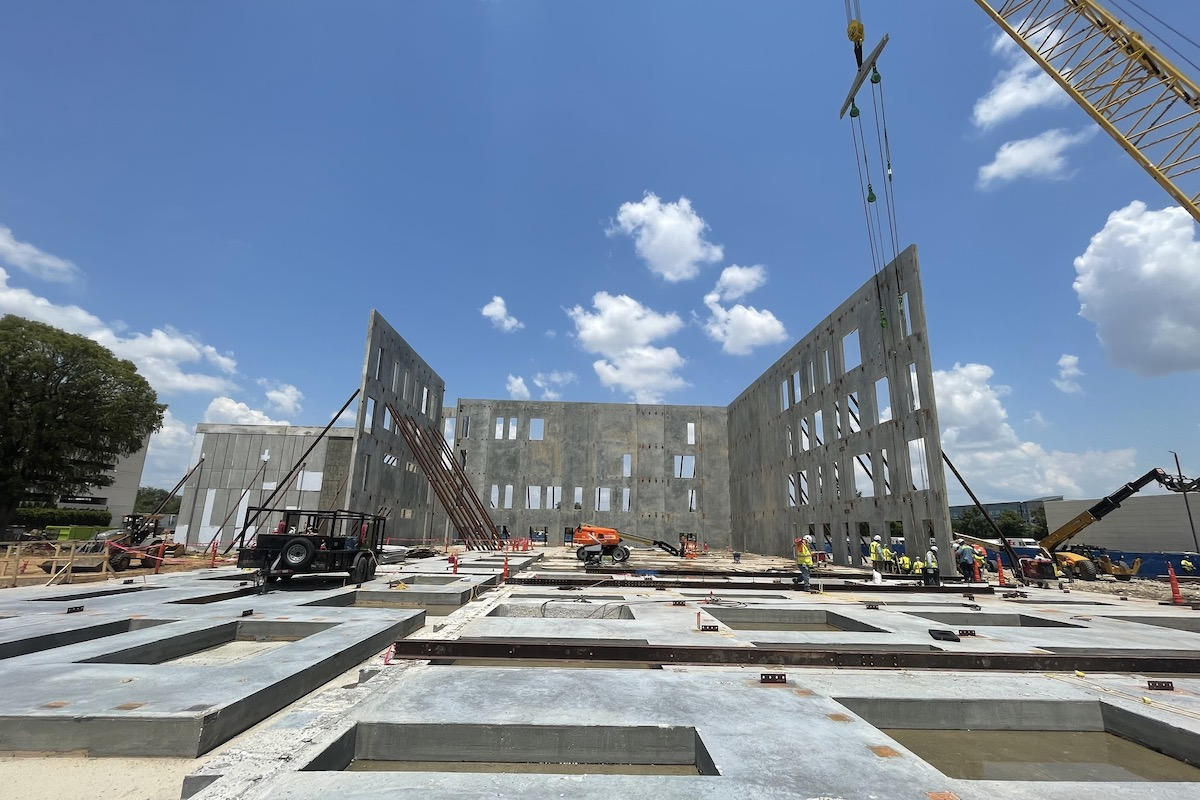
The building’s design calls for stacking 65 tilt-wall concrete panels — each 12.5 inches thick — four stories high, or 75 feet from foundation to roofline, making it “among the tallest tilt-up construction achievements in Houston,” according to a Baker Construction statement about the project.
The tilt-wall panels are engineered to serve not only as exterior walls but as structural components able to carry the weight of the building. Opting for a tilt-wall design helped expedite the overall construction process, said Ben Johnson, a Project Executive at Skanska.
Demolition and mobilization of the build site began in November 2024, following roughly a year of design collaborations between owner Harris Health and architect/designer HDR. Large-scale construction began in January 2025.

| Your local Broce Broom dealer |
|---|
| Nueces Power Equipment |
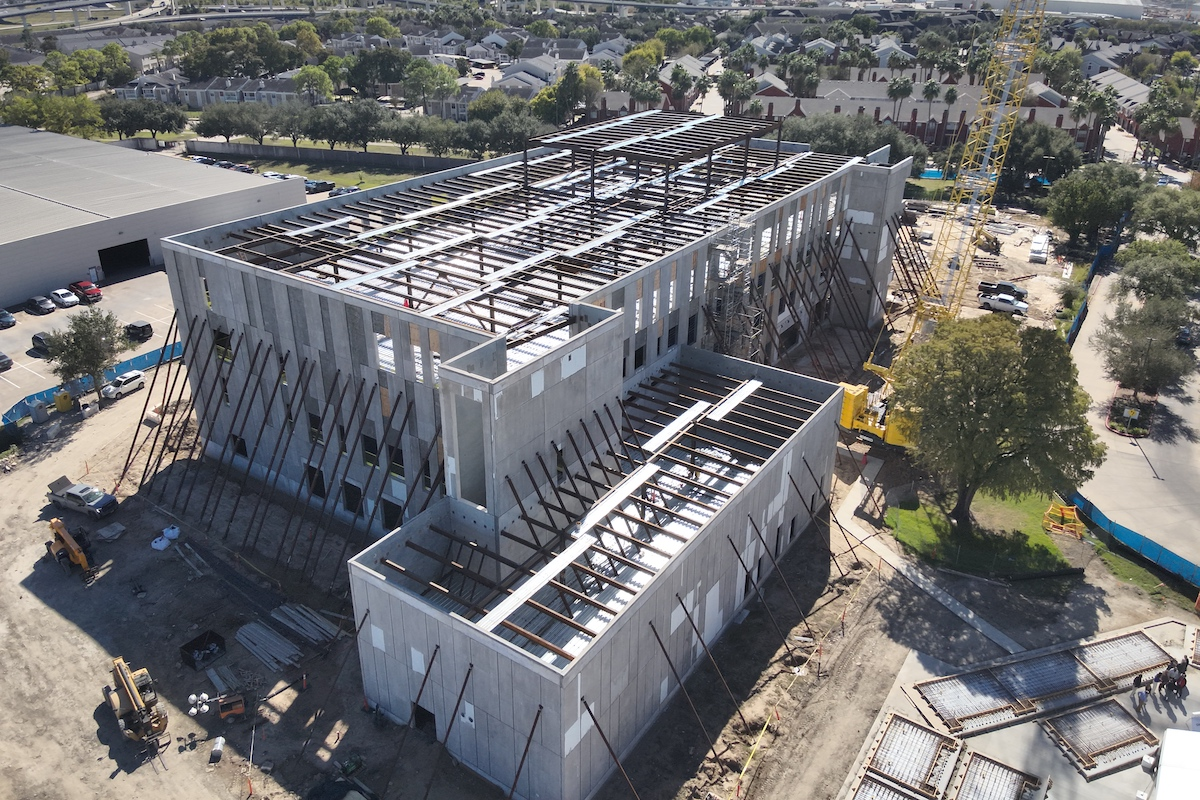
As of December 2025, crews had completed the installation of the facility’s concrete foundations and structural steel supports, as well as its tilt-wall exterior façade and poured concrete floors.
“It’s hard to believe what’s come together in essentially just 12 months of construction,” Johnson said. “We are currently working on MEP [mechanical, electrical, and plumbing] rough-in, doing overhead duct work and overhead electrical. Then we’ll come in behind that and start hanging walls.”
In all, crews have poured more than 10,000 cubic yards of concrete and placed more than 600 tons of structural steel.
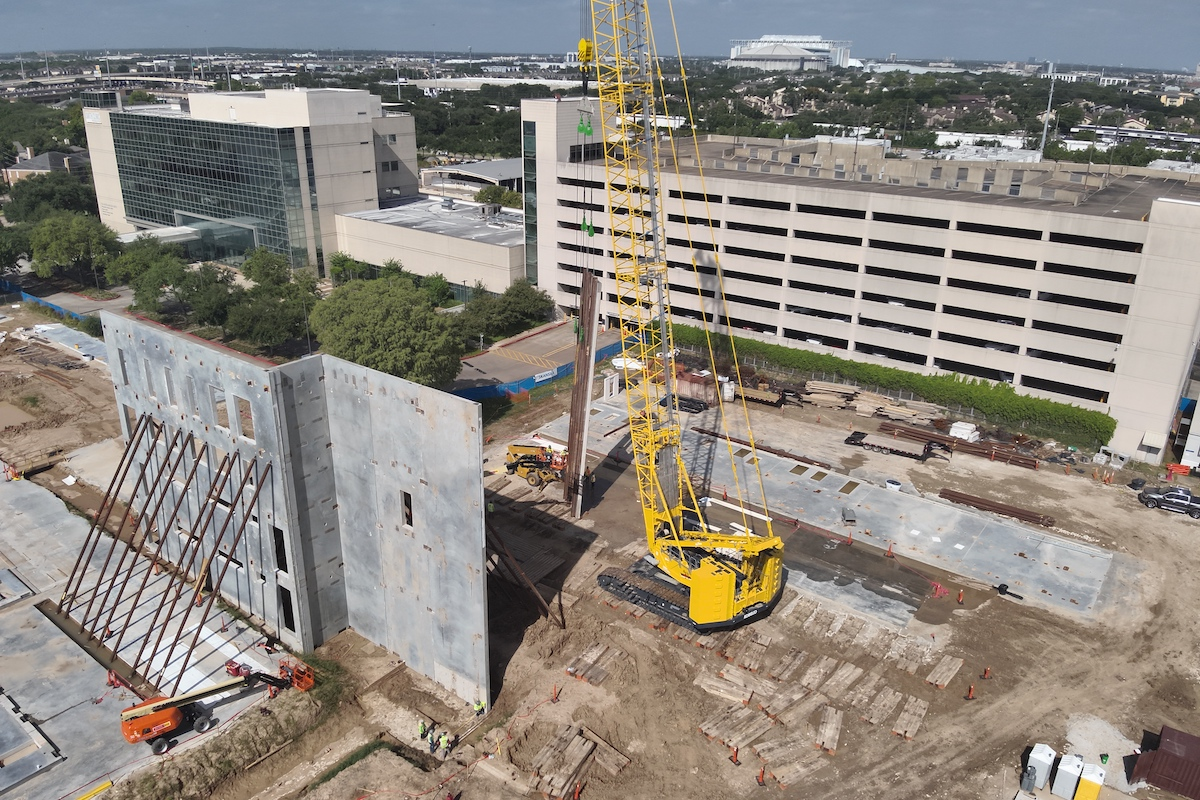
While the tilt-wall construction method has enabled the building to go up quickly, the process was not without its challenges — particularly given the build site’s relatively small, 7.5-acre footprint.

| Your local Bomag Americas dealer |
|---|
| WPI |
“When you're doing tilt-wall construction, you have to pour all the panels horizontally on the ground, and because they are so large and you're trying to get all of them formed and poured, it takes up the entire site,” Johnson said. “There's just nowhere else on site to really do anything. That was our biggest challenge.”
Skanska teams eventually negotiated a deal with the neighboring FedEx distribution center to utilize some of their property during the build, in order to have clearance to accommodate the new building’s tilt-wall panels and the Kobelco CK3300G Crane that was used to erect them.
Developing a workable, logistical construction flow that provided room for both curing and erecting dozens of panels — along with the imposing crane’s 295-foot boom length — required serious, hands-on planning.
“Planning was key,” Johnson said. “I think before we poured even a single panel, we probably had 20 coordination meetings to figure out how we were going to make everything work.”

| Your local Gomaco dealer |
|---|
| Closner Equipment Co Inc |
During these planning sessions, MSD Building Corp. representatives “actually took paper and created what we call ‘paper dolls’ — little pieces of paper scaled to the site — that we could all move around on the conference table like a big puzzle board, so we could plan a way to place everything and still leave room for the crane to work,” Johnson explained.
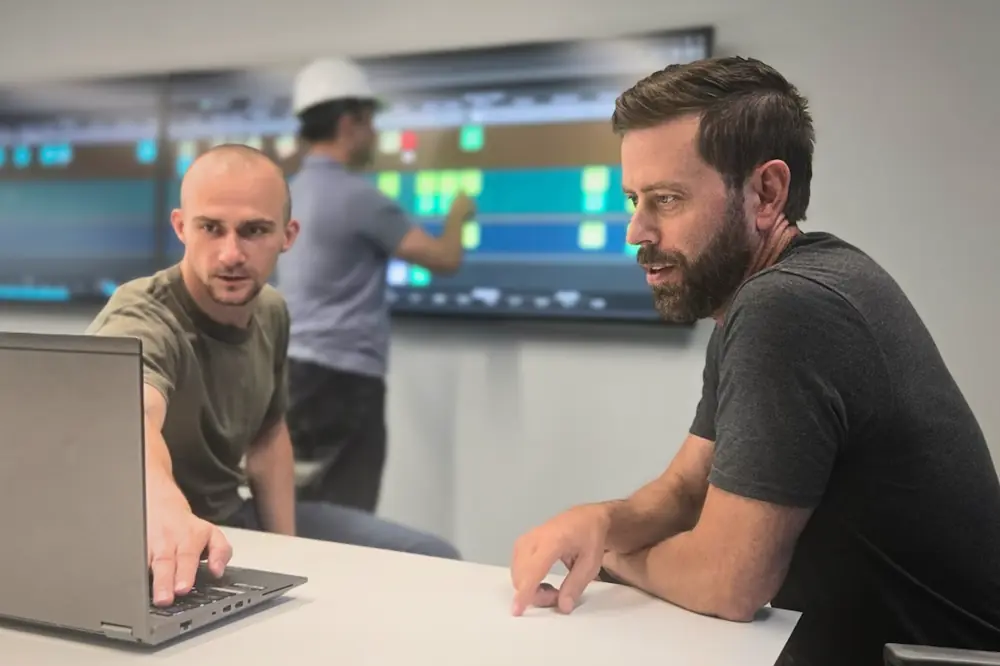
Eventually, Skanska team members developed a digital version of the paper dolls that teams could maneuver via computer screen. All this planning helped the project's various stakeholders visualize and plan around the constraints of the site, which also sits near the main entrance of Harris Health Smith Clinic and several busy roadways, Johnson said.
“Pedestrian safety was another main concern,” Johnson added. “We needed to ensure that traffic flow remained uninterrupted and that the Smith Clinic could continue accepting patients as usual.”
“Forming, lifting, and setting the panels demanded space for casting beds and a crane, all while keeping clinic operations undisturbed,” Baker Concrete Construction noted in a statement about the project.

| Your local Case Construction Equipment Inc dealer |
|---|
| ASCO Equipment |
| Nueces Power Equipment |
Given the limited space for staging, Baker crews adopted a just-in-time delivery approach, “bringing in what was needed, when it was needed, and immediately putting it in place,” Baker representatives said.
As an added challenge, Skanska crews were charged with protecting a memorial tree on the property during construction. As a result, teams had to carefully plan both the building’s concrete pour and panel erection sequences to ensure that the tracks of the crane would not negatively impact the tree, Johnson said.
“There was a lot that went into constructing this project, and at times it pushed the limits of what we thought was possible,” Johnson said. “As a matter of fact, the superintendent from MSD who has led tilt-wall construction all over the country said it’s the most complicated tilt-wall project that he’s ever been a part of. When someone that experienced says something like that, you realize we had quite a challenge on our hands.”
Inside, teams faced another logistical challenge: overseeing flooring installation to near-perfect flatness.

| Your local LeeBoy dealer |
|---|
| Closner Equipment Co Inc |
| Romco Equipment Co |
The planned installation of high-tech, robotic-based pharmaceutical automation systems required the flooring in the new pharmacy building to adopt precise parameters for flatness that well exceeded those of a typical build, Johnson said.
“There's a standard in construction that dictates how flat the floor has to be, and that's a normal part of our quality control process. But in this case, that standard was increased dramatically for the robotics,” he explained.
As a result, Skanska and its partner contractors had to engage in multiple flatness surveys throughout every stage of the floor construction process.
“When we were laying out steel and pouring concrete, we were taking extra precautions to make sure that we got the concrete ultra flat,” Johnson said.

| Your local Link Belt dealer |
|---|
| Nueces Power Equipment |
| Central Texas Equipment |
Currently, plans call for pharmacy fill services to utilize floors three and four of the new building, leaving floors one and two for flexible expansion and possible future clinic space. The mixed-use space ensures the building will be able to adapt to serve the community’s evolving needs.
As a final step to the building’s exterior, teams will paint the tilt-wall concrete panels white and install a series of narrow, blue-tinted windows, giving the building a similar look to other buildings in the Harris Health system.
Johnson said the positive working relationship between Harris Health, Skanska, and the various building partners has enabled the project to go smoothly, despite the logistical challenges of tilt-wall construction in such a tight footprint.
“The entire team has been so cohesive,” he said. “We all understand our roles, and we're all dedicated to what's in the best interest of the project.”

| Your local Hitachi dealer |
|---|
| ASCO Equipment |
- Owner: Harris Health, Houston, Texas
- General Contractor: Skanska, New York, New York
- Architect/Designer: HDR, Omaha, Nebraska
- Structural Consultants: MME Civil + Structural Engineering, Santa Cruz, California; Walter P Moore, Houston, Texas
- Mechanical/Electrical Consultant: SSR, Nashville, Tennessee
- Other Contractors/Trade Partners: MSD Building Corp. (tilt-wall erector and structural steel fabricator/erector), Baker Concrete Construction (concrete foundations and tilt-wall subcontractor), No Limit Construction (demolition, earthwork, and site utilities), N. Gil Electric (electrical subcontractor), Gowan/Garrett (HVAC & mechanical), Capsa Healthcare (designer/installer for automated central fill processing system)