
Spurred by the recurring threat of major flooding along the Red River in North Dakota and Minnesota, community leaders developed a long-term plan and began implementing the $3.2 billion Fargo-Moorhead Area Diversion project.
“People’s property and businesses are affected in major flood stages,” said Luke Chenery, CEO of the Red River Valley Alliance (RRVA), which was formed in 2021 and is the developer of a 30-mile-long diversion channel and related infrastructure, one of the components of the Fargo-Moorhead Area Diversion project.
“This is a one-of-a-kind project, which has never been done before in America,” Chenery added.
The Red River flows north and has an average depth of 17 feet. The area remains flat, with all water draining into the Red River. Approximately 260,000 people live in the area. The project will protect about one-quarter of North Dakota’s population, said Jason Benson, Executive Director of the Metro Flood Diversion Authority (MFDA). Snow melt and ice jams contribute to the flooding of the Red River and its tributaries.
Any crest above 30 feet high is considered major flooding. The frequency of floods has increased during the past two decades. The record for the highest cresting occurred in 2009 at 40.8 feet. It shut down businesses and schools to focus on the flood impacts. Major floods also took place in 2010, 2011, and 2019.

| Your local Gomaco dealer |
|---|
| Closner Equipment Co Inc |
“Floods have become more frequent and severe as time goes on,” Chenery said.
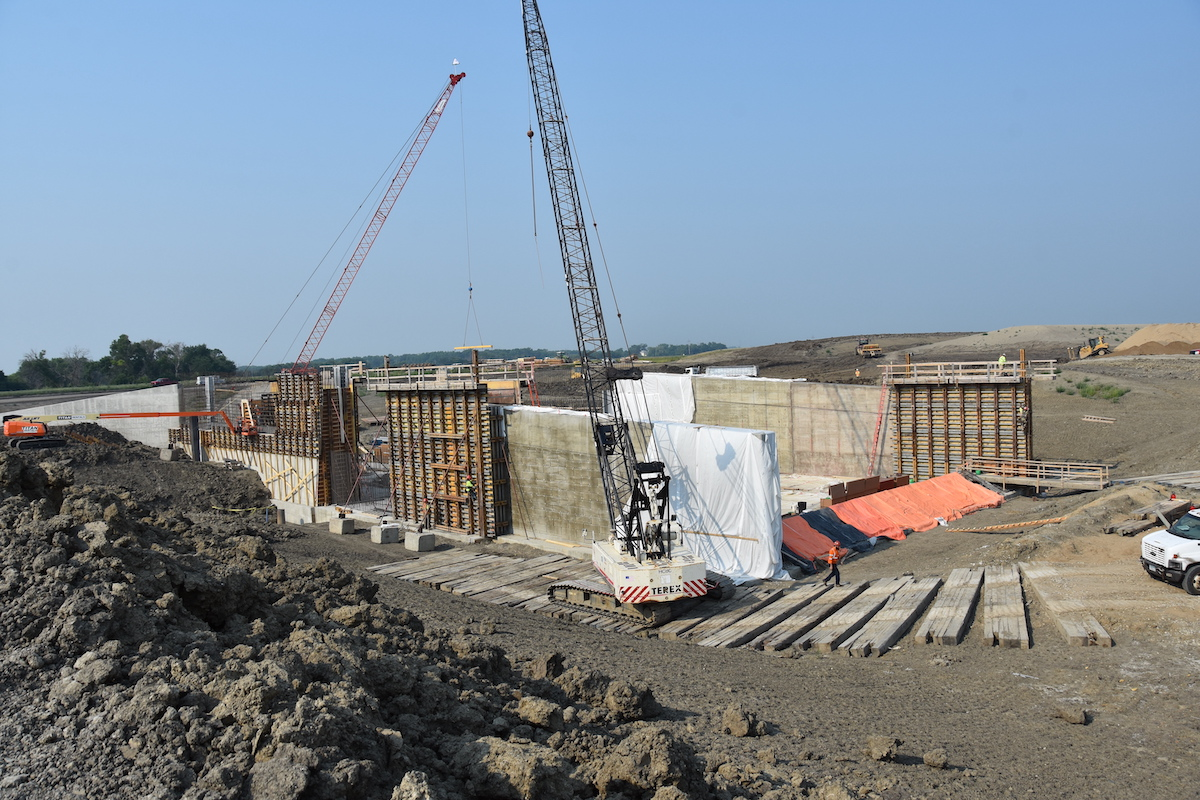
Authorities divided the work into two major components: the Stormwater Diversion Channel, which will route excess water around the neighboring cities and back to the Red River, and the Southern Embankment, essentially a dry dam to hold water during flood events. That way, the work could progress simultaneously, speeding up project delivery.
Due to private sector risk and liability concerns, the U.S. Army Corps of Engineers (USACE) accepted construction of the Southern Embankment, and the MFDA would handle the diversion channel, creating a public-private partnership (P3) to design, build, finance, operate, and maintain the channel and its related components for 30 years. Once complete, MFDA will make regular availability payments to ACCIONA, Shikun & Binui, and North American Construction Group, all international entities with P3 experience. After forming RRVA and ASN Constructors for the channel’s design and construction, they set to work.
Benson is overseeing the channel construction. MFDA members consist of Clay County, Minnesota; Cass County, North Dakota; Fargo, North Dakota; Moorhead, Minnesota; and the Cass County Joint Water Resource District.

| Your local Stewart-Amos dealer |
|---|
| Closner Equipment Co Inc |
The Fargo-Moorhead Area Diversion project is the first P3 for USACE and the first water management project in North America to be completed with a P3 delivery. MFDA, which retains ownership, stated that the P3 delivery allowed the project to be finished for $330 million less and 10 years earlier than if it had been a traditional design, bid, build delivery method. Completion has required collaboration across 20 utility companies and 30 federal, state, and local agencies. Funding includes about 25 percent federal funds and about 35 percent from the P3, with state dollars and a local sales tax paying for the rest.
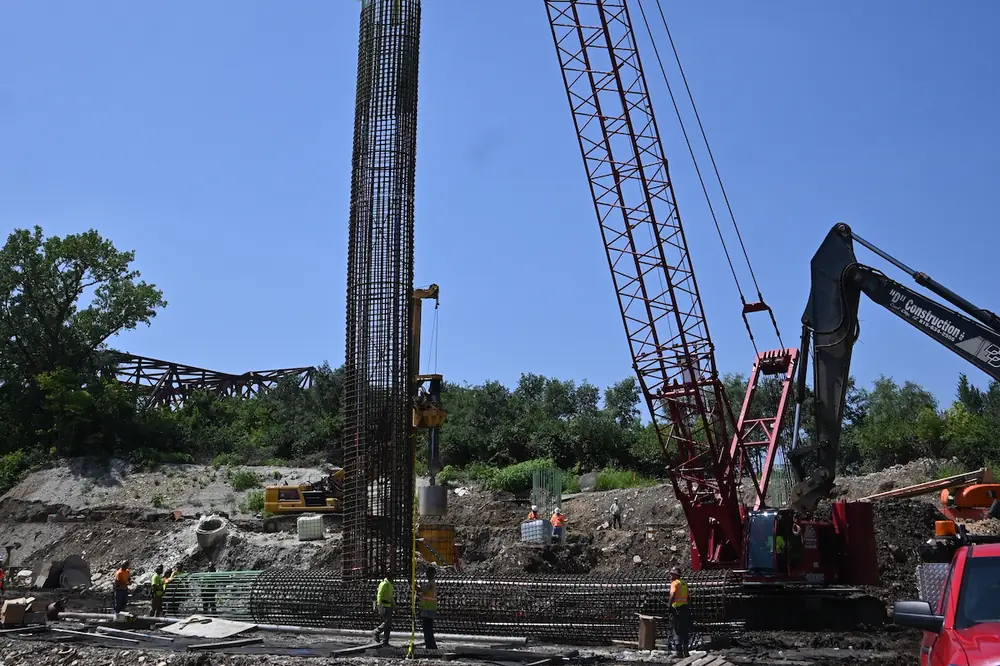
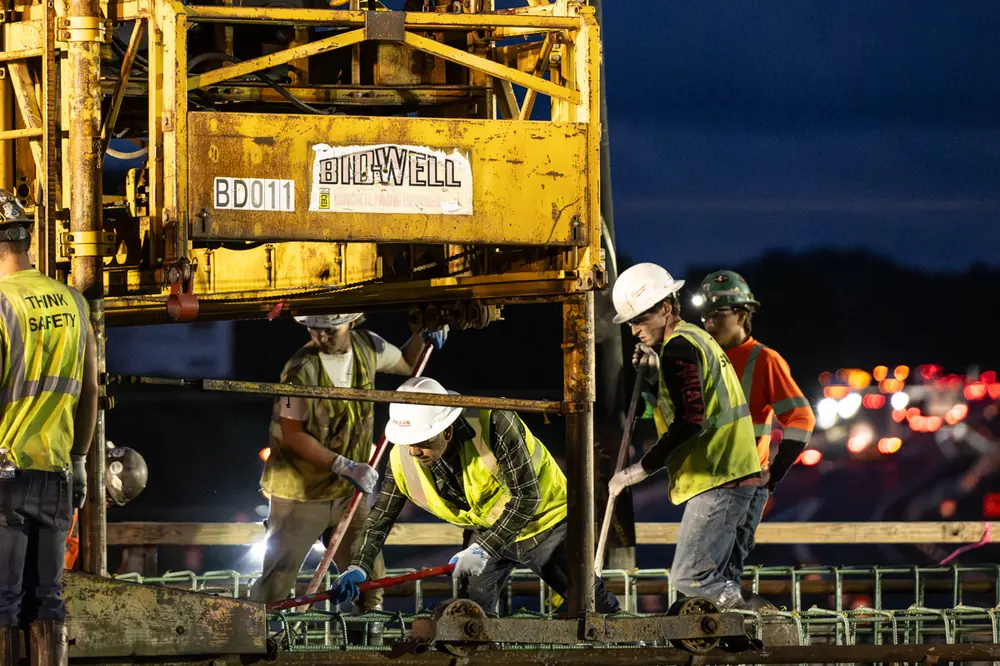
RRVA’s construction arm, ASN Constructors, began work on the $1.5 billion, north-south diversion channel on the west side of Fargo in August 2022 and plans to complete it by October 2026. The team is working 24 hours per day, every day, to finish on time.
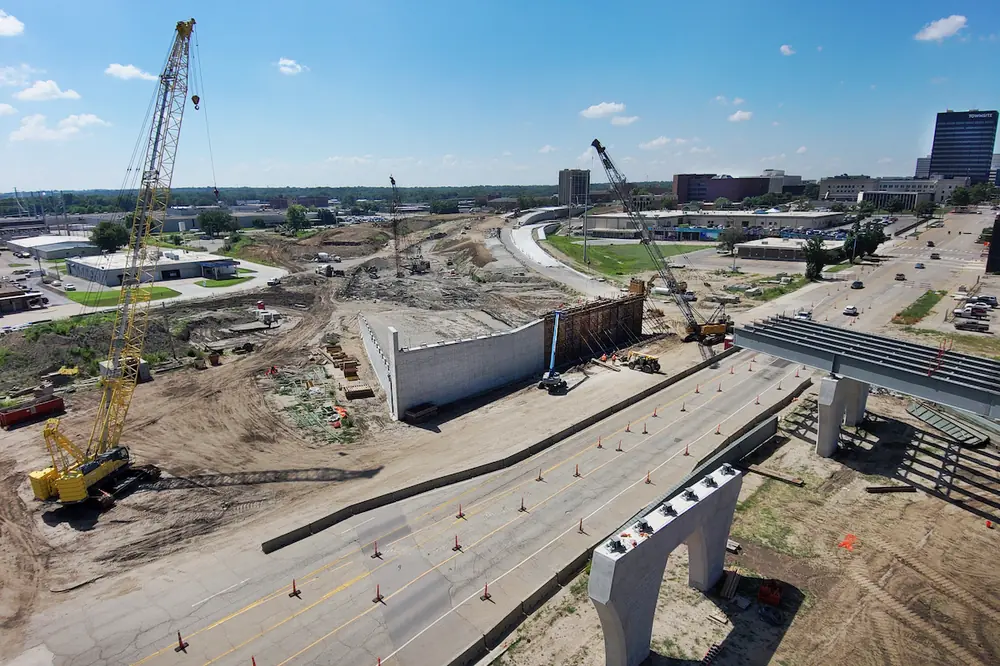
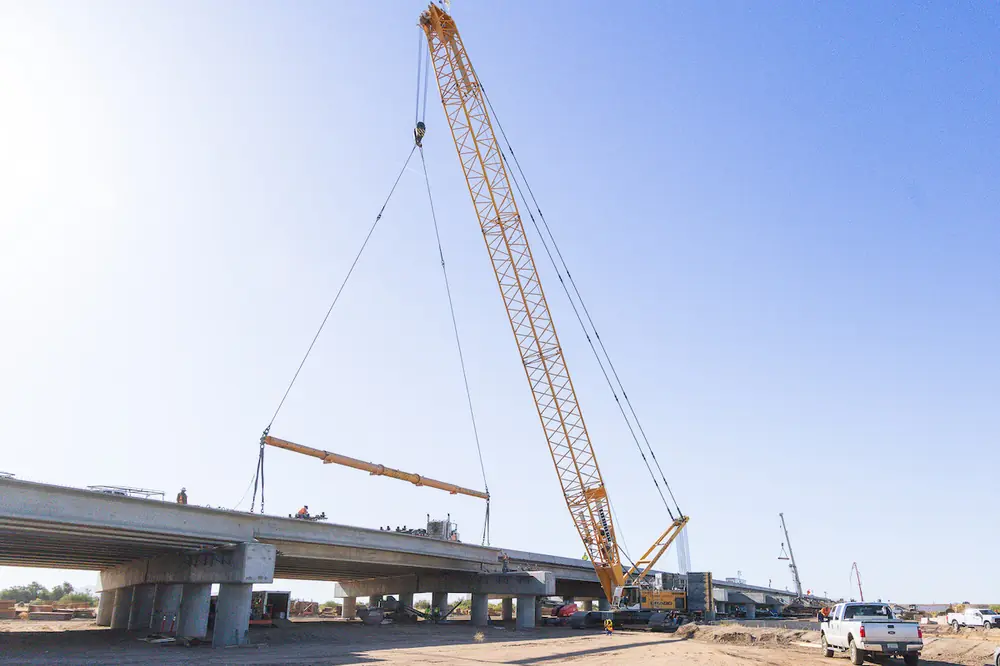
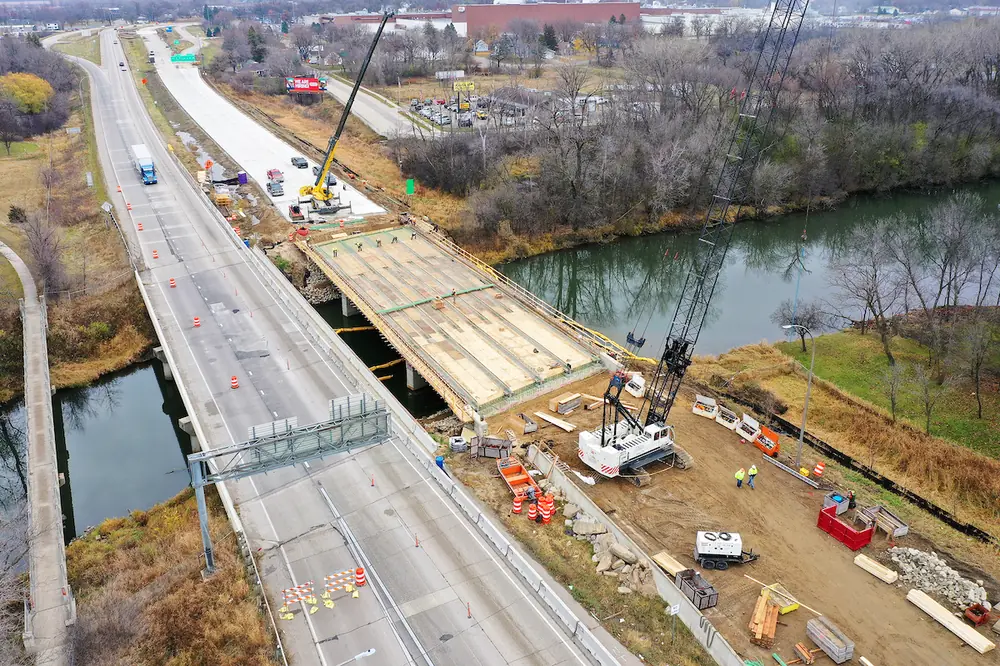
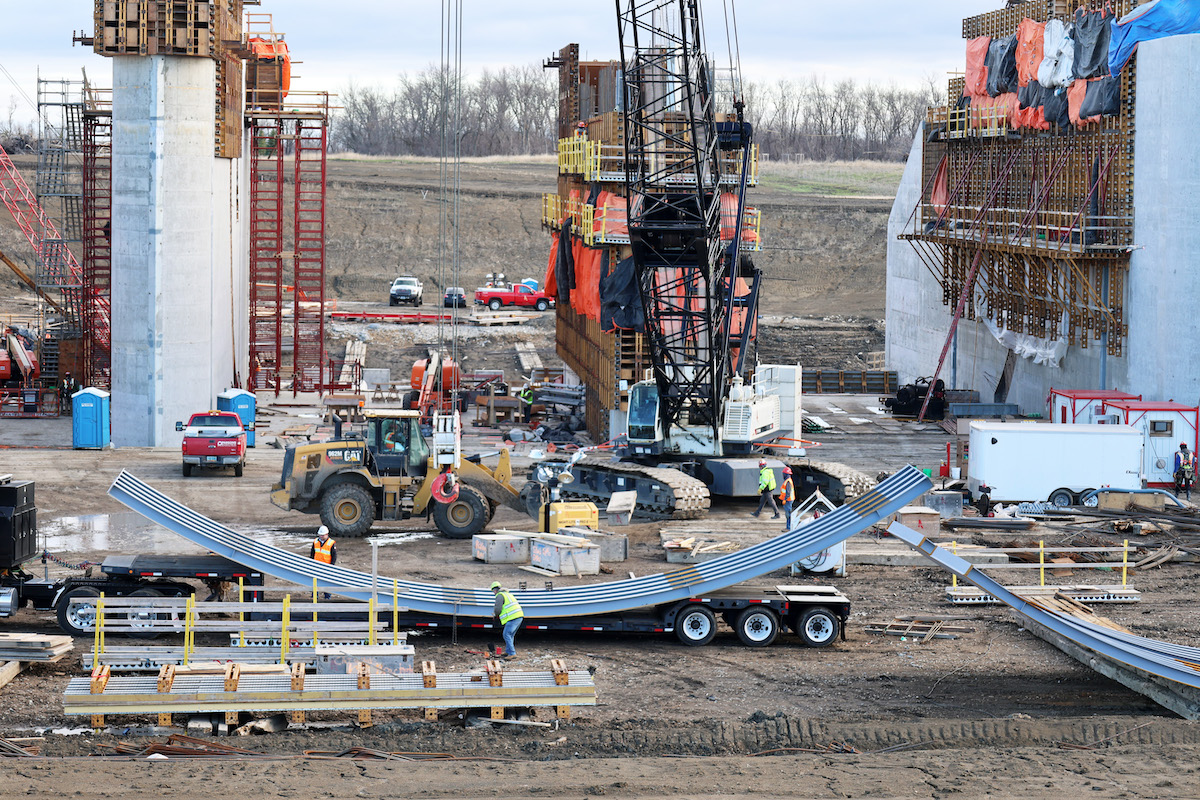
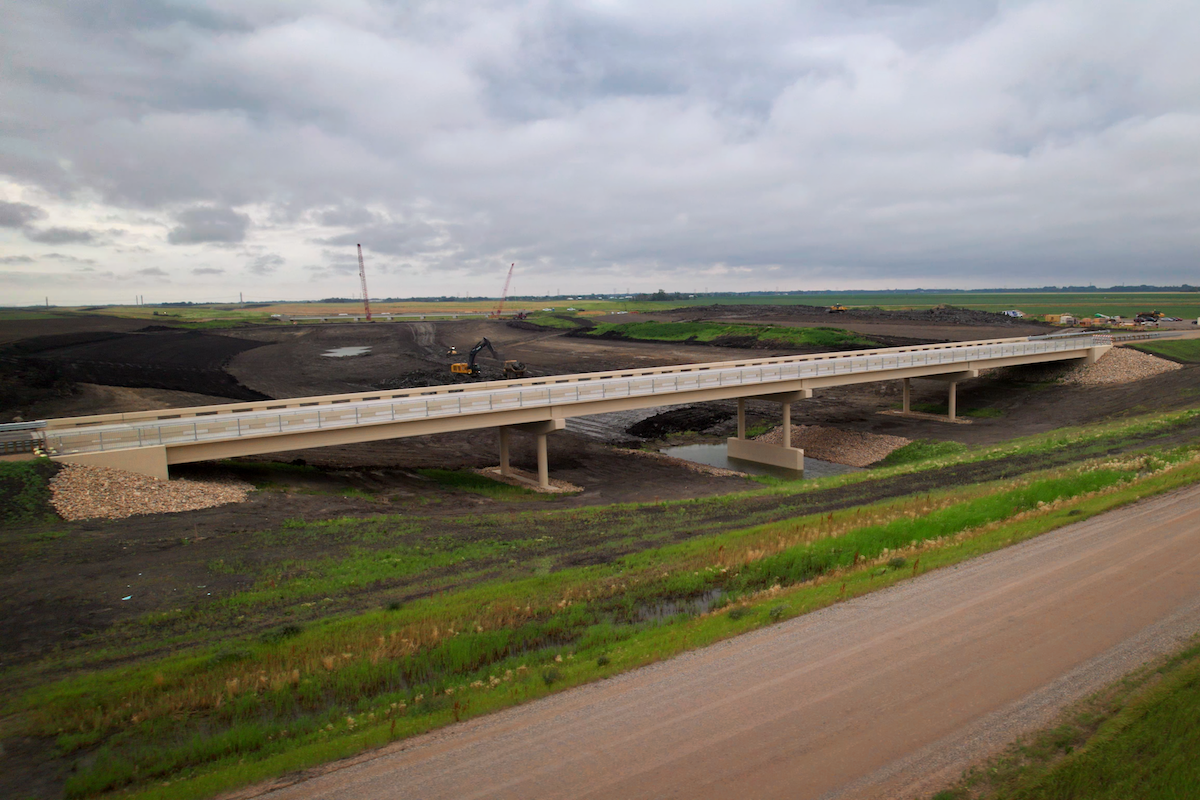
In addition to digging out 45 million cubic yards of dirt for the channel, the work includes building a levee on one side, drain inlets, aqueducts, and 19 bridges — including railroad, county, and interstate bridges that carry trains and vehicles over the channel. The completed channel will be 20 feet deep and up to 300 feet across. Seventeen of the bridges crossing the diversion channel are finished and open to traffic.
“Working through the harsh winter conditions of North Dakota is both a major highlight and a significant challenge,” said Pablo Fernandez Rodero, Deputy Project Manager with ASN Constructors.

| Your local ASV dealer |
|---|
| CLM Equipment Co |
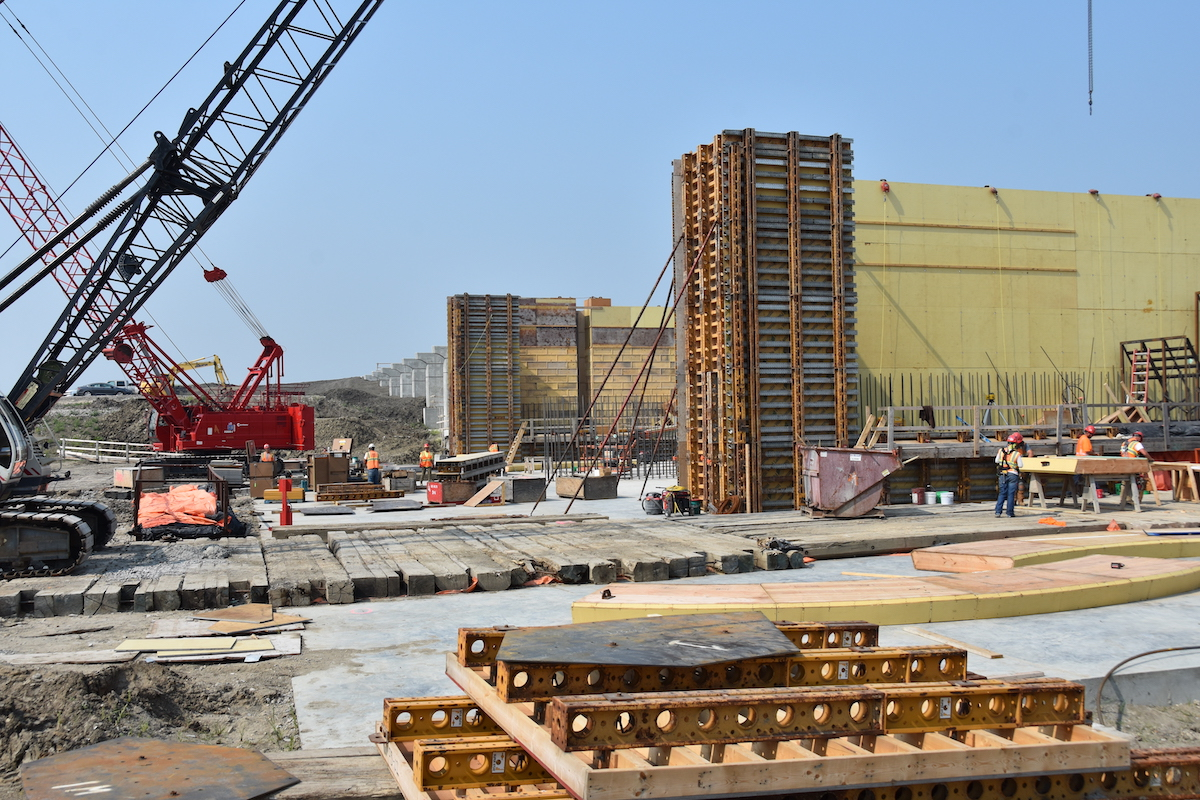
Despite the massive amount of work, ASN Constructors has kept the project on time. The team divided the channel work into 14 sections. The project’s structures are built individually, with different crews assigned based on expertise. ASN Constructors also has brought in subcontractors, mainly for structural work and roadways.
“Many different crews are working concurrently along the project in the different areas,” Fernandez Rodero said. “The number of crews and their size is based on the schedule requirements to achieve the preestablished project milestones.”
ASN has invested more than $80 million on equipment for this project, including heavy machinery, light-duty trucks, generators, and lights. All of it was purchased locally, supporting the community.
In accordance with environmental regulatory requirements, RRVA has included construction elements to protect the area’s fish population, including two river aqueducts over the diversion channel with large rocks to give fish a place to rest and heating to keep fish and wildlife able to navigate the water in the winter months.

| Your local Trimble Construction Division dealer |
|---|
| SITECH SE Texas |
| SITECH Tejas |
“A major environmental concern is to maintain and protect all wildlife, fish, and mussels in the rivers,” Chenery said.
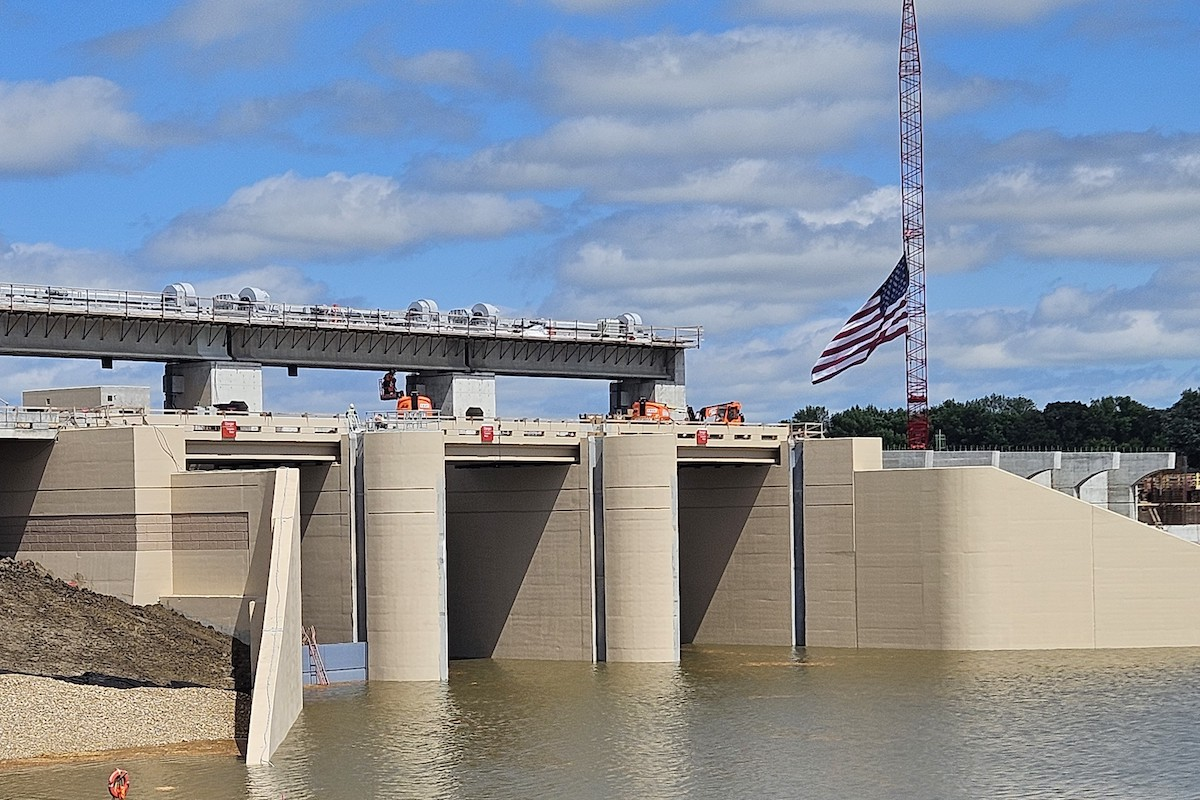
The team mitigated the loss of wetlands by acquiring new wetland areas, actually more than existed before this project. The southern end of the diversion channel will tie into the Southern Embankment. The work on the diversion inlet channel gate-control structure was let in 2016 and is now completed.
The 20-mile-long, 20-foot-high earthen Southern Embankment includes constructing three water control structures and an interstate bridge and raising 4 miles of the highway.
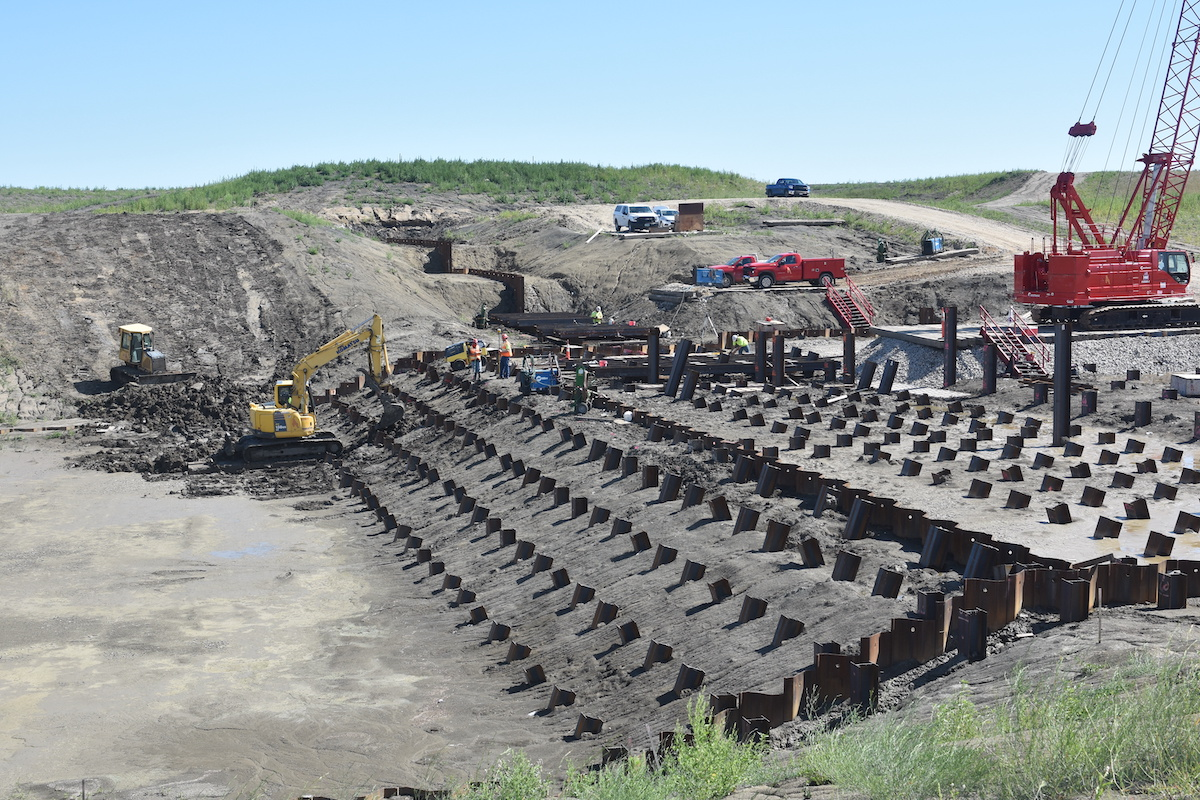
The Southern Embankment will be able to hold up to 14 feet of water. USACE divided this aspect of the project into 14 contracts. Ames Construction of Burnsville, Minnesota, received three separate contracts to build the water control structures. Crews used some of the earth removed from the diversion channel to build the Southern Embankment. Then the team installed thousands of wick drains in the soil to help with consolidation and to decrease the amount of settlement.

| Your local Bomag Americas dealer |
|---|
| WPI |
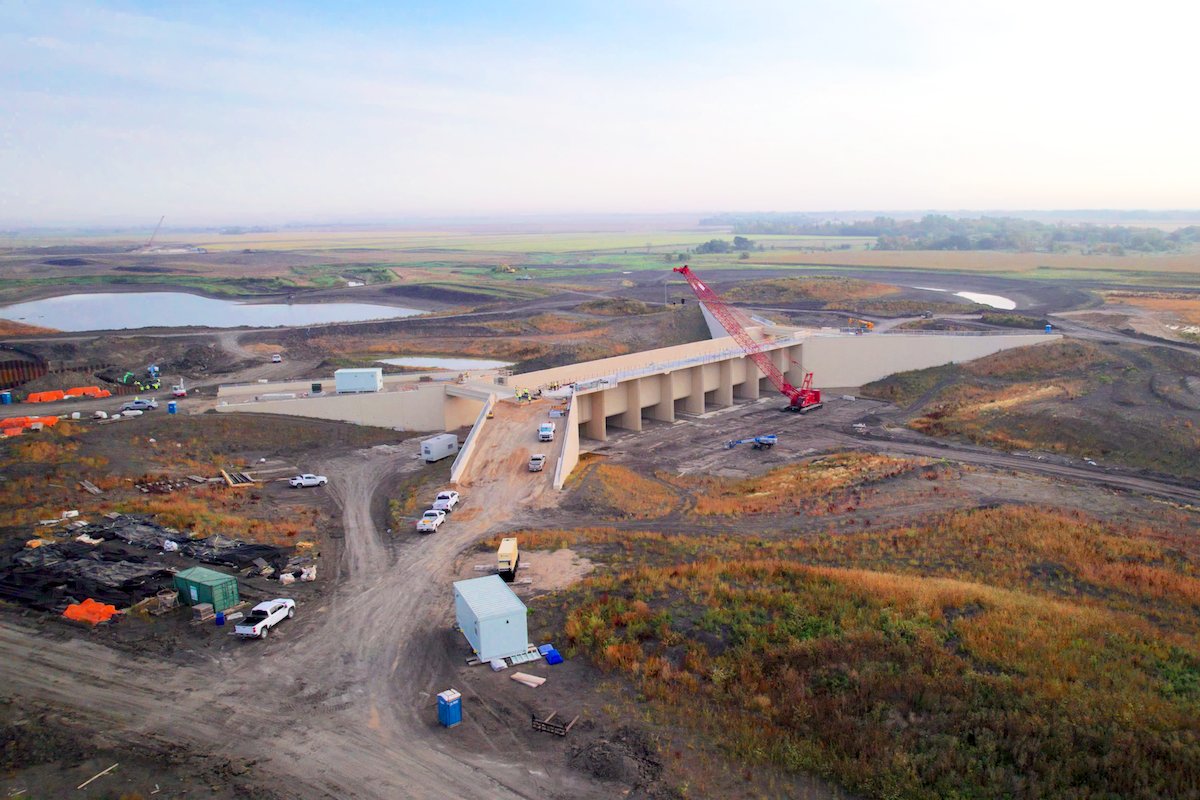
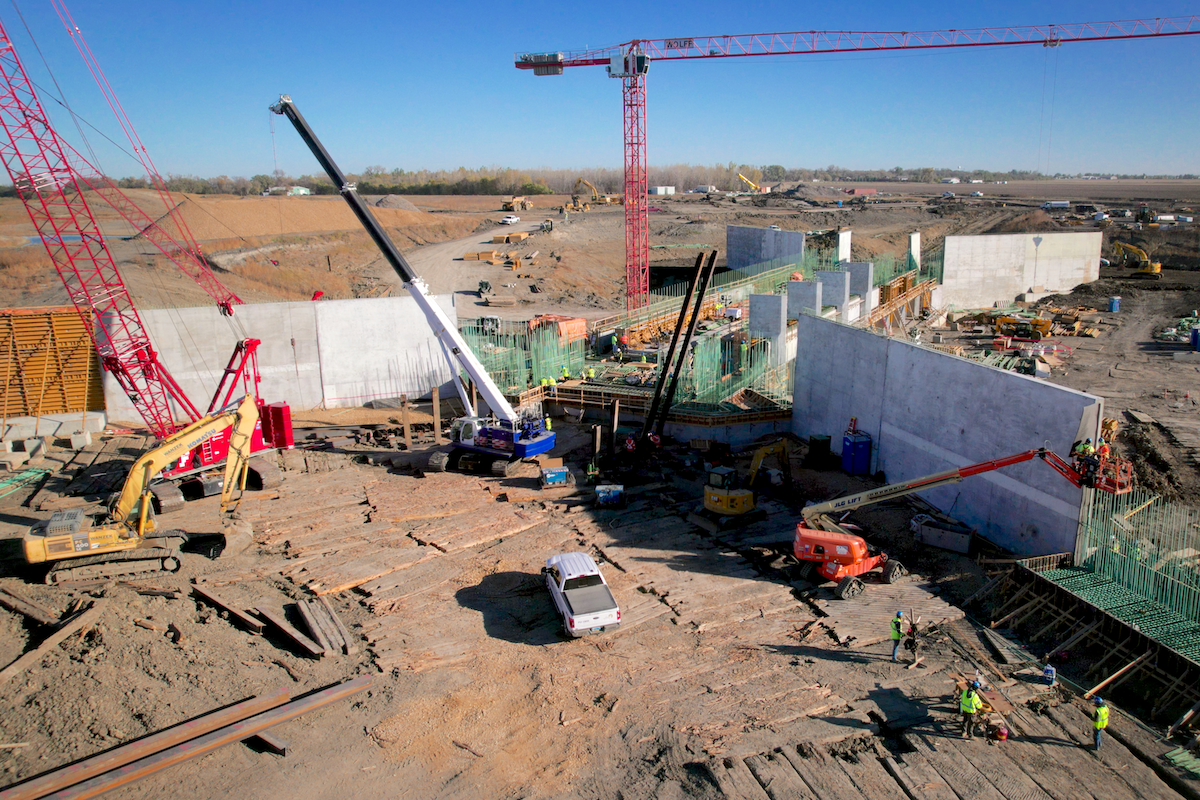
During the second contract, Ames built the Wild Rice River Structure, which is finished. Work continues on the Red River Structure, the largest of the water control structures, at more than 70 feet tall and 200 feet wide. Some of the structure remains underground. Its three gates are 52 feet tall and 50 feet wide. All were manufactured in Mississippi and Alabama, hauled to the site in pieces, with Ames lifting them into place, using large cranes.
The project remains on schedule and on budget with substantial completion expected in spring 2027. At that time, the Federal Emergency Management Agency will recertify the floodplain and eliminate the need for homeowners to purchase flood insurance, altogether saving $40 million in premiums, money that can be spent in the community.
Chenery said that he remains proud of the team and what everyone has completed.
“We have a great team, combining local resources with experts from around the world,” he added. “This project has tremendous benefits for the region.”

| Your local Hitachi dealer |
|---|
| ASCO Equipment |
Benson said he is proud of the community to be able to fund and build such a massive project and collaborate across multiple communities, jurisdictions, and agencies. Cass County and the City of Fargo imposed new sales taxes to raise funds for the project.
Fernandez Rodero added that this project is built to save lives and to protect the community of Fargo, Moorhead, and West Fargo against flooding. In addition, this is a project built to fight against climate change, which has a direct impact on the flooding.
- Owner: U.S. Army Corps of Engineers, St. Paul, Minnesota
- Public Partner, Stormwater Diversion Channel: Metro Flood Diversion Authority, Fargo, North Dakota
- Private Partner, Stormwater Diversion Channel: Red River Valley Alliance, Fargo
- Contractor: ASN Constructors, Fargo