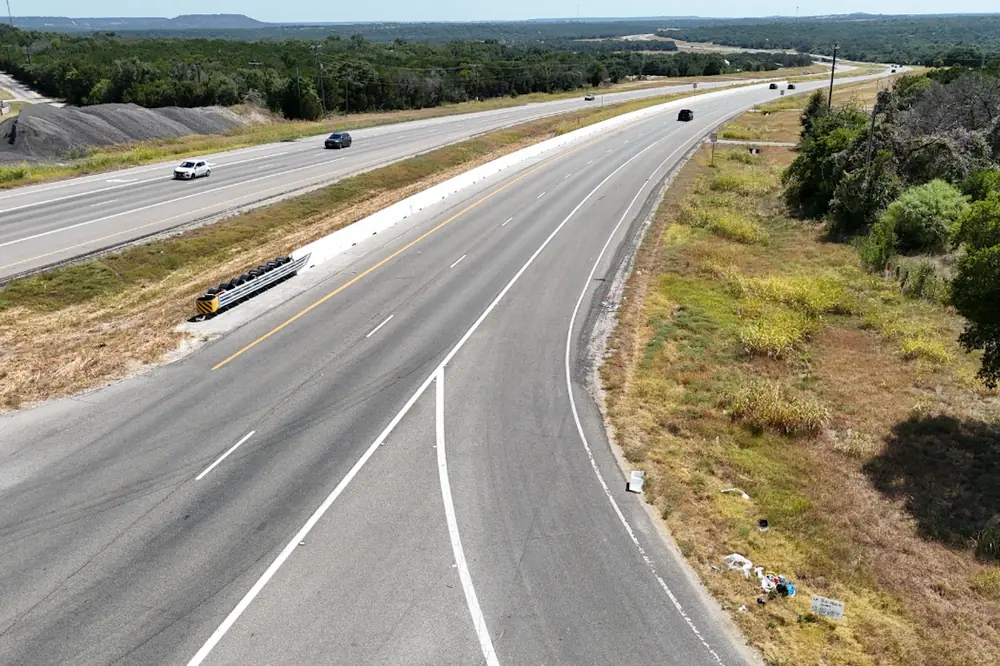
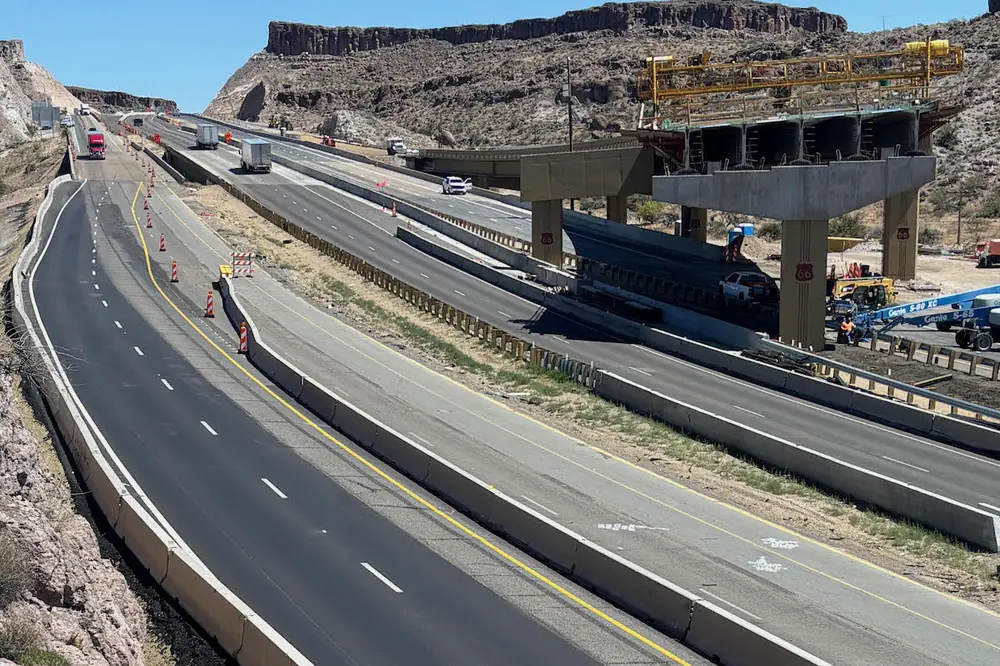

The Arizona Department of Transportation (ADOT) has entered the final year of work on a $106 million project to construct a free-flowing interchange connecting U.S. 93 and Interstate 40 in Kingman, Arizona. The project is expected to reduce delays along U.S. 93, which carries traffic north from Kingman toward Las Vegas, Nevada, by eliminating the need for traffic to stop at a traffic signal on Beale Street in downtown Kingman. U.S. 93 and I-40 currently share a common right of way through Kingman, with U.S. 93 changing to Beale Street as it runs through the city.
Once the project is complete, traffic will instead use two new ramps connecting the highways just north of Kingman, allowing vehicles traveling between U.S. 93 and I-40 to bypass the signalized intersection. As of this writing, ADOT had completed about 70 percent of the project, which is expected to open to traffic in early 2027.
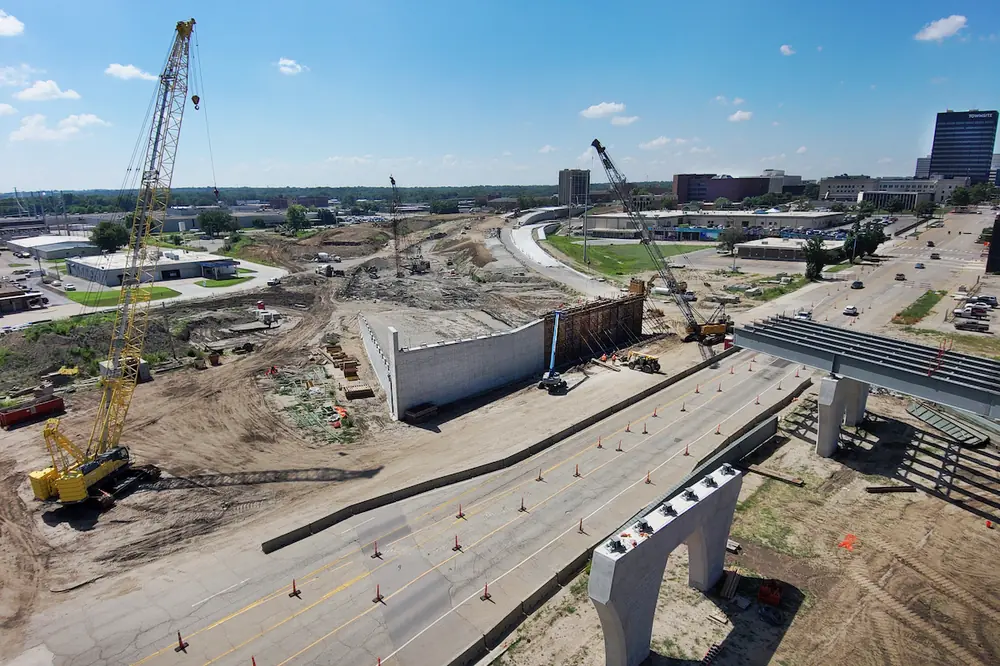
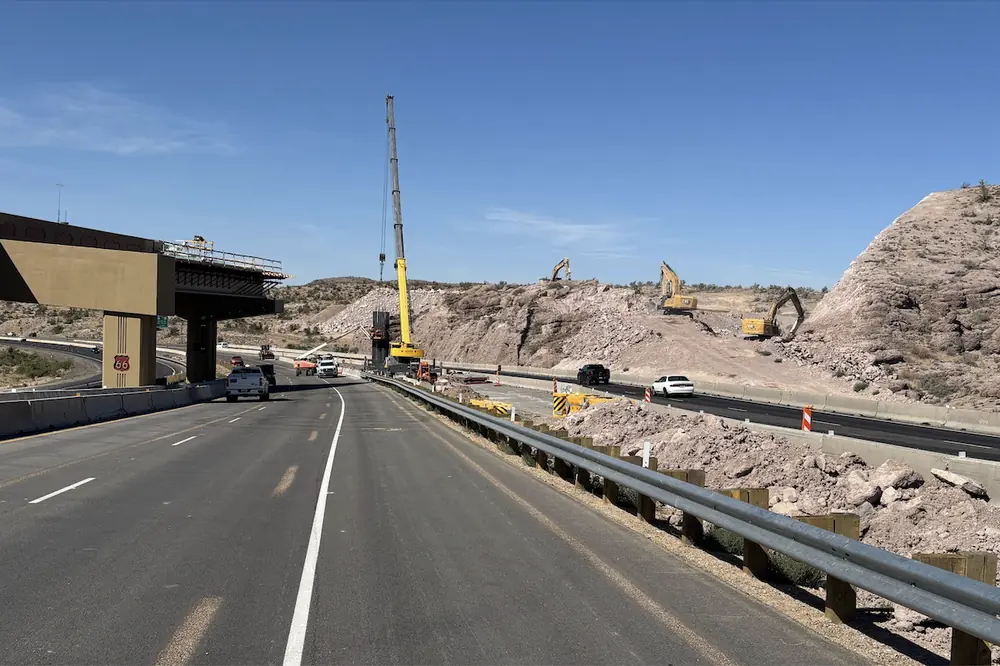
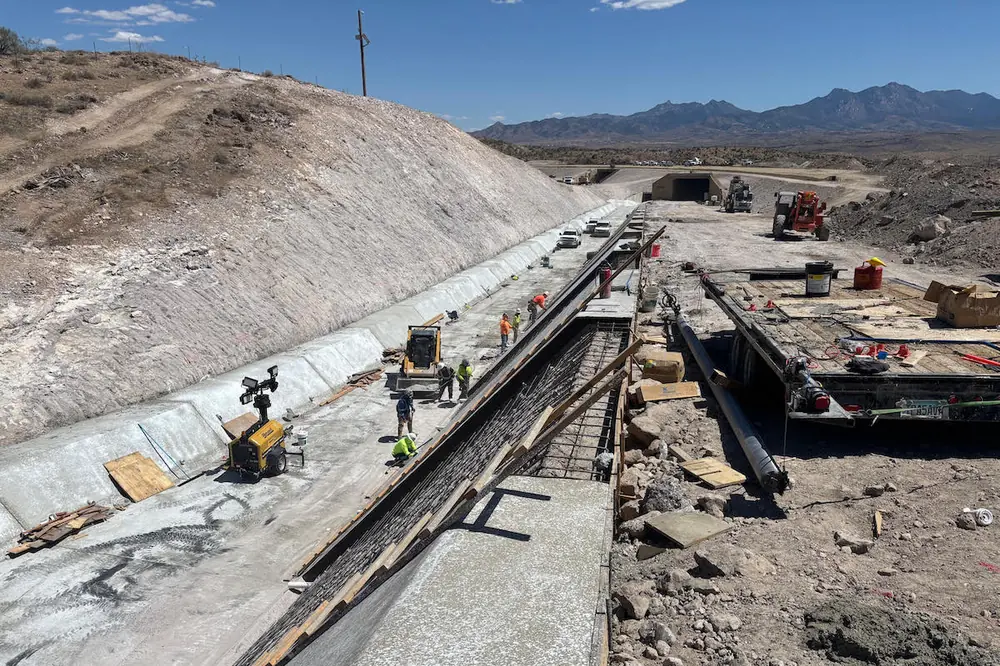
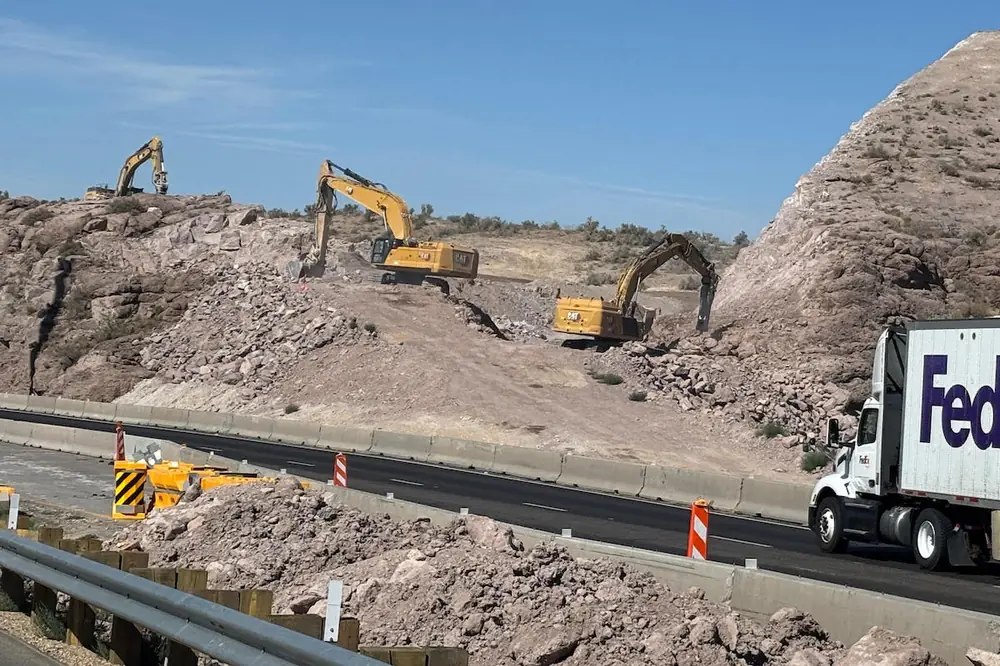
ADOT Public Information Officer Garin Groff said that one highly visible indication of progress was excavating the pathway for the future flyover ramps on I-40 at Clack Canyon Road. When finished, the new ramps will carry traffic from southbound U.S. 93 to eastbound I-40, about a mile away. Groff said crews have also carved and blasted the at-grade pathway for this new connection.
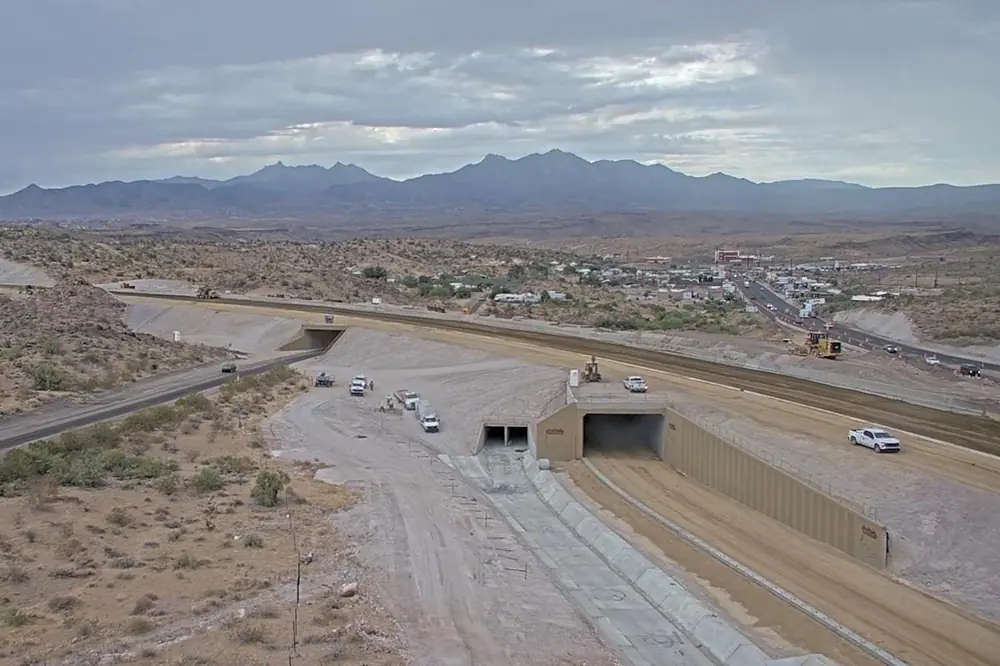
In addition, two traffic tunnels beneath the new ramps are now complete, providing connections for Fort Beale Drive and Beale Street. Interchange Project Manager William Sloan explained that tunnels are frequently built for ADOT projects because they are generally less costly than standard bridges and easier to maintain.
The tunnels are constructed using interior and exterior forms. The Fort Beale Drive tunnel is 215 feet in length, and the Beale Street tunnel is 239 feet. Sloan said that the construction forms are used repeatedly on different projects.

| Your local Yanmar dealer |
|---|
| WPI |
| CLM Equipment Co |
“The forms are like puzzle pieces, except they are rectangular, held together by joining hardware,” he said. “They come apart and are moved with forklifts.”
In addition to vehicle entrances and exits, the tunnels also have large openings to accommodate Holy Moses runoff — a reference to seasonal stormwater that flows through the project area. These stormwater issues are relatively unique to the Kingman site. According to ADOT, Holy Moses Wash is a desert wash (a dry, temporary riverbed) just south of Kingman in Mohave County, Arizona, running along the I-40 corridor. Although the wash is typically dry, it can quickly fill with rushing water during seasonal flash floods.
Sloan said that the top construction challenges his team and the contractor have faced so far include the following:
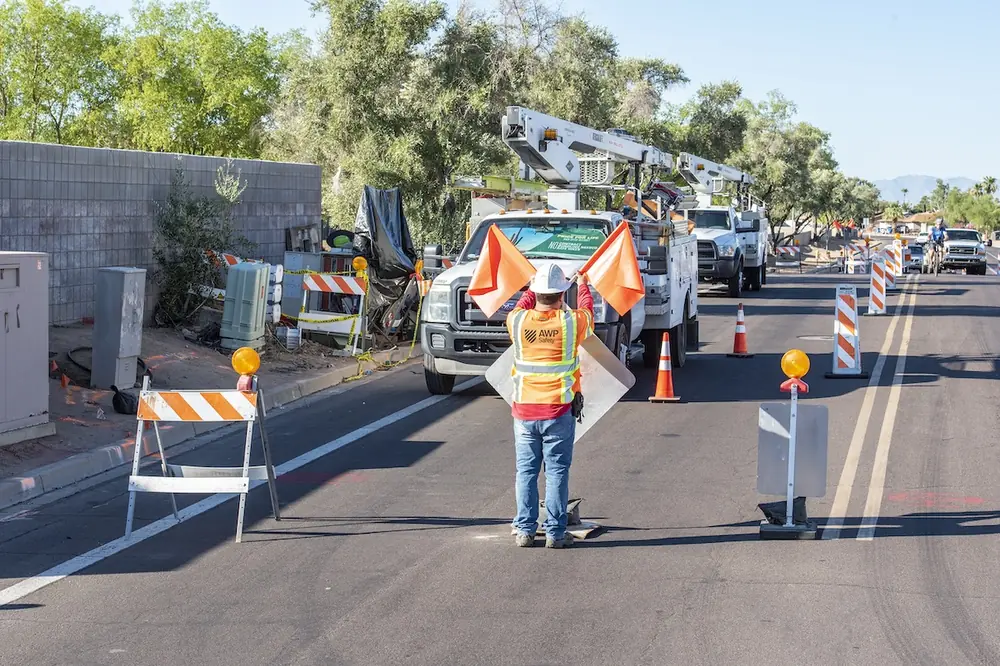
- Maintenance of traffic: For traffic flow, ADOT’s team sought to maintain two lanes of traffic in each direction as much as possible on both I-40 and U.S. 93. This has also helped project managers to maintain job site safety.
- The size and complexity of the project in a rural area: This relatively remote area, Sloan said, means there are not as many detour options available to either avoid the project area altogether or to set new approaches and exits for general traffic or for contractor access. In addition, the rural setting limited the number of subcontractors and suppliers for ADOT. Plus, travel distance to the site added time and cost for material shipments.
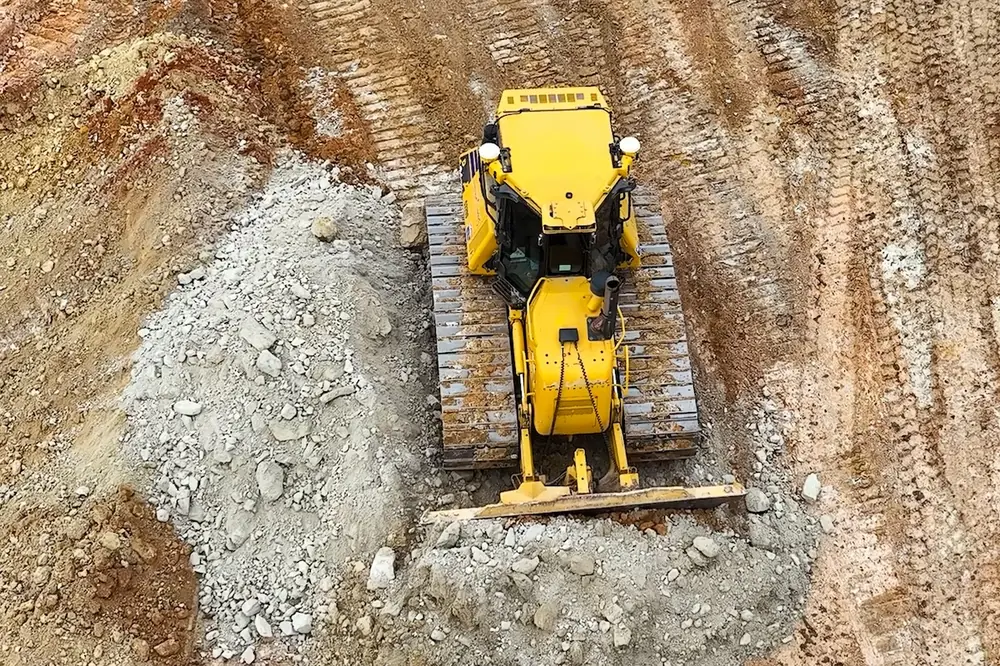
- Varied terrain and geotechnical formations: Sloan explained that mountainous ravines and bedrock in the area consist mostly of a material engineers refer to as a “tuff.” This is a dense ground scape formed after ancient volcanic ash was deposited and then extreme pressure over centuries converted the ash into a rock-like material, now extremely difficult to excavate. Sloan said that the team dealt with this challenge by using “brute force and perseverance.”

| Your local Hitachi dealer |
|---|
| Bane Machinery |
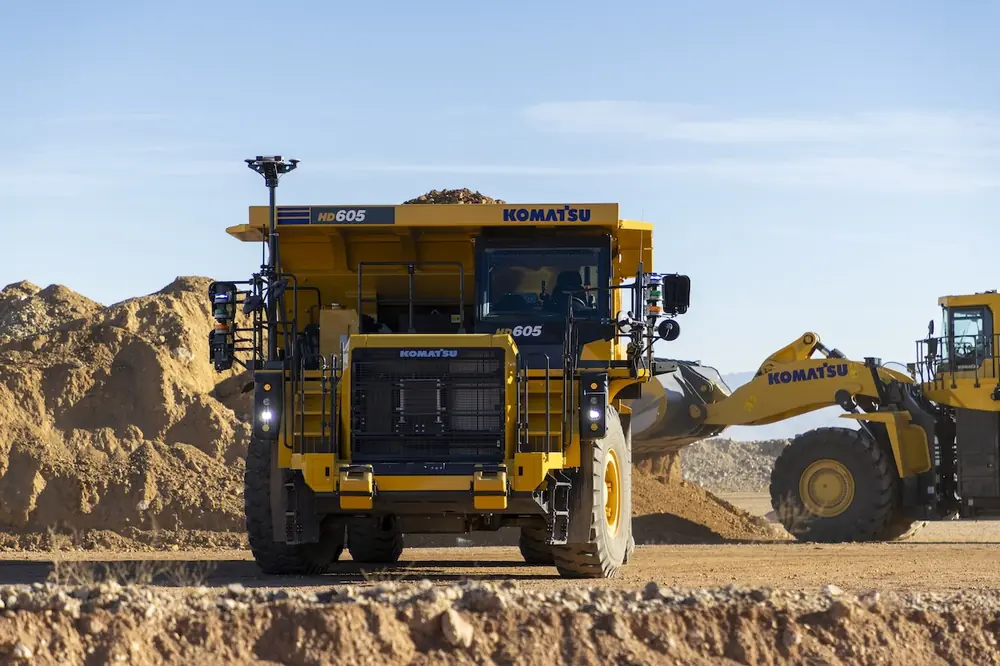
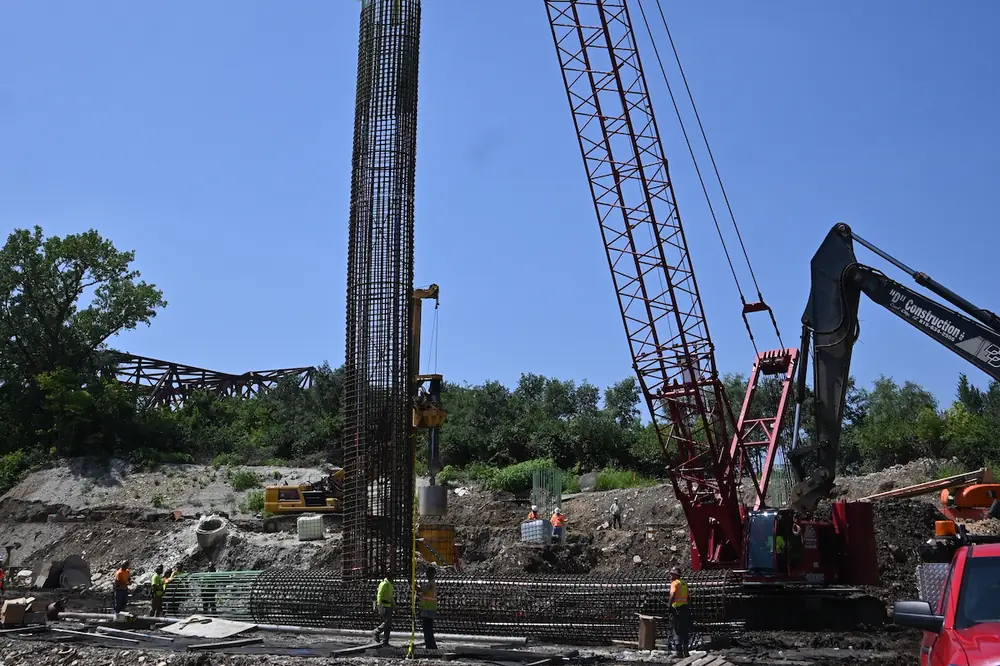
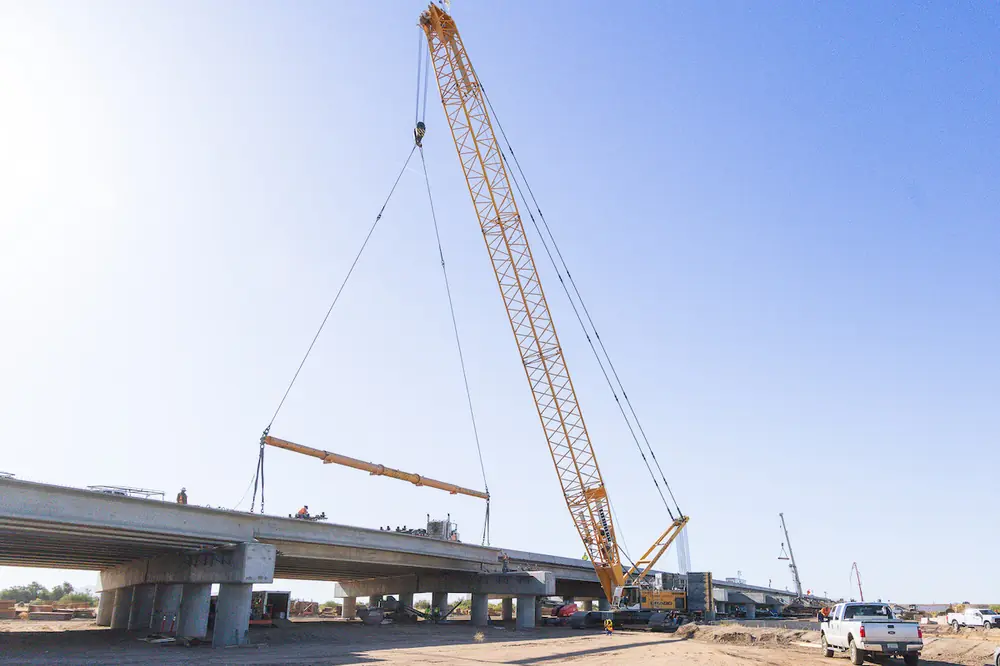
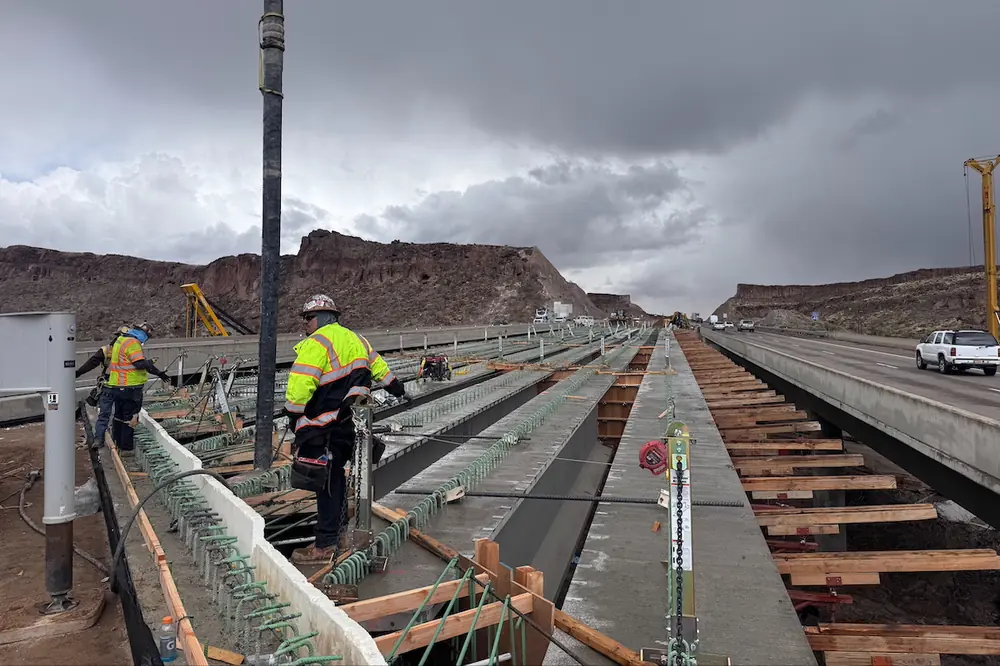
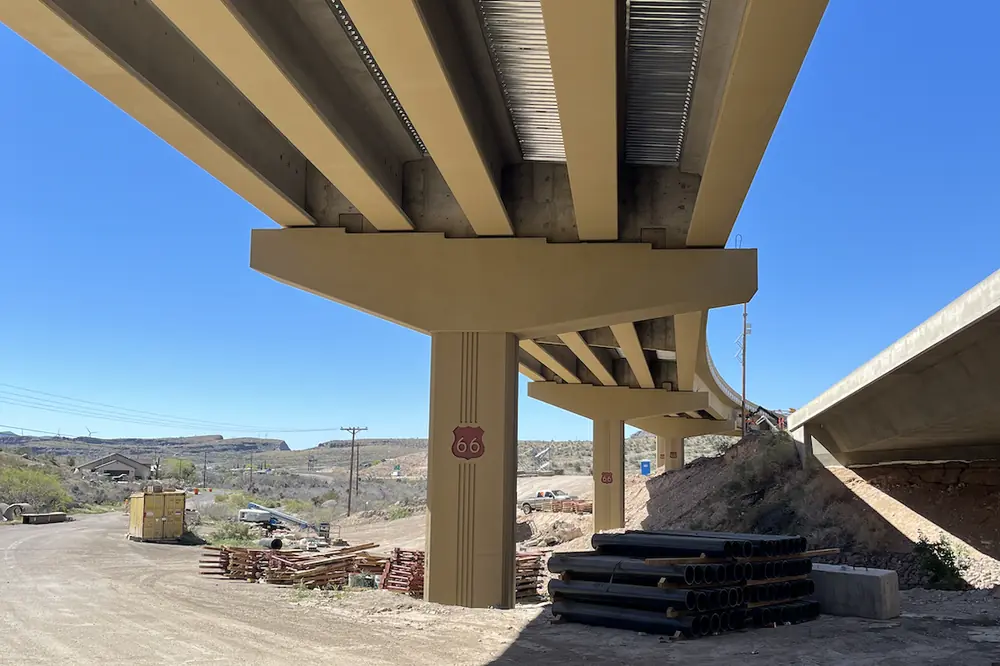
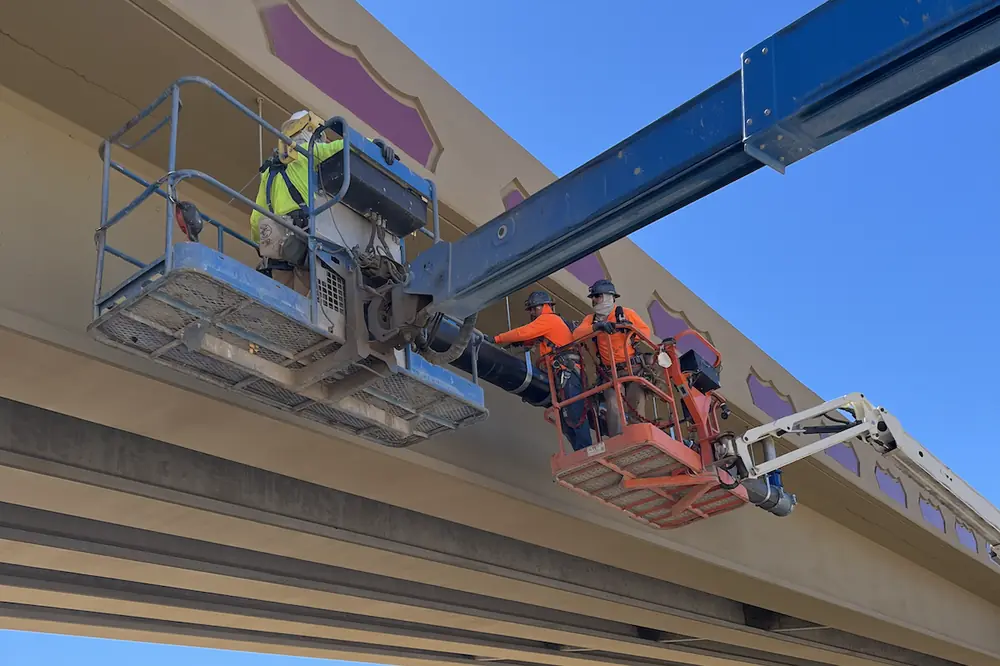
The project has included considerable rock blasting, requiring large equipment similar to that used in mining operations. So far, the project team has excavated and moved 601,000 cubic yards of rock and soil. For the flyover ramps, two cranes coordinated placement of 35 girders, each of which is approximately 160 feet long, nearly 7 feet tall, and weighs 165,200 pounds.
ADOT has no requirements to use recycled material. However, the large forms used to build the concrete structures are reused to minimize cost and the overall environmental impact.
To deal with all of these issues, ADOT established multiple traffic switches and closely coordinated with its public information team to try and keep residents and the traveling public informed of upcoming work to help drivers avoid construction-related problems.
“ADOT has a team of experienced construction managers that stay ahead of the challenges and keep the project moving despite issues that arise on a complex project such as this,” Sloan said.

| Your local Gradall Industries dealer |
|---|
| Kirby-Smith Machinery |
| WPI |
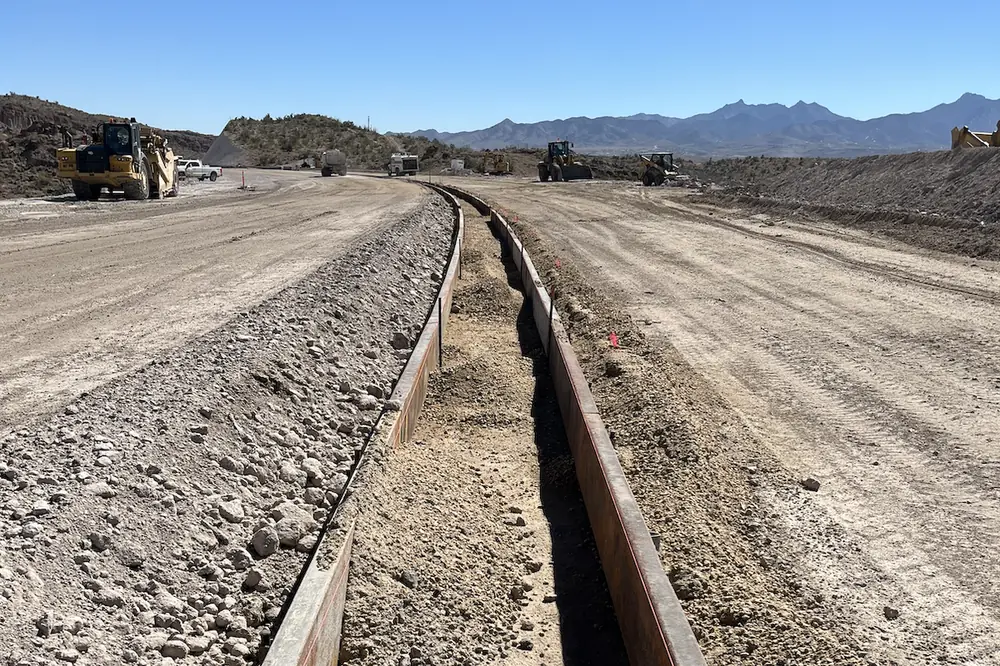
Special steps are often required in arid states to compact or otherwise prepare a roadbed to support construction. For this project, Sloan explained that the subgrade (native soil) is compacted and moisture is worked into the soil to yield a mix that will provide maximum support.
Then, the engineered aggregate base — ADOT refers to it as AB-Class II — is spread and compacted to the specified thickness based on the volume and weight of expected vehicles over the design life of the roadway. Finally, multiple layers of asphaltic concrete pavement are placed and compacted on the base.
In addition to Holy Moses storm runoff and potential flooding, ADOT takes an expansive approach on environmental issues.
“We are very proactive when it comes to protecting the environment,” Groff said.

| Your local Link Belt dealer |
|---|
| Central Texas Equipment |
| Nueces Power Equipment |
ADOT has started an extensive review of environmental issues that goes beyond analyses of air and water quality. This review is part of a Resilience Improvement Program (RIP), an effort focusing on how environmental and climate-related concerns might impact the state’s road and highway construction and how ADOT can best use available resources in response to those potential threats. (See “A Resilience Road Map” sidebar.)
Groff added that ADOT’s review includes “not only the flora-fauna and wildlife, but historical and Native American sacred sites.” He noted the importance of the review and referred to it as “money well spent.”
As the project nears completion, Groff said that ADOT’s team is working to stay vigilant and proactive, watching for issues that might arise.
“We just want to finish strong. ... We want to be prepared for problems and hopefully minimize the impact on time and cost, as well as public inconvenience,” he said.

| Your local Bobcat dealer |
|---|
| Central Texas Equipment |
| Nueces Power Equipment |
The new interchange is expected to open in early 2027. ADOT projects that it will handle traffic growth for the next 20 years.
ADOT established its Resilience Improvement Program in 2020 with the publication of a Resilience Improvement Plan Primer, part of its 2050 Long-Range Transportation Plan. But this work actually started quite a few years earlier. In 2013, ADOT published a report titled “Preliminary Study of Climate Adaptation for the Statewide Transportation System in Arizona.” In 2015, the department published an “Extreme Weather Vulnerability Assessment,” followed in 2020 by the “Asset Management, Extreme Weather, and Proxy Indicators Pilot Project.”
In its 2026 program update, ADOT explains that the resilience plan will enhance fundamental aspects of its programming decisions. The update explains that the resilience plan will help shift decision-making to “a formal quantitative, probabilistic, and data-driven approach to identify highway assets vulnerable to natural hazard, extreme weather, and climate trends.” Decisions about new roadway investments will be evaluated via a “resilience lens” that utilizes ADOT’s “years of foundational work, including its existing data, processes, and tools.” ADOT lists four major benefits to this work:
- Improved reliability
- Incorporating resilience into planning and programming activities
- Supporting resilience
- Potential reductions in project costs

| Your local Wirtgen America dealer |
|---|
| Nueces Power Equipment |
| Kirby-Smith Machinery |
The 2026 update explains that ADOT’s work is ongoing and is moving toward a new document (RIP2.0), intended to position the department in alignment with “innovative resilience best practices.” A completion date is not listed in the update.
In the resilience primer, ADOT references six possible climate hazards:
- Flooding: The most common and costly hazard affecting Arizona.
- Extreme heat: A condition particularly dangerous for maintenance crews and outdoor workers.
- Landslides: While rare in Arizona, some transportation routes are not easily detoured. Alternative roads, if available, may take hours longer.
- Wildfires: Expected to increase as climate change progresses.
- Drought: ADOT notes a current drought that started in 1995 and persists now.
- Earthquakes: Hundreds of earthquakes occur in Arizona every year, although most are low magnitude, occurring most intensely in the southeast and southwest corners of the state. Earthquakes can damage transportation corridors and create additional hazards and challenges.
- Owner: Arizona Department of Transportation
- General Contractor: Fisher Sand & Gravel, Tempe, Arizona