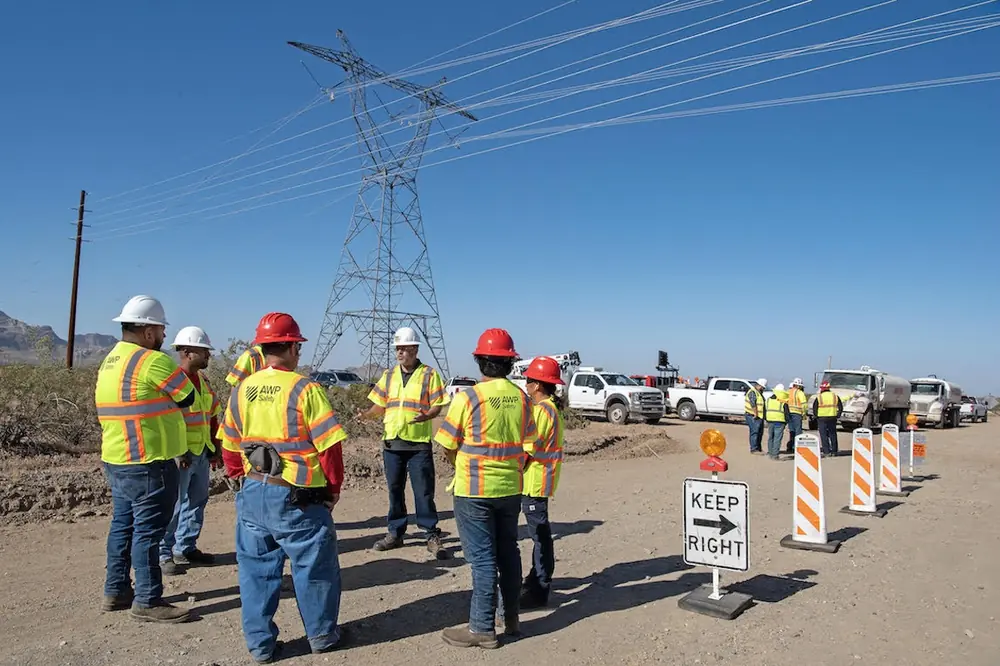
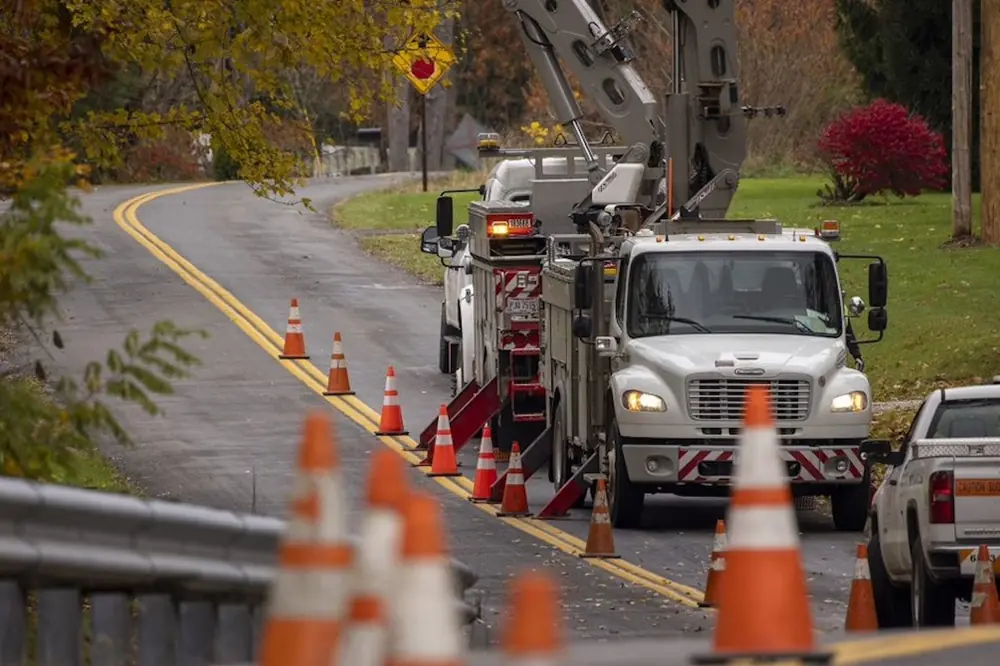

I spent nearly 40 years in the utility business, and I can tell you that construction teams know how to plan work.
You look at what must be done. You figure out where the trucks are going to be, where the people are going, what equipment is needed, what the hazards are, and how you are going to control them. On a larger project, that planning may start months before anybody ever gets to the site.
What I did not spend enough time thinking about — and what I see a lot of organizations still wrestling with today — is the roadway around that work.
Traffic control often comes in pretty late. The job is designed, the permits are moving, the crews are scheduled, and then somebody says, “We need traffic control here tomorrow morning.”
So now we are trying to catch up with a job that has already been planned. And that is the piece I think we can do better.

| Your local Leica Geosystems Inc dealer |
|---|
| Laser Specialist inc |
At AWP Safety, in one of our business units we supported about 400,000 work zones in 2025:
- 70 percent of those requests came in with 24 hours’ notice or less.
- 10 percent came in after 4 p.m. the day before the work was set to begin.
- 99 percent did not include a site-specific traffic control plan (that’s right — nearly all)
Think about that from the other side of the phone call. It is 5:30 in the afternoon and we need to have people, trucks, and equipment ready at 6 the next morning. We have to know what kind of setup the job requires, get the right resources together, and be ready when the construction crew shows up. By then, much of the planning window is already gone.
If a request comes in with limited detail, the setup may be planned and dispatched as a shoulder closure. But once crews arrive, the work may actually require a lane closure. Now the job may need additional people, a different taper, an arrow board, or an attenuator before work can begin.
The opposite can happen, too. When there is not enough information up front, more people or equipment may be sent than the job actually requires.

| Your local Deere & Co dealer |
|---|
| West Side Tractor Sales Co |
That is why earlier planning is not about adding more traffic control. It is about matching the traffic control to the conditions crews will actually face.
The advantage of preplanning is that the setup can be built around the actual job instead of starting with a default. The team can answer these questions:
- What kind of road is it?
- What are the speeds?
- What is the typical traffic volume during the work window?
- Is the crew near an intersection, around a curve, or in a location with limited sight distance?
- Is there crash history to consider?
- Are there state or local requirements that change the setup?
In other words, two jobs can look almost identical on a work order and still need very different traffic control elements once you look at the roadway and the conditions around the work.
At the same time, not every job needs the highest level of protection. A straightforward shoulder closure may call for a basic setup. But as speed, traffic volume, or roadway complexity increases, the protection may need to change with them.

| Your local Bobcat dealer |
|---|
| O'Leary's Contractors Equipment & Supply |
Some organizations provide upcoming work weeks or months in advance. Recently, in a high-speed fiber program, that kind of proactive planning helped reduce traffic control costs from about 10 percent of total construction spend to 2 percent, as documented by the customer. It came down to better information earlier, fewer assumptions, and a better match between the job and the resources needed to support it.
One thing I learned when I moved into this industry is how much traffic control requirements can change depending on where you are working.
There are federal requirements, of course, but each state does things differently, and municipalities may have additional rules. Some locations also require permits that somebody needs to account for before the crew is ready to go.
We recently had a situation where work was held up for months because traffic control permitting had not been addressed early enough. Everybody knew the work was coming, but that traffic control piece had not been pulled forward with the rest of the planning.

| Your local Takeuchi Mfg Ltd dealer |
|---|
| Brandeis Machinery |
We all know that the plan on paper and what you find when you get to the site are not always going to match perfectly. Maybe traffic is heavier, or the staging area is not what you expected, or a truck is parked where it shouldn’t be. You are always going to need people in the field who can look at the situation and say, “This is not right. We need to adjust.”
Technology can help us plan faster and get better information in front of people, but it does not replace that field experience. Somebody still has to look at what was set up and make sure it works for the conditions the crew is facing.
Then we ought to learn from it.
If the crew changed the setup, why? If drivers kept entering the taper at a certain location, did we capture that? If the same intersection keeps showing up in near misses or field adjustments, are we carrying that information into the next job?

| Your local Case Construction Equipment Inc dealer |
|---|
| Burris Equipment |
It comes down to a simple cycle: Plan the work, prepare for it, execute the plan, verify what happened, measure it, and then improve the next one.
Most contractors already know how to plan complicated work. What we advocate for is adding traffic control to that conversation sooner.
Give your traffic control partner a chance to look at the roadway while you are still planning the job. Let them help identify the people, equipment, and permits that will be needed. Then, when the crew gets there, you have a much better chance of having the right setup ready to go.
I have said this throughout my career: A planned job is a safer job. The same is true for the work zone. The earlier it’s planned, the better prepared everybody is when the work starts.

| Your local Sennebogen LLC dealer |
|---|
| Brandeis Machinery |
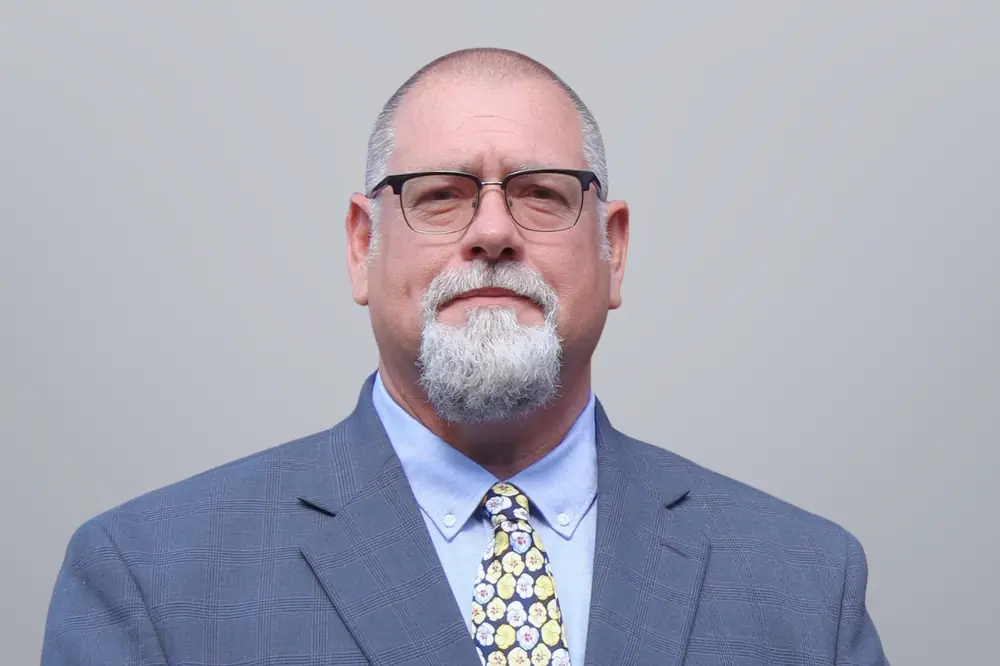
Tom Kratt is Senior Vice President Operations at AWP Safety. He has nearly four decades of experience in utility engineering and field operations.