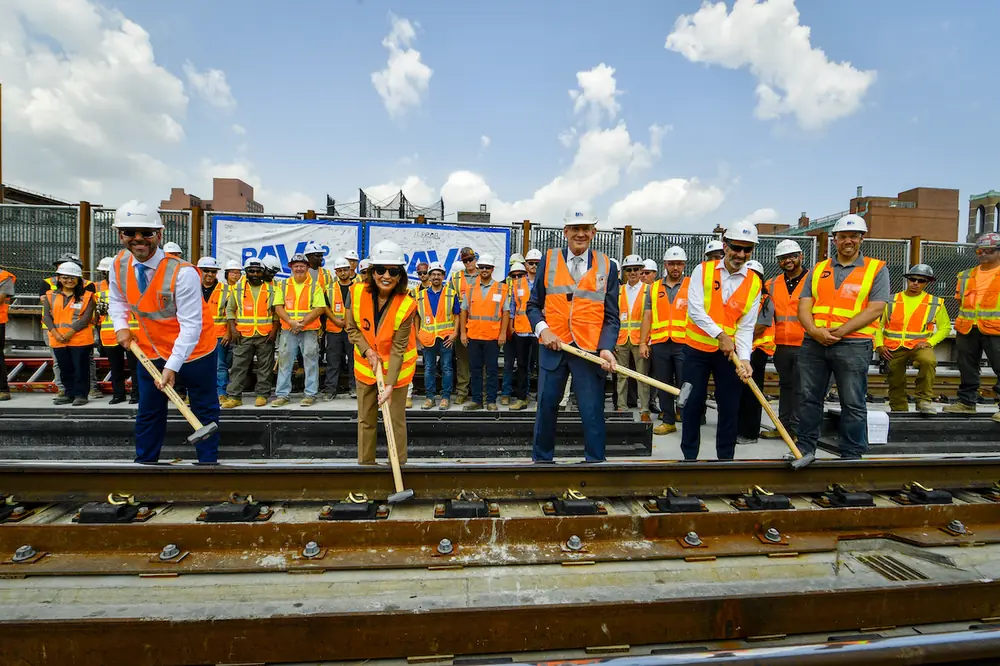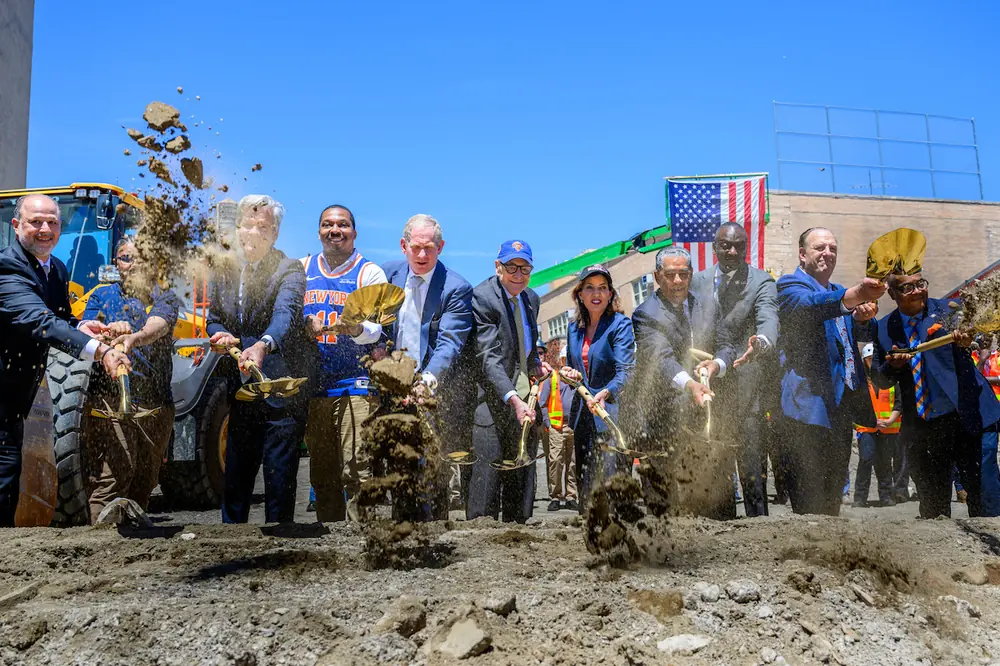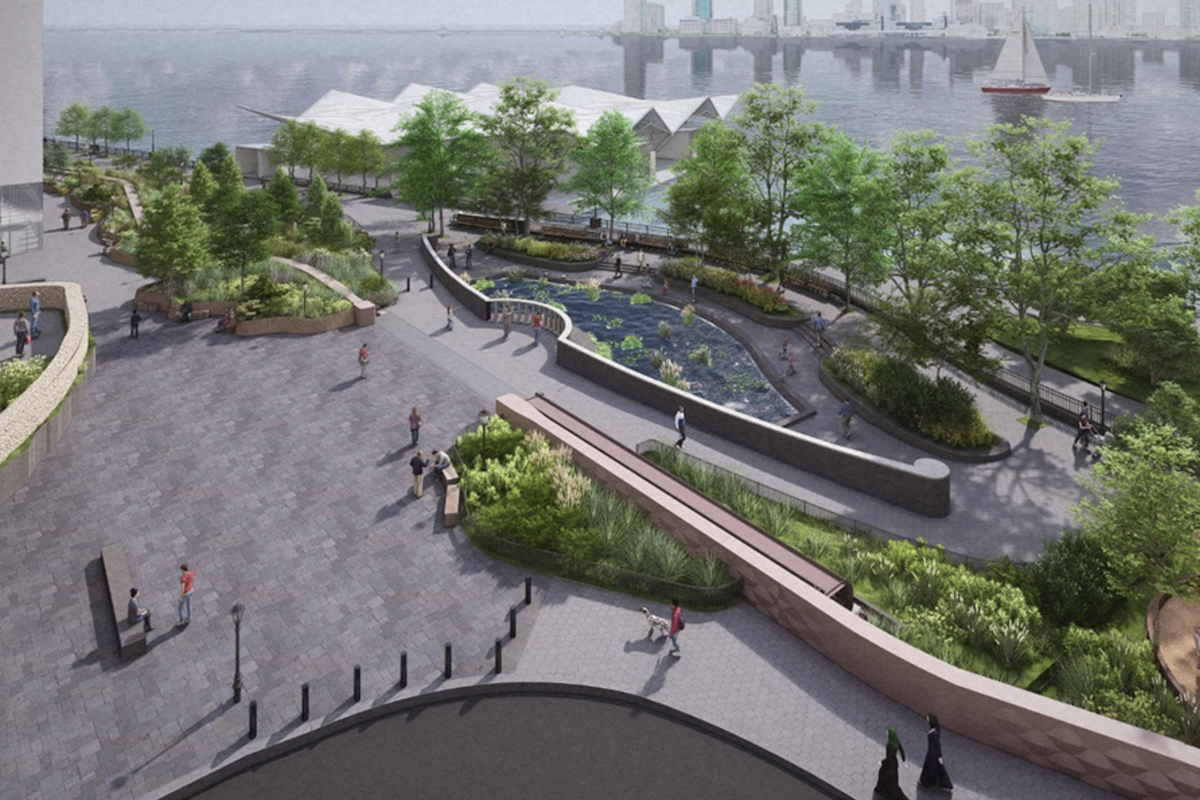
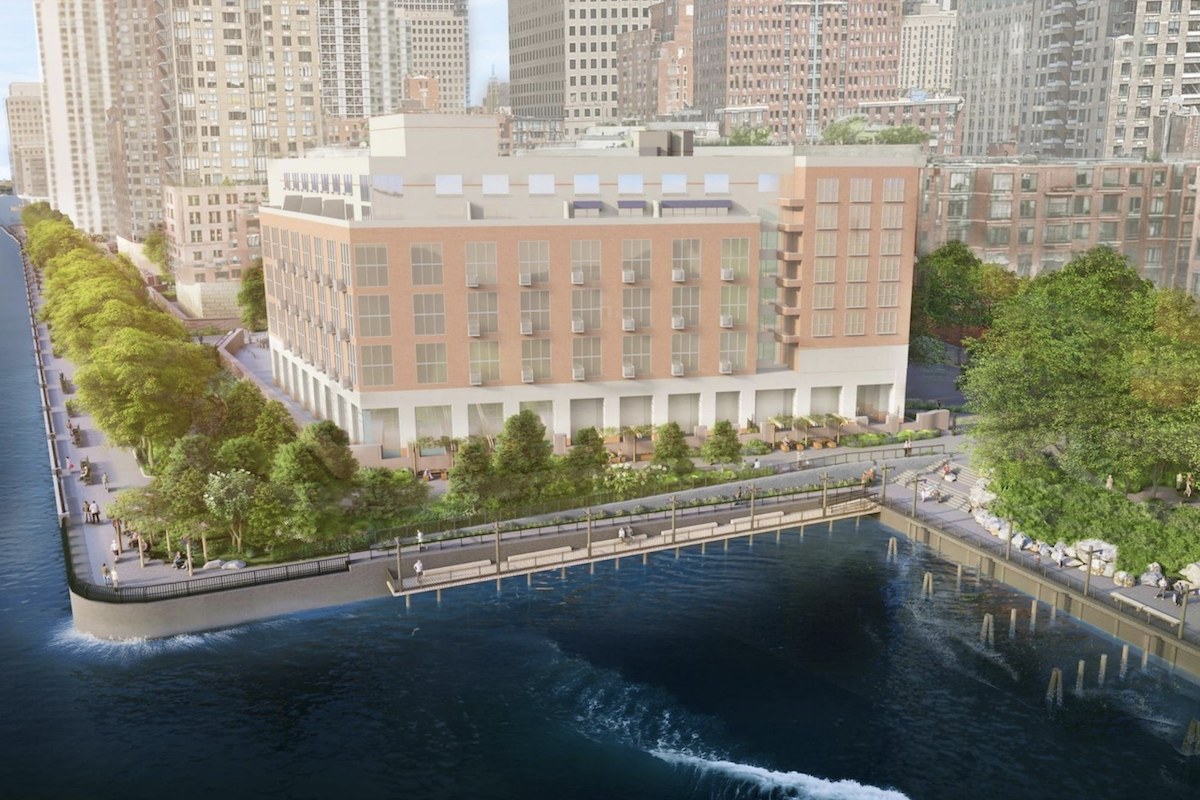


NEW YORK, NY — The Battery Park City Authority (BPCA) announces a Project Labor Agreement (PLA) with the Building and Construction Trades Council (BCTC) for the $1.7 billion Battery Park City Resiliency Project (BPCR), the first project in New York City to use the progressive design-build model. The PLA will support thousands of union careers while expanding opportunities for participation by Minority and Women-Owned Business Enterprises (MWBEs) and Service-Disabled Veteran-Owned Businesses (SDVOB). In addition to securing cost-efficiency for the complex, multi-year project, the PLA will ensure family-sustaining wages, promote local hiring, and expand career pathways to the middle class for youth, apprentices, women, and veterans. A joint venture team of Turner Construction Company and SPC Construction Co. LLC will deliver BPCR through a progressive design-build effort, further managing cost and risk in a transparent, flexible framework.
BPCR will provide risk reduction to property, residents, and assets within Battery Park City and beyond through the creation of an integrated coastal flood risk management system that runs from First Place, north along the Esplanade, across to the east side of West Street/Route 9A, and terminating above Chambers Street at a high point on Greenwich Street.
“This project exemplifies partnership and transparency,” said Charlie Whitney, Vice President, Turner Construction Company. “Through the progressive design-build model, all stakeholders were aligned from the very beginning to make informed, data-driven decisions that deliver value, efficiency, and long-term resilience. We are grateful to Raju Mann and the entire BPCA for having the foresight to use the progressive design-build model for this project, allowing Turner, SPC Construction, and all of our other partners to protect and strengthen one of New York City’s most iconic waterfronts.”
“The combined resources and partnership of our project team — along with the engineering expertise of our parent company, FlatironDragados — create a powerful synergy of local knowledge with global capabilities,” said Joe Sheehan, Chief Operating Officer, SPC Construction. “We are extremely proud to work together with all of our partners on this critical project to deliver innovative, sustainable, and creative technical solutions that will safeguard the community and strengthen New York City for generations to come.”
The PLA provides a mechanism to address the unique construction needs of BPCR, securing skilled and experienced local labor for the project with fair wages and strong MWBE and SDVOB participation. The PLA streamlines the construction process for the duration of the project, from scheduling and staffing to enabling electronic site access and preventing costly delays. It also promotes career opportunities for youth, apprentices, women, and veterans to enter the trades and work on the project through programs such as Helmets to Hardhats and Construction Skills.

| Your local Trimble Construction Division dealer |
|---|
| SITECH Allegheny |
| SITECH Northeast |
Work on BPCR is proceeding through a progressive design-build effort, an innovative method where design and construction are under a single contract to maximize cost-efficiency. BPCR is the first progressive design-build effort in New York City and the first to be undertaken by a New York State authority. The progressive design-build model establishes a clear framework for the overall budget, guaranteed maximum price, and schedule, providing cost certainty, reducing risk, and allowing the team to move forward with an on-time, on-budget delivery. The process also promotes collaboration, seeking ongoing input from the community and relevant stakeholders, and enabling the team to respond to evolving design and environmental considerations while maintaining alignment on budget.
Over the past four years, Turner-SPC and BPCA have worked closely with ARCADIS US, Inc., Bjarke Ingels Group, SCAPE Landscape Architecture, and other technical specialists and partners to plan the project. This process included extensive community and stakeholder outreach to gather feedback on the design to ensure BPCR reflects the needs and the priorities of the neighborhood.
In addition to providing risk reduction from coastal flooding, stormwater runoff, and heavy rains, BPCR will also deliver the following benefits:
- Protection: New infrastructure will protect the area from 2.5 feet of projected sea level rise, help cool during heat events, and prevent ponding more than 1-foot deep during heavy rains
- Reduce homeownership costs: The Federal Emergency Management Agency’s removal of Battery Park City from the current flood zone will eliminate homeowners’ need to purchase flood insurance for federally backed mortgagees
- Enhance public space: New design will create universal accessibility, remediate circulation pinch points, and increased and improved seating
- More landscape: More than 30 percent increase in total planting coverage within the project area, including doubling the amount of greenery on Battery Park City’s South Esplanade
- Increase native plantings: 85 percent native species coverage to support birds and pollinators with new planted areas that shorten existing gaps in habitat corridors
- Improve in-water habitats: Approximately 1,200 linear feet of reconstructed bulkhead designed to provide environments that support marine life