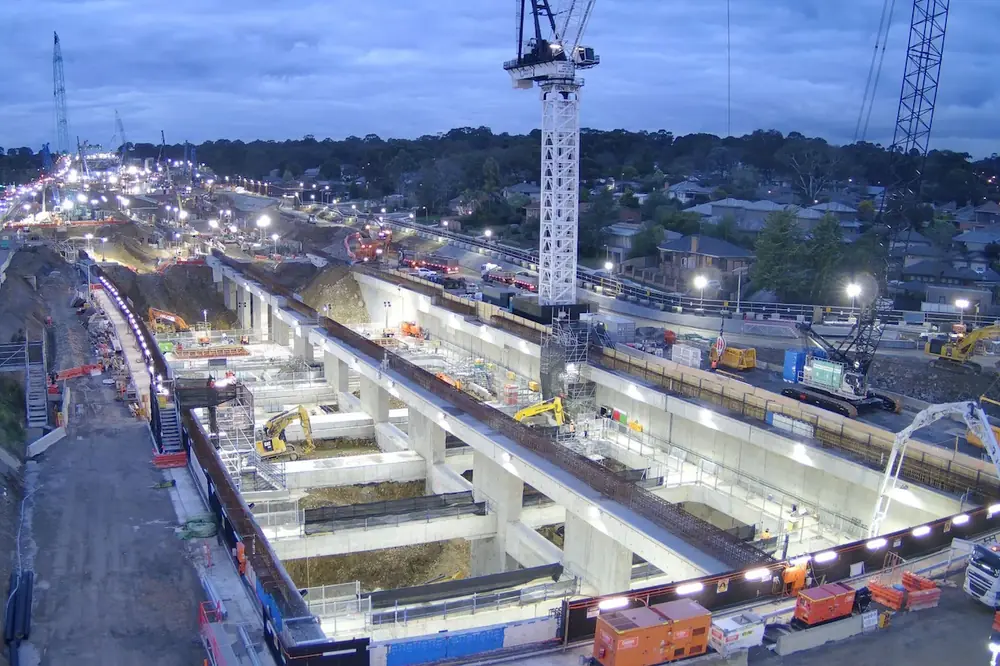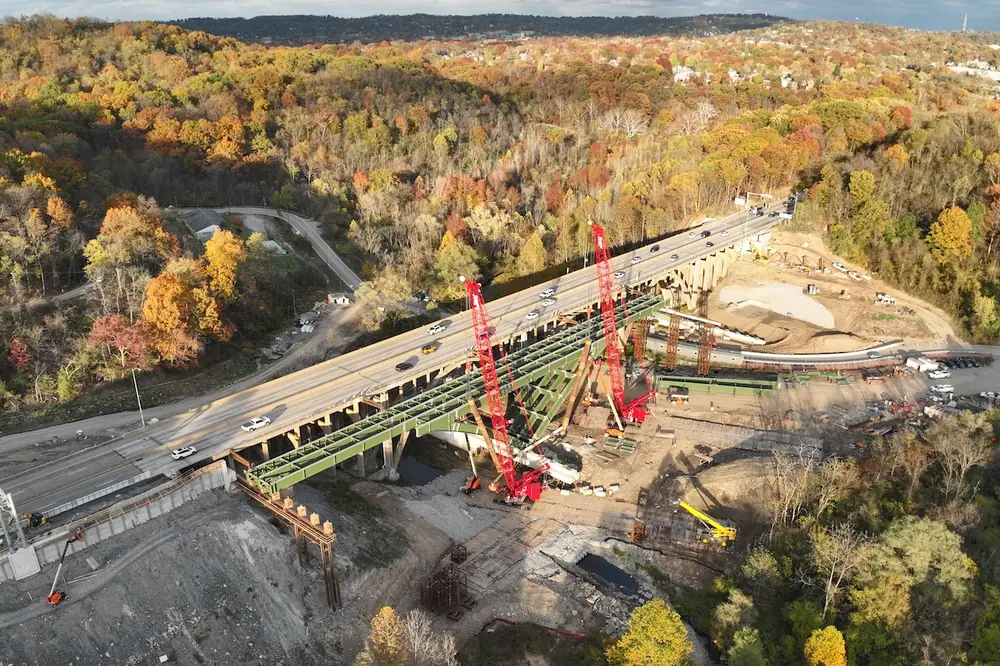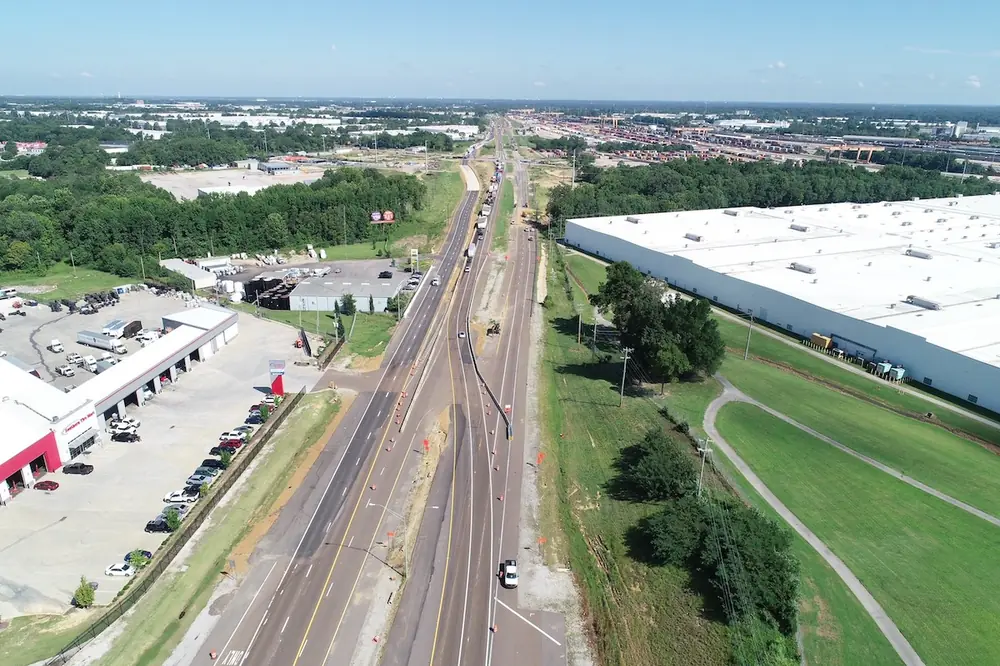


Syracuse, New York, is making a $2.25 billion infrastructure investment with the largest road construction project in New York State Department of Transportation (NYSDOT) history. This large undertaking will transform the current Interstate 81 (I-81) that traverses through the heart of downtown into the new Business Loop 81. I-81 will replace the existing I-481 that surrounds the east side of the city.
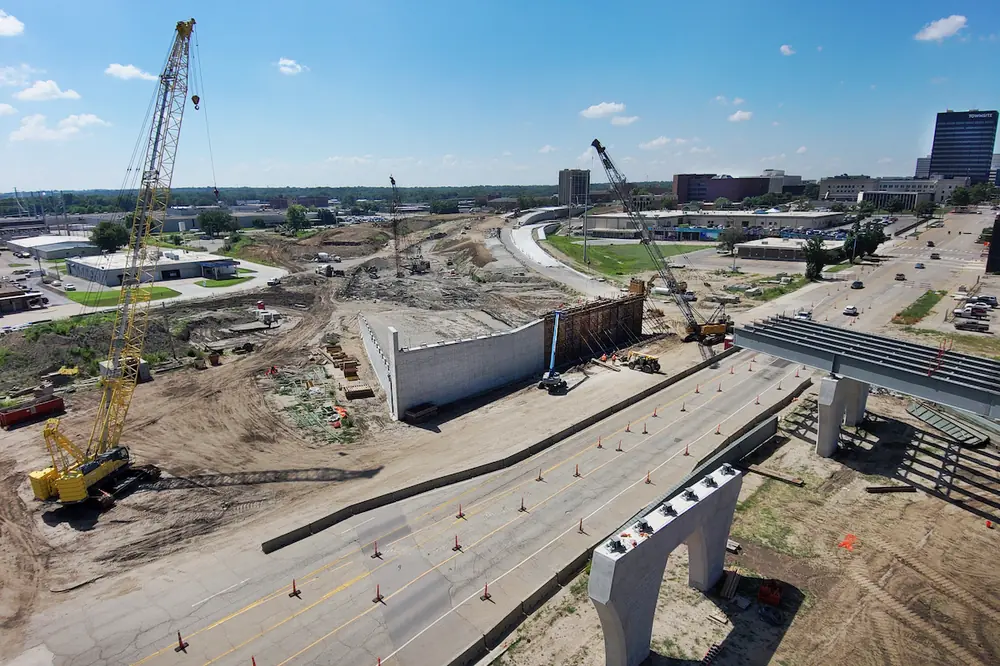
The scope of the project includes various improvements to interchanges, along with road widenings, demolishing an over 1-mile-long viaduct (elevated section), building or replacing over 25 bridges, and reconstructing on- and off-ramps. The area carries an estimated 100,000 vehicles per day, even during extreme weather conditions. The main part of I-81 was built back in the 1950s and 1960s and has become a main thoroughfare as a national and international north-south trade route from Tennessee to the Canadian border. Heavy use, expanding growth, and deteriorating road conditions have made this project critical to the region.
In this effort, the consortium of Salt City Constructors, LLC — made up of contractors Cold Spring Construction Co., D.A. Collins Construction Co., and L&T Construction — was awarded Contract 3 of the I-81 Viaduct Project. This includes reconstructing city streets, creating a new interchange, widening or realigning multiple on- and off-ramps, replacing three bridges, and adding a new northbound ramp bridge. This also gives the city the opportunity to install new underground stormwater infrastructure, build new shared-use paths, and upgrade pedestrian amenities.
Construction started in the spring of 2024 and should be completed at the end of 2026 for their estimated $219 million contract that will provide safe and efficient connections to the northside of the Inner Harbor area.
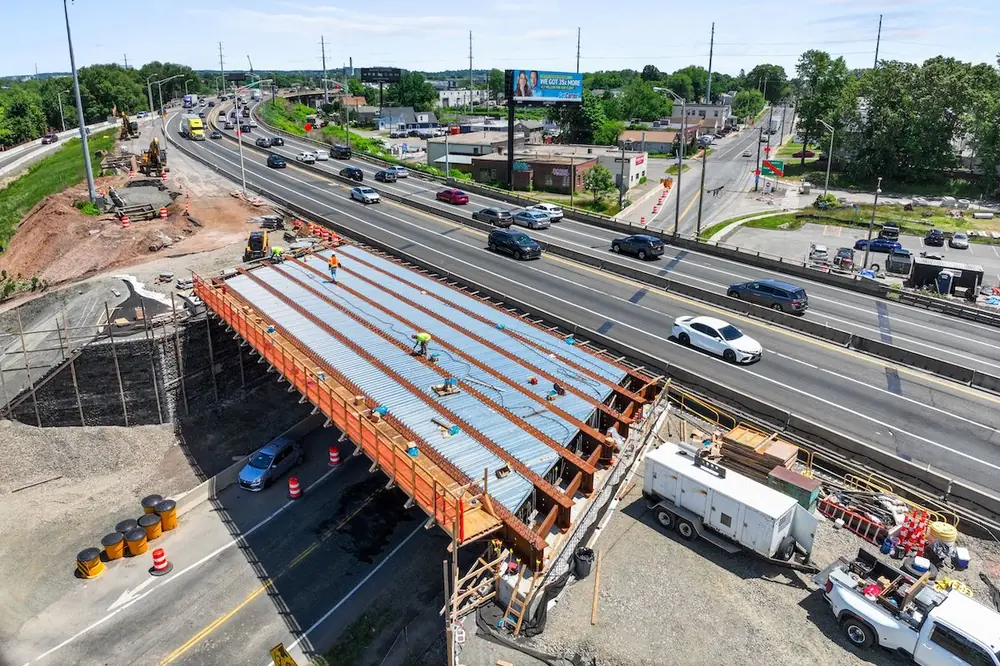
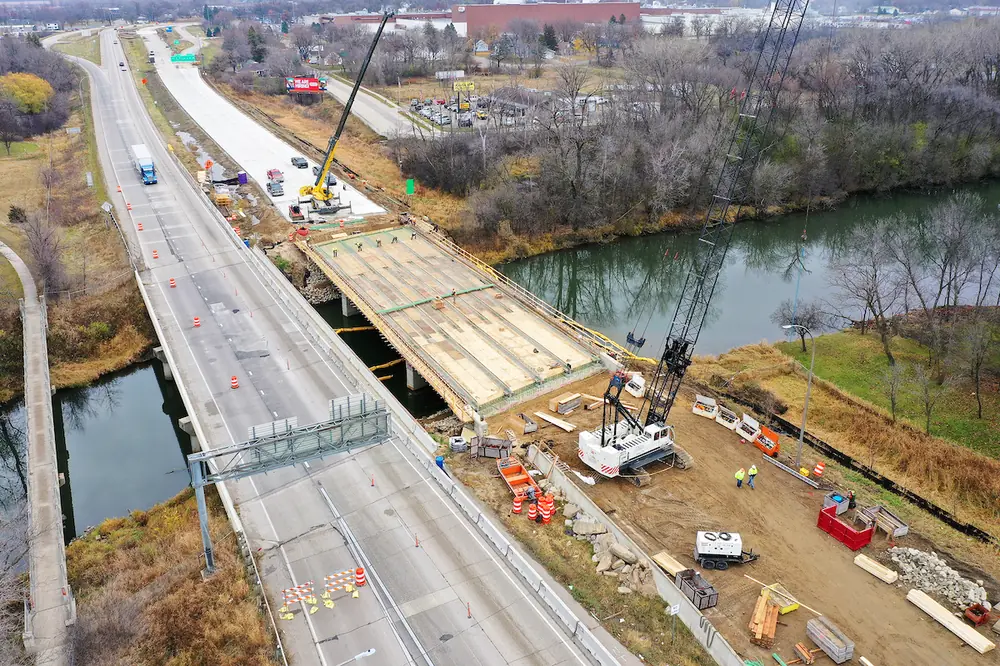
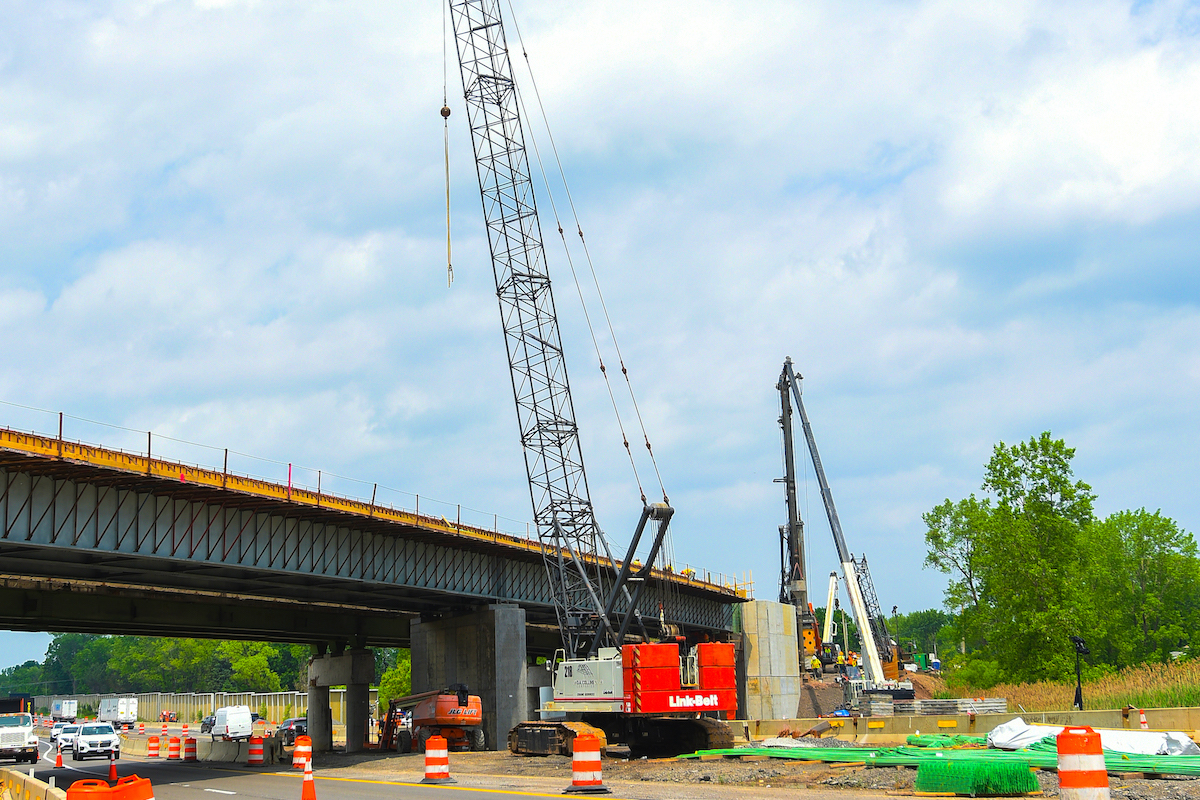
At the demolished Bear Street bridge, several Link-Belt machines are found on both sides of the interstate as well as in the median. The new four-lane (two lanes in each direction) overpass will be lengthened to fit over the expanded Business Loop 81, will be widened for pedestrian traffic, and will have upgraded curb treatments.

| Your local Trimble Construction Division dealer |
|---|
| SITECH Allegheny |
| SITECH Northeast |
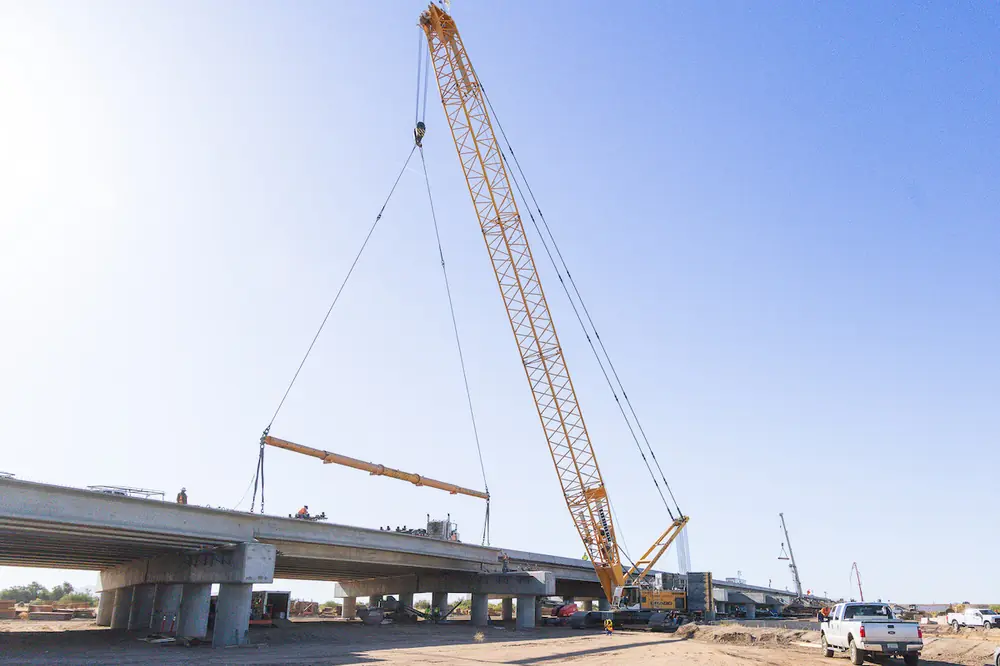
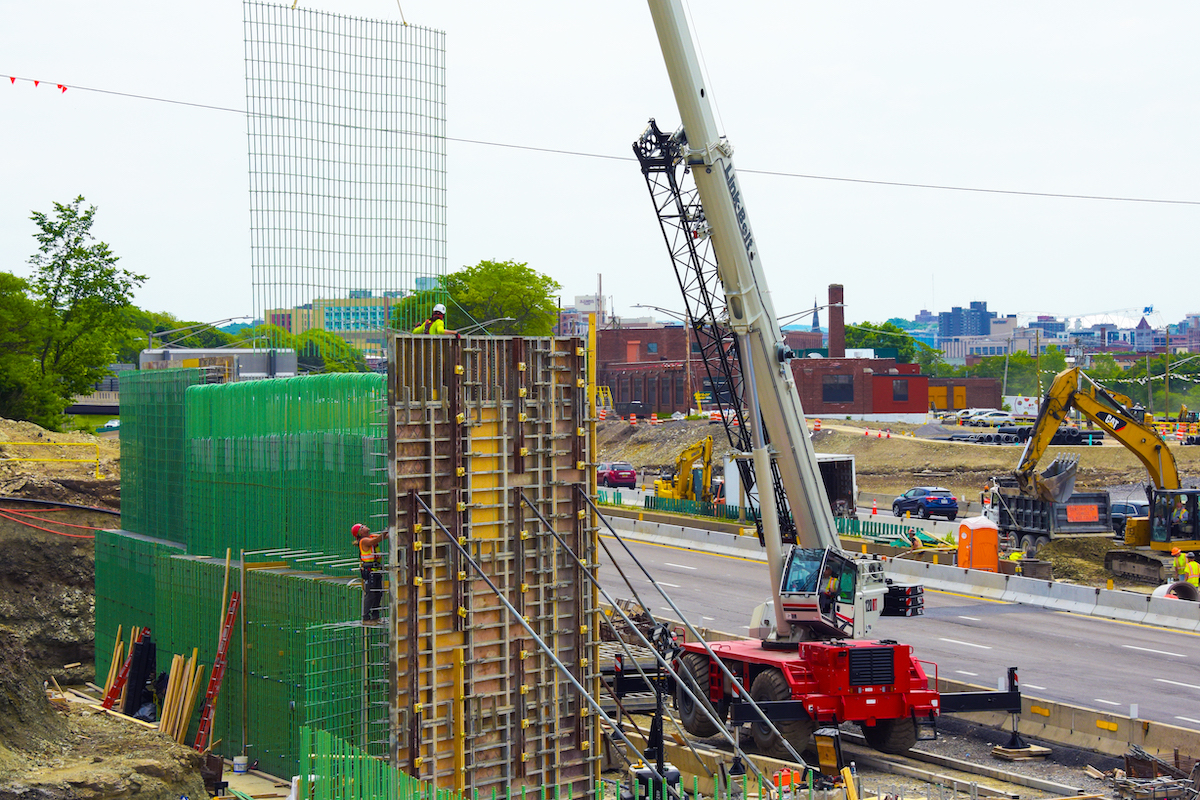
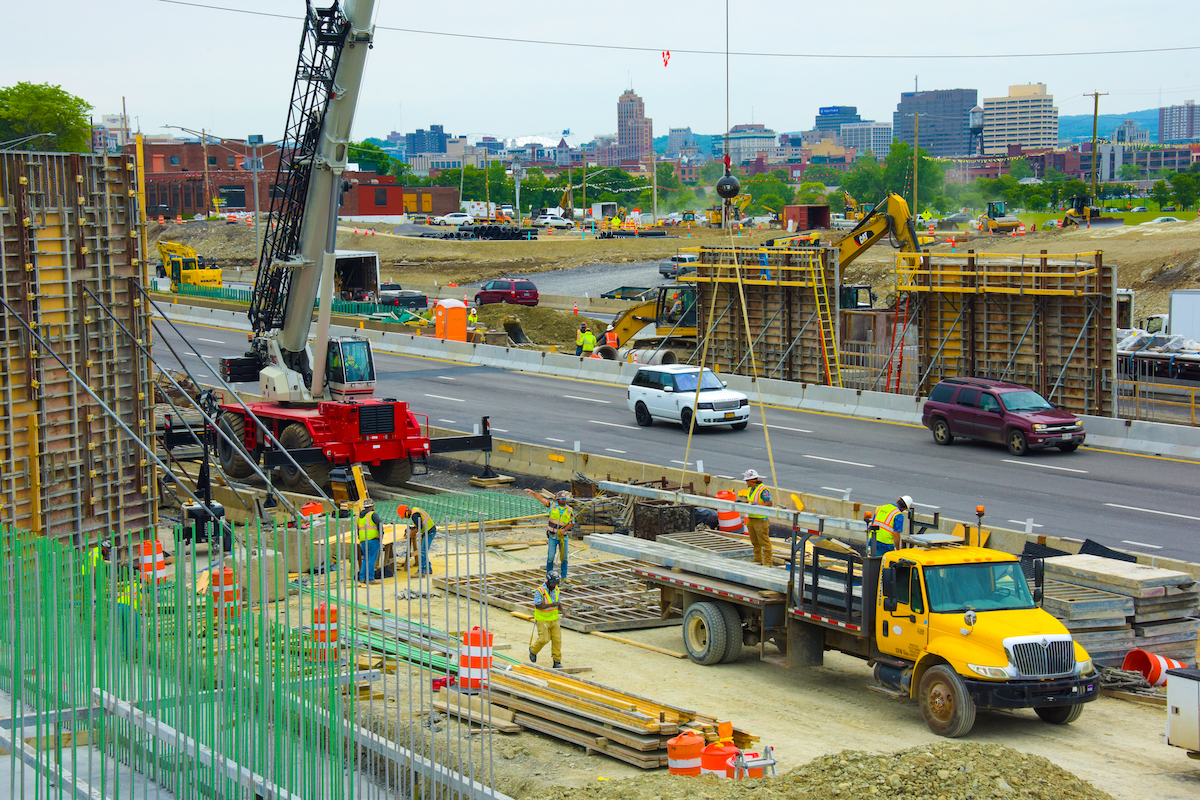
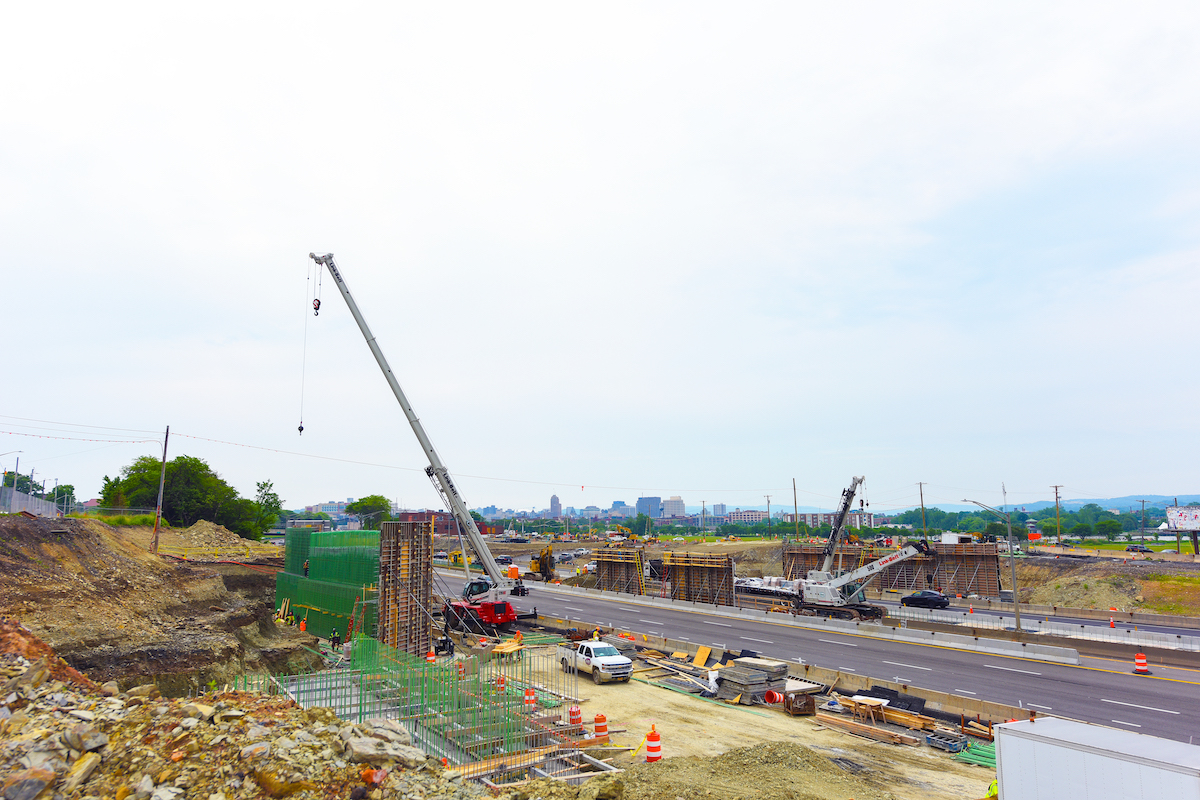
The contract also includes five retaining walls of soldier pile lagging, or cast-in-place concrete panels, which require formwork and rebar handling. Several of the retaining walls are thousands of feet long, extended out to tie into new bridge abutments or wing walls as Business Loop 81 is widened. This is where the Link-Belt TCC-550 and TCC-500 Telecrawlers are busy, when not placing formwork or gangs and rebar at abutments.
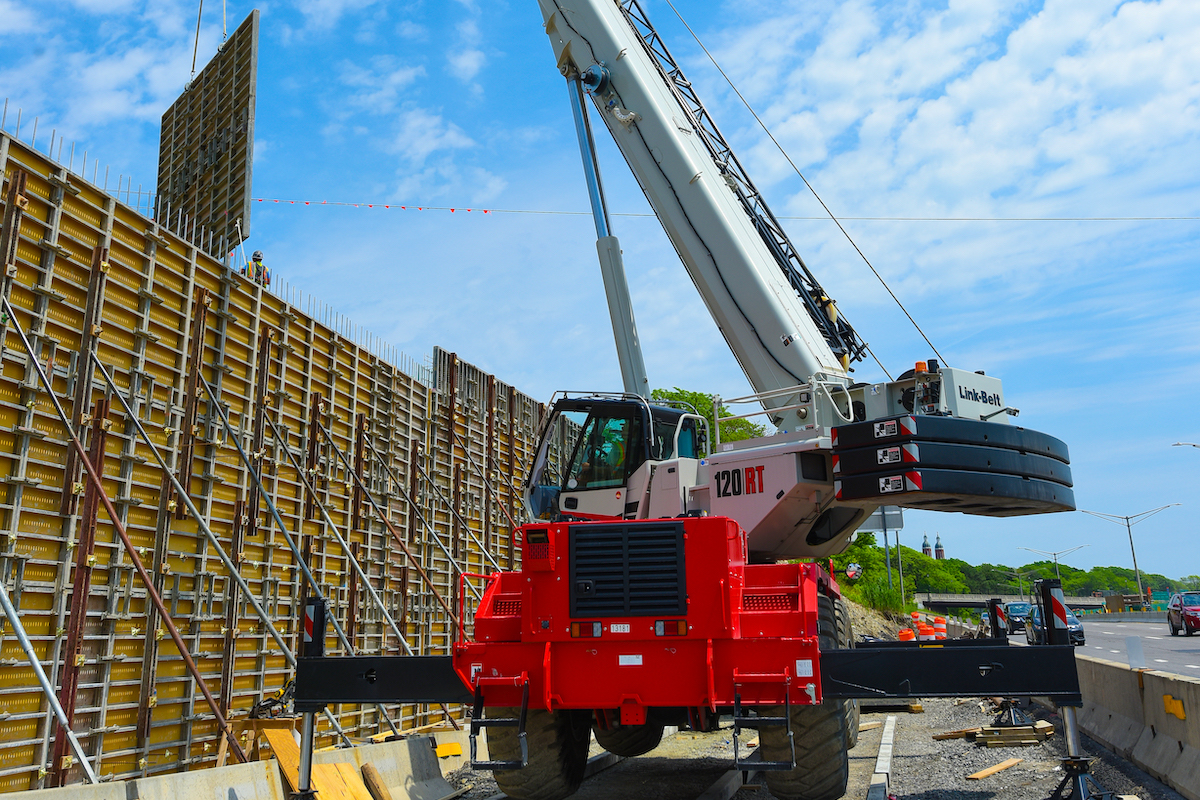
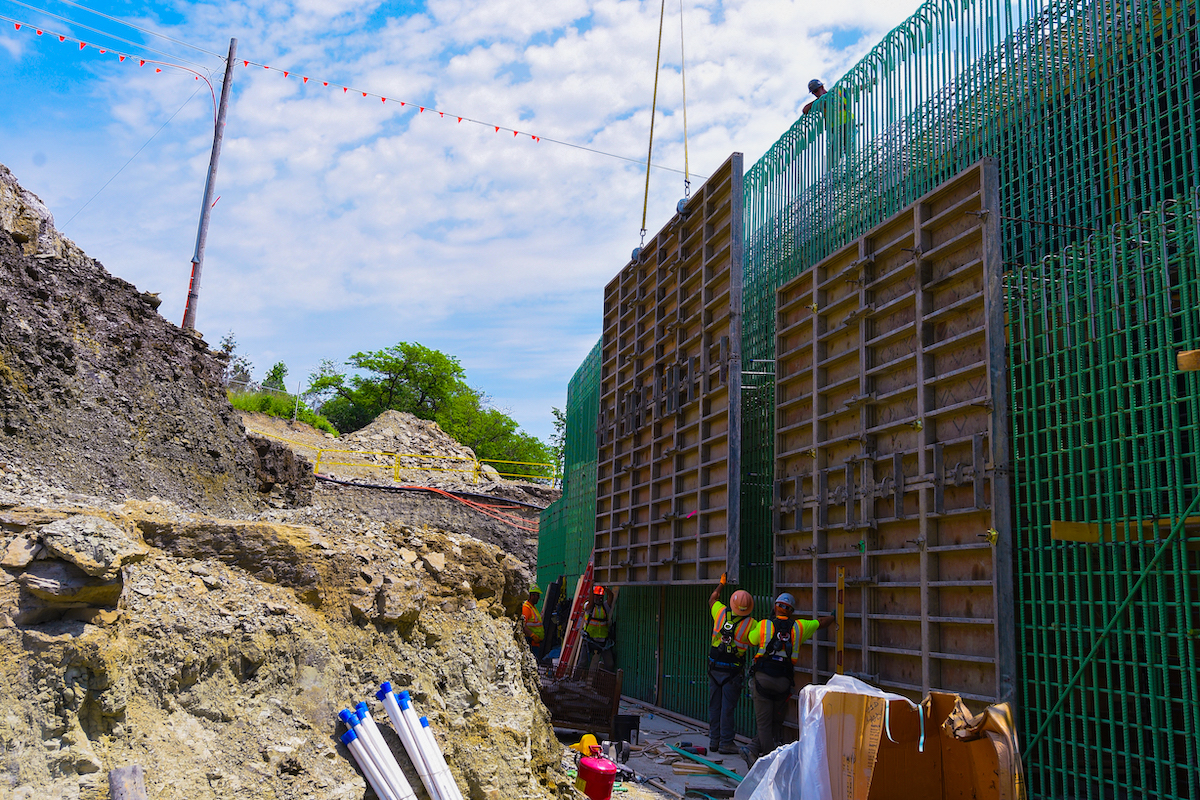
It is at the larger, higher Bear Street abutment that Link-Belt’s new 120RT 120-ton rough terrain crane is actively setting large premade rebar panels and large gang forms that weigh up to 14,000 pounds while hoisting them as much as 80 to 85 feet away. The heavily enforced structure measures at 83 feet wide and about 26 feet tall with two stem pours. The lower wall (lower stem) in the back face of the abutment (which is 7 feet 6 inches thick) creates support for the northbound Business Loop ramp bridge.
Because of the crane’s heavier capacity at a greater reach, it allows the 120-ton rig to stay in one place and make multiple heavy lifts swiftly for rebar, gang forms, or 400-pound, 30-foot-long “yoke” beams. The frontal gang forms on the northbound side abutment are three “gangs” tall, made up of multiple 8-foot by 10-foot secured panel forms. The back-bottom forms are wider, not taller, to facilitate the lower stem concrete pour.
According to the 120RT Operator, Pat Farrell of Salt City Constructors, who uses about 111.2 feet of boom out most of the time, the back-abutment gangs are usually about 7,000 pounds each. He needs the reach to hoist his load up and over the existing forms and rebar, which make up the 83-foot-long abutment. Since the low stem is 7.5 feet thick, his radius is 36 feet when dropping his load to the ground while working in the blind. A 69-degree boom angle is usually used while lowering the panels or gang forms.
| Your local Trimble Construction Division dealer |
|---|
| SITECH Allegheny |
| SITECH Northeast |
Working in the blind is not unusual for Farrell. There is only one major place he can sit with the crane — right next to the interstate slow lane — so he relies on his computer and crane radius that he has established.
“I have a pretty good idea of what I need for a radius, so I’m pretty close with that,” Farrell said. “The signal man may make me boom the load away or get it closer to me and then just lower it down. Then I just watch my weights as I’m coming down.”
“Sometimes when I’m close to the placement, it could be an inch that they tell me to move, then you have to pick it up and set it multiple times to get it exactly where they want it,” he added. “If they need an inch, you give them an inch. That is all up to the crew. But you are also watching your winches. I also have gotten the audible turned on for my winch, so I can hear the winch turn. I know if they need just a little bit, you can give it to them one way or the other.”
When working in the blind, Farrell feels that his signal men can make or break the lift.
| Your local Trimble Construction Division dealer |
|---|
| SITECH Allegheny |
| SITECH Northeast |
“A good signal man ... understands the dynamics of a crane, he understands boom deflection, and he understands the basics of the crane operation,” Farrell said. “The crane operator will understand when that signal man also gives him multiple signals at once, like swing boom down, cable down, or hold your load. It’s a working relationship with every crew you are with.”
The bridge goes down grade, with the southbound abutment being 20 feet tall. The center pier (22 feet tall) and abutment have the telecrawlers working in full 500-ton and 550-ton capacity with all counterweight attached.
“We are using the Link-Belt 120RT based on needing the long reach the machine has,” Structural Superintendent Joe Falta said. “We have more reach while using our big gangs. We had one abutment, not far away, that required an 80-foot reach, so we needed the 120 for what we were picking that was well over 10,000 pounds. Our heaviest panel might have been 14,000 pounds, with most weights lifted being 9,000 to 10,000 pounds, while working at a 75- to 80-foot radius.”
“For the retaining walls, we were using the telecrawlers, always, because you could track along the front of them and pick, carry, and hold the load at a radius of 30 to 40 feet,” Falta added. “They just keep crawling along the path. We also use the crawlers when possible on the abutments because it’s just nice. You don’t have to set up with outriggers and level it out and everything. As long as you have a level path, it works well.”