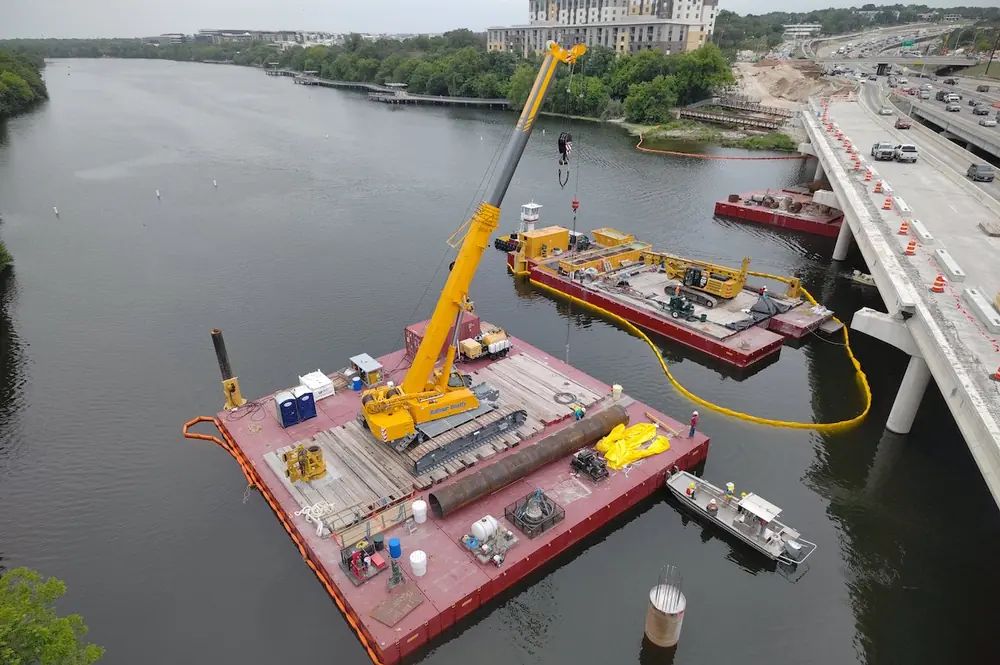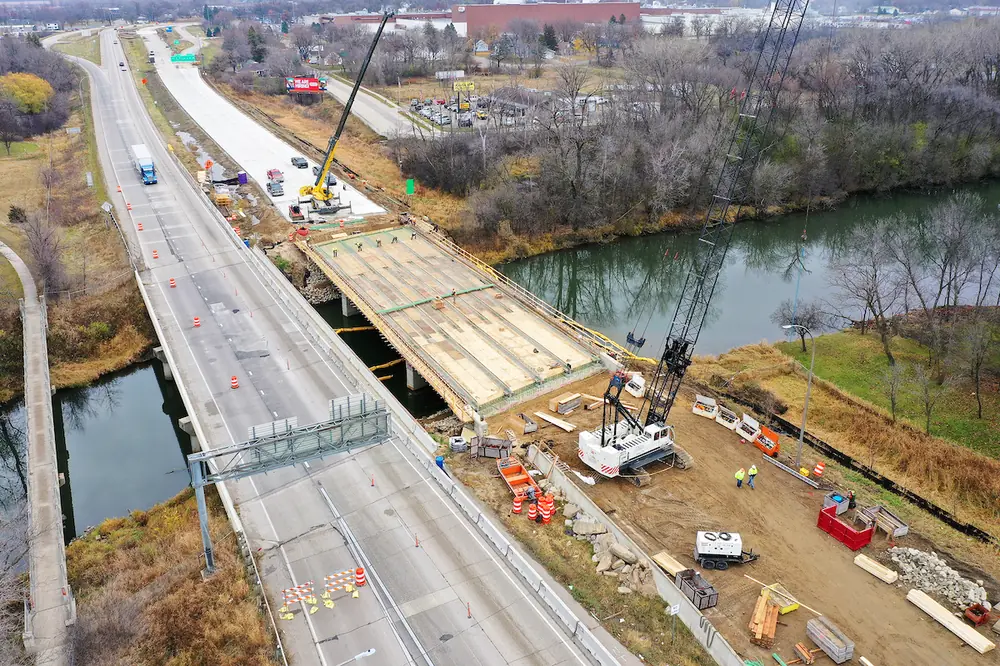


In 2026, construction will be operating inside constraints it can no longer work around. Infrastructure demand continues to rise, driven by public investment, private development, and years of deferred maintenance. Capital investment will remain high, even as interest rate volatility and cost inflation compress margins. Labor availability will continue to tighten, while supply chains remain exposed to geopolitical shifts, regulatory changes, and tariff pressure. None of these forces are new on its own, but their cumulative and sustained impact has fundamentally reduced the industry’s margin for error.
For decades, the construction industry absorbed volatility through experience and instinct. Schedules flexed. Contingencies expanded. Risk was managed reactively, often pushed downstream to the field. That model depended on an abundance of skilled labor, deep institutional knowledge, and tolerance for inefficiency. It no longer scales in an environment where projects are larger, timelines are tighter, and failure carries outsized financial and reputational consequences.
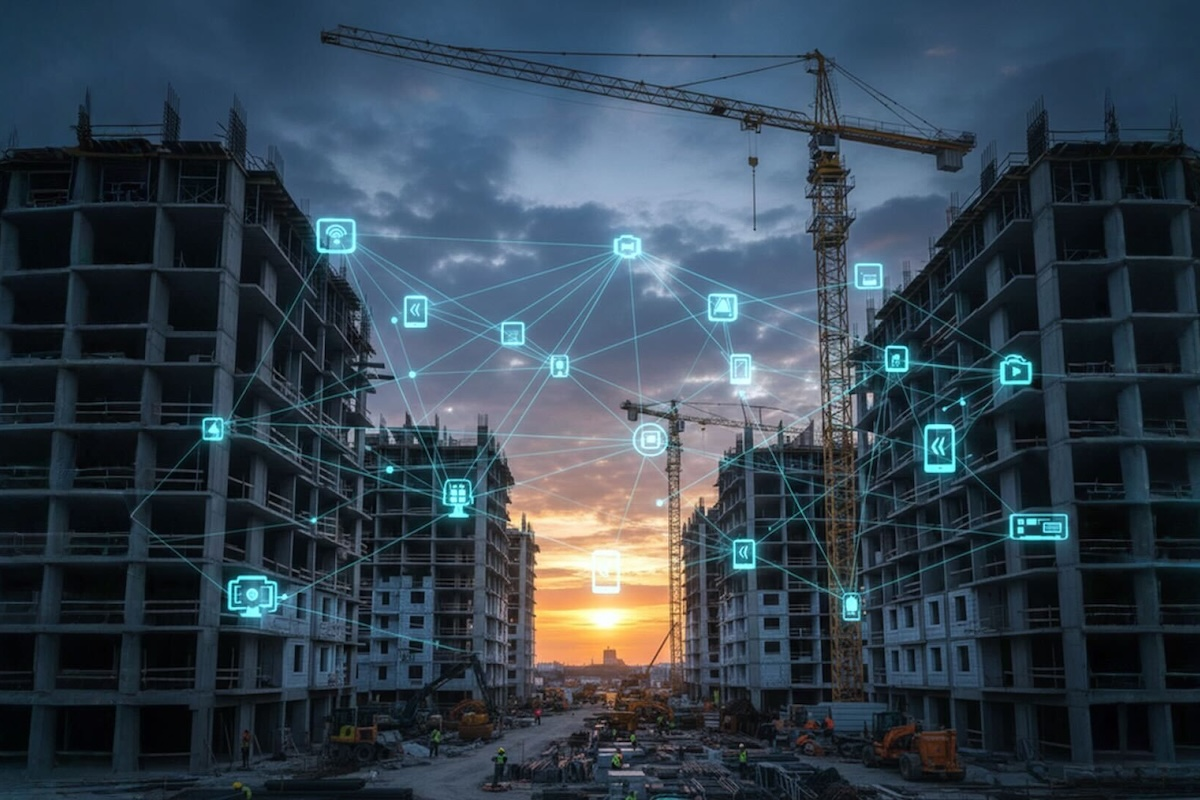
What is emerging instead is more structural — job sites designed to sense conditions as they evolve, interpret change in context, and respond with speed and consistency rather than delay. This is not a shift driven by novelty. It is driven by necessity.
This moment is not about adding more software or chasing innovation for its own sake; it is about activating intelligence across planning, equipment, execution, and oversight. In 2026, the industry will move beyond digital experimentation and begin operating with systems that continuously observe, learn, and inform decisions. The payoff is not theoretical efficiency, but measurable improvements in predictability, safety, utilization, and control.
The construction industry has spent years digitizing documents, standardizing workflows, and modernizing communication. These efforts provided visibility into project activity, but visibility alone does not resolve uncertainty. Knowing what happened yesterday does not always prevent what will go wrong tomorrow.

| Your local Trimble Construction Division dealer |
|---|
| SITECH Allegheny |
| SITECH Northeast |
The pressures shaping 2026 are structural, not cyclical. Labor shortages are demographic and persistent. Project scale, technical complexity, and regulatory oversight continue to increase. Owners and public agencies demand certainty around cost, schedule, and compliance, even as external conditions remain volatile. In this environment, static plans and fragmented systems amplify risk rather than absorb it.
What changes in 2026 is intent. Technology is no longer adopted to keep pace with peers or satisfy reporting requirements. It is deployed to manage outcomes actively. Intelligence moves from dashboards and after-action reports into daily operations, influencing how work is sequenced, how resources are allocated, and how risk is mitigated while there is still time to act.
This marks a shift from retrospective management to anticipatory control.
An intelligent job site is not defined by autonomy, artificial intelligence, or advanced analytics in isolation. It emerges when these capabilities operate together within a shared operational context that reflects real conditions on the ground.
| Your local Trimble Construction Division dealer |
|---|
| SITECH Allegheny |
| SITECH Northeast |
In practice, this means equipment performance, integrated labor, material and work schedules, logistics, labor availability, and field conditions are continuously reconciled against the plan. Data is spatially aware and time-sensitive, allowing teams to understand not just what is happening, but also where and why. Deviations are identified early, while corrective action still has leverage, rather than after delays and cost overruns are locked in.
Intelligent job sites replace linear workflows with feedback loops. Plans are no longer static documents but living models that evolve as reality diverges from expectation. Decisions become less dependent on anecdotes and more grounded in evidence.
Contractors who operate this way report tangible operational gains. Equipment utilization stabilizes instead of fluctuating. Rework declines because conflicts are surfaced earlier. Schedule forecasts become more reliable because they are continuously recalibrated rather than periodically revised. These outcomes are driven by integration and operational discipline, not by any single technology deployment.
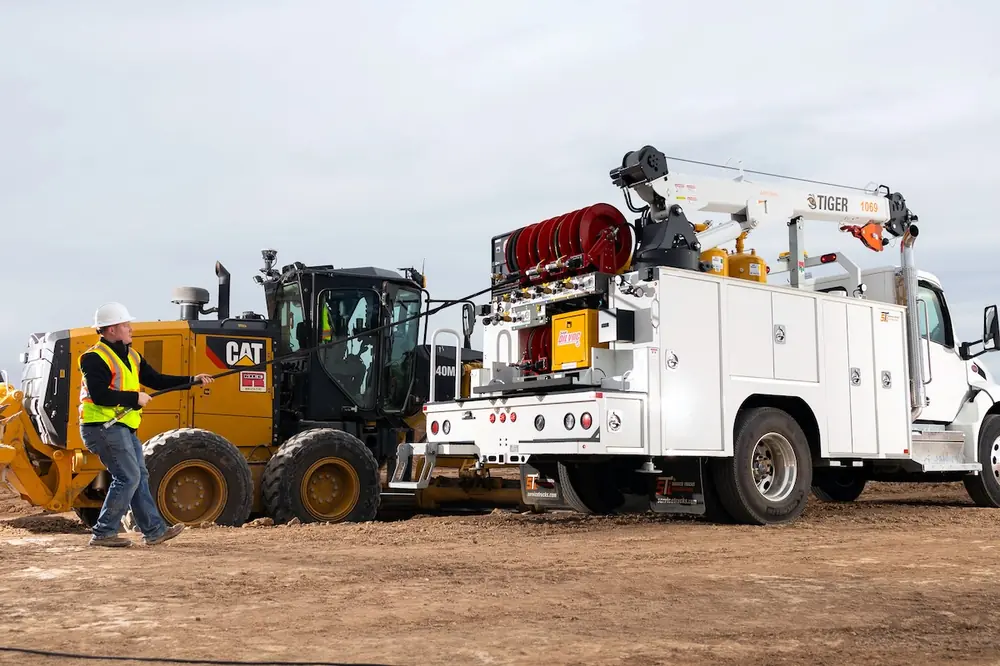
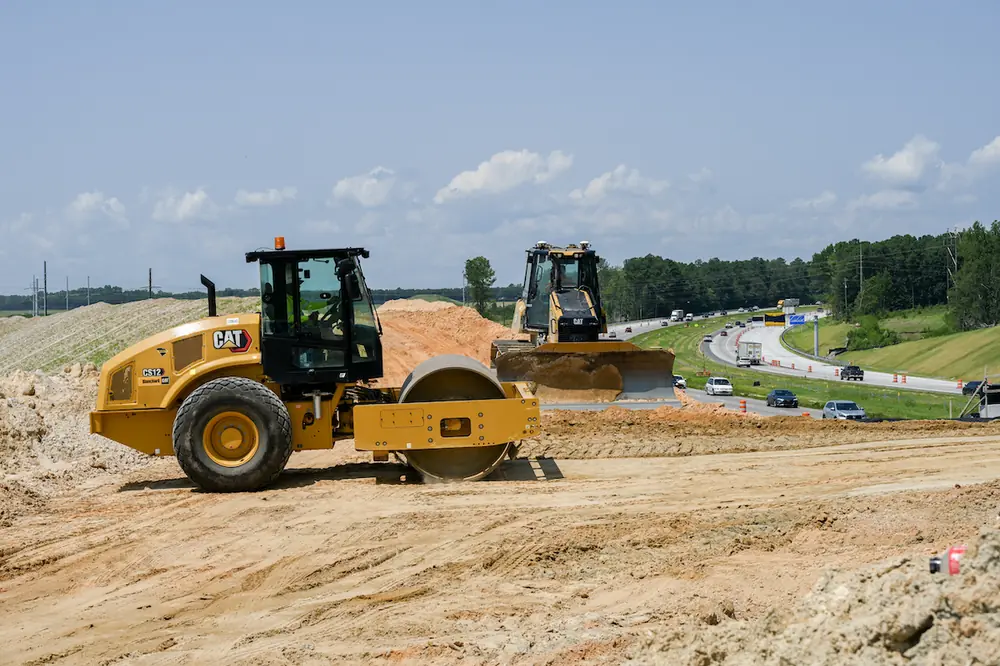
Autonomous and semi-autonomous equipment is no longer confined to controlled pilots or novelty use cases. In heavy civil, earthmoving, paving, and industrial environments, coordinated automation is becoming standard practice.
| Your local Trimble Construction Division dealer |
|---|
| SITECH Allegheny |
| SITECH Northeast |
The benefits are practical rather than aspirational. Machines execute repetitive tasks with consistent performance, reducing variability that often drives schedule slip. Safety exposure decreases in high-risk zones where fatigue and human error historically played a role. Operators transition from constant manual control to supervision, intervention, and optimization.
This shift also changes how productivity is measured. Output becomes more predictable. Equipment downtime becomes easier to diagnose. Utilization improves because machines operate as part of a coordinated system rather than as isolated assets.
Adoption has accelerated as connectivity improves and integration barriers fall. Mixed fleets can now operate cohesively, allowing contractors to introduce automation incrementally without replacing existing assets wholesale. The most successful organizations treat automation as a workforce multiplier that stabilizes production and extends scarce expertise, rather than as a replacement for skilled labor.
AI’s impact in 2026 is less about generating reports and more about governing execution. Planning and control systems increasingly adapt to changing conditions, continuously updating schedules, cost projections, and resource allocation based on actual performance data.
| Your local Trimble Construction Division dealer |
|---|
| SITECH Allegheny |
| SITECH Northeast |
Rather than relying on static baselines, AI-driven systems model probability. They surface risk before it manifests as a delay or an overrun. Machine vision supports quality and safety monitoring at scale, identifying deviations that would otherwise surface only during inspections or after rework is required.
Field teams receive recommendations grounded in live conditions rather than static assumptions or historical averages. This reduces decision latency and improves consistency across crews and shifts.
At the executive level, oversight becomes forward-looking. Instead of reacting to missed milestones or budget overruns after the fact, leadership teams can identify emerging risks earlier and intervene while options still exist. AI does not replace judgment. It reduces uncertainty, enabling judgment to be applied with greater confidence and discipline.
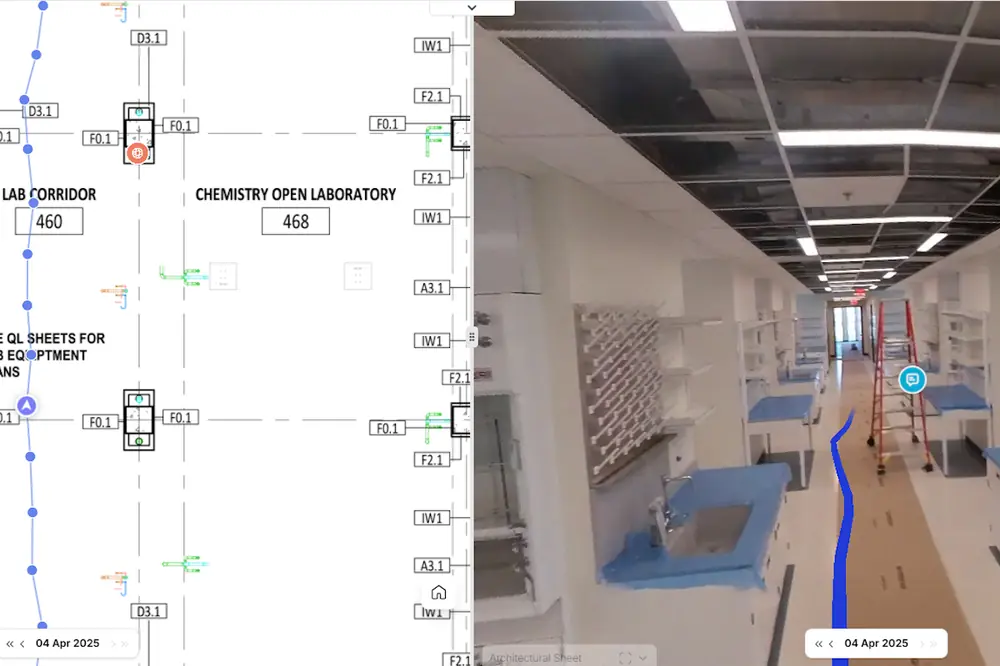
Spatial computing and mixed reality tools are moving out of demonstration mode and into daily use. Crews visualize work in context before execution. Installation tasks are guided spatially, reducing interpretation errors and dependence on tribal knowledge. Logistics planning improves as spatial constraints are identified earlier.
| Your local Trimble Construction Division dealer |
|---|
| SITECH Allegheny |
| SITECH Northeast |
This shift matters in an industry where experienced workers are retiring faster than they can be replaced. Spatial workflows capture institutional knowledge and make it accessible at the point of work. Training becomes faster and more consistent. First-time accuracy improves. Errors decline.
Beyond productivity, spatial tools also change communication. Teams align more quickly when they work from a shared visual understanding of the job site. What once required explanation now requires confirmation.
The most consequential shift happening in 2026 will be the move away from fragmented systems toward unified operational environments. Owners should increasingly expect interoperability, transparency, and real-time visibility across the project lifecycle.
Operational technology infrastructure will become a strategic asset. Connectivity, secure data pipelines, and edge will begin processing underpin intelligent operations. Data latency will become an operational constraint, not a technical inconvenience.
| Your local Trimble Construction Division dealer |
|---|
| SITECH Allegheny |
| SITECH Northeast |
Cyber resilience will also move beyond IT checklists and become an operational concern as equipment, planning systems, and control platforms become interconnected. Resilience will not be measured only by prevention, but by the ability to continue operating when systems degrade or fail.
Organizations that invest early in integration will reduce operational friction and avoid compounding complexity. Those who do not will find themselves often managing technology debt alongside project risk.
In 2026, the gap between hype and impact narrows. The competitive advantage comes from execution discipline, not tool accumulation. Planning and operations will converge into continuous feedback loops. Safety and utilization will be managed systematically rather than episodically. Owners will reward predictability and transparency over aggressive assumptions. Workforce productivity will improve through augmentation, not acceleration.
Perhaps most importantly, leading contractors will develop the ability to learn across projects. Intelligence compounds when data is reusable and processes are repeatable. That capability will increasingly separate market leaders from the rest of the field. Technology matters, but only when paired with redesigned processes, clear accountability, and leadership alignment.
| Your local Trimble Construction Division dealer |
|---|
| SITECH Allegheny |
| SITECH Northeast |
2026 will be remembered as the year intelligence stopped being theoretical in construction — not because technology matured overnight, but because the industry aligned people, data, and operations around measurable outcomes.
For leaders, the mandate is very clear. Modernize workflows with intent. Treat data as operational infrastructure. Reevaluate risk management through a predictive lens. Challenge legacy practices that no longer reflect economic reality.
The intelligent and aware job site is no longer a future concept. It is the new benchmark for performance, resilience, and leadership in the construction industry.
Shanthi Rajan is CEO of Linarc.