Communications towers have long been a part of the landscape, but if you think you’re seeing many more of them, you’re not mistaken. The rapidly increasing demand for wireless communication and private communication networks has triggered a significant increase in the construction of towers.
The growing presence of towers means construction crews are more likely to interact with them. Whether it’s actually erecting or performing work on a tower, or handling other projects within close proximity of towers, it’s important for workers to be familiar with the inherent hazards and basic safety rules associated with towers.
Tower Hazards
When we think about working around towers, the hazard that comes to mind immediately is everything associated with climbing them. Some tasks must be performed at great heights, in all kinds of weather conditions. That’s why falls from high levels present an obvious hazard – but falling is far from the only hazard involving towers.
There are also hazards associated with hoisting equipment – and sometimes workers – to worksites on towers, along with the potential for tools and heavy objects to be dropped from heights. That equipment can also fail in ways that endanger workers. Structural failures of towers have been known to occur. Less obvious are the invisible hazards created by radio frequency (RF) waves generated by equipment on the towers.
Because hazards vary by the type of tower, the environment, and the specific tasks being performed, it’s critically important to perform a thorough job hazard analysis before work begins. Once specific hazards have been identified, it becomes the responsibility of supervisors and workers to use strategies to mitigate the hazards.
We’ll explore some of the more common hazards and strategies for protecting workers.
Fall Hazards
Much of the work associated with towers is performed at height. Whether workers climb the tower structure, use a ladder, or are hoisted into position, fall protection and rescue planning are mandatory. That includes the use of fall protection systems and identifying safe anchor points for each location where tasks will be performed.
Rescue procedures must also be reviewed for each location to ensure workers will know the best way to retrieve someone who becomes injured or incapacitated. Those procedures should include identifying locations for rescue anchors and the nearest safe working levels, any equipment needed to conduct a rescue operation, and proper training for all workers who might have to participate in a rescue.
In most cases, workers who will be in elevated settings will use personal fall arrest systems (PFAS) that include a body harness and a device for connecting with anchorage points. The choice of which PFAS to use depends on the specific hazards and environmental conditions.
Some towers have fixed ladders that are protected by ladder safety device systems, typically involving a rigid rail or flexible carrier with a locking device connected to the worker’s harness.
As with other forms of personal protective equipment (PPE), PFAS must be inspected daily to ensure there are no defects or other issues that would compromise safe operation, and those inspections must be documented.
Electrical Hazards
Towers are often in close proximity to overhead electrical lines, and when that’s the case, crews are expected to develop an electrical safety plan that identifies and marks all electric lines. Workers should always assume electrical lines are energized with high voltage until the utility verifies otherwise, and they must not perform work within 10 feet from lines energized with up to 50 kilovolts – and farther away from higher voltages. Before work begins, the utility should be called to identify energized lines and equipment and determine whether that equipment needs to be deenergized or insulated to protect workers.
Environmental Hazards
Tower work is performed outdoors, often in remote areas. Crews need to assess potential organic hazards such as plants that could cause punctures or skin irritation, as well as insects or wild animals that might injure workers.
RF Hazards
The antennas on communications tower typically emit RF energy, a form of non-ionizing radiation that can be hazardous to human tissue and some types of equipment. There are strict Maximum Personal Exposure (MPE) limits for exposure to RF. Overexposure can cause heating of tissue and burns. In addition, wire ropes on equipment such as hoists can resonate with RF frequencies, causing them to become extensions of the antenna and generate their own RF energy.
If working on a tower presents the potential for exposure to RF energy, crews must develop a site safety plan to prevent excess exposure. That may include everything from RF monitors to special clothing, and lockout/tagout programs to prevent situations in which power is accidentally restored to an antenna while workers are at an unsafe distance.
Personal Protective Equipment
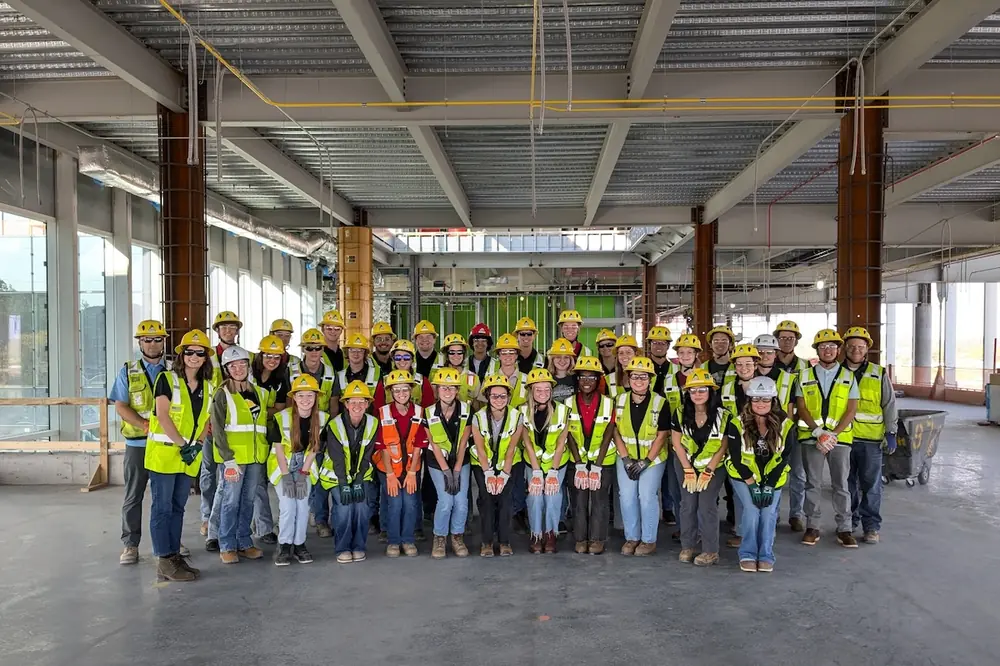
As with all worksite tasks, it’s important that all crews have the correct PPE for the environment and the tasks they’ll perform, and that the PPE is properly inspected at the correct intervals. For work on towers, PPE is likely to include fall protection, head and eye protection, safety footwear, gloves and other hand protection, hearing protection, and special clothing.
Equipment Safety
Specialized equipment on tower worksites may create other safety requirements. For example, if hoists will be used to move equipment or workers, crews will be expected to conduct daily inspections and ensure that the hoists are operated only by qualified personnel. Operators should have access to an operator’s manual and load charts. Crews must verify that the hoists are properly secured and anchored for the lifts they’ll perform. And, because workers may be distant from one another, hand signals or two-way radios may be needed to ensure clear communication about lifts. All rigging equipment must also be inspected each day to ensure it is in good condition.