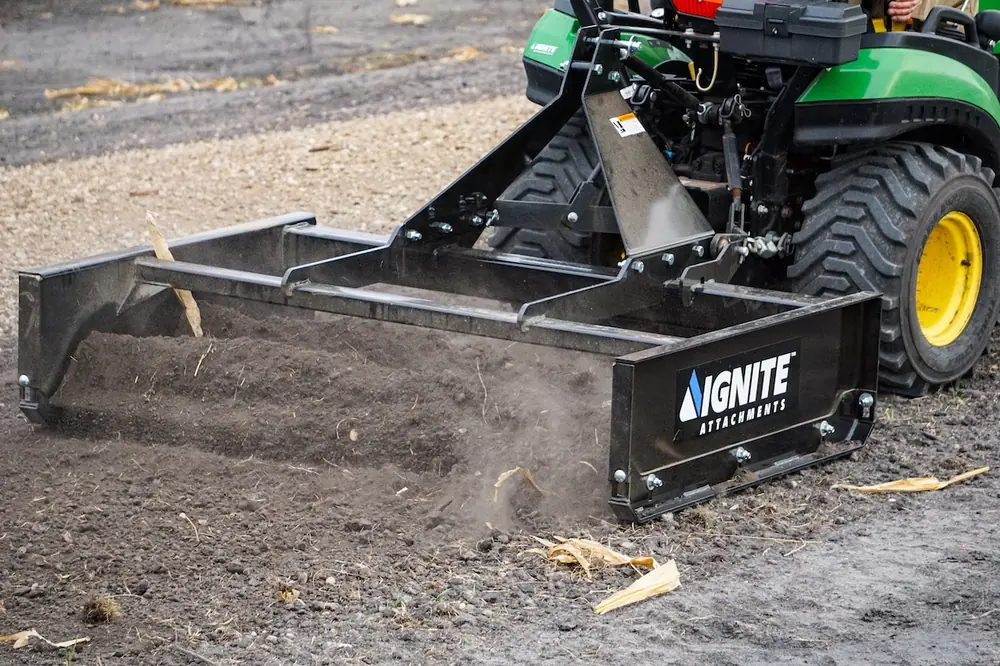
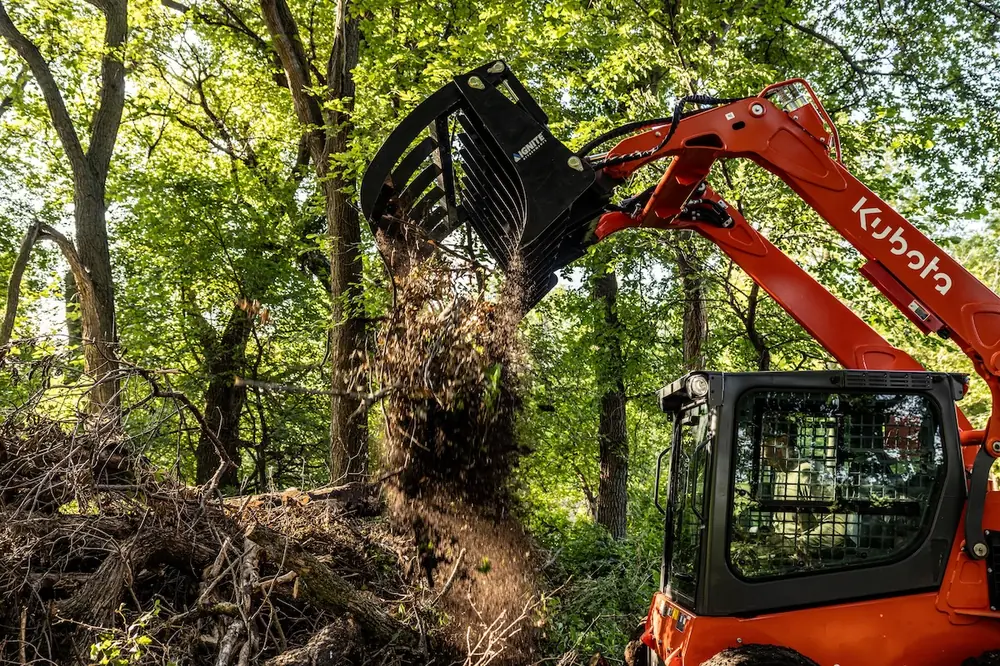

Every contractor wants to get more from the equipment already in their fleet. With labor shortages, rising equipment costs, and tight project schedules, every machine has to pull its weight. Attachments make that possible. A loader that spends the morning moving aggregate might be clearing demolition debris after lunch and drilling holes before the day is over.
That versatility helps keep equipment working, reduces idle time, and allows crews to respond quickly as project demands change. The catch is that not every attachment is the right choice for every machine — or every job.
It's easy to assume that if an attachment fits the machine, it's the right choice. In reality, physical compatibility is only the beginning. Every attachment changes how a machine performs. Its weight affects lifting capacity. Design influences visibility, maneuverability, and cycle times. Just as importantly, the application itself helps determine whether an attachment is suited for the work at hand.
Getting the best results means looking at the job, the machine, and the attachment as a package — not as separate decisions. When one piece is overlooked, efficiency suffers, wear increases, and the machine can't operate to its full potential.
Before looking at attachment specifications, take a step back and think about the work that needs to be done.

| Your local Broce Broom dealer |
|---|
| Nueces Power Equipment |
It sounds simple, but it's one of the easiest steps to overlook. It's easy to start comparing widths, capacities, or other specifications before thinking through the application. Instead, let the job drive the decision.
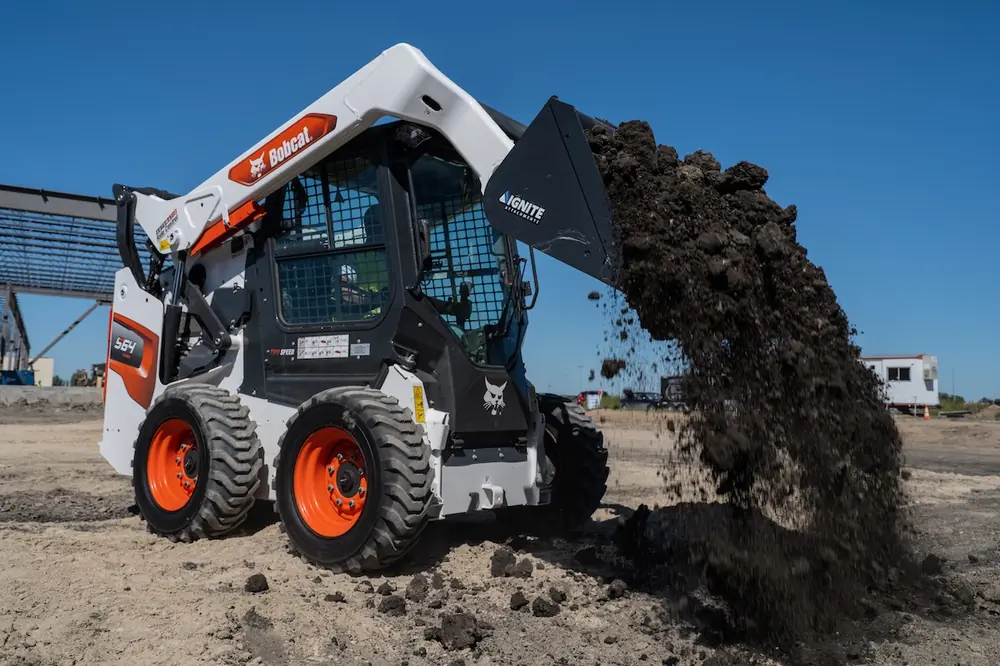
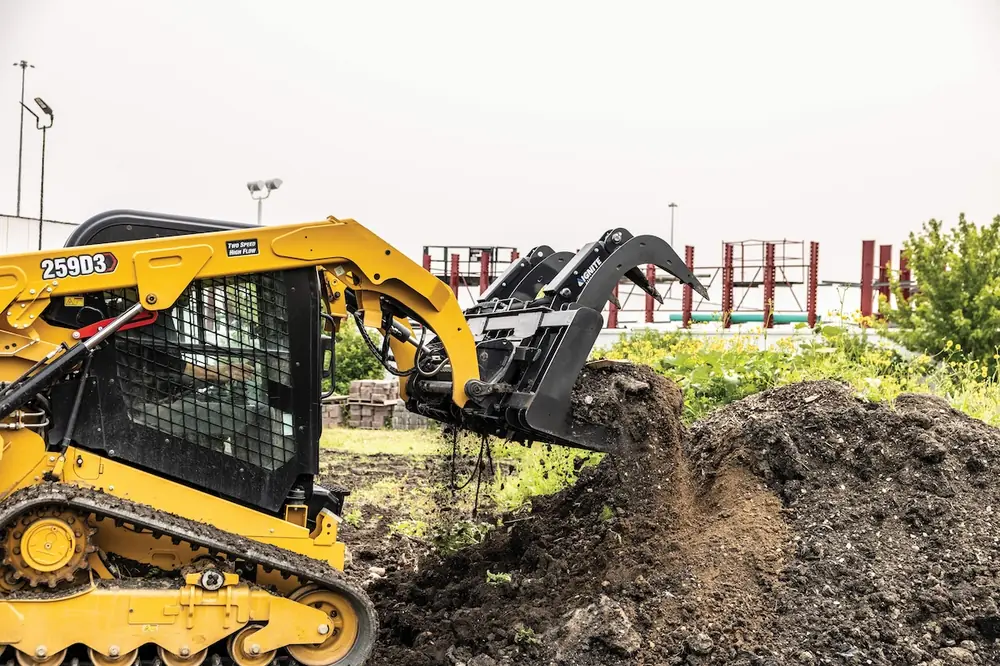
Take buckets, for example. A contractor loading aggregate on a road project has different needs than one removing reinforced concrete during demolition. Both require a bucket, but the ideal design, duty rating, and overall construction may be very different. The same is true for grapples, breakers, brooms, augers, and countless other attachments. The material being handled, job site conditions, and type of work all influence which attachment will perform best.
It's also worth thinking beyond the project in front of you. Will this attachment be used every day or only a few times each year? Does it need to excel at one specialized task, or should it be versatile enough to handle a variety of jobs? The answers help narrow the options and may even determine whether it makes more sense to use an attachment already in the fleet, rent one for a specialized project, or invest in one that will see regular use.
Once the work is clearly defined, the next step is making sure the machine is matched well to the attachment.

| Your local Bobcat dealer |
|---|
| Compact Construction Equipment, Inc |
| Bobcat of North Texas |
Smart attachment speccing starts with understanding the machine.
Rated operating capacity, lift geometry, and interface compatibility all influence how an attachment will perform in the field. Just because an attachment connects to the carrier doesn't necessarily mean it's the right match. Successful compatibility means understanding the machine's capabilities before asking it to perform the work.
Fortunately, that process has become much easier. Many manufacturers and equipment dealers now offer online compatibility tools that compare machine specifications with attachment requirements to help contractors identify compatible options across a wide range of makes and models. These tools eliminate much of the guesswork and provide a strong starting point when matching attachments to machines.
Compatibility, however, is only part of the equation. Digital tools can verify mounting interfaces and other key specifications, but they can't account for every real-world variable. Visibility, maneuverability, material type, and job site conditions still require careful evaluation. An attachment that checks every box on paper may not always be the best choice once work begins.

| Your local Takeuchi Mfg Ltd dealer |
|---|
| Kirby-Smith Machinery |
| Nueces Power Equipment |
One of the most common attachment speccing mistakes is trying to maximize attachment size instead of machine capability.
The goal isn't to hang the biggest attachment the machine can carry. It's to find the combination that allows the machine to accomplish the most work, day in and day out.
Every machine has a finite lifting capacity, and that capacity includes the attachment itself. The heavier the attachment, the less capacity remains for the material being moved. A larger bucket, grapple, or other attachment may look more productive on paper, but if its weight limits how much material the machine can safely handle, the expected gains can disappear quickly.
That's why smart attachment design isn't simply about adding more steel. Many manufacturers use engineering tools, such as finite element analysis (FEA), to identify exactly where reinforcement is needed. Instead of making the entire attachment heavier, engineers can strengthen high-stress areas while minimizing unnecessary weight. The result is an attachment that maintains durability while preserving more of the machine's rated operating capacity for the work that matters.

| Your local LeeBoy dealer |
|---|
| Closner Equipment Co Inc |
| Romco Equipment Co |
Weight also affects more than lifting capacity. Heavier attachments can change machine balance, reduce stability, and limit visibility, particularly when handling heavy materials or working on uneven ground. Those changes can slow cycle times, increase operator fatigue, and place additional stress on the machine over time.
In many cases, the most productive attachment isn't the biggest one — it's the one that strikes the right balance between strength, weight, and the demands of the application.
Weight isn't the only consideration when matching an attachment to the job. Choosing the right duty rating is just as important.
Most attachment categories are available in multiple duty ratings because not every application places the same demands on the equipment. Another common speccing mistake is assuming that the most rugged option is automatically the best investment.

| Your local Wirtgen America dealer |
|---|
| Kirby-Smith Machinery |
| Nueces Power Equipment |
A heavier-duty attachment is designed for tougher applications — not every application. If crews regularly handle reinforced concrete, demolition debris, or other abrasive materials, the additional strength of a severe-duty bucket may be worth the extra weight.
But if those demanding conditions are only occasional, replaceable wear components such as bolt-on cutting edges, teeth, and other wear parts can help protect high-wear areas and extend attachment life. While these components don't transform a standard-duty attachment into a severe-duty one, they can provide added protection when the job occasionally becomes more demanding. When they wear out, operators can simply replace the wear components rather than the attachment itself.
The goal is to match the attachment to the work being done — not simply choose the heaviest model available.
Even the best specification process has its limits.

| Your local Gradall Industries dealer |
|---|
| Kirby-Smith Machinery |
| WPI |
The spec sheet can confirm compatibility, operating capacity, and other key measurements. What it can't tell you is how an attachment will perform on your job sites, with your materials, and the way your crews work. Visibility in tight spaces, maneuverability around obstacles, the frequency of attachment changes, and the types of materials being handled all influence whether an attachment is truly the right fit.
That's why the best attachment decisions combine good data with real-world experience.
Use compatibility tools to narrow the field. Compare specifications carefully. Then take the final step and think through how the attachment will actually be used. In many cases, that extra consideration is the difference between an attachment that simply fits the machine and one that consistently delivers the performance you're looking for.
Smart attachment speccing isn't about choosing the biggest attachment or the most rugged model available. It's about finding the right combination of job, machine, and attachment. Contractors who take that approach can improve efficiency, reduce unnecessary wear, and get more from every machine in the fleet.
| Your local Magni dealer |
|---|
| Kirby-Smith Machinery |
Darin Gronwold is a Product Manager for Ignite Attachments.