
For decades, large vocational fleets supporting heavy civil construction, infrastructure projects, utilities, and field services have relied on strict vehicle standardization as a cornerstone of operational efficiency. Locking in specific makes, models, and upfit configurations helped simplify procurement, streamline maintenance, and ensure consistency across dispersed operations.
But today’s operating environment is anything but predictable.
With ongoing supply chain disruptions and shifting business demands, the rigidity that once defined best practice is now introducing friction. In Prologis’ 2025 Supply Chain Outlook, 87 percent of executives said safeguarding the supply chain against unforeseen disruptions is now a top priority, reflecting how deeply uncertainty is influencing operational decision making.
Increasingly, fleet operators are discovering that strict standardization, while well-intentioned, can limit their ability to respond quickly when conditions change. As a result, many are moving toward a more flexible approach that preserves consistency while allowing adaptability.
Traditional standardization strategies were built for stability in an often-steady market that allowed for narrow vehicle specifications. In today’s environment, those same constraints can slow fleets down.

| Your local Bobcat dealer |
|---|
| Compact Construction Equipment, Inc |
| Bobcat of North Texas |
When organizations are locked into a single vehicle or specific configuration, even minor disruptions such as production delays, parts shortages, or allocation limits can cascade into larger operational challenges. Vehicles may take longer to source; replacement cycles can stall; and, in some cases, assets sit idle while teams wait for the preferred specification to become available.
For contractors operating on strict project timelines, delays in securing properly specified trucks or upfit components can create ripple effects across crews, equipment deployment, and subcontractor schedules. For fleets supporting time-sensitive operations, those delays translate directly into lost productivity and missed commitments.
Forward-thinking fleets are not abandoning standardization altogether. They are redefining it.
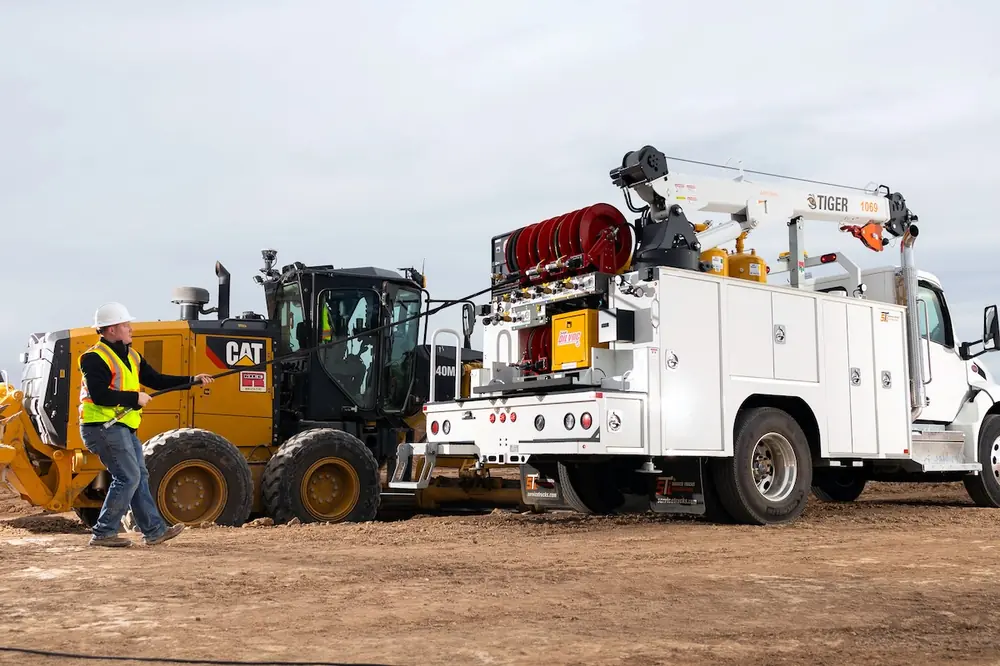
Instead of rigid, one-size-fits-all specifications, many are adopting flexible standards that establish clear operational requirements while allowing for multiple pathways to meet them. This often includes approving multiple OEMs; expanding acceptable vehicle classes or comparable models; creating alternative upfit packages for dump bodies, service bodies, lighting packages, or trailer configurations based on availability; and identifying substitute components when primary options face delays.

| Your local Wirtgen America dealer |
|---|
| Kirby-Smith Machinery |
| Nueces Power Equipment |
This approach enables procurement and operations teams to move faster, sourcing available vehicles that meet core job requirements rather than waiting for an exact match. It also introduces resilience into the acquisition process, ensuring fleets can maintain momentum even when market conditions shift unexpectedly.
For large fleets, the challenge becomes more nuanced.
Consistency still matters. Maintenance programs, safety protocols, technician training, and driver experience all benefit from a degree of uniformity. At the same time, over-standardization can create bottlenecks that ripple across the organization. Balancing these competing priorities requires a more deliberate strategy.
Many fleets are segmenting their operations by defining where strict consistency is essential and where flexibility can be introduced without compromising performance. For example, critical safety systems or core upfit requirements may remain standardized, while secondary features become more flexible.

| Your local Stewart-Amos dealer |
|---|
| Closner Equipment Co Inc |
Contractors managing fleets across multiple job sites and regions often need different vehicle configurations depending on terrain, seasonal demands, or project scope.
Driver experience is another important consideration. Operational consistency can reduce training needs and improve satisfaction, but allowing limited variation, especially when it accelerates deployment, can be a practical tradeoff. The larger the fleet, the more important it is to maintain multiple viable solutions rather than relying on a single path.
The shift toward flexible standardization is not only about managing risk, but also driving measurable performance improvements. Fleets that embrace flexibility are often better positioned to increase uptime and improve asset utilization.
Faster vehicle sourcing helps minimize service gaps, while alternative parts and configurations keep maintenance and upfit processes moving. Flexibility allows fleets to keep vehicles on the road and aligned with operational demand, even when external conditions are less than ideal.
| Your local Hitachi dealer |
|---|
| Bane Machinery |
This is especially important for contractors working against fixed deadlines, where vehicle downtime or procurement delays can directly impact project schedules and profitability.
The fleet industry is entering a new phase in which adaptability is as important as efficiency.
Flexible standardization represents a strategic evolution, not a departure from best practices. It reinforces the importance of consistency while recognizing the need to respond to real-world constraints.
By building optionality into vehicle specifications, procurement strategies, and upfit planning, fleets can reduce risk, maintain productivity, and better support long-term growth. For fleets operating in an environment defined by compressed timelines, material volatility, and evolving equipment availability, flexibility is increasingly becoming a competitive advantage.

| Your local Bobcat dealer |
|---|
| Central Texas Equipment |
| Nueces Power Equipment |
Charles Mathew is the Assistant Director of Order and Upfit at Merchants Fleet.