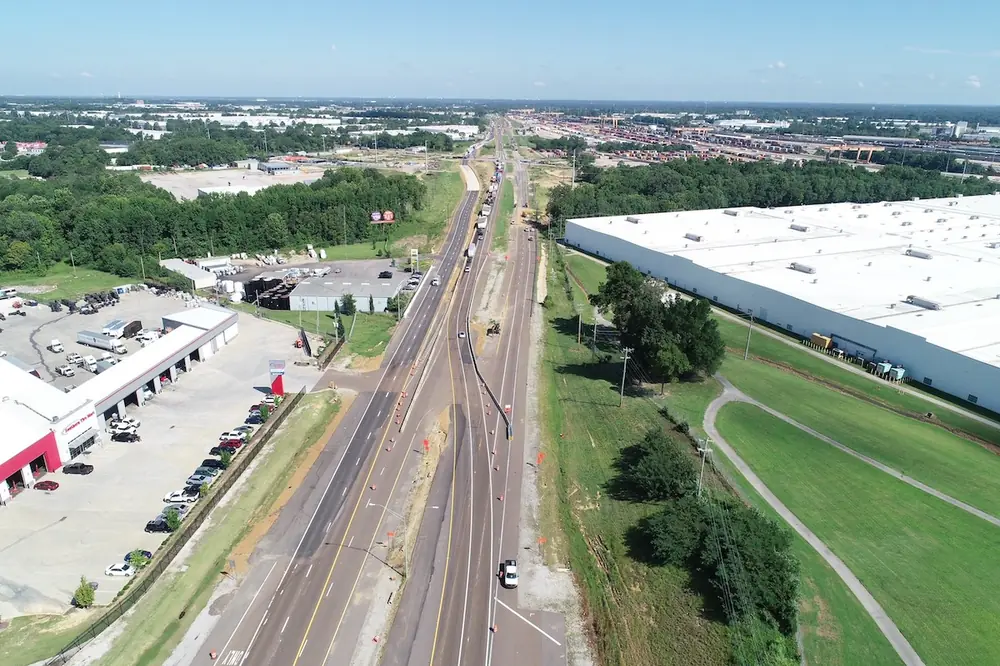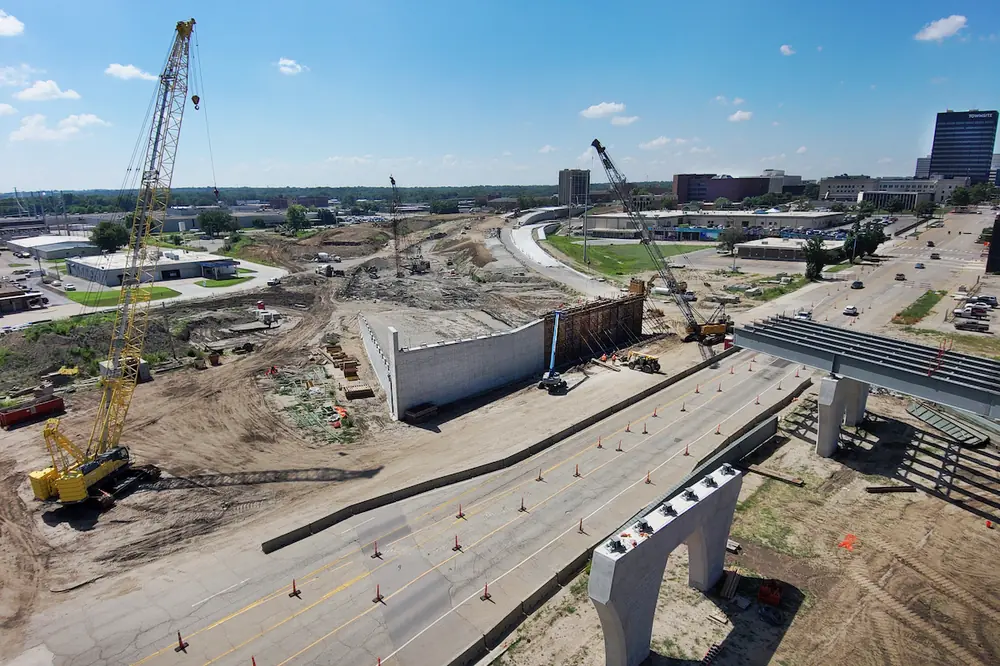

Marshall, Michigan, sits at the convergence of I-94, I-69, and M-96, making the Calhoun County community an important transportation crossroads for the state. To accommodate increasing commercial and commuter traffic, the Michigan Department of Transportation (MDOT) developed a plan to modernize those corridors and three interchanges.
The three-year, $335 million Marshall Modernization Project includes work on I-94, I-69, and M-96 (known locally as Michigan Avenue), as well as the I-69/M-96, I-69/I-94, and I-94/M-311 interchanges. Following preconstruction and utility relocation work that began in 2024, major roadway construction began in spring 2025 and is slated for completion in winter 2027.
The project will support the Marshall Area Jobs, Opportunity, and Recreation Campus, where Ford Motor Co. announced plans in 2023 for its 2.5-million-square-foot BlueOval Battery Park Michigan.
“The transportation goals are to increase capacity, improve safety, and enhance pedestrian and non-motorized access in support of increased commercial and commuter travel along the M-96, I-94, I-69 corridors in the Marshall community,” said Greg Finnila, the MDOT Engineer managing the project. “Ford’s BlueOval Battery Park is the driving factor that shaped the project’s scope and phased schedule to ensure the road network could be built to meet the Ford plant’s construction milestones and handle future traffic volumes and types.”
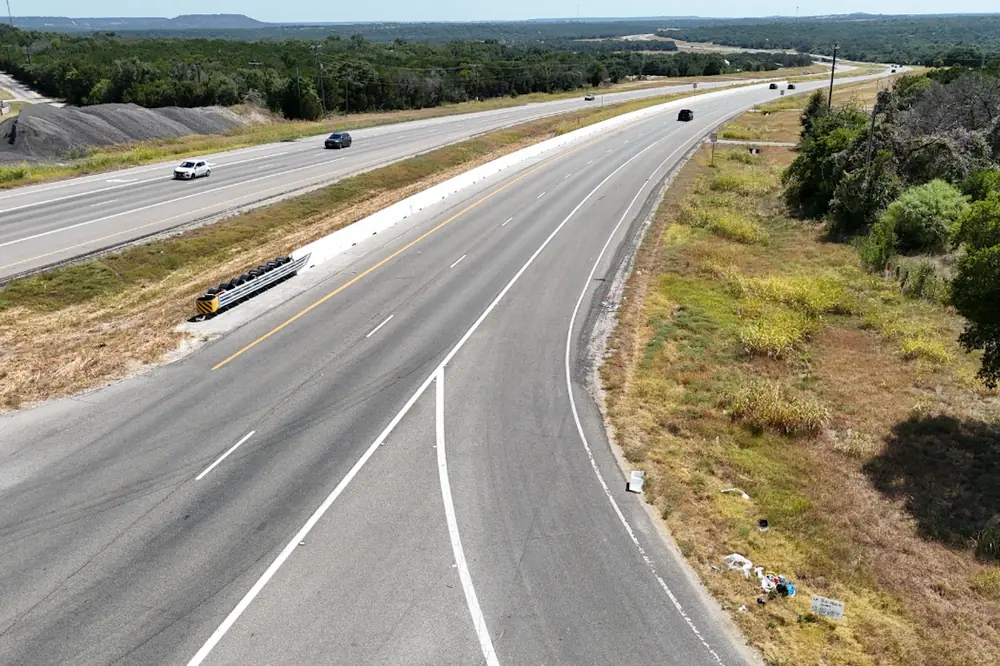
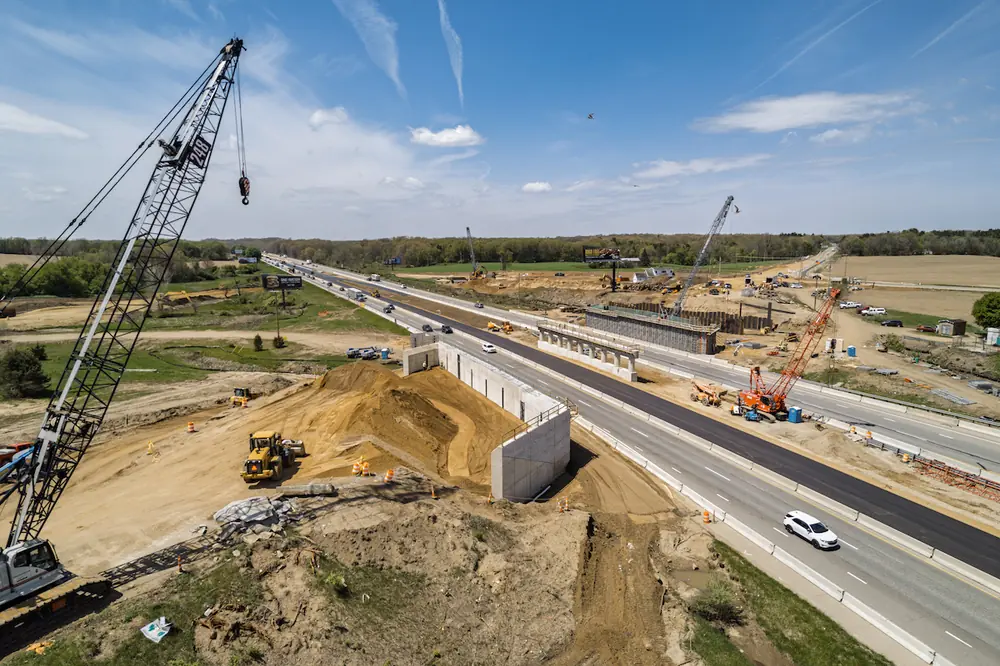
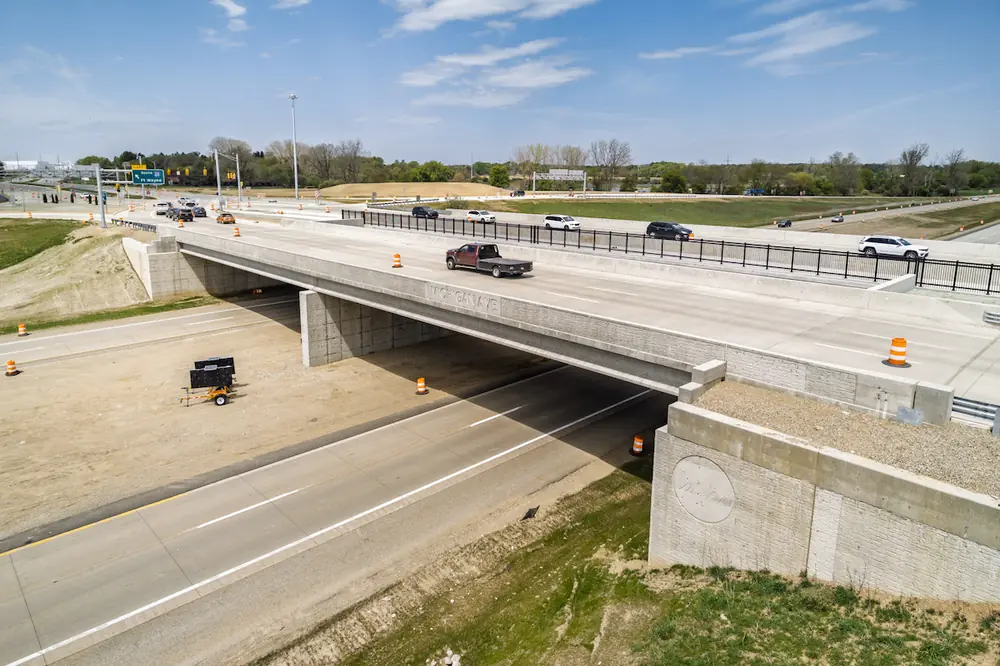
The first construction season delivered a central piece of that network: a boulevard on M-96 from I-69 to the BlueOval site. Crews also opened a new diverging diamond interchange at I-69 and M-96.

| Your local Astec dealer |
|---|
| Closner Equipment Co Inc |
“The diverging diamond interchange at I-69 and M-96 was selected because it shifts traffic to the left side through the interchange, creating a free-flow movement onto I-69 for all directions,” Finnila said. “The free-flow movement onto I-69 will reduce congestion and improve safety by the reduction in conflict points for the turn movements.”
The Marshall Modernization Project is Michigan’s first highway project delivered through progressive design-build.
“The progressive design-build was selected to bring on a contracting team, Michigan Innovative Constructors [MIC], early in the scope development process to begin collaborative work in refining design details and schedule phase to meet Ford’s BlueOval Battery Park build-out,” Finnila said. “Phasing developed by MDOT and the contracting team allowed for concurrent construction activities on early phases while design continued on the next scheduled phase.”
C.A. Hull leads MIC’s administrative responsibilities, overall project estimating, and major infrastructure components. Hoffman Bros. directs excavation, provides the project superintendent, and manages daily field operations. Anlaan Corp. handles bridge and culvert construction, Michigan Paving and Materials Co. performs asphalt paving, and Ajax Paving Industries completes the concrete pavement work.

| Your local Yanmar dealer |
|---|
| CLM Equipment Co |
| WPI |
AECOM leads the engineering team, with support from Baker, C2G, and SME. Finnila noted AECOM’s early concepts were especially important to construction phasing and maintenance-of-traffic plans. The designers have also responded to hydraulic evaluations, environmental issues, traffic changes, and utility coordination.
Together, the companies deliver nearly $100 million in construction work each season. The structure also shortens the path from identifying a field issue to approving a solution.
“Progressive design-build has not significantly changed day-to-day field operations, but it has helped streamline occasional ‘just-in-time’ approvals when design refinements are needed quickly,” Finnila said. “This approach allows the team to allocate resources based on design approval dates, ensuring crews can pivot efficiently as plans evolve.”
From the beginning, MDOT and MIC organized the program into six phases, pairing Phases 1 and 2, Phases 3 and 4, and Phases 5 and 6 into dedicated construction seasons. Phase 1 prioritized the M-96 boulevard from I-69 to the Ford site, which was completed by the end of 2025. MIC’s capacity allowed MDOT to add Phase 2 during that same season.

| Your local NPK Construction Equipment Inc dealer |
|---|
| WPI |
Phases 3 and 4 comprise the primary 2026 road and bridge work at I-94 and the M-96/M-311 interchange. Most of Phases 5 and 6 are scheduled for 2027, including completion of the M-311 bridge over I-94, eastbound I-94 reconstruction, and the final boulevard connection between earlier phases.
“The project’s phasing was designed to maximize the strengths of the progressive design-build team during each construction season,” Finnila said. “Work zones were structured so C.A. Hull and Anlaan could focus on bridge and culvert construction, while Hoffman Bros.’ large, efficient crews supported those operations and advanced roadway excavation ahead of Michigan Paving and Materials Company’s asphalt paving and Ajax Paving Industries’ concrete work.”
Conflicts are inevitable on a program of this size and pace, he added, but collaboration helps the team identify them early and develop joint solutions before they threaten larger milestones.
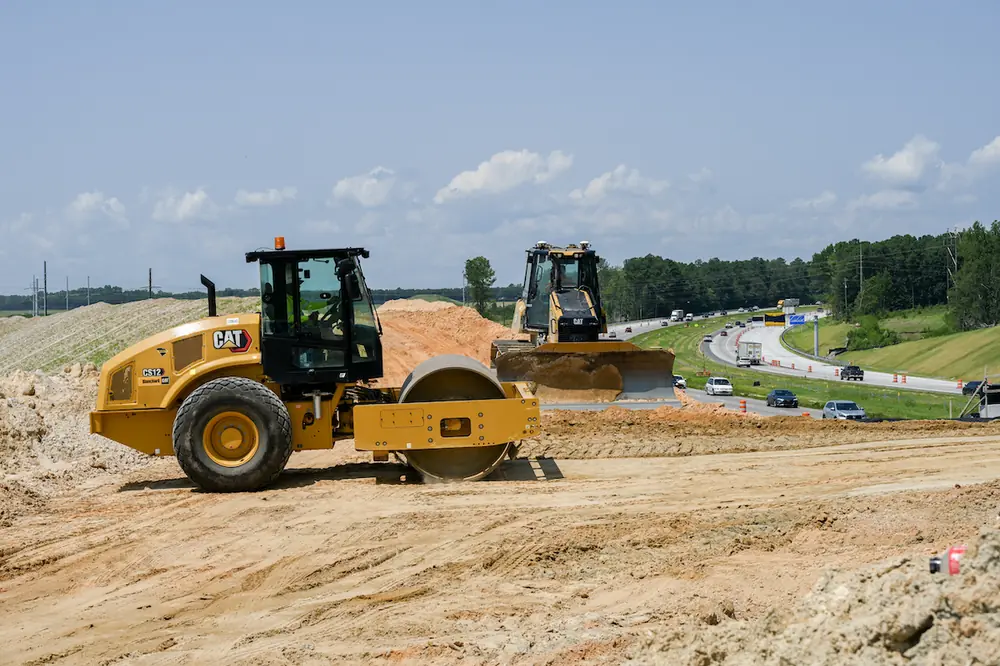
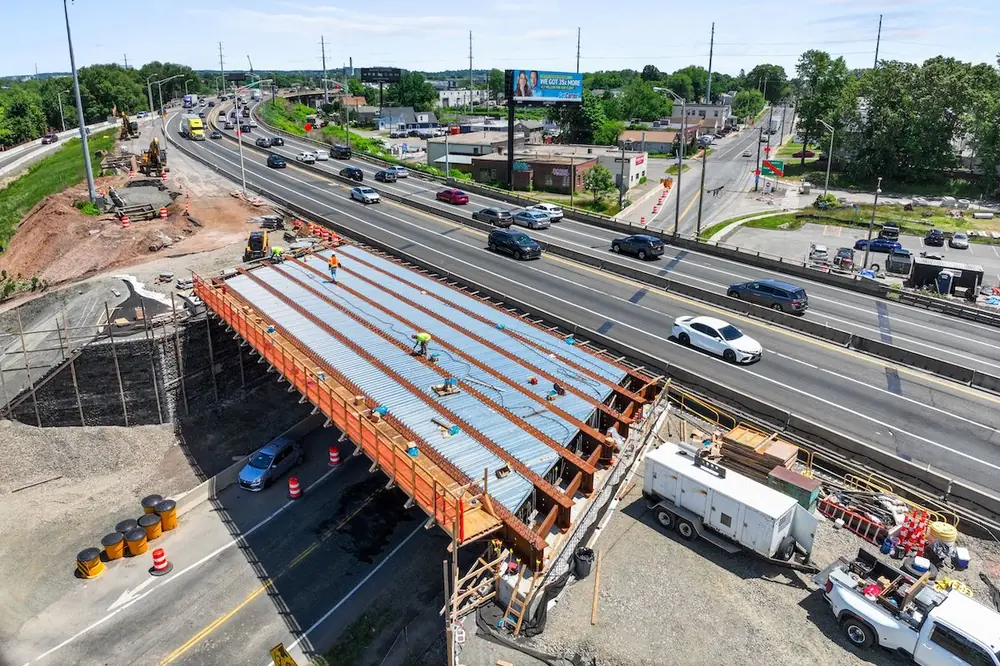
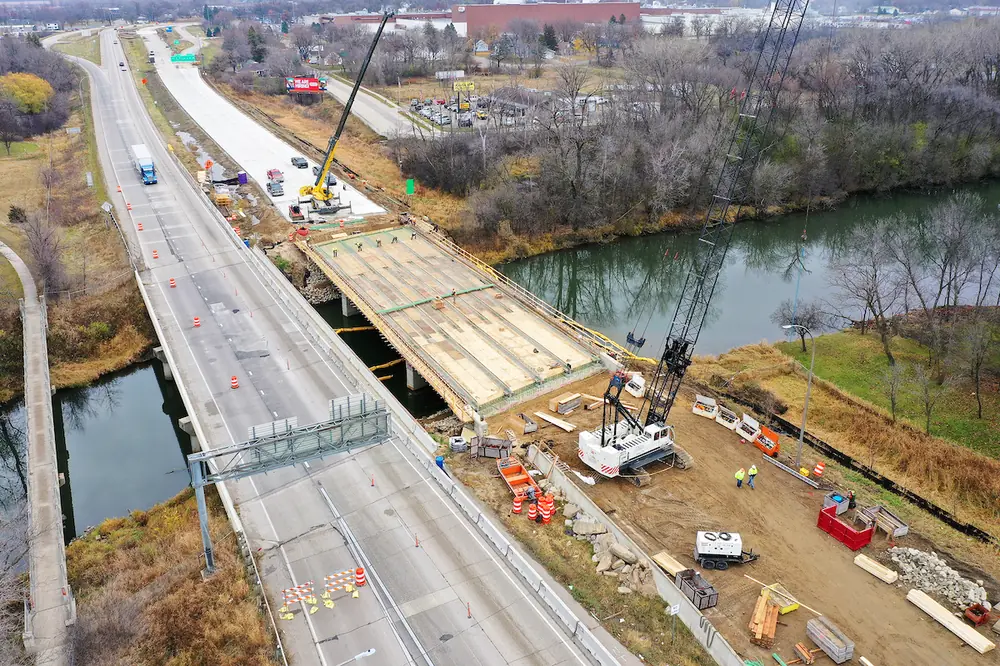
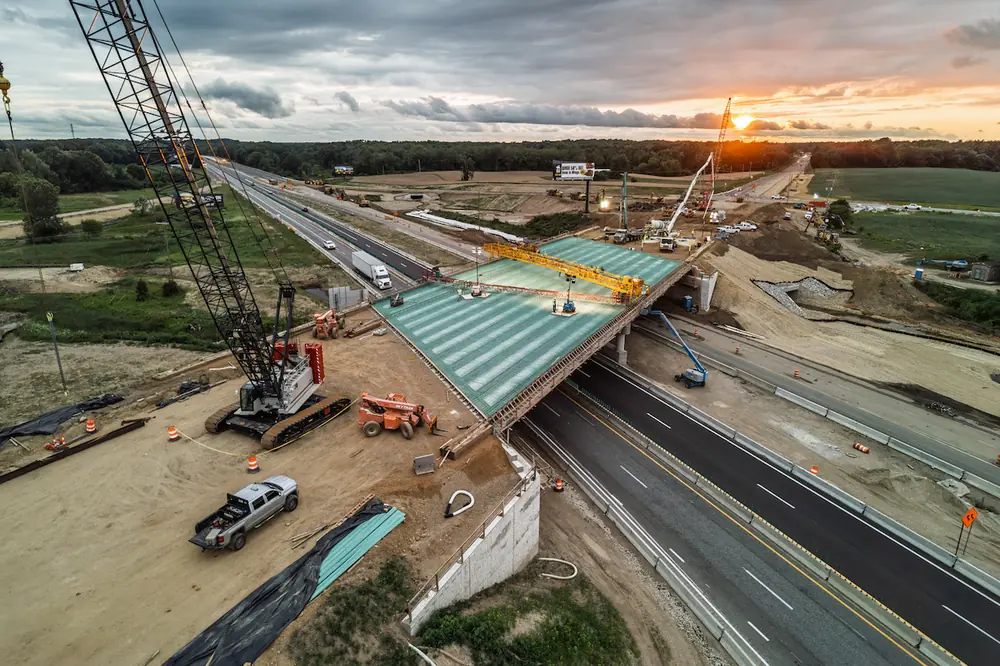
The 2026 season began with removal of the M-96 bridge over I-94. Crews then installed temporary crossovers, addressed drainage, and moved traffic off westbound I-94. Both directions operated on the south roadbed using the eastbound side and temporary pavement.

| Your local Takeuchi Mfg Ltd dealer |
|---|
| Nueces Power Equipment |
| Kirby-Smith Machinery |
“Shifting traffic away from the westbound lanes opened up the area for constructing the Dickinson Creek box culverts tied to the creek naturalization effort and for building the new M-96 bridge footings,” Finnila said. “This sequence also allowed crews to get an early start on the westbound I-94 ramps reconstruction.”
Replacing the M-96 bridge while rebuilding approaches, ramps, utilities, and adjacent portions of Michigan Avenue put numerous operations into a confined footprint. Early utility relocation coordination led by AECOM reduced conflicts and cleared the way for the bridge demolition, which required a full I-94 closure from Friday night through early Sunday morning.
To meet the challenge, the project team adjusted traffic signals, installed detour signs, notified communities and emergency services, and scheduled crews to finish demolition and cleanup within the short closure. Additionally, Michigan State Police and the Calhoun County Sheriff’s Office helped manage traffic and maintain safety.
“Coordinating multiple entities within a tight work zone has been challenging, but early utility relocation coordination led by AECOM greatly reduced conflicts and enabled the complex demolition of the M-96 bridge over I-94,” Finnila said.

| Your local ASV dealer |
|---|
| CLM Equipment Co |
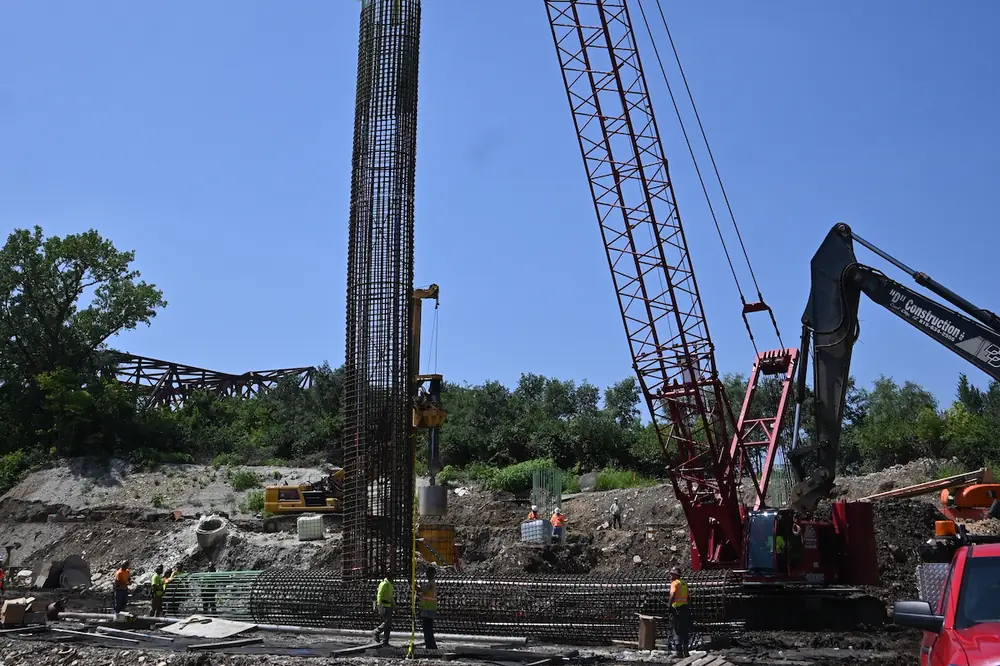
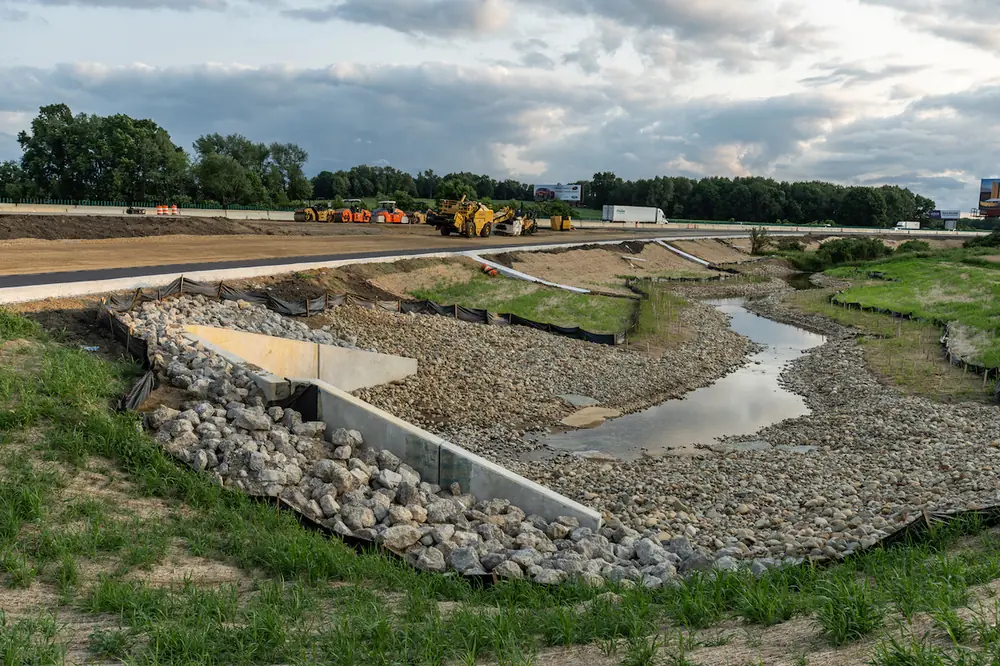
In addition to the work on the pavement and bridges, three new box culverts will carry Dickinson Creek beneath portions of the reconstructed corridor. In 2027, the new M-311 bridge will gain a third span to support an open channel for the creek. MDOT is also adding sinuosity, restoring the riparian zone, and creating wetlands around Dickinson Creek.
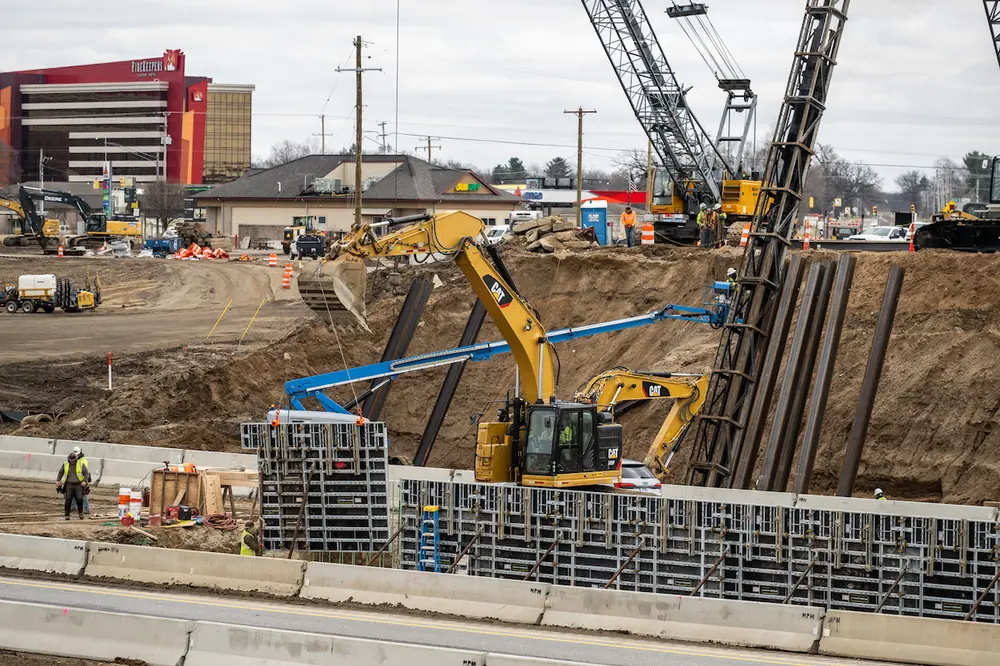
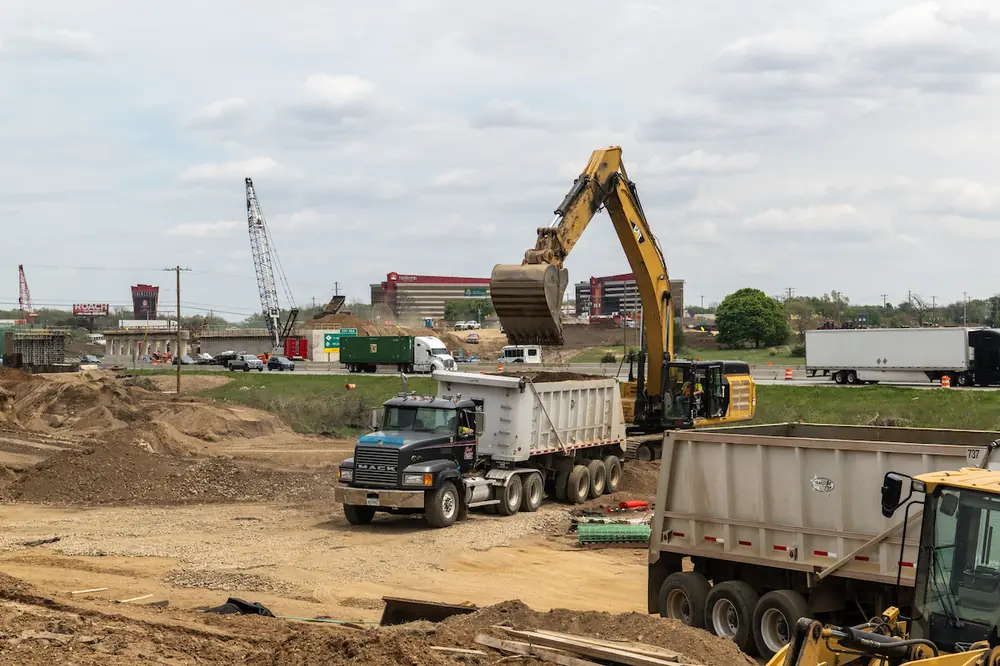
“Construction of the large Dickinson Creek box culverts has required driven sheet piling for excavation support, well-point dewatering systems, and a full suite of soil erosion and sedimentation controls such as silt fence, sediment basins, check dams, and plastic sheeting,” Finnila said. “These measures help maintain stable excavations, protect water quality, and support safe placement of culvert sections.”
Crews are restoring excavated areas with turf as soon as work is complete to stabilize soils. Stormwater basins further add management capacity. The bridges over I-94 and I-69 and the M-96 box culverts include sidewalks and align with local non-motorized plans. Phases 1 and 2 also delivered a path from West Drive to Opportunity Drive.
To date, field conditions have required adjustments. Extreme cold delayed utility relocations during the winter of 2024-2025, forcing crews to return later and work in smaller areas. Rain also prevented completion of an eastbound I-94 storm sewer culvert crossing during the bridge demolition weekend. The team finished that work through nighttime single-lane closures and partial-width construction.

| Your local Hitachi dealer |
|---|
| ASCO Equipment |
“Other minor delays have required small adjustments in both resource and schedule, but none have been outside what would be considered normal for a project of this size,” Finnila said.
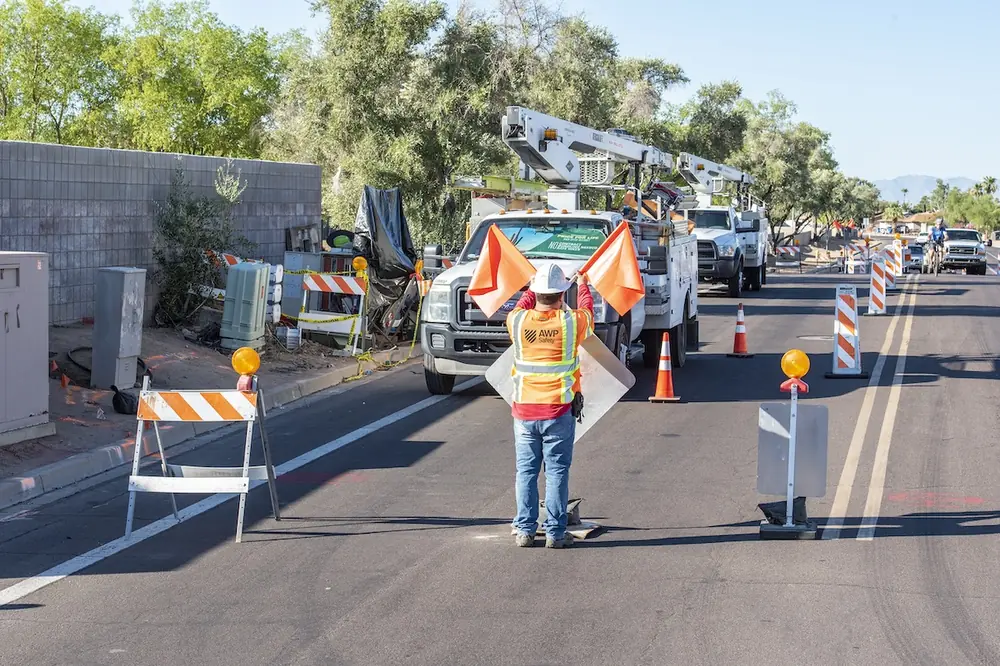
The maintenance-of-traffic plan uses temporary pavement on I-94, M-96, M-311, and Wheatfield Road. Two I-94 lanes remain available in each direction during peak periods, while one M-96 lane is maintained in each direction as much as possible. Most single-lane I-94 closures occur at night.
Traffic shifts are generally scheduled from 9 a.m. to 3 p.m. to avoid peak travel times and give crews daylight while working near live lanes. Full interstate closures are reserved for operations such as bridge demolition, when separation from traffic is essential. Crews use 24-hour operations during those windows to shorten detours.
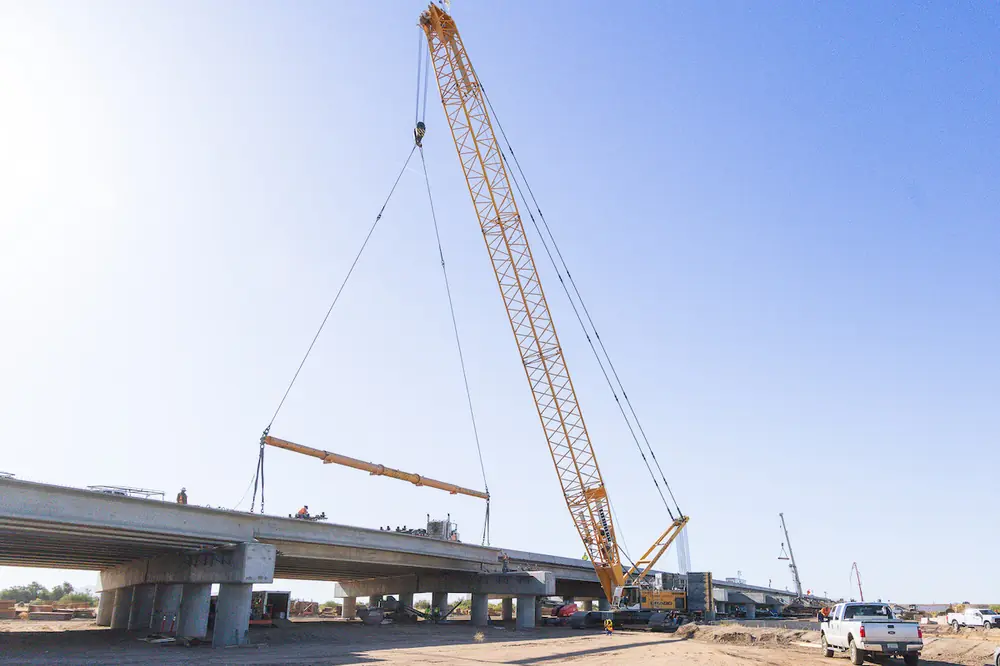
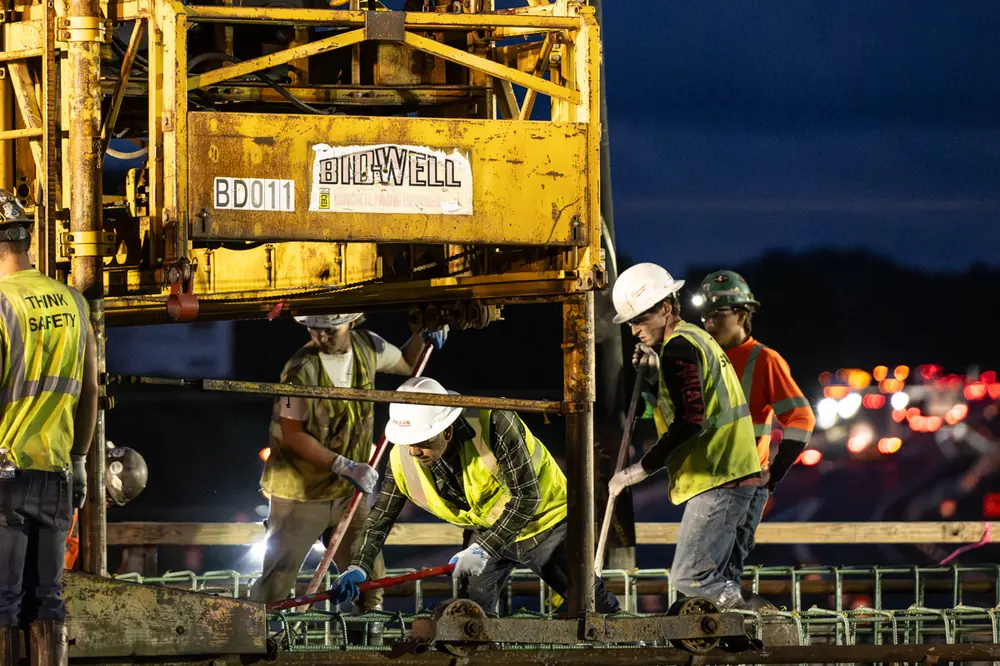
Beam setting requires intermittent nighttime closures. After each beam is placed, traffic is released until the next is ready. The strategy limits continuous stoppages while preserving a safe work zone.

| Your local Gomaco dealer |
|---|
| Closner Equipment Co Inc |
“Temporary pavement has also been added to M-96, M-311, and Wheatfield Road to maintain one lane of traffic in each direction as much as possible,” Finnila said. “Traffic regulation with alternating traffic has been minimized.”
MDOT expects the roadway infrastructure in Phases 3, 4, and 6 to be complete by the end of 2027, with only off-road components extending beyond that construction season. The overall program is trending toward substantial completion in winter 2027, although the remaining budget leaves little flexibility.
“The budget for the overall project is tight,” Finnila said. “The scope has been minimized to focus on critical operational and safety needs, and budget constraints may delay Phase 5 completion beyond the winter of 2027.”
When work is finished, the corridor will offer new capacity, fewer conflict points, upgraded interchanges, and more opportunities for local governments to expand non-motorized connections.

| Your local Wirtgen America dealer |
|---|
| Nueces Power Equipment |
“The collaborative approach is reflected in virtually every major accomplishment so far, making this a once-in-a-lifetime project that delivers entirely new capacity for the community,” Finnila said. “When the corridor is complete, motorists will most notice the improved safety and efficiency of travel — especially the reduced conflict points created by the new boulevard design, even if it requires slightly longer travel paths.”
- Owner: Michigan Department of Transportation
- Progressive Design-Build Team: Michigan Innovative Constructors
- Contractors: C.A. Hull Co., Walled Lake, Michigan (bridges and administration); Hoffman Bros. Inc., Battle Creek, Michigan (excavation and field operations); Ajax Paving Industries, Troy, Michigan (concrete pavement); Anlaan Corp., Grand Haven, Michigan (culverts and bridges); Michigan Paving and Materials Co., Kalamazoo, Michigan (hot-mix asphalt pavement)
- Lead Designer: AECOM, Dallas, Texas — supported by Baker, Pittsburgh, Pennsylvania; C2G, Atlanta, Georgia; and SME, Plymouth, Michigan
- Subcontractors: Integrity Tree Services, Give ‘Em A Brake, Nylander Engineering, Finishing Touch Photo & Video, Diamond Concrete Sawing, Dan’s Excavating Inc., P.K. Contracting LLC, Natural Environmental Reclamation Concept, Actin Traffic Maintenance Inc., Pavement Maintenance Systems LLC, Fort Wayne Reinforcement Inc., J.L. Milling Inc., Black Swamp Steel Inc., Cross Enterprise Inc., Jaffco Inc., Professional Thermal Systems Inc., Diane Dukes Inc., Pneumatic Restoration Inc., B&B Landscaping Inc., Doan Construction Co., Geo-Instruments Inc., New Generation Group LLC, S. Hayes Inc., Kalin Construction Co. Inc., Verdantas Michigan LLC, City Services Inc., Diversified Dewatering LLC, Opperman Grooving Inc., GM & Sons Inc., Concrete Cutting & Breaking Co., C&D Hughes Inc., Burman’s Tree Services LLC, K&H Concrete Cutting Inc., Bella Concrete Construction LLC, M&K Jetting and Televising LLC, Roemer Utility Service LLC, Toledo Caisson Corporation, Future Fence Company Photos copyright Michigan Department of Transportation