
Four state department of transportation projects in Connecticut, Maine, and Massachusetts won regional honors in the 2026 America’s Transportation Awards competition, sponsored by the American Association of State Highway and Transportation Officials (AASHTO).
“For almost two decades, the America’s Transportation Awards has highlighted the innovative work state DOTs do to improve communities and enhance the lives of the people who live and visit them,” said AASHTO Executive Director Jim Tymon. “But the truth is, these projects are just a fraction of the incredible work done by state DOTs every year. AASHTO is proud to recognize the diverse and forward-thinking projects that are improving safety, mobility, and quality of life in communities across the country.”
Thirty transportation projects were submitted by eight states and the District of Columbia in the Northeast Association of State Transportation Officials region for this year’s competition. Projects are judged in four categories: Quality of Life/Community Development, Operations Excellence, Best Use of Technology and Innovation, and Safety.
All nominated projects first compete at the regional level against projects of their own size (small, costing up to $10 million; medium, costing between $10 million and $100 million; or large, costing more than $100 million).
The three top-scoring projects from regional competitions throughout the U.S. advance to the Top 12 and compete for two national honors in the 2026 America’s Transportation Awards. The Grand Prize will be chosen by an independent panel of transportation industry judges, and the People’s Choice Award will be decided through online public voting. AASHTO will reveal both winners at its annual meeting in November 2026.

| Your local Bobcat dealer |
|---|
| Central Texas Equipment |
| Nueces Power Equipment |
The following four projects in the New England Construction area won 2026 regional America’s Transportation Awards.
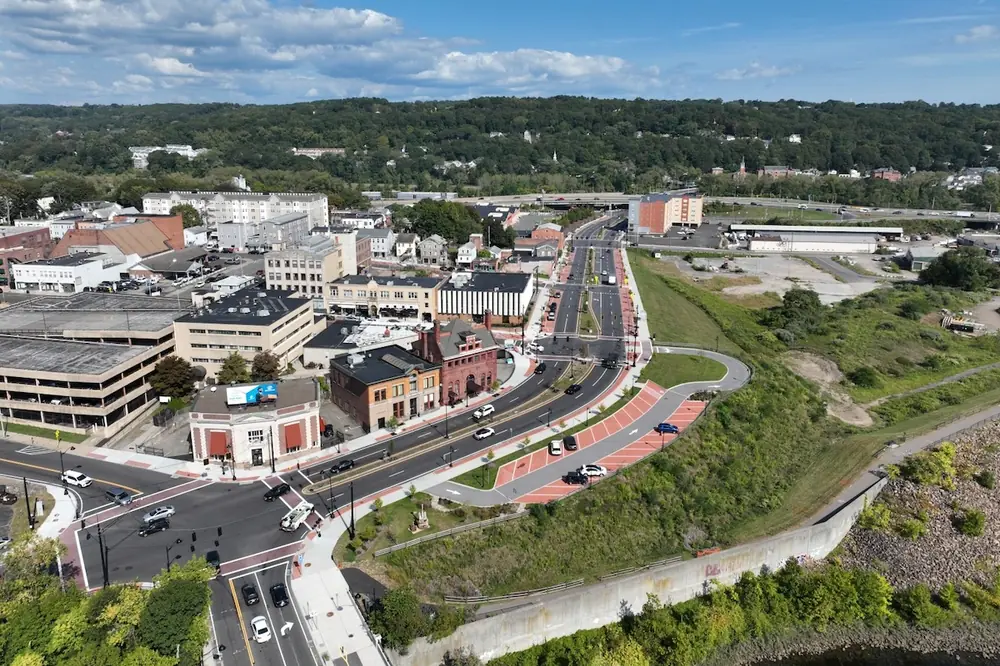
The Connecticut Department of Transportation’s (CTDOT) reconstruction of Route 34 (Main Street) in Derby improved traffic flow; enhanced pedestrian and bicycle safety to create a more accessible streetscape; modernized intersections and traffic signals; and expanded parking and housing development opportunities.
"Rebuilding downtown corridors creates safer streets, spurs the local economy, and makes our communities more vibrant," said Garrett Eucalitto, CTDOT Commissioner. "This recognition of a locally driven project reflects the outstanding work of CTDOT employees and the strong partnership with the Naugatuck Valley Council of Governments (NVCOG) and the City of Derby to deliver a project that will benefit the community for generations."
Route 34 serves as a primary artery for the area. By widening the roadway to create two through lanes in each direction, separated by a center median, the $46.66 million project boosted capacity in anticipation of increased travel demands from future land use in downtown Derby.

| Your local NPK Construction Equipment Inc dealer |
|---|
| WPI |
The project also upgraded the storm drainage system, incorporating rain gardens and permeable pavers that allow water to pass through rather than run off.
C.J. Fucci Inc. of New Haven, Connecticut, served as the construction contractor. NVCOG managed the design in cooperation with CTDOT and Luchs Consulting Engineers/DeCarlo & Doll.
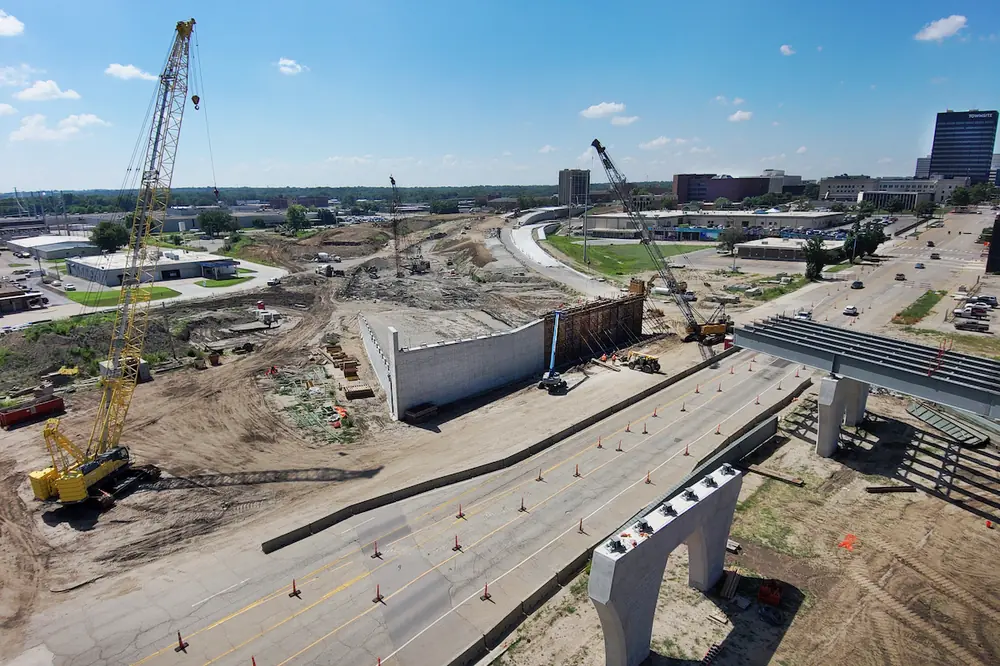
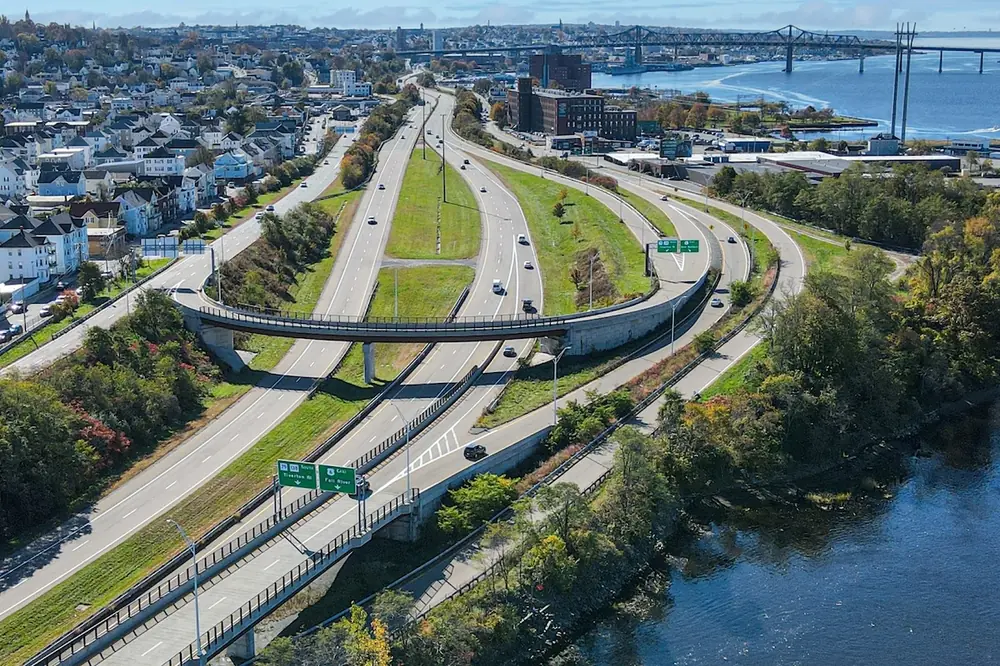
The Massachusetts Department of Transportation’s (MassDOT) Route 79-Davol Street Corridor Improvement project for the city of Fall River removed an aging, elevated expressway that created a physical and socioeconomic barrier between local neighborhoods and the waterfront.
"When we conceived the project, the goal was to rethink the way area works, traffic connectivity, [and] how to make this more a multimodal area," said MassDOT State Highway Administrator Jonathan Gulliver.

| Your local Magni dealer |
|---|
| Kirby-Smith Machinery |
The $118.5 million project replaced the Route 79 expressway with an at-grade, lower-speed, tree-lined urban boulevard that emphasizes multimodal transportation, with 4 miles of shared-use paths and enhanced access to the Massachusetts Bay Transportation Authority Fall River South Coast Rail station.
The removal of the expressway created approximately 25 acres of open space and development parcels, supporting economic growth. In addition, new stormwater infrastructure will reduce coastal flooding.
The project reached substantial completion one construction season ahead of schedule in 2025 and achieved full completion in 2026. The design-build team included D.W. White Construction, SPS New England, and HNTB.
To achieve the accelerated completion while maintaining traffic flow, the project team employed several innovative strategies, including:

| Your local Atlas Copco CMT USA dealer |
|---|
| Bane Machinery |
| Central Texas Equipment |
| Cooper Equipment Co |
| Closner Equipment Co Inc |
| Romco Equipment Co |
- A comprehensive 3D utility model that minimized conflicts and relocation needs.
- Early closure of the elevated expressway to allow demolition and major construction activities to advance during winter months.
- A staging approach that preserved the existing at‑grade roadway network while enabling an earthwork superhighway for efficient material movement.
“This project represents a once in a generation opportunity for Fall River,” said Jonathan Kapust, P.E., HNTB’s Senior Project Manager and Associate Vice President. “By removing the elevated highway, we created space for safer travel, new development areas, and dramatically improved access to the waterfront. Our team is proud to help deliver a project that provides meaningful benefits to residents and supports the city’s future growth.”
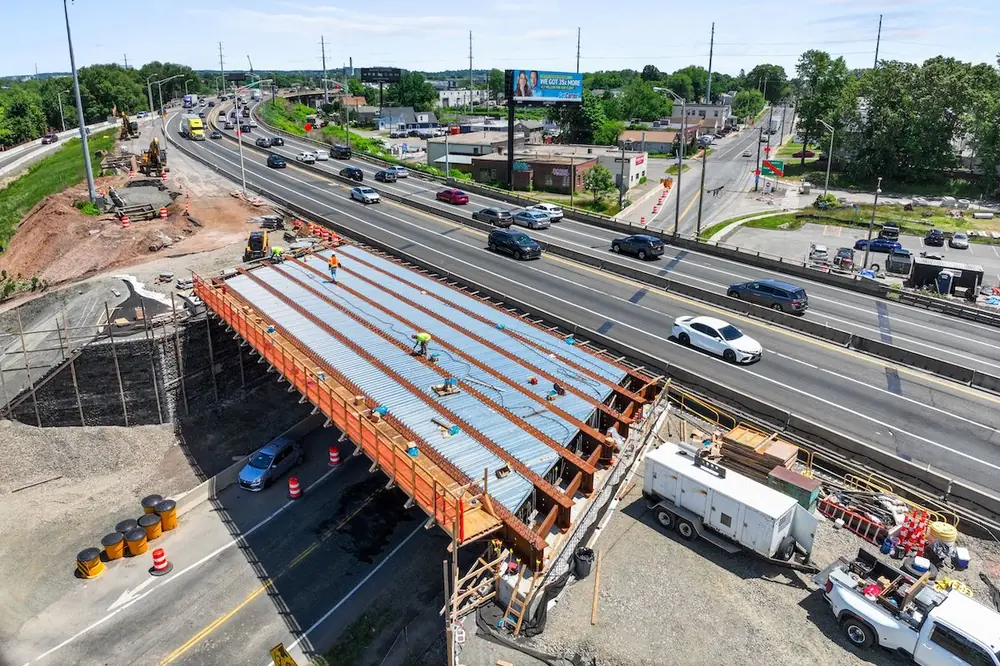
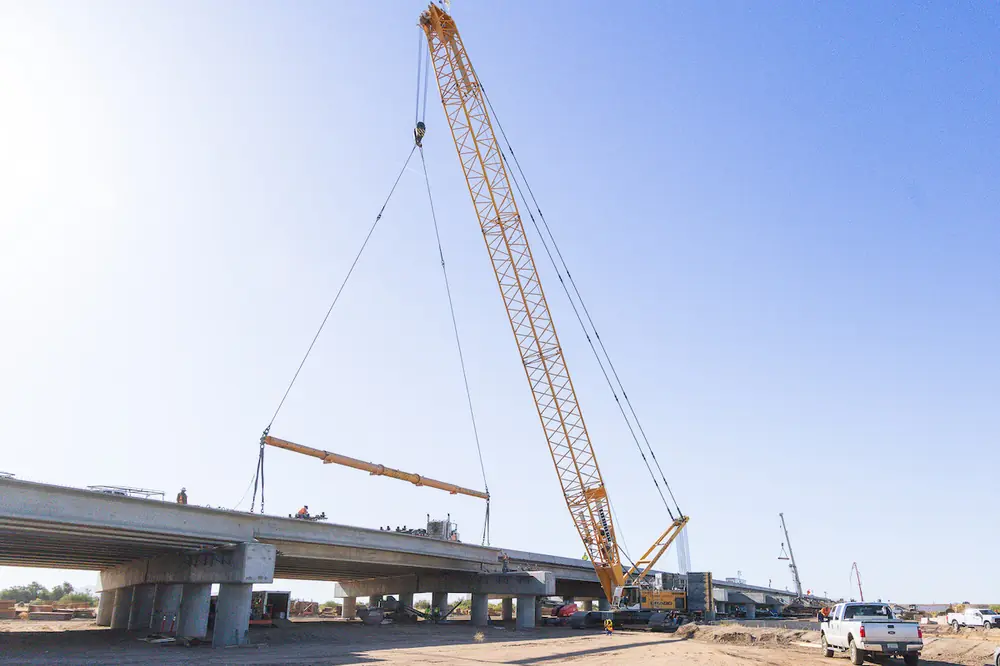
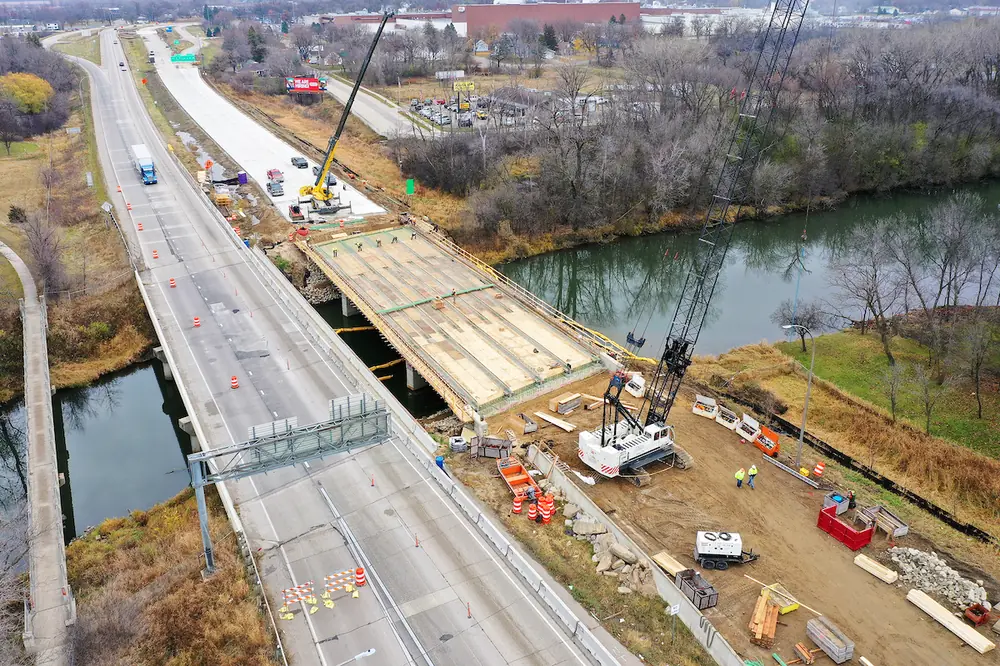
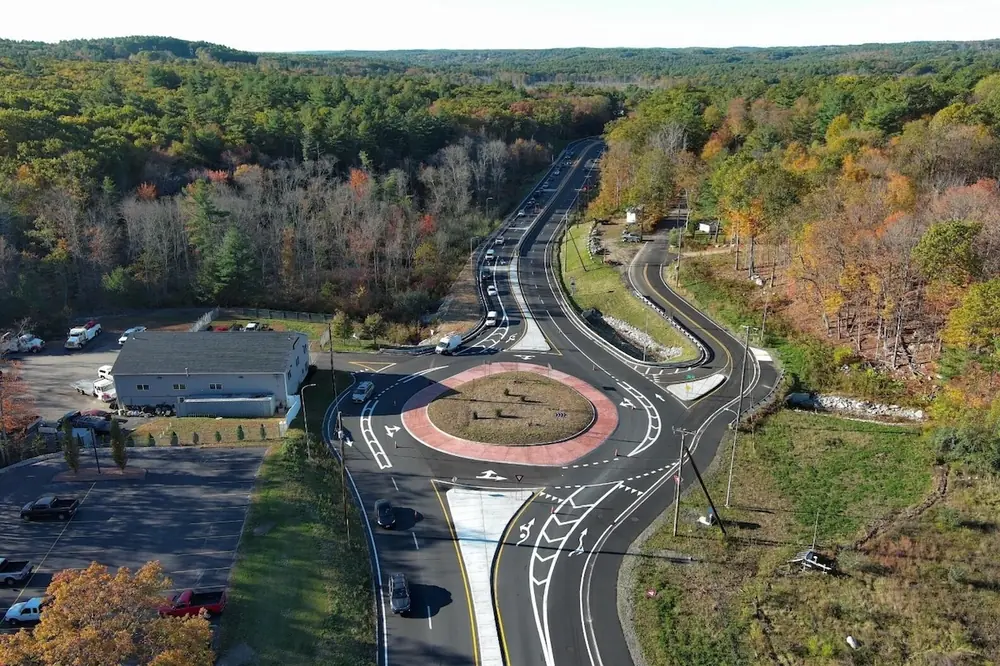
MassDOT awarded the design-build contract for 3.2 miles of Route 20 between Charlton and Oxford, Massachusetts, to the team of D.W. White and TranSystems. The $105 million reconstruction transformed a dangerous corridor into a safer, more efficient roadway.
"While performing the road safety audit process, the team found that vehicles stop in the left-most lane of Route 20 to turn left onto an unsignalized roadway or driveway, which is a contributing factor to [the] high number of rear-end collisions," said John Goggin, MassDOT Communications Analyst.

| Your local ASV dealer |
|---|
| CLM Equipment Co |
To improve safety, the project added a median that streamlines turning movements and access along the corridor while eliminating the risk of serious crossover crashes. The project also created new bicycle and pedestrian accommodations, replaced two bridges, reconstructed a signalized intersection, and built a new roundabout.
In addition, the project team extended an existing sewer main and activated a previously unused water main to strengthen critical infrastructure and create new economic opportunities.
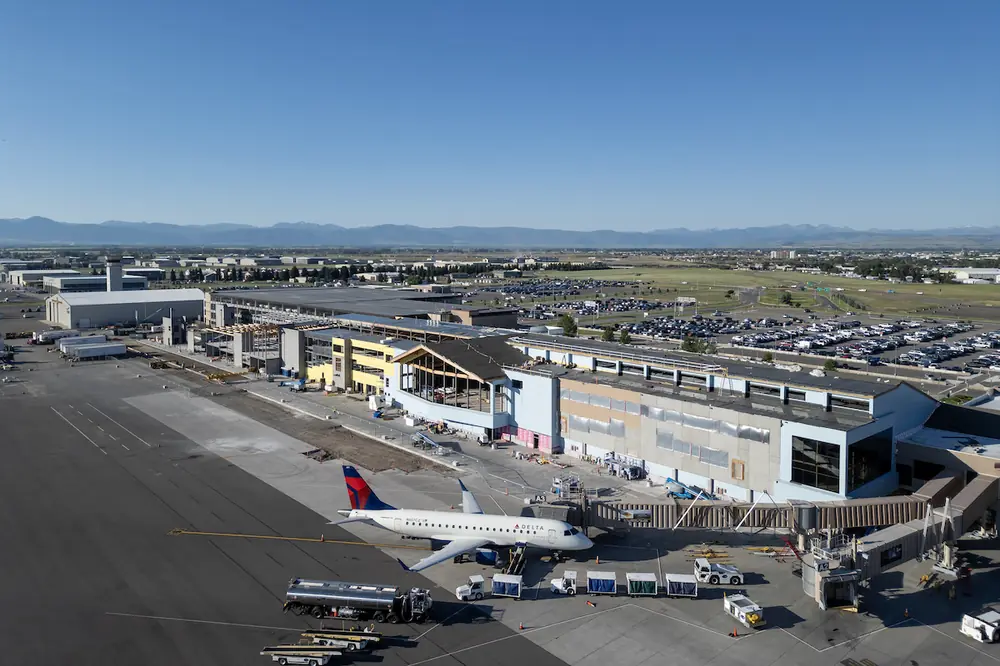
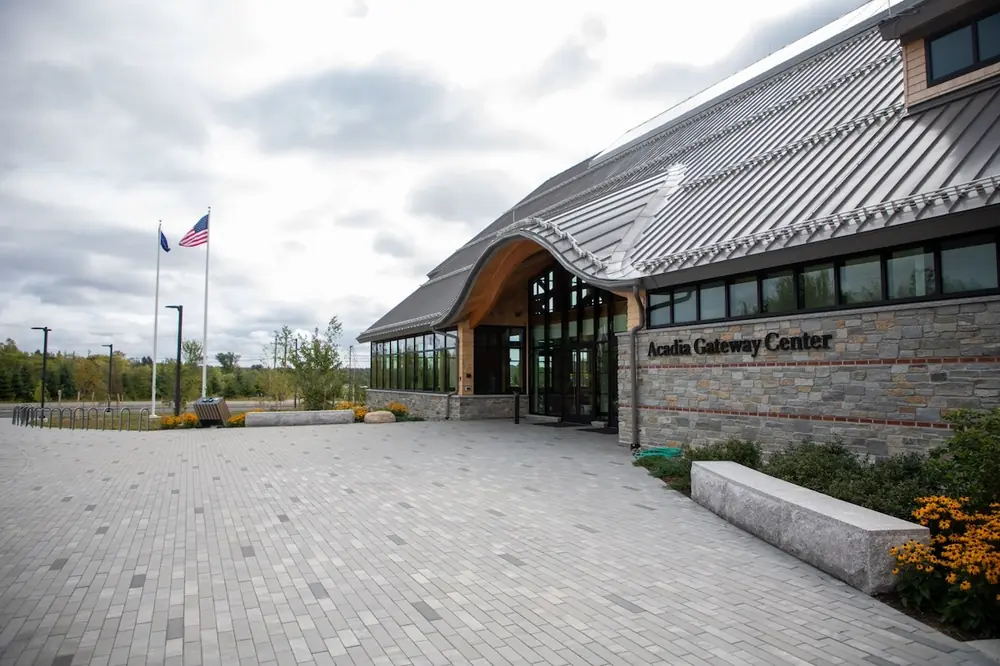
The Maine Department of Transportation’s (MaineDOT) new Acadia Gateway Center serves as a transit hub and welcome center for Downeast Maine and Acadia National Park. The $30 million project included a geothermal heating and cooling system, rooftop solar panel array, advanced energy management controls, and electric vehicle charging stations.
By combining renewable energy, intermodal design, and smart building systems, the Gateway Center serves as a model for resilient, low-impact transportation facilities in environmentally sensitive areas, MaineDOT said.

| Your local Wirtgen America dealer |
|---|
| Kirby-Smith Machinery |
| Nueces Power Equipment |
"Not only will the Acadia Gateway Center enhance the experiences of the millions of visitors who come to this region every year, but it will also have long-lasting economic and sustainability impacts on the Downeast region," said Bruce Van Note, former Commissioner of MaineDOT.