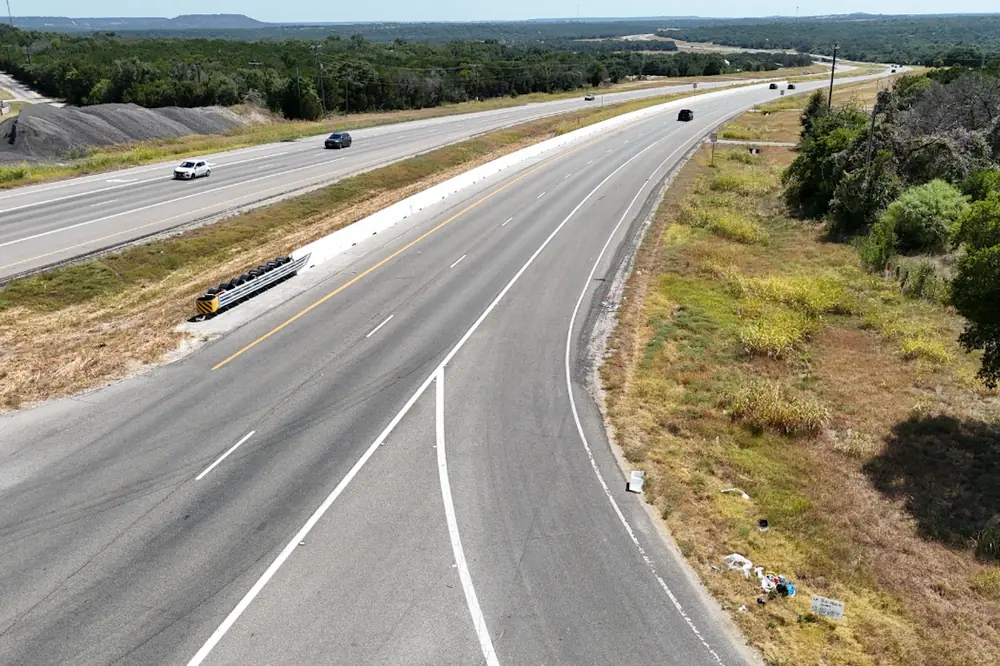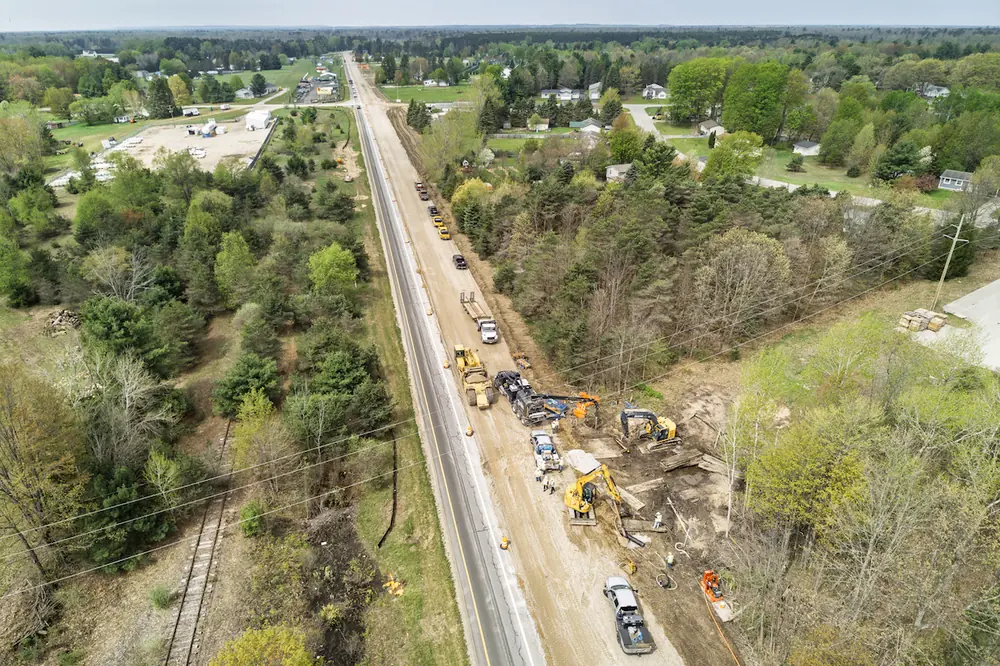
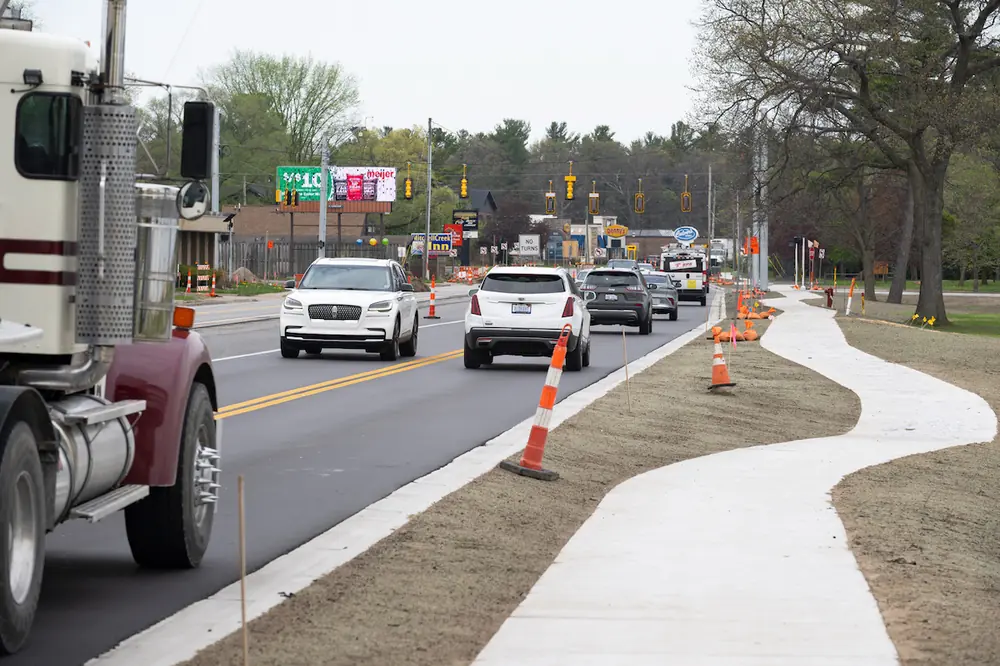
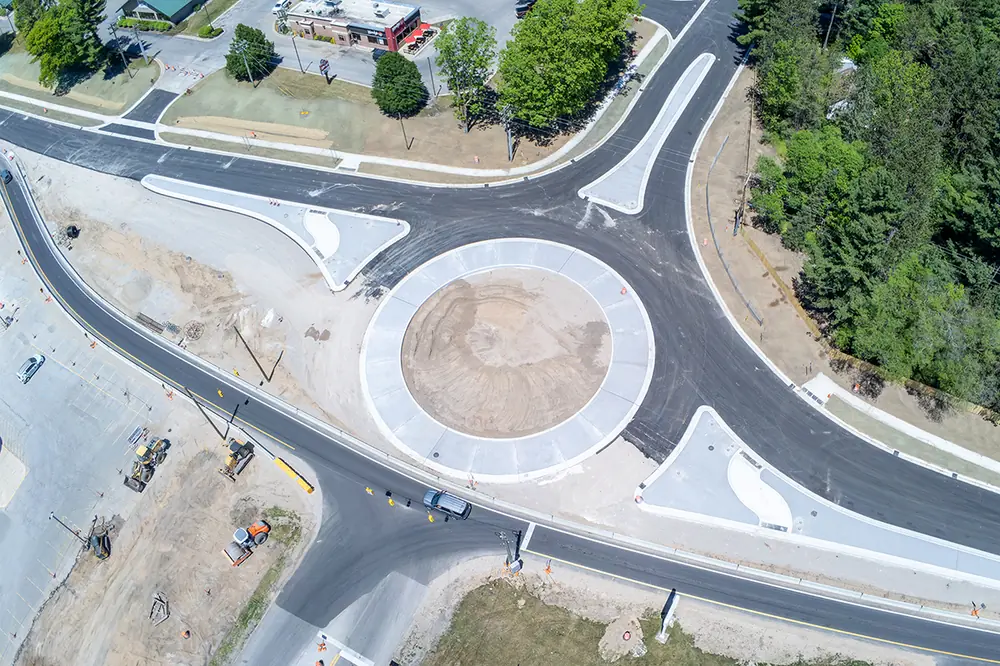

Grand Traverse and Benzie counties lie in the northwest region of Michigan’s Lower Peninsula, with U.S. 31 running through both counties. The Michigan Department of Transportation (MDOT) is partnering with the joint venture of J&N Construction and DJ McQuestion & Sons to redo a 7.8-mile section of U.S. 31 in Grand Traverse and Benzie counties.
The roadway within the project area is severely cracked.
“This section of U.S. 31 has reached the end of its service life and has become obsolete,” MDOT Construction Engineer Jim Johnson said.
This stretch of U.S. 31 has an average daily traffic between 15,000 and 16,000, including approximately 600 commercial vehicles. Despite those significant numbers, the route is still primarily rural, according to James Lake, MDOT’s North Region Media Representative. However, there is increased commercial development to the east and a significant commuter route to Traverse City from smaller towns to the south and west.
One of the primary contributors to traffic in the area is the Interlochen Center for the Arts, which hosts dozens of art performances and musical events each season.

| Your local Stewart-Amos dealer |
|---|
| Closner Equipment Co Inc |
Currently, this section of U.S. 31 is two lanes. The roadway expands to three lanes in some sections, including a turning lane.
The project’s scope includes:
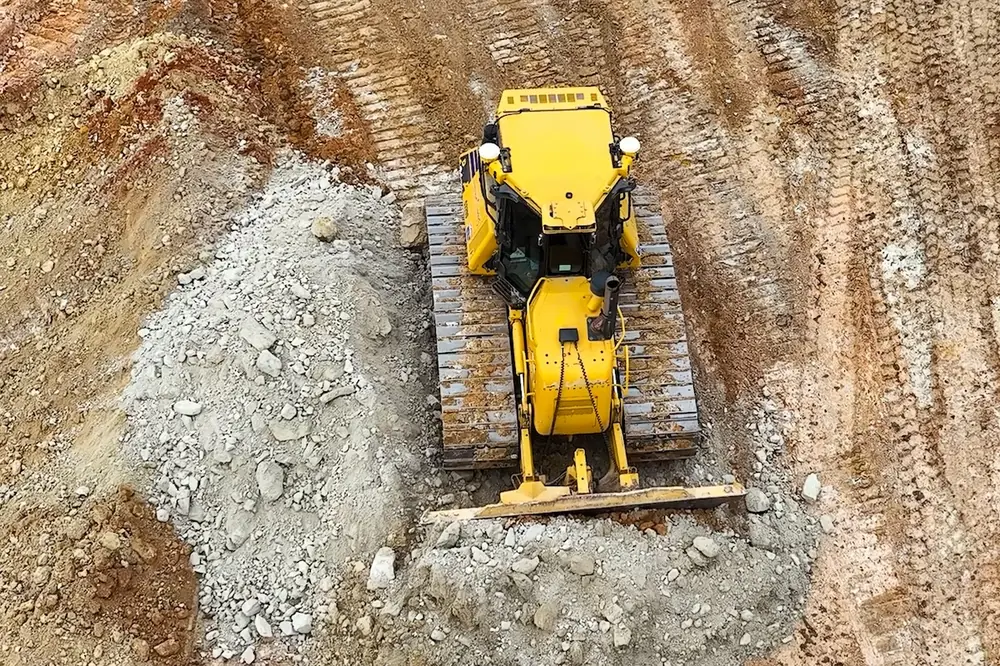
- Rebuilding and widening the roadway to improve pavement condition
- Providing safety improvements with the addition of center left-turn lanes
- Widening and paving the shoulders
- Installing rumble strips
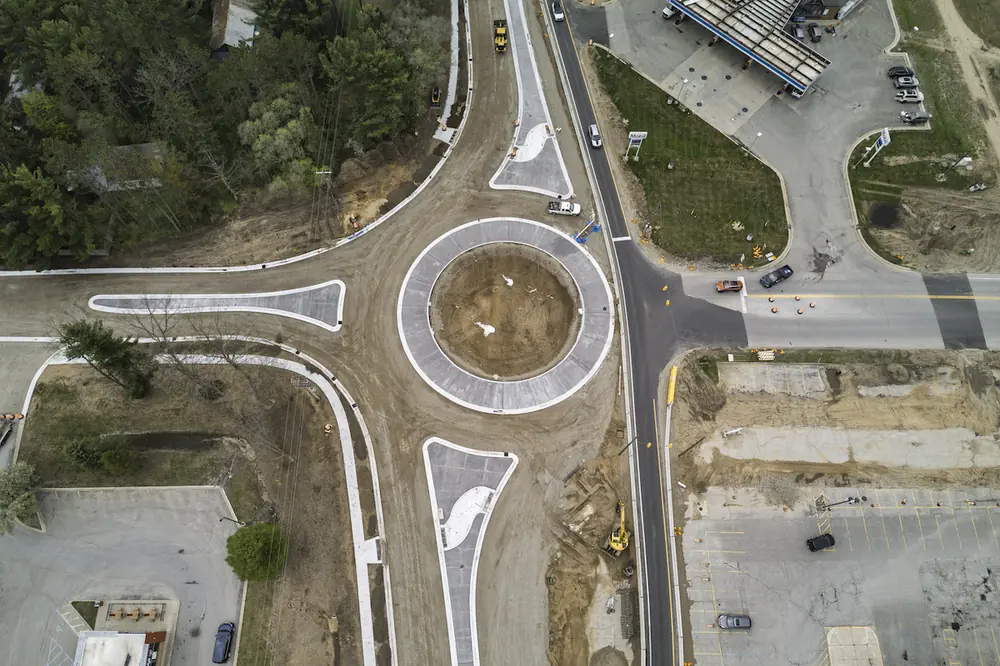
- Putting in a roundabout
The intersection where the roundabout is being constructed currently has a full traffic signal, but no dedicated turn phases.

| Your local Yanmar dealer |
|---|
| WPI |
| CLM Equipment Co |
“When planning for this project, MDOT approached the community with alternatives of a new, modernized traffic signal with left-turn phasing, or a roundabout, and the community overwhelmingly supported the roundabout option,” Johnson said. “The roundabout will not only help operations at this intersection, particularly before and after events at Interlochen Fine Arts Academy, but also safety.”
The center left-turn lane is being added to give drivers a dedicated lane to wait for a safe gap in traffic before making a turn, while keeping through-traffic moving.
“The roadway experiences congestion during peak periods, typically the morning and afternoon rush hours as commuters head to and leave Traverse City,” Johnson said. “The turn lane will keep traffic flowing, minimize delays, and better accommodate increased traffic volumes.”
It is also expected to make this section of U.S. 31 safer.

| Your local Astec dealer |
|---|
| Closner Equipment Co Inc |
Dealing with utilities is an issue on many infrastructure projects, which is why they are often moved or handled before formal construction begins.
“The utilities were supposed to have been relocated before the start of the job,” J&N Construction Superintendent Craig Todd said. “However, weather and permitting issues slowed down utility removal, so they have been on the job site with us.”
Todd noted that this has caused some delays and conflicts, but that was primarily in the early stages of the project.
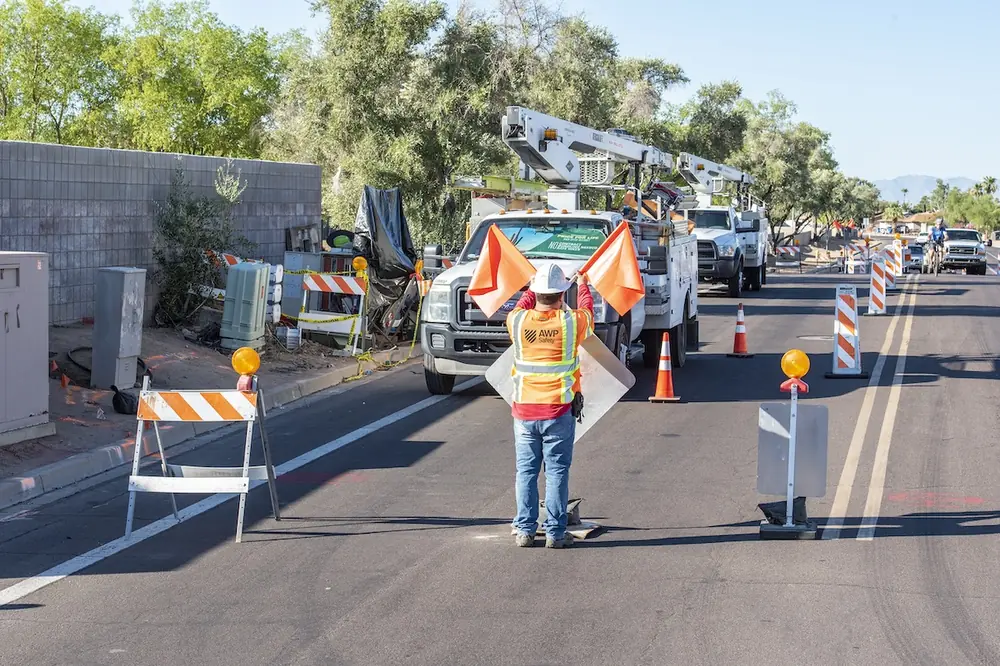
The biggest challenge on the project, according to Todd, has been the traffic. The area draws lots of tourists who visit the Interlochen Center for the Arts and the Cherry Festival. They have to deal with a major detour, which can add up to 20 minutes to a trip that is just a few miles.

| Your local LeeBoy dealer |
|---|
| Closner Equipment Co Inc |
| Romco Equipment Co |
“The locals have adapted to the detour and found alternative routes, but tourists are unfamiliar with the area,” Todd said. “Some have been unclear, so we and MDOT have put up more barricades and signage to help guide them along the route.”
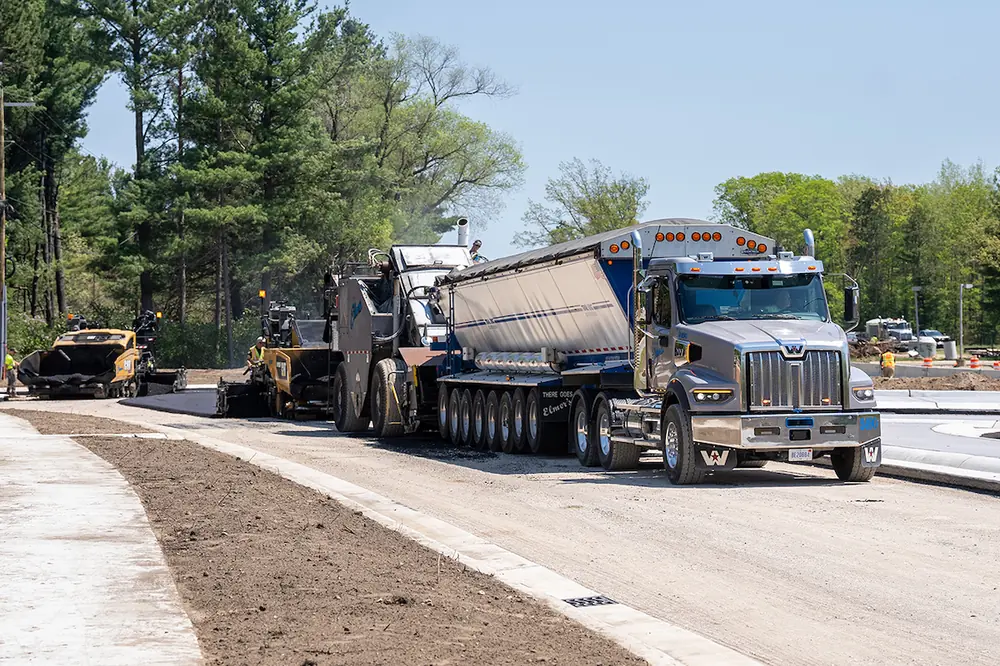
One of the major elements of this job is paving. Team Elmer’s is serving as the paving subcontractor on the project.
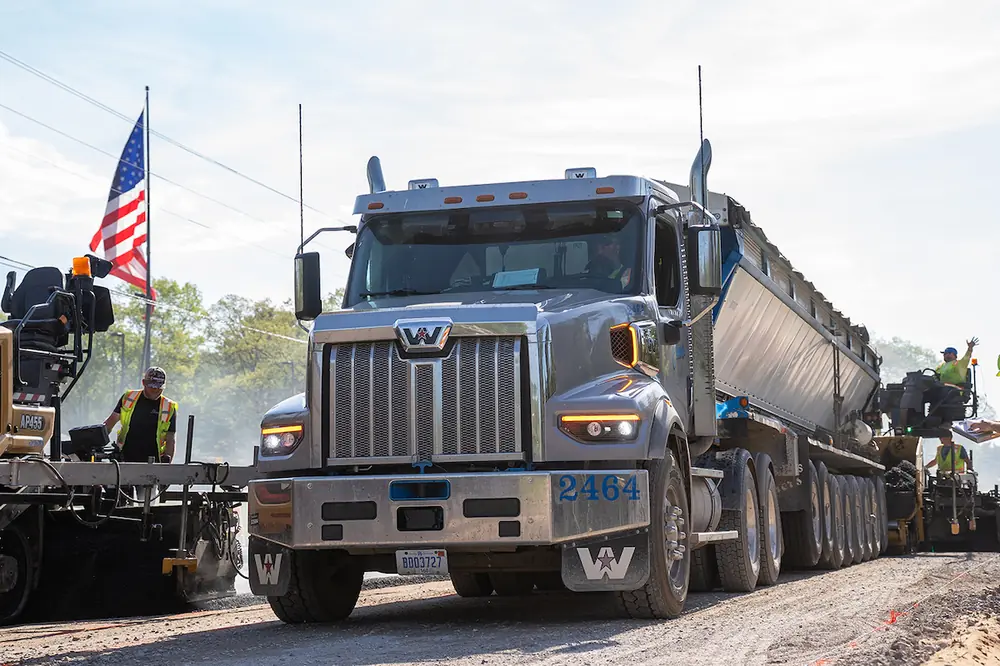
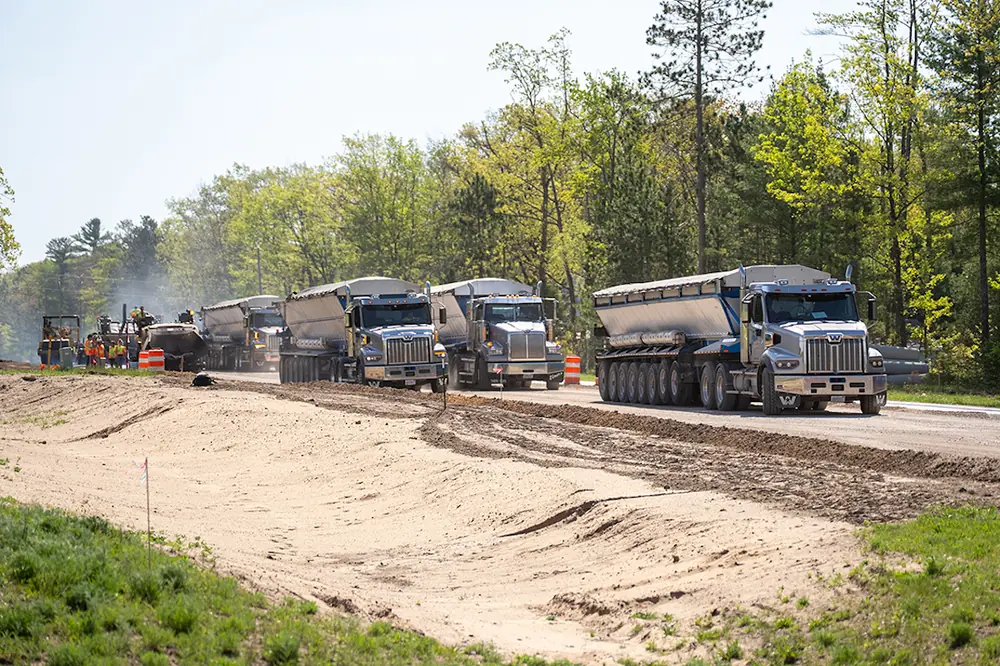
The team is using eight-axle live-bottom trucks to haul and place 75,000 tons of pavement. At peak operations, up to 18 trucks were active on site at any given time. The team also used a shuttle buggy, which allowed trucks to transfer material without directly contacting the paver.
“This was a large-scale project with a significant volume of work compressed into a tight timeline,” Team Elmer’s Communication Director Tonya Wildfong said. “Coordinating crews, equipment, and traffic control required constant communication and adaptability.”

| Your local ASV dealer |
|---|
| CLM Equipment Co |
Another challenge the team dealt with was a weather event with prolonged rain duration and high intensity that caused local flooding.
“During this event, the roadway subbase was saturated in some areas, requiring the need to install a system consisting of stone wrapped in geotextile grid to support the new roadway,” Johnson said. “The department worked closely with our geotechnical engineers to provide this solution to ensure no delays to the project.”
Todd noted that some areas did not get much rain, but the area overall is low-lying and swampy. There are suitable soils that take rain well.
The solution implemented by MDOT geotechnical engineers is called a burrito. Similar to the popular Mexican dish, a burrito is a wrap with ingredients stuffed inside. In this case, the wrap is a geotextile fabric, and the filling consists of aggregate composed of crushed stone and gravel.

| Your local Case Construction Equipment Inc dealer |
|---|
| ASCO Equipment |
| Nueces Power Equipment |
It is used in drainage systems, retaining walls, and soil stabilization to separate the stone from surrounding soils and allow water to drain while filtering out sediment. It helps prevent the aggregate from sinking into soft ground and improves structural integrity.
The project’s phasing is complex. The job is split in half lengthwise, then in half again at the centerline, creating four separate jobs, with some pre-stage and removal work at the end. To meet the schedule, the team needs to complete each stage in roughly seven weeks and cannot start a stage until the previous one is complete.
As a result, coordinating and scheduling personnel and subcontractors is essential to maintaining the schedule and keeping the project on track.
J&N, McQuestion, and Team Elmer’s are Michigan-based contractors that have worked throughout the state and have partnered with MDOT on multiple projects.

| Your local Wirtgen America dealer |
|---|
| Kirby-Smith Machinery |
| Nueces Power Equipment |
“At this stage of construction, they have worked diligently to keep the project moving forward, making shifts in operations during different stages to keep on schedule overall,” Johnson said.
Construction on the project began in spring 2025 and is scheduled to conclude in fall 2026. It is currently on schedule.
Work during the first year of the project included temporary widening on U.S. 31 to help maintain traffic during 2026 work, improvements to county roads used as detour routes, and the removal and replacement of unsuitable soils in the vicinity of two bridges within the project limits.
“The work done last year has helped keep us on schedule this year by effectively managing traffic and giving contractors room to rebuild the highway part-width,” Johnson said.

| Your local Bomag Americas dealer |
|---|
| WPI |
A separate 2024 project in the same area required the road to be dug up and closed to traffic. It was performed on a short-term expedited schedule. MDOT chose not to combine the contracts because that would have meant keeping the road closed to traffic for an extended period.
Another reason the current project is on schedule, according to Johnson, is MDOT’s collaboration with the contractors to advance other portions of work whenever conditions allowed. The flexibility helped offset delays caused by a late-winter/early-spring blizzard that led to lingering local seasonal road weight restrictions.
Aside from the heavy rain event earlier in the project, the weather has not significantly hindered the team. Todd said there have only been two rain days over the course of the project. He also credits the subcontractors, who have been very responsive, for helping keep the project on schedule.
The project has a $32.5 million construction budget and is currently on budget. Johnson credits good stage planning and favorable weather. The project is funded by the federal and state governments via the traditional 80/20 split.

| Your local Wirtgen America dealer |
|---|
| Nueces Power Equipment |
When the project is completed, locals and tourists alike will have the benefit of a corridor that is safer and smoother. The extra lane will increase mobility, and the roundabout will help keep traffic moving.
- Owner/Engineer: Michigan Department of Transportation
- General Contractors: J&N Construction, Gaylord, Michigan; DJ McQuestion & Sons, Le Roy, Michigan
- Designer: Clark Dietz Inc., Oakbrook Terrace, Illinois
- Other Contractors: Team Elmer’s, Traverse City, Michigan