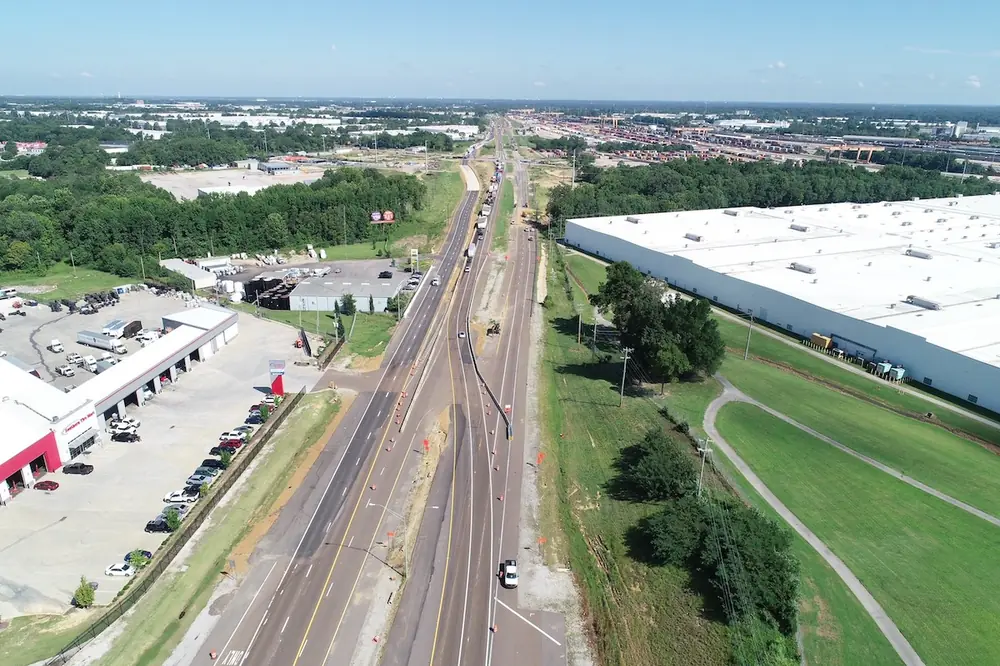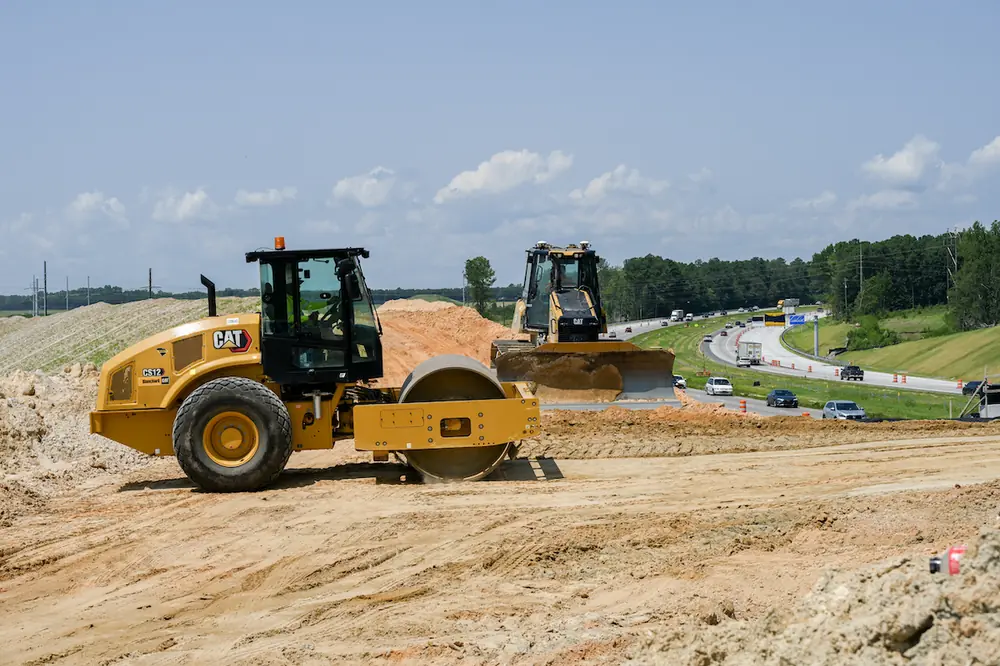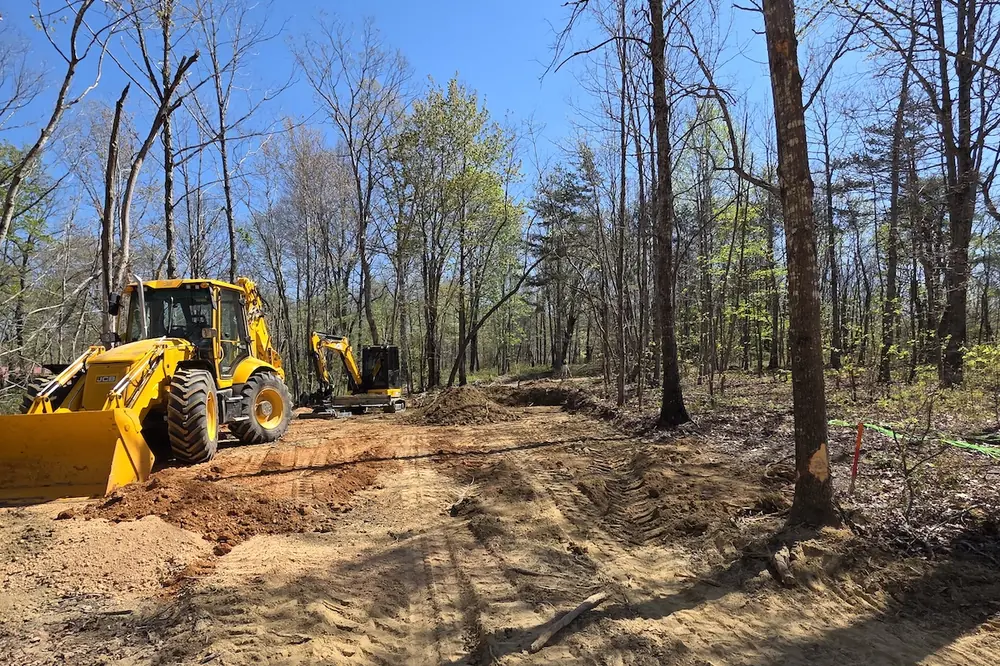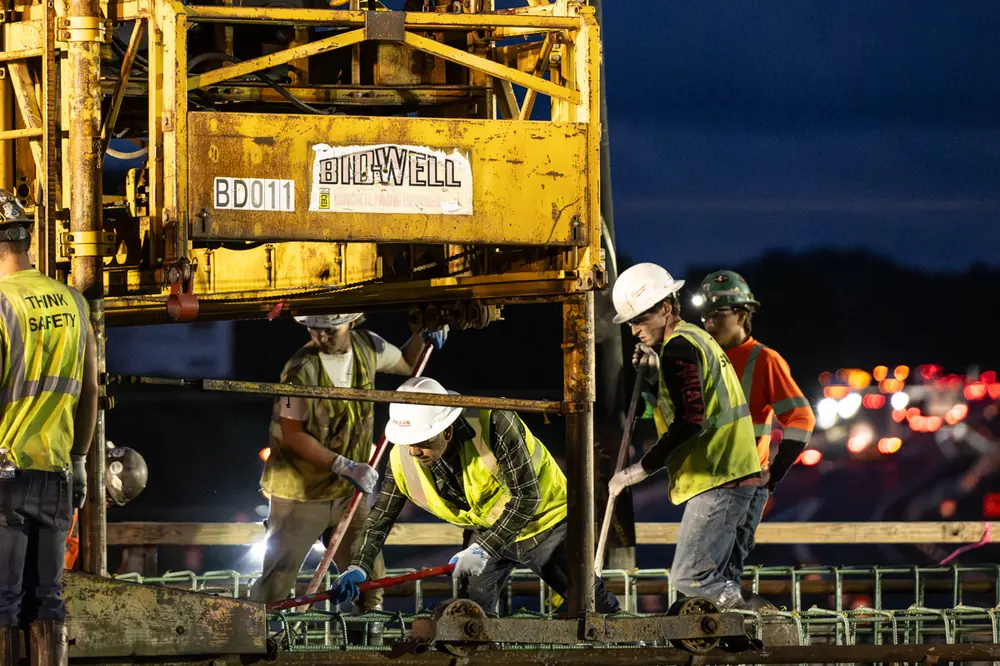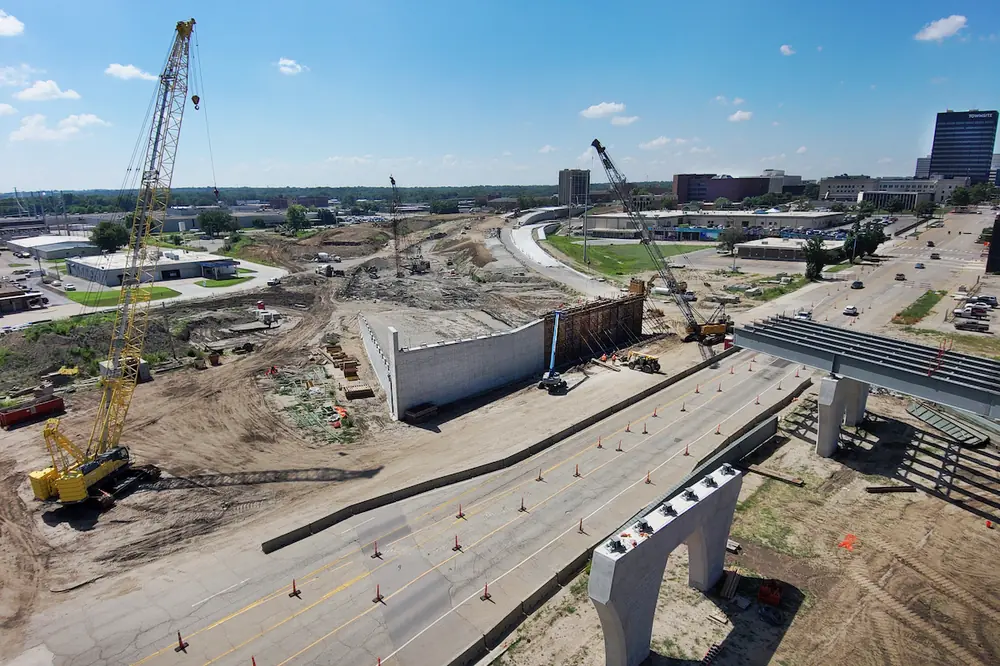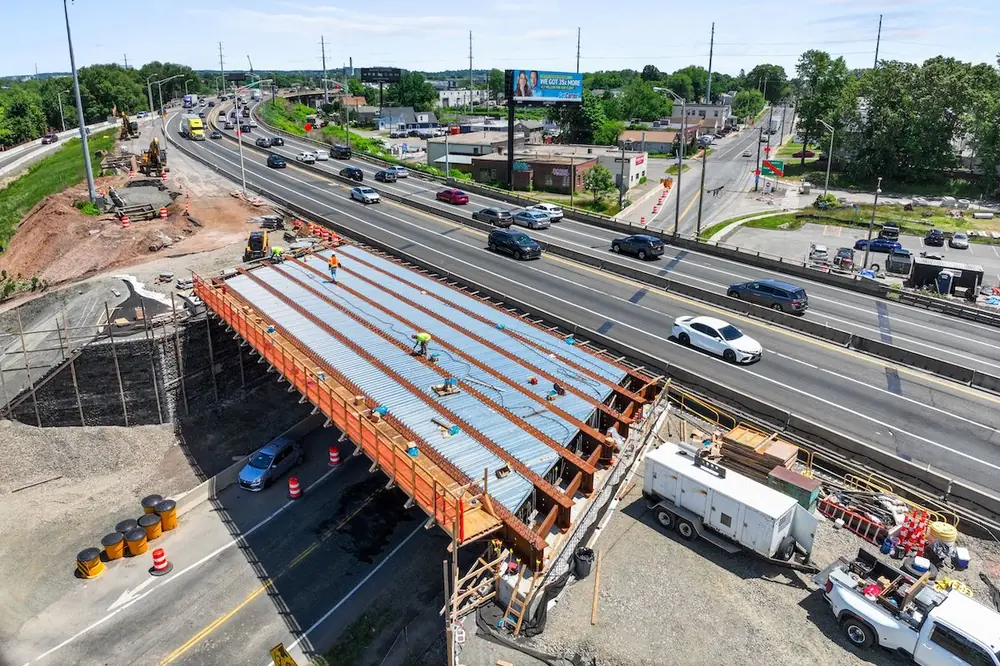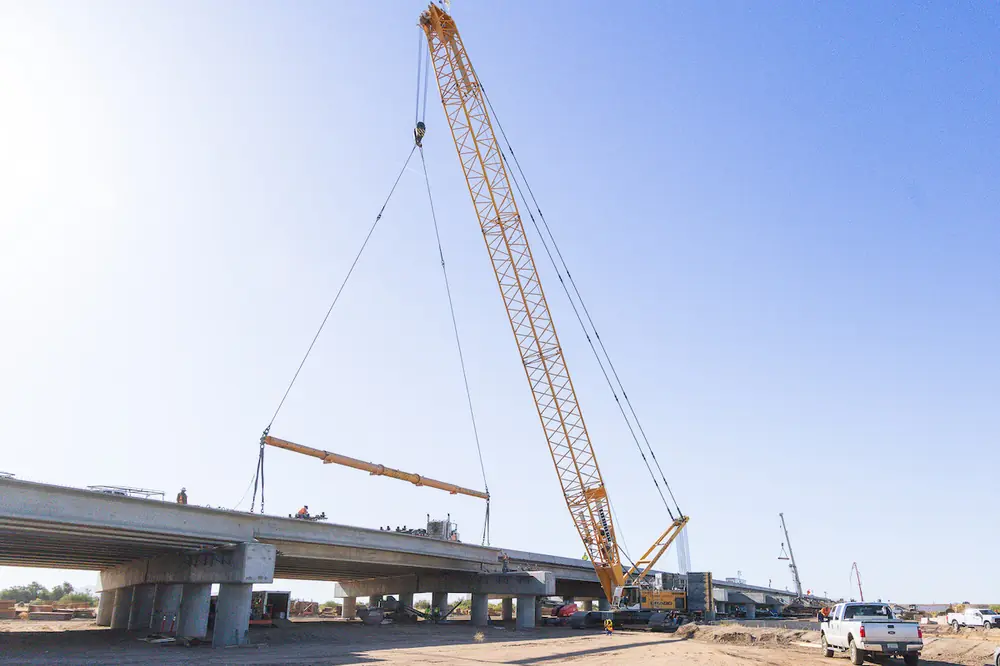


Interstate 35 (I-35) runs over 1,500 miles from the American-Mexican border to Duluth, Minnesota, with Oklahoma being one of the states it passes through along the way. The Oklahoma Department of Transportation (ODOT) is working on multiple projects on the I-35 corridor from the Texas border to Oklahoma City, Oklahoma, which is the most heavily trafficked in the state. One such project is taking place at the I-35 and SH-9 West interchange in Goldsby, Oklahoma.
Goldsby is located just outside of Norman, Oklahoma, and approximately 30 miles south of Oklahoma City, which has grown dramatically over the past decade and continues to do so.
When cities experience growth, the increase tends to impact traffic in the surrounding suburbs as well. In 2021, the average daily traffic (ADT) on I-35 around the interchange was 81,500. It is expected to rise by over 60 percent and reach 128,000 by 2050. For SH-9W, the ADT was 26,120 in 2021, and it is projected to be 47,320 in 2050.
“There’s lots of congestion on and around the interchange,” said Preston Hiemstra, the Purcell Resident Engineer with ODOT, who is overseeing and administering the project. “Oklahoma City continues to grow, as do the towns surrounding Oklahoma City.”
He added that I-35 southbound is prone to backups. The four-lane highway is a heavily traveled corridor. There are so few river crossings in the area, more people are likely to use I-35 as their main choice.

| Your local Volvo Construction Equipment dealer |
|---|
| Nuss Truck & Equipment |
Other factors are contributing to the growing ADT in and around the interchange. Nearby Riverwind Hotel and Casino, which is over 219,000 square feet and one of the largest in the state, draws significant traffic. The interchange is also a few miles away from the University of Oklahoma.
The main focus of the project is to replace the interchange. The current interchange is a partial cloverleaf with diamond ramps on the west side of I-35, for southbound I-35 traffic exiting to SH-9W and for SH-9W traffic entering to southbound I-35. The southeast quadrant of the interchange contains a loop ramp for eastbound SH-9W traffic headed to northbound I-35 and an exit ramp for northbound I-35 traffic destined to SH-9W. The northeast quadrant of the interchange contains a free-flow ramp for westbound SH-9W traffic headed to northbound I-35.
ODOT and general contractor Sherwood Construction are installing a diverging diamond interchange (DDI). It is just the third DDI in the state. Once it is constructed, drivers will be able to get on and off Highway 9 much easier.
“DDI’s have been shown to reduce crash rates while improving efficiencies of intersections, specifically where there are large amounts of left turn movements,” Hiemstra said.

| Your local Komatsu America Corp dealer |
|---|
| Road Machinery and Supplies Company |
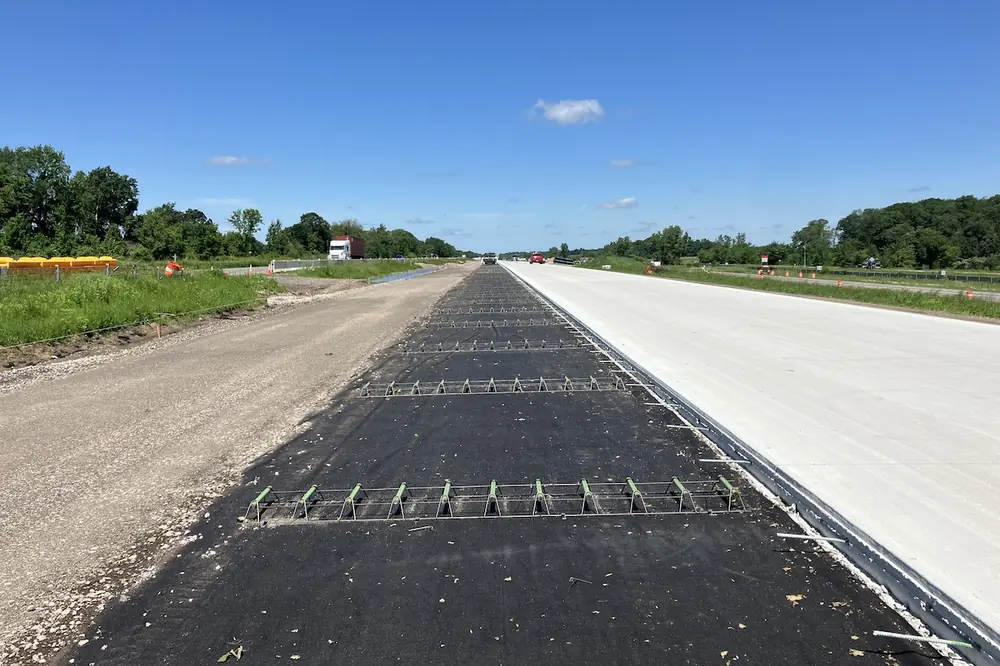
In addition to the DDI, the project involves widening I-35 to six lanes between SH-9W and SH-74/Main Street in Goldsby and building two roundabouts along SH-9W service roads.
The team is constructing new side streets due to the changed alignments that will come with the DDI and the widening of I-35. Another reason for this is that the side streets experience significant commuter traffic. The side streets include a new Harvey alignment, which runs north/south along the east side of Riverwind Casino. This ties into a newly constructed roundabout at Bankers Avenue. The team has also constructed another roundabout at Lamar and 12th Street that the new reliever ramp from southbound I-35 will tie into.
“The new configuration will enable casino traffic and more localized traffic to have their own way and separate them from drivers continuing on to the interchange,” Hiemstra said.
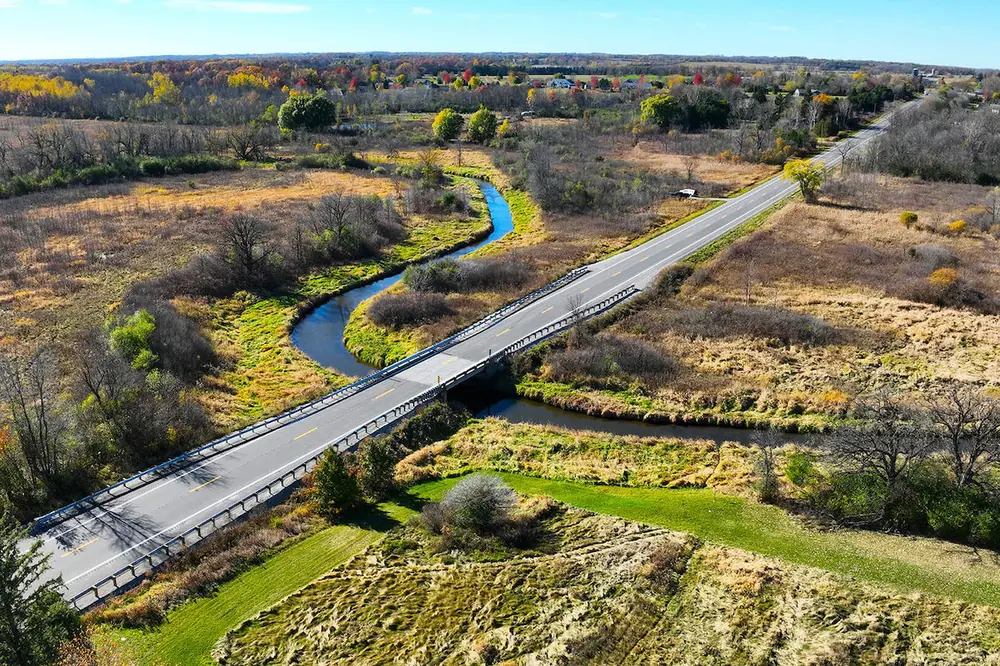
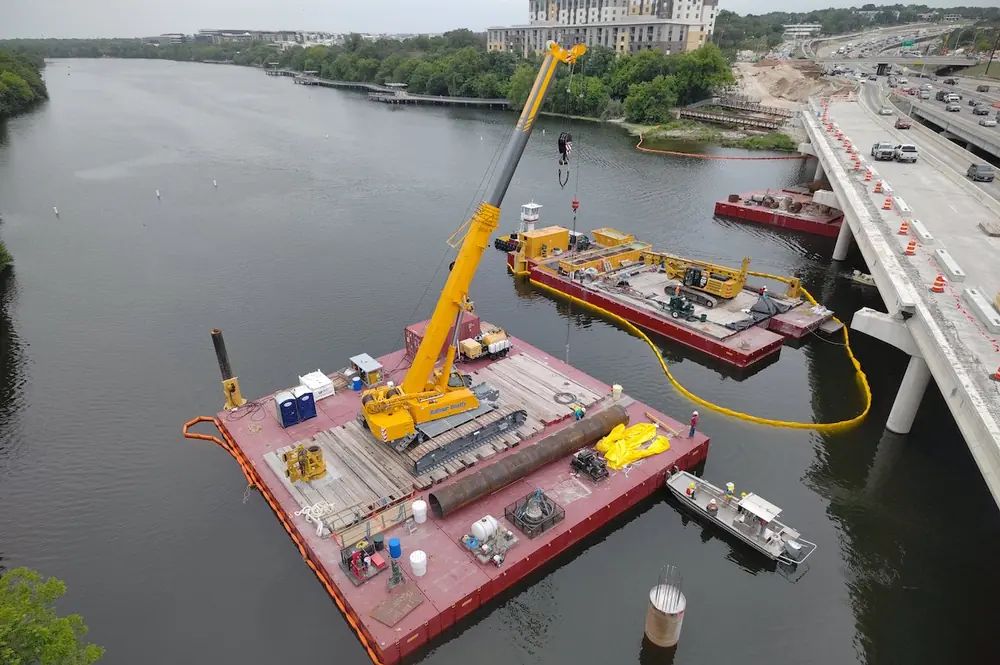
The Canadian River, a tributary of the Arkansas River, is on the outskirts of the project. There are also bodies of water on the west and east side of I-35. Plus, there is a river bridge on the north end of the project that I-35 spans.

| Your local Gomaco dealer |
|---|
| Gomaco -Contact For a Dealer Near You |
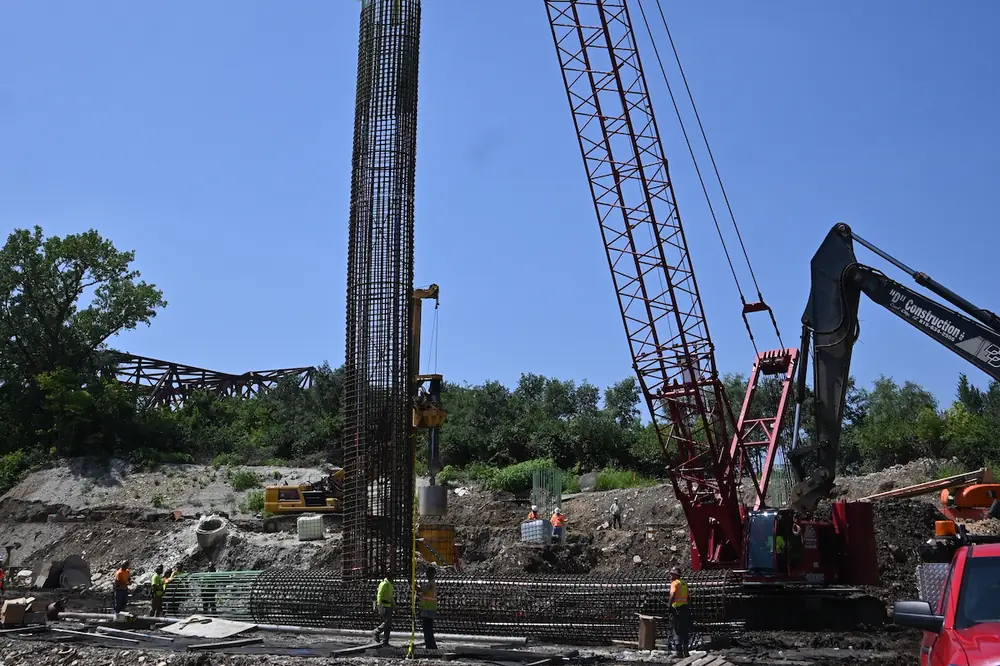
Because of the waterways in the area, it was not a surprise to the team that they encountered groundwater as they drilled shafts. However, it was surprising that the groundwater near the Canadian River was just 5 feet below the surface.
“We have to go 40 feet down to drill shafts,” Hiemstra said. The contractor pumped the water out and installed slurry walls to secure the ground and ensure the shafts could be installed as planned.
While the team made boring logs to test the soil before beginning construction, they did not get close to the riverbank. So, it was not clear that the water table was so high. “It was a higher elevation than we expected,” Hiemstra said.
The contractor handled the elevated water issue in just a few days, so it did not impact the schedule.

| Your local Trimble Construction Division dealer |
|---|
| SITECH Northwest |
| SITECH Mid-America |
| SITECH Dakotas c/o Butler Machinery |
Another challenge the team has encountered is dealing with the traffic level in the area. The department was particularly concerned about the traffic levels due to the river bridge on the north end. The region has a few crossings, with the next closest being a few miles away in either direction. Cutting off bridge access would create a significant inconvenience for drivers.
The team has taken a couple of steps to keep the traffic flowing and minimize congestion, including:
- Altering the lengths of acceleration lanes
- Adjusting the timing of traffic signals on the highway to get people through more safely
- Owner: Oklahoma Department of Transportation
- General Contractor: Sherwood Construction, Tulsa, Oklahoma
- Designer: TEIM Design, PLLC
- Key Subcontractors: Silver Star Construction, Tulsa Pier Drilling, Tom Hudson Paving, Direct Traffic Control, Central Bridge Company, Impact Contractors
Sherwood Construction, headquartered in Tulsa, Oklahoma, has existed since 1934. The large firm can self-perform many types of civil construction and has in-house material sources and quality control services.
| Your local Volvo Construction Equipment dealer |
|---|
| Nuss Truck & Equipment |
Hiemstra has worked with the firm multiple times and said that “they have lots of experience with big projects in Oklahoma, are familiar with this type of work and the area, have experienced crew members, and know how to run a project.”
Hiemstra said he has been very pleased with Sherwood and gave them much credit for keeping the project on budget and schedule.
“The contractor contacts us as soon as they run into a problem or have a concern,” Hiemstra said. “They submit any necessary paperwork so I can get it to our ODOT experts, who need to review the issue. By keeping the lines of communication open and moving things along the chain promptly, we can get a proposal approved promptly and keep the project on schedule.”
Construction began in January 2024 and is scheduled to be completed in early 2026. So far, the contractor has met all the milestones (there are incentives/disincentives to do so). In 2024, the team focused primarily on the work related to the side roads.
| Your local Volvo Construction Equipment dealer |
|---|
| Nuss Truck & Equipment |
The construction budget is $82 million. As of the writing of this article, the project was on budget. The federal government is financing the project.
Hiemstra does not expect the project to go over budget, as there have been few issues. He credited the designer and contractor. Other pluses include a good relationship with the contractor, the ability to negotiate prices, and minimal change orders.
“We also have consulted out additional help to make sure we have proper oversight on the project,” Hiemstra said. “CEC has been helping with material testing on the interchange portion of the project, and Atkins Realis has been the construction residency over the interstate widening.”
When the I-35 and SH-9 West interchange is completed, it will help alleviate congestion, reduce conflicts, ease entry and egress both on and off the interstate, and make travel in and around the casino more streamlined. The project also furthers ODOT’s goal of widening the entire southern I-35 corridor from four to six lanes, between Oklahoma City and the Oklahoma-Texas border. The extra lanes will improve travel reliability for drivers since more lanes will be able to remain open during potential traffic interruptions.
| Your local Volvo Construction Equipment dealer |
|---|
| Nuss Truck & Equipment |