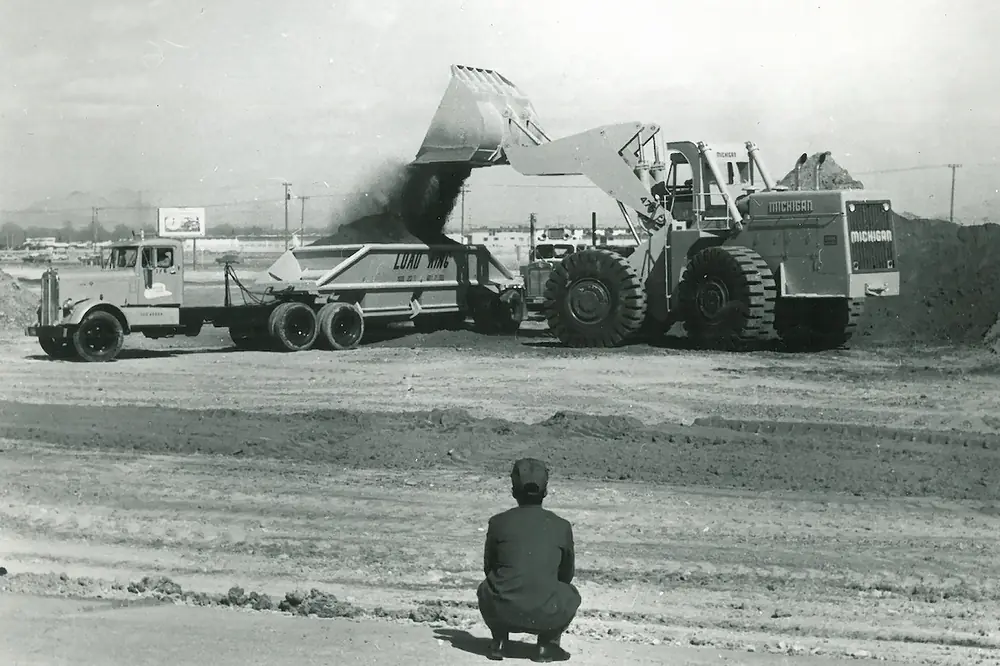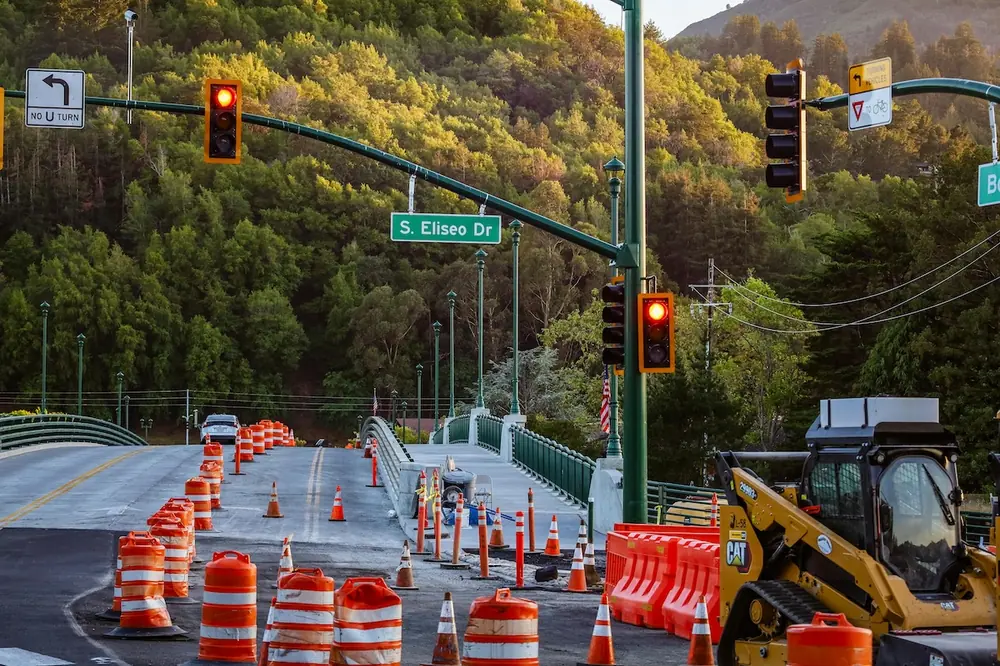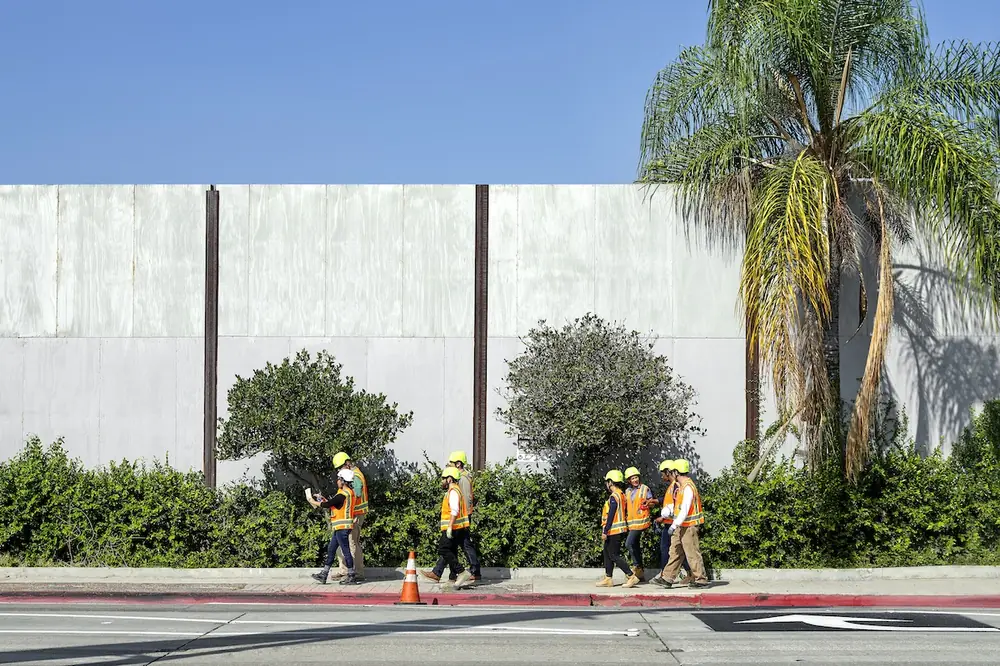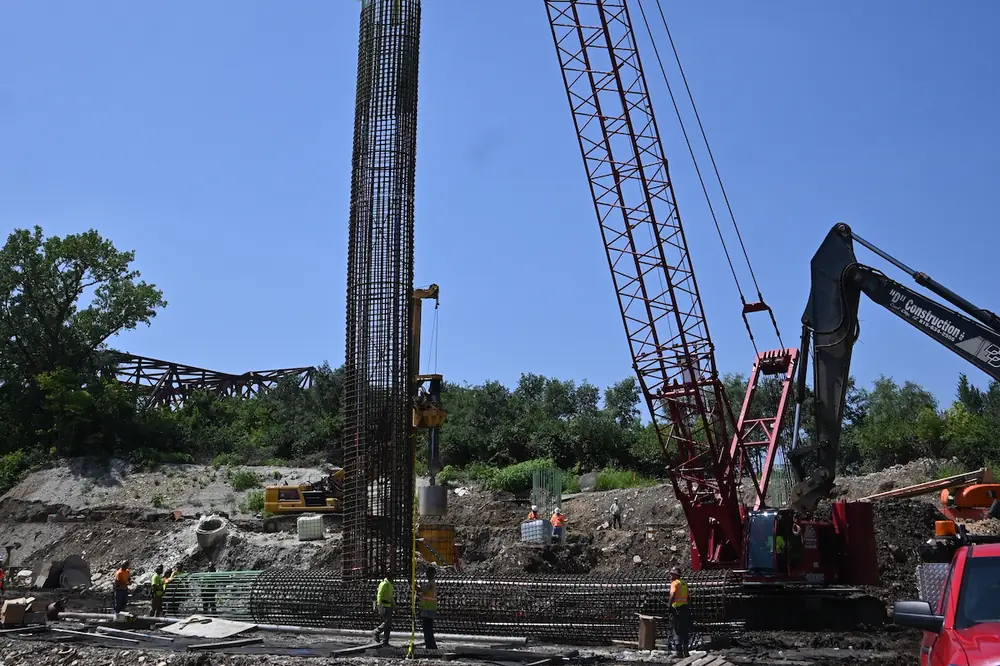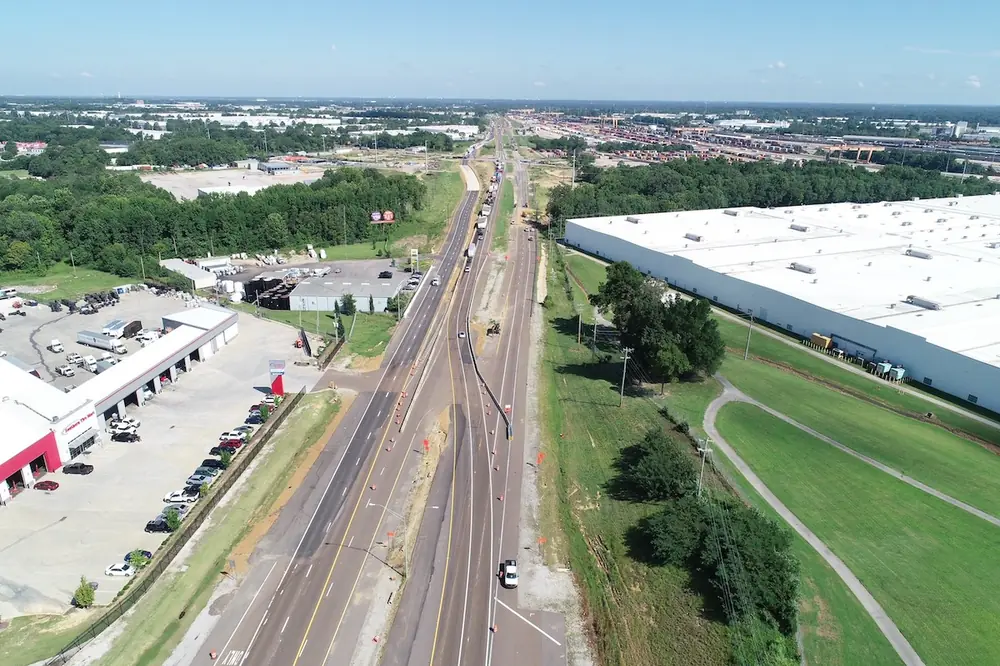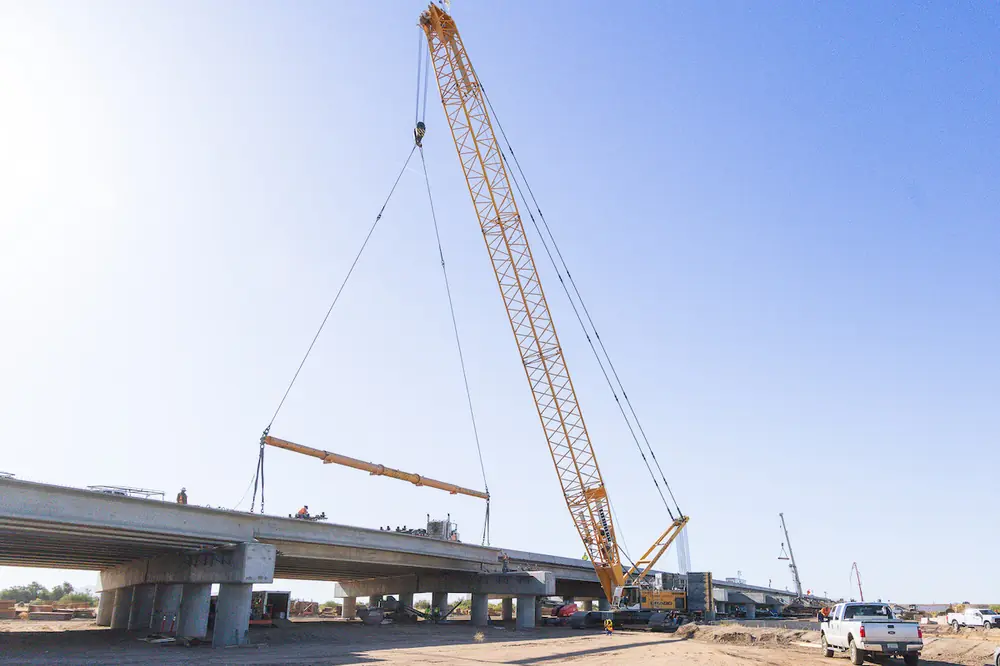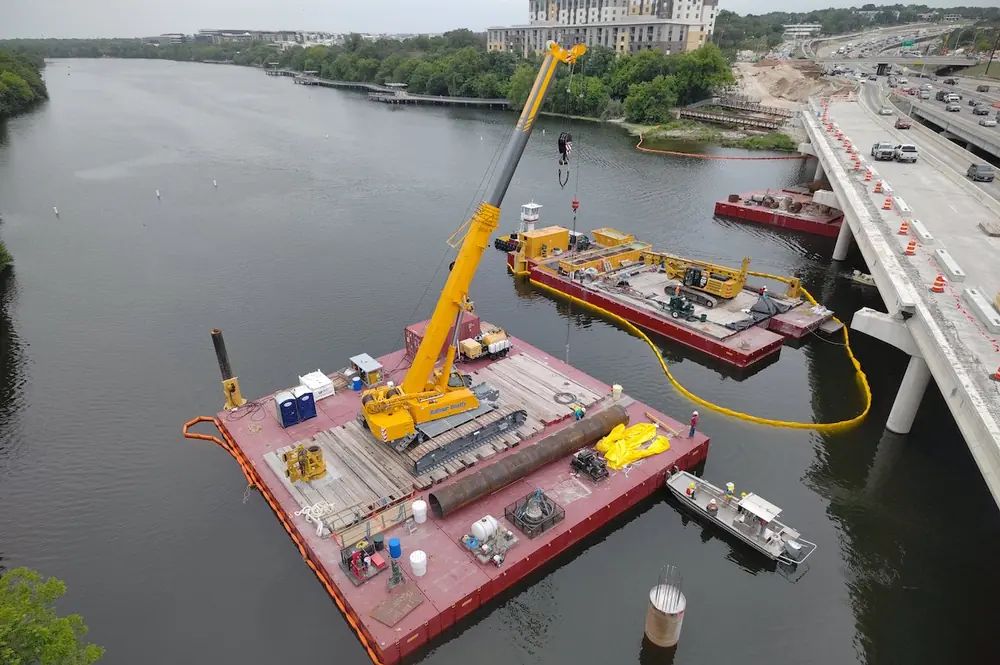



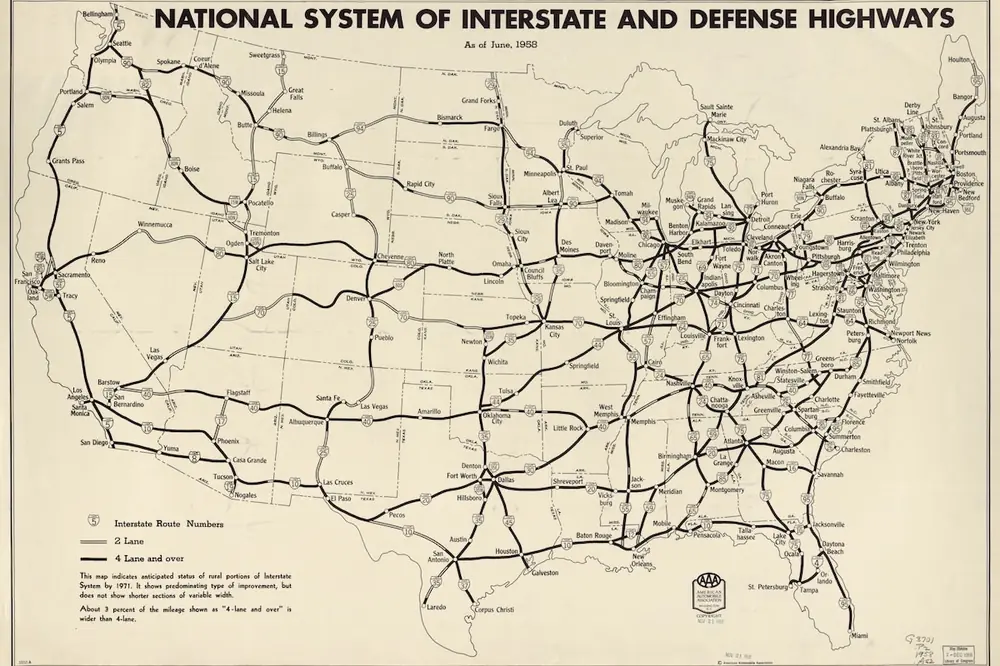
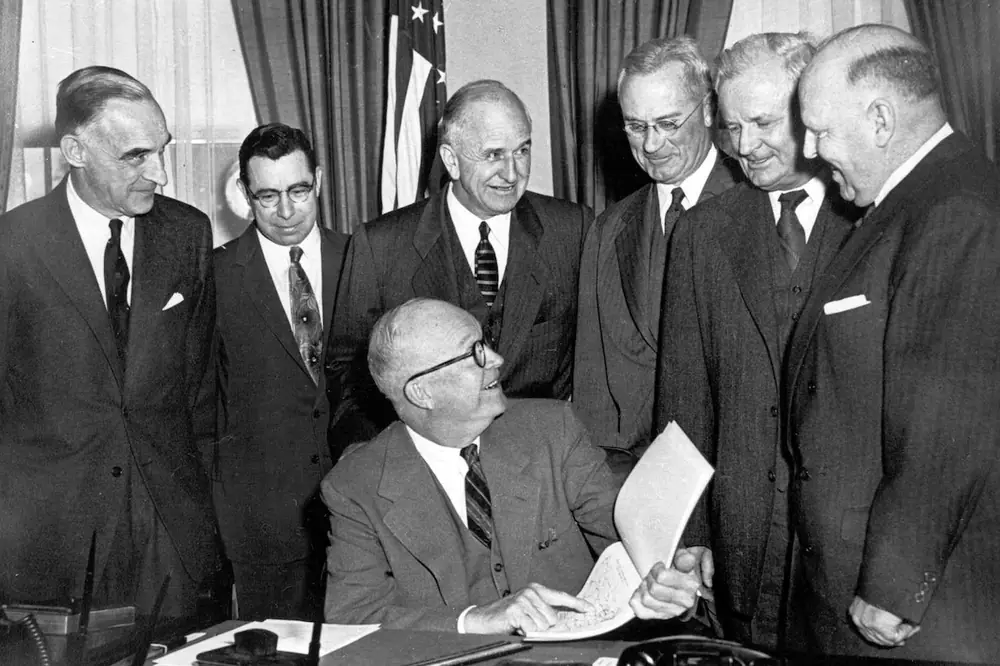

Initiated by the Federal-Aid Highway Act of 1956 under President Dwight D. Eisenhower, the Interstate Highway System is widely considered one of the greatest public works projects in the first 250 years of United States history. For the heavy civil construction industry, it represented an unprecedented era of standardized road building, requiring all routes to be freeways with at least four lanes, controlled access, and no at-grade crossings.
“Our highways badly need modernization and expansion to accommodate today’s vastly increased motor traffic,” Eisenhower said when signing the legislation.
Seventy years later, that statement rings just as true.
Authorized at an initial $25 billion — equivalent to $300 billion today — for the construction of 41,000 miles over a 10-year period, the massive construction undertaking ultimately spanned 35 years and cost approximately $114 billion, or $937 billion in 2026 dollars. Today, the sprawling national network spans 48,890 miles and serves as the main arteries for much of the U.S.
Interestingly, the system’s development in Texas — which currently contains 3,233 miles of the national network — began well before the routes received their official interstate designations. A 50-mile stretch of I-45 between Galveston and Houston opened in 1951 as the state’s first urban expressway, eight years prior to becoming I-45. In 1962, 43 miles of I-35 opened in Bexar County, marking the first time an interstate highway spanned county-to-county within a large metropolitan area.

| Your local Gomaco dealer |
|---|
| Gomaco -Contact For a Dealer Near You |
Today, the economic benefit of the Interstate Highway System in Texas is approximately $6.1 billion annually due to improved traffic safety, reduced delays, and lower fuel consumption, according to the Washington, D.C.-based nonprofit TRIP. In 2024 alone, the Interstate Highway System saved 600 Texan lives, preserved 38 million gallons of fuel, and reduced traffic delays by 138 million hours.
Celebrating its 70th birthday this year, the Interstate Highway System’s infrastructure is showing severe signs of its advanced age. A critical issue for modern roadbuilders is that most interstate segments still retain their original underlying foundations, meaning repeated pavement resurfacing yields diminishing returns and increasingly shorter periods of pavement smoothness.
In Texas, rapid growth and intense utilization have heavily strained the aging network. While U.S. interstate highways carry 24 percent of all vehicle travel on just 2.6 percent of the nation’s roadway lane miles, travel on Texas’ Interstate Highway System increased by a massive 61 percent from 2000 to 2024 — the fifth highest rate in the U.S.
As a result:

| Your local Volvo Construction Equipment dealer |
|---|
| Nuss Truck & Equipment |
- 64 percent of Texas’ urban interstate highways are currently considered congested during peak hours, the ninth highest share among all states.
- 13 percent of pavements on Texas’ interstate highways are in poor or mediocre condition.
- 54 percent of Texas’ interstate bridges are rated in fair condition, while 1 percent are rated in poor or structurally deficient condition.
“Seventy years after the Interstate Highway System transformed transportation in America, it now faces challenges its original designers could never have anticipated,” said Bob Lanham, TRIP Board Member and past President of the Associated General Contractors of America and President of Williams Brothers Construction in Houston, Texas. “Aging infrastructure, increasing traffic volumes, and evolving transportation needs demand more than routine maintenance. They require a long-term commitment to modernizing this vital network so it can continue to support economic growth, improve safety, and serve future generations.”
To address the system’s physical and operational deficiencies, the U.S. Department of Transportation estimates a staggering $196 billion backlog in necessary improvements nationwide, which includes $58 billion needed for pavements, $65 billion for bridges, and $73 billion for system expansion and enhancements. The Transportation Research Board indicates that addressing these needs will require annual investments to more than double, increasing to $57 billion annually over the next 20 years.
For contractors, this mandates a massive upcoming pipeline of work. Beyond simply replacing aging pavements, Texas roadbuilders will be tasked with completely upgrading outdated interchanges, adding high-occupancy toll lanes, “right-sizing” lane capacity, and fundamentally overhauling safety features to handle the influx of both passenger and commercial freight.

| Your local Trimble Construction Division dealer |
|---|
| SITECH Dakotas c/o Butler Machinery |
| SITECH Northwest |
| SITECH Mid-America |
“Roads do more than just move people. They are the foundational lifelines that support our communities and keep America’s economy moving,” said Dean Word III of Dean Word Company in New Braunfels, Texas, and TRIP Board President. “Rebuilding and expanding the 70-year-old frameworks that shaped modern transportation is our next great infrastructure challenge. Investing in the interstate system’s future means preserving its legacy while increasing mobility and freight capacity for future generations.”
“The Interstate Highway System is more than concrete and steel; it is a living symbol of American ambition, ingenuity, and unity,” TRIP Executive Director Dave Kearby said. “Built by a generation that believed in creating something bigger than themselves, these roads connected families, fueled commerce, strengthened national defense, and opened the country to endless opportunities. As we reflect on its 70th anniversary and America’s 250th, rebuilding this system is not just an investment in infrastructure; it is a chance to honor that legacy and ensure future generations inherit an America that still believes in building boldly for tomorrow.”
For more information and access to all TRIP reports, go to www.tripnet.org.