



For years, construction robotics have been viewed primarily as a technology story. The conversation often centered on what robots could do, how autonomous systems worked, or what future job sites might look like. While those discussions generated plenty of excitement, they frequently overlooked the question contractors care about most: Do the economics make sense?
Today, that question deserves a fresh look. Across the construction industry, labor availability has become one of the most significant constraints on project delivery. Associated Builders and Contractors estimates the industry will need to attract 349,000 net new workers in 2026 to meet anticipated demand. Meanwhile, in the most recent workforce survey results from Associated General Contractors of America and the National Center for Construction Education and Research, 92 percent of respondents were struggling to fill open positions, while 45 percent reported project delays because of labor shortages.
Workforce availability has become more than a staffing challenge — it is now a business risk. The impacts are felt across every phase of a project as delays increase costs, overtime pressures grow, and schedules become more difficult to maintain. Bid opportunities may be passed over simply because firms cannot confidently staff the work.
Historically, construction has responded to workforce pressures through productivity-enhancing technologies. Excavators replaced manual digging, GPS-guided machine control transformed earthmoving operations, and drones improved surveying and site documentation. Each innovation enabled contractors to accomplish more work with greater efficiency, precision, and consistency.
Robotics represent the next chapter in that evolution.

| Your local Komatsu America Corp dealer |
|---|
| Road Machinery and Supplies Company |
Despite years of interest in robotics, adoption has remained slower than many anticipated. The reason was never that the technology lacked potential; the challenge was that the business case often remained difficult to justify.
For many contractors, robotics required significant upfront investment, specialized expertise, and a willingness to assume operational risk before seeing measurable returns. Purchasing an unfamiliar robotic system was fundamentally different than renting a piece of equipment for a project. Contractors had to evaluate not only the technology itself, but also utilization rates, workforce training requirements, and long-term maintenance obligations.
We’ve seen this firsthand. Over the last several years, our team at RIC Robotics has supported projects ranging from residential housing developments to large-scale commercial construction. In nearly every conversation, the primary question has not been whether the technology works — it’s how contractors can deploy it in a way that aligns with project economics.
Today, that equation is beginning to change. Much of that stems from how robotics are deployed. Increasingly, contractors are gaining access to robotic systems through service-based models rather than traditional ownership structures.

| Your local Trimble Construction Division dealer |
|---|
| SITECH Northwest |
| SITECH Mid-America |
| SITECH Dakotas c/o Butler Machinery |
This approach allows firms to utilize advanced automation without committing substantial capital expenditures up front. Instead of purchasing technology and hoping utilization justifies the investment, contractors can deploy robotic systems where they create the greatest value and evaluate performance based on project outcomes.
The shift to robotics-as-a-service mirrors changes that already transformed other aspects of construction. Few contractors purchase every specialized piece of equipment they use. Often, they rent cranes, temporary power systems, and other project-specific assets when it makes economic sense.
Robotics are increasingly viewed through the same lens. The conversation around robotics is becoming less about technology and more about productivity. That distinction is important.
The most compelling robotics applications are not necessarily the most futuristic; they are the ones that solve practical project challenges.

| Your local Gomaco dealer |
|---|
| Gomaco -Contact For a Dealer Near You |
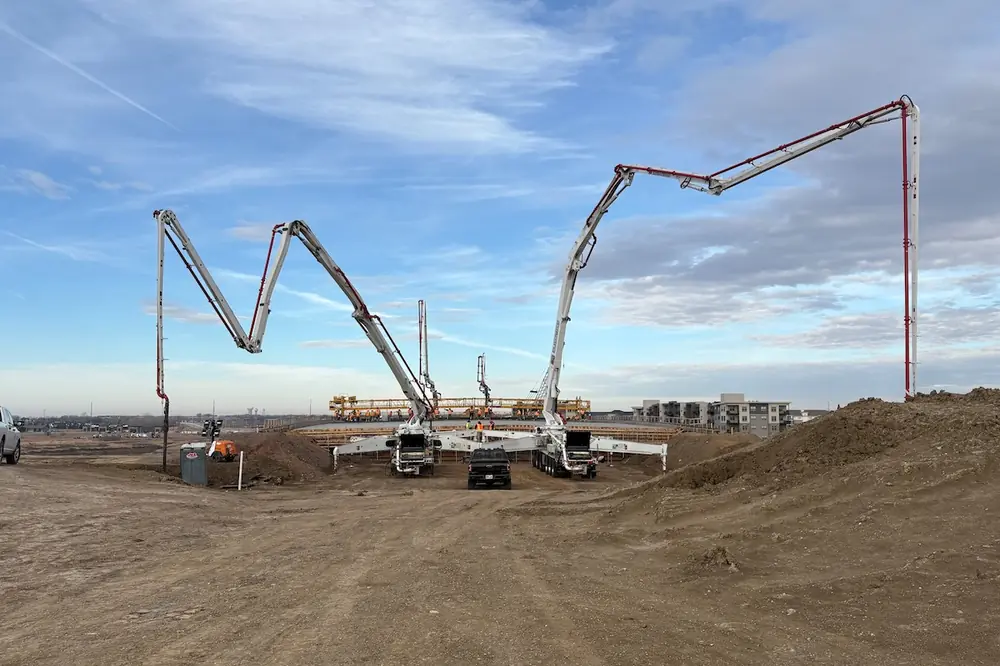
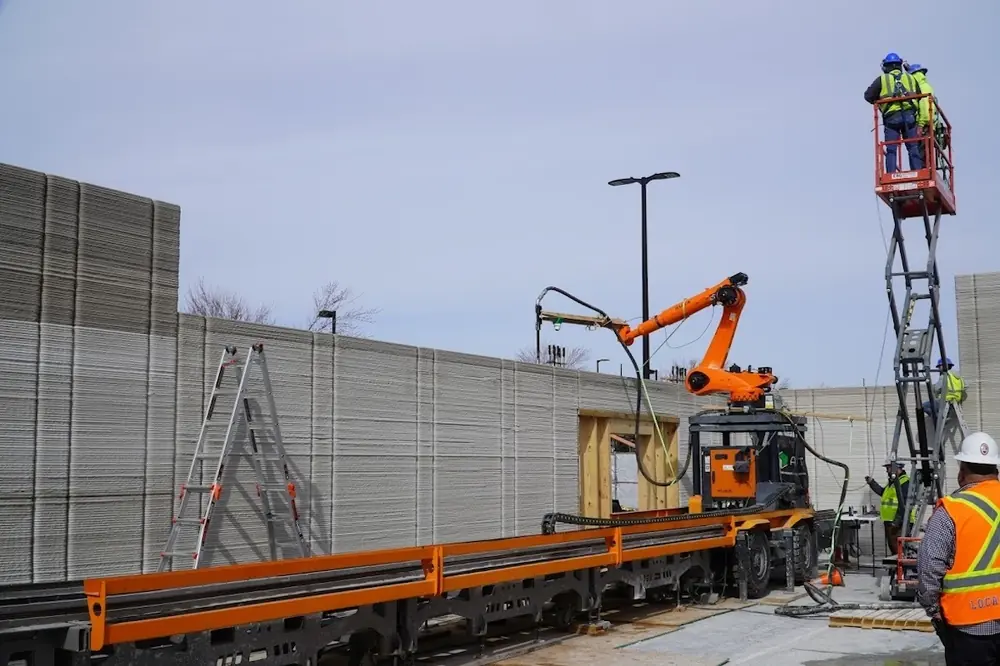
Repetitive concrete work, site development activities, and other labor-intensive tasks can benefit from automation that improves consistency while reducing dependence on increasingly scarce labor resources. In many cases, the value comes not from replacing workers, but from enabling skilled teams to accomplish more with the workforce already available.
That nuance is often misunderstood.
Robotics are not a substitute for skilled tradespeople; they are a force multiplier. Just as machine control systems did not eliminate equipment operators and drones did not eliminate surveyors, robotic systems are designed to help construction professionals work more efficiently and safely.
Just as importantly, broader adoption will require workforce development alongside technology deployment. Across the industry, contractors, unions, and technology providers are increasingly investing in training programs that help workers develop skills around automation and additive construction methods. Through our work with the Operative Plasterers’ & Cement Masons’ International Association trade union, we’ve seen firsthand that tradespeople are eager to learn how emerging technologies can complement their expertise and expand career opportunities.

| Your local Volvo Construction Equipment dealer |
|---|
| Nuss Truck & Equipment |
The future job site will not be staffed by robots instead of people. It will be staffed by skilled workers supported by technologies that help them deliver projects faster, safer, and more predictably.
As contractors evaluate robotics, the most important metric may no longer be the cost of the machine itself. Instead, the focus should be on the cost of the completed task.
Can a robotic system help maintain schedules despite workforce shortages? Can it improve productivity on repetitive activities? Can it reduce project risk while allowing skilled workers to focus on higher-value tasks? These are the questions that ultimately determine whether the economics pencil.
For an industry facing persistent labor shortages, rising costs, and increasing project demands, those answers matter more than ever.
| Your local Komatsu America Corp dealer |
|---|
| Road Machinery and Supplies Company |
The most significant breakthrough in construction robotics may not be the robots themselves — it will likely be the emergence of business models that finally make advanced automation practical, accessible, and economically viable for contractors of every size. And that is when new technologies stop being experiments and start becoming tools.
Ryan Cox is Chief Executive Officer of RIC Robotics.