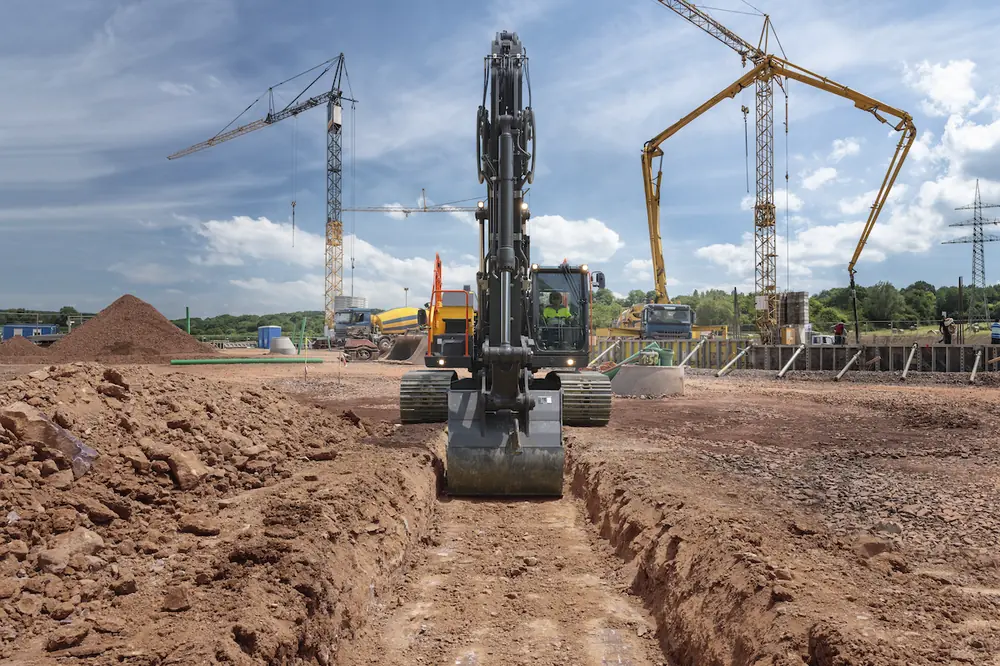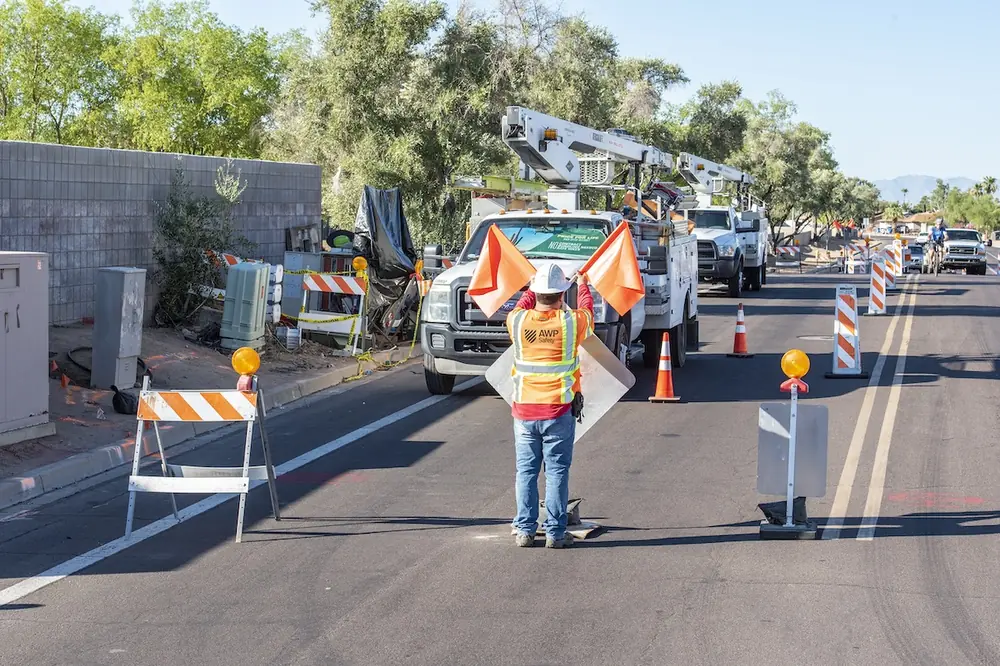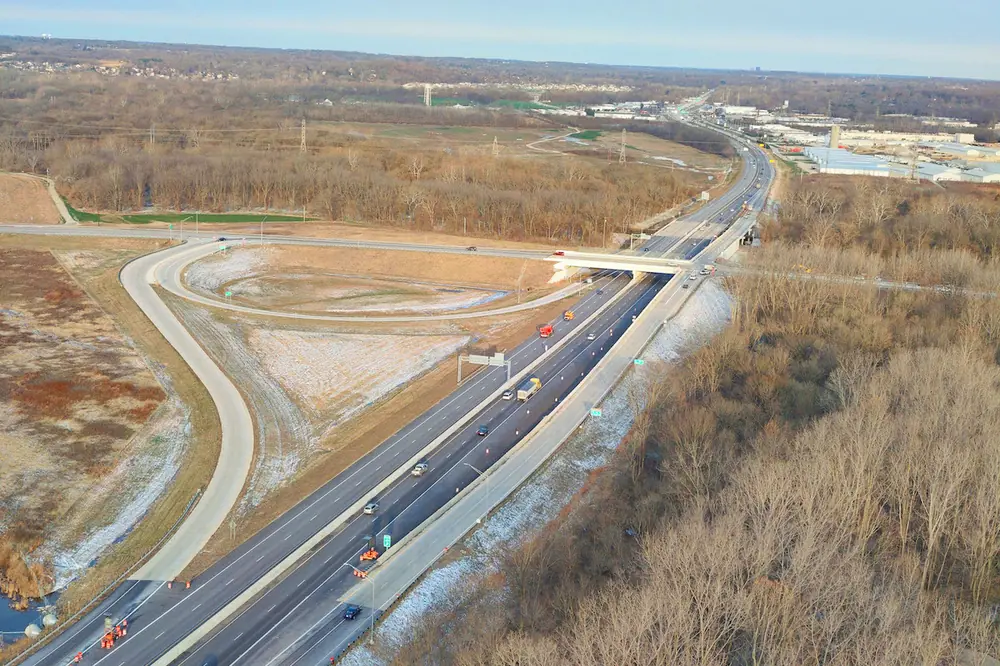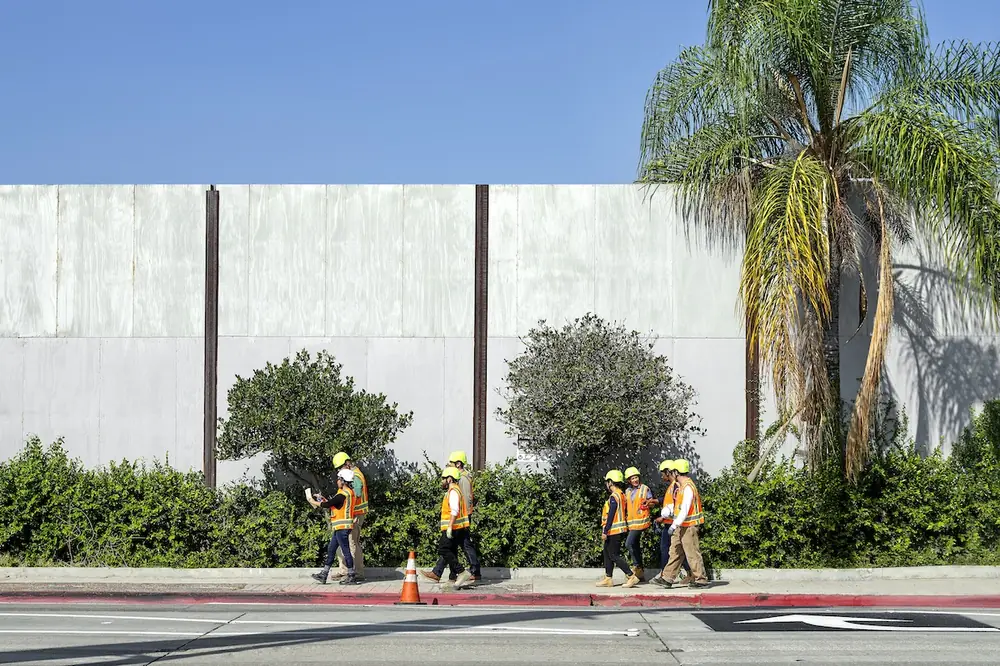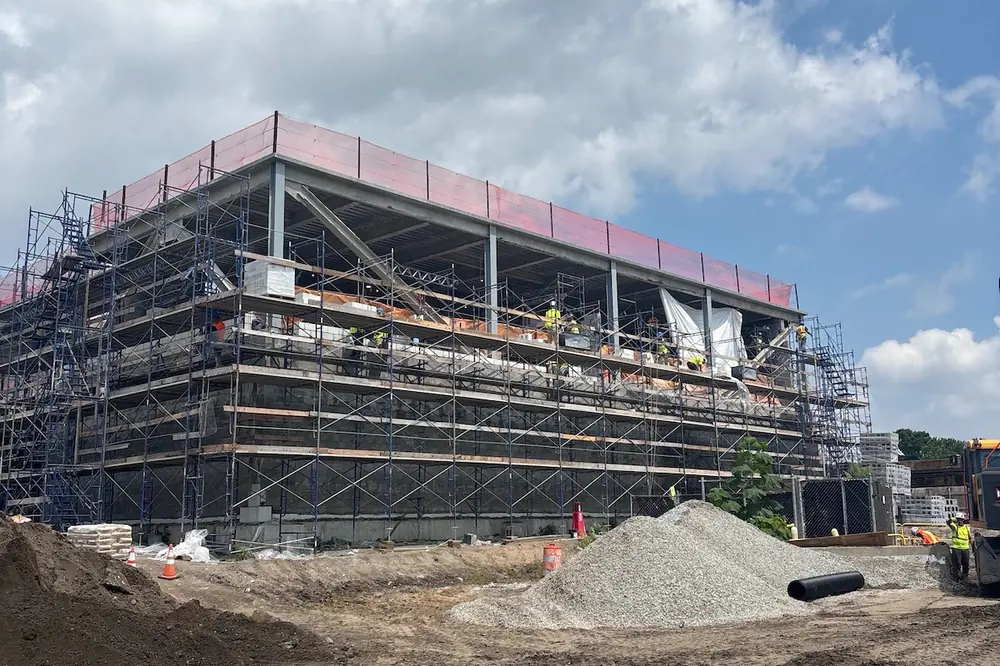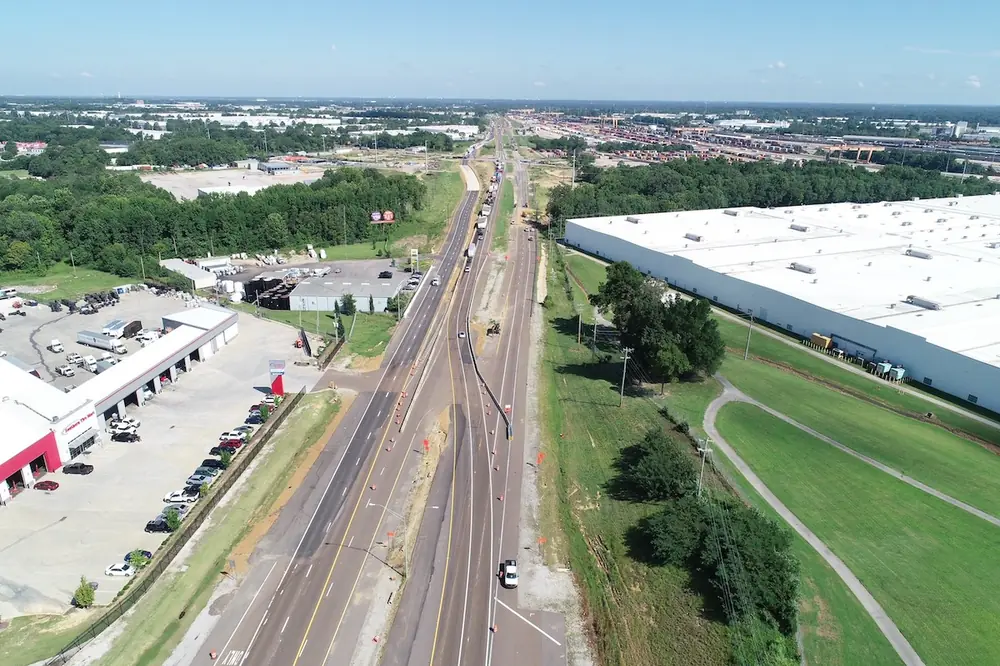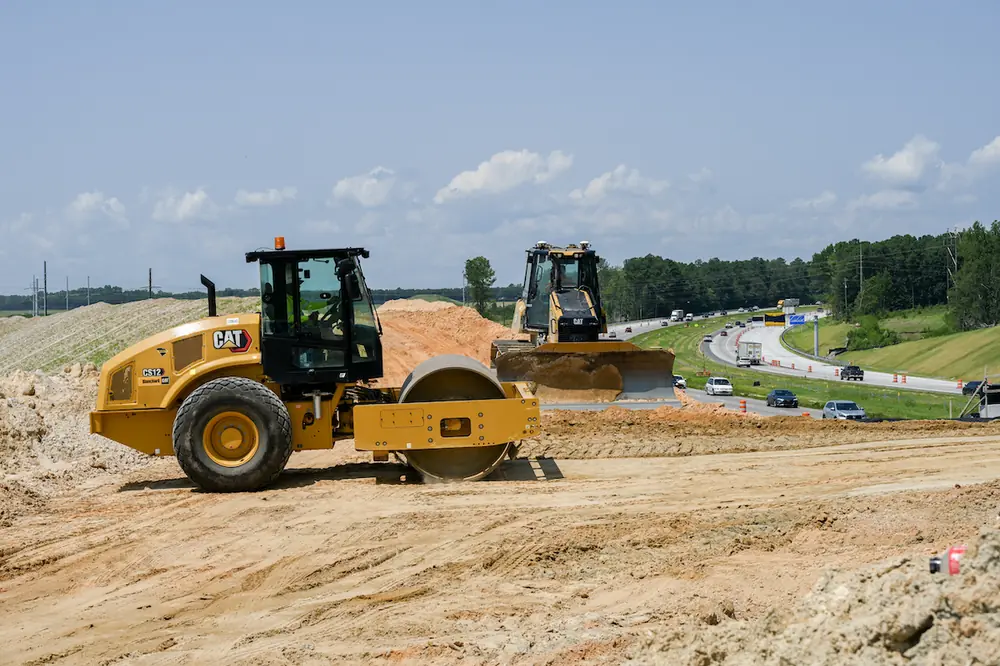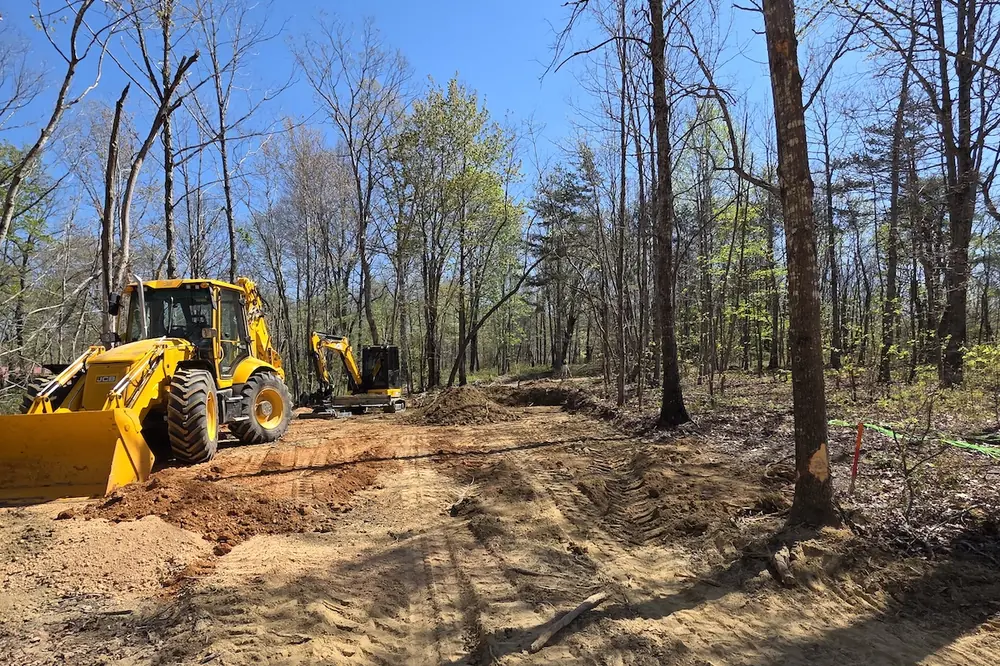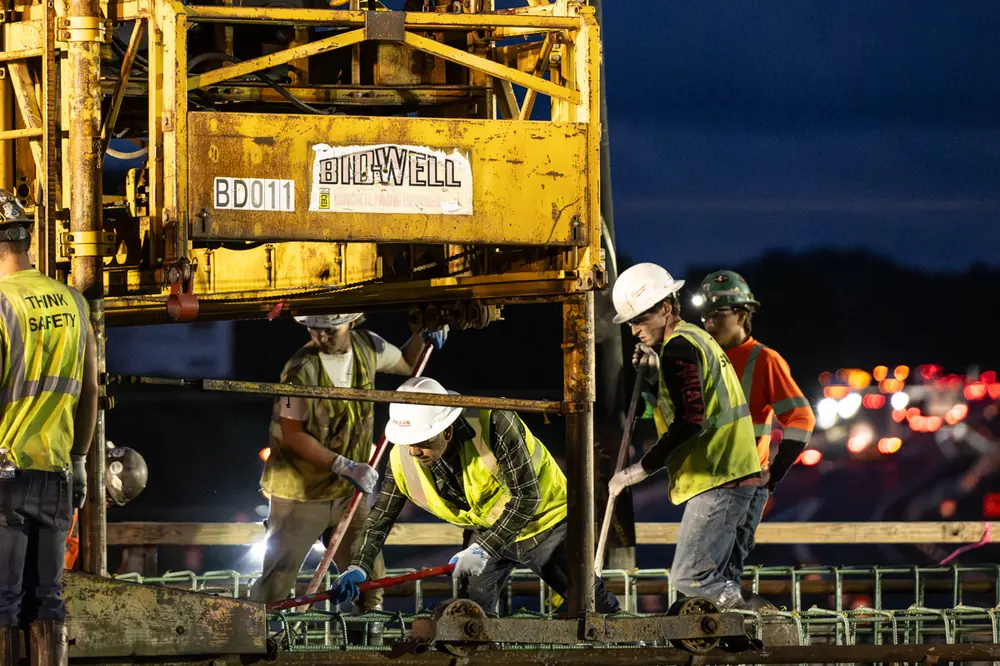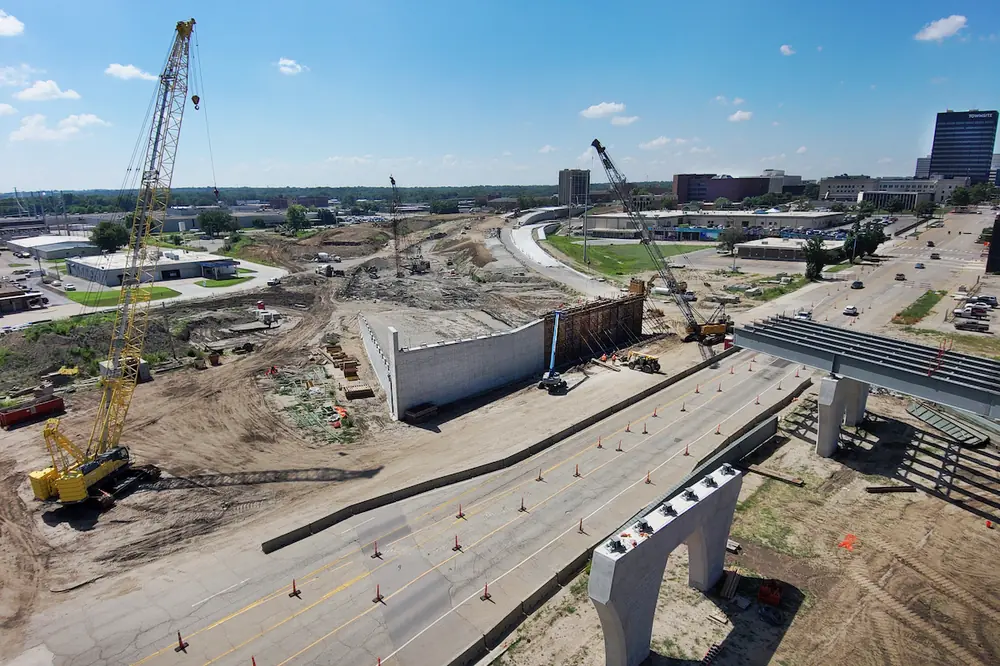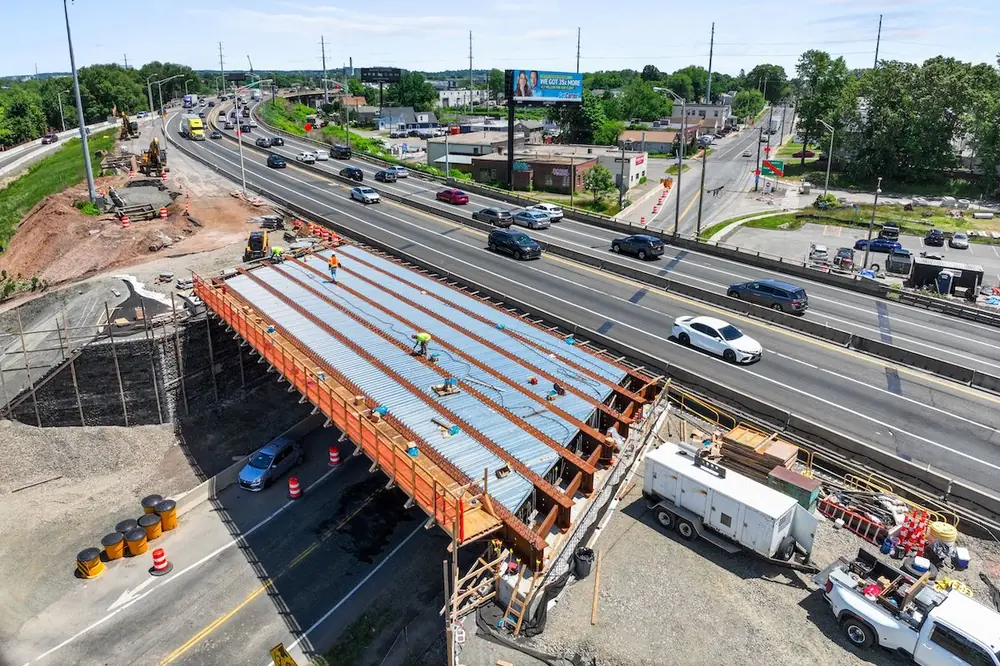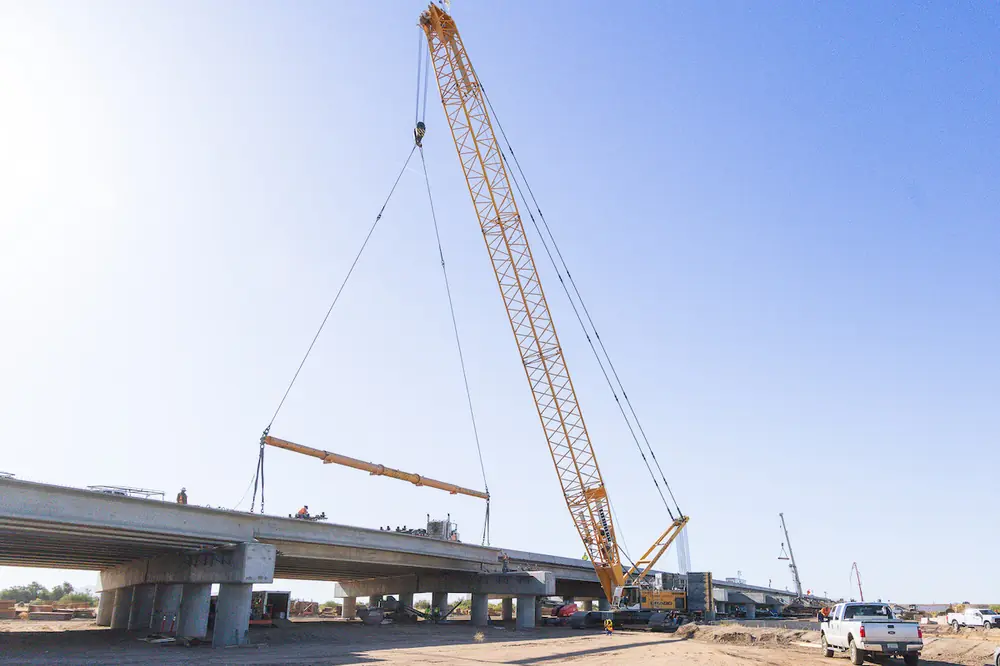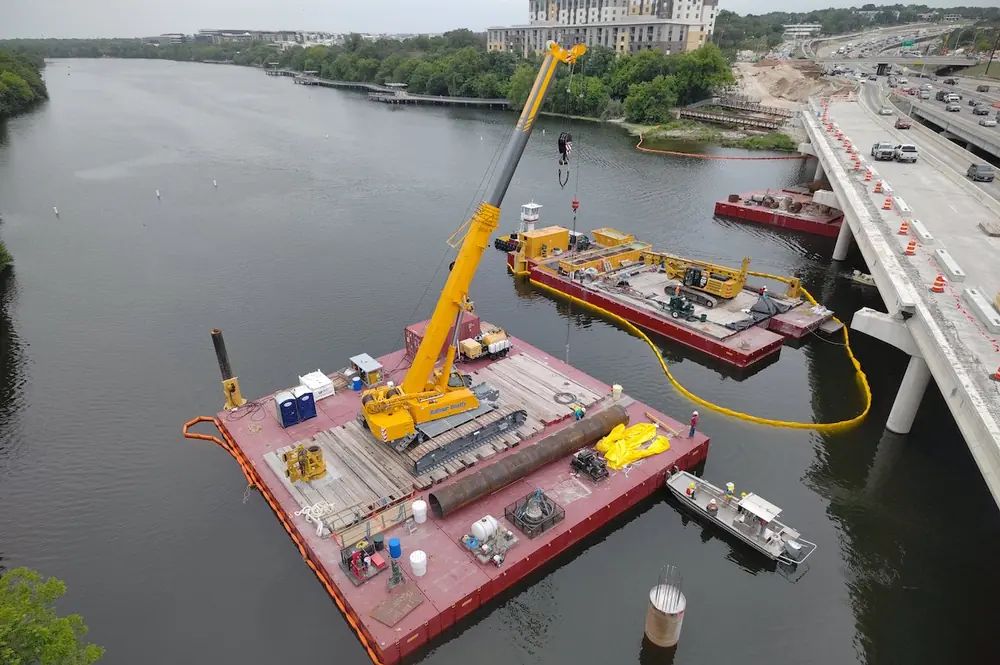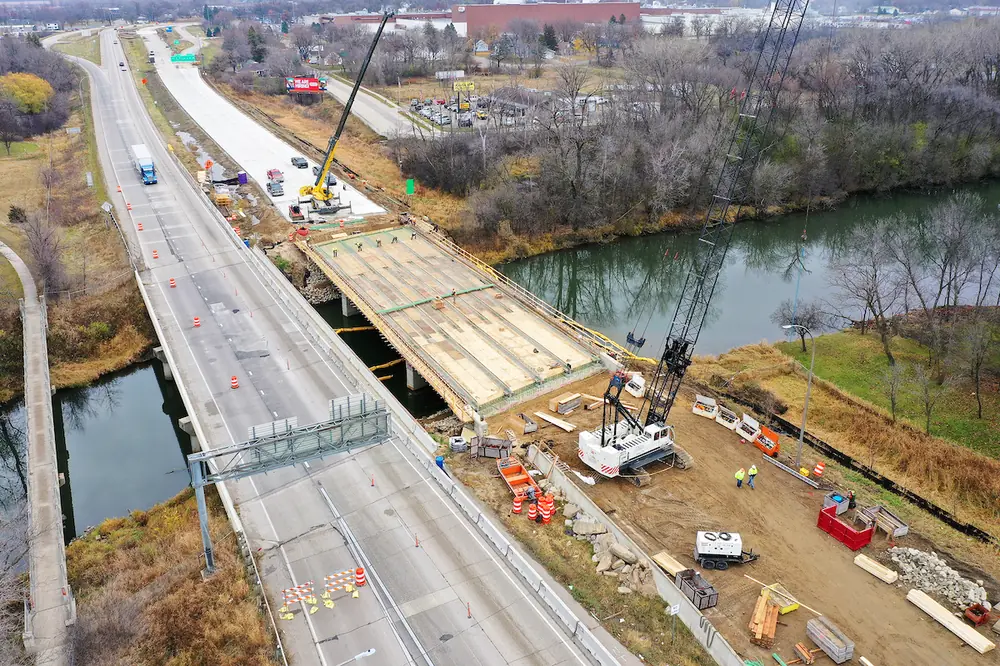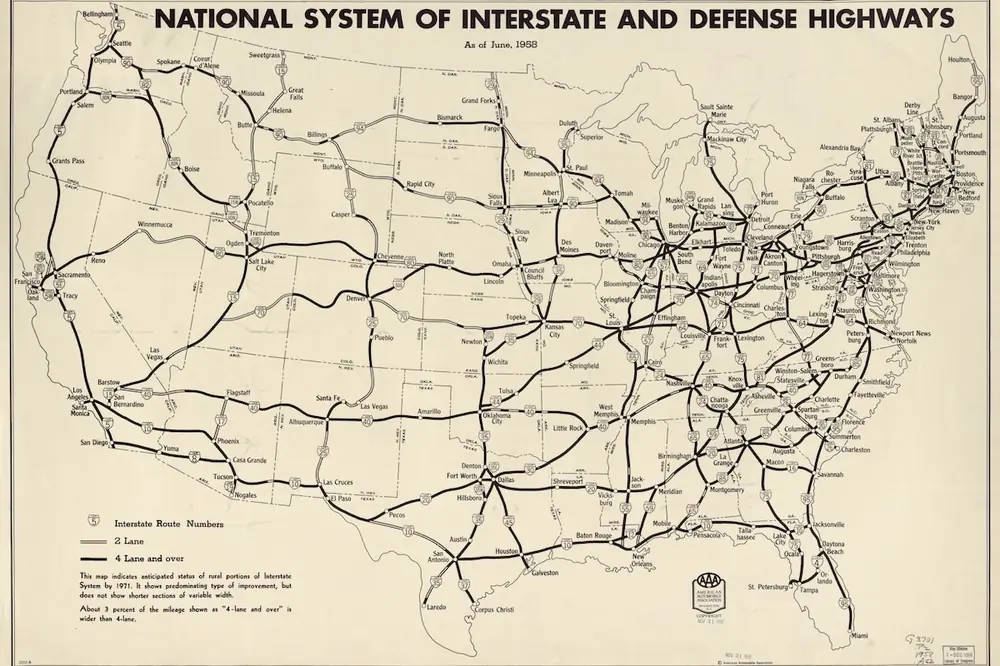
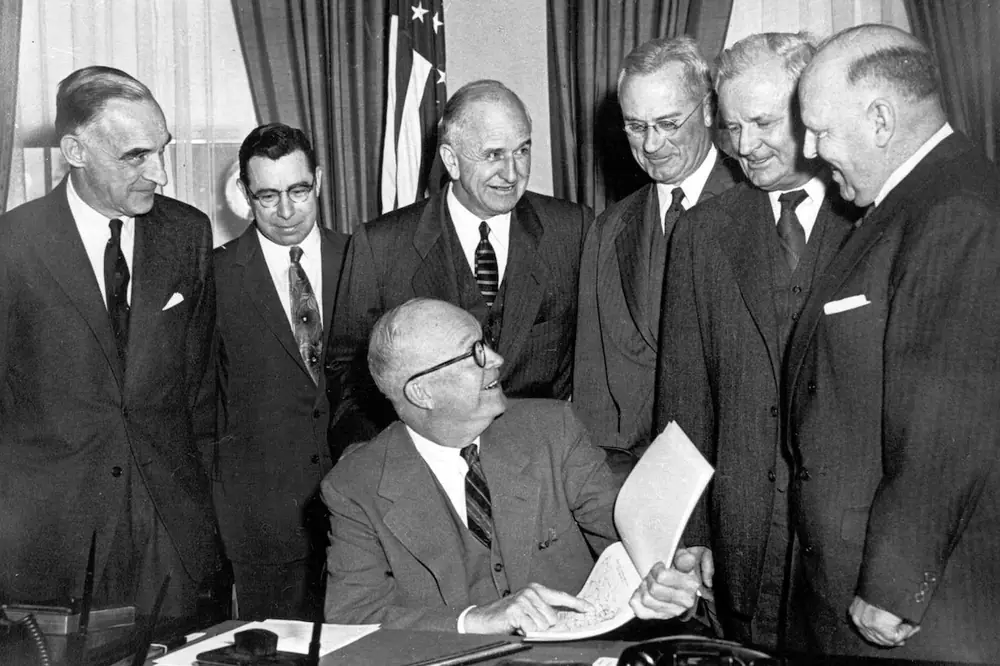

Initiated by the Federal-Aid Highway Act of 1956 under President Dwight D. Eisenhower, the Interstate Highway System is widely considered one of the greatest public works projects in the first 250 years of United States history. For the heavy civil construction industry, it represented an unprecedented era of standardized road building, requiring all routes to be freeways with at least four lanes, controlled access, and no at-grade crossings.
“Our highways badly need modernization and expansion to accommodate today’s vastly increased motor traffic,” Eisenhower said when signing the legislation.
Seventy years later, that statement rings just as true.
Authorized at an initial $25 billion — equivalent to $300 billion today — for the construction of 41,000 miles over a 10-year period, the massive construction undertaking ultimately spanned 35 years and cost approximately $114 billion, or $937 billion in 2026 dollars.
Today, the sprawling network spans 48,890 miles and serves as the main arteries for much of the U.S., generating an estimated economic benefit of $65 billion annually considering fuel savings, road safety improvements, and congestion reduction, according to research by the Washington, D.C.-based nonprofit TRIP.

| Your local Sennebogen LLC dealer |
|---|
| Brandeis Machinery |
“For the past 70 years, the Interstate Highway System has served as the ultimate economic engine for Michigan and the entire country,” said Rob Coppersmith, Executive Vice President of the Michigan Infrastructure and Transportation Association (MITA). “It hasn’t just efficiently moved freight and daily commuters; it has successfully connected once-isolated communities, fueled unprecedented regional growth, and provided a safe, reliable foundation for generations of American prosperity.”
Celebrating its 70th birthday this year, the Interstate Highway System is showing severe signs of aging, presenting an immense challenge for heavy civil contractors, engineers, and those who support the industry. The U.S. Department of Transportation estimates a staggering $196 billion backlog in necessary improvements nationwide, which includes $58 billion needed for pavements, $65 billion for bridges, and $73 billion for system expansion and enhancements.
In Michigan, intense utilization and a harsh environment have heavily strained this aging network. Currently, 40 percent of all major locally and state-maintained roads in Michigan are in poor or mediocre condition. Driving on these rough roads costs the average Michigan driver $772 annually in additional vehicle operating costs — accelerated vehicle depreciation, additional repairs, increased fuel consumption, and tire wear — draining $6 billion statewide each year.
Michigan’s bridges are equally fatigued. Eleven percent of the state’s bridges (20 feet or longer) are rated in poor or structurally deficient condition, representing the ninth highest share in the nation. Fair bridges make up 56 percent of the inventory, while only 33 percent are rated in good condition.

| Your local Case Construction Equipment Inc dealer |
|---|
| Burris Equipment |
Reflecting the advanced age of the network, 41 percent of Michigan’s bridges were built in 1969 or earlier. The Michigan Department of Transportation (MDOT) estimates that two-thirds of the bridges under its authority have far exceeded their original design lives. Without additional funding, more than 100 trunkline bridges may close to traffic by 2035, severely impacting approximately 1.8 million daily drivers.
Traffic congestion on major routes also chokes commuting and commerce, costing Michigan drivers $5.9 billion in 2024 alone in the form of lost time and wasted fuel. While vehicle miles of travel (VMT) dropped by 54 percent in April 2020 during the pandemic, traffic has rebounded significantly, with VMT in early 2025 running 1 percent higher than the same period in 2024.
This heavy traffic flow is accompanied by a severe safety crisis. From 2019 to 2024, 6,474 people were killed in traffic crashes in Michigan, averaging 1,294 fatalities each year. While Michigan’s 2024 traffic fatality rate of 1.07 per 100 million miles was lower than the national average of 1.2, fatalities on rural non-interstate roads are significantly higher at 1.53. Over the last decade, overall traffic fatalities in Michigan rose 16 percent. Crashes in 2024 imposed $16.1 billion in economic costs, with roadway features contributing to approximately one-third of all fatal crashes.
To address these deficiencies, the Transportation Research Board has indicated that annual national highway investments must more than double to $57 billion annually over the next 20 years. In Michigan, the state’s 21st Century Infrastructure Commission estimated that the state needs to invest an additional $2.2 billion in roads and bridges annually to meet quality goals. However, the state faces a massive funding cliff.

| Your local Takeuchi Mfg Ltd dealer |
|---|
| Brandeis Machinery |
While the federal Infrastructure Investment and Jobs Act provided $7.3 billion over five years (a 29 percent annual boost), and the state’s 2019 Rebuilding Michigan Program (RBMP) authorized $3.5 billion in bond sales, those programs are concluding. The Growing Michigan Together Council noted in 2023 that the state still faces an annual transportation funding gap of $3.9 billion. As the RBMP bond funding ends, MDOT’s annual funding for road reconstruction is projected to drop sharply from $495 million to $222 million, supporting roughly 2,800 fewer construction jobs in 2026 than in 2025.
Compounding the problem, the purchasing power of the state’s 31-cents-per-gallon fuel tax has been severely eroded by inflation. The national highway construction cost index rose 54 percent from early 2022 through third quarter 2024.
Modernizing the network will require “right-sizing” the system, adding necessary lane capacity, and upgrading interchanges to manage commercial freight. In 2022, Michigan’s freight system moved 756 million tons of goods valued at $1.1 trillion — the sixth largest freight value in the country. Looking ahead, freight moved by trucks in Michigan is expected to increase 56 percent by weight and 80 percent by value by 2050, placing unprecedented pressure on aging corridors where combination trucks already make up 12 percent of total interstate travel.
“The Interstate Highway System is more than concrete and steel; it is a living symbol of American ambition, ingenuity, and unity,” TRIP Executive Director Dave Kearby said. “Built by a generation that believed in creating something bigger than themselves, these roads connected families, fueled commerce, strengthened national defense, and opened the country to endless opportunities. As we reflect on its 70th anniversary and America’s 250th, rebuilding this system is not just an investment in infrastructure; it is a chance to honor that legacy and ensure future generations inherit an America that still believes in building boldly for tomorrow.”

| Your local Leica Geosystems Inc dealer |
|---|
| Laser Specialist inc |
For more information and access to all TRIP reports, go to www.tripnet.org.