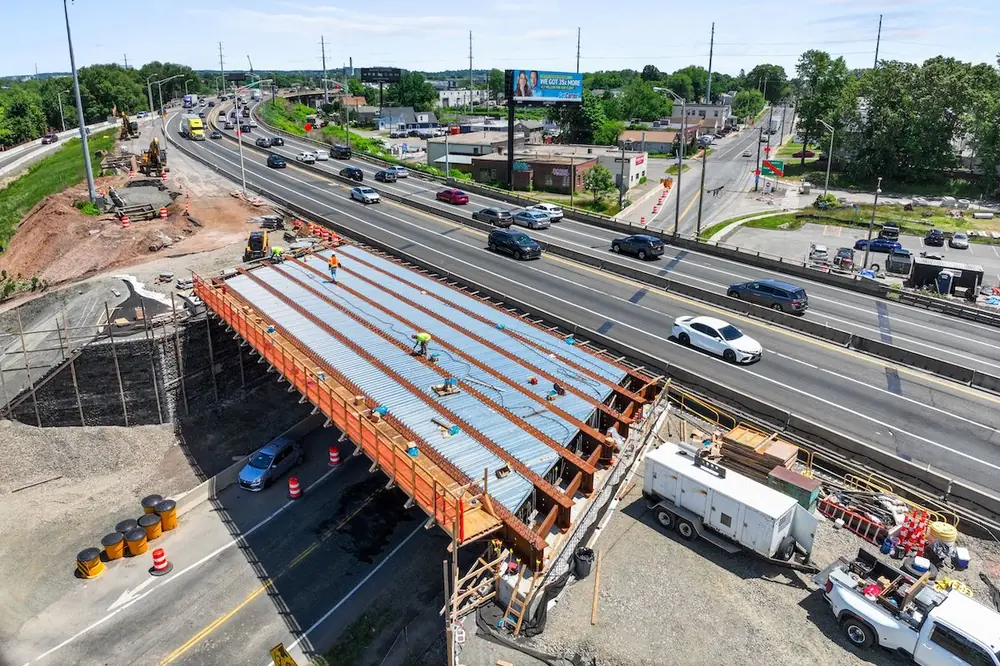
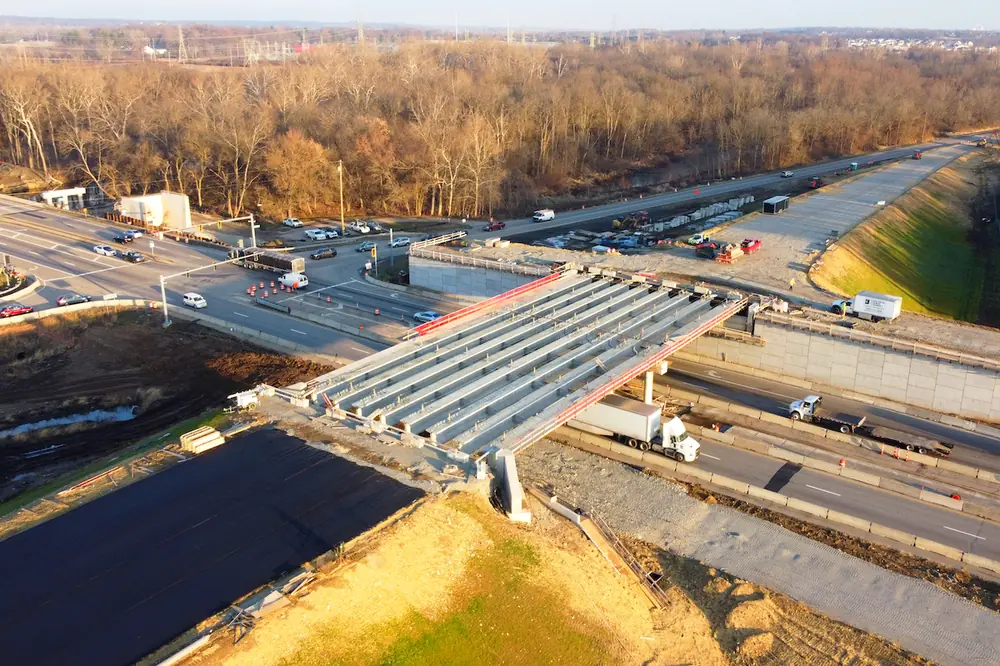
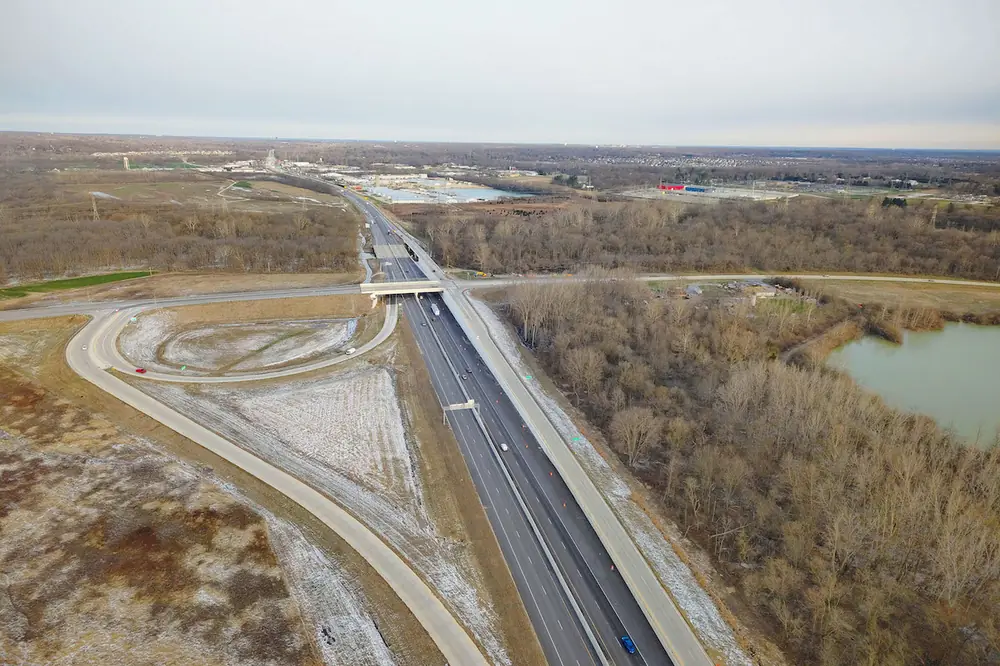
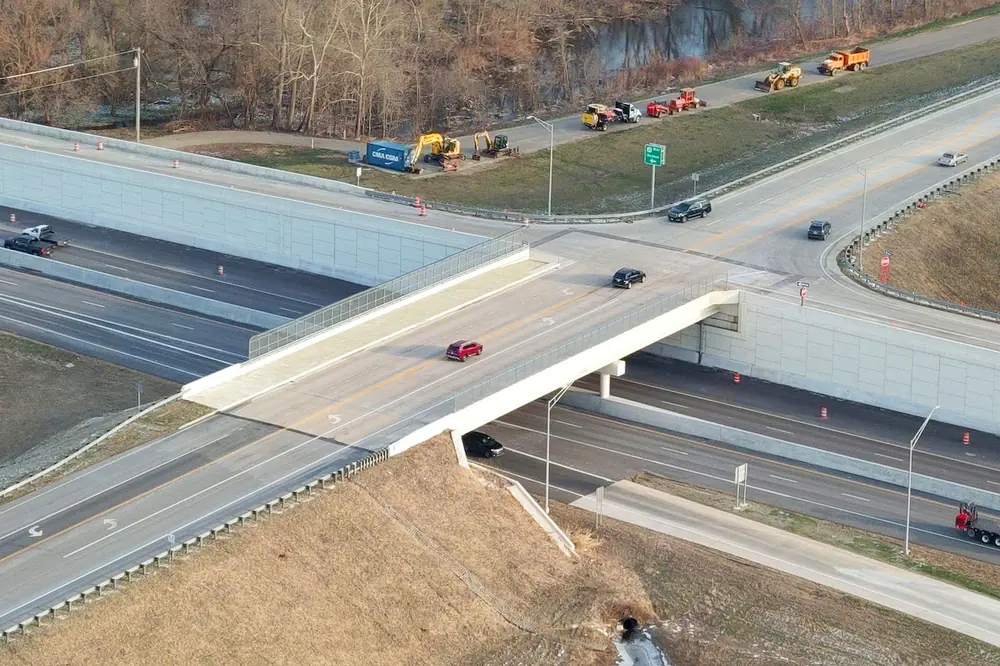

After nearly two decades of planning, the Ohio Department of Transportation (ODOT) is delivering a major upgrade to one of Greene County’s most problematic intersections. The $40 million U.S. 35/Valley-Trebein project replaces a high-crash, at-grade crossing with a modern interchange and overpass, while converting 1.28 miles of U.S. 35 into a limited-access highway.
“The project was developed to ease congestion, enhance traffic flow, and improve safety along the corridor between Xenia and Beavercreek in Greene County, and it is the final component of the long-range project to upgrade U.S. 35 between I-75 at Dayton and I-64 at Charleston, West Virginia,” said Kathleen Fuller, CPM, Public Information Officer for ODOT District 8.
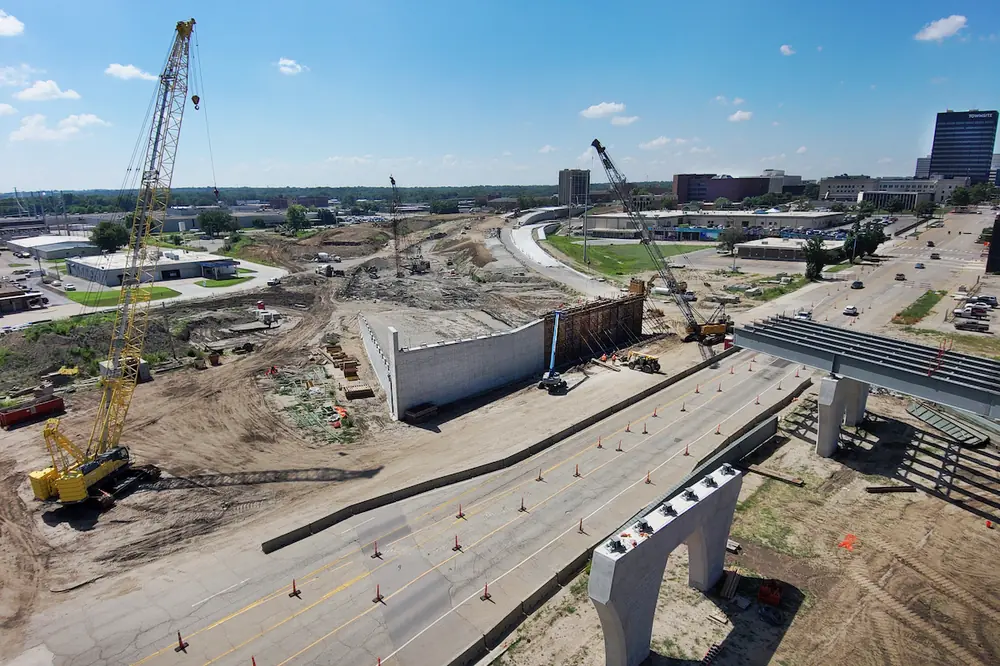
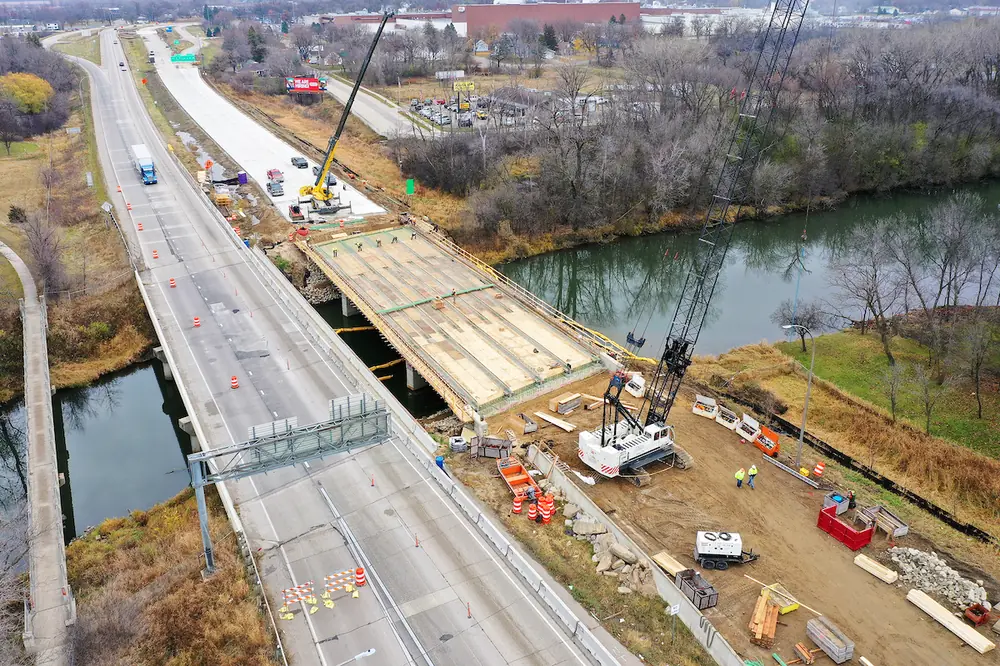
Rachel Bates, Project Manager for Sidney, Ohio-based Eagle Bridge Co., which served as the general contractor for the project, noted the primary scope included constructing new embankments to elevate the existing roadway and installing retaining walls to support the increased grade.
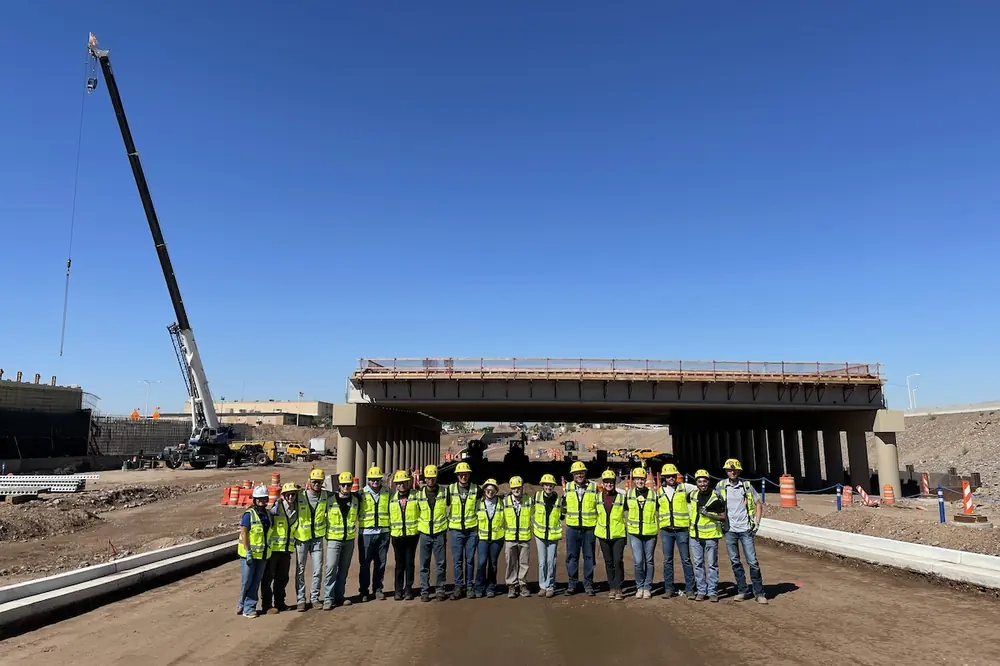
“The project also involved building a new bridge carrying Trebein/Valley Road over U.S. 35, a new ramp from Trebein Road to U.S. 35 eastbound, and three additional ramps supported by embankments and retaining walls,” she said. “Once the grade separation and ramp system were established, U.S. 35 was fully reconstructed within the project limits. This included removal of existing pavement, regrading, placement of new aggregate base, and installation of new asphalt on both eastbound and westbound lanes, along with select bridge rehabilitation work.”
In the 2017 Highway Safety Improvement Plan, the roads at the intersection of U.S. 35 with Valley-Trebein ranked 105th in the state for suburban intersections for crashes from 2013 to 2017. Although improvements such as additional signage and flashing signage were made at the intersection to address concerns, safety issues persisted, primarily due to congestion on this heavily traveled route.

| Your local Case Construction Equipment Inc dealer |
|---|
| Burris Equipment |
Fuller explained that although identified years earlier, the intersection improvement project was initiated in 2007 when ODOT authorized a design consultant and initiated the feasibility study. The project advanced through the various stages of development, with a series of feasibility and environmental studies completed between 2009 and 2015, and engineering, detailed design, environmental, and right of way acquisition continuing through 2022.
“Along with state and federal funding from the Transportation Review Advisory Council [TRAC], local funding commitments have totaled 20 percent of the construction costs,” Fuller said. “In addition, Beavercreek Township negotiated a land donation in the amount of $820,000 to move the project forward.”
The Greene County Engineer’s Office and Beavercreek Township administration were instrumental throughout the stages of project development, from initiation to the start of construction.
“The funding commitments from our local partners, specifically the $820,000 land donation during the earliest stages of development, enabled the project to be advanced into the design phase and expedited some of the right of way acquisition,” Fuller said. “The additional 20 percent commitment secured by the local government enabled the project to be supported through construction.”

| Your local LeeBoy dealer |
|---|
| Brandeis Machinery |
When scoping and developing preliminary plans for a new construction project such as this, ODOT looks to develop a project that will provide the greatest benefit while minimizing the overall impact to the environment, property owners, motorists, and general public. It also must consider fiscal constraints and work within budgetary allocations.
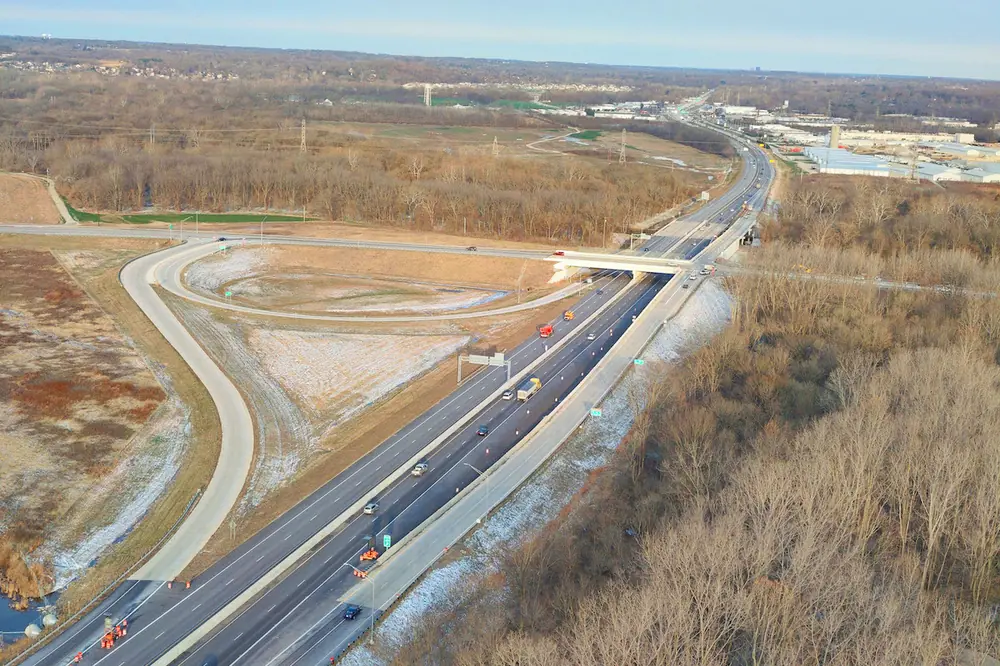
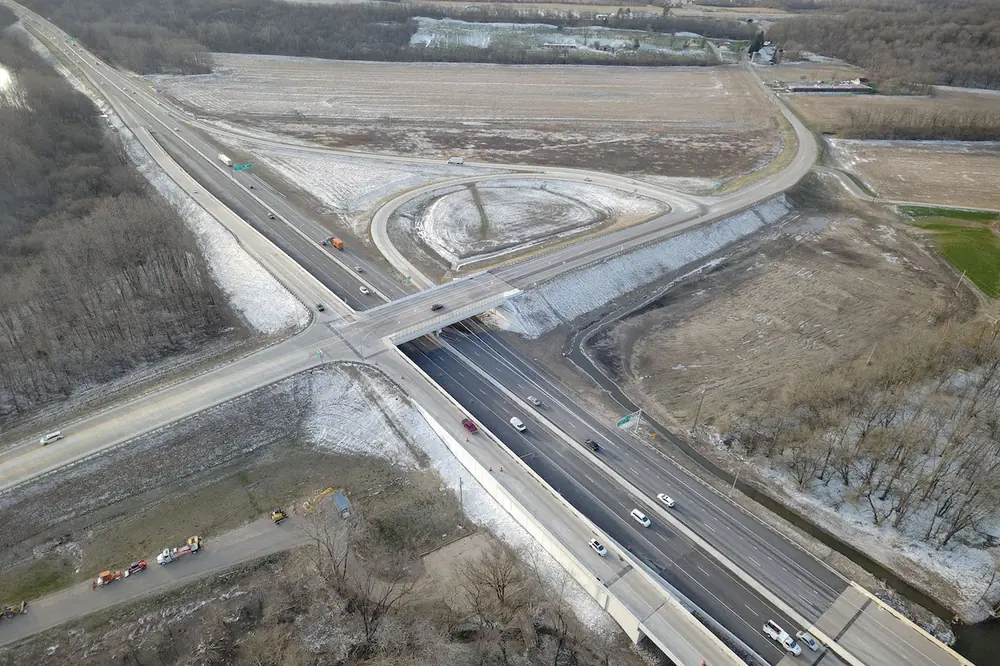
For this project, there were three design alternatives furthered for consideration: Alternative 1A, which provided a tight diamond interchange at the Valley-Trebein Road and a loop ramp in the southwest quadrant; Alternative 2A, which provided a tight diamond ramp configuration, north of U.S. 35, and a conventional diamond interchange configuration south of U.S. 35 at Valley-Trebein Road; and Alternative 5B, which provided a tight diamond interchange at the intersection like 1A, but with a loop ramp in the southeast quadrant. Ultimately, Alternative 5B was selected, as it limited the impacts to the nearby Little Miami River that is located in the southwest quadrant.
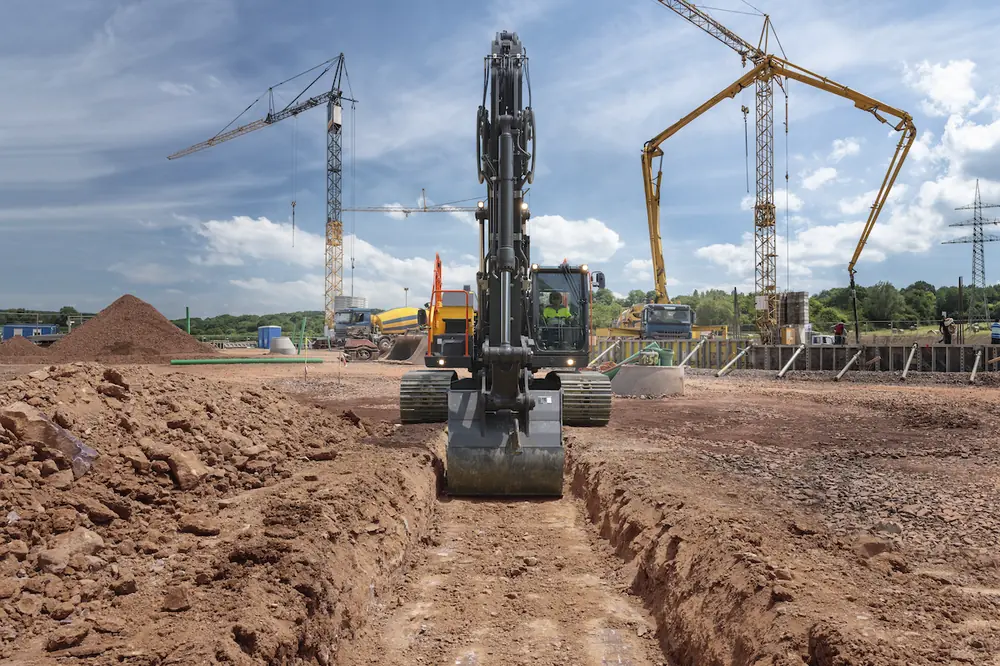
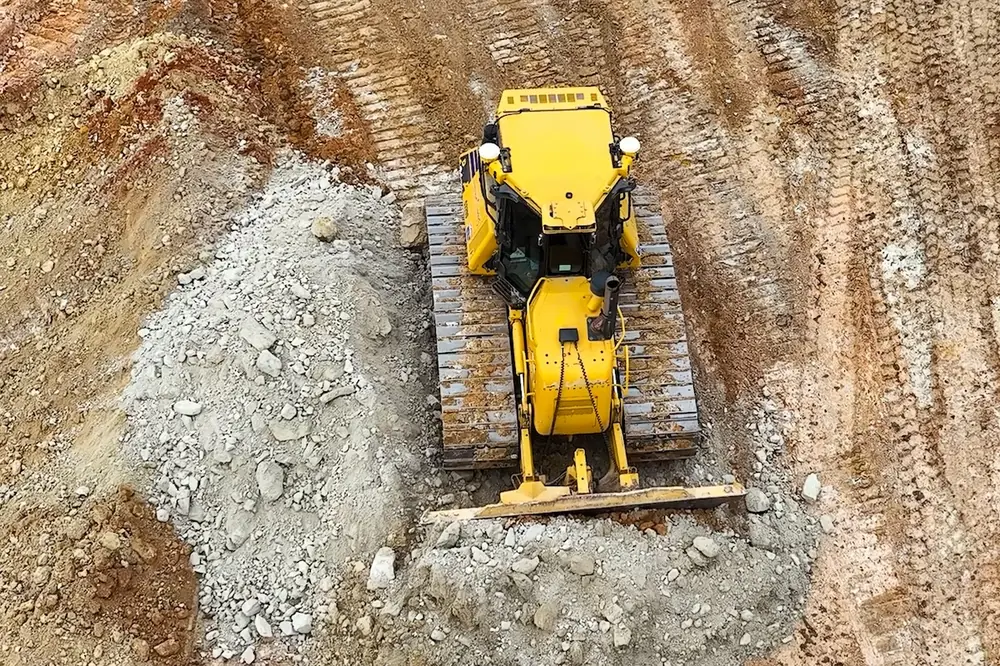
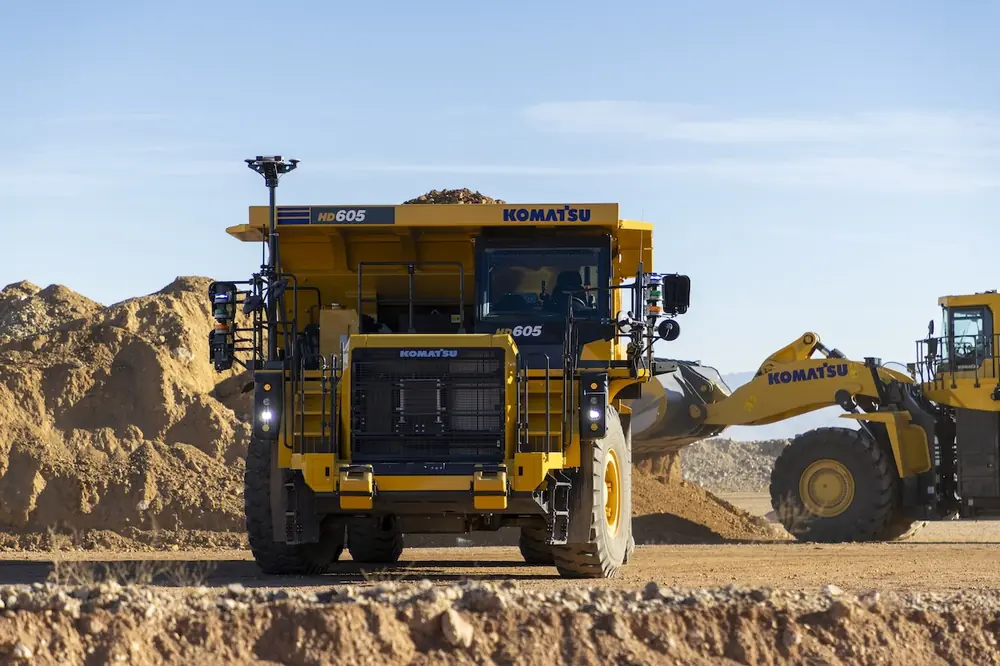
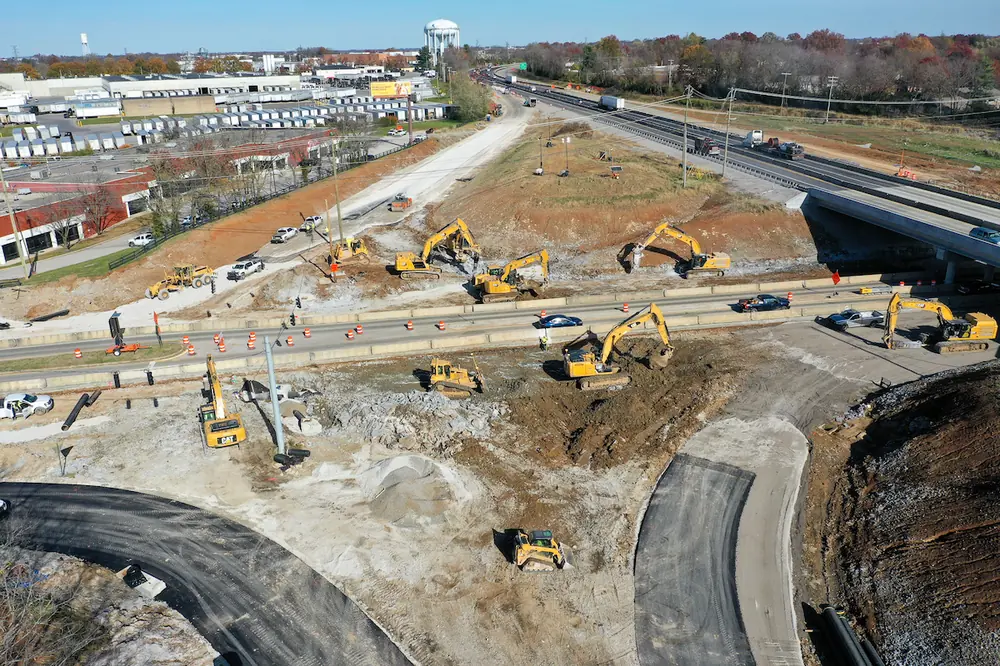
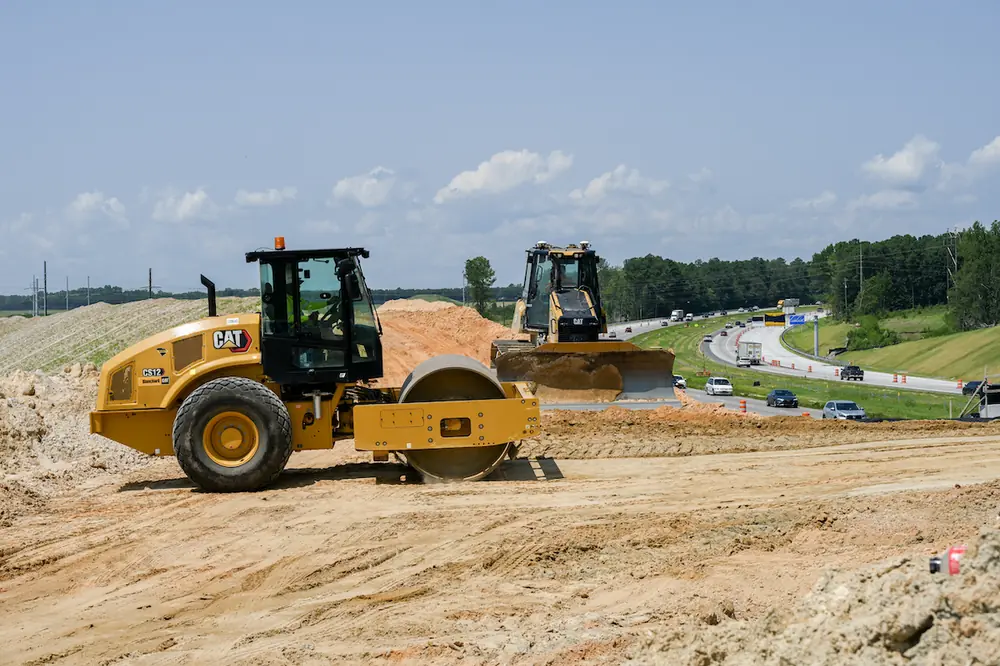
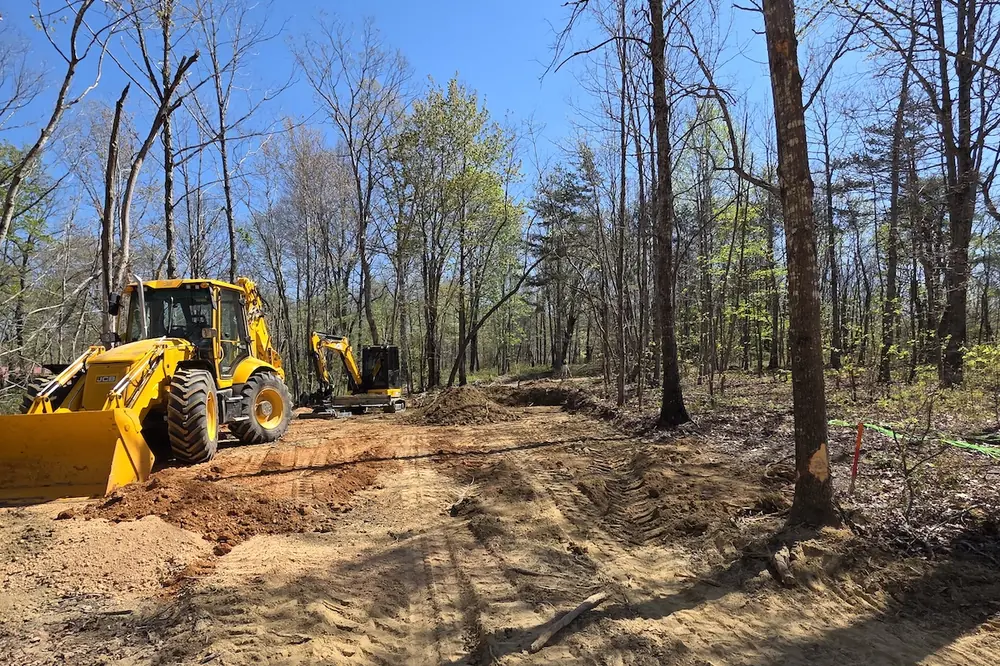
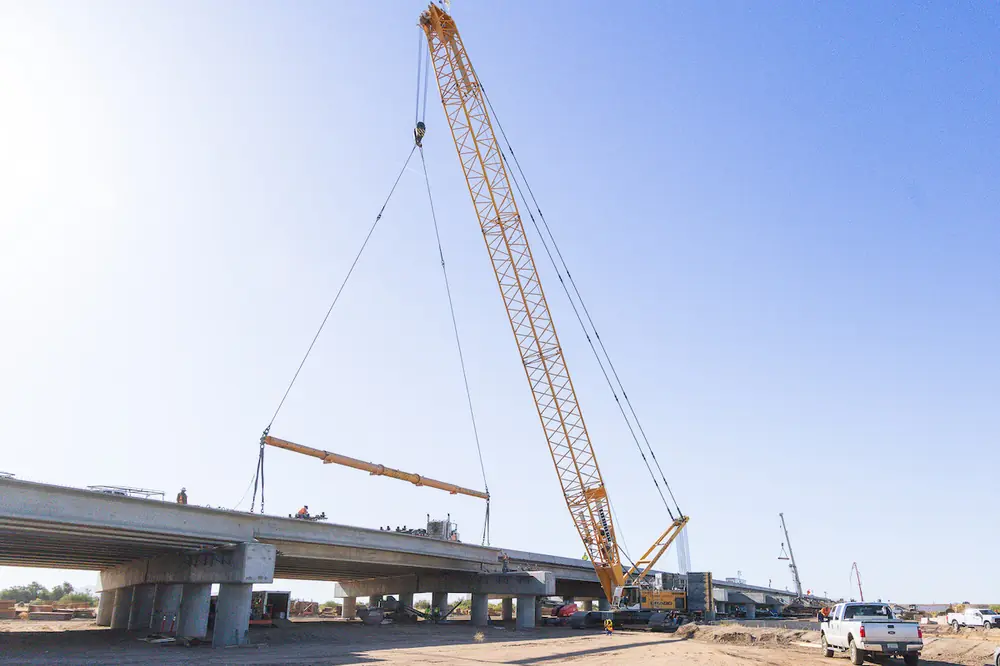
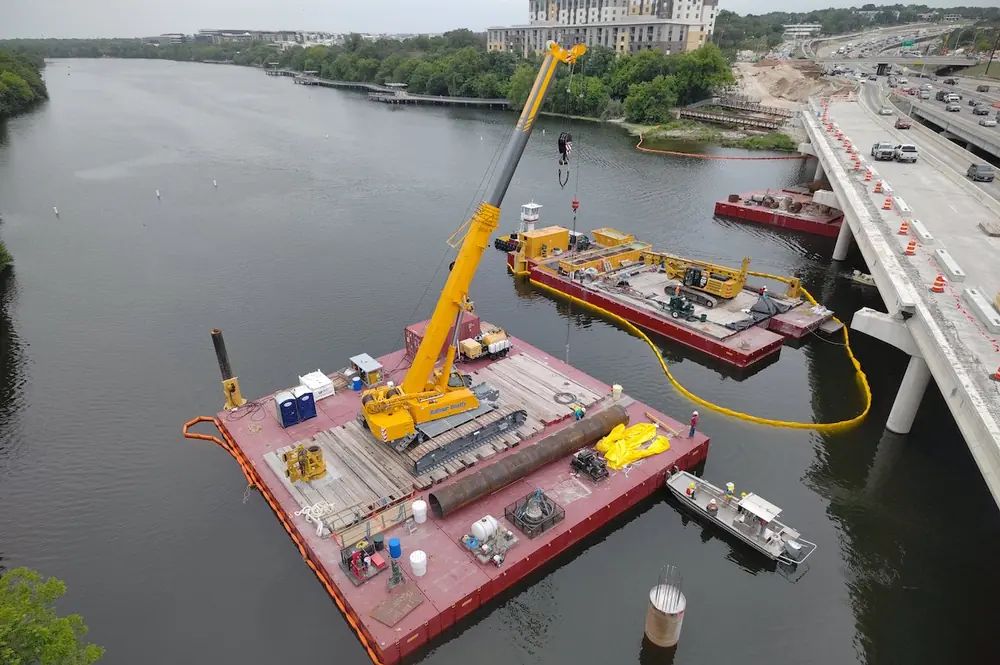
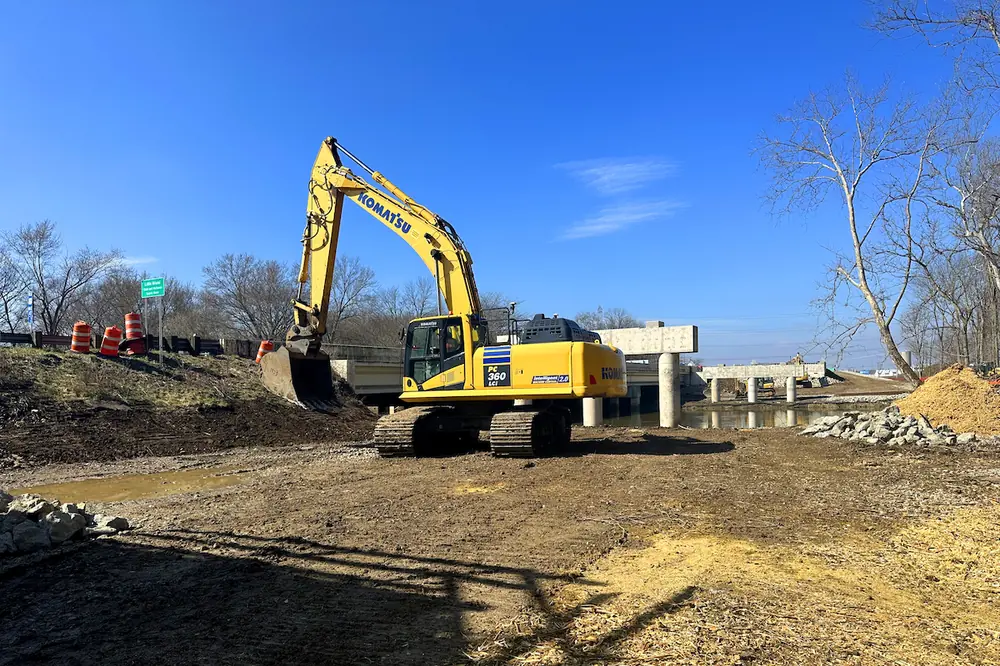
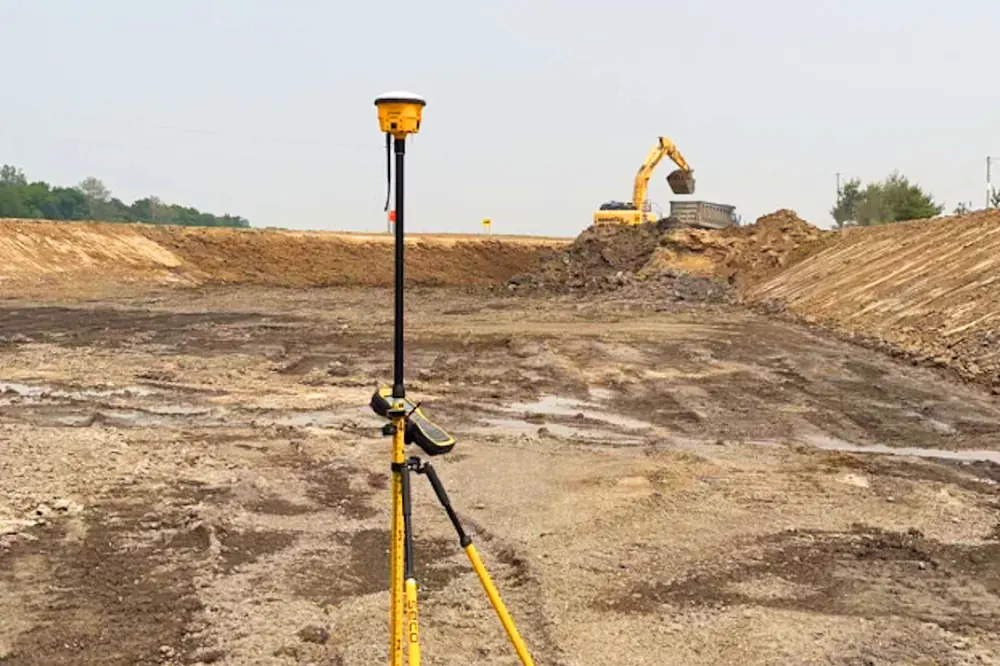
“The project utilized a wide range of heavy equipment, including track excavators, bulldozers, cranes, pile driving equipment, rollers, off-road and on-road dump trucks, skid steers, and specialized equipment such as a Movax system for pile installation,” Bates said.
Upgrading U.S. 35 to a limited-access facility included eliminating the at-grade, signal-controlled intersection and replacing it with an interchange, bridge construction (over U.S. 35 and over the Little Miami River), retaining wall construction, and upgrades to Valley and Trebein roads on either side of the former at-grade intersection.

| Your local New Holland dealer |
|---|
| Burris Equipment |
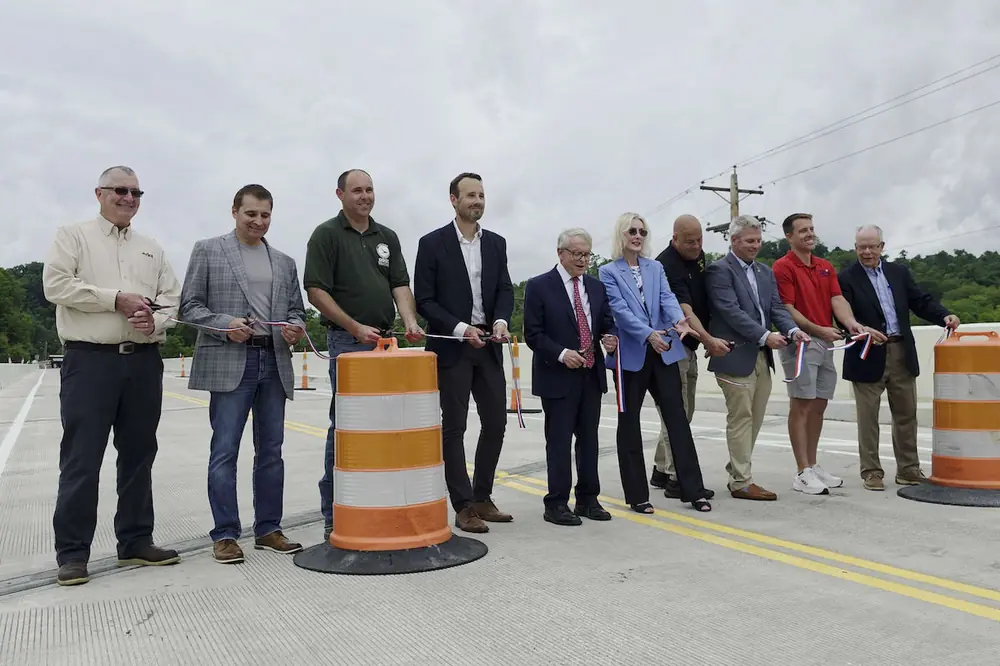
“The interchange has been opened to traffic, so motorists now access Valley-Trebein roads via ramps, while thru-traffic [U.S. 35] motorists can continue on the four-lane route without stopping at a signalized intersection,” Fuller said.
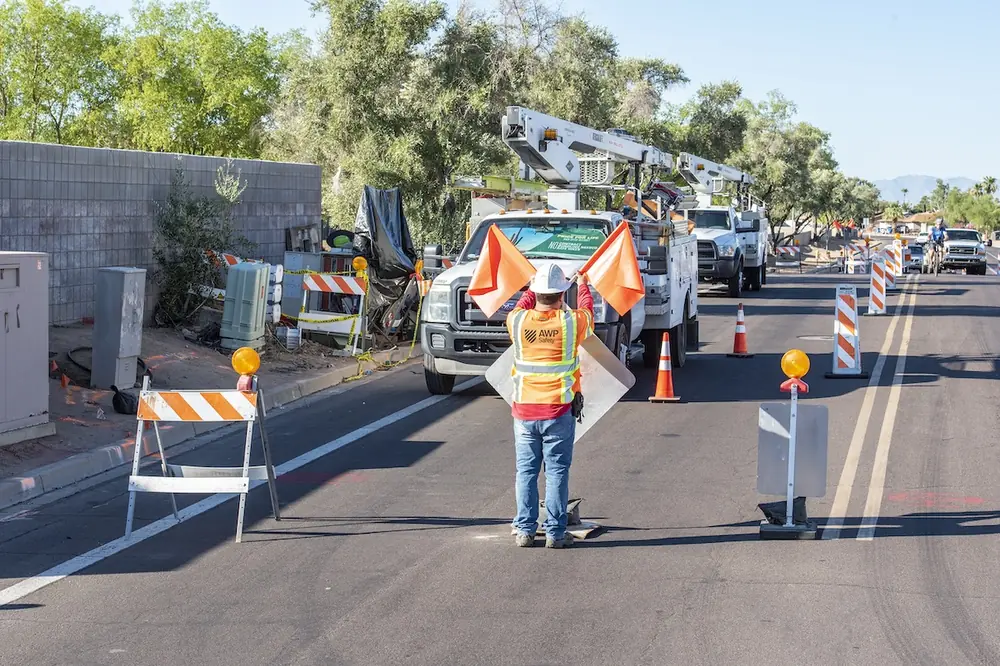
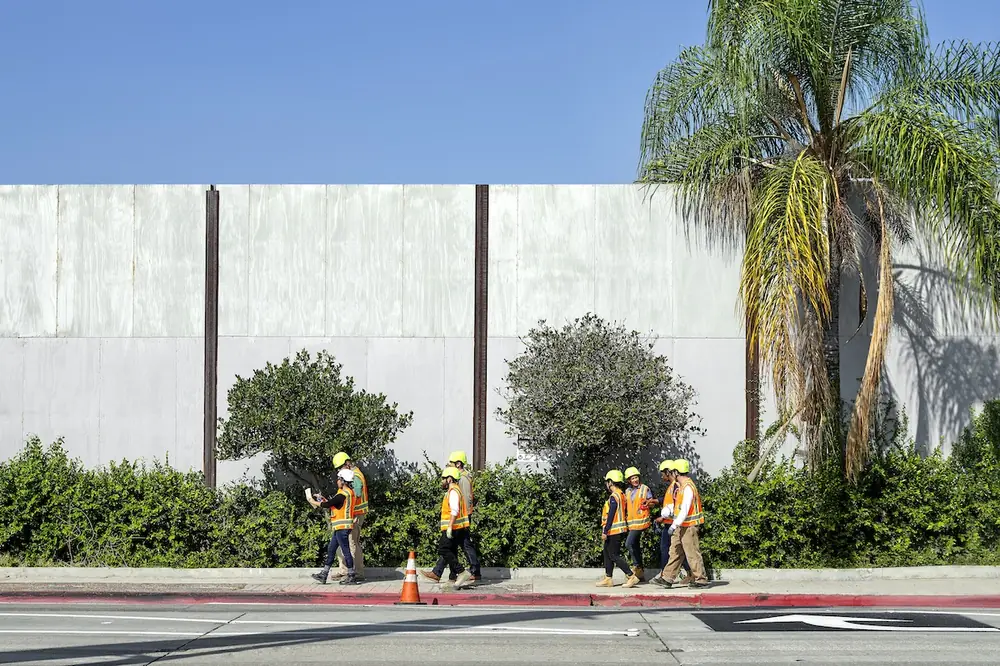
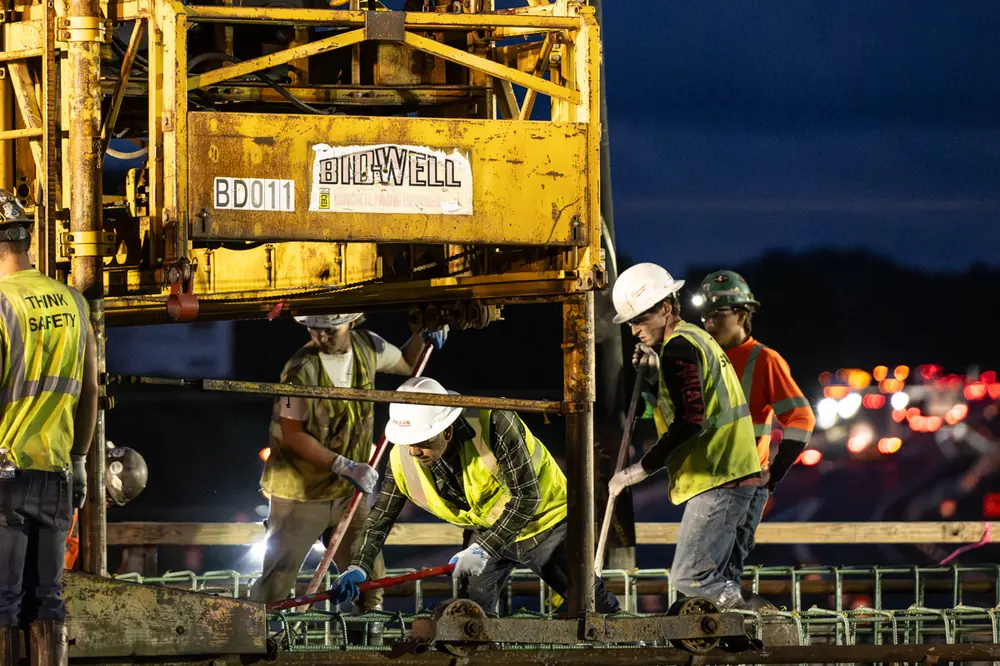
Safety has been a top priority throughout the project. Portable concrete barrier was used extensively to separate workers from active traffic and protect motorists from work zones and elevation changes.
The project also utilized electronic Work Zone Speed Limit signs, which allow speed limits to be adjusted dynamically during active work periods. Standard Maintenance of Traffic (MOT) measures — including signage, channelizing devices, and barrels — were also implemented in accordance with project plans.
One of the most significant challenges early in the project was weather, which delayed embankment construction and retaining wall installation.

| Your local Bobcat dealer |
|---|
| O'Leary's Contractors Equipment & Supply |
“These activities were critical to the overall sequence, and those delays created a cascading effect on subsequent phases of work,” Bates said. “Despite these challenges, the phased construction progressed well. Adjustments were made as needed to maintain safe and efficient access for construction traffic throughout the project.”
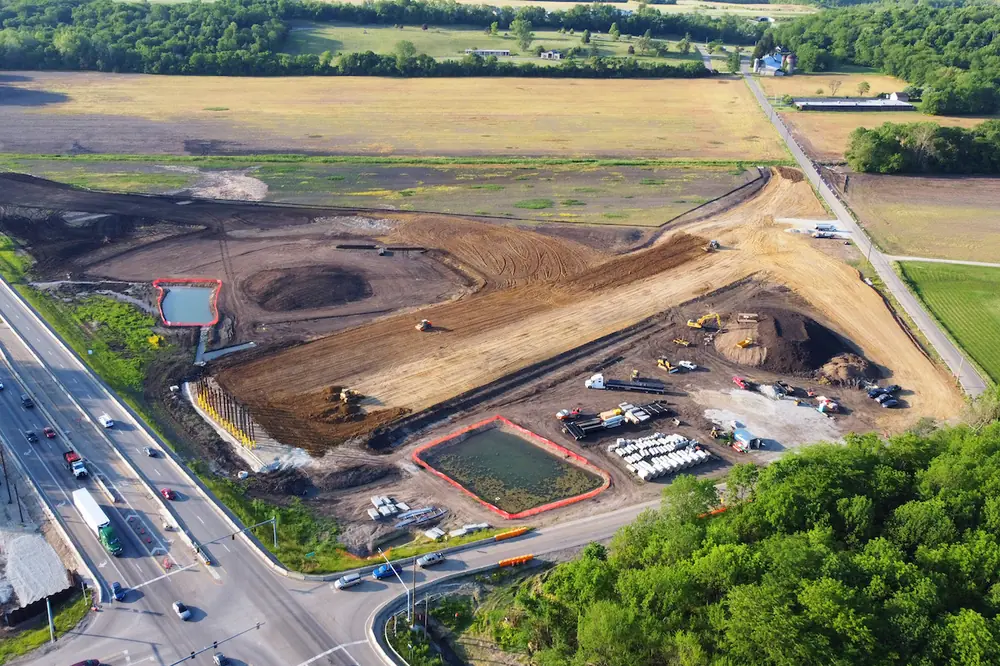
The new overpass required significant embankment construction to elevate the roadway and eliminate the at-grade crossing on U.S. 35. Bates noted one of the primary challenges was sourcing sufficient suitable material to build these embankments.
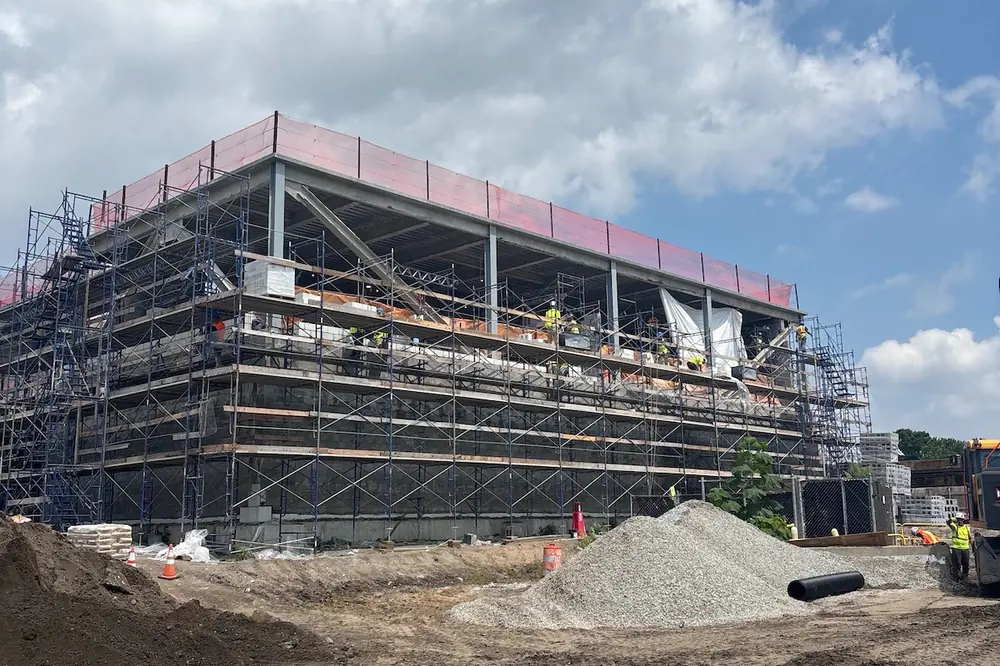
“Additionally, the retaining walls utilize precast concrete panels manufactured off site,” she said. “There are a limited number of approved suppliers, and coordinating production and delivery — particularly with weather impacts — required careful planning. Despite these challenges, the team successfully managed procurement and installation without major issues.”
The Eagle Bridge Co. team also encountered unforeseen utility conflicts, including lines that were installed after the original design was completed and therefore were not reflected in the plans. This required additional coordination and adjustments in the field to accommodate those utilities.

| Your local Atlas Copco CMT USA dealer |
|---|
| Brandeis Machinery |
“As with many large, multi-year projects, there were some plan discrepancies — likely due to the extended design timeline and changes within the design team,” Bates said. “However, we worked closely with the Ohio Department of Transportation and the design team to identify and address issues early, taking a proactive approach to minimize impacts to the project schedule and overall progress.”
Construction staging was largely defined in the ODOT plans and required a carefully sequenced approach. Initial phases focused on constructing embankments, ramps, and temporary pavement to support future traffic shifts.
“Traffic was first moved onto the new bridge over U.S. 35 to allow continued work on ramps and mainline improvements,” Bates said. “At one stage, traffic was shifted onto temporary alignments and crossovers, allowing reconstruction of U.S. 35 eastbound while maintaining traffic flow in both directions. Once eastbound lanes were completed, traffic was shifted again to allow work on westbound lanes.”
This phased approach ensured that traffic remained operational throughout construction while allowing major components of the interchange to be built safely and efficiently.

| Your local Trimble Construction Division dealer |
|---|
| SITECH Mid-South |
| SITECH Midway |
| SITECH Indiana |
| SITECH Mid-America |
| SITECH Ohio |
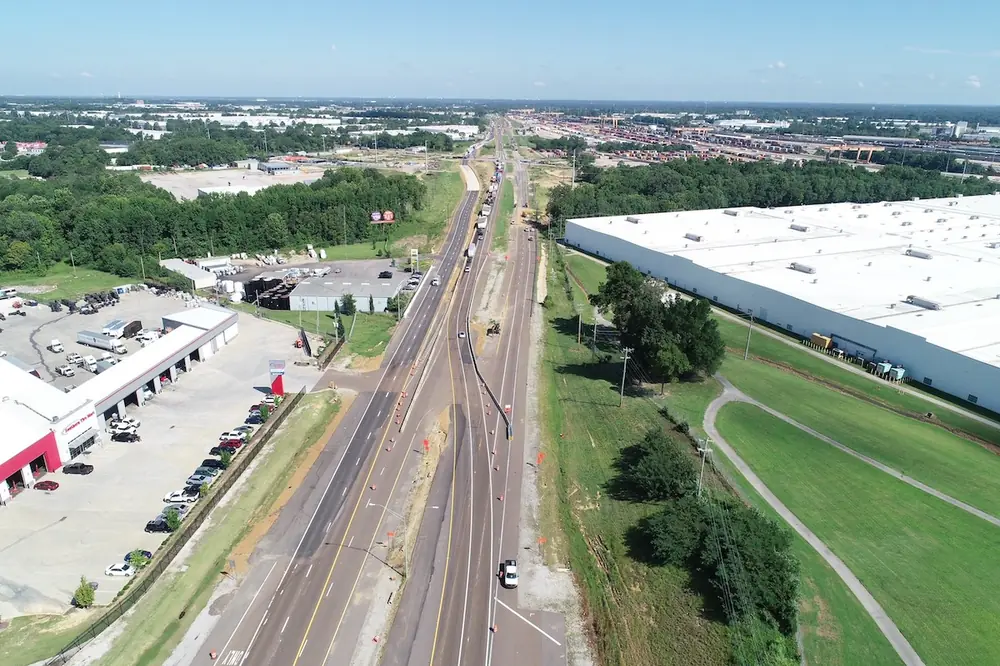
“Most of the impacts to traffic on U.S. 35 have been limited to single-lane closures during the evening and overnight hours. However, there were some overnight, full closures in either direction for various phases of work that included beam setting for the new overpass bridge and establishing the work zones on U.S. 35, as well as on Valley and Trebein roads,” Fuller said. “Additionally, full closures on both Valley and Trebein roads were necessary for storm sewer installation. Otherwise, traffic has been maintained on these routes with flaggers during daytime hours of operation.”
The Greene County Engineer’s Office helped communicate major traffic impacts through local outreach and social media, ensuring that both regional and local traffic were informed.
The project operates under a Storm Water Pollution Prevention Plan, which is developed and monitored by a third-party consultant and approved by ODOT.
“Erosion and sediment control measures are installed, tracked, and regularly inspected throughout construction,” Bates said. “Additionally, the asphalt used on the project incorporates recycled materials in base courses where permitted, helping to reduce material consumption and environmental impact.”

| Your local Gomaco dealer |
|---|
| Fabick CAT/MO |
As with any new construction project, Fuller noted there were numerous environmental issues that had to be taken into consideration for the project, including right of way, utility relocations, and impacts to residents/property owners.
“However, much of this was mitigated through the design of the project, which minimized the overall impact to these components, specifically to the Little Miami River,” she said.
Certain areas of unsuitable soil were encountered during construction. In those locations, undercutting operations were required, which involved removing poor soils, installing geotextile fabric, and replacing the material with engineered stone.
“While undercutting is typically a minor or contingency item, this project required significantly more than originally anticipated, and the team adapted accordingly to maintain proper subgrade stability,” Bates said.

| Your local Wirtgen America dealer |
|---|
| Brandeis Machinery |
Over the years, there were growing capacity issues with the former intersection that added to safety concerns. Once the project is complete, there will be plenty of safety improvements motorists can expect compared with the previous intersection layout.
“During peak times, vehicles back up on U.S. 35 in both directions, as well as on the county road [Trebein Road] to the north,” Fuller said. “By eliminating the signalized, at-grade intersection, we are reducing congestion and improving the flow of traffic for those traveling on U.S. 35 and Valley and Trebein roads.”
With all major milestones having been finished as of this writing, the project is in the final phase of construction and is on track to be completed this spring. The remaining work primarily includes placement of the final surface asphalt on westbound U.S. 35, along with mill and fill operations at project tie-in points on both eastbound and westbound lanes.
“Additional work includes completion of lighting systems and overhead sign installations,” Bates said. “Final grading, seeding, and site restoration will also be completed as part of project closeout. Drivers will notice smoother pavement surfaces, finalized traffic patterns, and completion of permanent roadway features as the project nears completion.”

| Your local Deere & Co dealer |
|---|
| West Side Tractor Sales Co |
- Owner: Ohio Department of Transportation
- Contractor: Eagle Bridge Co., Sidney, Ohio
- Designer: Jacobs, Dallas, Texas
- Subcontractors: A&A Safety Inc., Security Fence Group, Black Swamp Steel Inc., Kokosing Construction Company Inc., John R Jurgensen Company, Bunn Enterprises Inc., Faber Enterprises Inc., Phenix Stabilization LLC, Dynamic Surface Applications Ltd., J-Milling Inc., Heavy Highway Construction Company LLC, The Ruhlin Company, IVS Hydro-Demolition Services, 360 Construction Company Inc., DOT Diamond Core Drilling Inc., Complete Clearing Inc., Riley Contracting Inc.