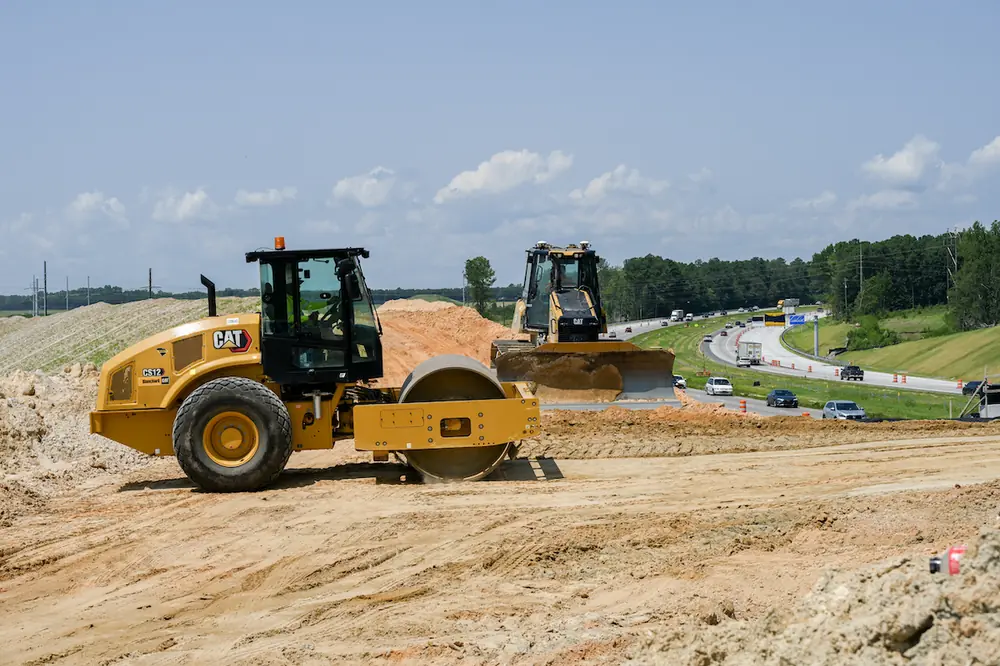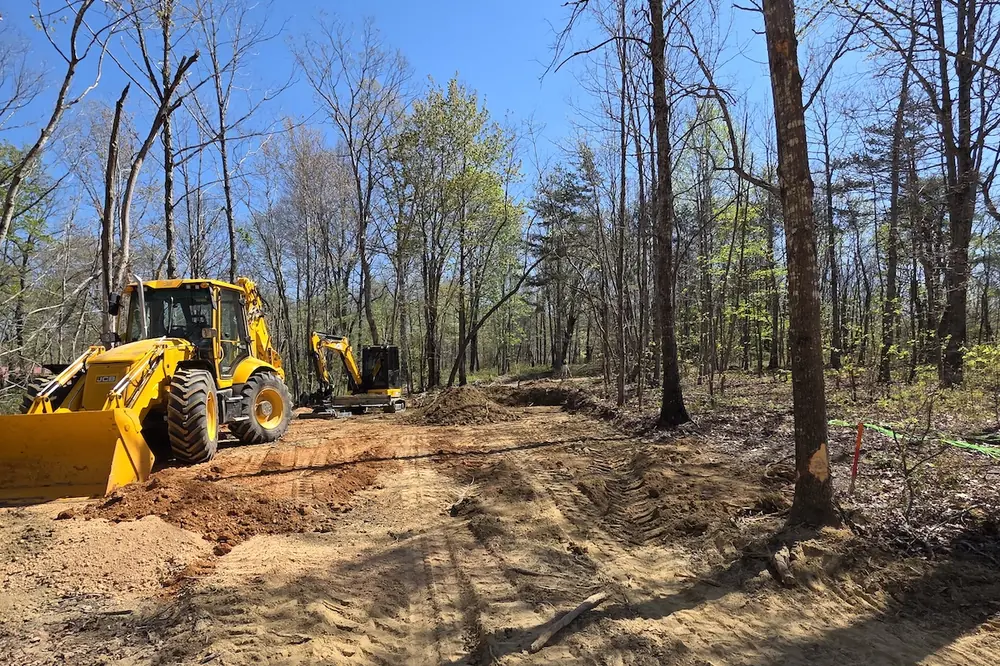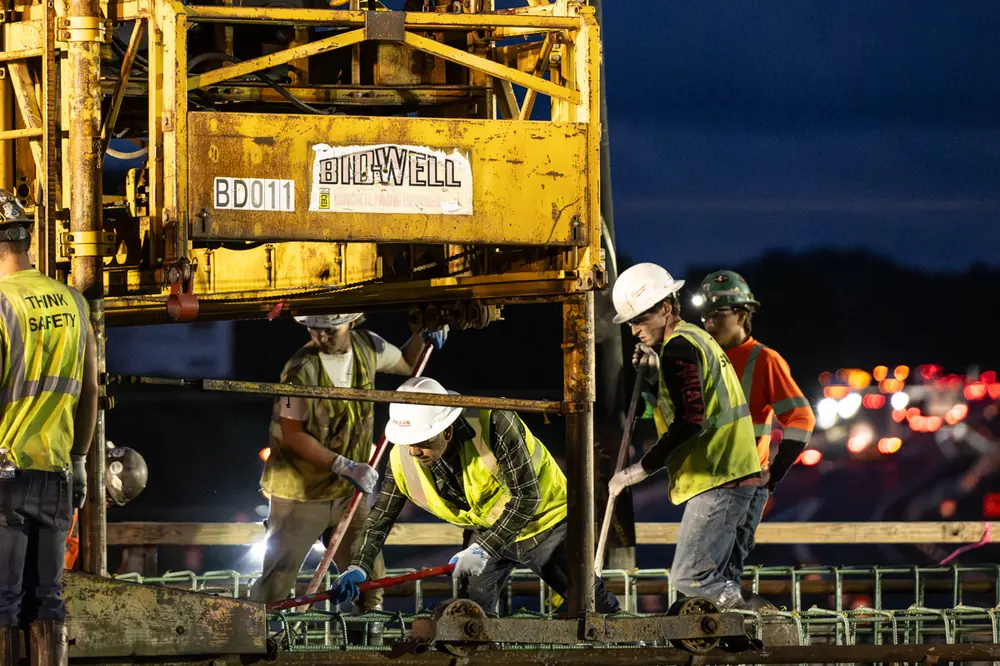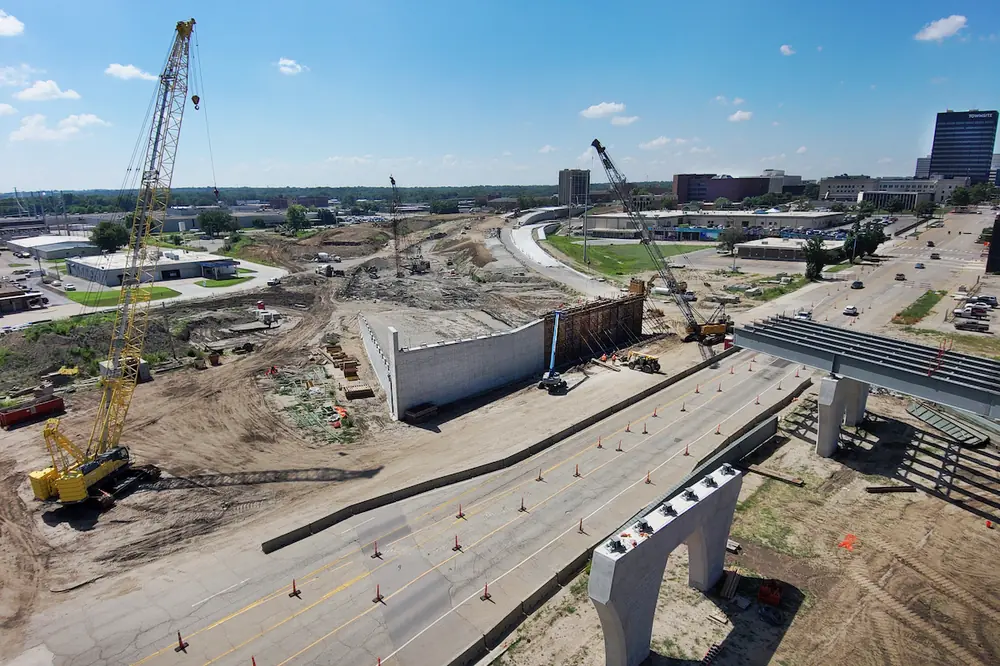
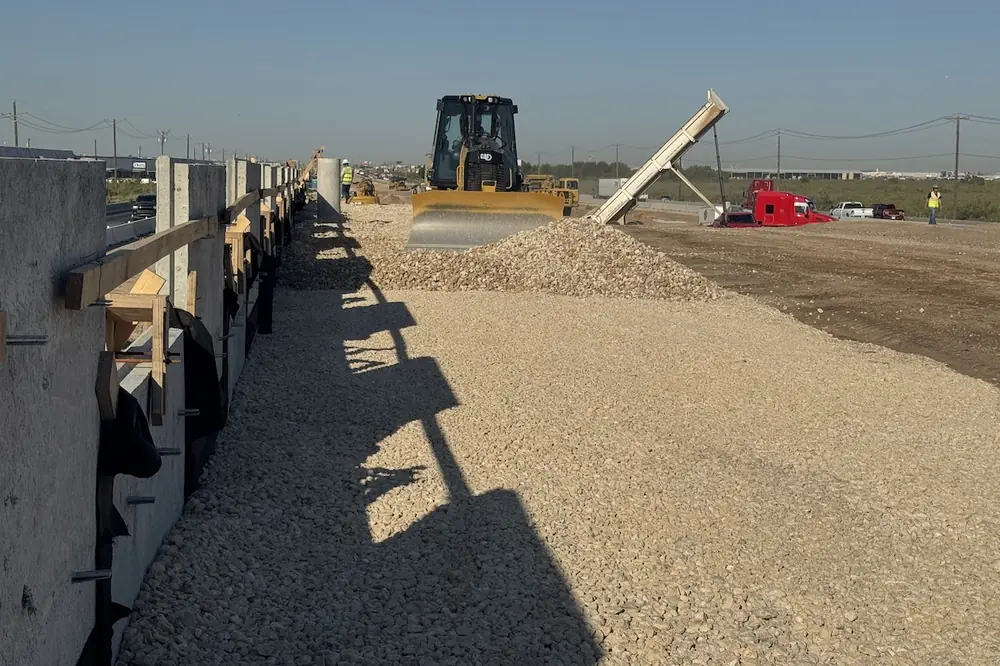

While Texas has a diverse economy, the energy sector remains its driving force — shaping industries across the state, including construction. In Odessa, the Texas Department of Transportation’s (TxDOT) I-20 improvements project is taking place along a key energy corridor, with Sundt Construction serving as the general contractor.
Nearly 3,000 miles long and 250 miles wide, the Permian Basin covers west Texas and southeastern New Mexico. The oil-and-gas-producing area includes more than 7,000 fields, according to the Railroad Commission of Texas. The Odessa-Midland corridor is in the middle of the Permian Basin.
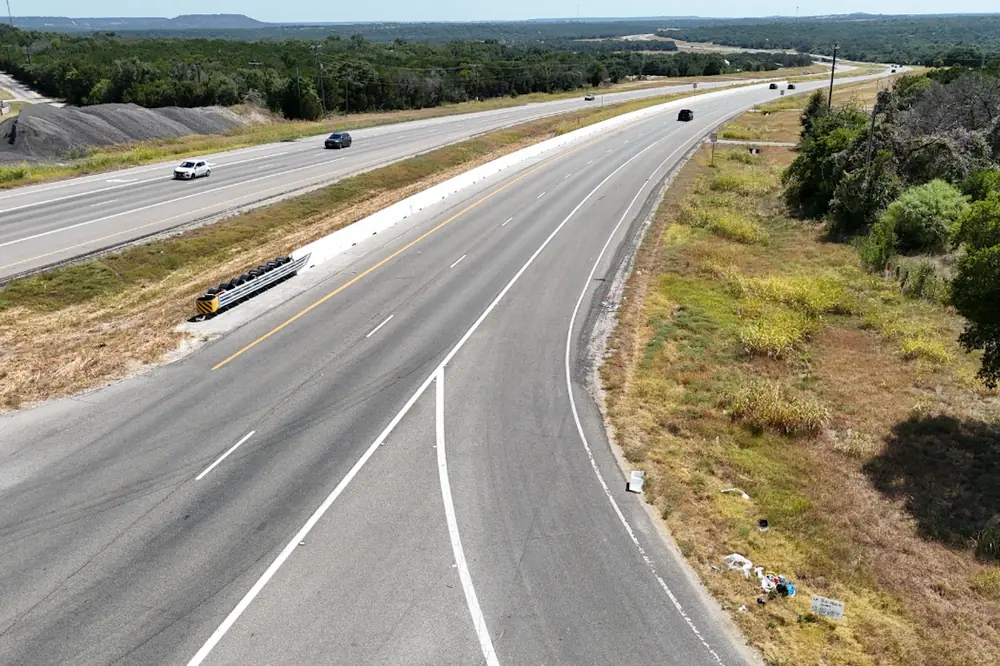
Interstate 20 (I-20) originates just south of Odessa in Reeves County and runs over 1,500 miles before terminating in Florence, South Carolina. The route carries significant commercial truck traffic, with an average daily traffic (ADT) of 42,670 in the Odessa area as of 2020. The projected ADT in 2040 is 85,340.
In 2016, the TxDOT Odessa District partnered with the Permian Basin MPO on a corridor study to develop improvements for the I-20 Odessa-Midland corridor, focusing on a 40-mile stretch of I-20 between Odessa and Midland. The study resulted in a 10-year, $1.4 billion program of improvements.
As part of that program, Sundt is working on two adjacent projects covering 11 miles.

| Your local Broce Broom dealer |
|---|
| Nueces Power Equipment |
“They are two separate contracts that were awarded within months of each other,” said Brian Smith, Sundt Construction Project Executive, who is overseeing both projects. “We’re running it as one project since they’re literally next door.”
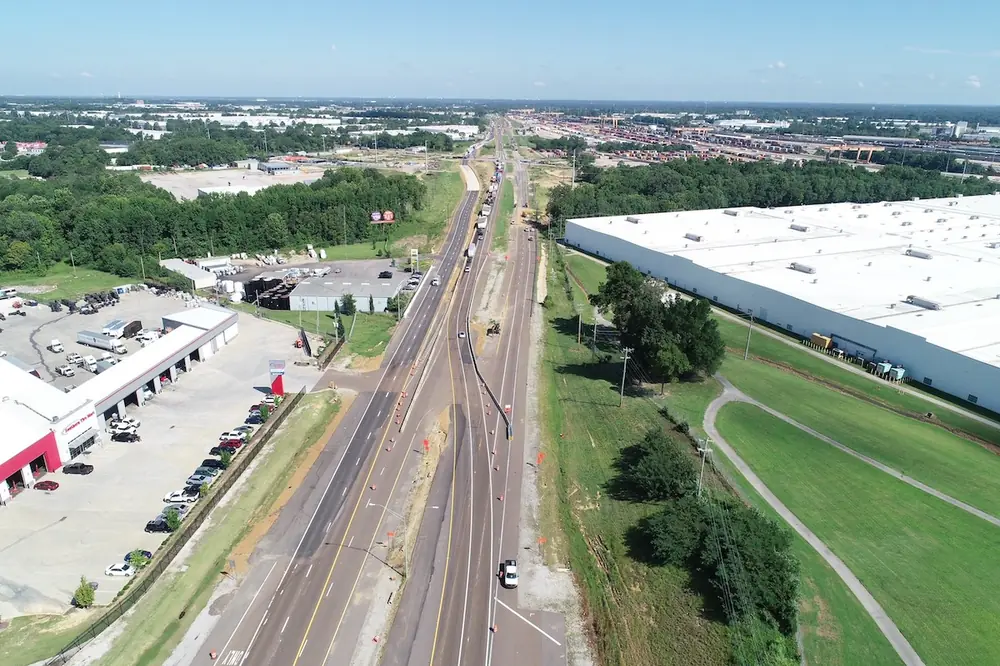
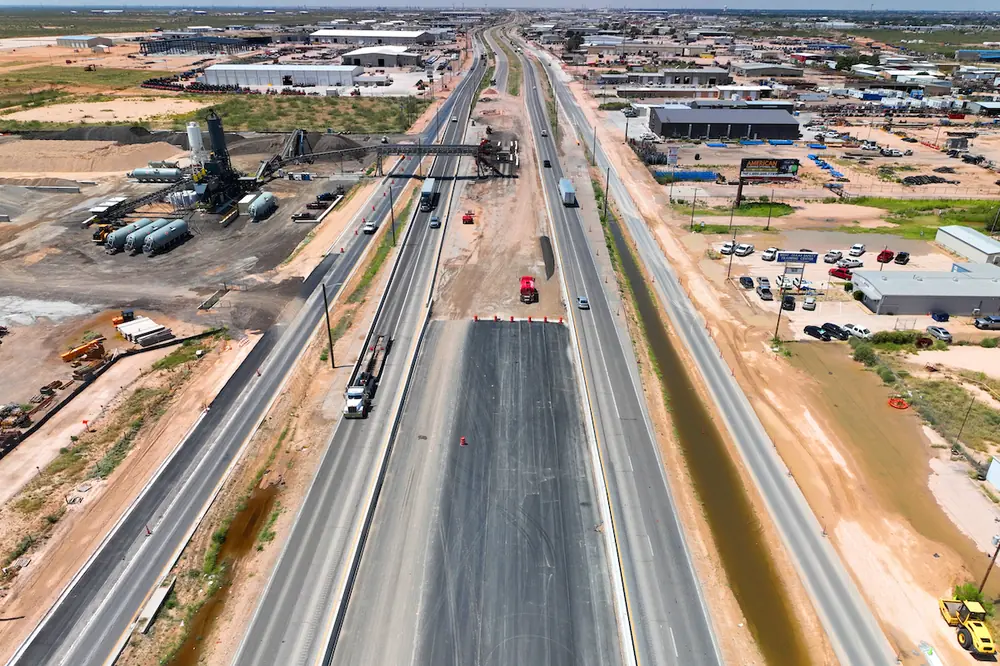
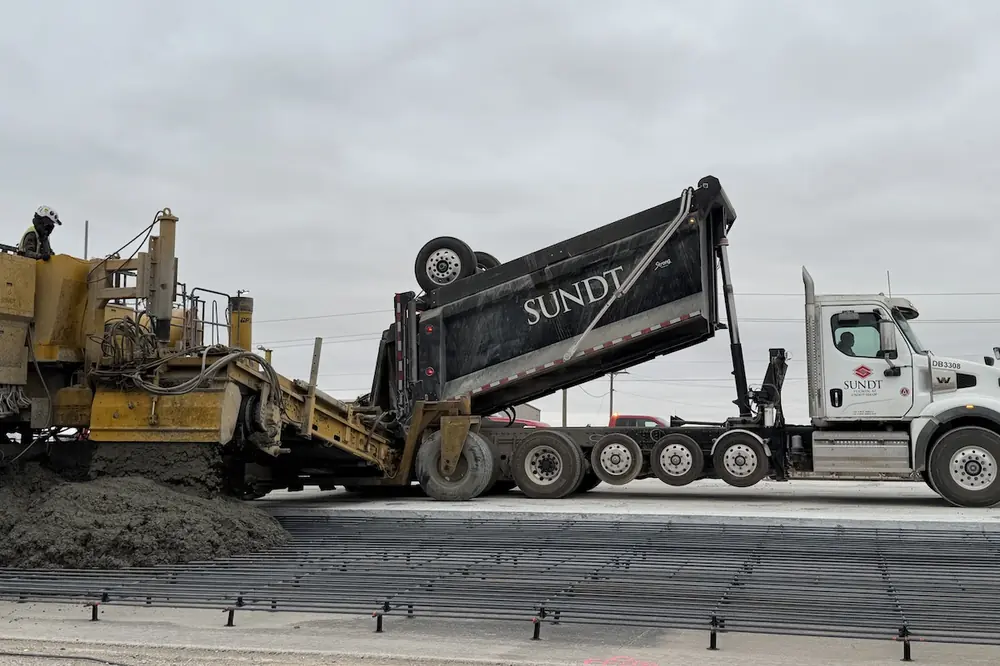
The project entails widening the highway from two to three lanes in each direction. The existing lanes are being converted from asphalt pavement to a 14-inch concrete pavement.
“We’re upgrading the roadway to accommodate for the commercial truck traffic associated with the oil and gas industry,” Smith said.
The project also entails:

| Your local Astec dealer |
|---|
| Closner Equipment Co Inc |
- Reconfiguring the frontage roads to one direction only.
- Enhancing safety by constructing a centerline concrete barrier that separates east- and westbound traffic and adding centerline freeway lighting.
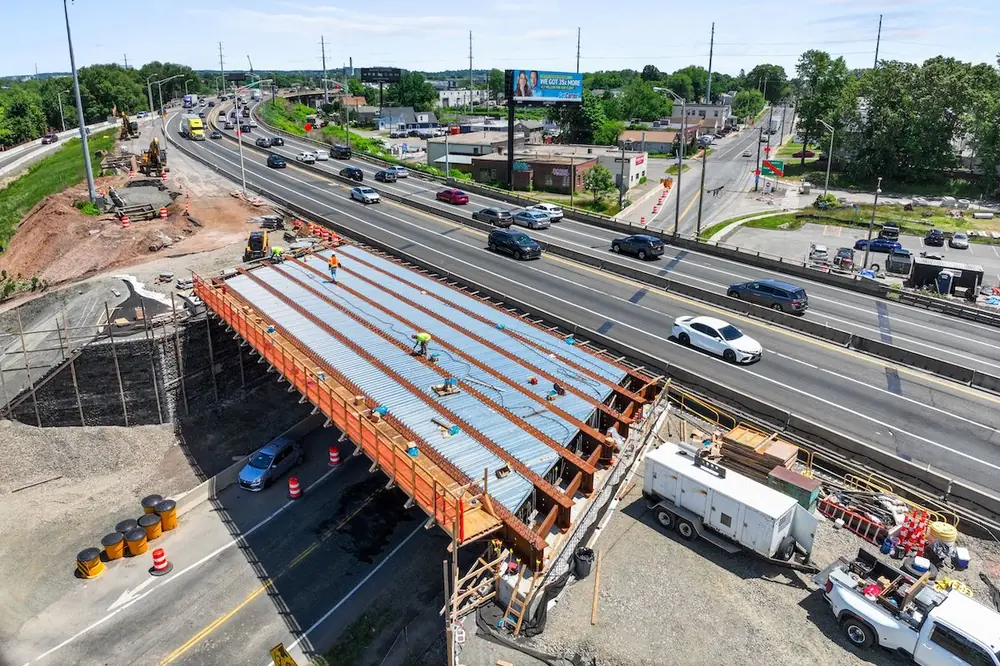
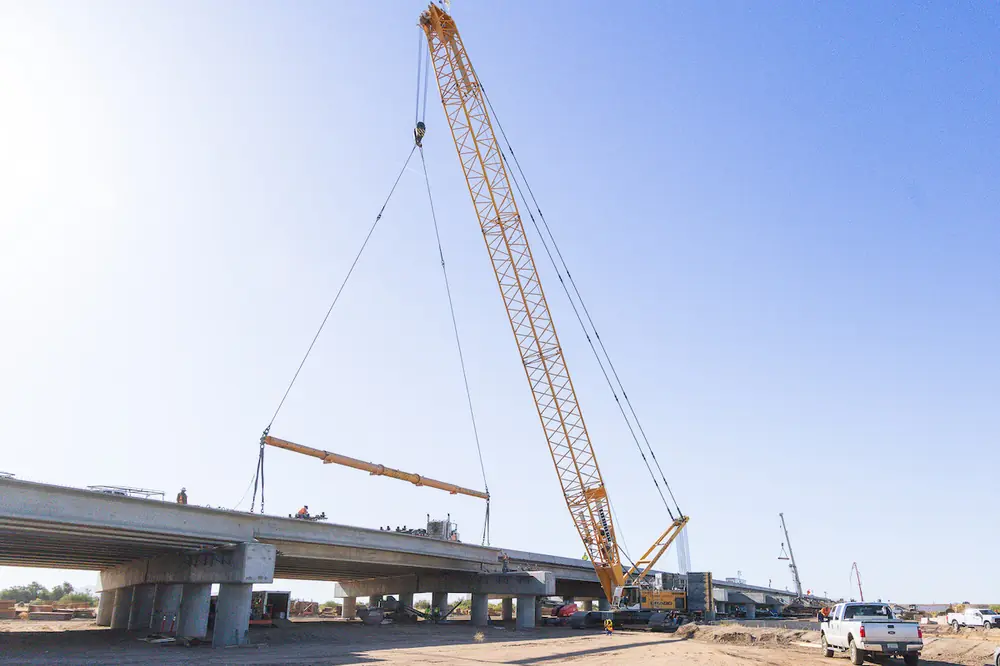
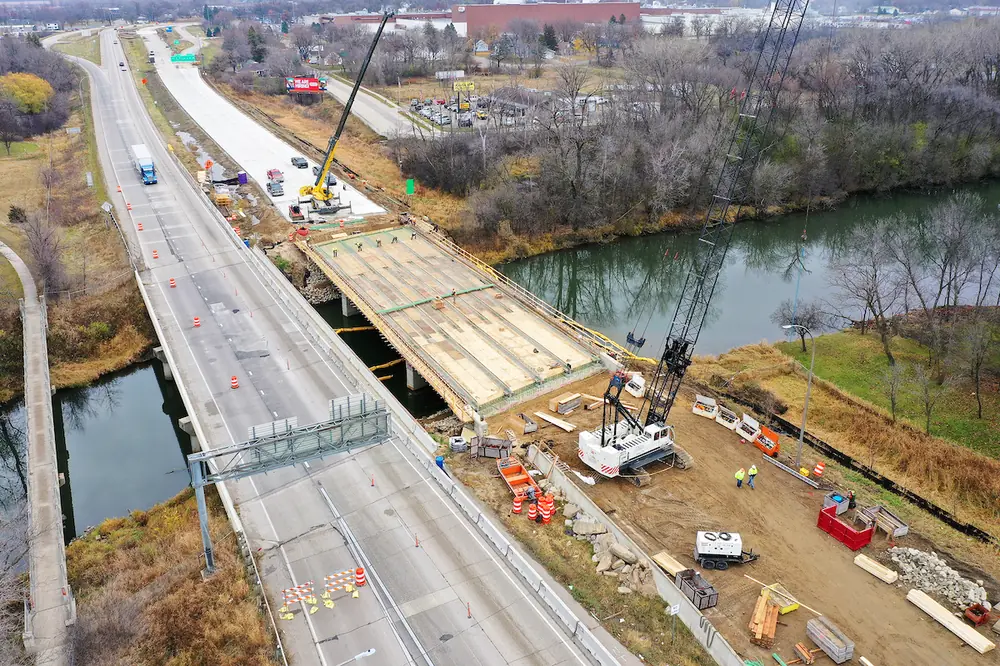
- Reconstructing six bridges — three bridges are being torn down and replaced, and three are under new construction. The new bridges are necessary because TxDOT anticipates putting in new intersections as the city grows.
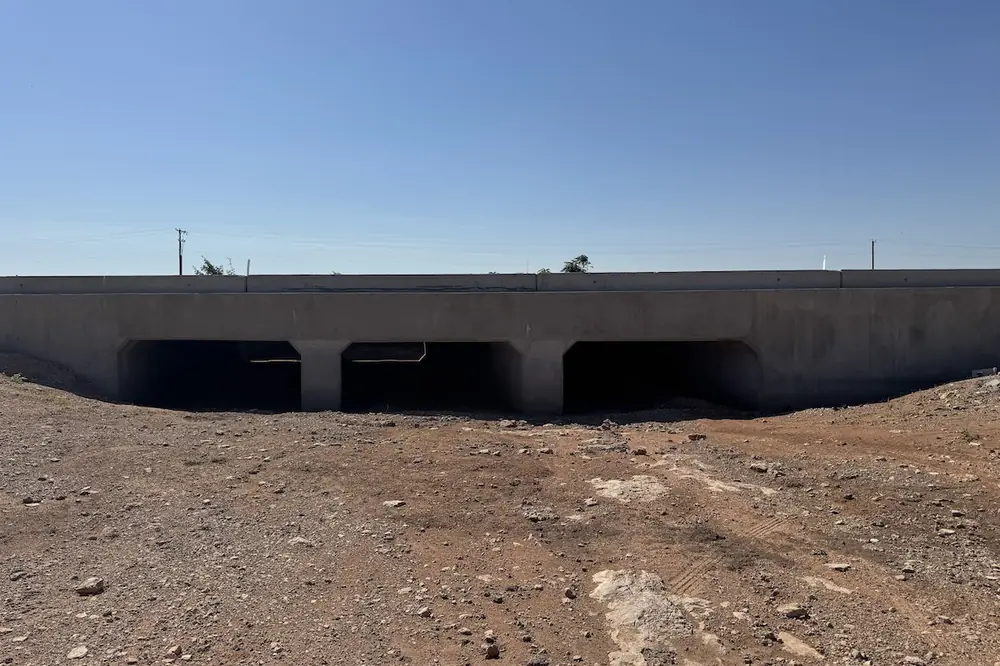
- Adding various drainage structures, including box culverts ranging in size from 7 by 2 feet and 2 by 5 feet, along with reinforced concrete pipe ranging from 18 to 36 inches in diameter. There are many dry washes that cross I-20, creating drainage issues during the wet winters.
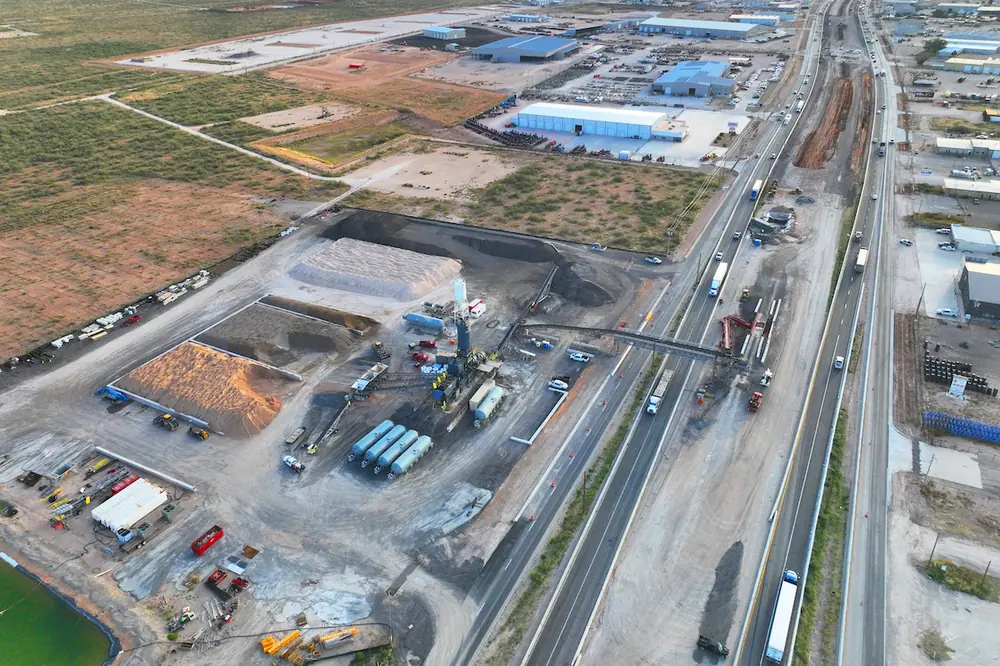
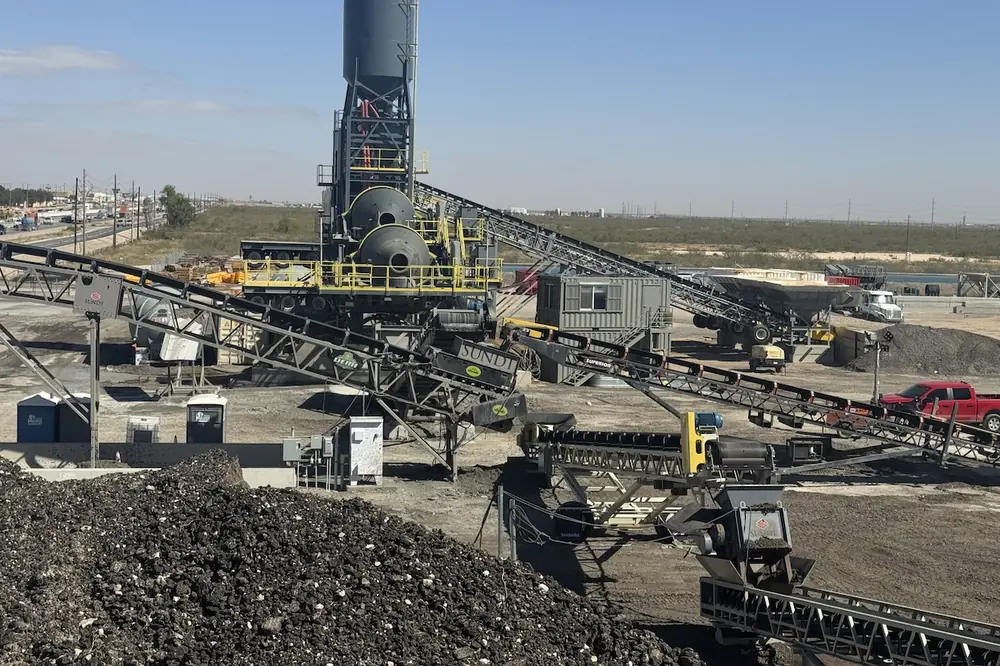
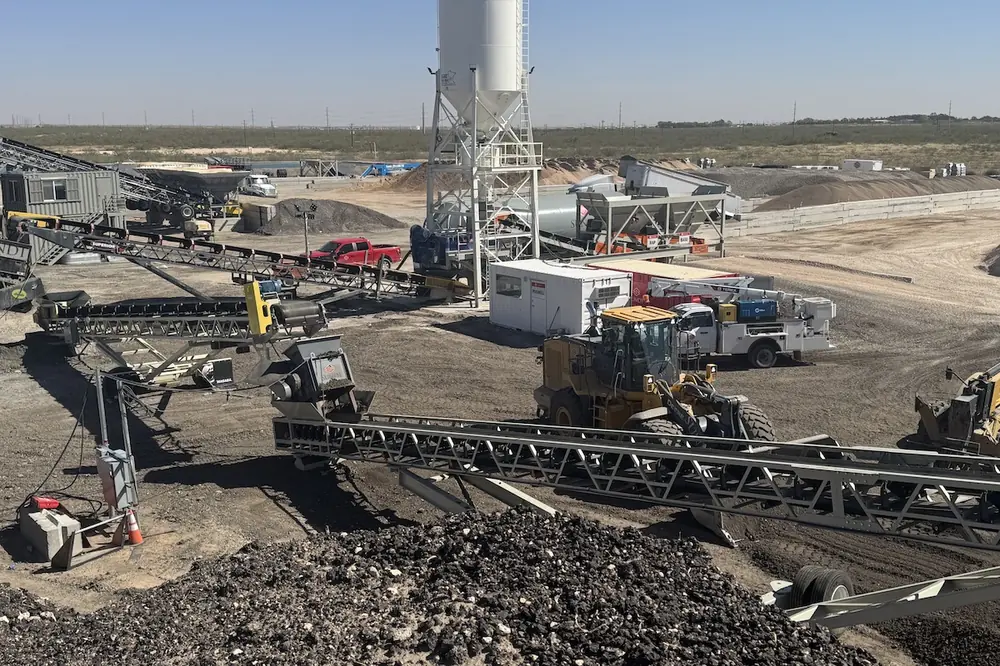
- Setting up a concrete plant in the middle of the two jobs
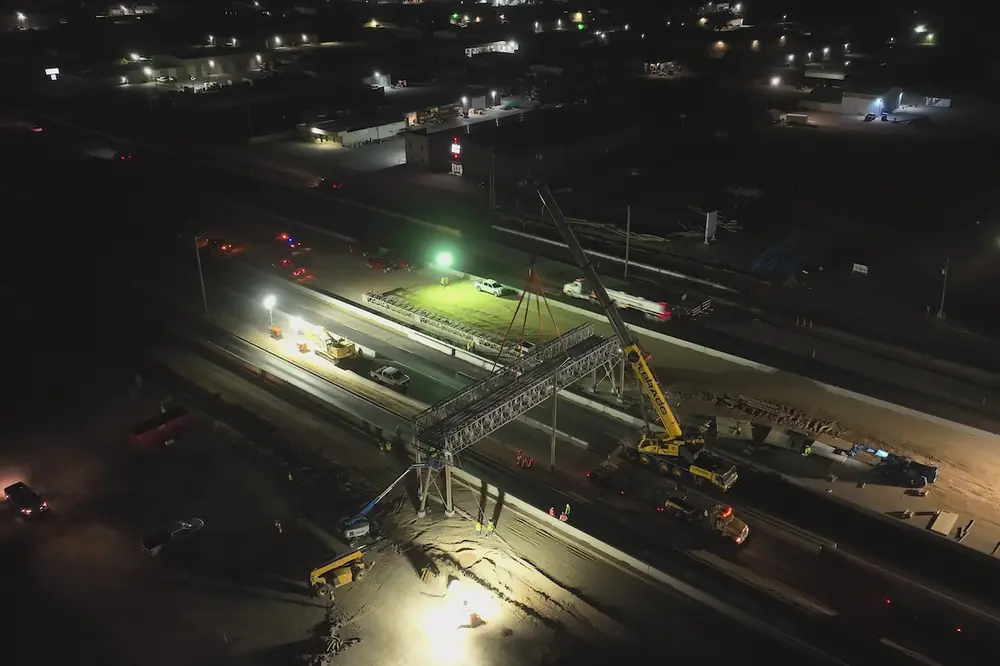
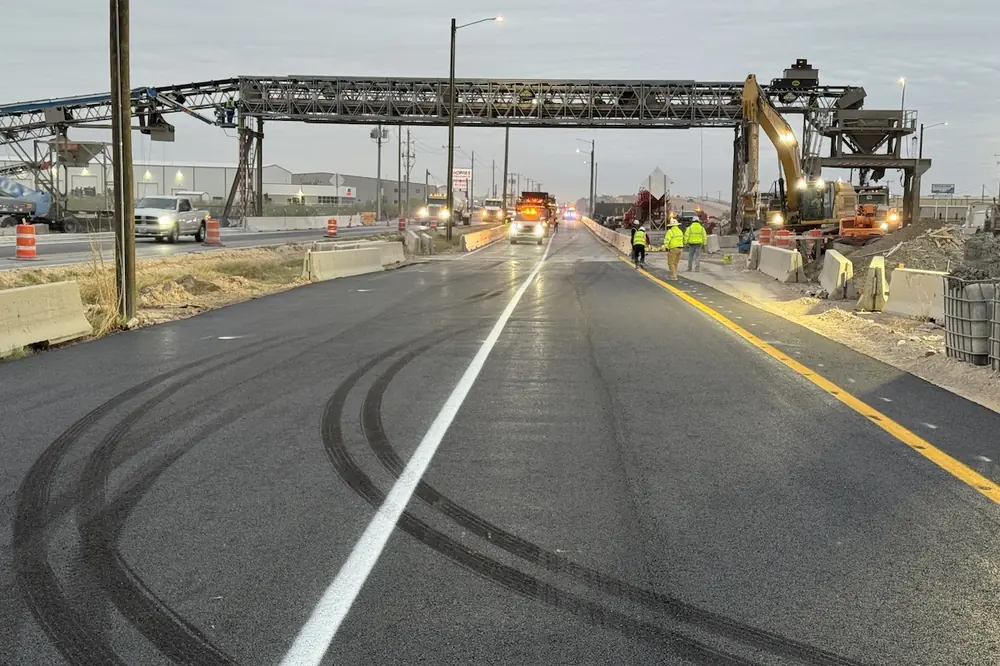
- Installing an Acrow bridge across I-20, a custom conveyor steel bridge structure meant to speed up concrete transportation
- Owner: Texas Department of Transportation
- General Contractor: Sundt Construction, Tempe, Arizona
- Designer: LJA Engineering, Houston, Texas (Ector County); Stantec, Edmonton, Canada (Midland County)
- Other Contractors: Hardy Hole Drilling, Chaparral, New Mexico; Lone Star Paving, Austin, Texas; Willis Electric, Abilene, Texas; Toro Bravo Construction, San Antonio, Texas; TRP Construction Group, Fort Worth, Texas; A Brothers Milling, El Paso, Texas; TexOp Construction, Justin, Texas; FC Traffic Control, Amarillo, Texas
The primary challenge of this job is moving concrete effectively and efficiently in a corridor with significant commercial truck traffic and frequent bottlenecks. To deliver the concrete while minimizing traffic disruptions, the Sundt team made two key decisions:
According to the Acrow website, the “versatility of Acrow’s modular bridge technology serves both permanent and temporary applications. Easy to erect, disassemble, and transport for use in different locations, Acrow’s temporary bridges are used on construction, drilling, and excavation sites all over the world, providing safe and efficient access for workers, heavy off-road vehicles, machinery, and equipment.”

| Your local Trimble dealer |
|---|
| Kirby-Smith Machinery |
| WPI |
“It allowed us to transfer material directly into a truck within the work zone,” Smith said. “We didn’t have to go around the project to get back to our plant, and it minimized the interaction with the commercial traffic that was using I-20.”
Sundt’s website says that the conveyor bridge used “recycled materials that would otherwise be discarded and improved safety and efficiency in a densely populated section of Texas highway.”
“This job afforded us the opportunity to put the Acrow bridge in the right location,” Smith said. “There was also the right configuration where we could put the batch plant in the middle of both jobs, so it could service both of the projects.”
Smith noted that a similar setup was erected on a project in Arizona years ago.

| Your local Hitachi dealer |
|---|
| Bane Machinery |
“We’ve tried to use it once since then, but the economics didn’t work out,” Smith said. “Because of the volume involved on this job, it made sense.”
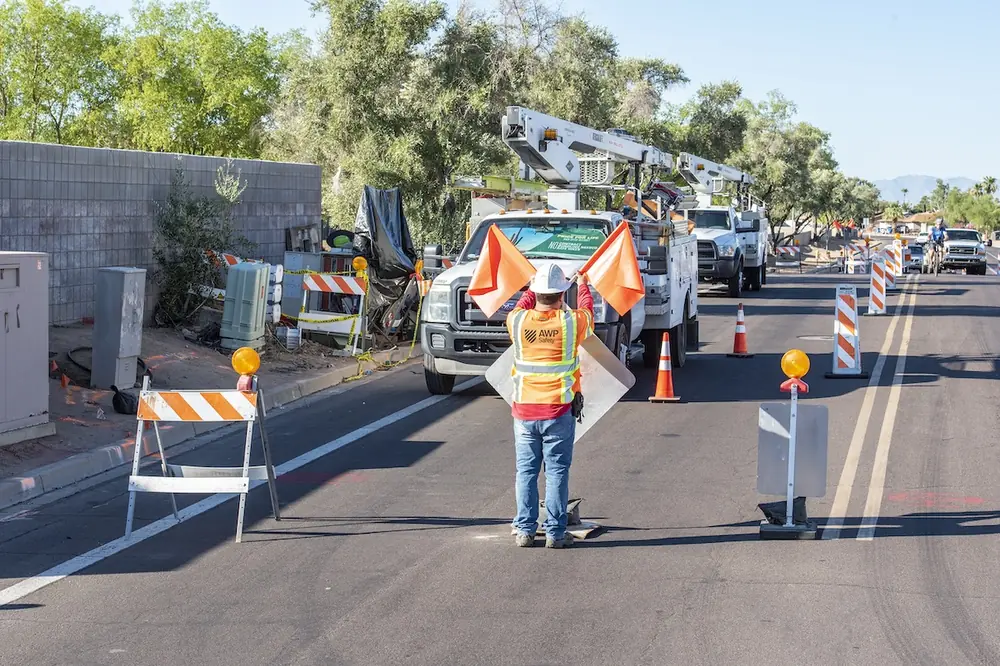
Job site safety was especially challenging for the construction team when working around live highway traffic. To increase safety, Sundt installed a temporary concrete traffic barrier to delineate the crews and protect them.
Another challenge is that Sundt is new to the area but is eager to establish a foothold there. The company is based in Tempe, Arizona.
“We’ve been eyeing this corridor for two-plus years before the job was let,” Smith said. The team bid on smaller jobs to learn about the area and the community.

| Your local Gradall Industries dealer |
|---|
| Kirby-Smith Machinery |
| WPI |
The I-20 project, with its focus on concrete paving, was a good fit for Sundt. There are more projects in the works along I-20, and Sundt’s onsite experience gives them an advantage on future projects.
As this project has progressed, Sundt and the team have had to gain the trust of local suppliers and the local TxDOT district.
“On some previous projects, TxDOT had bad experiences with contractors,” Smith said.
To build trust and rapport with TxDOT, Sundt is focused on quality and being upfront with the owner if problems occur.

| Your local Wirtgen America dealer |
|---|
| Nueces Power Equipment |
| Kirby-Smith Machinery |
“If we mess up, we tell them,” Smith said. “Transparency is key, and we work with TxDOT to bring solutions to the issues.”
Construction began on the first project, known as Ector County, in spring 2024 and is scheduled for completion in February 2028. This job is more involved than the second, as it includes more bridges. The project has a budget of $238 million.
Construction on the second project, known as Midland County, began in the summer of 2024 and is scheduled to run through September 2027. It has a construction budget of $163 million.
Both projects are currently on schedule and on budget. Smith attributes this to the pre-planning effort by the Sundt team.

| Your local Astec dealer |
|---|
| Closner Equipment Co Inc |
Once complete, the projects will provide the infrastructure needed to support regional growth, increase roadway capacity, and bring the interstate up to current safety standards.