
Many job sites today are understaffed. Superintendents are already short skilled trades. But if your welder calls in sick or your delivery driver leaves for another project, your schedule doesn’t pause — the deadline stays the same.
The industry realities are clear: We’re facing persistent labor shortages and increasingly complex projects. Robotics and automation can help alleviate these challenges — not by replacing workers but by assisting them.
Construction productivity has increased by less than 1 percent over the last two decades, while project complexity has gone up dramatically. Tolerances are tighter. Data centers are larger. Buildings are taller. And we’re asking the same number, or fewer, people to deliver more.
In this environment, the question isn’t: “Will automation replace workers?” The real question is: “How do we get more done with the skilled workers we have?”
What automation does is remove non-value-added, physically punishing tasks. For instance, it can keep skilled workers on the ground — the safest place to be — while machines handle repetitive tasks at height.

| Your local Case Construction Equipment Inc dealer |
|---|
| Birkey's Construction Equipment |
In addition, with automated equipment, a single operator can manage several machines, reducing the impact of labor scarcity on productivity.
Robotics is the execution layer of a broader technology stack. It combines perception systems that understand the environment, robotic manipulation to perform the task, and connectivity to coordinate machines across the job site. This technology accelerates the delivery of measurable value in the field.
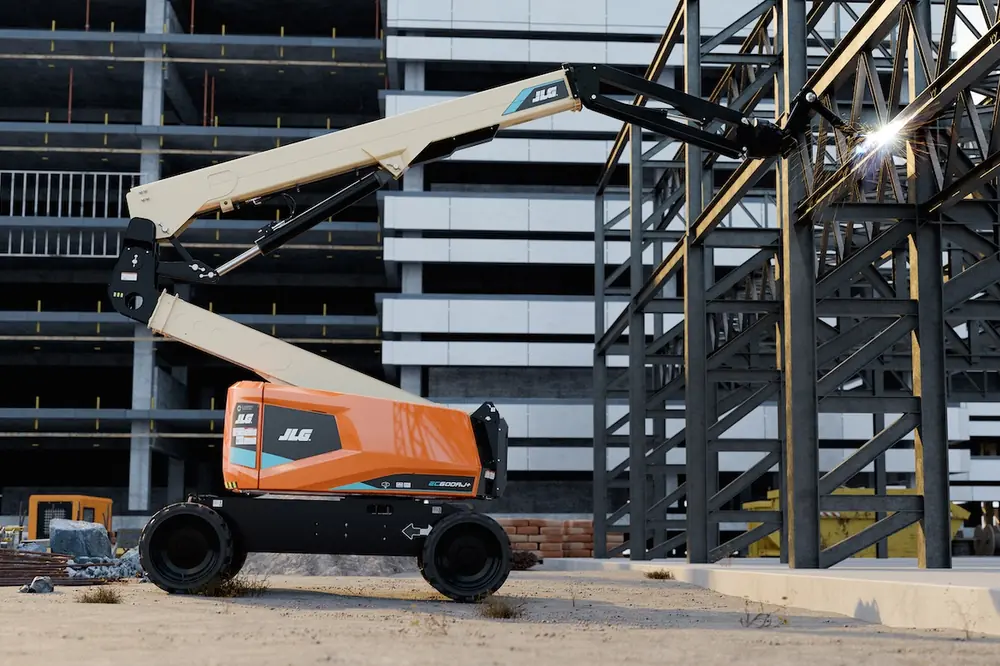
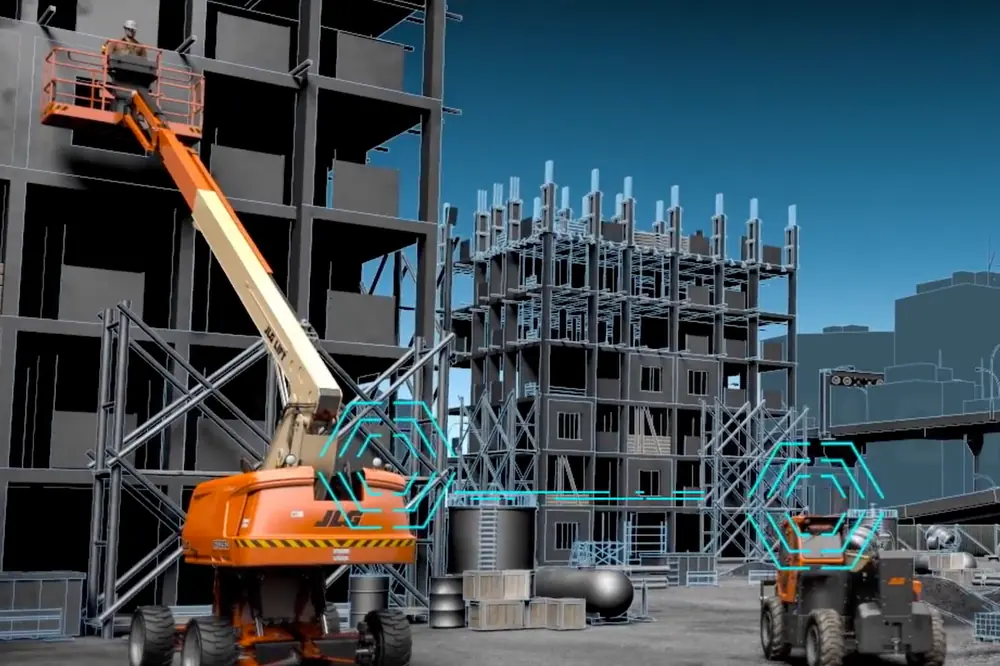
Let’s look at an example where the boom lift provides the mobility platform, the sensors provide perception, and the robotic end effector executes the task.
You’re installing structural steel in a manufacturing facility. The trusses are in place, and now the welding needs to happen at height. Traditionally, that means lifting a certified welder 50 or 60 feet in the air, carefully positioning, welding, repositioning, repeating — sometimes in cold wind, sometimes late at night to stay on schedule.

| Your local Case Construction Equipment Inc dealer |
|---|
| Burris Equipment |
Now imagine that same lift equipped with a robotic end effector.
Instead of the worker physically executing each weld, the machine positions itself precisely using perception systems and AI-guided control. It identifies the intended weld location, performs the weld consistently, captures validation data, and moves to the next point.
The human doesn’t disappear; the human shifts roles to supervise, validate, ensure quality, and intervene when judgment is required. But that human is no longer exposed to the same physical strain or fall risk.
Robots don’t get tired. They don’t rush because it’s the end of a shift. They don’t lose precision in the rain. They don’t slow down at 2 a.m. during a schedule push.

| Your local Deere & Co dealer |
|---|
| West Side Tractor Sales Co |
That consistency changes how projects are delivered.
Connectivity is the coordination layer of the technology stack. Through connected systems, machines don’t operate in isolation. They share location, task status, and intent. When material placement is complete, the welding operation can begin automatically. That’s not just automation; it’s orchestration.
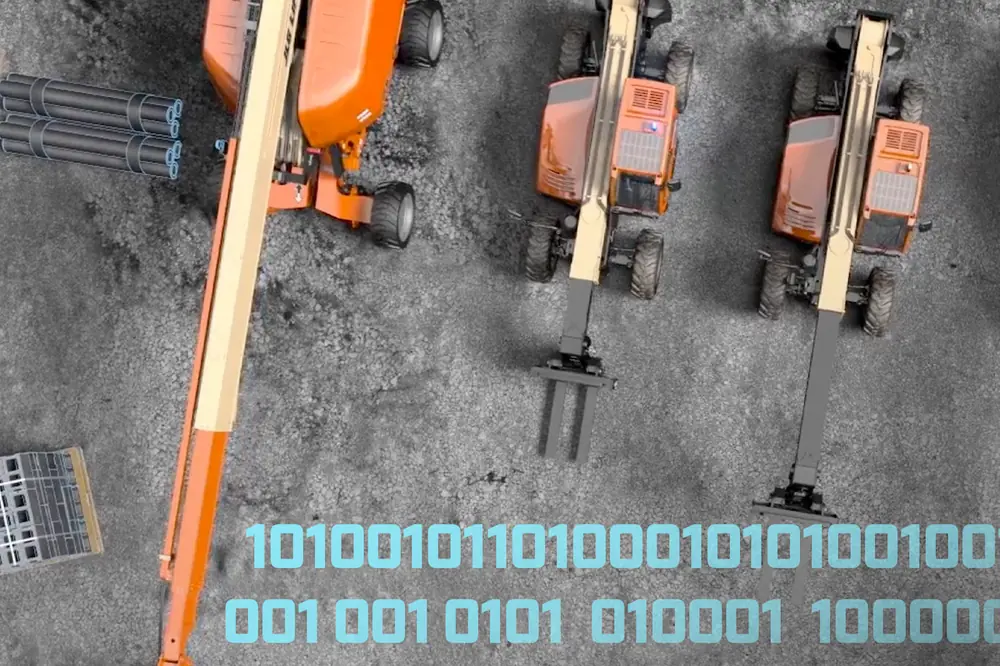
In one job site scenario, micro-sized scissor lifts autonomously transport and lift a truss, then signal the boom lift to begin welding. That’s machine-to-machine orchestration, not just monitoring.
Micro-sized scissor lifts with leader-follower technology are ideal for tight spaces such as data centers. One operator can guide multiple units, or they can operate autonomously in a coordinated formation. They transport oversized materials, lift in tandem, and precisely position components using integrated perception systems.

| Your local Atlas Copco CMT USA dealer |
|---|
| Brandeis Machinery |
This dramatically improves sequencing and reduces manual handling.
Equipment, tools, and materials communicate in real time. A scissor lift doesn’t just sit there; it reports its status. A beam doesn’t just get delivered; it’s tracked into the workflow. A completed weld doesn’t rely solely on memory; it’s verified and documented instantly. The sequencing becomes digital instead of manual.
Let’s take it out of the abstract for a moment.
Imagine a 40-story tower going up in a major city. You have weather delays, constrained staging areas, inspectors coming and going, materials arriving in phases, and crews stacked on top of each other trying to stay on schedule.

| Your local Trimble Construction Division dealer |
|---|
| SITECH Mid-South |
| SITECH Midway |
| SITECH Indiana |
| SITECH Mid-America |
| SITECH Ohio |
Today, a superintendent spends a significant amount of time coordinating people, equipment, and materials — making phone calls, walking the site, checking whether a lift is available, whether the beam has arrived, and whether the weld was completed correctly. That’s a lot of time spent searching or reacting.
In a connected job site, equipment, tools, and materials communicate in real time.
Think about that on a large data center project where downtime penalties can reach into the millions. When micro scissor lifts move autonomously in formation to position a truss and then signal a boom lift to begin welding, you’ve eliminated multiple coordination steps. The sequencing becomes digital rather than manual.
You’ve gained visibility, you’ve gained coordination, and you’ve gained consistency.

| Your local Wirtgen America dealer |
|---|
| Brandeis Machinery |
Historically, certain physically demanding tasks required endurance and strength. With robotic assistance, those barriers are lower. Size and upper-body strength are no longer determining factors.
With robotic assistance, the skill shifts toward technical oversight and system coordination. Construction becomes a technology-enabled field — one where you manage intelligent equipment, analyze real-time data, and oversee automated execution.
That shift changes how work is performed and how the industry attracts and retains talent.
For the first time in construction history, the tools we deliver improve after purchase through over-the-air updates. Machines become smarter, more capable, and more productive over time.

| Your local Gomaco dealer |
|---|
| Fabick CAT/MO |
The job site of the future isn’t about replacing people. It’s about creating an environment where skilled workers supervise, validate, and orchestrate work while connected machines handle repetitive tasks.
In a labor-constrained world, that’s not optional — it’s necessary.
Shashank Bhatia is Chief Technology Officer and Global Vice President of Engineering at JLG.