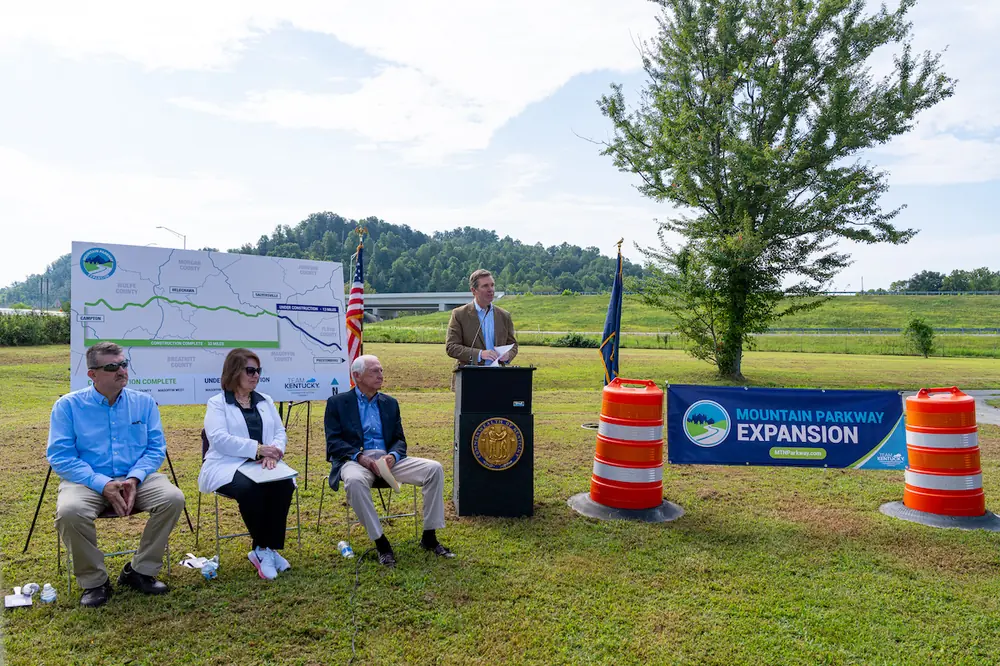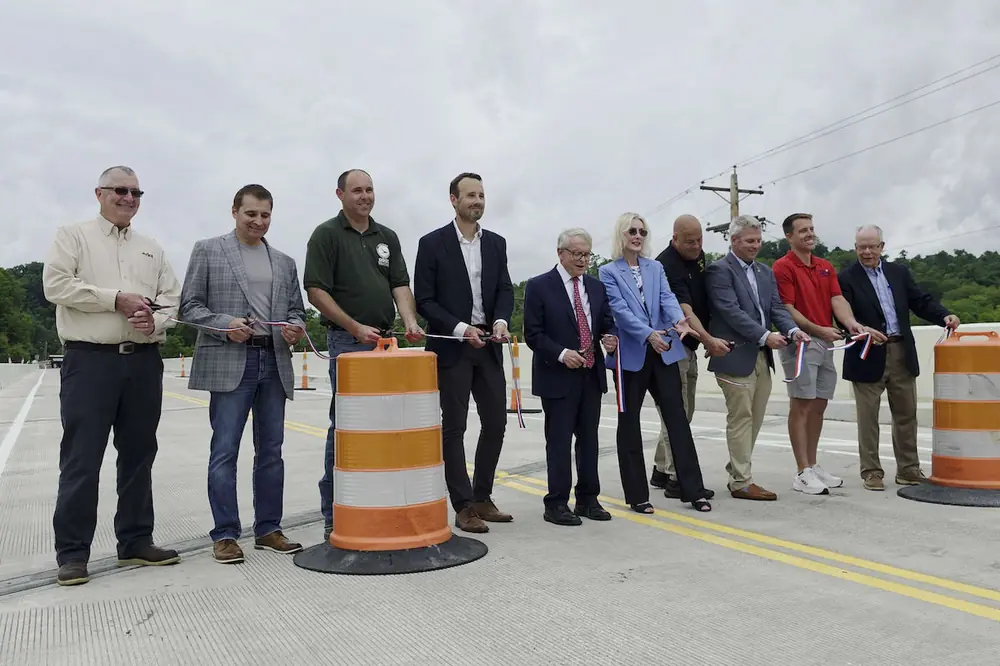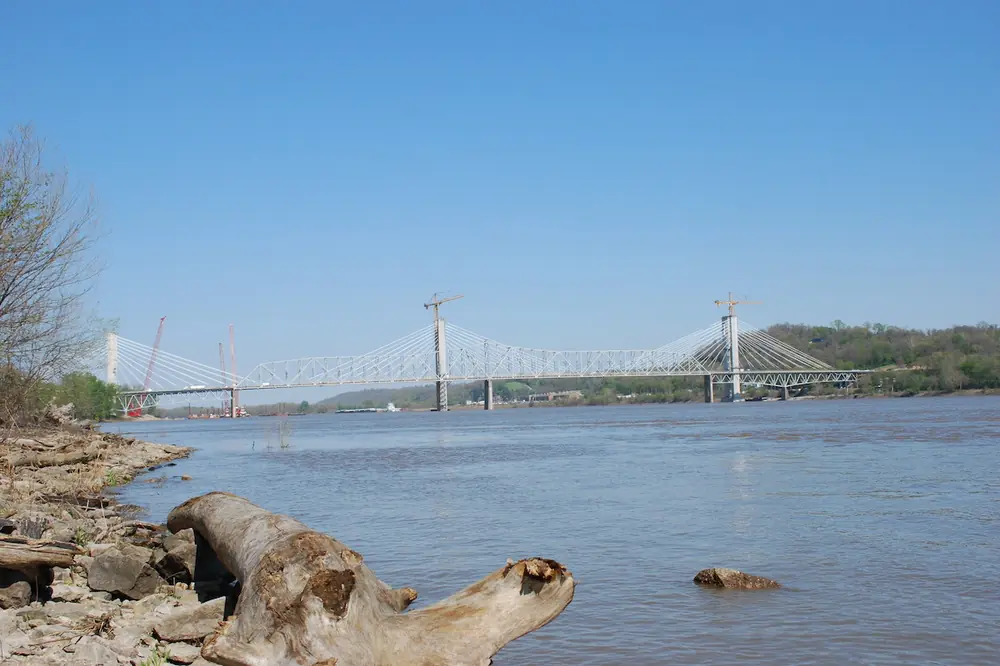
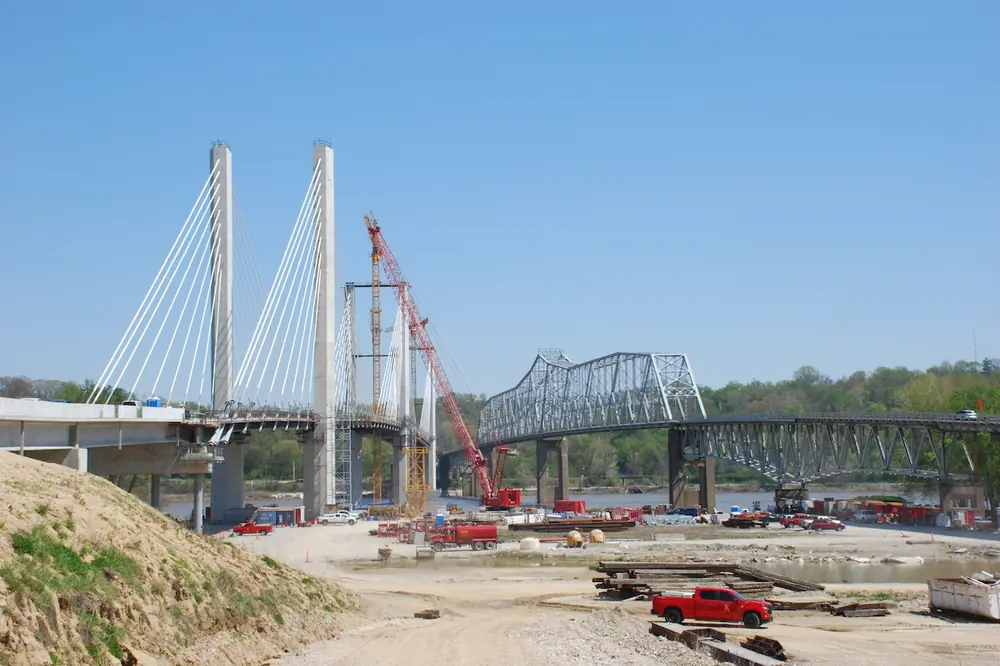


CHESTER, IL — The Illinois Department of Transportation (IDOT) joined state and local leaders, along with the Missouri Highways and Transportation Commission and the Missouri Department of Transportation (MoDOT), to celebrate the completion of the new Don Welge Memorial Bridge. The ribbon cutting marked the culmination of years of collaboration between Illinois and Missouri to replace the vital river crossing connecting Randolph County in Illinois and Perry County in Missouri, via Illinois 150 and Missouri 51.
“The Don Welge bridge is essential to connecting Chester to the region and Illinois to the Midwest,” Illinois Transportation Secretary Gia Biagi said. “Through the governor’s capital program and the strong partnership with our neighboring states, we look forward to continuing to replace and revitalize these critical border bridges up and down the state.”
The $307.1 million project replaces the Chester Bridge, built in 1942, with a modern bridge that improves safety, mobility, and reliability for the public, commercial vehicles, and agricultural traffic that travels between Illinois and Missouri each day. Overseen by MoDOT, the project was made possible through a partnership between Missouri and Illinois, with IDOT investing approximately $143.2 million in the bridge and the Illinois approach through Rebuild Illinois.
The new bridge features two 12-foot lanes with shoulders, replacing the aging structure with a wider, safer, and more reliable crossing. The improvements ensure the bridge will continue to serve as an important transportation link supporting regional commerce, agriculture, emergency services, and local travel in southern Illinois and southeast Missouri.
The bridge, named in honor of longtime Chester resident and bridge advocate Don Welge, carries 7,000 vehicles daily, with approximately 25 percent being commercial motor vehicle traffic.

| Your local Takeuchi Mfg Ltd dealer |
|---|
| Brandeis Machinery |
Rebuild Illinois (RBI) is investing a total of $33.2 billion over six years into the state’s aging transportation system, creating jobs and promoting economic growth. RBI is not only the largest capital program in state history, but also the first that touches all modes of transportation: roads and bridges, transit, waterways, freight and passenger rail, aviation, and bicycle and pedestrian accommodations.