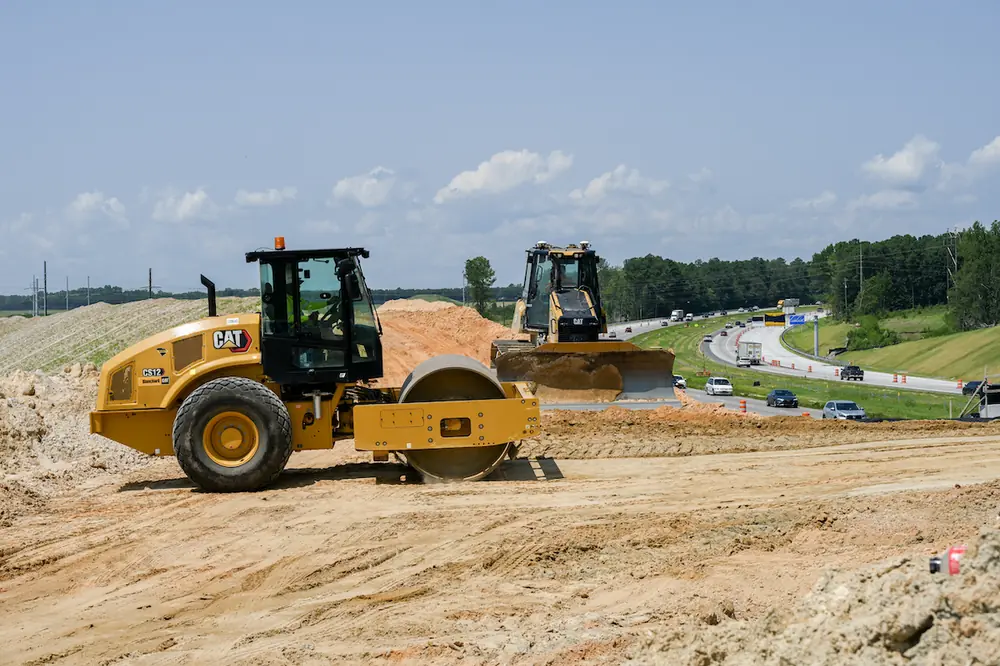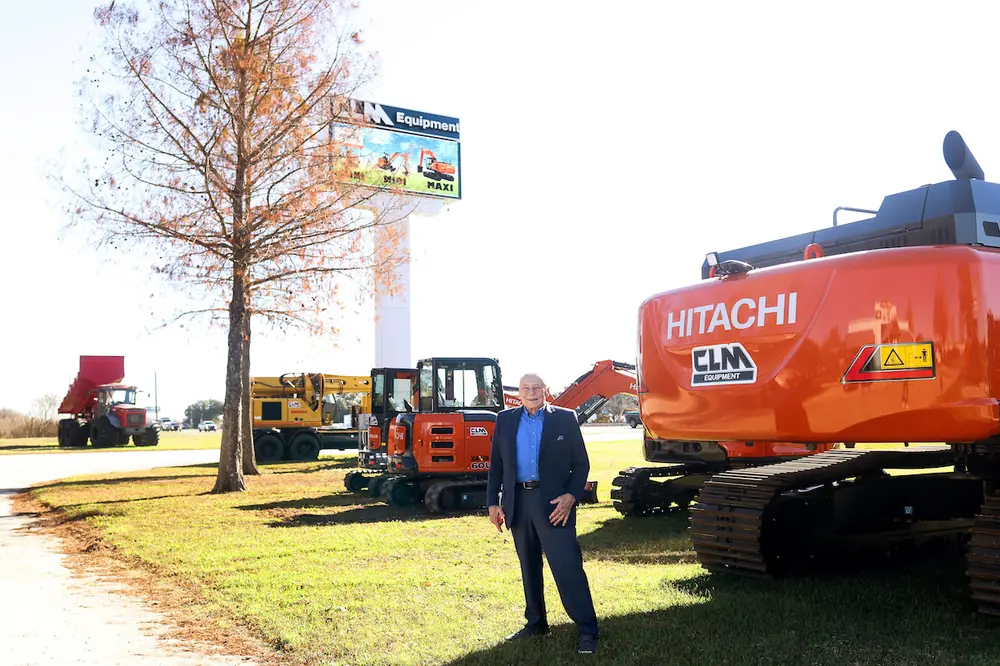
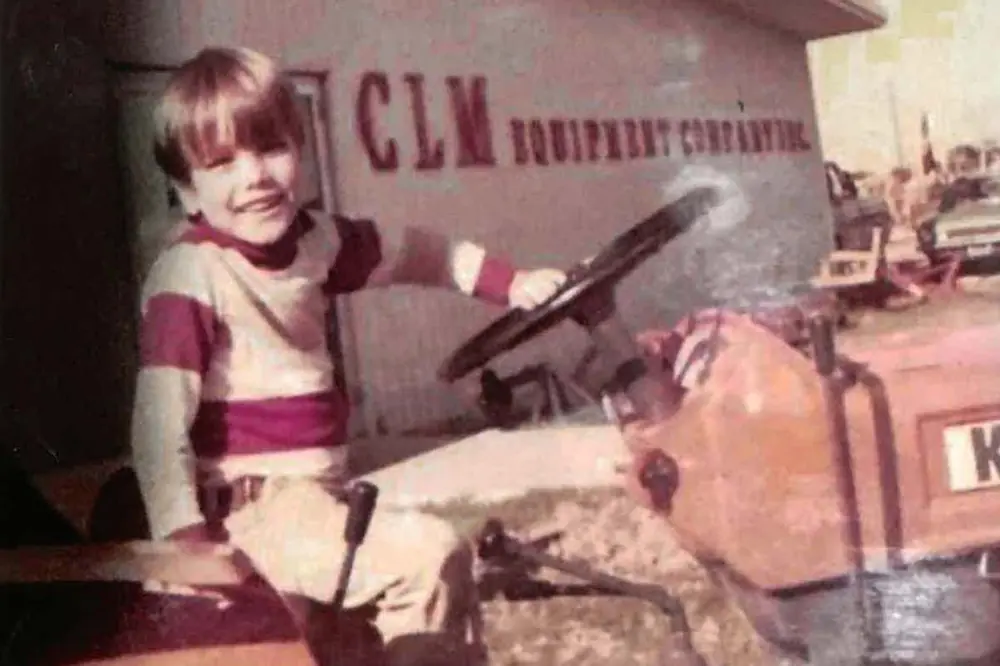

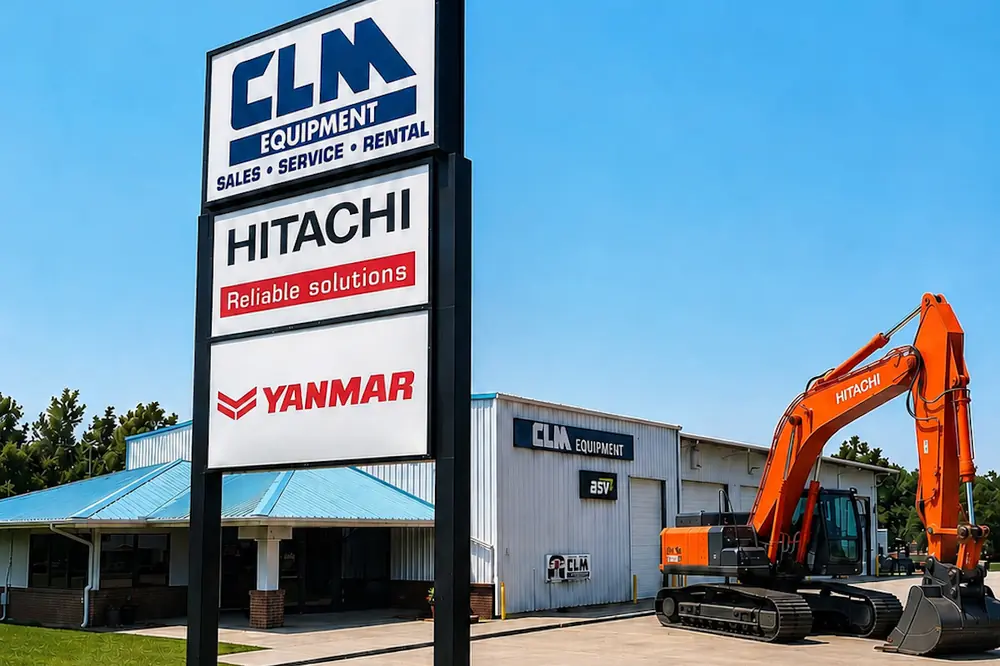
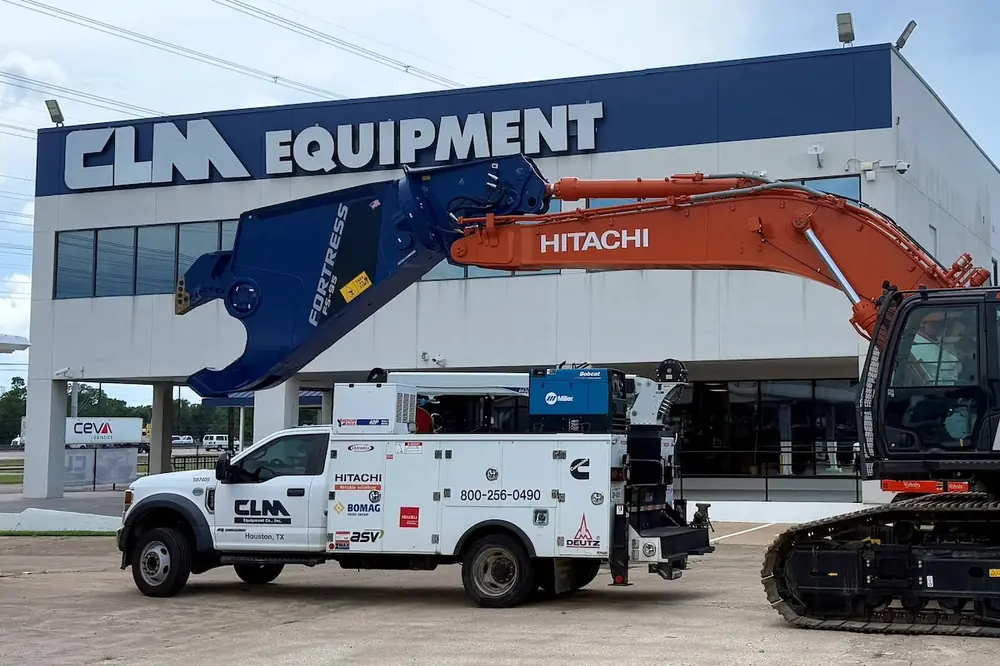
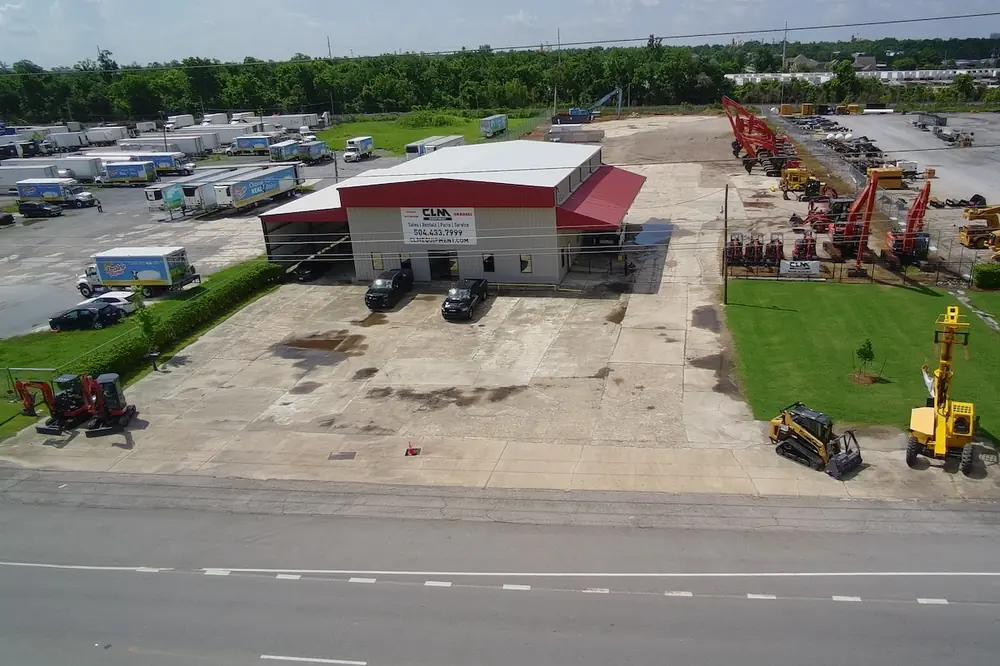
When CLM Equipment Co. first opened its doors in August 1966, contractors were still actively cutting new interstates and roads through the Louisiana clay. It was hard work and even harder on the equipment. The land would eventually yield but not without a fight. As a dealer, CLM built its reputation on the quality of its equipment and forged lasting relationships with customers by keeping that equipment up and running.
Enter a 19-year-old Floyd.
Floyd Degueyter was 19 years old when the former President of CLM, Gerald Crochet, tapped him as one of the company’s first employees. Crochet was impressed with Floyd’s “whatever-it-takes” attitude. Before CLM, one of Floyd’s first jobs was at Brennan’s in New Orleans, Louisiana, where he learned that attention to detail and customer satisfaction were measured by the meal and the service received.
Floyd was the epitome of an “all-around” worker. He was the guy who did a little bit of everything. If the shop floor needed sweeping, he grabbed the broom; if a machine came in with a blown hydraulic line, he grabbed his wrenches. Starting off on the front lines of the parts department, he gained a line-item understanding of exactly what it takes to support a field operation. But Floyd had his eyes on a broader horizon — he wanted a path into equipment sales.
Crochet appreciated his ambition but told him to pursue sales on his own time. Floyd agreed and proceeded to hook up the company’s tractor and bush hog to a truck trailer after regular hours and on weekends. He would drive out across local parishes, scouting for potential customers.

| Your local Atlas Copco CMT USA dealer |
|---|
| Brandeis Machinery |
“I saw some tall grass and asked the landowner if I could try out our equipment on it,” Floyd recalled. “He was impressed with how it worked, and that was my first sale.”
That single field demonstration netted Floyd a $50 commission and laid the strategic blueprint for what CLM would become over the next six decades. It proved that in the heavy construction business, you do not sell iron by waiting for a contractor to walk onto the lot. You sell it by bringing the machine to the customer, putting it in the dirt, and proving it can perform and solve that customer’s problem.
But those foundational years were defined by absolute grit, not easy victories. The financial reality of a startup dealership in the late 1960s meant razor-thin margins and immense personal sacrifice. Floyd and his wife were balancing the intense pressure of raising a young family with three small children on a limited budget. Money was so tight that the household menu often consisted of little more than bologna sandwiches. Every spare cent was being stretched to keep the household stable while the business found its footing.
The turning point — and the alignment of Floyd’s personal skin in the game — arrived in 1973. Recognizing his natural ability to connect with local contractors, Floyd took a Dale Carnegie course that formalized his professional ambitions. He set a definitive goal: he would become a partner in CLM Equipment within a few short years.

| Your local Case Construction Equipment Inc dealer |
|---|
| Birkey's Construction Equipment |
In 1973, management offered Floyd the job of President and the opportunity to buy into CLM. Being the consummate salesman, Floyd went home and made the sales pitch of his life. He convinced his wife that taking their life savings and putting it into CLM was an investment, not a gamble. He was investing $7,500 in the company and in their future. They did have three small children, so they agreed to hold back $200.
The original partners were impressed with how Floyd cultivated strong relationships with customers and the employees. He was a natural leader. By age 27, less than a decade after first walking into the shop, he was running the company. The business flourished under his guidance, and by the late 1970s, the opportunities for expansion had outgrown the partners. Floyd saw the opportunity to expand into the booming civil, municipal, and industrial expansion taking hold across the Gulf Coast.
“I want to expand,” Floyd told them. “I want to go and grow.”
Between 1977 and 1978, Floyd orchestrated a buyout of the original partners. The legacy partners retained ownership of the physical property on Bernard Road to maintain a reliable cash flow, but the keys to the operational engine of CLM were officially in Floyd’s hands. The era of the single-acre shop was over. The regional expansion was about to begin.

| Your local Wirtgen America dealer |
|---|
| Brandeis Machinery |
Once Floyd took the reins, expanding CLM was not about drafting a slick corporate map. It was about following where the dirt was moving. If civil contractors were clearing land, digging pipeline trenches, or building highways from south Louisiana into Texas, CLM wanted a shop close enough to provide the service on those machines.
First the Sulphur branch was established in 1980 to serve the southwest Louisiana market. Then the company pushed west into Texas by the mid-1990s. They set up shop first in the industrial corridor of Nederland around 1995, then added a branch in Pasadena in 1999, and another in Mont Belvieu by 2002. But keeping things simple is a core rule at CLM, and managing too many overhead expenses can kill a dealership. Around 2002, they shut down Pasadena, took the crew and the iron from Nederland, and consolidated everything into one heavy-duty Texas stronghold in Mont Belvieu. At the same time, they pushed east from the Lafayette headquarters, establishing full-service operations in Lake Charles and Prairieville, Louisiana, and across the state line into Gulfport, Mississippi.
Those who have run a civil outfit know the construction business runs in hard, unpredictable cycles. It can be easy to look like an equipment genius when the economy is booming, contractor backlogs are full, and iron is moving quickly out of the yard. The real test of a dealer does not happen during the boom times; it happens when the market drops out, funding dries up, and dealers are forced to make hard, ugly changes.
During the peak, CLM had scaled up aggressively, expanding from three locations to five, and watching their fleet balloon from 100 machines to over 500. When the economic cycles turned vicious, they did not freeze up. They had the discipline to pull back, scaling back down to a leaner footprint of two or three core stores to protect the company’s financial health.

| Your local Leica Geosystems Inc dealer |
|---|
| Laser Specialist inc |
“You never know how good you really are until you have to face tough decisions and make those kinds of changes,” said Eric Walker, General Manager and Vice President of Operations at CLM. “You don't want to do it, and you certainly don't want to have to remember it, but that's how you can really tell.”
What kept CLM alive during those lean years was not corporate double-talk; it was absolute transparency with the guys in the shop. In the equipment world, what is not said can cause the most damage and rumors. When things got tight, Floyd and his managers laid the bad news out upfront. The crew might not have liked the reality, but the mechanics who stayed knew they were getting the straight, unvarnished truth from ownership. They were a team, and they were going to get through the downturn together.
Back then, diagnostics did not happen on a laptop screen. If a contractor’s machine went down on a road project, a mechanic had to trace out a hydraulic leak or an engine issue purely by eye, ear, and a set of heavy wrenches. Over 60 years, CLM has watched the industry transform into a landscape governed by advanced telemetry and GPS grade control systems. Yet, even as the tech evolved, the foundational logic stayed the same: if the wheels or tracks are not turning, the contractor is losing money.
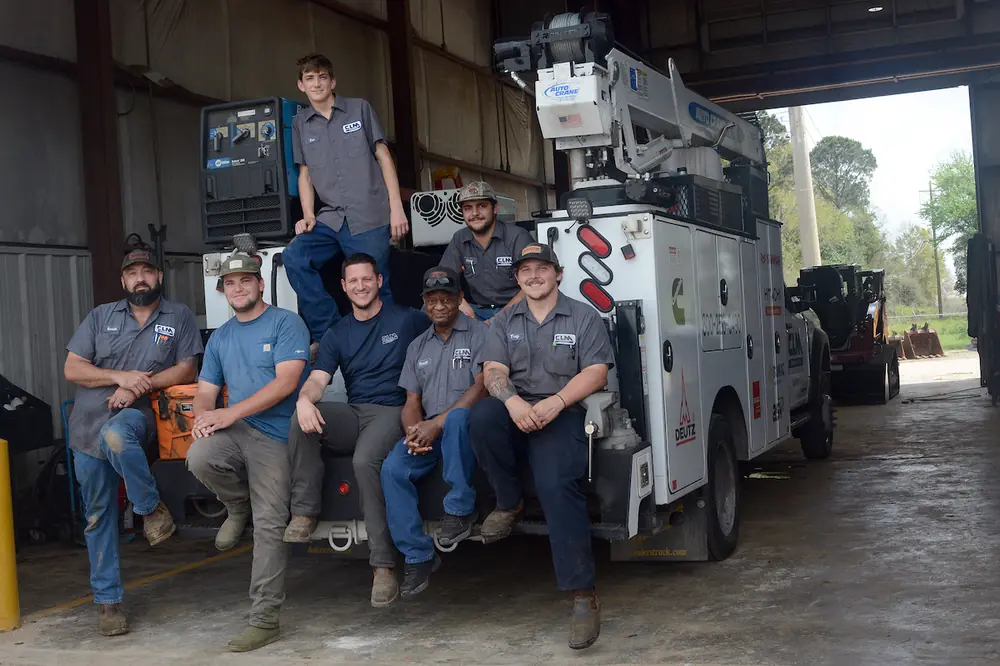
That resilience comes naturally because CLM purposefully builds its service departments around a specific type of worker: country boys with an automatic, inherited work ethic. Walker is cut directly from that cloth. Thirty years ago, long before he ever walked into CLM in 1997, Walker grew up in a family where self-employment meant fixing your own iron or you did not eat. His dad ran an independent logging and gravel outfit, and Walker was the lead mechanic before he was old enough to vote.

| Your local Gomaco dealer |
|---|
| Fabick CAT/MO |
“By the time I was probably 15 years old, I could pull the transmission out of an 18-wheeler, change a clutch, and do that kind of stuff,” Walker said.
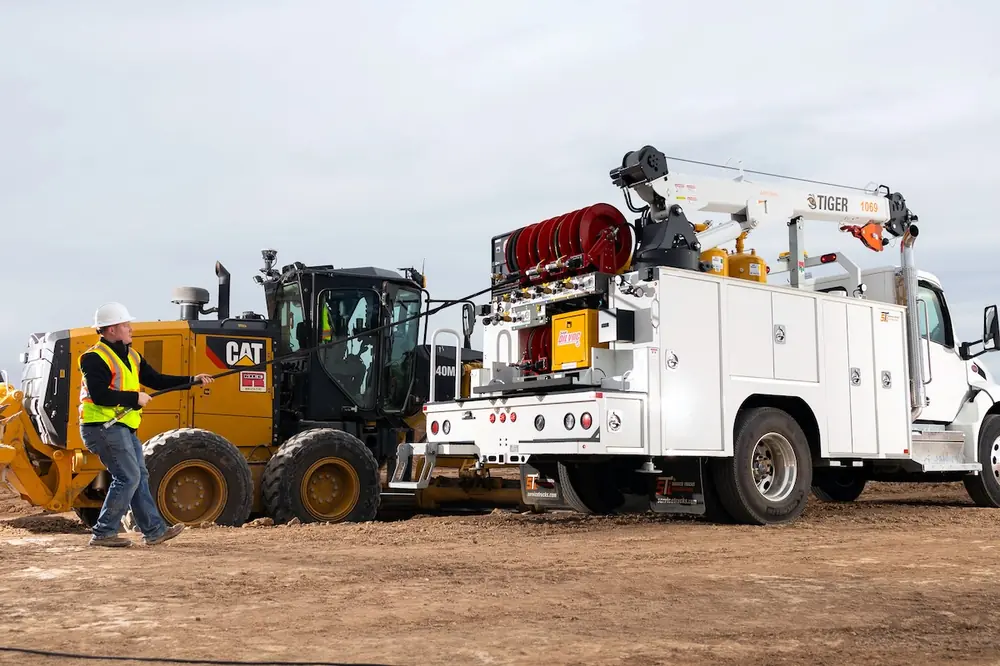
That is the mechanical DNA that defines CLM's leadership. When corporate mega-dealers run into a systemic issue or a branch management vacancy, they usually call a committee meeting. At CLM, guys like Walker just jump in a service truck and drive out to fix the problem themselves. Whether it is steam cleaning or pressure washing an excavator or diagnosing an electrical issue, nobody at the executive level is too proud to grab a wrench and resolve a problem.
As the market shifted over the decades, CLM adjusted its equipment strategy to match what modern civil contractors needed. They realized early on that contractors do not buy a brand name out of blind loyalty; they buy the support system that keeps the tracks turning.
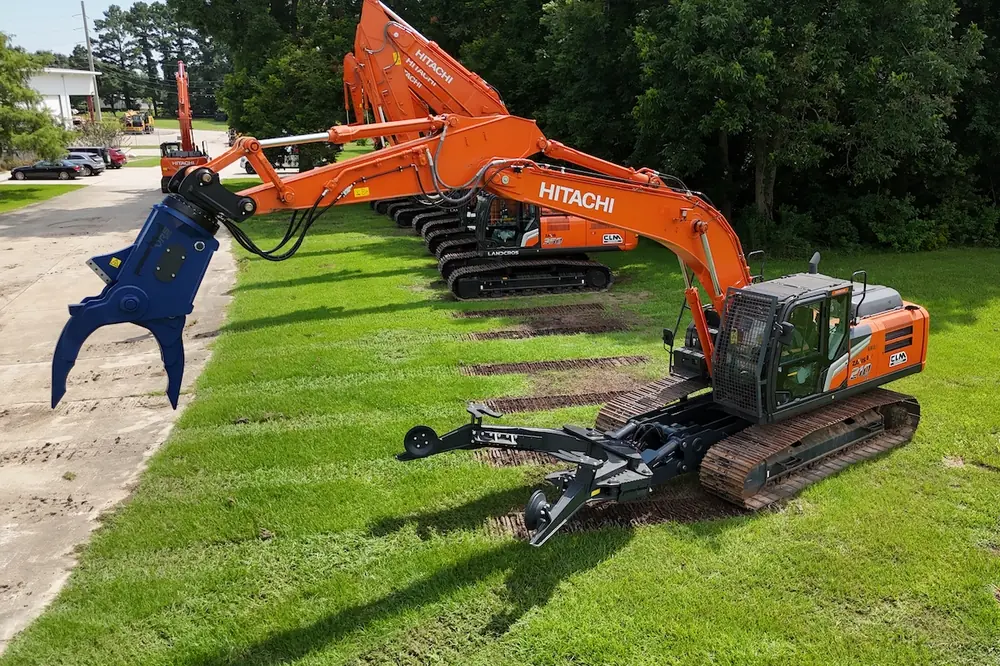
This shift led to a tight partnership with major global manufacturers who align with CLM’s high-uptime expectations. Today, CLM’s heavy-line and material handling strategy is anchored primarily by Hitachi Construction Machinery (HCM). When Hitachi stepped out in North America as a completely standalone brand with its own dedicated manufacturing footprint for heavy excavators, wheel loaders, and specialized amphibious systems, CLM saw a massive opportunity to secure the entire state of Louisiana to give their contractors a clear market edge.

| Your local Bobcat dealer |
|---|
| O'Leary's Contractors Equipment & Supply |
For Director of Sales Blake Degueyter and the rest of the executive team, the biggest advantage of their current manufacturer lineup is how simple it keeps the lines of communication. When a major civil contractor is running a multi-million-dollar highway project or pipeline and an unprecedented technical issue pops up, they usually cannot afford to wait for a massive corporate hierarchy to review the claim.
At CLM, the corporate red tape does not exist. If a contractor has a critical problem, Floyd, Blake, or Walker can pick up the phone and talk directly to the president of the manufacturing company. Decisions on warranty issues, machine allotments, and structural parts are made right then and there on the spot, without weeks of waiting.
To keep those machine packages readily available, CLM runs a tight, disciplined rental-to-used playbook. They do not hold onto rental iron until it is completely run down.
This creates a double advantage for their customers. First, it ensures that contractors renting from CLM are always operating low-hour, reliable machines on their job sites. Second, when those machines hit the used market, CLM can offer local buyers pristine, fully documented iron that still carries plenty of profitable life, sold at a fair market value.

| Your local Wirtgen America dealer |
|---|
| Brandeis Machinery |
If a contractor sits across the desk from a salesman at a massive, multi-state corporate dealer group, the transaction is usually built around standard configurations. Large, consolidated dealer networks tend to prefer moving volume — massive, cookie-cutter packages of assembly-line iron straight out of the factory catalog. It is an operations model designed for high-turnover fleet sales, but it leaves a massive gap for contractors dealing with unpredictable, highly specialized project demands along the Gulf Coast.
“We’ve just never been scared to try different things and do different things,” Blake said.
Living and working along the Gulf Coast means dealing with wetlands, swamps, and pipeline rights of way where a standard crawler tractor will sink right into the muck. To solve that unmet need for their civil contractors, CLM dove heavily into the amphibious pontoon excavator niche, pairing long-reach booms with massive floating undercarriages. Today, they run a specialized fleet of these marsh buggies, separating themselves entirely from the rest of the competitive dealer landscape across Louisiana and Texas.
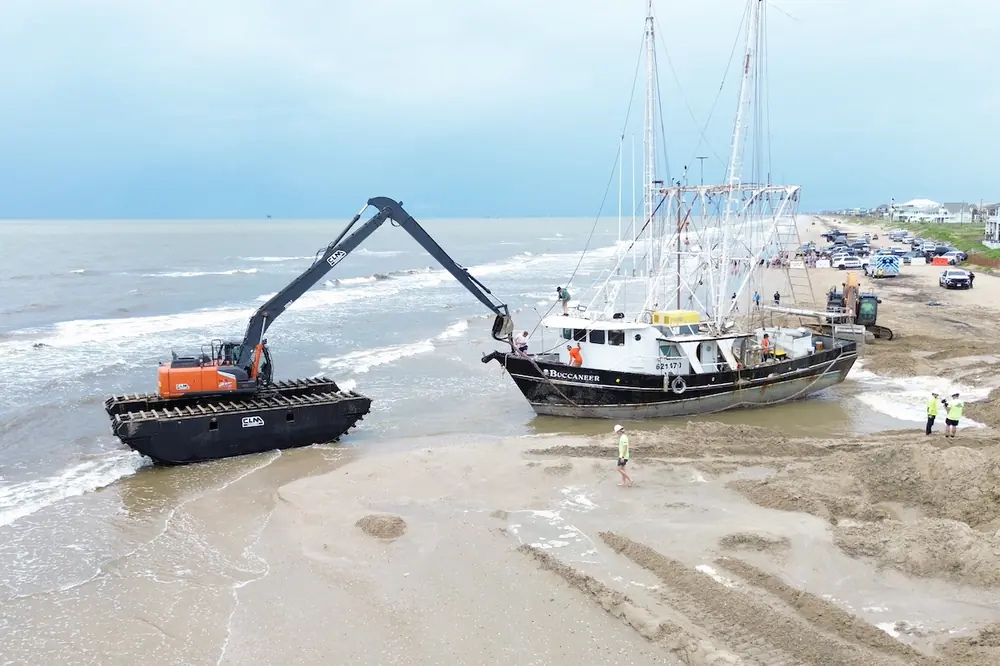
That specific engineering expertise is what led to a wild, high-profile recovery operation on the Texas coast. A commercial shrimp boat hit a sandbar close to shore near Crystal Beach on the Bolivar Peninsula. The captain killed the motor, and the relentless surf pushed the heavy vessel hard into the sand, leaving it dry-docked and stranded on a beach protected as a sensitive sea turtle habitat.

| Your local Trimble Construction Division dealer |
|---|
| SITECH Indiana |
| SITECH Mid-America |
| SITECH Ohio |
| SITECH Mid-South |
| SITECH Midway |
The situation blew up on social media, catching the attention of the crew from the Discovery Channel show “Diesel Brothers,” led by Diesel Dave. The TV production team reached out to CLM to see if they had the iron capable of pulling off a massive, timed beach recovery.
CLM did not hesitate. They shipped a specialized pontoon tracking excavator straight out to the beach. Working against a strict 36-hour deadline before the tide window shut, the recovery crew used the amphibious machine to dredge out the thick sand around the grounded hull, effectively creating a channel through the surf zone. Once the boat was freed up from the sand’s suction, they hooked it up to a heavy dozer and the CLM pontoon machine, walking it cleanly backward into deep water.
The episode racked up over 2.5 million views on YouTube, showcasing to the entire construction industry exactly what CLM’s custom rigging and willingness to innovate could handle under pressure.
“Our expertise in installing specialty attachments for specific applications really appeals to our customer base,” Marketing Director Dana Degueyter-Reynolds said of the company’s niche focus.

| Your local Komatsu America Corp dealer |
|---|
| Brandeis Machinery |
Whether recovering a stranded vessel on a Texas beach or helping a contractor clear out a Louisiana marsh, CLM’s success comes down to treating a machine like a blank canvas for the contractor’s problem.
To support the heavy civil, highway, municipal, and industrial construction sectors across Louisiana and Texas, CLM Equipment Co. maintains full-service sales, rental fleet, and parts support for the following equipment lines:
- Hitachi excavators: Full-line hydraulic crawler excavators designed for high-production dirt moving, road building, and mass excavation
- Hitachi wheel loaders: Heavy-duty, high-horsepower material handling wheel loaders engineered for mining, aggregate, and civil site prep
- ASV track loaders: Compact track loaders equipped with patented rubber-track undercarriages for high traction and ultra-low ground pressure
- Yanmar excavators: Highly nimble compact and mini excavators designed for tight utility infrastructure, municipal drainage, and urban job sites
- Yanmar skid steers: Durable, high-turn compact skid steer loaders engineered for rapid material moving and attachment versatility
- Gradall equipment: Specialized telescoping-boom crawler and wheeled excavators designed for highway finish-grading, ditching, and slope work
- FAE land management/land clearing: Heavy-duty forestry mulchers, brush cutters, and land-clearing attachments for right of way management
- FAE road construction: Advanced soil stabilizers, asphalt shredders, and rock crushers built for deep road reclamation and base preparation
- Manitou forklifts: High-capacity rough-terrain forklifts and material handlers built to keep commercial and industrial job sites moving
- Pettibone equipment: Heavy-duty telehandlers and specialized material handling units built for rugged pipe yards and oilfield logistics
- Atlas equipment: High-production industrial material handlers and scrap recycling cranes optimized for heavy sorting applications
- Fortress shears: Demolition and recycling shears
- Mantsinen: Material handlers including mobile industrial machines and industrial tracked machines
As CLM Equipment Co. celebrates its diamond anniversary, the conversation naturally turns toward continuity and the horizon. In the heavy equipment business, family-owned independent dealerships are a dying breed; most eventually get swallowed up by massive multi-state rental networks or private equity firms. For Floyd, keeping the company independent is not just about pride — it is about protecting the specific culture that built the business from a single shop footprint.
| Your local New Holland dealer |
|---|
| Burris Equipment |
“We built CLM as a family organization that was committed to giving our customers exemplary service,” Floyd said. “And our customers became our friends and partners.”
To keep that philosophy alive, CLM avoids the common pitfall of handing out corporate executive titles to the next generation without onboarding them from the ground up. The transition of leadership requires family members to understand the day-to-day grit of the shop, the yard, and the satellite branches.
Today, the second generation forms the operational spine of the executive team. Blake commands the company’s entire sales engine and inventory strategies across both Louisiana and Texas, while Dana directs the company’s regional marketing, branding, and communications footprint.
Now, the third generation is stepping into the business under the exact same “learn by doing” rules that Floyd faced in 1966. Down in Houston, Texas, Blake’s daughter, Chelsea, is on the ground helping Dana drive the company’s regional marketing and brand strategies. Meanwhile, Dana’s youngest son, Evan, recently graduated high school, bypassed the traditional corporate track, earned his CDL, and started with the company in January. He did not get a comfortable office; he started in the back of the shop handling check-ins and check-outs, along with hauling equipment.

| Your local Sennebogen LLC dealer |
|---|
| Brandeis Machinery |
“I see the look in my dad’s eyes, whenever he walks in and sees me or Blake. Now, that’s how I feel too,” Dana said, describing the pride of watching the third generation learn the ropes from the ground up. “It's a good feeling to see them wanting it.”
That generational handoff ensures that as CLM continues to grow, it will not lose control of its people or its core values. The strategy remains slow, deliberate, and entirely organic, focusing deeply on high-profit, specialized niches rather than chasing raw volume for the sake of getting big.
“We don’t want to get too big to where we lose control of our people,” the leadership team emphasized. “We make decisions on the spot. ... We make it too easy to do business.”
The future footprint is already taking shape. CLM recently purchased property in Port Allen, Louisiana, to establish a permanent stronghold in the Baton Rouge market. The executive team is actively looking at land acquisitions to expand further into north Louisiana.

| Your local Deere & Co dealer |
|---|
| West Side Tractor Sales Co |
Dealership groups come and go, and lines of iron will always evolve. But as CLM enters its next 60 years, its foundation remains as solid as it was on August 1, 1966. By treating employees like family, contractors like partners, and keeping corporate red tape completely out of the way, this home-grown Gulf Coast original is aiming to prove that honest service after the sale never goes out of style.