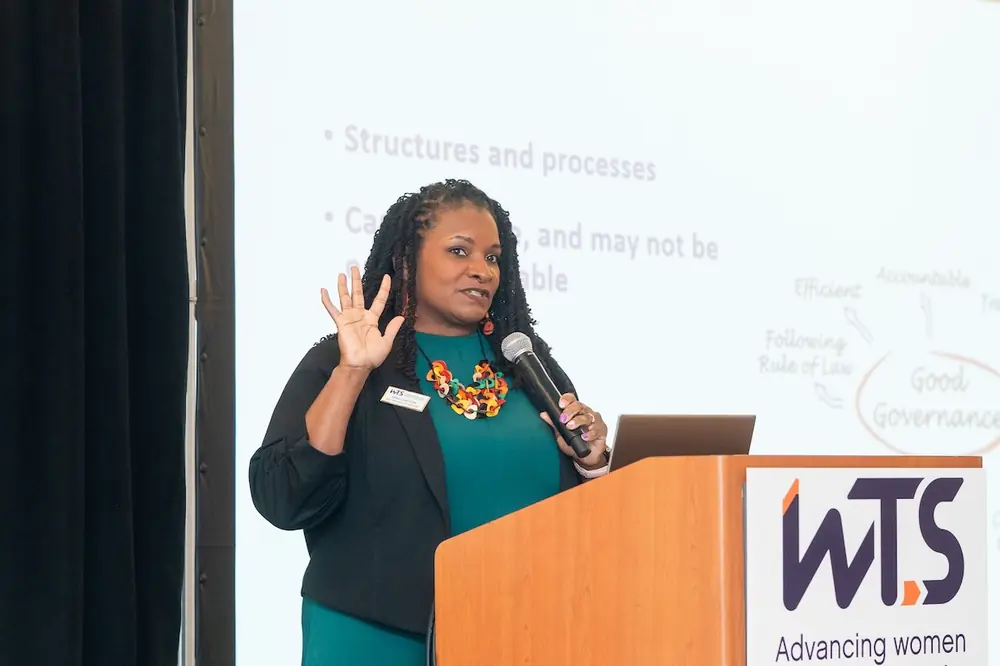
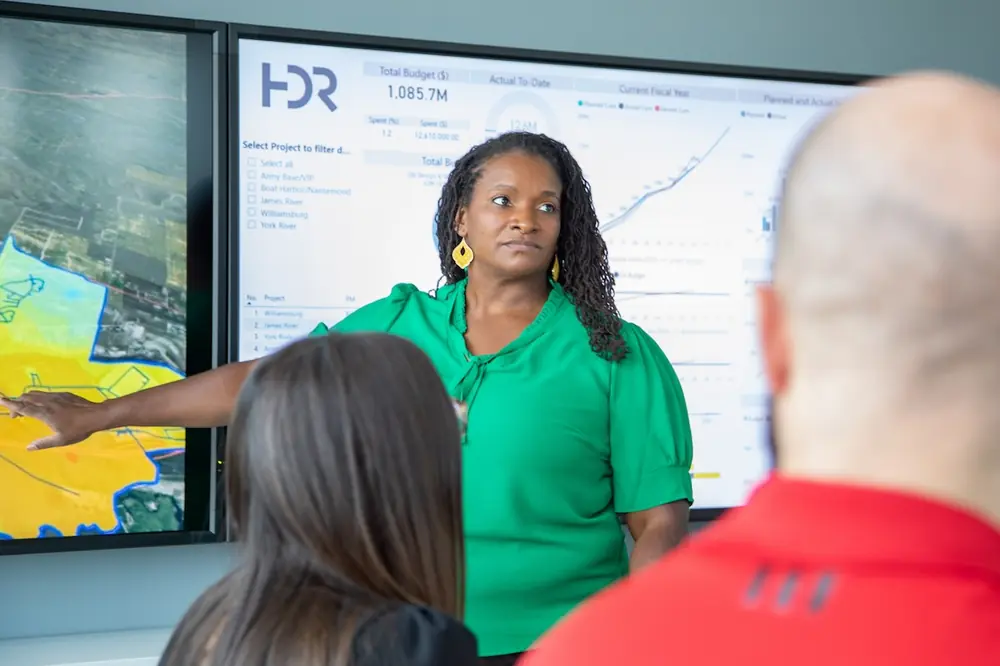
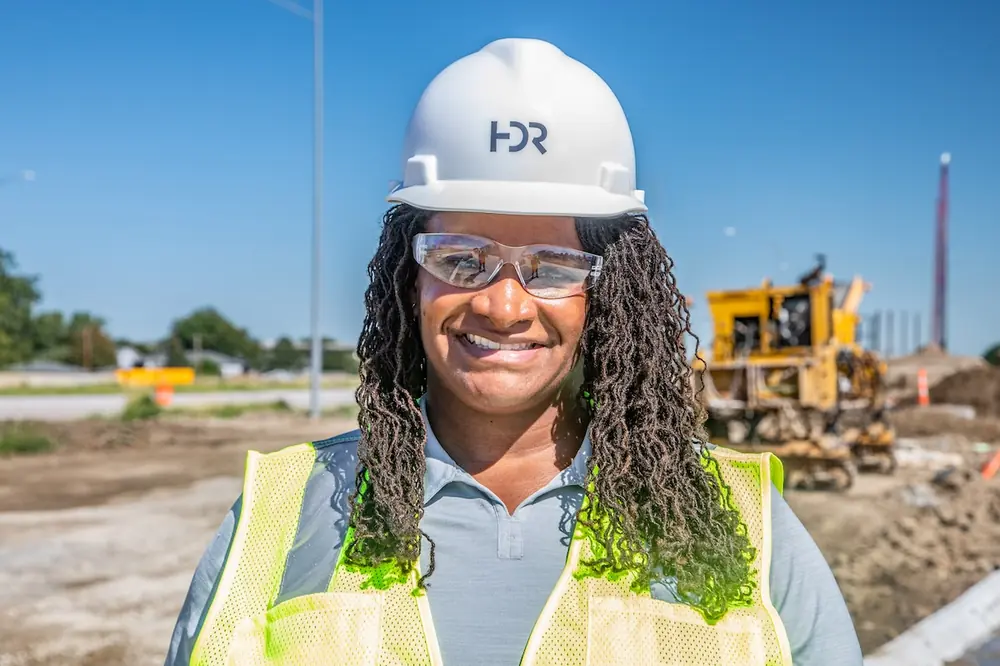


Erin Slayton, P.E., believes in the power of mentorship.
Looking back on her career, she can trace the defining moments and people who helped shape her journey. Each step forward was fueled not only by opportunity but also by those who took the time to invest in her growth, she said.
Today, Slayton is HDR’s Program Management Director. She’s managed over $10 billion worth of capital transportation projects and programs. But she still remembers what it felt like to be an intern trying to find her place in the industry, and she is determined to help others find their own paths.
Slayton recently began a two-year term as Chair of WTS International, a 10,000-member organization committed to advancing women in transportation. Slayton has been an active participant in WTS for much of her 25-year career and helped charter the WTS South Carolina chapter.
Below, Slayton shares her insights on mentorship, leadership, and creating opportunities for those who come next.

| Your local Leica Geosystems Inc dealer |
|---|
| Laser Specialist inc |
A few years ago, we changed the mission statement of WTS from “Advancing Women in Transportation” to “Advancing Women, Advancing Transportation.” We are not advancing women for the sake of advancing women. We truly believe that advancing women has a significant impact on the success of the transportation industry. Projects and policies have better outcomes when you have different voices and perspectives at the table.
But women who are young and driven may not know what opportunities exist for them. Or maybe there’s no one else in the room that looks like them.
Through WTS, women can step into leadership roles in their local chapters that may not be available to them at work. They can grow their networks and learn from other women in the industry through WTS connections and educational programming.
I have been fortunate to have several impactful mentors and sponsors, but one person has been there since the very start of my career journey.

| Your local Trimble Construction Division dealer |
|---|
| SITECH Tri-Rivers |
I remember being an intern and trying to figure out where I fit in this industry. I was working on the Tacoma Narrows Bridge project, and my supervisor at the time decided that at the end of my internship, I should do something a little intimidating. He took me to the Washington State Capitol and had me present to Washington State Department of Transportation executive leadership. I wasn’t sure that was something that I was ready for, but after I finished my presentation, someone turned to my supervisor and said, “You’re going to work for her someday.”
He could have laughed that off. Instead, he took it seriously. From that day forward, he elevated me. He promoted me. He advocated for me. He cleared paths I didn’t even know were blocked.
He couldn’t have known I would go on to lead signature mega projects and become the first Black woman Senior Vice President in HDR’s history. But he knew that helping one young woman rise was good, for her and for the industry.
I think about him often because it reminds me of the importance of allyship, and that leadership is never just about the role you’re in — it’s about what you build in others. I believe the time I spend mentoring will come back tenfold to the industry, because if there’s something I can do to help and support people in their growth, then it’s time well spent.
| Your local Hitachi dealer |
|---|
| ASCO Equipment |
Program management is the art of delivering interrelated projects in a coordinated effort by a multidisciplinary team that brings outcomes that no single project could achieve alone.
When we’re delivering a program, we’re focused on something bigger than just the sum of individual projects. We step back and look at how each project contributes to the overall goal. Using a programmatic approach helps us manage the risks by looking at all the individual project risks together in the overall program to find the “right” and most efficient means of delivery for the program.
At HDR, program management opens the door to opportunity — bringing together our deep bench of multidisciplinary talent to support program delivery while creating meaningful growth paths for employees across every discipline. Part of my job is to help people find those paths.
I often advise clients to integrate program management and construction management into a single team for the sake of simplicity and efficiency.
| Your local Hitachi dealer |
|---|
| ASCO Equipment |
There’s a lot of overlap between the two. With an integrated team, the owner doesn’t have to worry about managing two separate entities or determine where the program management scope ends and the construction management scope begins. Instead, you have an integrated team working together for the good of the program, with a common goal of serving the client.
I also advise clients to engage construction management resources early. That early engagement really helps when it comes to mitigating risk and thinking through those implications for the entire life of the program. Having the construction management team involved early helps us make better decisions.
People often ask me what it takes to be a program manager. What are the credentials? What are the requirements?
My answer often surprises people, because entering program management is less about the specific technical skillset and more about an attitude. Nobody learns how to run mega projects in school. Virtually all the people who are doing program management today have learned on the job. What matters most is a sense of adventure. A willingness to do something new or different.

| Your local Yanmar dealer |
|---|
| CLM Equipment Co |
| WPI |
I tell employers to look beyond the specific rigid perceived qualifications of a role. I was hired for an internship after my freshman year of college despite having limited experience. Years later, I asked the hiring manager why he chose me. He said he liked that I was a college athlete. That told him I had time management skills, determination, grit, and was a good teammate.
That was a huge lesson for me. We all have more talent than what’s listed on our resume.
Training people to thrive in program management, or any specialty, calls for patience and a belief in people's potential. Great hiring managers recognize the innate strengths individuals bring to the table and invest the time to build the technical skills that help them grow, succeed, and make a lasting impact.