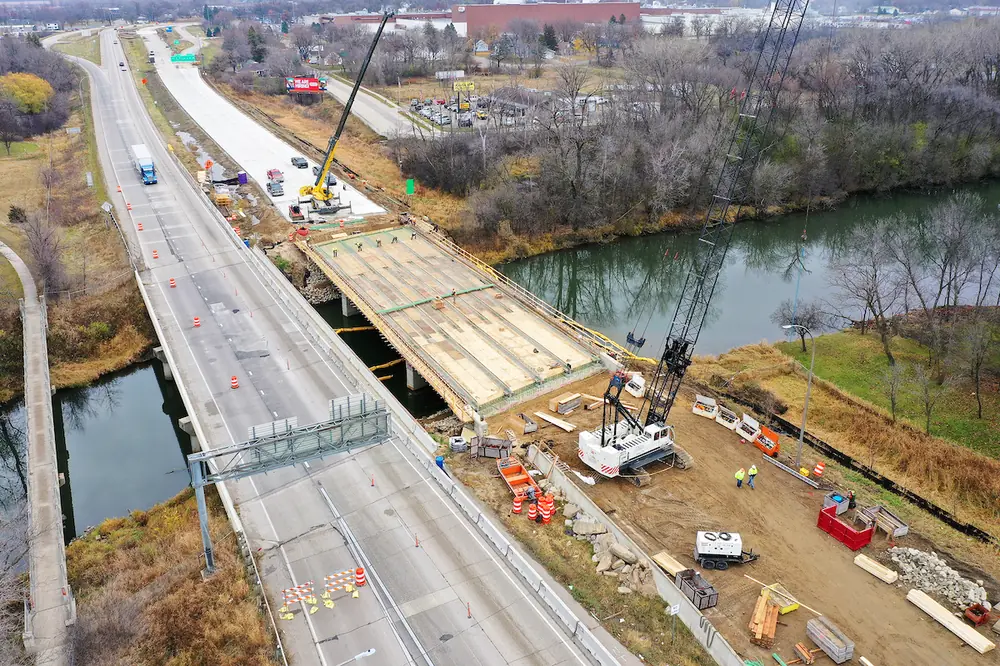
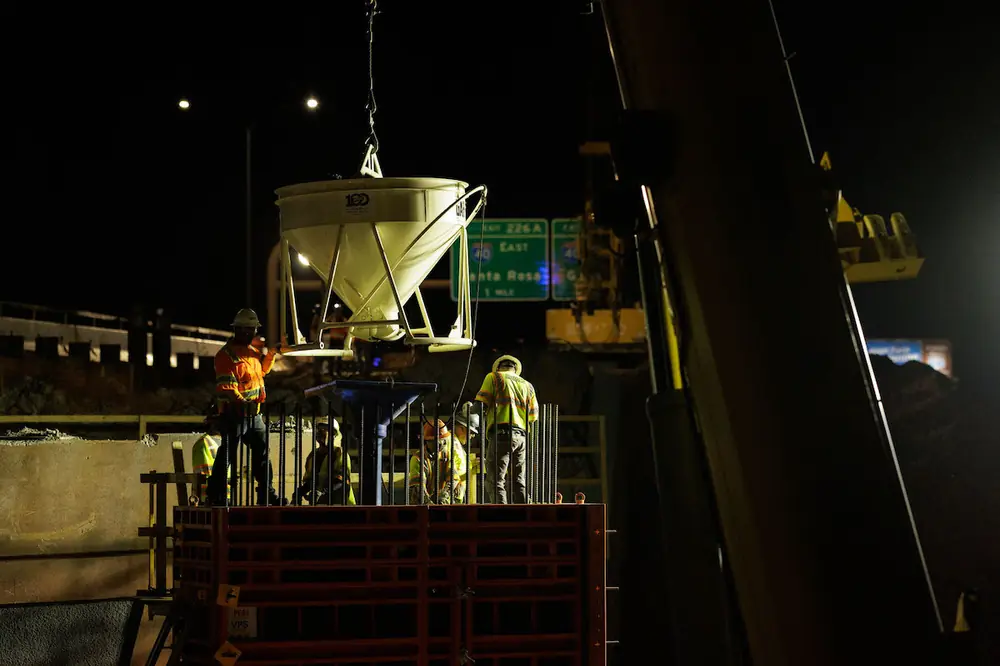
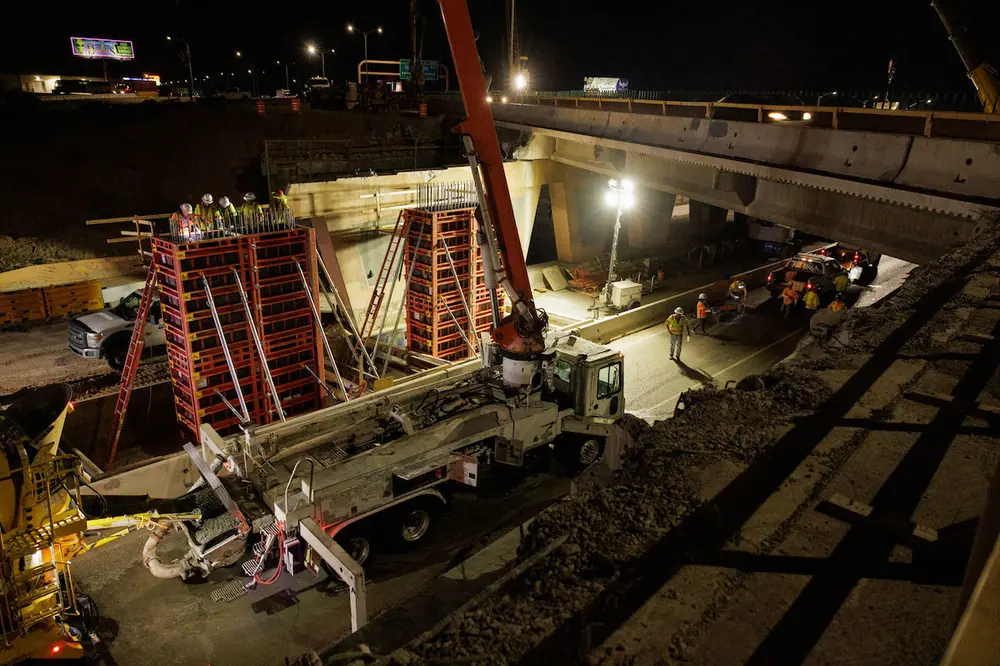
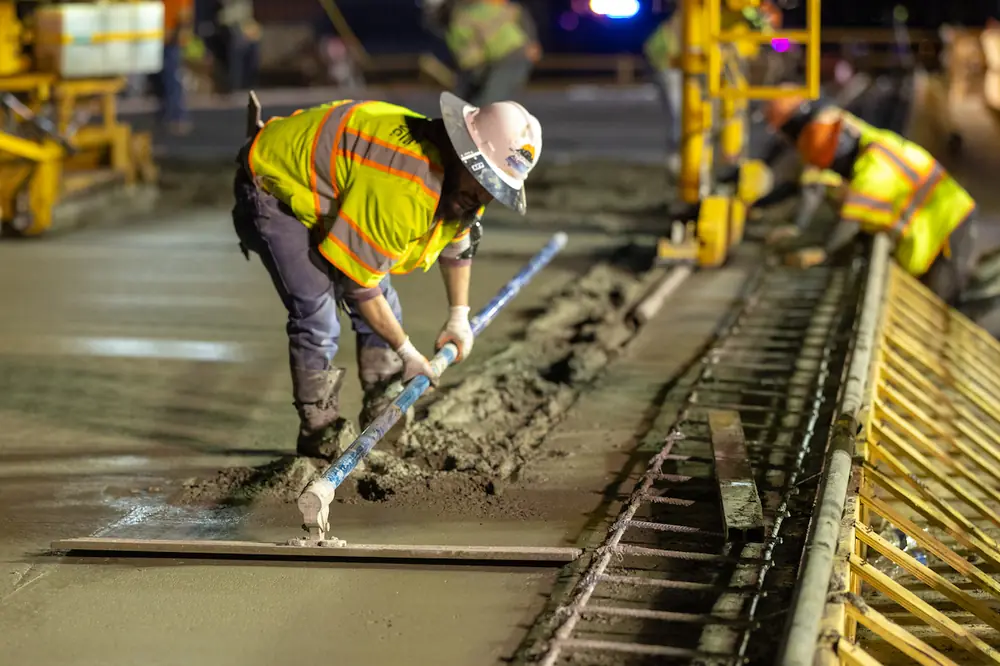
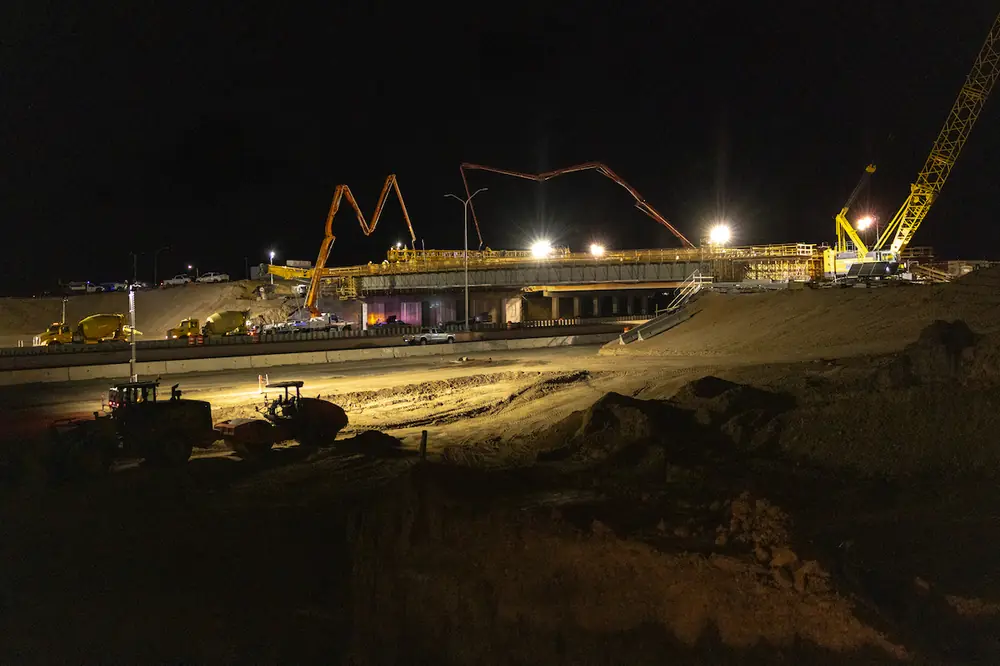

Interstate 25 (I-25) is a north-south highway spanning nearly 1,100 miles, beginning in Las Cruces, New Mexico, and terminating in Buffalo, Wyoming. A major city that I-25 traverses is Albuquerque, New Mexico, where one of the New Mexico Department of Transportation’s (NMDOT) largest projects is taking place. For the I-25 Improved Comanche to Montgomery design-build project, the department is partnering with AECOM and local contractor, AUI Inc.
The Albuquerque metro area has a population of nearly 1 million, while the city itself has approximately 560,000 residents. The project is taking place in northeast Albuquerque. The average daily traffic for this section of I-25 is 100,000, and NMDOT estimates that traffic will continue to grow. The area surrounding this stretch of I-25 is primarily commercial, with some nearby residential development.
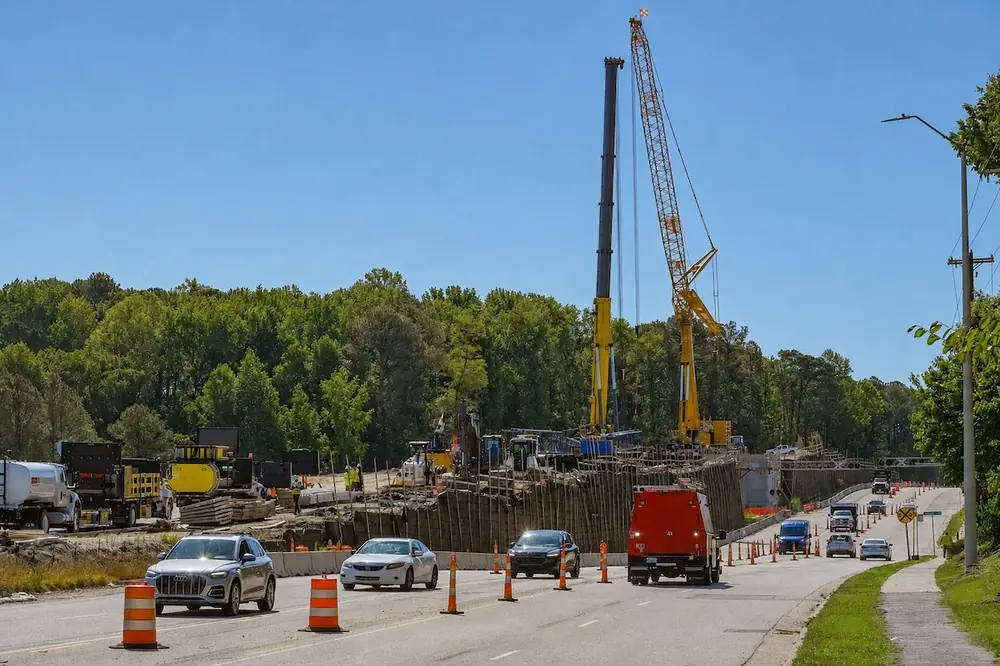
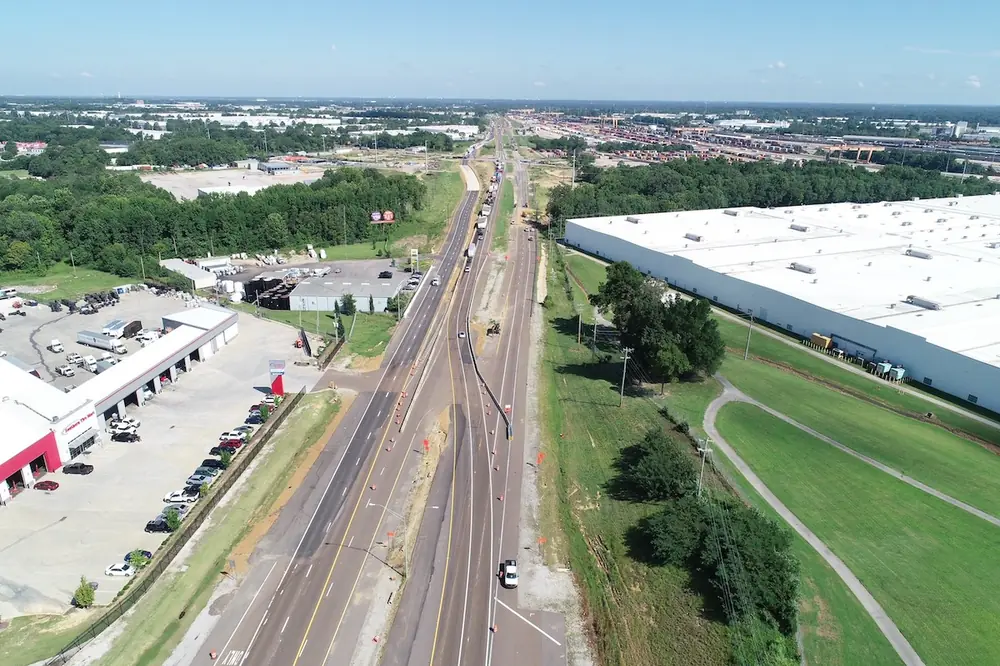
The project is focused on reconstructing two major interchanges, along with the section of roadway between them. The Montgomery and Comanche interchanges are 1 mile apart, and the total project area is approximately 2 miles.
The two interchanges represent the last pinch point on I-25 in the area. They are the only interchanges where I-25 is three rather than four lanes. Because the area has fewer lanes, commuters regularly experience traffic backups while traveling through the project area. NMDOT expects the project to improve travel times and increase safety.
The large scope of work includes the following, according to NMDOT:
- Widening of I-25 in both directions
- Addition of a southbound lane on I-25
- New asphalt pavement
- Improved frontage road system to allow for safer access to I-25 and the local roadway network
- Advanced U-turns for improved east/west connection
Improvements at the Comanche and Montgomery interchanges include:

| Your local Topcon Positioning Systems Inc dealer |
|---|
| Linder Industrial Machinery |
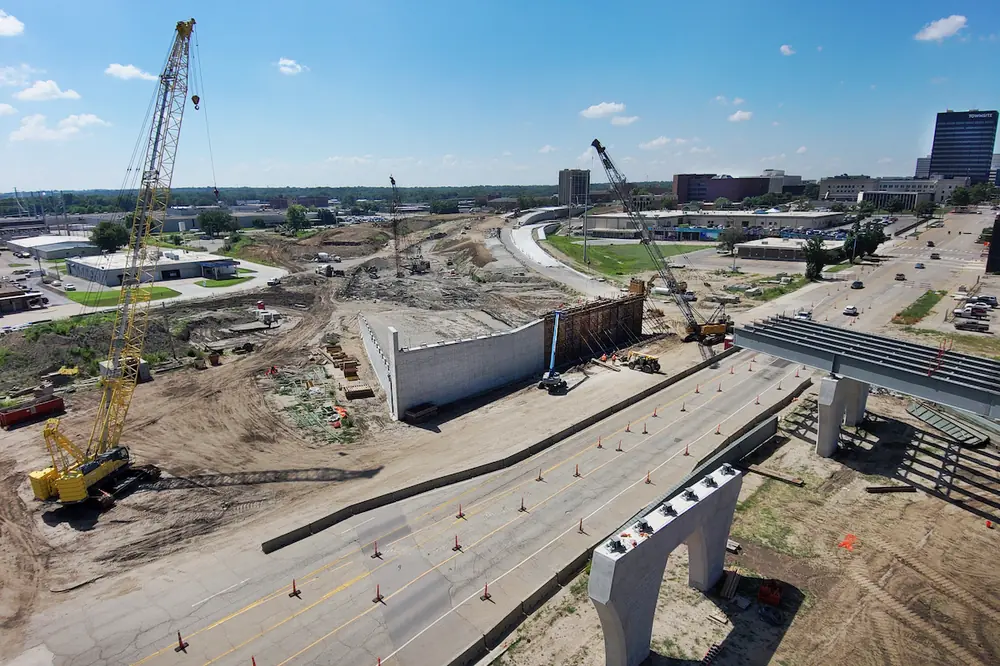
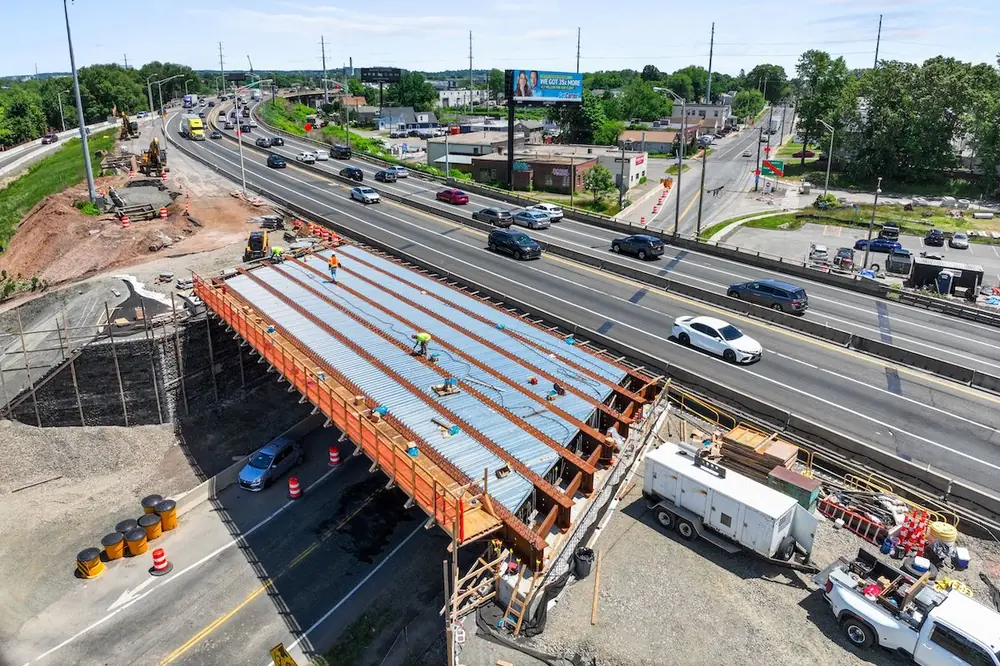
- Construction of two north- and southbound bridges at the Comanche interchange
- Construction of two east- and westbound bridges at the Montgomery interchange
- Advanced U-turns for frontage roads
- Reconfiguration of on- and off-ramps
- Barrier-separated shared-use paths for pedestrians and cyclists
“There’s also a pedestrian aspect to the project,” AUI Inc. Design Build Manager Patrick Shaw said. “There were no bike lanes at the Montgomery interchange, and those at Comanche were inadequate.”
The team is installing a 10-foot-wide lane on both sides of traffic at each interchange.
Upon completion of the project, drivers will be able to easily cross the highway from one side to the other via the Texas U-turn. According to the Crash Modification Factors Clearinghouse, Texas U-turns allow “vehicles traveling on a one-way frontage road to access the opposing direction one-way frontage road via a U-turn before the terminal intersections at the diamond interchange. This technique removes two potential left-turn maneuvers from the adjacent at-grade intersections.”
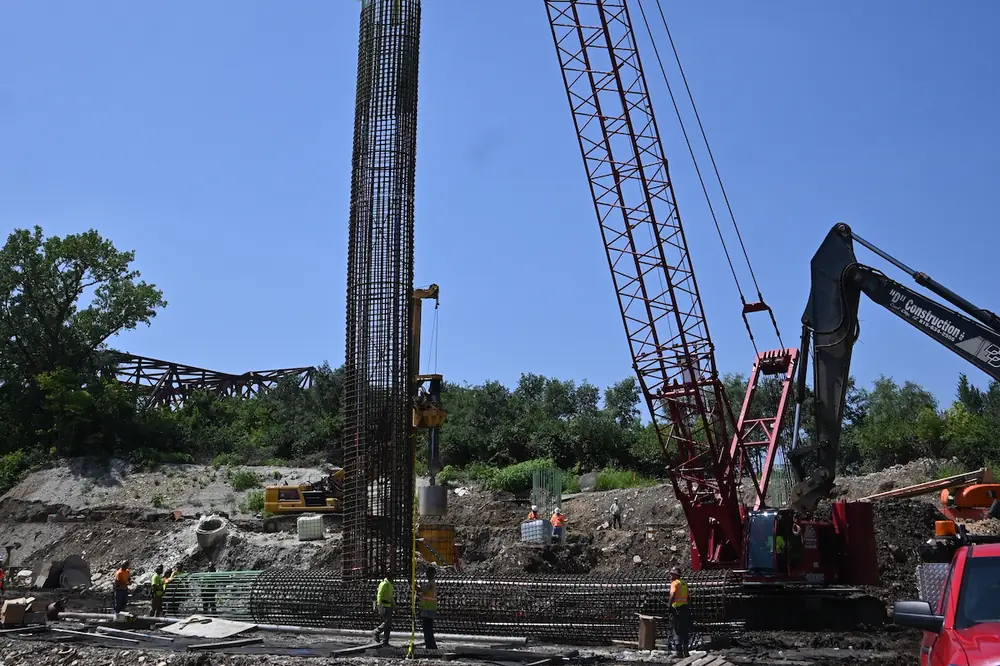
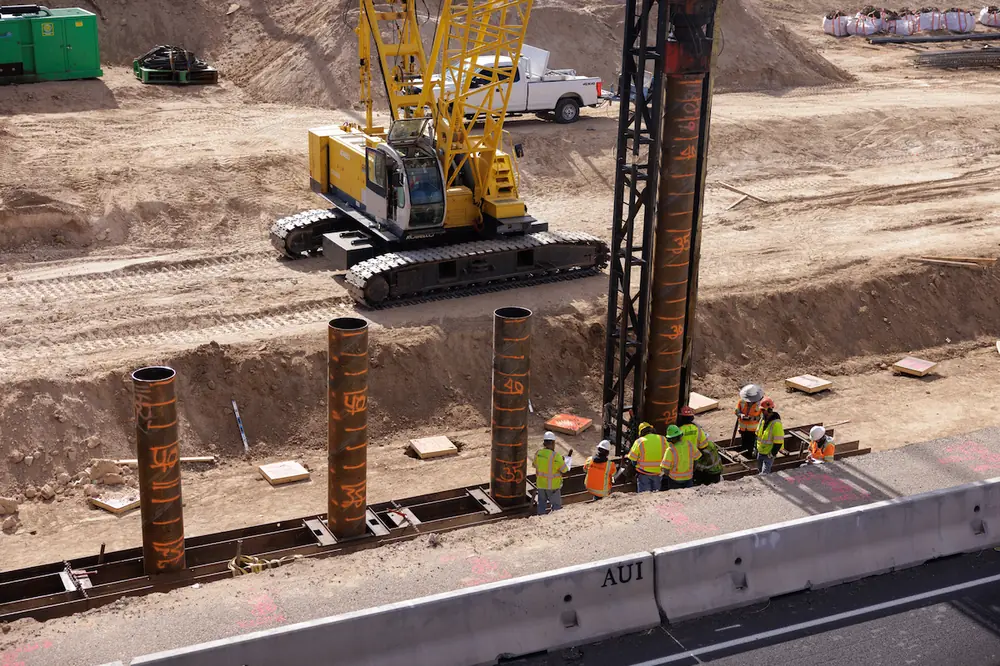
The team ran into some issues while they were foundation piling. The foundations will serve as a support for the north- and southbound braided ramps and bridges for the Montgomery and Comanche on- and off-ramps.
The subsurface beneath the braided ramp collapsed, causing two piles to fail during installation. The team’s engineers had to redesign the abutment footers, adding more piling to make it work.

| Your local Volvo Construction Equipment dealer |
|---|
| Richmond Machinery & Equipment |
Shaw said the failure was caused by “a geotechnical issue, as there were unforeseen conditions. There was a concentration of cobble only in the areas of the braided ramp bridges. The area right at the tip is what crumbled. We didn’t notice it until we went to pour concrete.”
The team handled it by drilling and cleaning out the holes.
“We did some extra cleaning of pre-bore holes for the piles, put in sand, and hammered the pile until we got to the required depth that could support the foundations,” Shaw said.
The issue meant the team had to redesign the abutments on the fly.

| Your local Komatsu America Corp dealer |
|---|
| Linder Industrial Machinery |
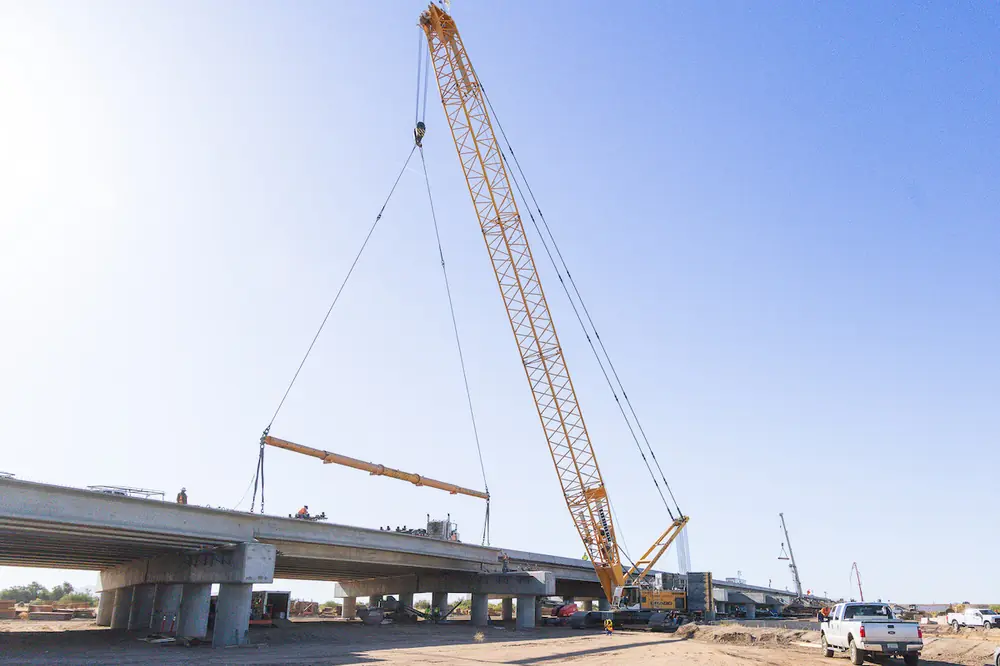
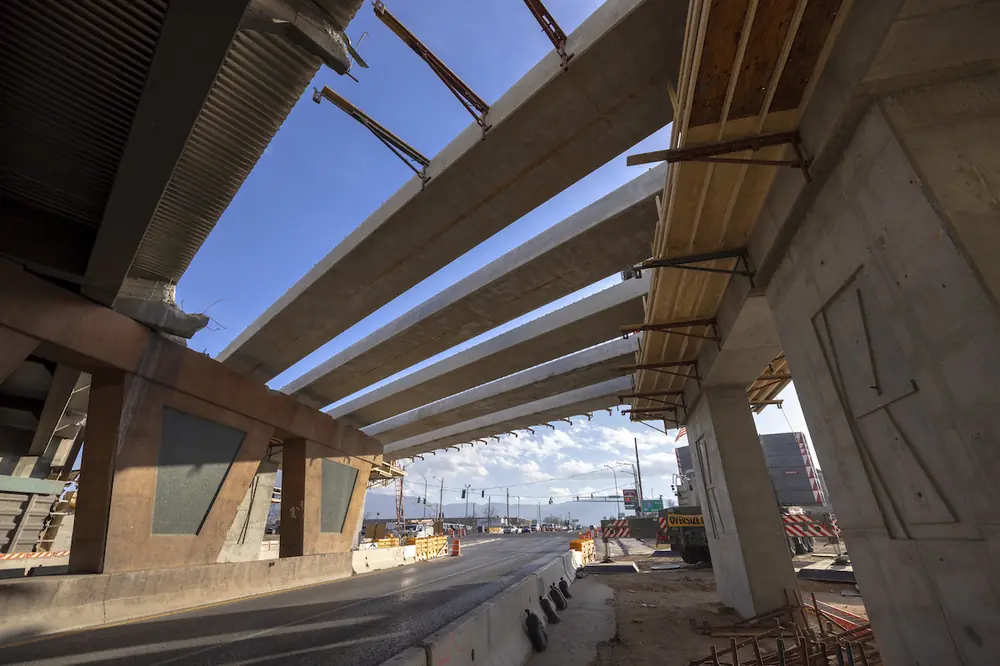
As part of the project, the team is installing 78-inch-tall girders, achieving the longest span NMDOT has ever done with concrete girders.
One of the issues that came with these girders was a lack of expected camber. There was a 7-inch deficit of camber causing multiple issues. The stirrups in the girders would no longer extend into the deck, and the increased weight resulting from thicker haunches would place additional dead load on the bridge that had not been accounted for.
“We installed shims in the girders at the bearing locations, which raised it up to cause no issue with the bars,” Shaw said. “We bent the bars at the abutments and installed a 4.5-inch-thick piece of steel to fill the gap.”
Finding, acquiring, and installing the steel was a time-consuming process, and it has impacted the project’s schedule.

| Your local Bomag Americas dealer |
|---|
| Linder Industrial Machinery |
AUI, which was founded in 1981, is headquartered in Albuquerque. The company is New Mexico’s largest multi-disciplined and diversified heavy-civil contractor.
“We’re very proud to be the local company that NMDOT selected for this project,” Shaw said. “NMDOT has done a few significant design-build jobs in the past but never worked with local contractors.”
The team for the I-25 Improved Comanche to Montgomery project is composed of many local contractors, including AUI, so money is being reinvested into Albuquerque.
Shaw suspects that NMDOT chose the design-build delivery method for the project due to design issues with the Comanche interchange.

| Your local Trimble Construction Division dealer |
|---|
| SITECH Mid-South |
“NMDOT wasn’t able to make it work with the braided ramps, so they added it to the Montgomery job,” he said. “If NMDOT had waited until Comanche was designed, it would have pushed the job way into the future.”
The contract for the design-build project is $258 million. The state is on budget, Shaw said, due to a limited number of major change orders. However, one significant change was because of the increase in state-mandated wages for construction workers.
The city of Albuquerque has made requests for changes. Although they are not contributing to the project's financing, the city will handle maintenance once the project is completed. Federal and state governments are financing the project via an 85/15 split.
The issues noted above have increased costs and dented AUI’s bottom line.
| Your local Topcon Positioning Systems Inc dealer |
|---|
| Linder Industrial Machinery |
Construction on the project began in August 2024 and was originally scheduled to be completed in early to mid-spring 2027. However, Shaw estimates that the project will go slightly longer (around 1 1/2 months) and wrap up at the end of spring 2027. He points to the shim issue as the reason and added that the team used the “industry standard to backcheck what the camber should have been.”
The team has managed to remain close to the schedule, despite the two challenges.
“We can have a change mitigated in less than 48 hours, which is one of the beauties of design-build,” Shaw said. “There’s no complex, time-consuming RFI [Request for Information] process.”
He added that there have been 130 field design changes. The team has engineers in the field who address issues as soon as possible. The state also had significant maintenance of traffic (MOT) changes.
| Your local Topcon Positioning Systems Inc dealer |
|---|
| Linder Industrial Machinery |
“The NMDOT has been very willing to work with us on the fly, and that willingness has helped us to keep this project moving,” Shaw said.
When the project wraps up, it will eliminate the remaining pinch points on I-25 in the Albuquerque area. Drivers will no longer need to weave to get on and off the interstate. Shaw, who lives in the area, succinctly summed up what he said will be the biggest benefit: “The flow will be amazing.”
- Owner: New Mexico Department of Transportation (NMDOT)
- General Contractor: AUI Inc., Albuquerque, New Mexico
- Designer: AECOM, Dallas, Texas
- Engineers: NMDOT and AECOM
- Other Contractors: Guzman Construction Solutions, Albuquerque; San Bar, Albuquerque; MWI, Albuquerque