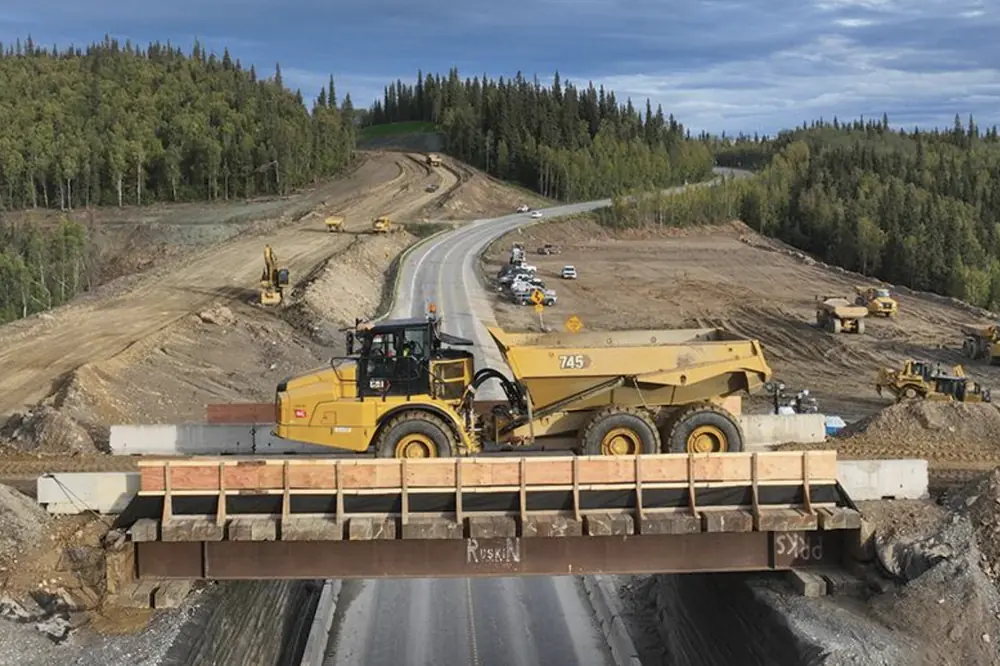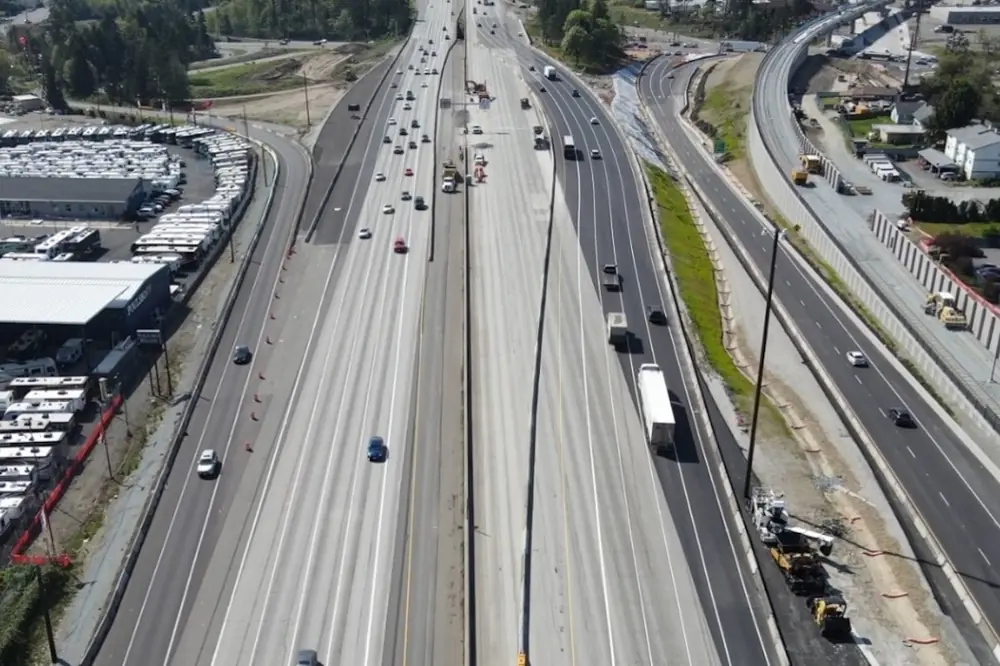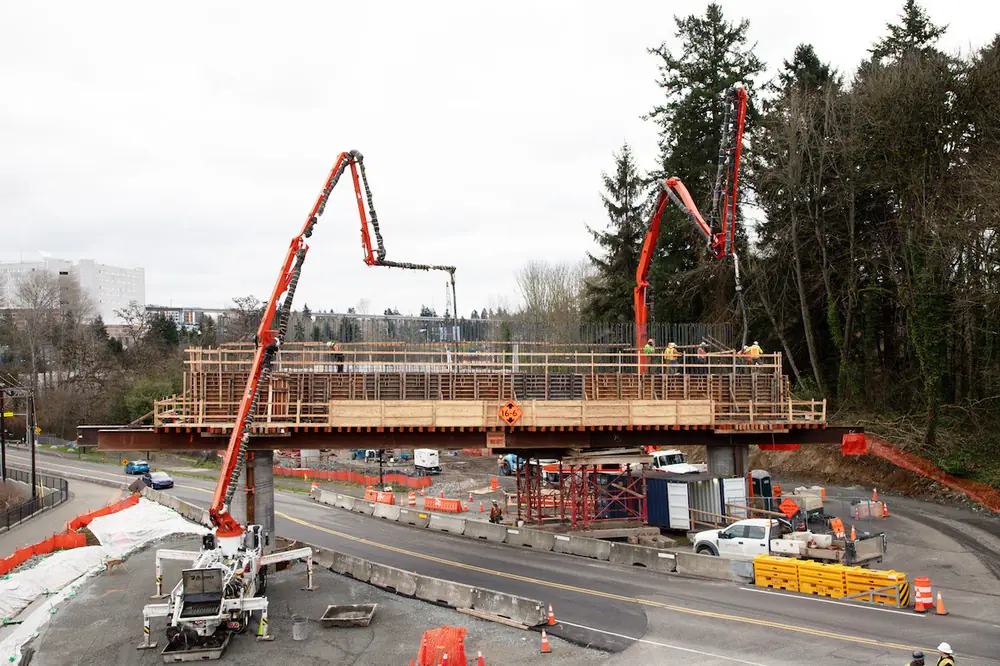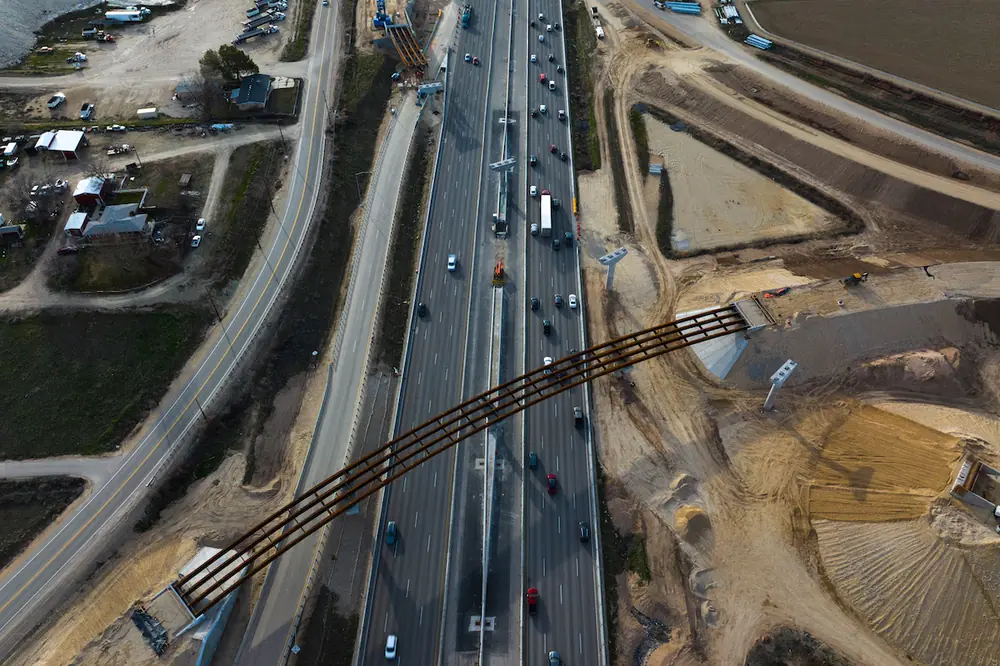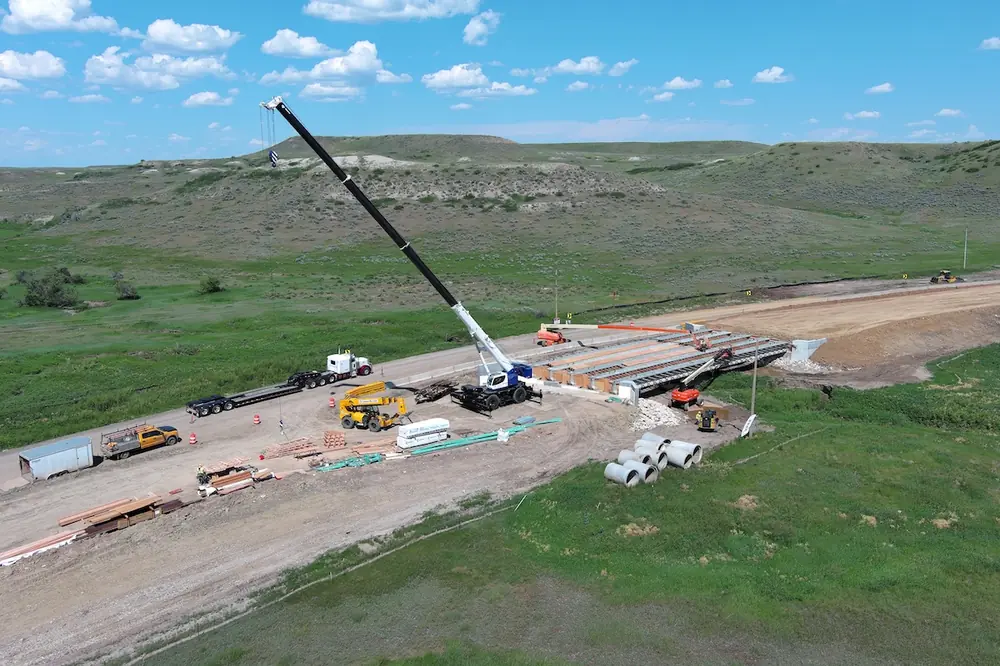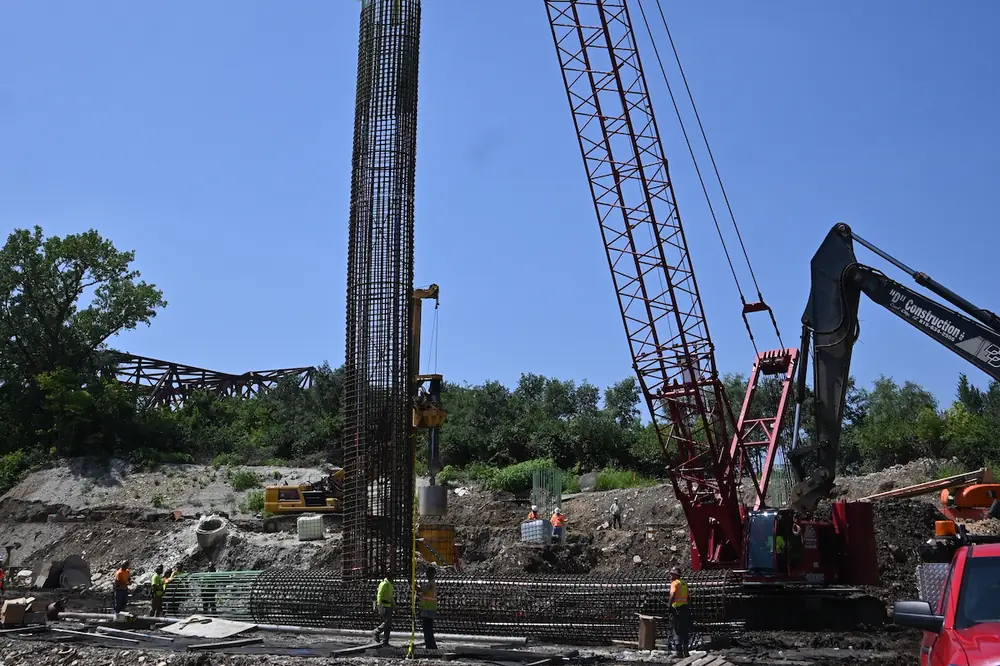
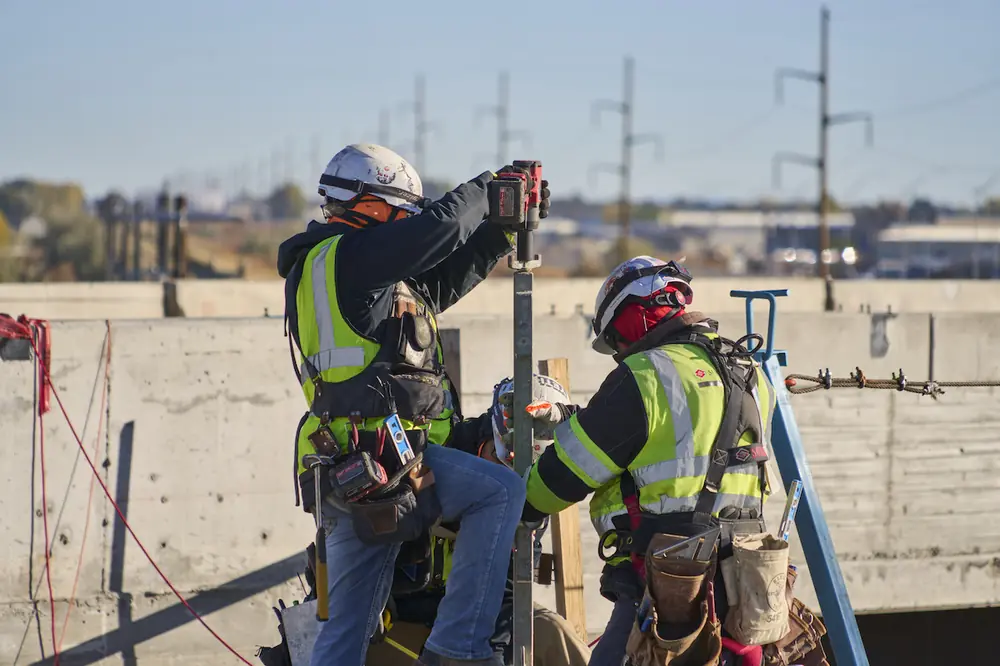
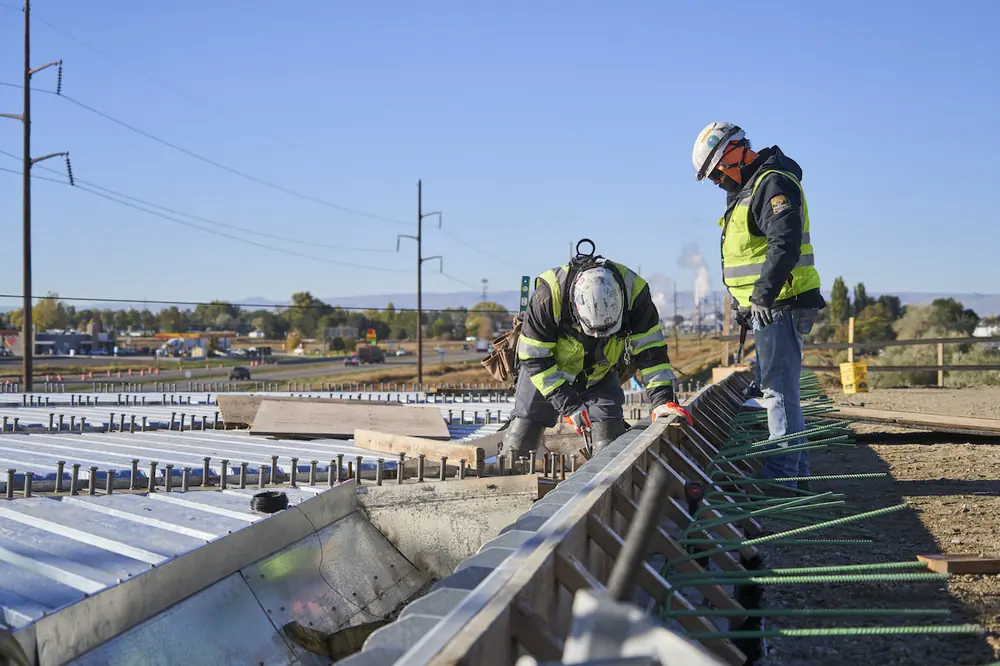
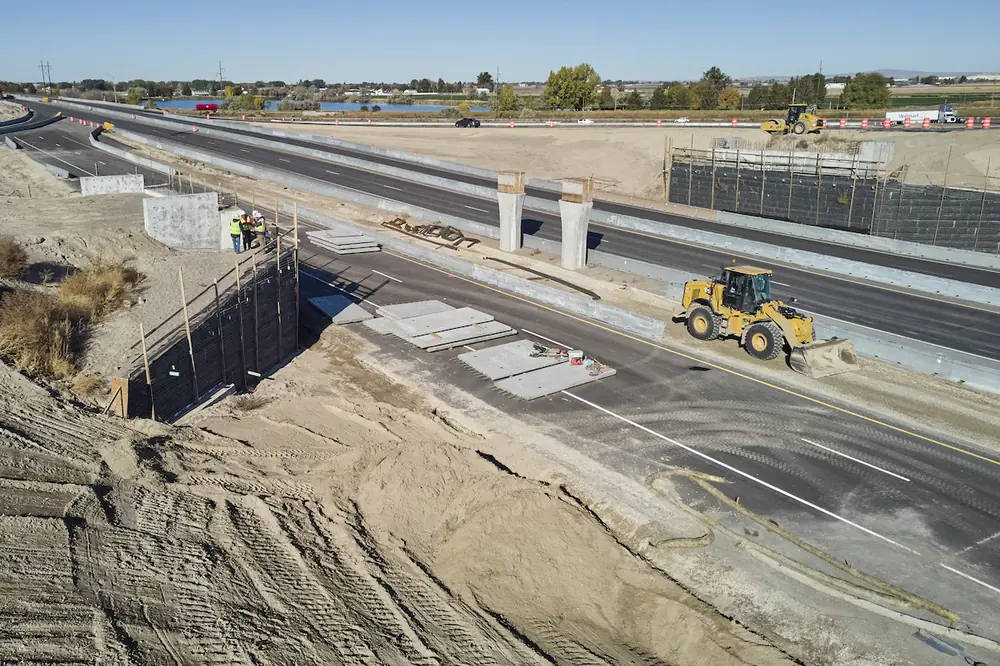
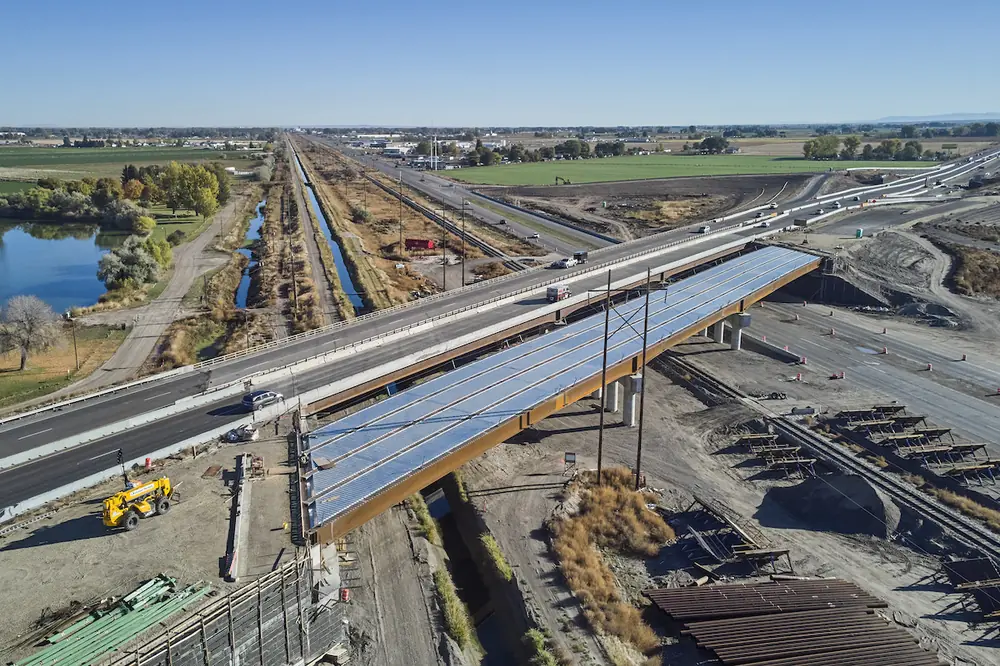
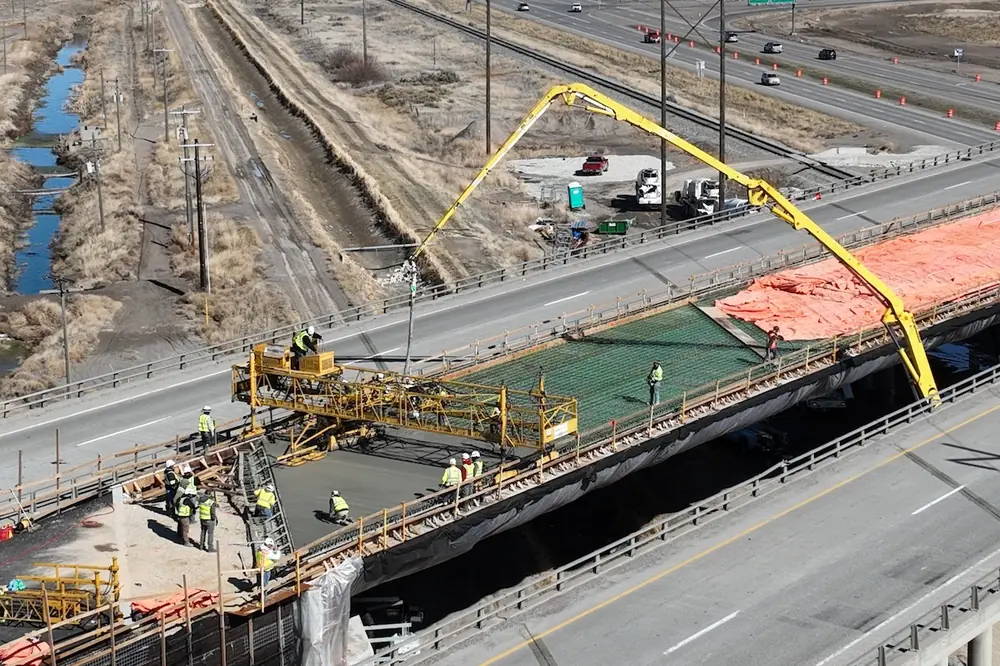
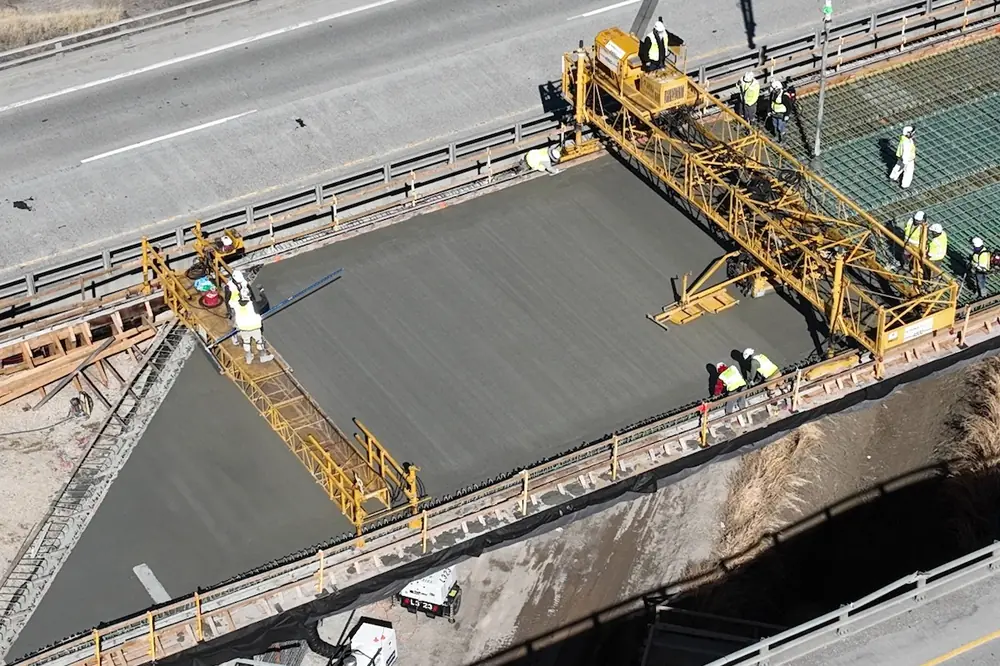
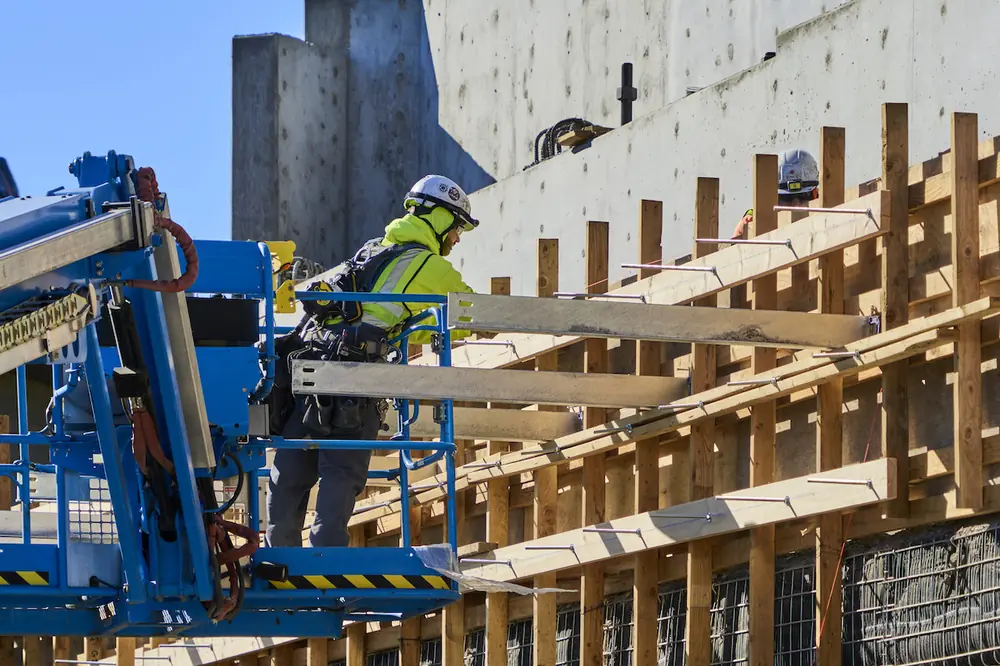
Located along Interstate 84 in south-central Idaho, the city of Heyburn has grown nearly 20 percent over the past decade, according to World Population Review. To keep pace with that growth and improve safety on a decades-old interchange, the Idaho Transportation Department (ITD) and general contractor Sundt Construction are rebuilding the Heyburn Interchange with new bridges, longer ramps, and a modern traffic configuration.
The current Heyburn Interchange was constructed over 60 years ago, and the aging infrastructure needed to be replaced, as it had reached the end of its service life. As is often the case with aged infrastructure, the Heyburn Interchange did not meet modern safety standards.
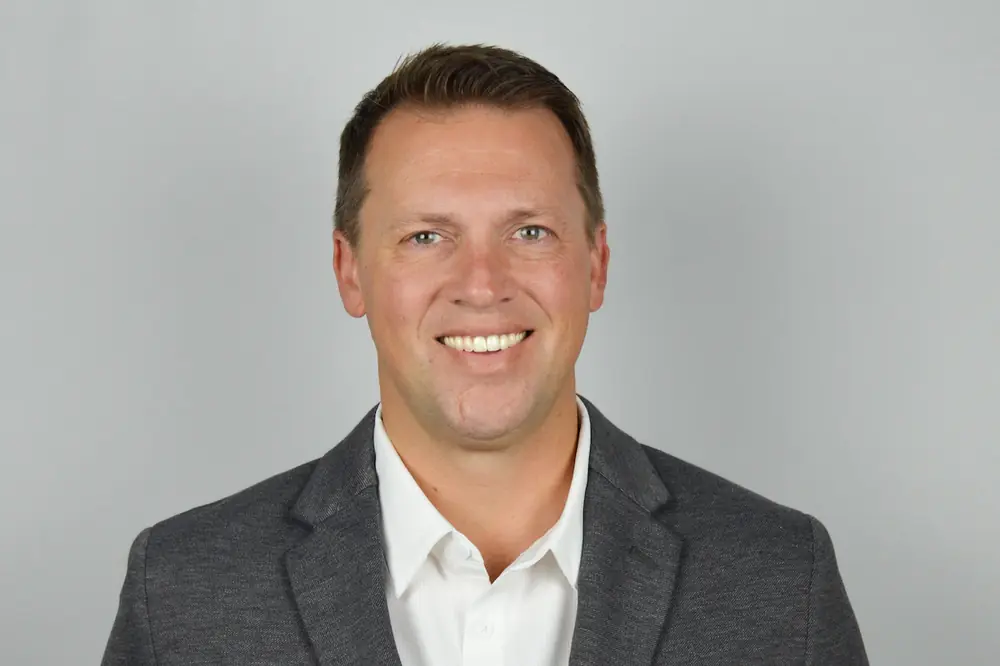
“One of the purposes of this project is to increase the safety of exiting traffic,” said Sundt Project Manager Aaron Vigilante, who is responsible for overseeing the schedule and financial success of the project. “Due to previous incidents on the interchange, ITD realized safer means to exit the route were needed.”
ITD’s website states that the new interchange is designed to “improve safety and keep traffic moving, meeting the community’s needs as the area grows.”
According to a Sundt press release, the scope for this project consists of:

| Your local Trimble Construction Division dealer |
|---|
| SITECH Northwest |
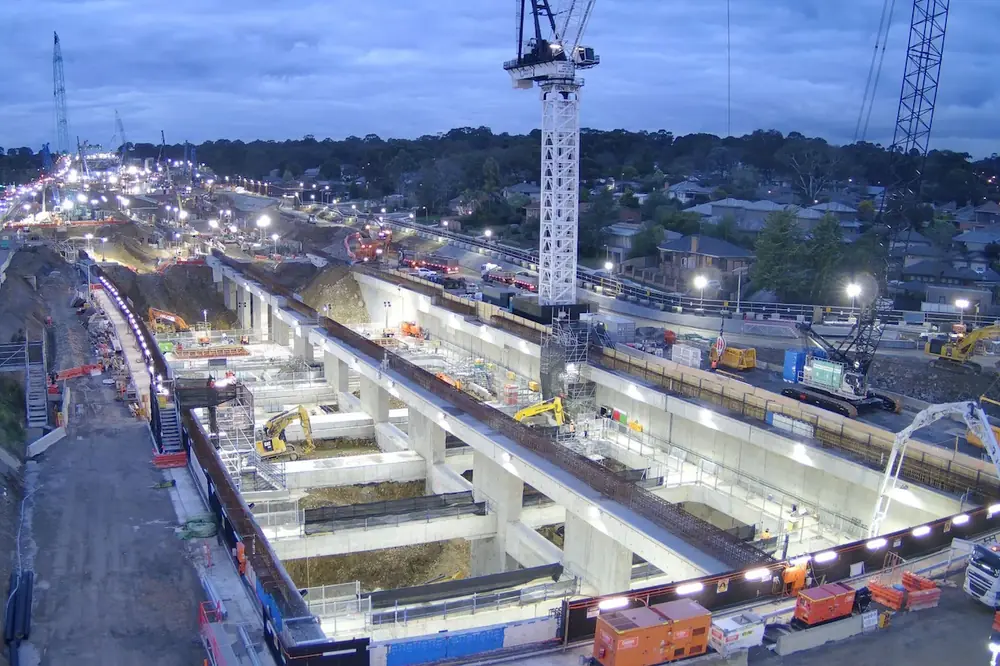
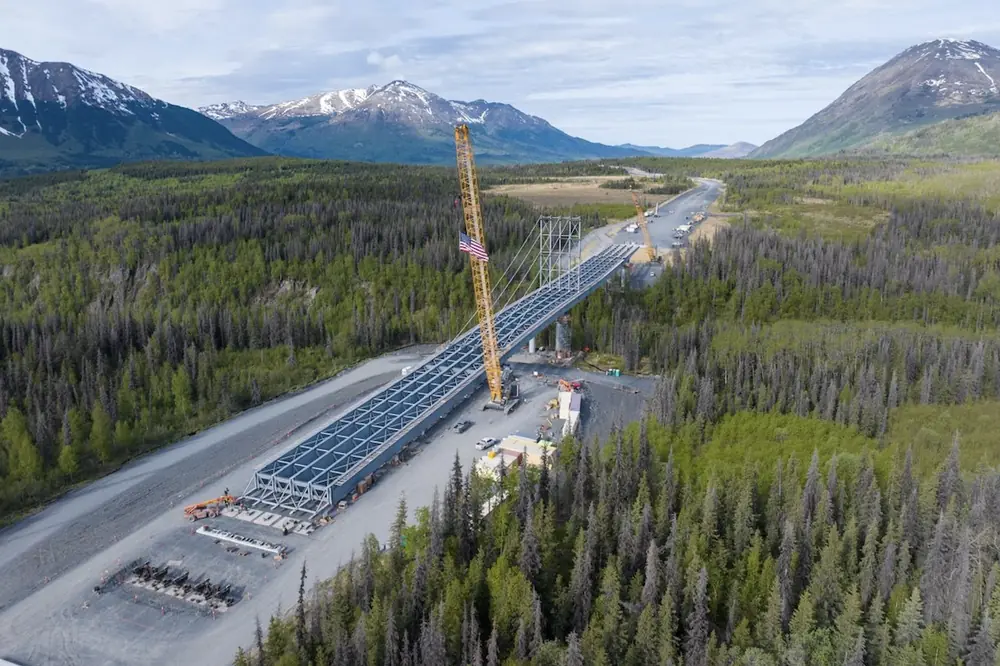
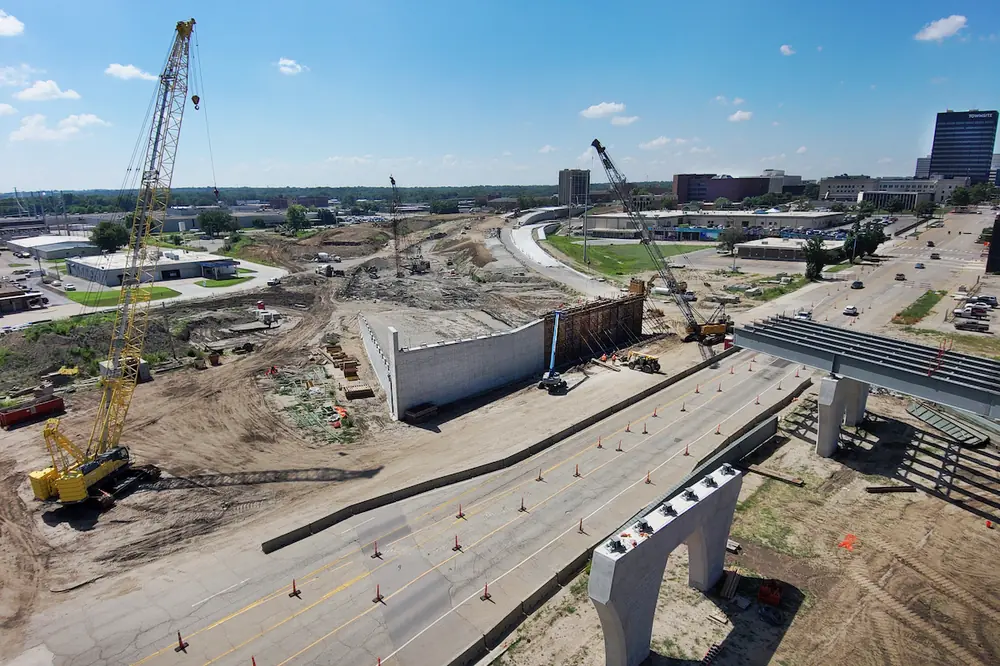
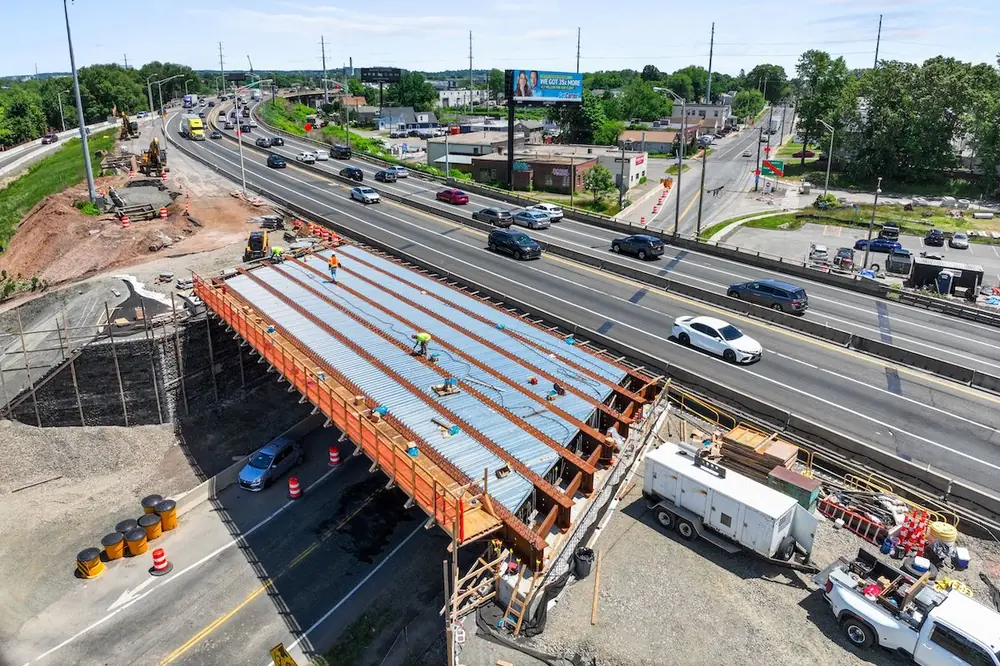
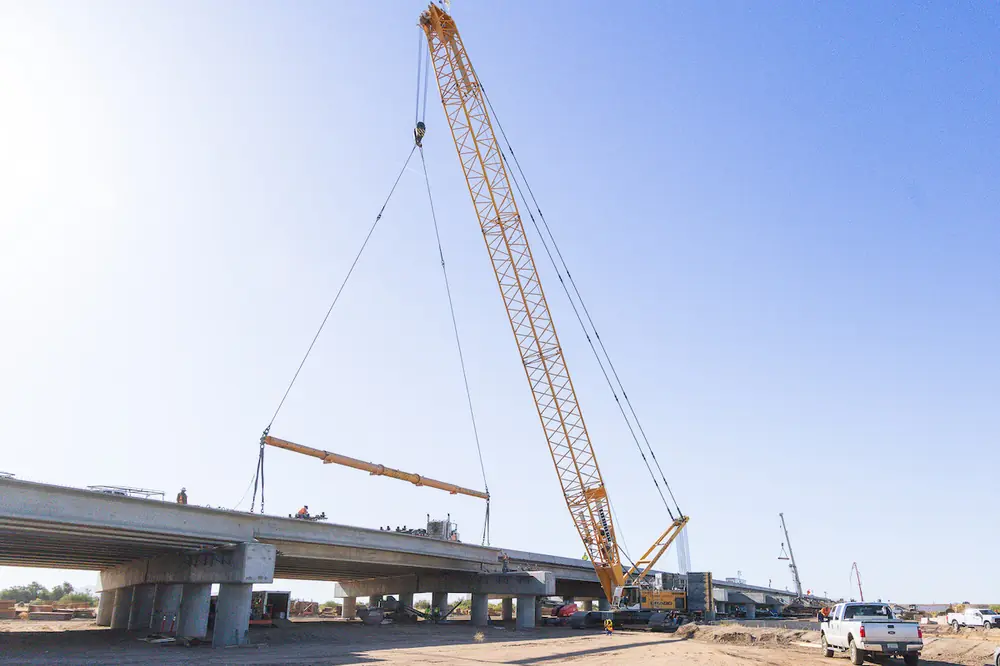
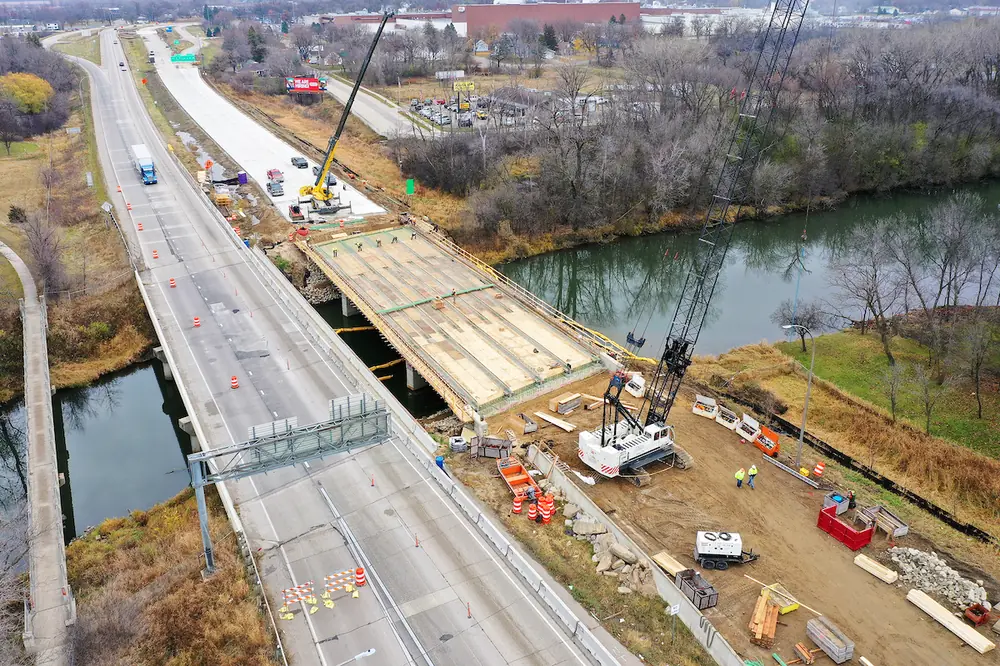
- Replacing the I-84 east/west structures over the Eastern Idaho Railroad and State Highway 24
- Constructing a new partial-offset-diamond interchange with an overcrossing bridge
- Reconstructing and realigning the existing ramps
The ITD website also says that the new interchange will be “shifted to the east and feature longer ramps to access I-84 and two new signals to control ramp traffic. The existing loop ramps will be removed, and the I-84 bridges will be replaced.”
The longer ramps and larger structures are expected to make entry and exit onto I-84 safer.
Open fields line this section of I-84. The city and surrounding area include irrigated fields of sugar beets, wheat, and potatoes, and the local economy is driven by agriculture. The road carries a significant amount of truck traffic transporting produce in and around the state and beyond.

| Your local Metso Minerals Industries Inc dealer |
|---|
| PacWest Machinery |
| Westate Machinery Co |
Idaho is a large state by land area. However, it has a small population, making it one of the least densely populated states in the country. According to the Idaho Department of Labor, 88 percent of Idaho’s land area is in counties classified as rural. Heyburn is located in a relatively remote area, which has impacted the project.
“Sourcing material, including bridge forms and engineering, has been a challenge,” Vigilante said. “Much of our materials came from the eastern part of the country, and transporting it here has been difficult.”
He added that the project is also a good distance from the major hardware chains, such as Lowe's and Home Depot.
The isolation makes planning even more important. By doing in-depth planning, the team ensures they have the materials and supplies they need and avoids delays due to shortages.

| Your local Gomaco dealer |
|---|
| Gomaco -Contact For a Dealer Near You |
“Planning is critical to maintaining our schedule,” Vigilante said.
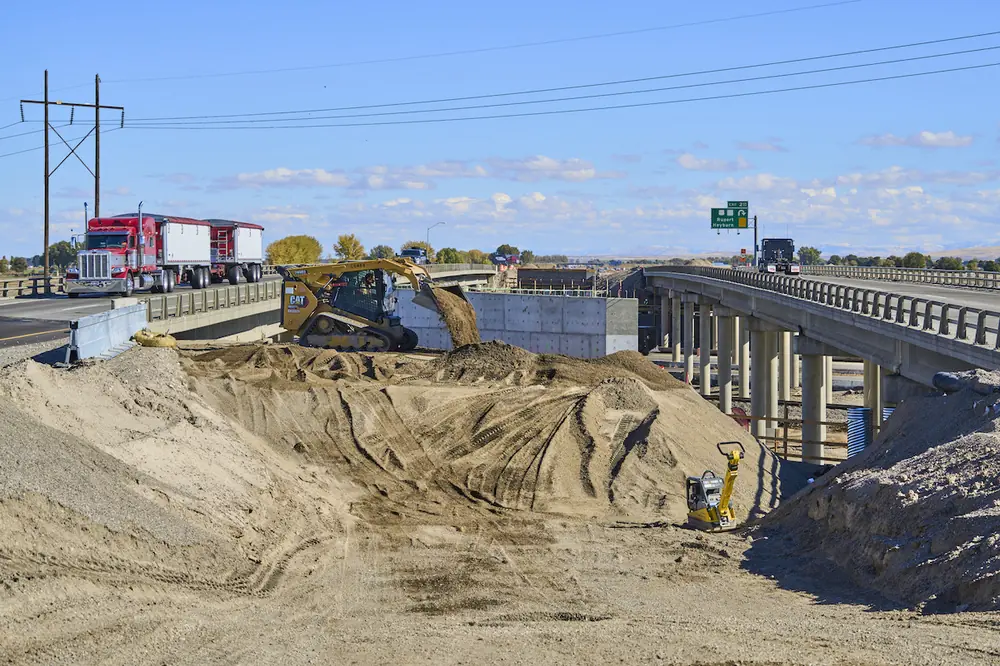
When the project commenced, Sundt proposed to IDT that the team borrow materials from the ITD maintenance yard located next to the project site. The original plan called for trucking the material in from off site, about 15 miles away.
The change in location resulted in several benefits. It reduced the number of vehicles on the road by significantly shortening haul-truck travel distances, thereby lowering environmental impacts. The change also improved safety by reducing traffic volumes in the area.
The borrow source was an adjacent maintenance yard. The land was uneven, and some areas were covered by water.

| Your local Superior dealer |
|---|
| Westate Machinery Co |
“We improved the yard before returning it,” Vigilante said. “We leveled out the land and provided an all-weather surface utilizing recycled asphalt from the project.”
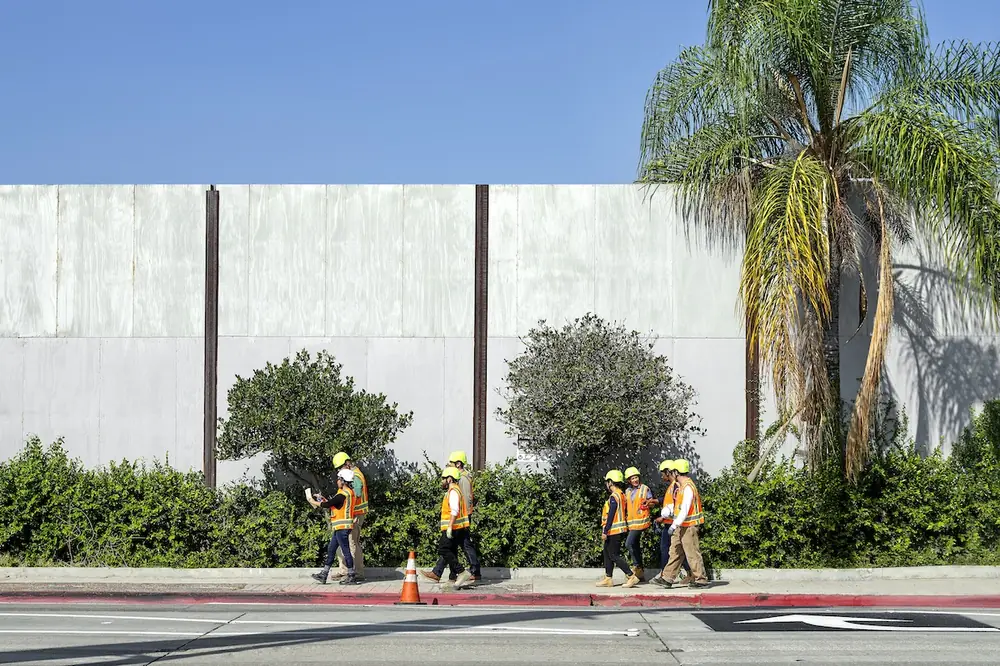
Sundt and the construction team had a good working relationship with the owner and its onsite representatives and inspectors.
“The communication on site was very good, which helped us when we needed to settle issues that arose on site rather than pushing it to higher levels of leadership,” Vigilante said. “When we did have to consult those leaders, ITD got us answers quickly.”
Effective communication on the work site, which helped resolve issues at the lowest levels, benefited the project.
| Your local Trimble Construction Division dealer |
|---|
| SITECH Northwest |
“We empower our people to make decisions, and we focus on our shared goals. It helps get things done and saves time,” Sundt Area Manager Ben Becker said.
The project has had no major issues that needed to be escalated so far.
Another interesting element of this project concerns the phasing. Sundt suggested that the project designers and engineers modify the original construction phasing. ITD accepted the change, and it has shaved nearly a full month off the construction time.
“The fact that we were able to reorganize the method of construction is a testament to our communication and rapport with the owner,” Vigilante said. “If we didn’t have a good working relationship, we couldn’t do the things we’ve done. We explained what we win by rephasing and how it contributes to the project’s success.”
| Your local Trimble Construction Division dealer |
|---|
| SITECH Northwest |
Sundt Construction is based in Tempe, Arizona. The company’s website states that it has “expertise and experience in diverse markets [and a] wide range of self-perform capabilities.” The team has worked on multiple projects in southern Idaho.
“This project gave us an opportunity to expand our footprint in southern Idaho,” Becker said. “We’ve gained experience from the previous project in the area and were able to bring that and apply it [to] the project at hand.”
Becker added that some of the staff and craftspeople from the previous projects are on the current project, giving them an opportunity to continue their working relationship with ITD.
The construction budget for the design-bid-build project is $92 million. The project is on budget at the time of this writing, although owner-initiated change orders are expected to increase the final cost slightly. The change orders include milling and overlaying the roadway adjacent to the project as well as approach slab repairs a couple of miles east of the project.
| Your local Trimble Construction Division dealer |
|---|
| SITECH Northwest |
The state is funding the entire project. According to a press release from ITD, the project is “funded as part of [Governor Brad] Little’s Leading Idaho transportation funding initiative. The Leading Idaho initiative allows ITD to take a deliberate approach to advance large projects that will enhance safety, improve mobility, further strengthen Idaho’s economy, and positively impact the Magic Valley and communities across the state for years to come.”
Construction on the project began in the spring of 2024, with an anticipated completion of late fall 2026. Vigilante expects the project to finish one to two months ahead of schedule due to the time savings he and the team achieved by altering the phasing.
When construction wraps up, the new Heyburn Interchange will provide safer, more efficient access to Interstate 84 for local residents, commuters, and the heavy agricultural freight that relies on the corridor.
- Owner/Engineer: Idaho Transportation Department
- General Contractor: Sundt Construction, Salt Lake City, Utah
- Designer: HDR Engineering Inc., Omaha, Nebraska