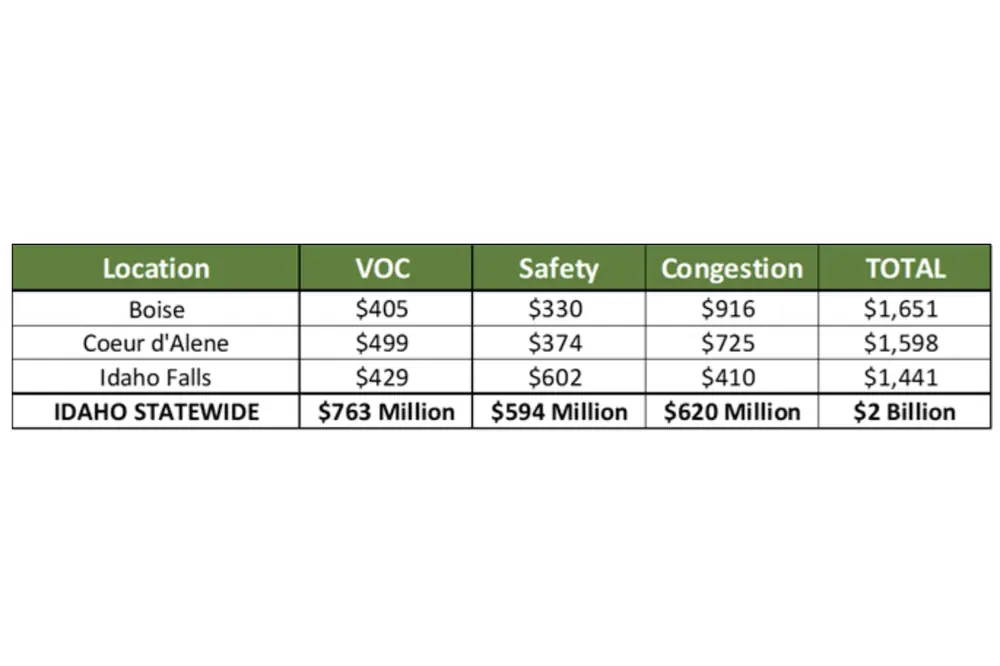

BOISE, ID — Roads and bridges that are deteriorated, congested, or lack some desirable safety features cost Idaho motorists a total of $2 billion statewide annually — up to $1,651 per driver in some areas — due to higher vehicle operating costs, traffic crashes, and congestion-related delays. A lack of adequate investment in transportation and increasing inflation in construction costs could hamper Idaho’s ability to make needed improvements to its transportation network, according to a new report released by TRIP, a Washington, D.C.-based national transportation research nonprofit.
The TRIP report, “Idaho Transportation by the Numbers: Meeting the State’s Need for Safe, Smooth, and Efficient Mobility,” finds that Idaho has led the nation in vehicle travel growth since 2019, contributing to increasing traffic congestion. The TRIP report also found that 43 percent of major locally and state-maintained roads are in poor or mediocre condition, 5 percent of locally and state-maintained bridges (20 feet or more in length) are rated poor/structurally deficient, and the number of traffic fatalities has increased significantly in the last decade. In addition to statewide data, the TRIP report includes regional pavement and bridge conditions, congestion data, highway safety data, and cost breakdowns for the Boise, Coeur d’Alene, and Idaho Falls urban areas.
Idaho drivers lose $2 billion per year in the form of extra vehicle operating costs (VOC) as a result of driving on roads in need of repair, lost time and fuel due to congestion-related delays, and the costs of traffic crashes in which the lack of adequate roadway safety features, while not the primary factor, likely were a contributing factor.
The TRIP report found that Idaho leads the nation in population and vehicle travel growth. Idaho’s population grew to approximately 2 million residents in 2025, a 29 percent increase since 2010. This was the fastest rate of population growth among U.S. states during that time and significantly outpaced the national rate of 10 percent population growth at the time. Idaho is also leading the nation in the rate of vehicle miles of travel (VMT) growth since just prior to the COVID-19 pandemic. From 2019 to 2025, VMT in Idaho increased by 14 percent, the highest rate among all states and significantly higher than the 1 percent increase in U.S. VMT during the same period.
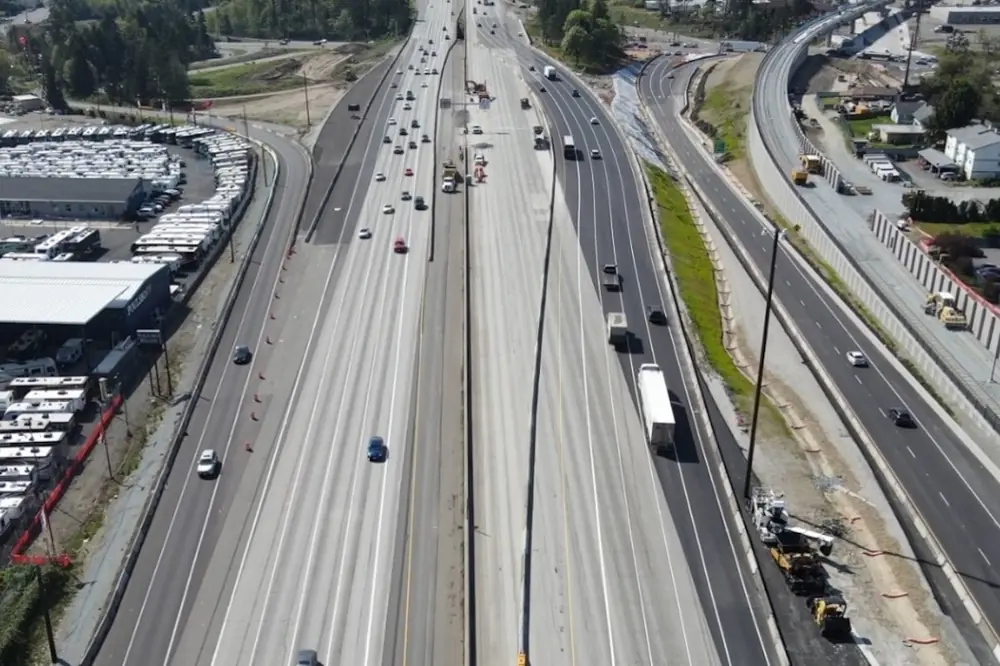
Rapid growth in population and vehicle travel in Idaho is resulting in increased traffic congestion, particularly in the state’s largest urban areas. Congested roads choke commuting and commerce and cost Idaho drivers $620 million each year in the form of lost time and wasted fuel — up to $916 per driver.

| Your local Gomaco dealer |
|---|
| Gomaco -Contact For a Dealer Near You |
Traffic crashes in Idaho claimed the lives of 1,441 people from 2019 to 2024. In the decade from 2014 to 2024, the number of traffic fatalities in Idaho increased 29 percent. TRIP estimates that roadway features, while not the primary cause of a crash, were likely a contributing factor in approximately one-third of all fatal traffic crashes, resulting in $594 million in economic costs in Idaho in 2024.
Statewide, 43 percent of all major locally and state-maintained roads and highways in Idaho are in poor or mediocre condition. Driving on rough roads costs the average Idaho driver $546 annually in additional vehicle operating costs — a total of $763 million statewide. Extra vehicle operating costs include accelerated vehicle depreciation, additional repair costs, and increased fuel consumption and tire wear.
Five percent of Idaho’s bridges (250 of 4,646 bridges) are rated in poor/structurally deficient condition, meaning there is significant deterioration of the bridge deck, supports, or other major components. Sixty-three percent of the state’s bridges are rated in fair condition, and the remaining 32 percent are in good condition. Most bridges are designed to last 50 years before major overhaul or replacement, although many newer bridges are being designed to last 75 years or longer. In Idaho, 38 percent of the state’s bridges were built in 1969 or earlier.
Without additional transportation funding at the local, state, and federal levels, costs to motorists will increase and needed projects will be delayed. Revenue from Idaho’s motor fuel tax — a primary transportation funding source — is falling behind future needs as improved fuel efficiency and growing electric and hybrid vehicle use reduce gas tax collections. At the same time, inflation has significantly increased highway construction costs. The Federal Highway Administration’s national highway construction cost index rose 47 percent from early 2022 through the first half of 2025, significantly reducing the purchasing power of available transportation dollars.

| Your local Trimble Construction Division dealer |
|---|
| SITECH Northwest |
The efficiency and condition of Idaho’s transportation system, particularly its highways, is critical to the health of the state’s economy. In 2024, Idaho’s freight system moved 191 billion tons of freight, valued at $117 billion. From 2024 to 2050, freight moved annually in Idaho by trucks is expected to increase 42 percent by weight and 80 percent by value (inflation-adjusted dollars). The design, construction, and maintenance of transportation infrastructure in Idaho supports approximately 19,300 full-time jobs across all sectors of the state economy. Approximately 304,000 full-time jobs in Idaho in key industries like tourism, retail sales, agriculture, and manufacturing are dependent on the quality, safety, and reliability of the state’s transportation infrastructure network.
“It will be critical that Idaho adequately invest in its transportation network in order to provide a system that is smooth, safe, and efficient,” said Dave Kearby, TRIP’s Executive Director. “It is much more cost effective to invest in improving and maintaining the state’s transportation network than to pass along the high costs of a deficient transportation system to drivers.”