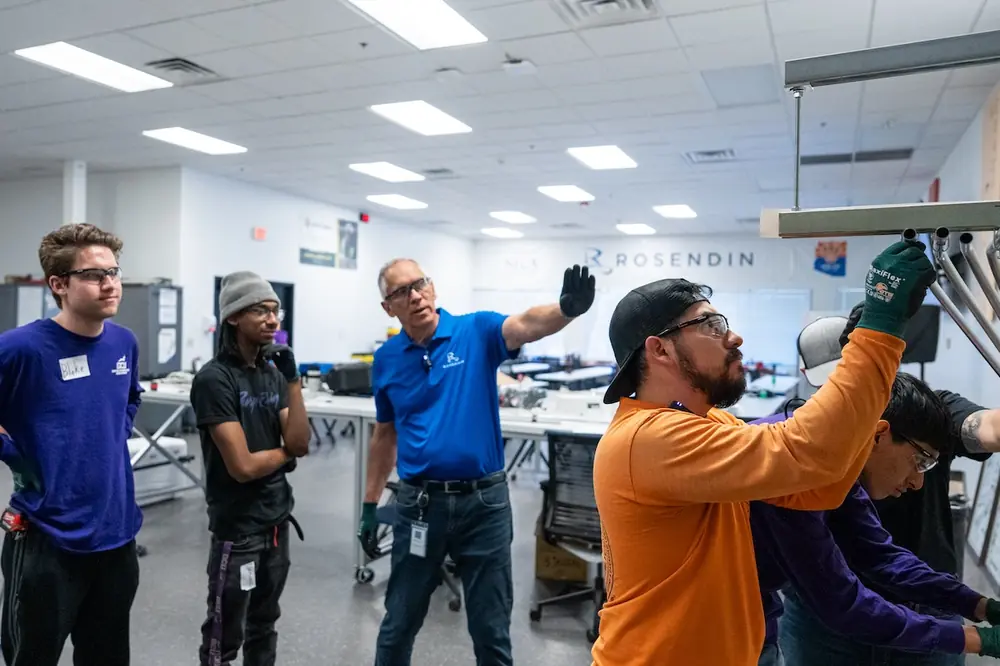
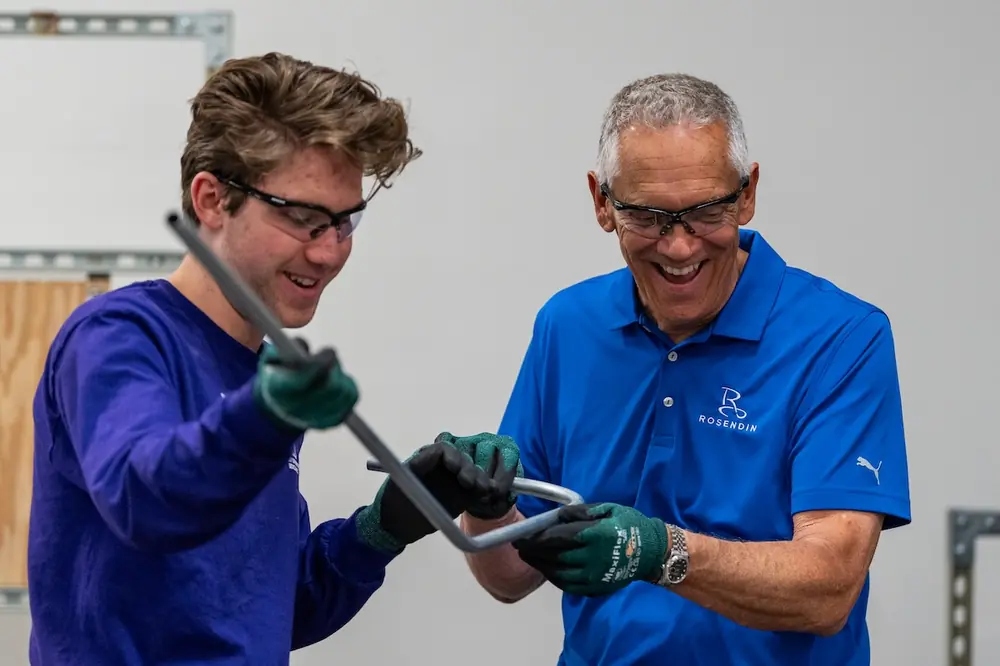


I started my construction career in 1979 as an IBEW apprentice, taking a bus one hour each way to work at the Palo Verde nuclear power plant in Arizona. That decision to enter the Phoenix Electrical Apprenticeship Program became the most impactful career move I ever made. It launched a 45-year journey that took me from apprentice to CEO of Rosendin, one of America's largest employee-owned electrical contractors.
Today, as I look at our industry's workforce crisis, I see the same opportunities that transformed my life available to a new generation. Yet we're failing to connect with them effectively. Government and industry sources report a worker shortage in the hundreds of thousands. Meanwhile, for every two journeymen who retire, only one enters the field, and 40 percent of newcomers leave within 24 months.
The approach of working more overtime or offering bigger incentives isn’t a sustainable solution. A better solution is to partner strategically with apprenticeship programs using what I call the ART strategy: attract, retain, and transfer knowledge.
Most of us came up through apprenticeships, but the landscape has changed dramatically since we started. While the fundamentals remain solid — 8,000 hours of hands-on training plus classroom instruction funded by employers — the competition for talent has intensified.
Consider this: Universities now graduate thousands of engineers each semester for a limited number of project management roles, while companies struggle to fill apprentice positions that lead directly to $60,000 to $80,000 careers without student debt. The disconnect isn't logical; it's cultural.

| Your local Komatsu America Corp dealer |
|---|
| Continental Equipment Corp (CEC) |
The irony runs deeper. Apprenticeships have expanded beyond construction into manufacturing, healthcare, and technology, yet parents still push their kids toward college debt rather than paid learning programs that guarantee employment. We're competing against a higher education system that has convinced families that a trade career represents failure rather than success.
This perception gap creates our opportunity. While other industries fight over college graduates, smart contractors can capture motivated individuals who want to build something tangible while earning a living wage from day one.
The construction industry has talked about workforce shortages for a decade, but no clear solution has emerged.
The real solution requires a strategic approach:
- Attract talented individuals to our industry
- Retain them through meaningful development
- Transfer critical knowledge from experienced professionals to newcomers

| Your local Deere & Co dealer |
|---|
| AIS Construction Equipment |
This framework addresses each stage of the workforce pipeline, creating sustainable growth rather than short-term patches.
As consultant Jim Rohn says, "If you want to attract, you need to be attractive." Construction isn't attractive right now, and we need to change that.
The attraction challenge starts younger than most contractors realize. By sixth grade, kids have already formed opinions about careers based on what they see around them. When's the last time you or someone on your team spoke at a career day?
Parents hear about college prep programs constantly because universities invest heavily in reaching families. Construction companies need to match that effort by building relationships with school districts and hosting information sessions that showcase apprenticeship pathways leading to six-figure careers without student debt. School counselors become powerful allies when contractors take time to educate them about apprenticeship opportunities.

| Your local Trimble Construction Division dealer |
|---|
| SITECH Michigan |
The investment disparity tells the story. Large contractors spend tens of thousands annually recruiting college graduates for project management roles, bringing in over 100 paid summer interns nationwide. These staff hires receive week-long orientation programs. Meanwhile, the same companies hire small numbers of pre-apprentices and apprentices who receive only hours of safety training before being thrown into sink-or-swim situations.
This explains why 40 percent leave within two years. Contractors serious about solving workforce shortages need to change this equation. Sponsor construction summer camps for middle schoolers. Build relationships with high school shop teachers. Partner with apprenticeship programs on marketing efforts rather than leaving recruitment entirely to them.
Apprentices aren't just future journeymen; they're future foremen, superintendents, estimators, project managers, and CEOs. History proves that skilled workers transition well into leadership roles, but only if we retain them long enough to develop their potential.
This generation values company culture and wants early communication about career opportunities. We must carefully select the journeymen who mentor apprentices, avoiding toxic individuals who can destroy passion in minutes.
| Your local Komatsu America Corp dealer |
|---|
| Continental Equipment Corp (CEC) |
Construction will always be physically demanding work, but the culture around that work can evolve. I've watched companies transform their retention rates by treating craft workers, especially apprentices, as their most valuable assets. Today's workers care about company culture differently than previous generations.
The contractors getting results give apprentices the same thorough orientation they provide college interns, mapping out career possibilities before anyone steps on a job site. They schedule regular check-ins with apprentices, tracking progress like any other critical project metric.
These companies set retention goals and quietly invest in promising apprentices before word spreads through the industry grapevine. They practice what most of us learned as kids and treat others how you want to be treated. Performance gets rewarded at every level, achievements get celebrated, and communication flows constantly about opportunities and career paths.
Knowledge transfer from journeyman to apprentice represents our industry's heartbeat. This relationship becomes intensely personal, with pairs often spending more time together than with their families.
| Your local Komatsu America Corp dealer |
|---|
| Continental Equipment Corp (CEC) |
The current crisis stems from losing knowledge holders twice as fast as we're creating knowledge seekers. Federal guidelines require a 1-to-1 journeyman-to-apprentice ratio, but industry reality falls far short. Not all journeymen make good teachers, compounding the challenge.
The best knowledge transfer happens when experienced journeymen naturally gravitate toward teaching. These master craft professionals exist in every company — they're the ones apprentices seek out for advice and other workers respect for both skill and patience. Smart contractors recognize this talent and structure their crews accordingly, moving apprentices through different teams and project types to broaden their exposure.
Technology amplifies this approach when companies integrate AI-powered training modules for specific tasks or partner with equipment vendors who offer hands-on programs. The key is multiplying your knowledge transfer capacity while preserving the personal mentoring relationships that make apprenticeships effective.
The contractors I know who solved their workforce challenges all share one thing — they treat apprenticeship partnerships like any other strategic investment. They've woven their attraction, retention, and knowledge transfer efforts into their business planning process the same way they approach safety or project management.
| Your local Komatsu America Corp dealer |
|---|
| Continental Equipment Corp (CEC) |
These companies don't just write checks to apprenticeship programs; their leadership shows up at meetings, sits on advisory boards, and tracks progress with the same rigor they apply to job profitability. They've learned that measuring what matters — from recruitment numbers to retention rates — helps them stay ahead of an industry that's evolving faster than most realize.
The labor shortage will not pass soon, and all contractors will eventually be affected. I believe in the power of registered apprentice programs and think they will be our best choice for attracting, retaining, and training future journeymen and solving workforce challenges.
Photos courtesy of Rosendin.
A 45-year veteran of the construction industry, Mike Greenawalt now serves as Chief Visionary Officer of the Greenawalt Foundation. He and his wife Dena founded the organization to provide access to education, training, and support for individuals pursuing careers in the skilled trades.