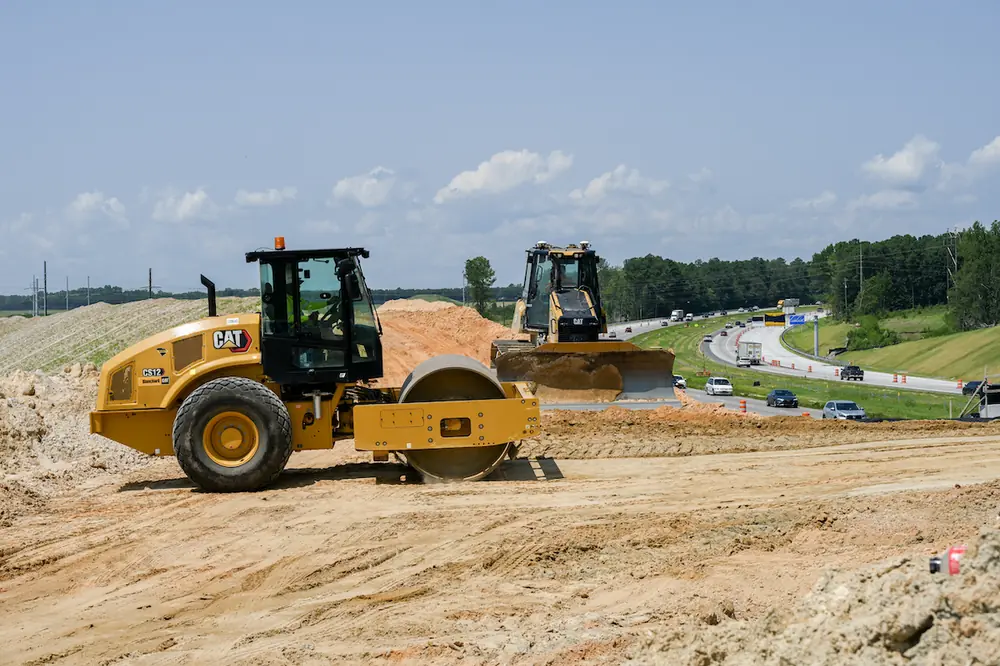
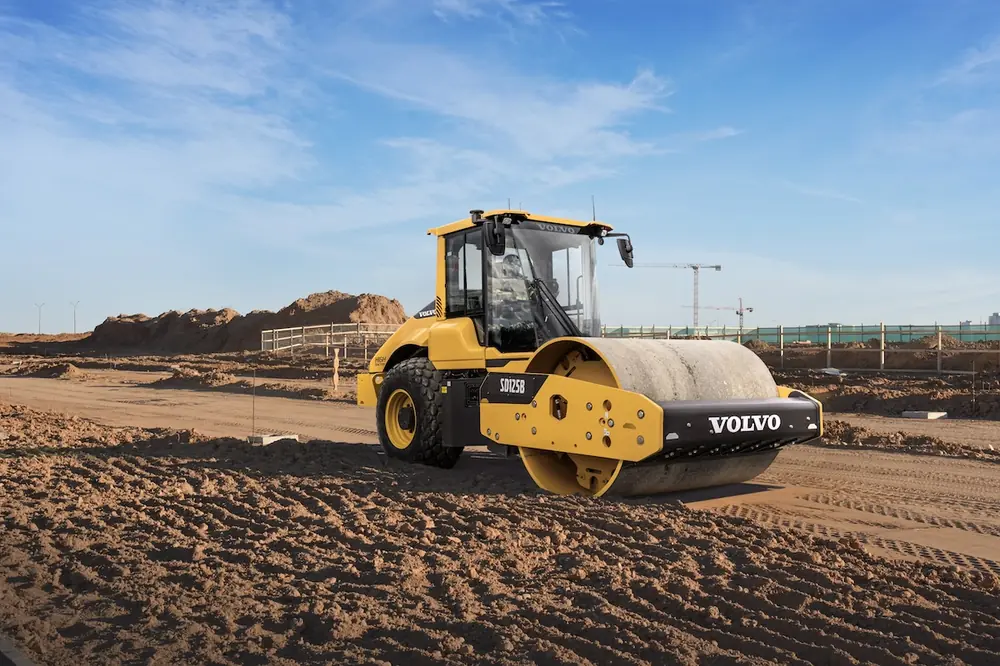

Soil compaction is one of the most critical steps in construction and road work because it directly affects the resilience and longevity of the finished structure. Whether you’re constructing the subgrade for a major highway or preparing a building pad, the compaction quality determines how well the final surface resists settling, cracking, and deformation over time.
While you may be aware of the benefits of intelligent compaction (IC) technology for asphalt rolling, it’s less common to see crews using it for soil compaction — but perhaps it’s time for that to change.
Keep reading to examine the importance of properly compressed base layers and how today’s rollers and IC platforms expedite success in achieving them.
In an era of increasingly variable weather conditions, subgrade stability is more vital than ever. Changes in moisture and temperature can significantly affect soil behavior, making consistent compaction results more difficult to achieve.
Compaction is far more than flattening the surface. It’s a controlled process that requires the right combination of force, frequency, amplitude, and timing to remove air voids and rearrange soil particles into a stable, load-bearing structure. Even when working in thin lifts, achieving consistent target density can be challenging because it depends on just the right alignment of material type, moisture content, and proper technique.

| Your local Komatsu America Corp dealer |
|---|
| Continental Equipment Corp (CEC) |
Over-compaction can occur in certain soil types, especially cohesive soils where excessive energy may degrade the structure. However, it’s more common that excess passes waste fuel and time, accelerate wear on the machine, and reduce job site productivity.
IC technology is designed to take the guesswork out of this process.
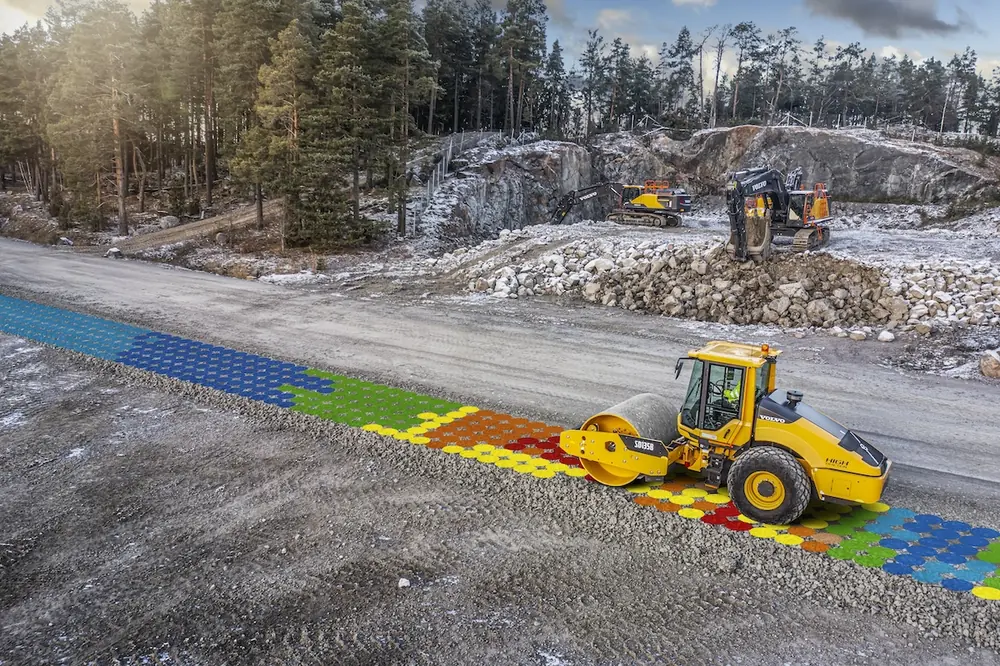
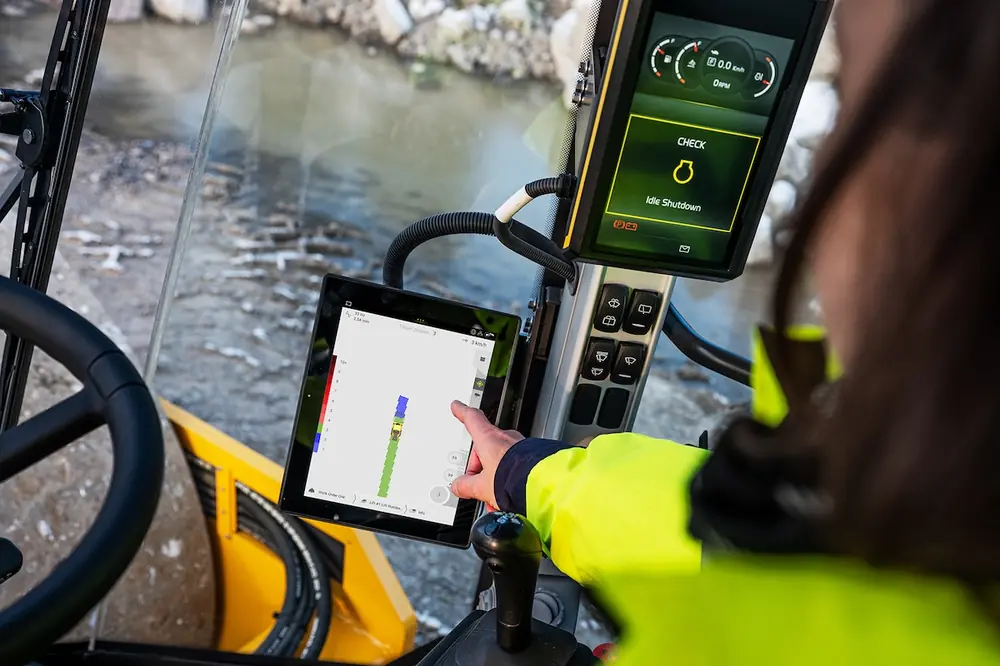
These systems use a combination of GNSS positioning and on-board sensors to provide real-time feedback on machine location, pass mapping, and material stiffness. This information is delivered via an in-cab display that visualizes progress for the operator.
By seeing exactly where the ground has been adequately rolled and which areas require more attention, operators can hit density targets with fewer passes and greater confidence. And because changes in weather — and therefore moisture — are top threats to subgrade quality, the ability to adjust speed, passes, and vibration settings in the moment is invaluable.

| Your local Deere & Co dealer |
|---|
| AIS Construction Equipment |
Stiffness mapping in an intelligent compaction system is often shown as a compaction measurement value (CMV). This provides a continuous understanding of material stiffness, allowing operators to identify areas of relative weakness or variability across the compacted layer. This X-ray-like view also allows operators to identify areas that are too wet and may never dry if covered. By spotting these variations early, contractors can adjust their compaction strategy and reduce the risk of future settlement issues.
Every job site has different requirements, and each fleet has different budget considerations, which is why IC technology comes in various levels:
- Entry-level package — This often includes a simple compaction gauge and a rearview camera integrated into the monitor. These allow the operator to track progress while maintaining a clear view of the area behind the machine for safety.
- Mid-level package — This level may involve the addition of GNSS-based pass mapping and CMV across the job site. This lets the operator monitor progress without relying on manual markers or memory.
- Advanced package — The most comprehensive systems include high-accuracy location tracking and full data recording. These enable the automatic creation of project reports and provide extensive detail on the performance of the roller without the need for post-processing.
For projects with strict government specifications, advanced IC systems can also be paired with real-time kinematic (RTK) base stations to achieve location accuracy within an inch. This level of precision is often required for high-stakes projects where every little bit of settlement matters.
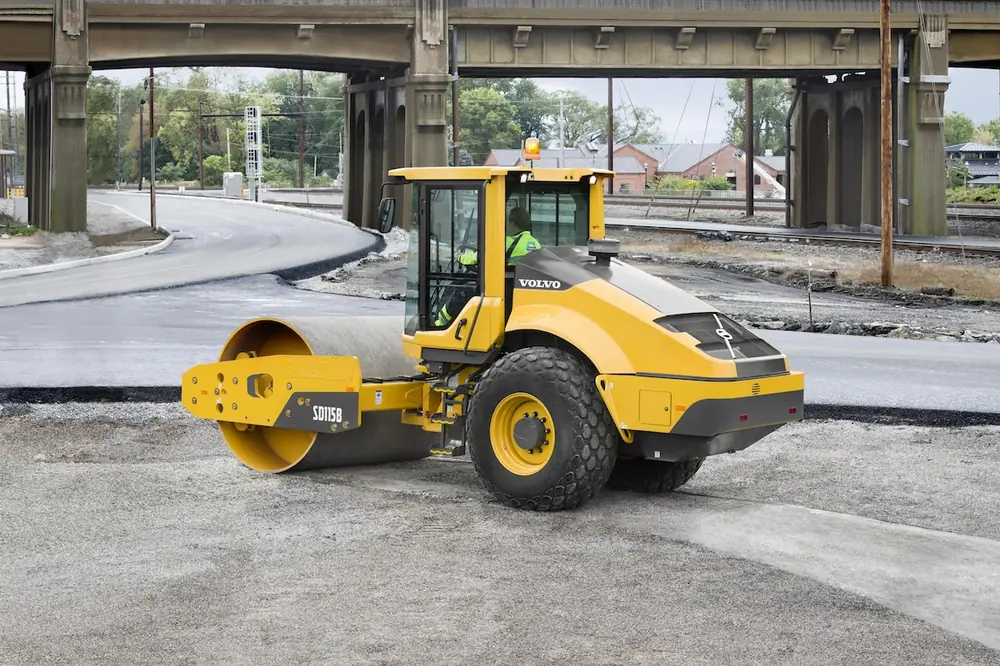
While IC software plays a critical role in the process, the hardware of modern soil compactors has also evolved to support higher-quality outcomes.

| Your local Trimble Construction Division dealer |
|---|
| SITECH Michigan |
Some premium rollers are now built with advanced drum control systems that offer multiple frequencies and amplitude settings, along with the ability to adjust for different surface types, which allows a single machine to work for a variety of materials and lift thicknesses. Centrifugal force has been optimized to ensure that density targets are reached in fewer passes, minimizing machine wear and wasted fuel.
To handle the diverse terrain of construction sites, some of the newest soil compactors feature high gradeability and traction control systems to prevent wheel and drum spin on slopes. Many manufacturers install high-torque engines that deliver maximum power at low rpms for improved fuel efficiency.
And, bringing it back to the technology, many new models come equipped for over-the-air software updates to make IC and other upgrades faster and easier.
The adoption of assistive technology like intelligent compaction is becoming a necessity for contractors who want to improve accuracy and efficiency — which ultimately translates to profitability. By reducing unnecessary passes, preventing rework, and providing a digital record of the finished job, IC technology provides a clear return on investment.
| Your local Komatsu America Corp dealer |
|---|
| Continental Equipment Corp (CEC) |
Whether you’re looking for a simple way to track passes or an advanced, data-driven compaction management system for detailed reporting, there is a solution that fits your business.
Justin Zupanc is Compaction Product Manager at Volvo Construction Equipment.