On a construction job site, time doesn't disappear in hours. It disappears in 15-minute chunks, 40 times a day, across every member of the crew. A foreman scrolling through three WhatsApp threads to find the superintendent's last instruction. A superintendent calling the aggregate supplier twice because he can't remember whether the delivery got confirmed. A project manager digging through emails for a permit the subcontractor sent last week by text.
Each episode, on its own, looks minor. Multiply it across a 20-person crew over six months, and you've thrown away an entire project's worth of work hours.
The productivity conversation in construction almost always circles around equipment, materials, and schedule. But there's a quieter factor — and one responsible for a big chunk of the losses that never show up in the closeout report: the time spent looking for, repeating, and rebuilding information that already existed somewhere.
A typical crew today communicates across at least five channels at once: phone calls, text messages, WhatsApp with separate groups by work face, email, and radio. Throw in the foreman's handwritten notes, the paper daily reports, and the Monday coordination meeting.
The result is predictable. The information exists, but it's scattered across places nobody can pull it from later. And every time someone needs to find it, they lose time. When that someone is a superintendent or a project manager, the lost minutes get expensive fast.

| Your local Komatsu America Corp dealer |
|---|
| Road Machinery and Supplies Company |
This isn't a technology problem; it's an information-flow design problem. And counterintuitively, throwing more tools at it tends to make things worse.
After talking with superintendents, project managers, and subcontractors across different kinds of projects, three leaks repeat themselves with uncomfortable consistency.
Searching for Information
Studies on knowledge-work productivity estimate that about 20 percent of the workday is spent looking for internal information. On a job site where that "internal information" lives across different channels, that number is bigger. And it's not the laborer's time; it's the superintendent's. That's some of the most expensive time on the project.
Repeating Instructions
When a direction travels through channels that don't leave a retrievable record, it has to be repeated until it lands with everyone responsible. Every repetition burns the sender's time and adds noise on the receiving end.

| Your local Iowa Mold Tooling Co Inc dealer |
|---|
| Star Equipment LTD |
Coordinating with Outside Parties
This one is the most underestimated. Suppliers, subcontractors, and outside inspectors aren't in the crew's internal chats. Every task that involves them means a separate message, phone call, or email. And when that coordination breaks down, you're not losing minutes — you're losing a full day with a crew standing around waiting on concrete or a work face shut down waiting on an inspection.
Talking about bad communication in the abstract doesn't move anyone. What moves people is translating it into dollars, days, and reputation.
A superintendent losing 90 minutes a day to chase information burns about 200 hours over a six-month project. That's more than a month of time spent looking for things instead of running the job.
A decision that takes 48 hours to travel from the project manager down to the foreman can hold up three work faces. A claim for time extension gets won or lost based on who has a record of what was said, when, and to whom. And good foremen — well, they get tired of running disorganized projects, and replacing them in today's market is neither quick nor cheap.

| Your local Manitou dealer |
|---|
| Star Equipment LTD |
The temptation, faced with this diagnosis, is to buy more software — more platforms, more dashboards, more integrations. In practice, that tends to make things worse: now your information is fragmented across six places instead of five.
What works is simpler, and it starts with process decisions, not tech ones.
Concentrate Messages Into a Single Official Channel
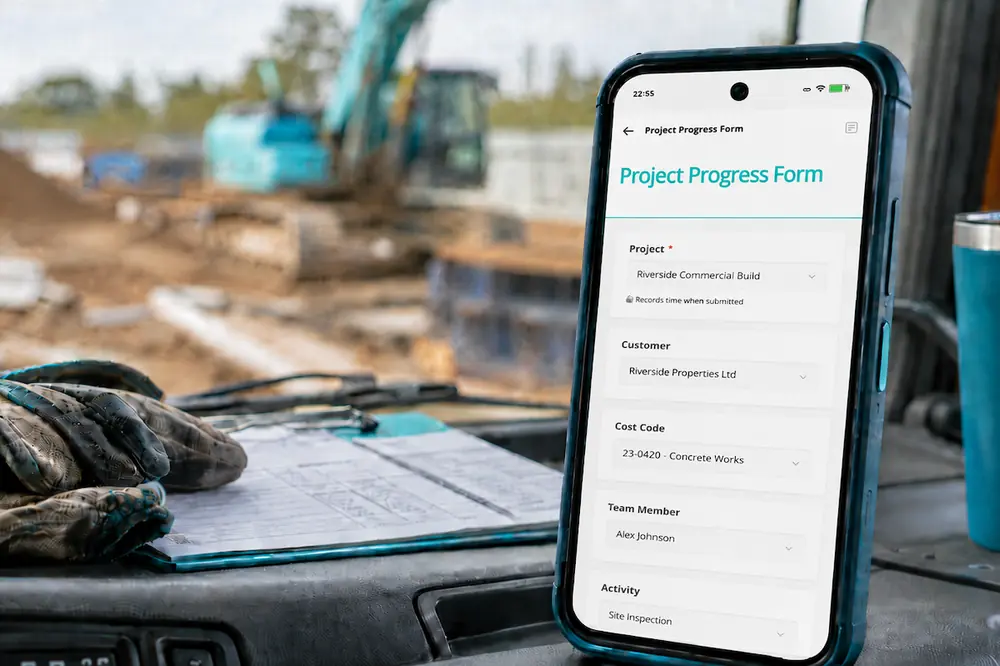
It can be a platform; it can be a notebook. But just one. Anything not in there doesn't exist for project purposes. Texting and WhatsApp can still be used for coordinating the day-to-day logistics, but decisions that affect time, cost, or quality get logged in the official channel. This rule alone tends to recover somewhere between 30 and 60 minutes a day per key person.
Three Mandatory Elements for Every Task
Identify these every time: what needs to be done, who's responsible, and by when. Without those three, it doesn't count as a task. Enforced with discipline for two weeks, this rule changes the dynamic of an entire crew.

| Your local Gehl Co dealer |
|---|
| Star Equipment LTD |
Extend Notifications to Outside Responsibles
Historically, this is the hardest part. Suppliers and subcontractors aren't in your internal systems. But when a task involves them — delivering a material, executing a stage, inspecting a pour — the team needs them to get notified, confirm, and stay logged in the same thread as the rest of the project information. Pulling the supplier out of an isolated email chain and into the same record as the internal crew removes an entire layer of manual coordination.
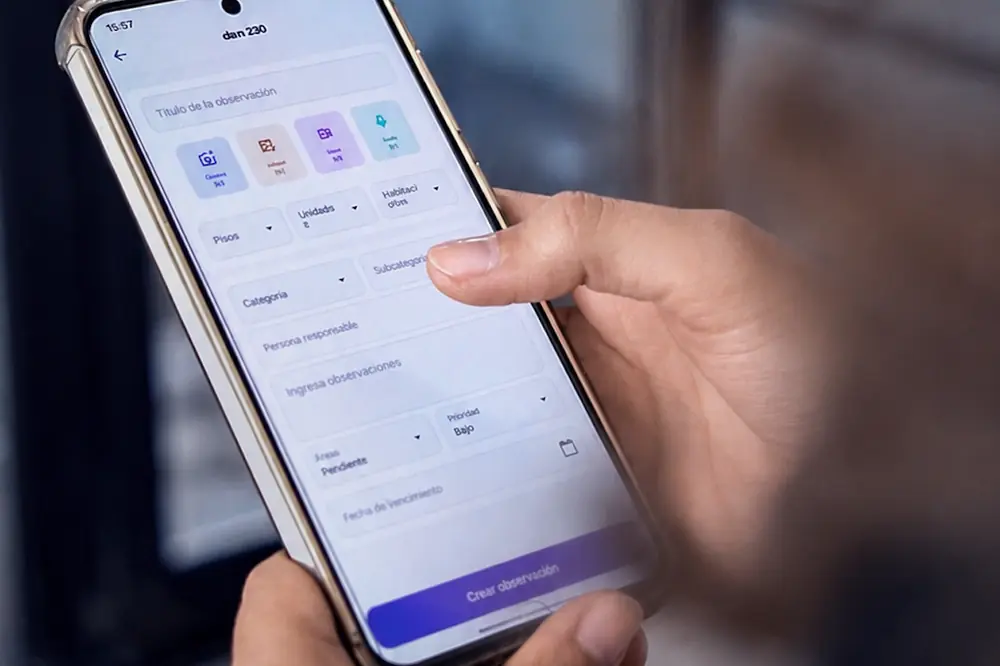
Photo, Location, and Description for Every Field Observation
An observation without a photo is an opinion. With a photo and a station, it's evidence. And evidence doesn't get debated — it gets resolved.
Explicit Close-Out
A task doesn't close because time has passed. It closes because someone confirms — ideally with a photo — that it got done.
Weekly 15-Minute Pending Review
Not a two-hour coordination meeting. Fifteen minutes, list in hand, covering what's still open and who closes it this week.

| Your local Trimble Construction Division dealer |
|---|
| SITECH Midway |
| SITECH Central LLC |
| SITECH Mid-America |
A practical way to know whether your team is communicating well is to look at the weekly report coming out of the project. A good report has four things:
- Every task with an owner and a date
- Every observation with a photo and a location
- Status of pending items with suppliers and subcontractors
- Closeout history for the week
If your current report is missing any of those four, that's where the leak is.
The practices above don't require significant investment; they require discipline. And that's where most teams stumble: they confuse the decision to "clean up communication" with the decision to "buy a tool to clean up communication." Those are different things.
The tool accelerates what already works; it doesn't replace the team agreement. If the project manager keeps giving orders over the phone with no record, no software is going to fix that.

| Your local Gomaco dealer |
|---|
| Fabick CAT/MO |
| Road Machinery and Supplies Company |
The first step is an honest conversation inside the team about how much time is lost to searching, repeating, and rebuilding information — and what that costs. Once an agreement is in place, any reasonable tool supports it. Without it, no tool fixes it.
Margins are tight and schedules don't forgive. The good news is that time lost to communication, unlike weather or fuel prices, is actually within our control. We just have to decide to treat it as seriously as we treat the drawings and the schedule.
Ignacio Le Bas is the Founder of ObraTask, a mobile app for job site communication and task management.