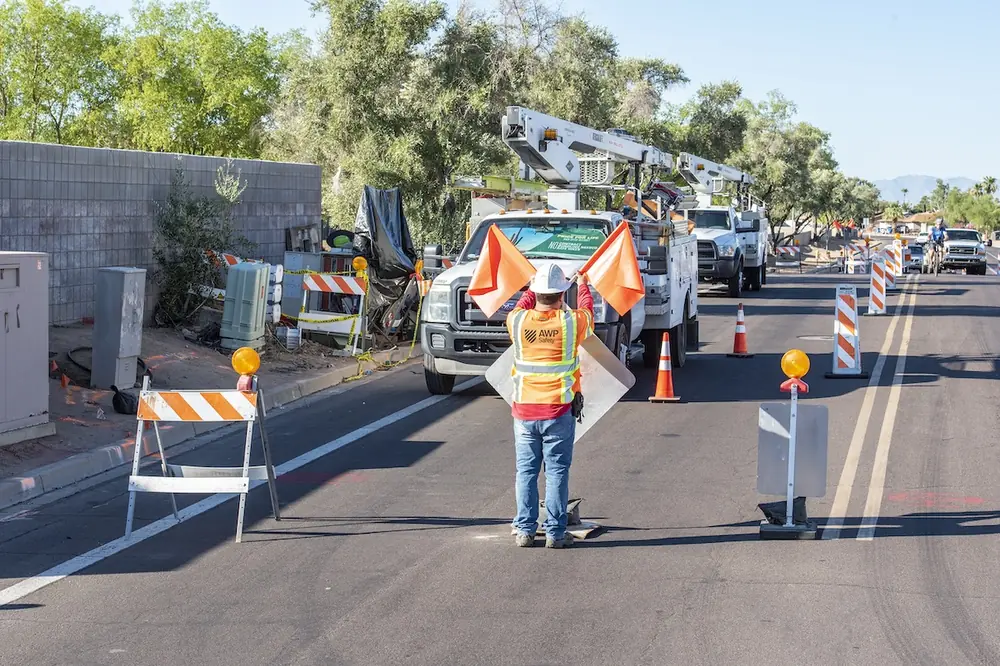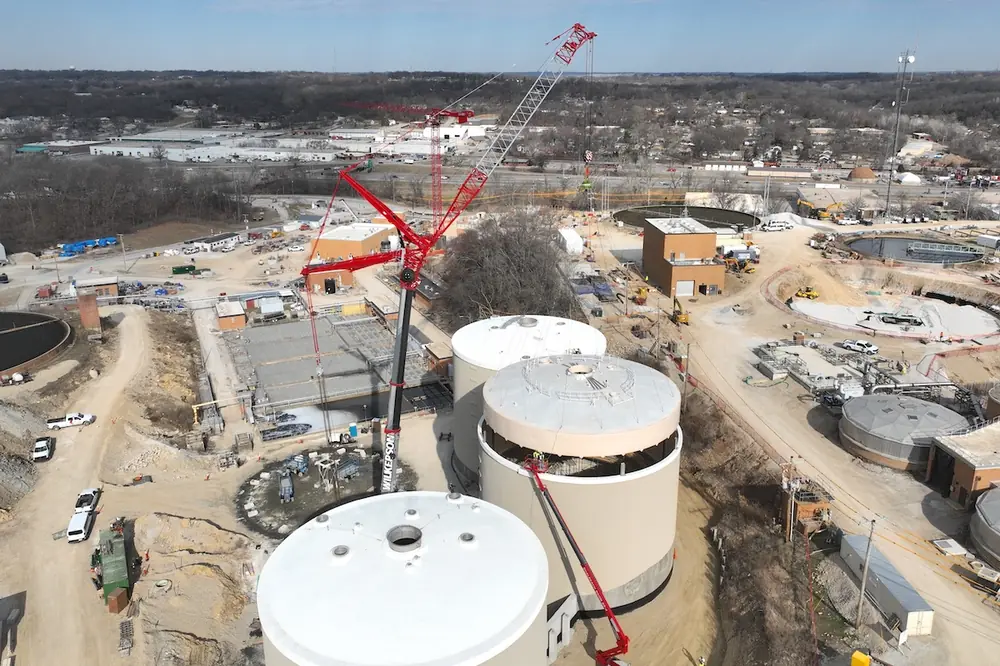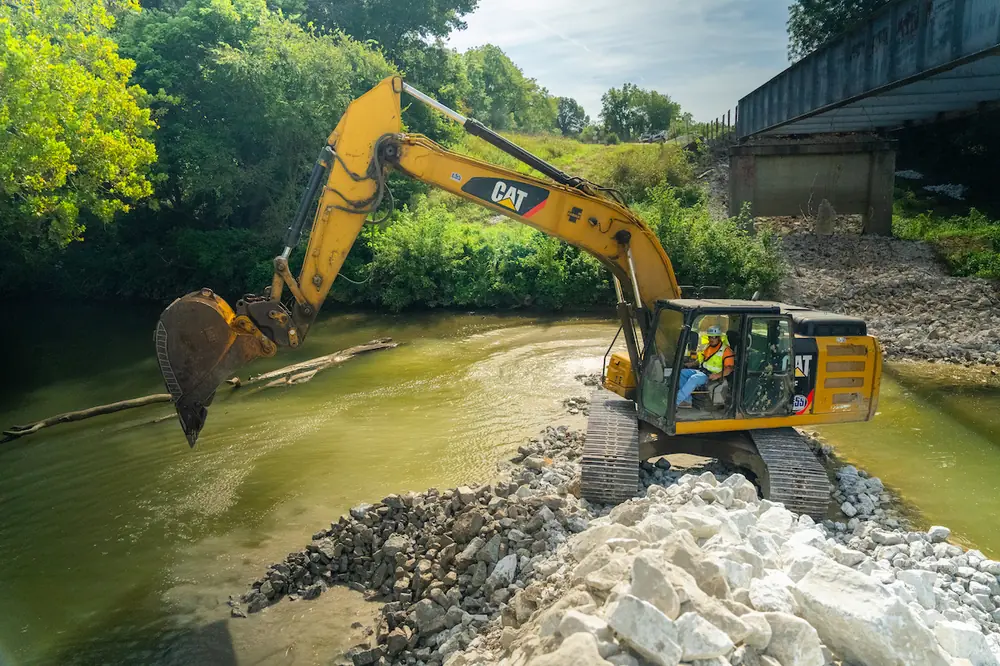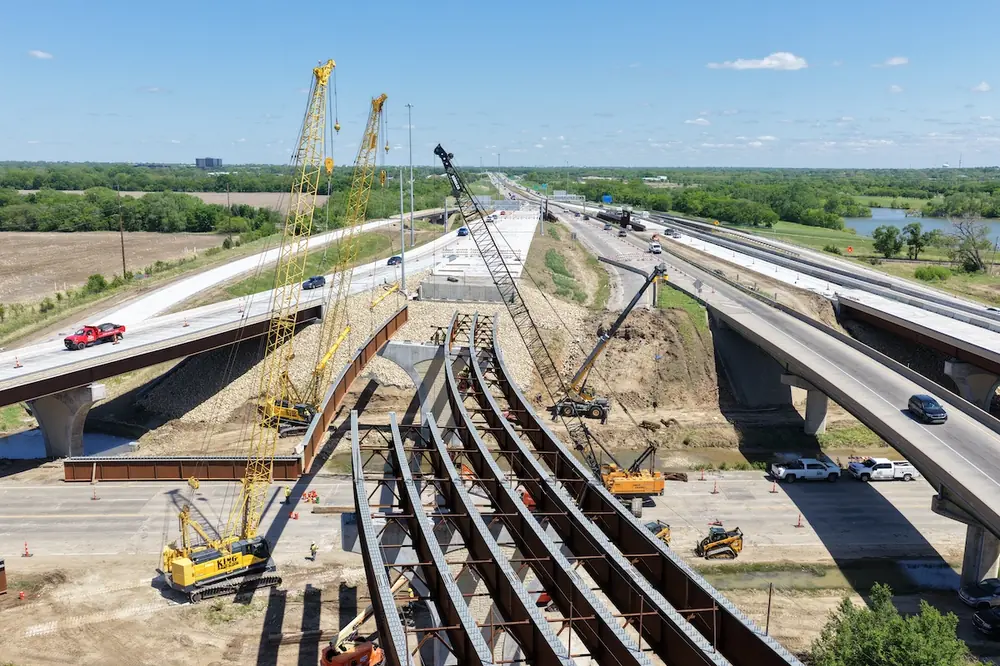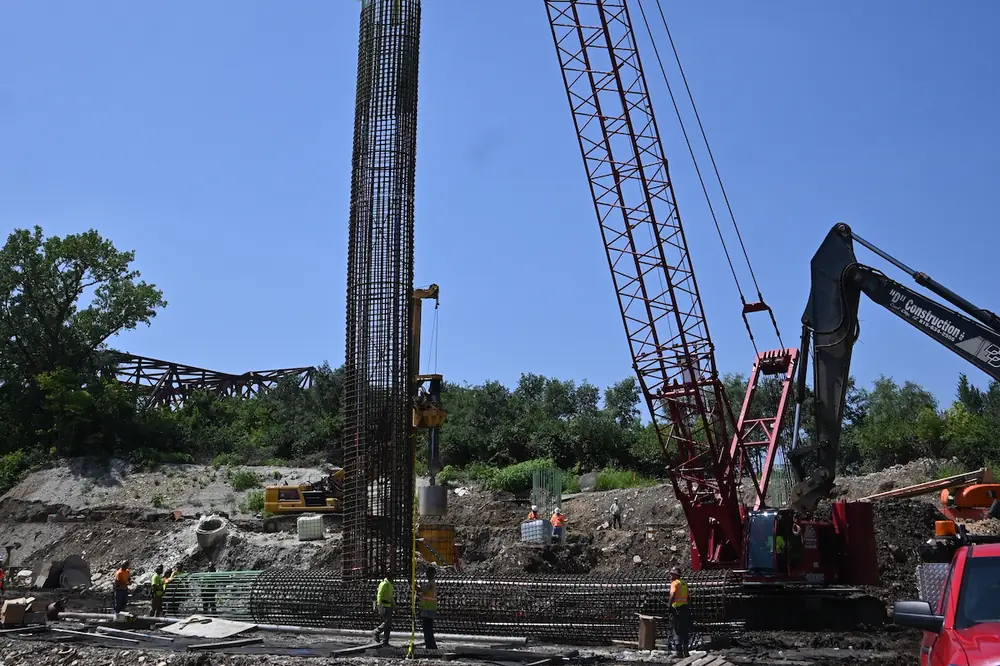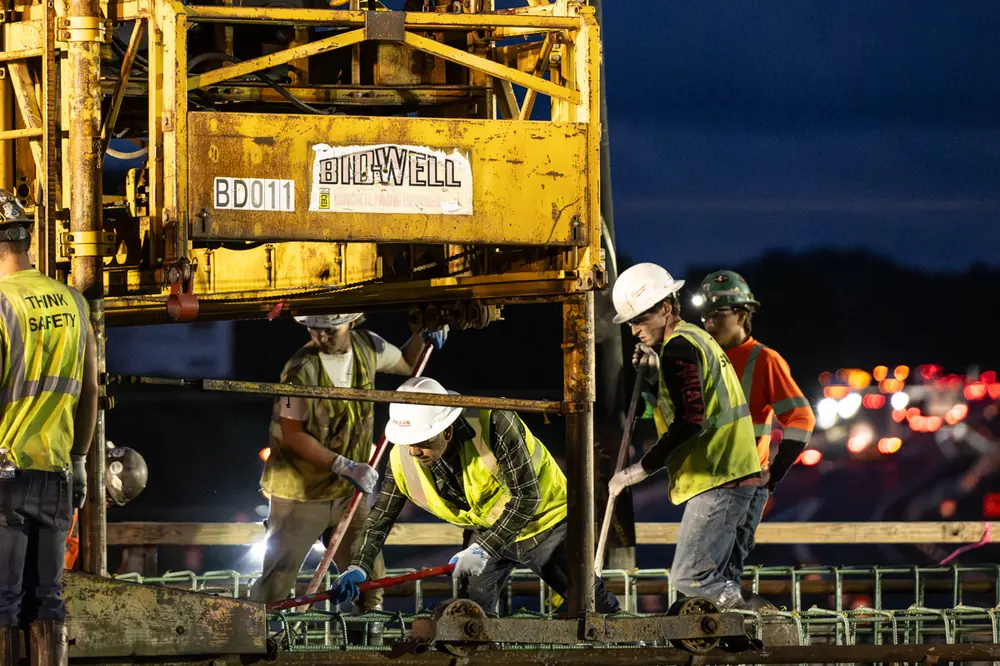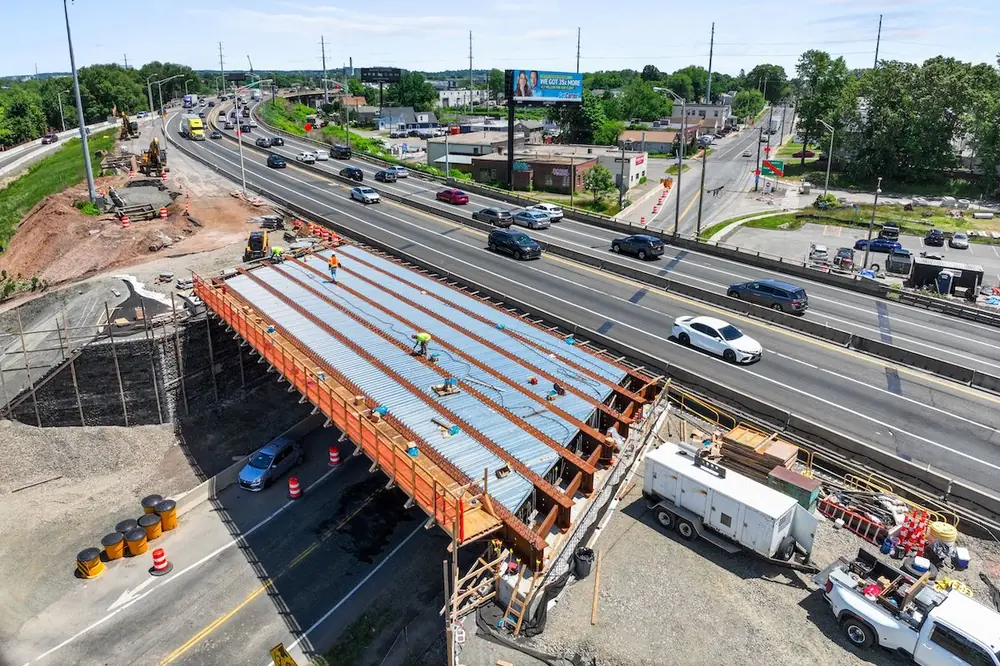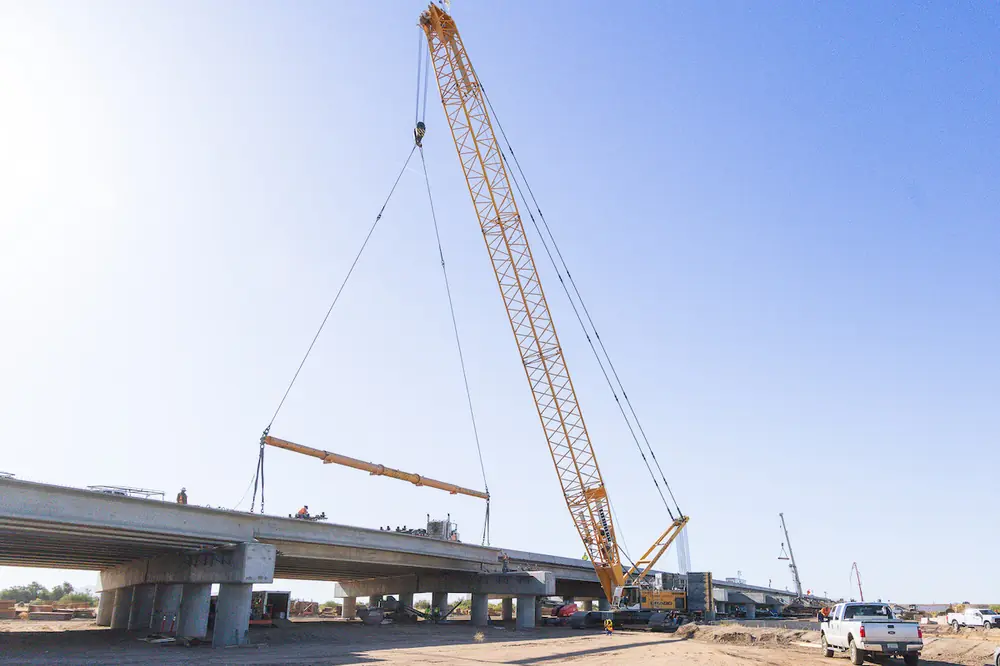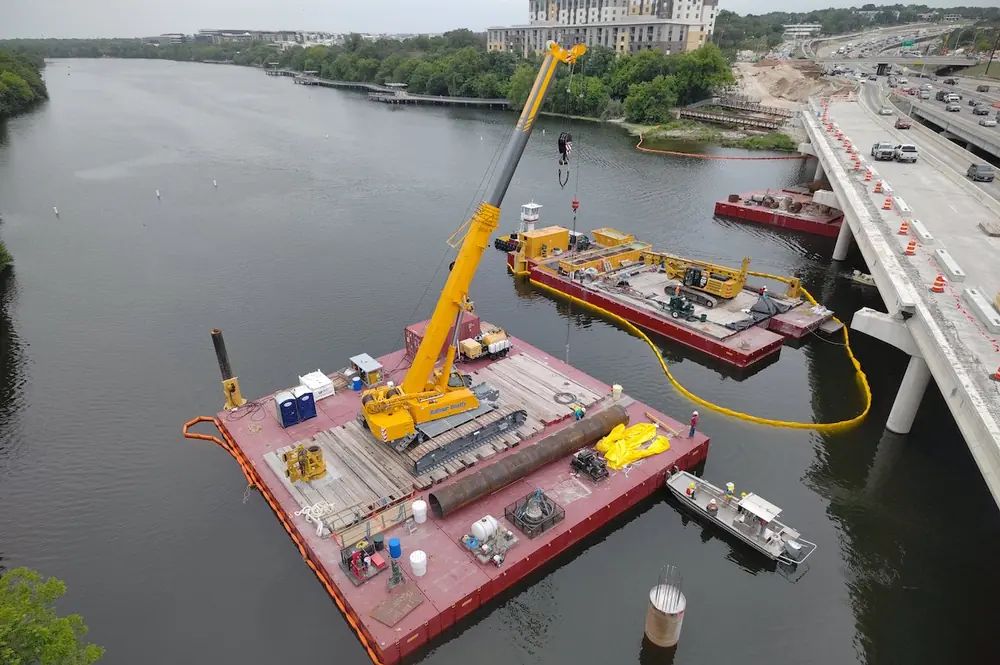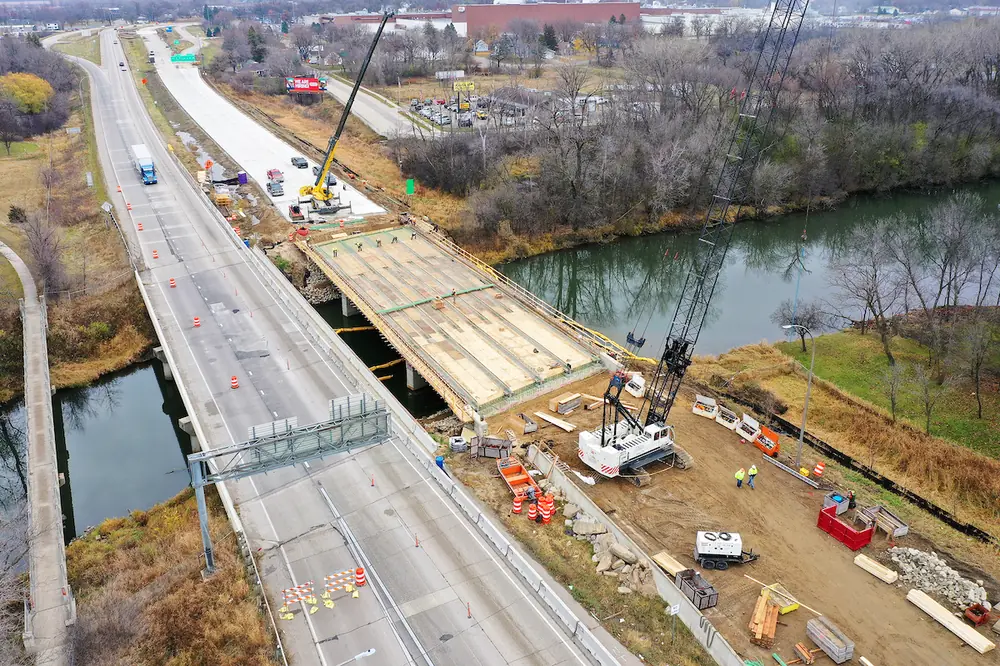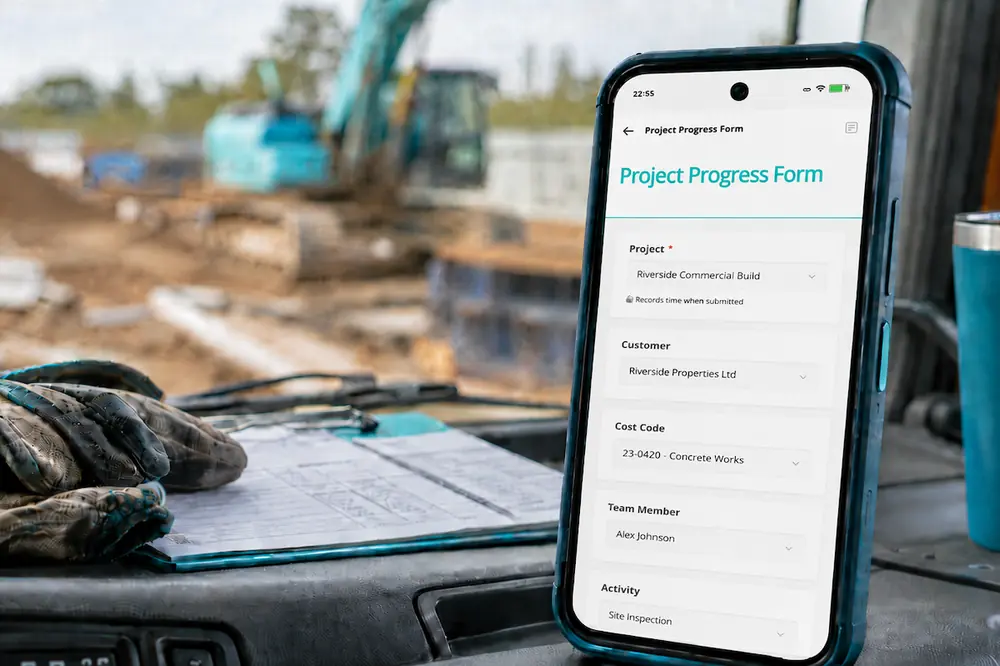
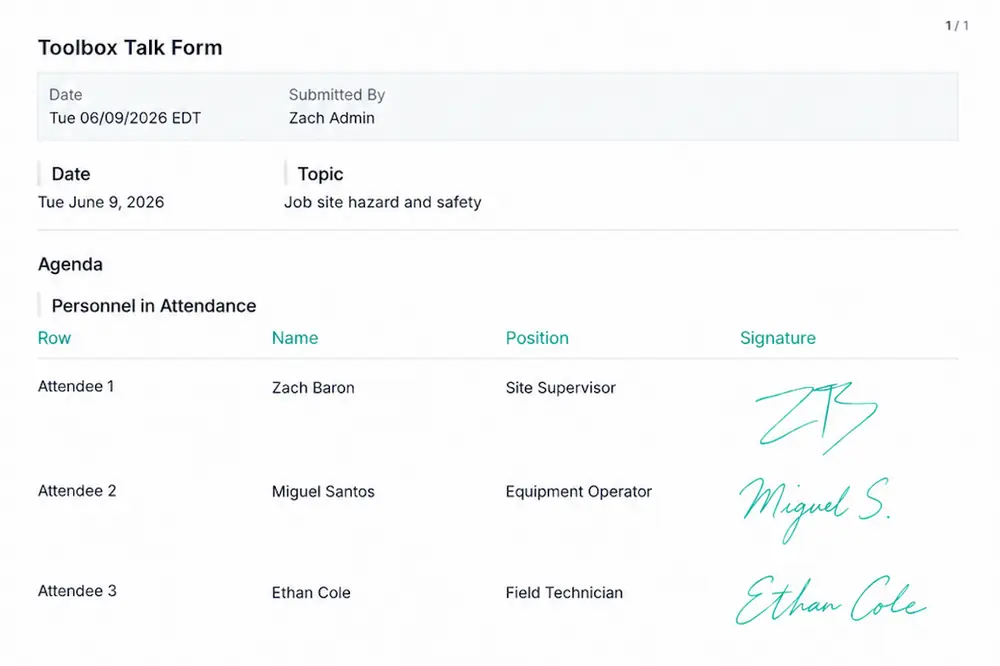


A crew finishes a bridge pier demolition job 40 minutes outside cell coverage. The safety inspection form is done. The equipment log is done. But none of it submits because there's no phone signal available.
This is one of the most common workflow gaps for field teams. Most documentation systems are built around an assumption that a connection will be there when someone needs it. When that assumption breaks, so does the workflow behind it.
Most job site software gets tested somewhere with reliable service. But a drilling site, a rural utility trench, a road cut through open country — none of those settings guarantee that. Yet these are exactly the places where heavy civil crews spend their days.
When a form can't be submitted at that moment, one of two things happens. Either the worker holds onto it and reenters it later, which introduces delay and a second point for error. Or the system simply drops it, and nobody notices until an audit or insurance visit asks for a record that doesn't exist.
Most workflows were built for places that always have signal. That's the actual gap, and it's a design problem more than a connectivity one.

| Your local Manitou dealer |
|---|
| Star Equipment LTD |
Three things tend to fail before anything else does.
First, timing breaks down. A safety inspection completed at 7 a.m. but submitted at 6 p.m., once the crew truck reaches signal, no longer reflects when the work actually happened. For anything tied to compliance, that gap matters.
Ownership is the second failure point. Without a system that queues and syncs automatically, someone has to remember to resubmit. On a five-person crew, that's manageable. Across multiple sites and states, it isn't. The system puts the burden of remembering on a person instead of building it into the process, and that's where forms get lost.
Trust in the record is the third, and it's the one an auditor or insurance inspector will care about most. If a form can be submitted hours after the fact, there's a real question of whether it reflects what happened or what someone reconstructed afterward.

| Your local Leica Geosystems Inc dealer |
|---|
| Laser Specialist inc |
This isn't a hypothetical. It's a pattern that shows up wherever crews work out of signal range.
A drilling and blasting contractor operating across five Midwest states ran into this problem directly. Crews submitted timecards and safety forms however it was convenient in the moment — some by email, some by texting a photo, and some on paper handed in days later. Office staff spent hours each week tracking down basic records, while compliance documents that should have been available in seconds often took days to produce.
The fix isn't asking crews to work differently. It's building a workflow that behaves the same whether there's signal or not.
That means submission doesn't require a decision from the worker. The system queues the record the moment it's created and sends it automatically once a connection appears.

| Your local Takeuchi Mfg Ltd dealer |
|---|
| Kirby-Smith Machinery |
| Star Equipment LTD |
A contractor running crews across poor-signal areas saw this play out from the other direction. Before switching systems, workers who couldn't get a signal simply couldn't clock in. The office had no way to dispute complaints, so hours got paid based on guesswork rather than records.
Once the contractor’s system began collecting time and location data offline and syncing it automatically the moment a connection returned, that dispute disappeared because the record didn't depend on the worker having signal in the first place.
Waiting for the right software isn't the only option. A few things any contractor can do this week, regardless of what system they're running:
Timestamp at the Point of Work
Don’t timestamp at the point of submission. If the current system doesn't automatically timestamp at the point of work, build a manual habit around it: note the actual time on the form itself, even on paper, so the record doesn't depend on when it reaches the office.

| Your local Magni dealer |
|---|
| Kirby-Smith Machinery |
Name One Responsible Person per Crew
Not just a policy, but a person designated responsible for offline forms. When resubmission depends on memory, it needs to be one person's job to remember, not a general expectation everyone shares and nobody owns.
Build a Standard Format
Specify what gets submitted when signal returns. If crews are emailing, texting, and handing in paper depending on whatever's convenient, standardize it to one method. Consistency matters more than which method gets picked.
Back Up Compliance-Critical Items
A physical logbook in the truck for safety checks or incident reports isn't elegant, but it gives you a fallback if a digital form never leaves the device.
Ask What Happens to a Form That Never Syncs
Lost devices, dead batteries, and abandoned drafts happen. Find out whether that data is recoverable or simply gone — before it costs you an audit.

| Your local Gomaco dealer |
|---|
| Fabick CAT/MO |
| Road Machinery and Supplies Company |
For any contractor evaluating a documentation system, find out what happens when someone hits submit with no signal. If the answer involves the word "later," that's worth pressing on.
Ask specifically how the timestamp is captured, whether resubmission depends on a person remembering, and whether the office ever sees a different version of a form than the one the crew actually filled out.
The consequences of one gap from a dropped signal on a job that actually needed the record can be significant. Better to find out before it costs you an audit, not during one.
Alexandra De Bonis is Co-Founder and Head of Product at Workyard.