

Fiber-reinforced polymer (FRP) structural composites have a history of replacing traditional materials. Introduced in the mid-1930s, their first widespread use was in World War II, when they proved a valuable alternative to metal aircraft parts. After the war, their use expanded exponentially into a variety of consumer and industrial applications, including aerospace, marine, automotive, and many more. Today, they’re used in combination with — or as complete replacements for — steel, wood, concrete, aluminum, granite, and other architectural formats.
Although the construction industry has used structural composites since the 1940s, it has generally been slower than other fields to innovate with them. Architectural and other civil engineering uses such as bridges started to appear in the 1960s, gaining momentum over time as manufacturing and production processes matured.
Now the built industry has reached a critical tipping point. A combination of market forces is transforming structural composites from a novel and often misunderstood format into one that many architects and engineers consider using first. This article explores the material characteristics that make structural composites so attractive in building, and how they’re being used to address some of the industry’s most pressing challenges.
Structural composites combine resin with reinforcing materials such as glass, carbon, or aramid fibers to create materials that are stronger and lighter than traditional construction formats like steel and concrete. Their high strength-to-weight ratio makes them easier, safer, and less expensive to handle, transport, and install.
Another advantage is exceptional durability, including greater impact resistance compared to traditional materials. Building exteriors, military equipment covers, boat hulls, and more have proven capable of enduring decades of exposure to ultraviolet radiation, chemicals, corrosion, high temperatures, mold, and moisture (including seawater). In addition to their longer service life, composites maintain their integrity, appearance, and even color over time with virtually no maintenance.

| Your local Gomaco dealer |
|---|
| Gomaco -Contact For a Dealer Near You |
The ability to mold composites into practically any shape or size makes them extremely versatile, both in new construction and renovation projects. This allows greater flexibility and freedom of expression in a wide range of architectural and structural applications, including creative designs that would be difficult or impossible to achieve with traditional materials. In building facades, for example, composites enable smaller wall cross-sections and larger openings compared to architectural precast concrete.
“The molding freedom you get with composites has made them popular in decorative architectural applications for a long time,” said John Busel, Vice President of the Composites Growth Initiative at the American Composites Manufacturers Association. “But today, we’re seeing composites in architecture extending beyond décor into structural applications such as cladding panels, building facades, and much more.”
The superior thermal protection potential of structural composites had already been recognized by World War II, although advances in material science didn’t make their use practical until after the war. In building construction, they can provide more than 10 times the thermal insulation value of precast concrete. Moreover, composites don’t conduct electricity, reducing the risk of electrical hazards.
Finally, the materials used to create structural composites require much less energy to produce, contributing to sustainable building practices and LEED certification objectives without increasing total costs. Their durability and long lifespan reduce the need for frequent replacements, lowering the overall environmental impact.

| Your local Trimble Construction Division dealer |
|---|
| SITECH Southwest |
| SITECH Rocky Mountain |
| SITECH Northwest |
“Composite materials are fueling the growth of new applications throughout the construction industry, making it possible to do things that simply can’t be achieved with any other material,” Busel said.
One of the reasons structural composites seem like a new material, even to many architects and engineers, is that they’ve historically been used in ways that aren’t visible. For example, they’ve been the go-to material for seismic strengthening retrofits for decades — even used to protect vehicles and buildings from explosions and ballistic projectiles. Their abilities to absorb and dissipate energy make them reliable in ensuring structural integrity, especially in regions prone to natural disasters like earthquakes, tornadoes, or hurricanes.
QuakeWrap, Inc., one of the earliest companies to use composites for this kind of rehabilitation, has pioneered advanced construction technologies utilizing FRP since 1994. One of their specialties is PileMedic, designed to repair deteriorated steel, timber, and concrete columns and submerged piles. The process involves wrapping the damaged columns with FRP, then pumping in new concrete grout to reinforce it.
Retrofits like these can be completed in as little as a few weeks, for a fraction of the cost of replacing degenerating infrastructure. The result is stronger and more durable support than when the structure was built, protecting against disasters ranging from earthquakes to terrorist attacks. In the case of bridges or piers, the work can often be carried out without disrupting existing use. In fact, the public often isn’t even aware repairs are in progress.

| Your local Bobcat dealer |
|---|
| Ditch Witch West |
Another hidden use is FRP reinforcing bars (rebar). First deployed in the mid-1990s, FRP rebar has gained large-scale traction in building, construction, and infrastructure projects as a replacement for its steel equivalent, especially in applications where corrosion or magnetic properties are major concerns. The American Concrete Institute published the first FRP rebar code in 2022. In the built world, it’s seeing growing use in parking garages, balconies, foundations, retaining walls, beams, columns, warehouse floors, and other areas.
The U.S. Army Corps of Engineers (USACE) uses FRP composites extensively in flood control facilities and along navigable waterways. Composites were initially adopted for repairs to existing structures, many of which had already exceeded their intended design life. These ranged from cracked dam surfaces to aging lock doors, lift gates, and discharge ports on structures dating back as far as the 1920s.
One of the USACE’s criteria when first evaluating composites was a 100-year lifecycle. Composites also reduce total costs by eliminating many maintenance issues, including corrosion (previously mitigated with cathodic protection), thermal expansion, and painting. Over the years, composites have proven so successful that many USACE districts now require their design teams to evaluate FRP as a first-choice material of design.
USACE released a set of guidelines titled “Composites for Low-Head Water Control Structures” in 2018, recommending best practices for new hydraulic structures in the U.S. The guidelines detail how composite materials can improve durability and minimize repairs in a wide variety of hydro applications. They’re also used to minimize corrosion and long-term costs in waterways with exposure to chemicals or saltwater.
| Your local Gomaco dealer |
|---|
| Gomaco -Contact For a Dealer Near You |
In addition to custom-molded parts such as wind turbine blades, aircraft wings, ship hulls, or car bodies, some composite products are specifically manufactured to mimic or replace other materials in their most basic forms. These applications can often be found hiding in plain sight because they’re easy to mistake for metal, plastic, and even wood.
Depending on the formulation, composites can be up to 70 percent lighter than steel and 20 percent lighter than aluminum. Compared to wood (a naturally occurring composite), structural composites are more durable because they resist rotting and pests, are dimensionally stable, and require far less maintenance.
Advantic Building Group offers a prime example of this approach. They use FRP as an alternative to steel, producing structural framing, walkways, and panels. The lightweight FRP solutions they produce reduce costs and offer similar structural performance at less than 50 percent the weight. They also enable faster installation and greater sustainability benefits.
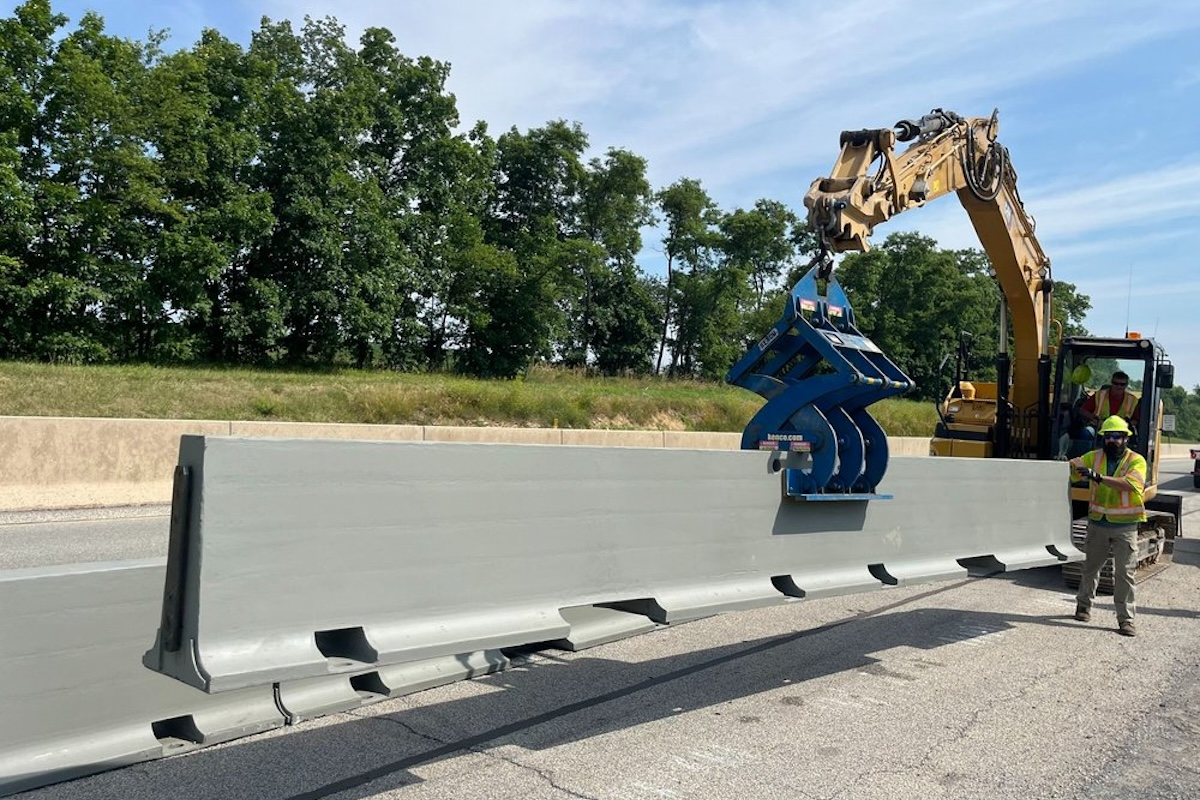
Another company moving away from concrete is Asynt Solutions, which recognized the need for a safer, more efficient, eco-friendly alternative to bulky and brittle concrete traffic barriers. The company’s Ape Barrier system reinvented the jersey barrier, a design essentially unchanged since the 1950s. The system has proven its ability to meet or exceed standards for portable concrete barriers established by the National Cooperative Highway Research Program in its “Manual for Assessing Safety Hardware” (MASH). The Ape Barrier system is approved for MASH TL-3 standards, the highest rating for resistance to impacts from cars and trucks. Compared to concrete barriers, it’s easier and less expensive to transport, increases job site efficiency, and minimizes carbon emissions.
| Your local Gomaco dealer |
|---|
| Gomaco -Contact For a Dealer Near You |
The use of structural composites parallels another rapidly growing construction trend: prefabrication. According to a 2025 report by The Business Research Company, the market for prefabricated buildings was expected to grow from $165.85 billion in 2024 to $178.95 billion in 2025, reflecting a compound annual growth rate (CAGR) of 7.9 percent. Looking further out, the report anticipates a projected valuation of $239.23 billion by 2029. Key trends driving this forecast include increasing construction, pervasive shortages of skilled labor, and the ongoing push to improve job site safety.
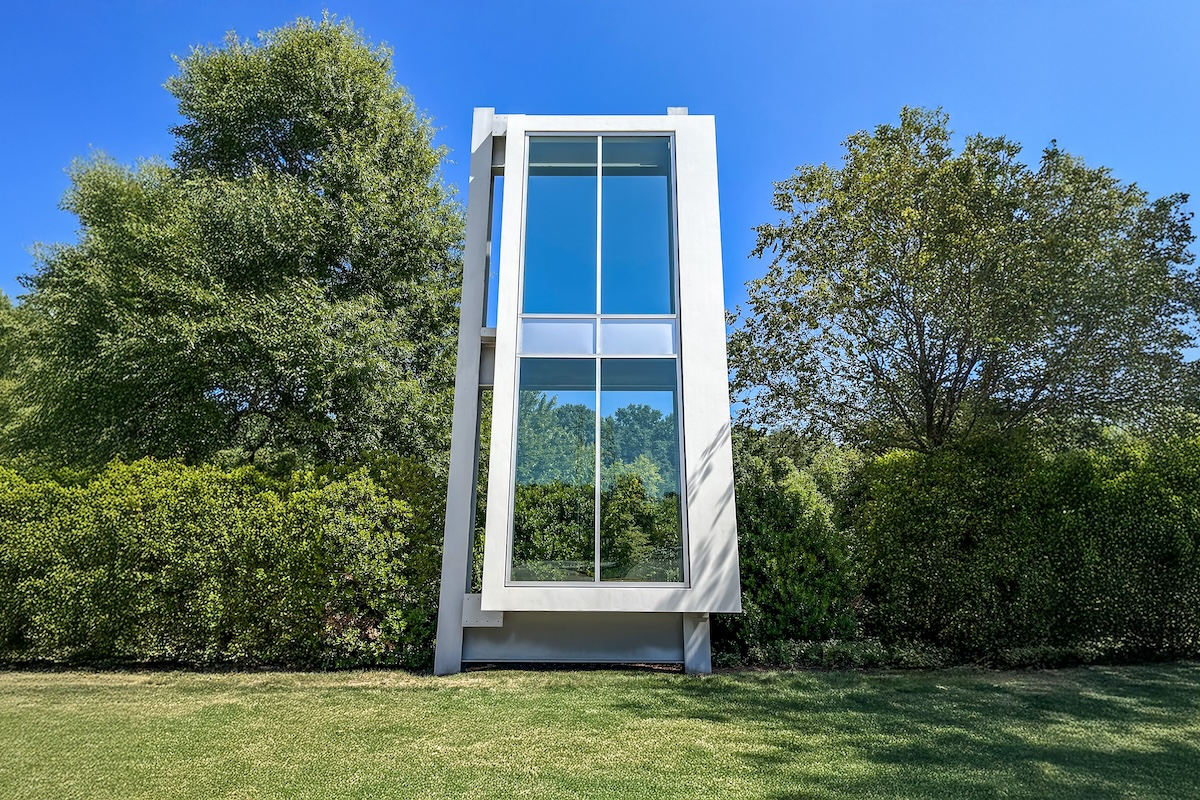
Building Composites set out to address these concerns with HyperWall, an exterior structural/architectural building enclosure system manufactured for design flexibility but in standardized and modular forms that speed up installation and cut costs. The high strength-to-weight ratio of structural composites means the panels can be mounted with bolted connections, which go together twice as fast as welded connections and require less skilled labor.
The upside of structural composites is that buildings can be closed up to 50 percent faster than traditional formats and at lower cost. Moreover, the inherently waterproof nature of FRP structural composites reduces the likelihood of water-related warranty claims over enclosure systems using precast concrete or steel.
Structural composites are becoming increasingly essential in construction thanks to a combination of strength, light weight, design flexibility, durability, and sustainability. Although growth projections vary, the use of structural composites in the construction industry is expected to grow steadily at an estimated CAGR of 5.2 to 7.6 percent over the next five years.
| Your local Gomaco dealer |
|---|
| Gomaco -Contact For a Dealer Near You |
Combined with improvements in technology, prefabrication, and other processes, composites are poised to relieve many of the most pressing challenges facing the construction industry, from utilizing scarce labor more efficiently to reducing total costs and enhancing sustainability.
Andy Loff, P.E., has an extensive background in structural engineering, business development, construction, manufacturing, and technological development. Prior to becoming CEO of Building Composites, he founded multiple engineering and fabrication companies utilizing composite materials and other advanced solutions.