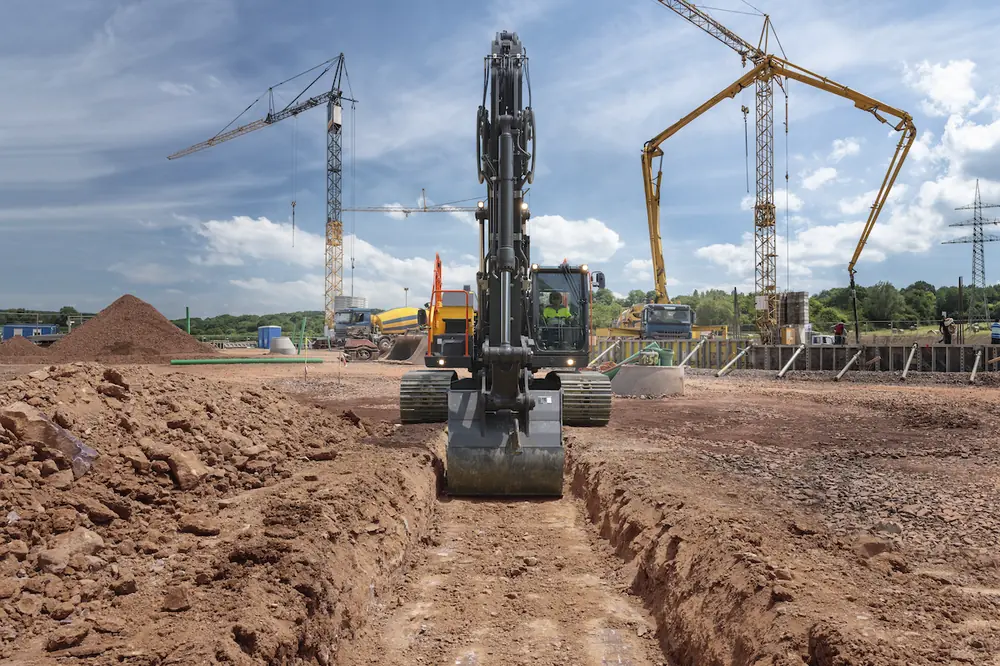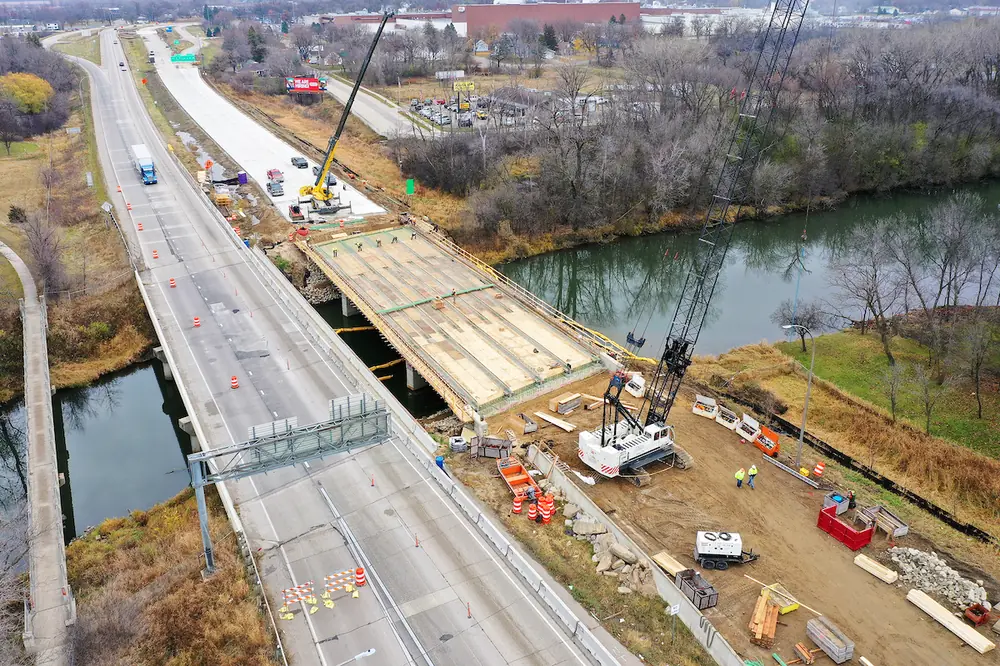

Today’s construction job sites are increasingly complex. Crews are working longer days, tackling tighter timelines, and operating in environments where access to infrastructure isn’t guaranteed. In that reality, productivity depends on more than a single machine or piece of iron — it relies on planning a complete, end-to-end equipment lineup.
Equipment fleets can only perform at their best when the job site is properly prepared. Reliable power, consistent lighting, and dependable air supply allow crews to extend work into evening hours, operate safely, and stay productive in remote locations.
When contractors think beyond diggers and material movers and plan holistically for power and support equipment, they create job sites built for efficiency from the ground up.
Before the first bucket is loaded or the first trench is dug, proper preparation sets the tone for the entire project. A well-planned job site prioritizes safety, reliability, and performance across every piece of equipment.
Daily inspections are the first line of defense against downtime. Walk-around checks for leaks, damaged hoses, loose connections, or worn components help catch small issues before they become costly failures.

| Your local Gomaco dealer |
|---|
| Gomaco -Contact For a Dealer Near You |
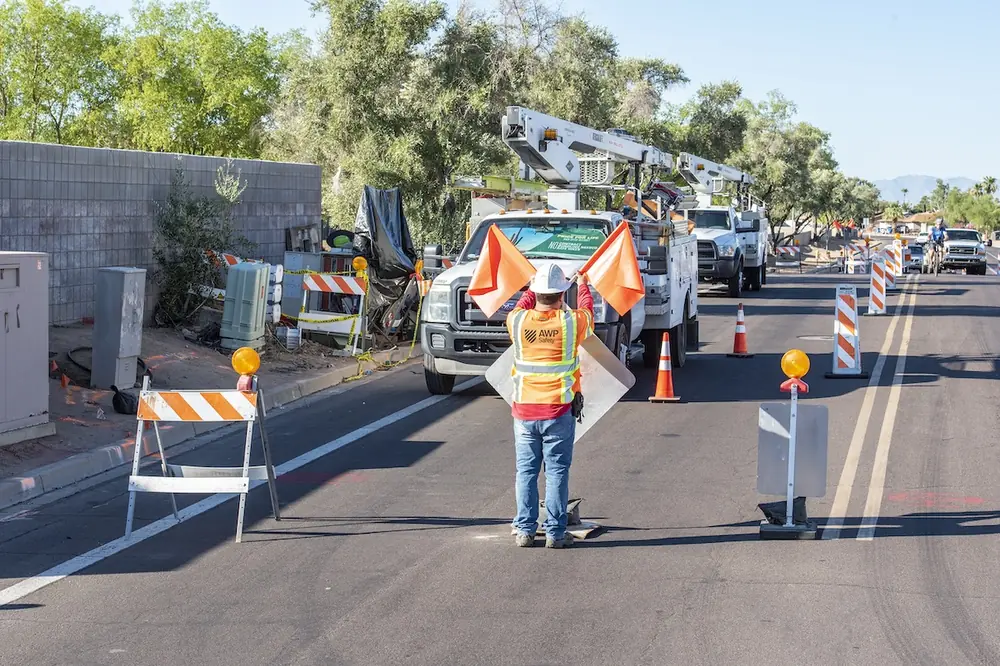
Equally important is understanding the site — identifying overhead hazards, uneven terrain, tight access points, and traffic flow so the right machines can be selected and operated effectively.
Consistent maintenance keeps equipment ready when it’s needed most, especially in harsh conditions or extended shifts. Following manufacturer’s recommended service intervals and adjusting for environmental demands helps protect uptime. And regardless of experience level, operators should remain alert and aware. Familiar tasks can still present new risks as site conditions change throughout the day.
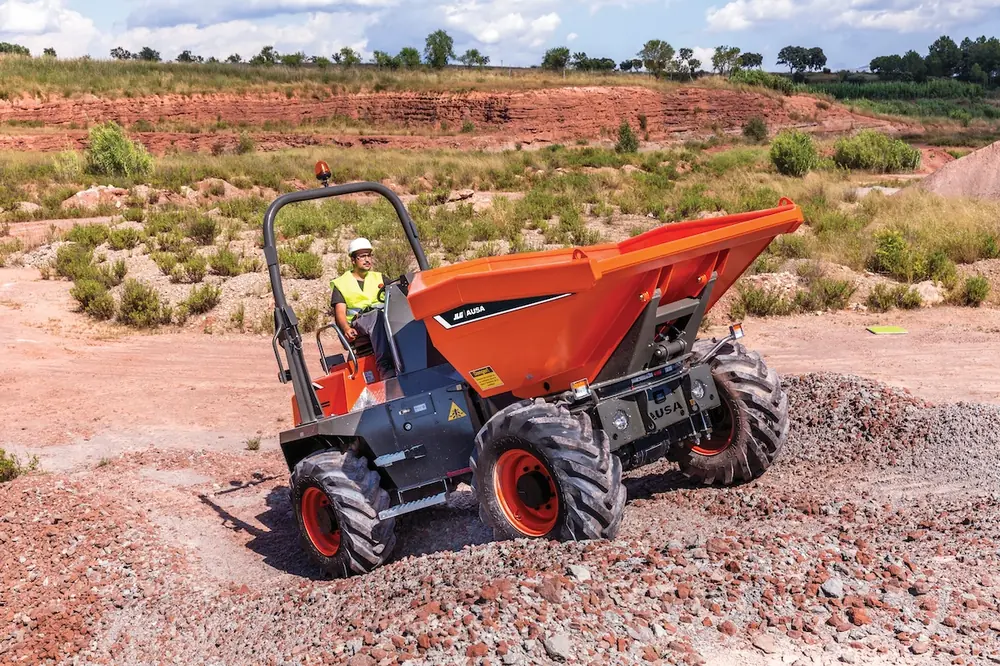
By proactively prepping the job site, contractors can focus on matching equipment to the work ahead. Compact equipment, for instance, can handle tasks ranging from grading and trenching to material handling and demolition.
Compact Track Loaders
These machines take on challenging ground conditions where flotation, traction, and stability matter most. Their track‑based undercarriage distributes weight more evenly, resulting in lower ground pressure and improved performance on soft, muddy, or uneven terrain. This makes them well-suited for grading, site preparation, and material handling in conditions that would slow or limit wheeled equipment.

| Your local Trimble Construction Division dealer |
|---|
| SITECH Southwest |
| SITECH Rocky Mountain |
| SITECH Northwest |
Tracks also provide a smoother ride in rough environments, helping operators stay productive across long shifts.
Skid-Steer Loaders
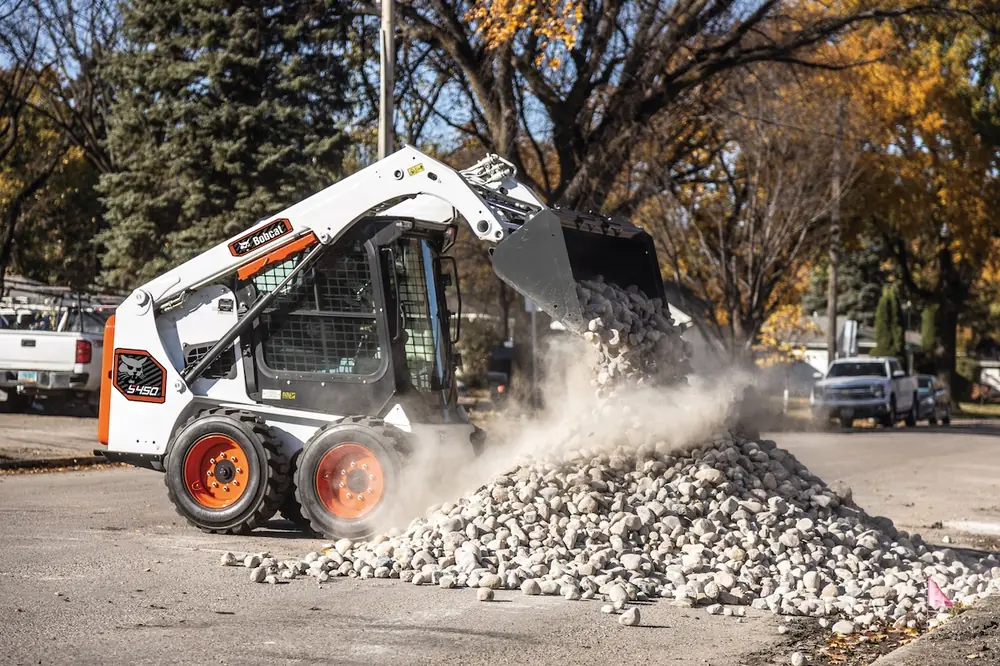
These machines offer speed and maneuverability on firm, improved surfaces such as concrete, asphalt, and hard‑packed soil. Their wheeled design allows for quicker travel speeds and sharper turning in applications that require frequent repositioning.
Skid‑steers are typically easier to transport and maintain, compared to track machines. For contractors prioritizing agility, transport efficiency, and hard‑surface productivity, skid‑steer loaders offer a practical solution.
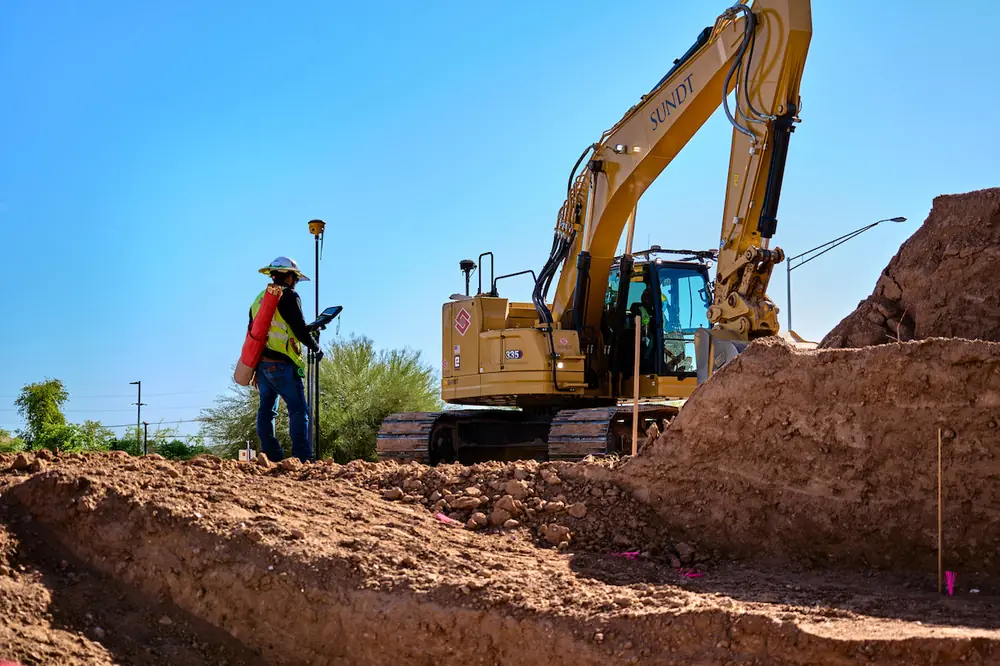
Compact Excavators
With the ability to rotate 360 degrees, compact excavators allow operators to dig, place material, and backfill without repositioning the machine — a key advantage on confined job sites. Features like zero or minimal tail swing and boom offset mean they can work close to structures, utilities, or obstacles.

| Your local Bobcat dealer |
|---|
| Ditch Witch West |
Attachments dramatically expand what core machines can accomplish.
For instance, hydraulic breakers support demolition, augers speed post-hole drilling, and trenchers simplify utility work. Brush cutters, mulchers, and specialized buckets allow contractors to adapt equipment to changing tasks without adding machines to the fleet.
With hydraulic quick-attach systems, operators can switch tools without leaving the cab, saving time and improving productivity.
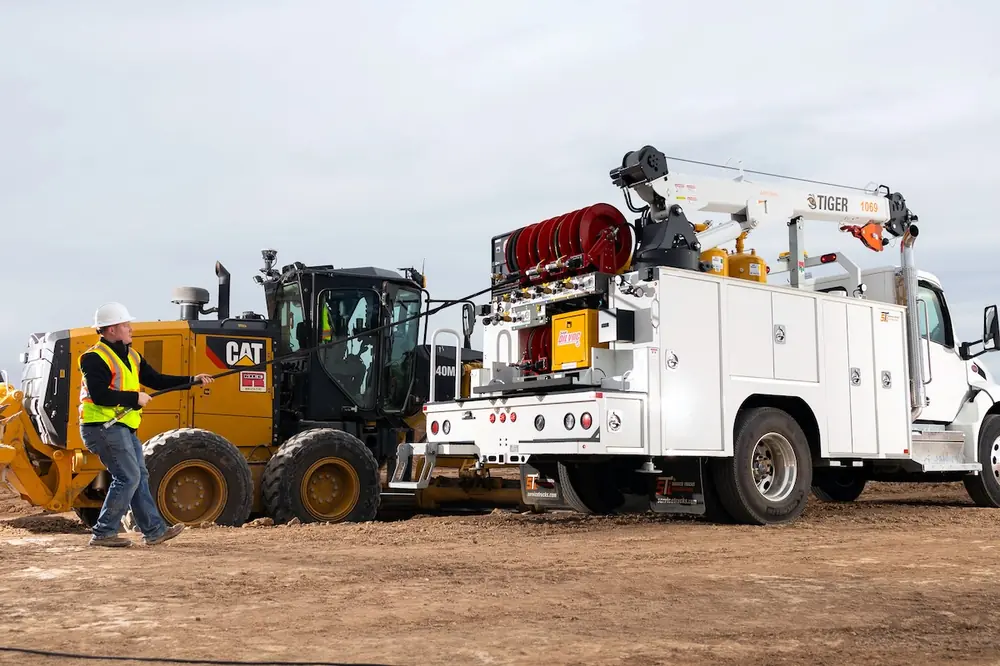
While loaders and excavators handle the hands‑on work, power and job site infrastructure equipment create the conditions that allow crews to keep moving, especially after daylight fades or when grid power isn’t available.
| Your local Gomaco dealer |
|---|
| Gomaco -Contact For a Dealer Near You |
Portable Generators
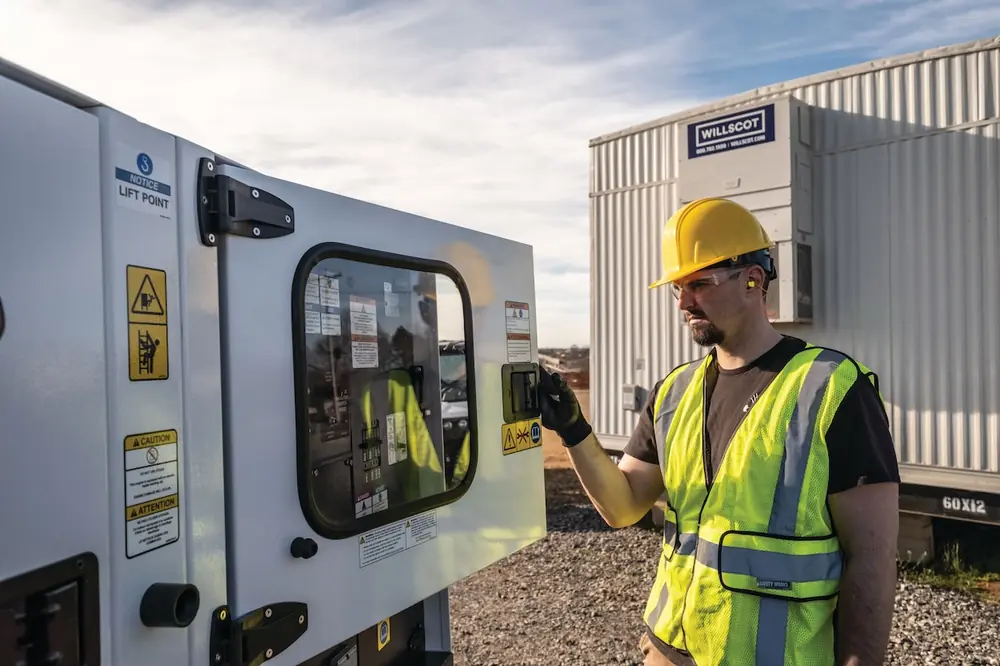
Modern units range from compact models suited for small tools to larger machines capable of powering multiple high‑draw devices simultaneously. Diesel generators offer fuel efficiency, with many models designed for extended runtimes on a single tank. Advanced controls allow generators to synchronize for scalable power and manage variable loads to protect engines and reduce maintenance.
Proper generator sizing is critical. Undersized units can trip breakers and stall work, while oversized generators may suffer from inefficiencies. To ensure the right fit, contractors should inventory their tools, understand voltage and amperage requirements, and consult dealers for motor-load calculations.
Light Towers
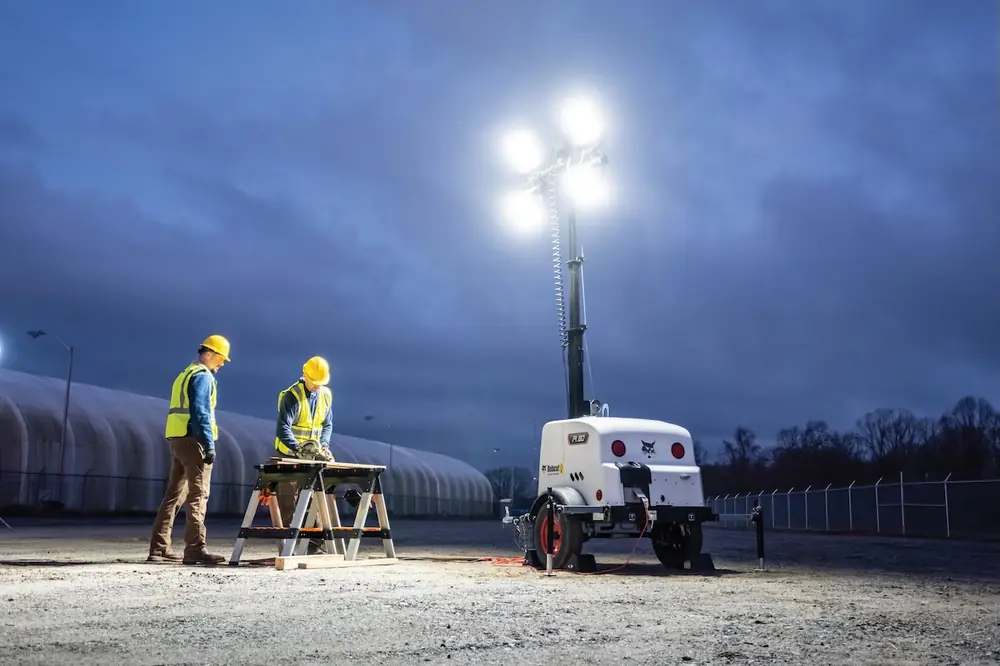
Illumination from light towers enhances safety, quality, and confidence on the job site.
Fuel-efficient engines paired with modern alternators provide powerful lighting and auxiliary power. LED technology offers maintenance-free operation rated for up to 50,000 hours, while tall masts and adjustable fixtures ensure consistent coverage. With extended runtimes per tank and programmable dusk-to-dawn operation, light towers keep sites secure and productive with minimal intervention.
| Your local Gomaco dealer |
|---|
| Gomaco -Contact For a Dealer Near You |
Portable Air Compressors
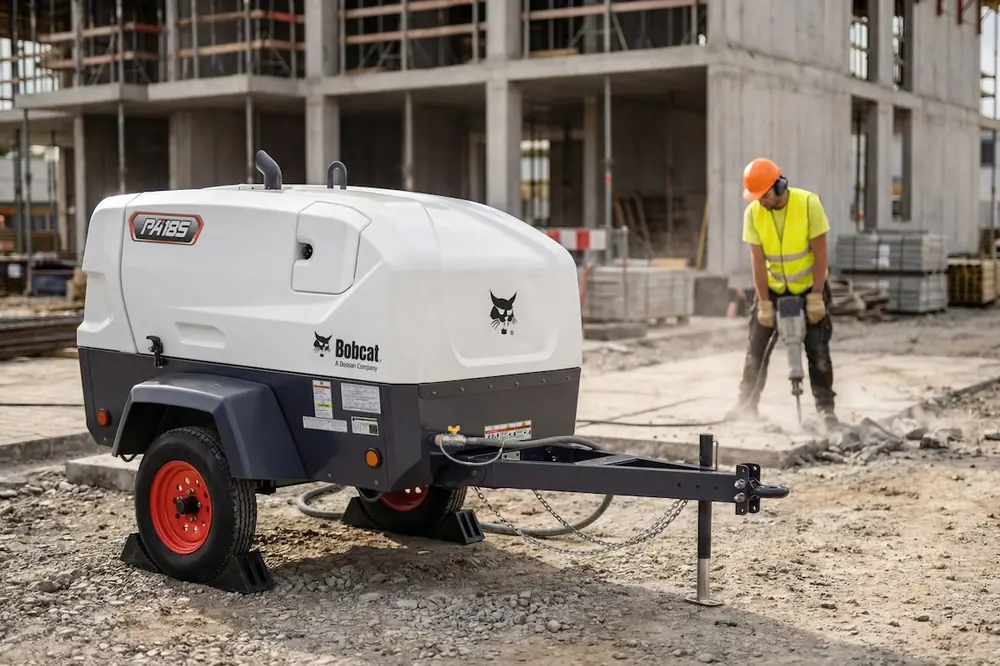
This option supplies the airflow needed to run pneumatic tools such as jackhammers, drills, and spray equipment.
Available in outputs ranging from 185 to 1,600 cubic feet per minute, towable compressors allow contractors to dial in pressure and flow for specific applications while powering multiple tools at once. Their mobility makes it easy to reposition equipment as work zones shift throughout a project.
Power, lighting, and air may operate quietly in the background, but their impact on productivity and efficiency can be significant.
Reliable lighting improves working conditions and helps crews maintain quality standards when visibility is limited. Self-contained power allows operations to continue in remote locations, emergency response situations, or sites awaiting permanent electrical service.
| Your local Gomaco dealer |
|---|
| Gomaco -Contact For a Dealer Near You |
Compressed air enables techniques beyond the capabilities of electric tools, particularly in demanding or off-grid environments. Continuous output from towable compressors supports sustained operation without performance loss — critical for high-impact applications like concrete breaking.
The most efficient job sites rely on equipment that works together seamlessly. When machines and support equipment share common design elements, contractors benefit from simplified training, streamlined maintenance, and easier parts management. Fuel compatibility reduces complexity, while consistent service intervals support efficient scheduling.
Working closely with an experienced dealer for parts, service, and expertise can also strengthen fleet performance. Dealers who understand an operation’s applications and challenges can provide insight into equipment selection, sizing, and long-term planning.
Keeping a job site moving requires more than just the right loader or excavator. It demands a complete view of the operation — one that includes support equipment alongside core machines and attachments.
| Your local Gomaco dealer |
|---|
| Gomaco -Contact For a Dealer Near You |
Contractors who take a comprehensive approach are better prepared for extended shifts, remote locations, and unexpected challenges. By investing in proper site preparation and complementary equipment, they position their crews to work safer and more efficiently, no matter what the job demands.
In an industry where downtime equals lost revenue, having the right machine for every task is a necessity. When every piece of equipment plays its role, the job site keeps moving forward.