Texas is often described as a “freedom of contract” state. Courts routinely enforce contract provisions that one party later claims are unfair, reasoning that sophisticated parties should be bound by the agreements they make.
But a recent decision from the Fourteenth Court of Appeals in Houston, Texas, serves as an important reminder that not every contract provision is automatically enforceable. In Solorzano II v. Sage Construction Co., the court refused to enforce a pay-if-paid (i.e. contingent payment) clause because the contractor failed to satisfy statutory requirements that apply to many Texas construction projects.
These paid-if-paid clauses are often present in construction contracts, so the case offers contractors, subcontractors, and suppliers practical lessons about when such a clause will work and when it will not.
The construction industry often refers to two payment clauses that sound similar but operate very differently — the less onerous pay-when-paid clause and the more severe pay-if-paid clause. To the uninitiated, this may sound like tomayto-tomahto, but the distinction between the two can be critical when a project runs into financial trouble.

| Your local Hitachi dealer |
|---|
| Bane Machinery |
Under a pay-when-paid clause, payment is typically due when the owner pays the contractor. If the owner never pays, the contractor may still be required to pay the subcontractor within a reasonable time.
A frequently encountered issue with pay-when-paid clauses is what constitutes a reasonable time for payment when the owner has not paid. Unfortunately, there is no bright-line answer.
Texas courts have generally treated the issue as a fact question that depends on the circumstances of the particular project. As a result, neither lawyers nor courts can provide a universal deadline. Instead, the determination may ultimately be left to a judge, jury, or arbitrator.
While that uncertainty can be frustrating, pay-when-paid clauses at least offer subcontractors some comfort: the dispute is usually about timing rather than whether payment is owed at all.

| Your local LeeBoy dealer |
|---|
| Closner Equipment Co Inc |
| Romco Equipment Co |
On the other hand, a pay-if-paid clause makes the contractor’s obligation to pay a subcontractor contingent on receiving payment from the owner. Because it shifts the risk of owner non-payment downstream, lawyers often refer to it as a “risk-shifting” provision.
If the owner never pays, a properly drafted and enforceable pay-if-paid clause may relieve the contractor of the obligation to pay the subcontractor.
A typical clause might state that:

| Your local Gomaco dealer |
|---|
| Closner Equipment Co Inc |
"Subcontractor expressly assumes the risk that the owner may fail to pay contractor for subcontractor’s work. Contractor shall have no obligation to pay subcontractor for subcontractor’s work unless contractor first receives payment from owner for subcontractor’s work. Therefore, contractor’s receipt of payment from the owner for the subcontractor’s work is an express condition precedent to any obligation of contractor to pay subcontractor. This condition precedent means that subcontractor’s entitlement to payment is contingent upon the owner first paying contractor such funds. This clause is not intended to affect the timing of payment; rather, this clause explicitly shifts the risk of non-payment to the subcontractor."
Not surprisingly, these clauses tend to be popular with contractors and less popular with subcontractors, and if one of these is in your contract, it could mean the difference of a late payment and no payment at all.
Chapter 56 was enacted in 2009 following years of debate over pay-if-paid clauses.
At the time, contractors and subcontractors faced uncertainty. Courts in other states had reached different conclusions regarding pay-if-paid clauses. Some enforced them in the name of freedom of contract. Others struck them down as unfair attempts to shift the risk of owner insolvency.

| Your local Atlas Copco CMT USA dealer |
|---|
| Bane Machinery |
| Central Texas Equipment |
| Cooper Equipment Co |
| Closner Equipment Co Inc |
| Romco Equipment Co |
Rather than waiting for Texas courts to resolve the issue, industry groups worked with legislators to develop a compromise. The result was Chapter 56.
In simple terms, the statute permits contingent payment clauses on many Texas projects, but only if certain conditions are satisfied.
Oversimplifying somewhat, a contractor seeking to enforce a pay-if-paid clause generally must do two things.

| Your local Case Construction Equipment Inc dealer |
|---|
| ASCO Equipment |
| Nueces Power Equipment |
Before the pay-if-paid clause becomes enforceable against the subcontractor, the contractor must obtain and provide information regarding the project's financial viability. The required information varies depending on whether the project is public or private.
For public projects, the owner may provide a statement confirming that funds have been authorized and are available for the project.
For private projects, the required financial information can be more extensive and may include:
- A legal description of the property
- Information regarding construction loans
- The amount and source of funds available for the project
- Other information specified by Chapter 56
- Make reasonable efforts to collect the payment from the owner
- Assign its rights against the owner to the unpaid subcontractor
- Understand whether Chapter 56 applies to the project
- Investigate project financing at the outset
- Provide the required financial information to subcontractors
- Document those disclosures
- If payment problems arise, actively pursue collection from the owner
- Consider assigning claims to unpaid subcontractors when appropriate
- Ask for the financial information required by Chapter 56
- Confirm whether the contractor has complied with the statute
- Do not assume a pay-if-paid clause is automatically enforceable simply because it appears in the subcontract

| Your local Bobcat dealer |
|---|
| Compact Construction Equipment, Inc |
| Bobcat of North Texas |
If the owner fails to pay, the contractor cannot simply walk away and point to the pay-if-paid clause. Rather, the contractor generally must either:
A word of caution: Chapter 56 does not apply to every Texas construction project. Among other exclusions, the statute generally does not apply to: design services, many civil and infrastructure projects, and detached single-family residences, duplexes, triplexes, and fourplexes.
For projects outside Chapter 56, the law remains less certain. Texas appellate courts have not provided definitive guidance on whether a contingent payment clause that shifts the risk of owner non-payment will always be enforced.

| Your local JCB North America dealer |
|---|
| Monk JCB |
| BOSS JCB |
| South Star JCB/Meinecke |
That uncertainty was one of the reasons industry participants sought legislative compromise in 2009.
Yet even when Chapter 56 did apply, an unanswered question was what circumstances would allow a subcontractor to avoid enforcement of a pay-if-paid clause.
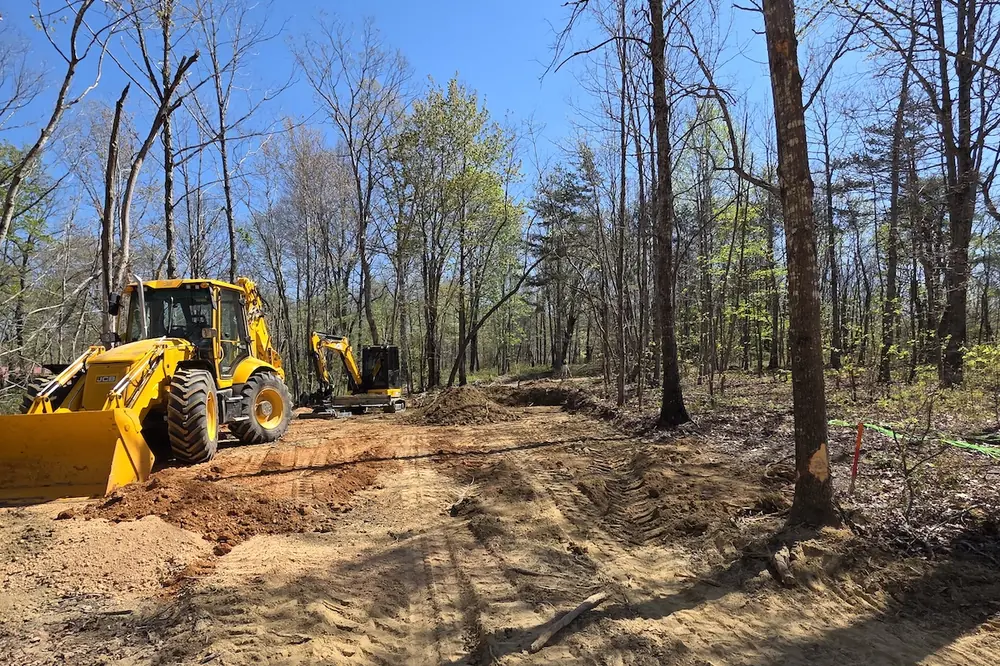
A recent case arose from a subcontract between Sage Construction (general contractor) and Solorzano (subcontractor) for land-clearing work valued at approximately $180,000. After Solorzano completed roughly half of the work and submitted an invoice, Sage advised that the owner was not paying and had become unresponsive. Solorzano sued for payment.
Sage relied on a pay-if-paid clause in the subcontract, which expressly accounted for and allocated the risk of non-payment by the owner. Solorzano responded that the clause was unenforceable under Chapter 56 of the Texas Business and Commerce Code. The appellate court agreed with Solorzano.

| Your local ASV dealer |
|---|
| CLM Equipment Co |
According to the court, Sage did not satisfy the statutory requirements necessary to enforce the contingent payment clause. Indeed, there was no evidence that Sage provided any of the project’s financial information. As a result, the pay-if-paid provision could not serve as a defense to Solorzano’s payment claim.
The lesson is straightforward: simply including a pay-if-paid clause in a contract does not guarantee that a court will enforce it.
For contractors seeking to rely on pay-if-paid provisions, they should consider the following:

| Your local Astec dealer |
|---|
| Closner Equipment Co Inc |
For subcontractors wary about such clauses when bidding on a job:
For projects governed by Chapter 56, contractors have a roadmap for making pay-if-paid clauses enforceable. But those protections come with obligations. A contractor that fails to satisfy the statute’s disclosure and collection requirements may find that its carefully drafted contingent payment clause provides little protection at all.
And even on projects excluded from Chapter 56, determining a project’s financial viability is often a sound business practice. Knowing where the money is coming from before work begins can prevent many payment disputes before they occur.

| Your local Astec dealer |
|---|
| Closner Equipment Co Inc |