

Teamwork is at the center of any safe and successful job site. When teamwork breaks down, the risks add up: longer project timelines, bleeding margins from preventable inefficiencies, greater danger to operators, excessive equipment downtime, higher incident-related costs, and the list goes on.
Crews need a clear understanding of communication standards, project goals, and each member’s role, all working in sync to complete a project safely and efficiently. Soft skills like collaboration and coordination have always been critical, yet they’re among the most difficult skills to teach.
Luckily, the challenges of the past don’t have to define the future. Team building, enhanced through simulation, gives crews a realistic yet safe space to problem-solve and operate efficiently before ever setting foot on the job site.
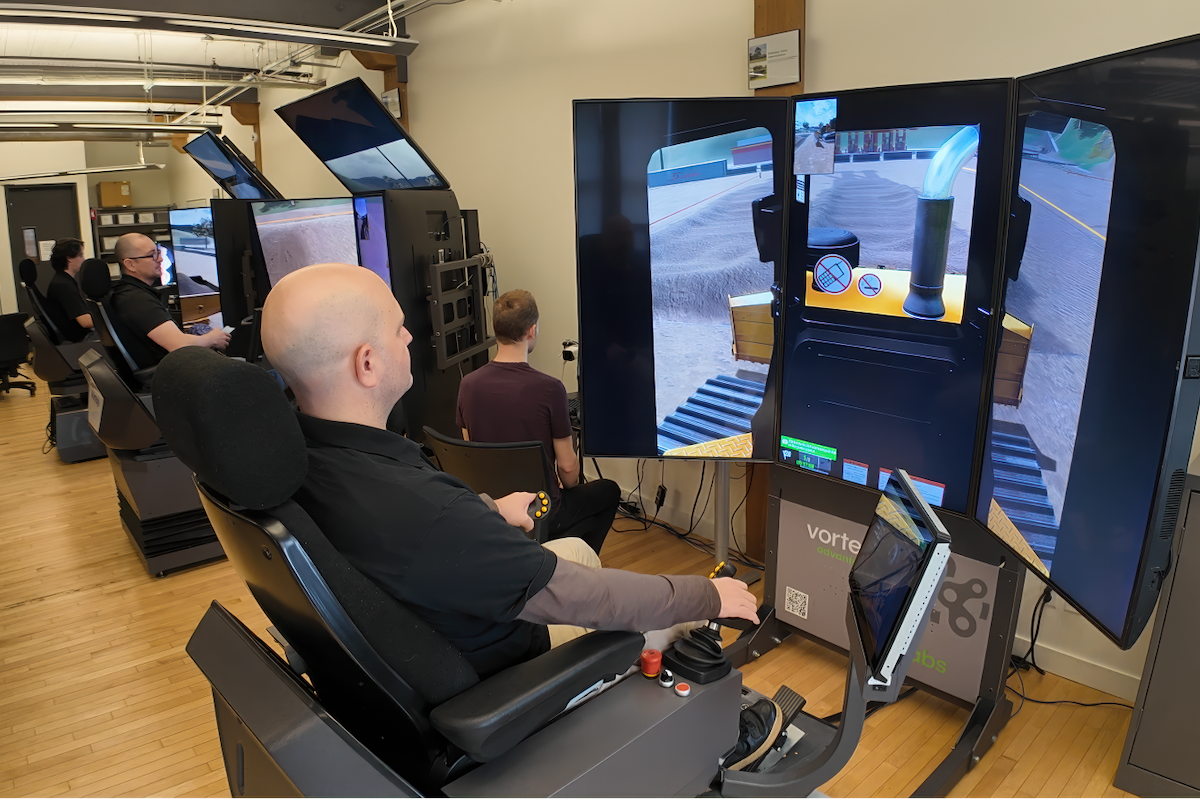
With simulation training technology, companies can train operators on different pieces of equipment without any risk. Crew training lets teams train with the full job site in mind, aligning tasks, operators, and crew communication. It also gives multiple trainees a chance to get in the seats of different pieces of heavy equipment often used together in the real world, in the same shared environment, learning how to operate, interact, and work together more safely and productively.
As this technology develops, we can easily imagine a future where simulation training connects directly with job site data. Crews may be able to download their own design files into the simulator, helping teams visualize and prepare for real upcoming jobs long before equipment arrives on site.
Not only can operators train on a simulated job site, but the use of sandbox exercises provides a free-form training environment that challenges operators to apply their skills creatively and think critically, just as they would on a real job site. Trainees can tackle challenges using multiple approaches, experimenting and learning to find proactive resolutions — without risk — in the virtual work site.
This experience then translates to real-world critical thinking skills. Without preset objectives, trainees learn to make decisions, problem-solve, and strengthen muscle memory, preparing them to handle complex and unpredictable situations safely and efficiently.
When operators understand machine interactions, blind spots, workload sequencing, and spatial awareness in a safe virtual environment, they’re far less likely to create unsafe conditions or damage equipment at the real job site.
Crew training also goes beyond the operators. It enables field workers and site managers to train together with operators in realistic and immersive environments. This is a practical way to build collaboration, coordination, and clear communication.
Training operators together on multiple pieces of equipment inside the same simulated job site builds the communication patterns they need long before they’re on the real site. Crews hit the ground already operating as a unit — reducing delays, rework, and onsite ramp-up time.
For example, in two-person crew training, one trainee operates the excavator, learning to safely and efficiently load an articulated dump truck (ADT), while the other trainee operates the ADT, practicing coordination with the excavator and driving across varied terrain.
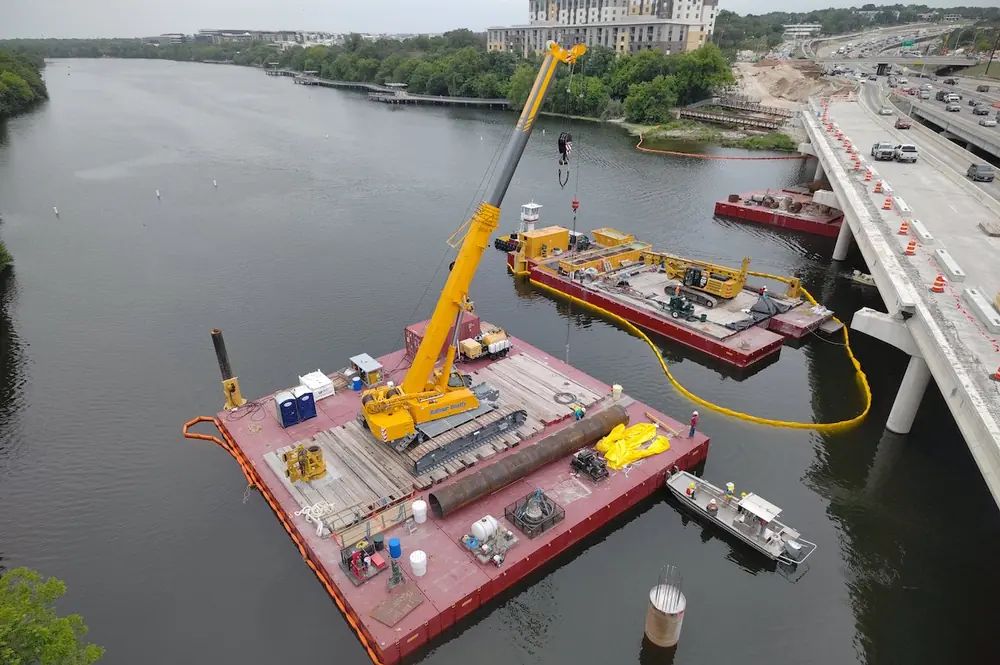
Crew training functionality also includes tandem lift operations for crawler cranes and mobile cranes, where a lead crane operator learns how to safely and efficiently maneuver a steel pipe load in tandem with a secondary crane, operated from another simulator connected to the network.
A three-person crew training option allows trainees to perform a series of coordinated tasks. They can use an excavator to load an ADT, then maneuver the ADT to dump dirt before a dozer completes fine grading. Realistic machine reactions, such as the motion of the dozer and track slippage when grading, helps trainees understand how the machines work and can help build communication habits that transfer directly to the job site.
Simulated crew training can also provide true machine-to-machine interaction, allowing trainees to experience real-time physical responses between equipment. This reduces risk and directly translates to improved performance on the job site.
Real-time machine interaction also drives productivity by keeping excavator, ADT, and dozer operators in sync, ensuring the load-haul-dump cycle runs smoothly. With fewer queues, reduced idle time, and less rework from uneven dumping, crews move more material per shift and keep the entire operation flowing.
Simulation replicates reality so crews can rehearse, practice teamwork, make mistakes, and gain a full understanding of work requirements. It also allows them to safely experience the challenges they might face in the field, training together just as they will work together on the job site, resulting in the confidence to anticipate risks and go into work fully prepared.
Teamwork on the job site is about more than safety. It also impacts productivity and profitability. Every inefficiency, safety incident, and delay costs time and money — and most importantly, could cost lives.
Working on live equipment introduces the potential for accidents and machine damage. Misuse, fuel inefficiencies, and lost productivity can add up quickly. Crew training simulation, on the other hand, allows operators to repeatedly practice maneuvers without burning fuel, wearing down equipment, delaying work, or incurring risks. Practicing teamwork in a simulated environment translates into improved work quality, accountability, and reduction of resources.
Intelligent training solutions that model real-world complexity with precision can help boost workforce development and teach teamwork skills without financial or safety risk. Operators can refine their skills individually while developing their soft skills collectively, preparing them to anticipate challenges well ahead of entering the real job site.
Simulation allows you to evaluate teamwork skills and target areas that need improvement, all in an environment that poses far fewer hazards to personnel, equipment, and property.
Alan Limoges serves as the Manager of Product Growth at CM Labs, where he leverages a background in engineering and a track record of cultivating strategic partnerships to deliver solutions through CM Labs' technology.