
The 95Revive urban initiative, underway in Philadelphia for the better part of a decade, is a long-term, multi-phase infrastructure initiative to rebuild and improve Interstate 95 (I-95) in Pennsylvania.
One of the plan’s signature projects aims to reconnect Center City and surrounding neighborhoods to the waterfront along the Delaware River — not only physically, but culturally as well.
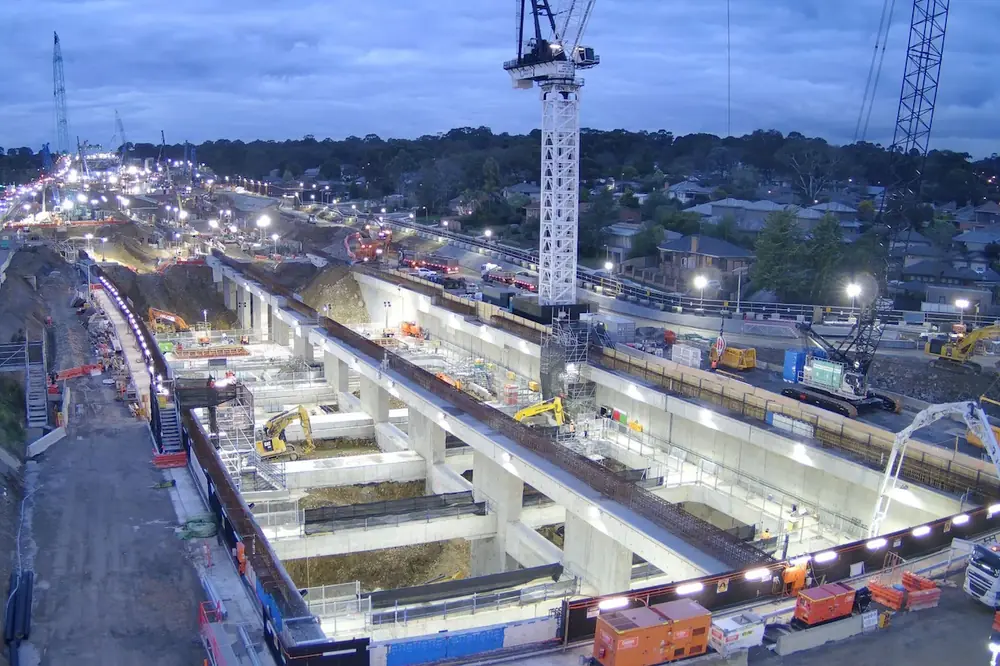
The I-95 Central Access Philadelphia (CAP) Project Penn’s Landing, which began in 2023, will reduce the current physical barrier the highway produces.
The corridor construction, federally funded through the Federal Highway Administration, is a $329 million partnership project.
The Pennsylvania Department of Transportation (PennDOT) is overseeing the project, with New Jersey-based Hill International providing construction management services. Construction on the project includes the structural cap replacement, and the improvements of the utilities, beams, abutments, and more.
Upon completion, the CAP will add access for pedestrians and cyclists from the west side of I-95 to Columbus Boulevard and the waterfront.
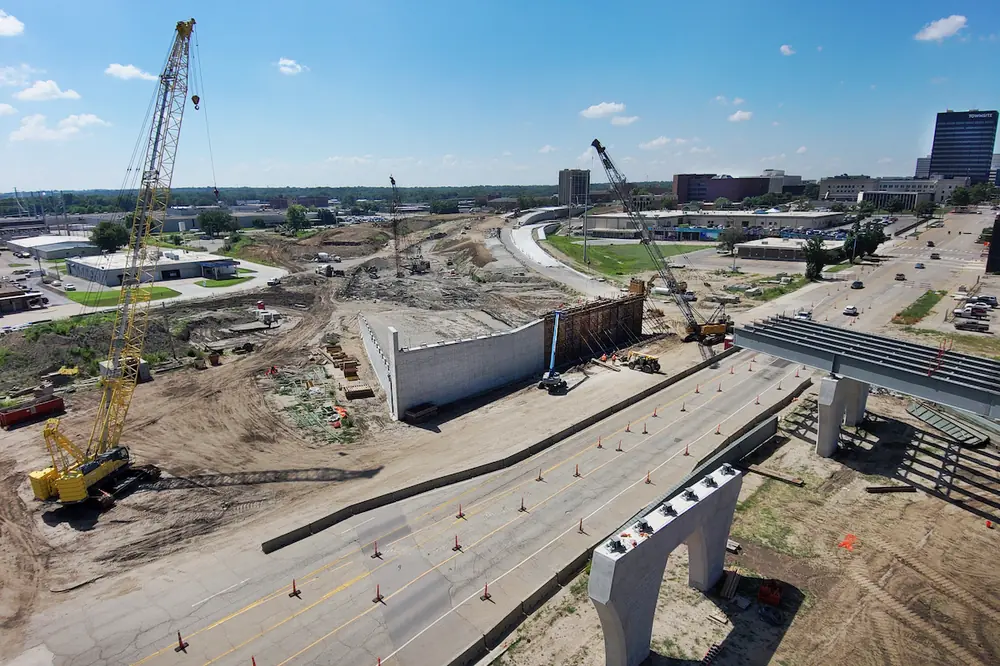
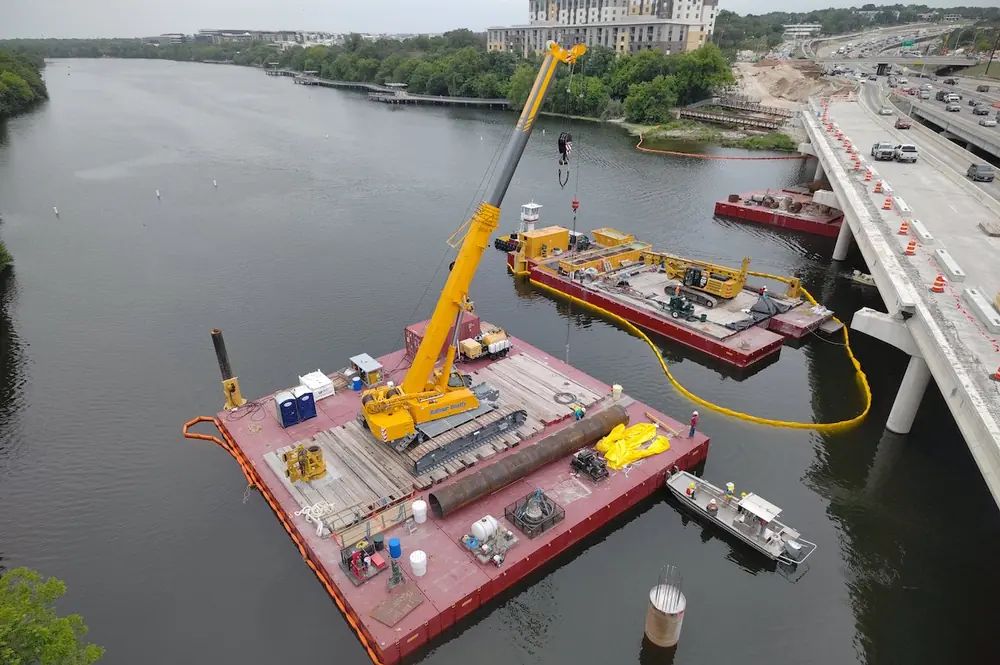
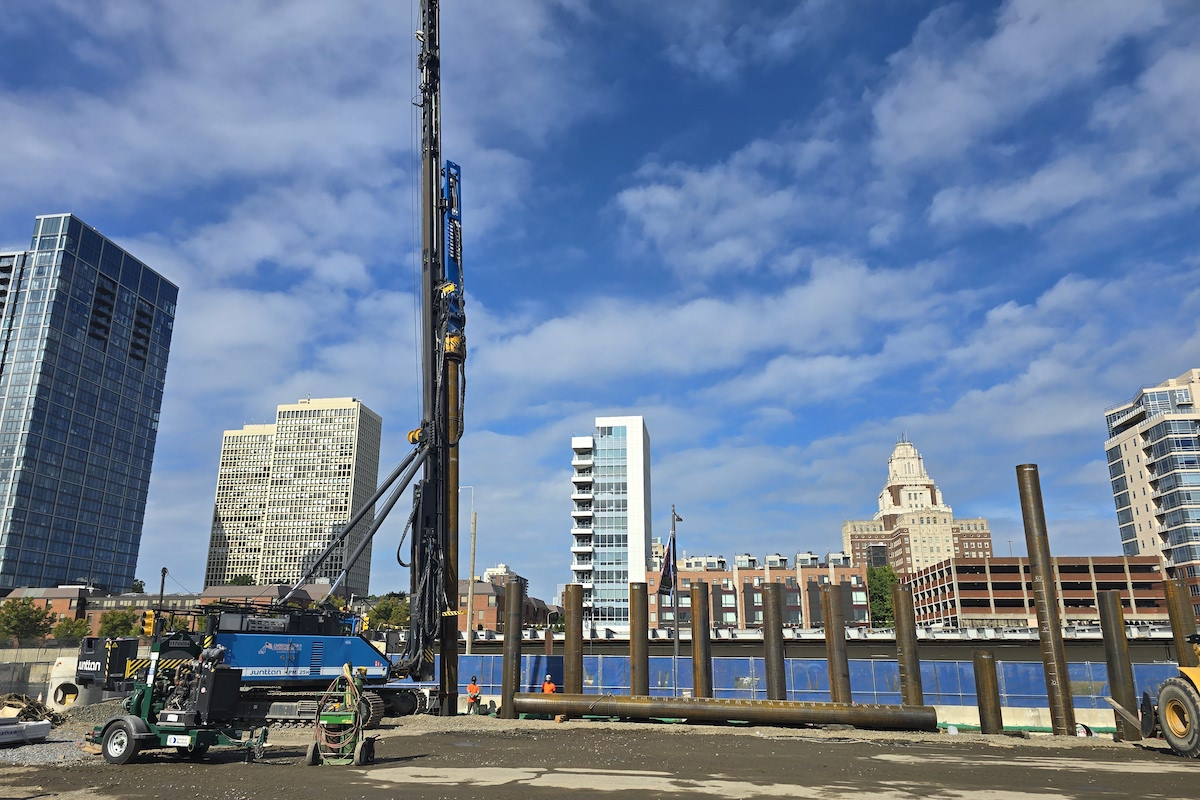
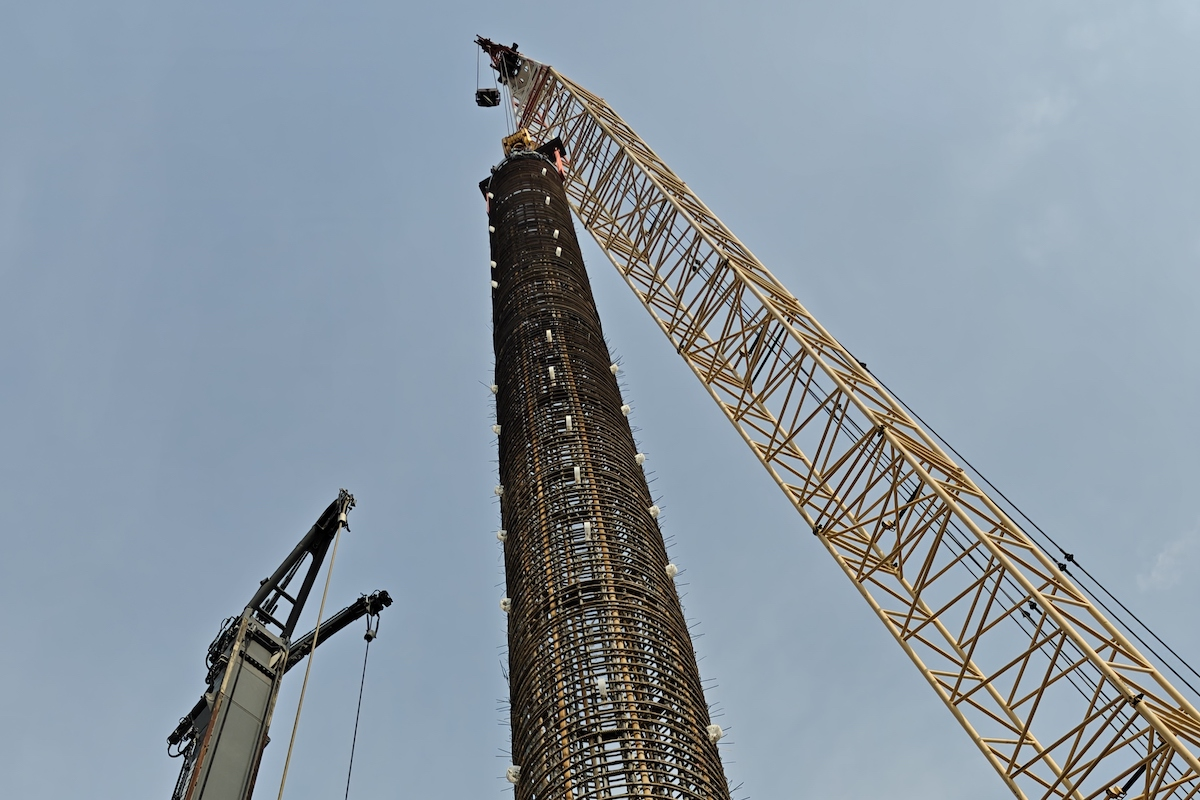
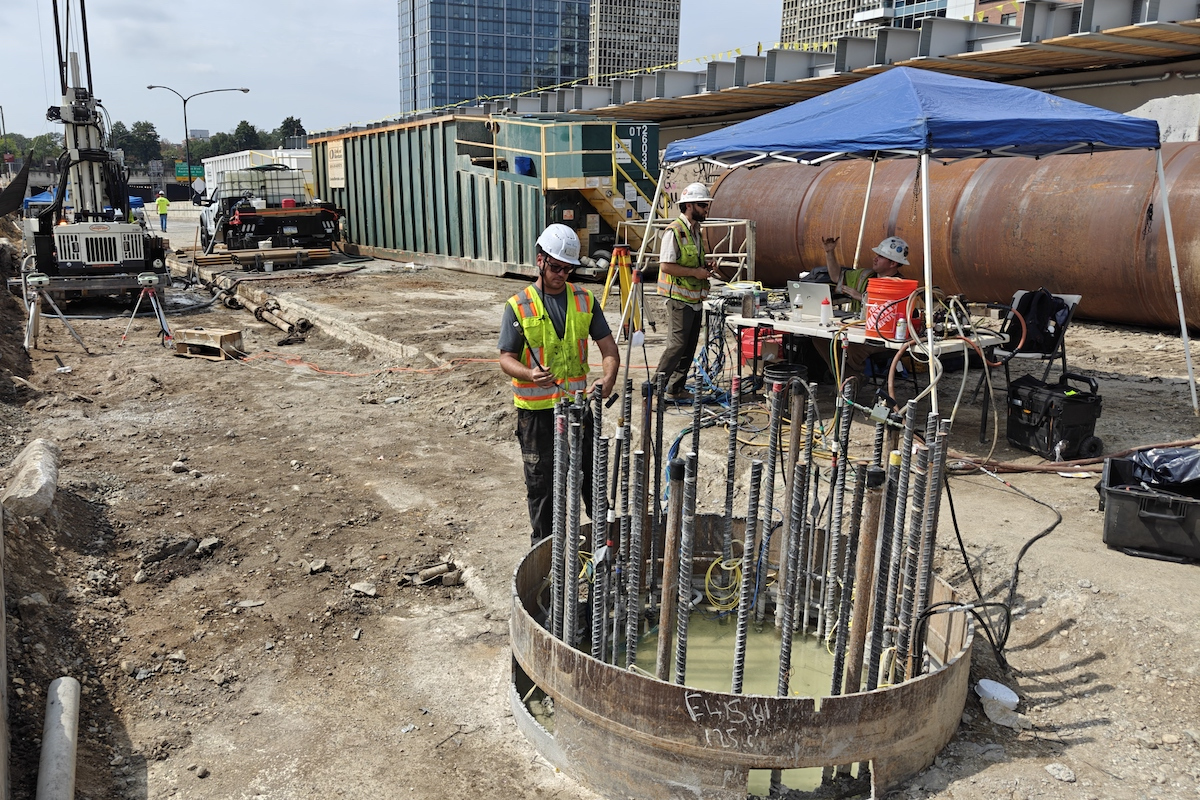
The team is currently reconstructing the viaduct connection between Chestnut and Market streets at Penn’s Landing, building a section of the Delaware River Trail along Columbus Boulevard, repairing the underwater concrete piles in the Penn’s Landing area.
The new deck structure, a massive, engineered platform that will support an 11.5 acre park, will cover or “cap” over a stretch of I-95/Columbus Boulevard to promote development, encourage usage of the waterfront area, and make life easier for bicyclists and pedestrians.
“Right now, I-95, Christopher Columbus really breaks it up,” said Frank Bonito, Senior Project Manager at Hill International Inc. “There's a lot of roadblocks to get over that way.”
The shallow, multi-span bridge will make it easier for people to walk from Center City to the Delaware River’s waterfront, rather than winding through a maze of city streets.
“It's going to be a lot safer and convenient for everyone,” Bonito said.
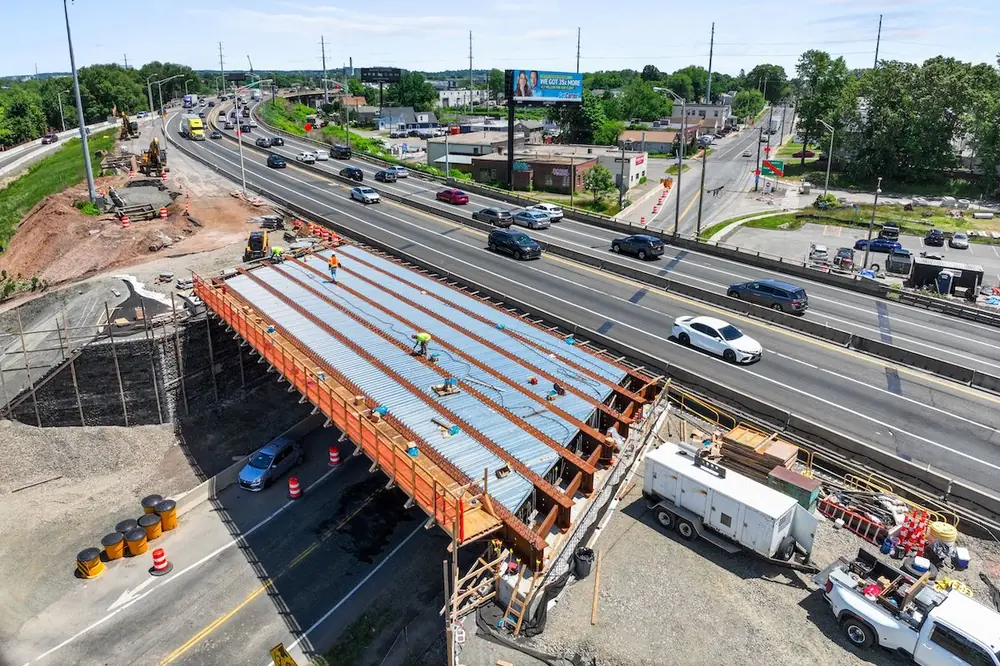
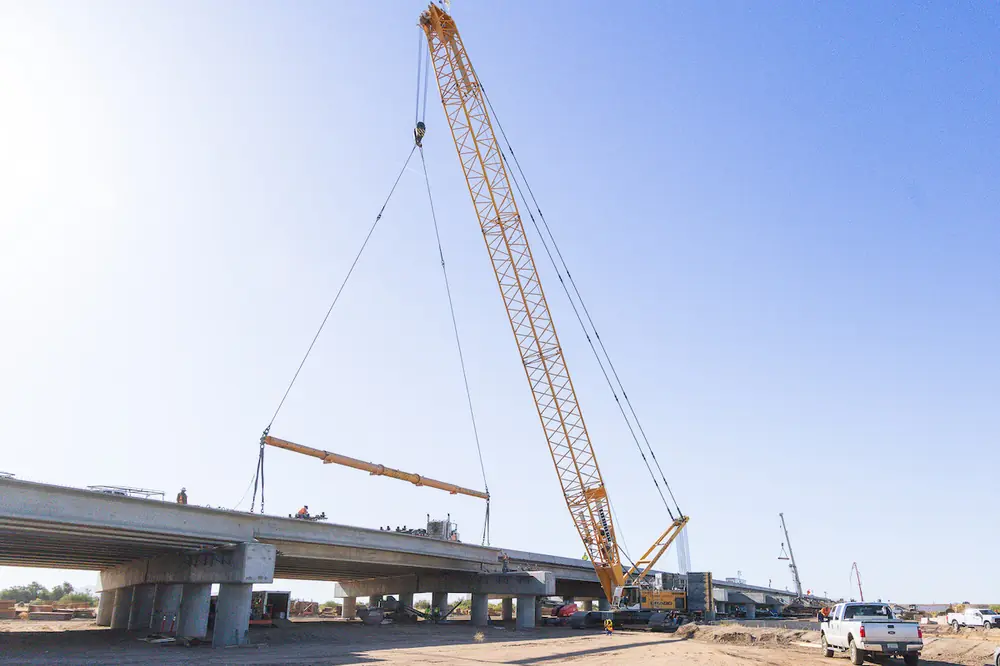
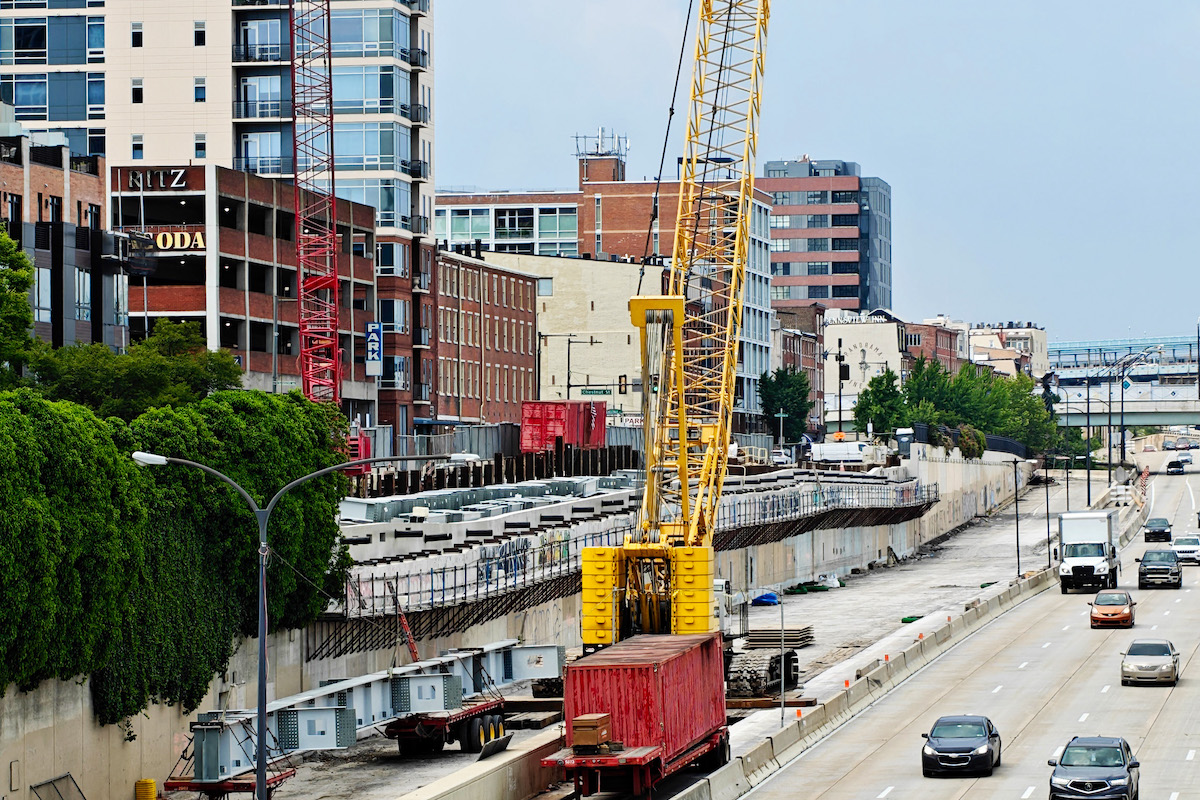
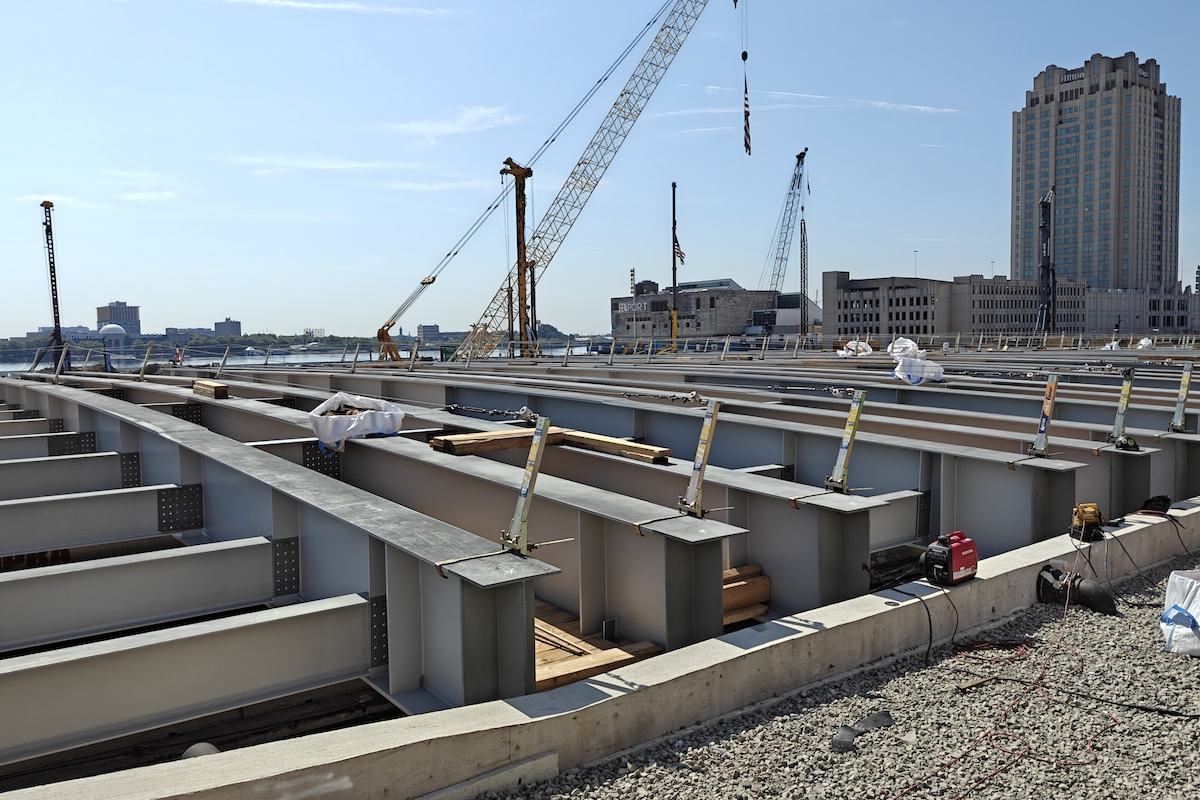
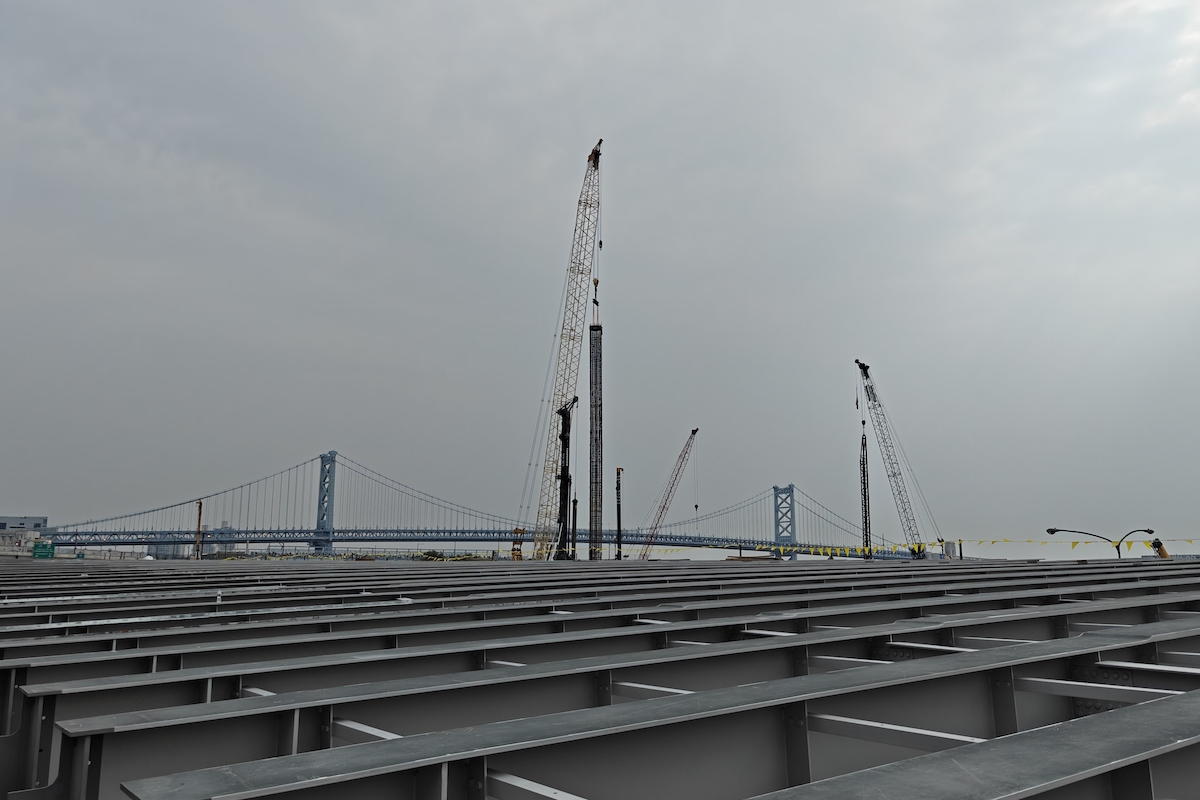
According to Hill International, the project’s first set of steel beams were installed over I-95 in June. Eighty beams stretch east from Front Street across I-95’s southbound lanes to a new pier in the highway’s median.
Custom-built, two-part trailers carried each oversized beam one-by-one from Lancaster, Pennsylvania, to the project site on I-95 — more than 70 miles away.
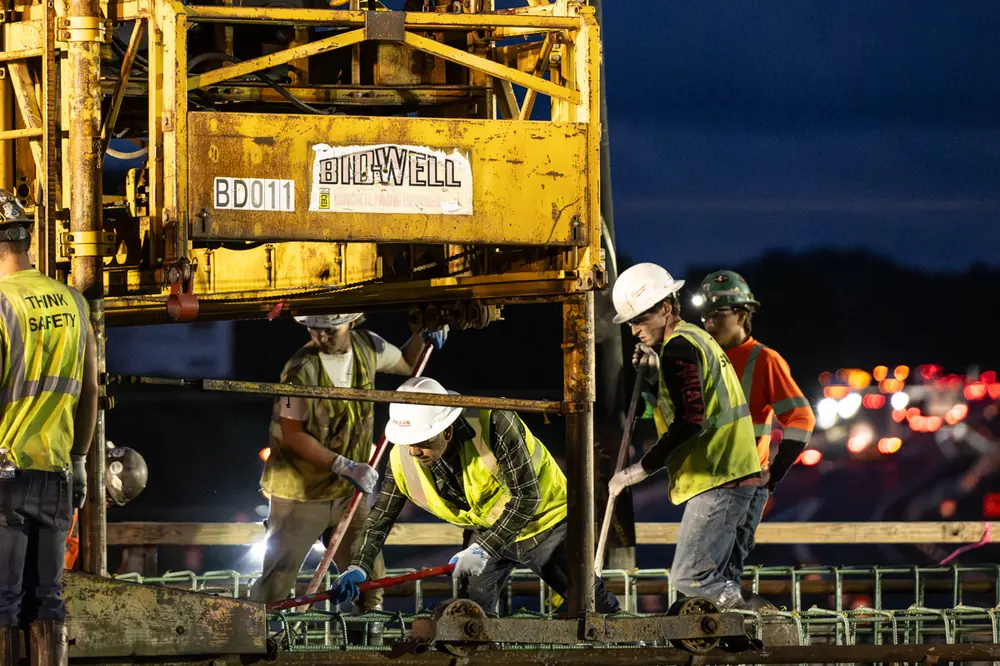
Contractor, Buckley & Company Inc., used cranes that were on site throughout the summer, lifting the beams into place during five weeks of overnight road closures.
“I love seeing the beams go up. So I think having that first span of beams over 95 southbound is something that really catches your eye,” Bonito said.
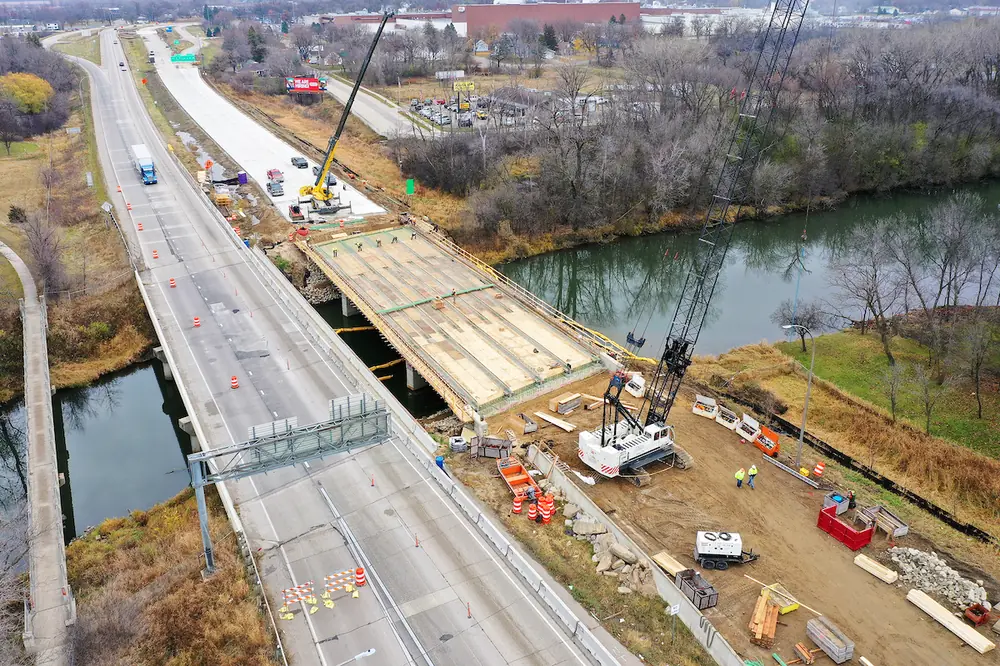
This fall, work continues on the eastern abutment and support pier for the extension of the CAP, placing the girders roughly 110 feet and 130 feet in length.
“They are in pairs of three, and then there's a larger gap for a trough as you go across the bridge,” said Michael Altomari Jr., Assistant Construction Engineer at PennDOT.
Assembly of the new South Street Pedestrian Bridge extension on the east side of I-95 is expected to begin in early 2026.
The steel structure, a signature, tied-arch extension of the existing pedestrian bridge over I-95, will allow pedestrians to access Penn’s Landing from Center City by crossing over Columbus Boulevard.
When finished, the extension will be lifted into place over Columbus Boulevard and anchored to piers on both sides of the riverfront arterial.
The existing pedestrian bridge remains open during this work with only minor interruptions. Pedestrians and cyclists will also be able to travel between Penn’s Landing and Front Street using Dock and Market streets during construction.
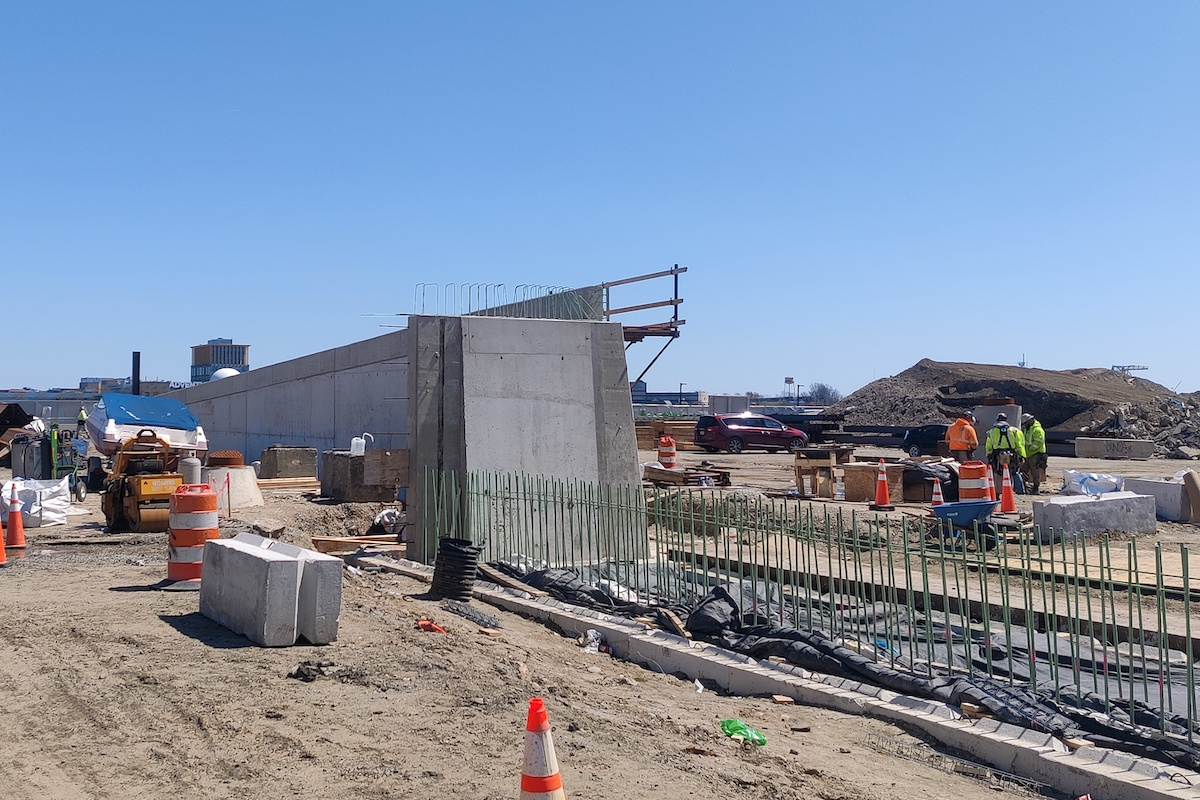
The team reused the existing wall along Front Street and performed innovative construction methods.
Over the last six months, the team has been “slab strengthening,” or reinforcing the existing footing and slab on I-95 for that prior retaining wall to make it strong enough to hold the superstructure design.
“We’re using what's there, and modifying what's there, rather than just tearing it all down,” Altomari said. “Starting from new — which would've been more costly — the engineers, the designers were able to figure out a way to reuse most of that wall.”
The existing pedestrian bridge currently goes across I-95 and ends at its east side near the Penn’s Landing parking lot.
The next phase, a tied-arch, steel extension, will turn the superstructure into a fully multi-modal bridge over Columbus Boulevard, connecting the local neighborhoods (Queens Village and Society Hill) to the river and trail.
“We're going to have to make it so that people on bikes could stay on their bikes, and just kind of flow with everything and keep moving,” Bonito said.
“Currently the access to the parking lot is not really bicycle friendly,” Altomari said. “The ramp coming down from the existing bridge is not really traversable on a bike. It's tight. So this is going to be a lot safer and provide more access.”
While the decades-old I-95 cutting through Center City has a controversial past — one that urban planners, architects, academics, nonprofits, and city officials have been calling out for decades — PennDOT has learned a few things about the complexities surrounding redoing postwar interstate buildout infrastructure.
“One thing I would say is be flexible,” Bonito said. “Be open to new ideas. Just because we have it in the design plans doesn't mean it's locked in all the time. Or things that people said can't be done doesn't mean you can't start talking to people about it.”
According to PennDOT, the team was supposed to do demolition of the existing structure over an approximately five-month period at night. Instead, they closed I-95 for two weekends, deciding it would be the safer option for drivers.
“It wasn't just that we had to start talking to our neighbors in different states. We had to coordinate — detour people around,” Bonito said.
“We had to get the word out, talk to the press office, get the ball rolling,” he added. “We started saying, ‘Okay, this looks possible. This makes sense. Let's do this.’ And we wound up doing it over two weekends.”
“It's a big deal when Philadelphia is virtually shut down directly in the city,” said Krys Johnson, Safety Press Officer at PennDOT. “So that was just a huge coordination, and everyone did just a spectacular job on that.”
“The Philadelphia city police were there on site,” Bonito said. “They were directing traffic as needed, and they moved around as everything kind of bottled up. They moved to those locations to try to clear things out.”
Next up on the project list is setting the remainder of the beams, constructing Pier 2 and the eastern abutment, and installing the deck. In the fill area along the river, crews will excavate, making a large undercut to remove excessive soil, then place a large layer of foam glass aggregate to slope down from the top of the bridge to the riverfront.
According to the PennDOT website, as new projects are conceived and launched, they will work with community and business groups, nonprofit organizations, and public agencies to involve them in the planning and to solicit their thoughts and ideas for improving the interstate highway.
PennDOT’s work is scheduled for completion in 2029. The new Park at Penn’s Landing is expected to open to the public in 2030.
- Owner: Pennsylvania Department of Transportation, with City of Philadelphia as the park owner
- General Contractor: Buckley and Company Inc., Philadelphia, Pennsylvania
- Construction Manager: Hill International Inc., Mount Laurel, New Jersey
- Designer: Pennoni, Philadelphia, Pennsylvania
- Engineer: Pennoni (CAP structure); WSP, Montreal, Quebec (South Street Pedestrian Bridge)
- Other Contractors: JPC (water/sewer); Kuharchik (lighting/signals/ITS); American Pile and Foundation LLC; Atlantic Coast Dismantling LLC (demolition); Cornell & Company (steel assembly)