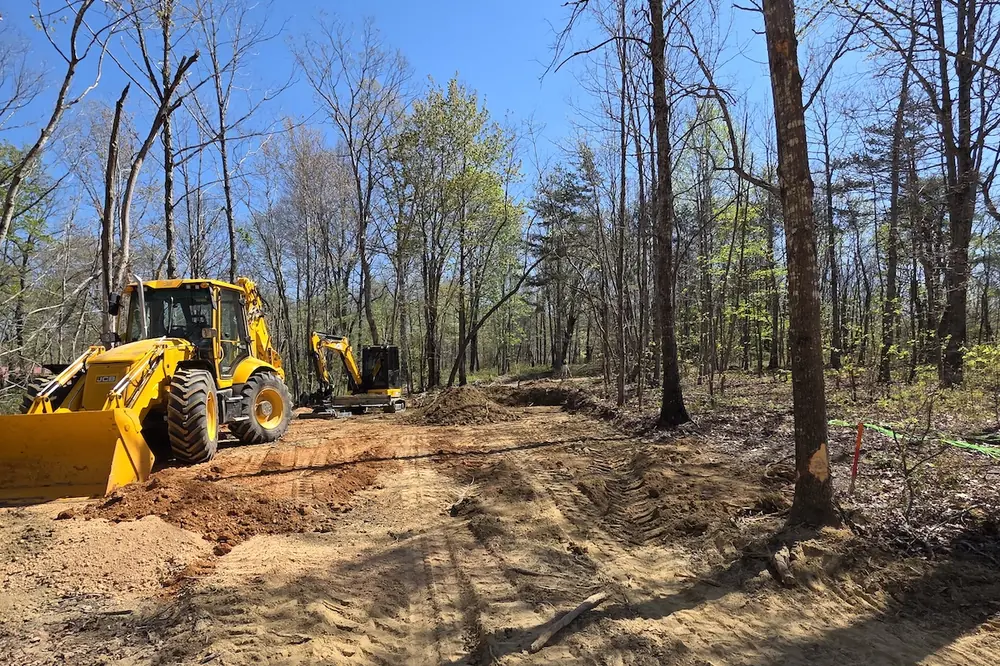
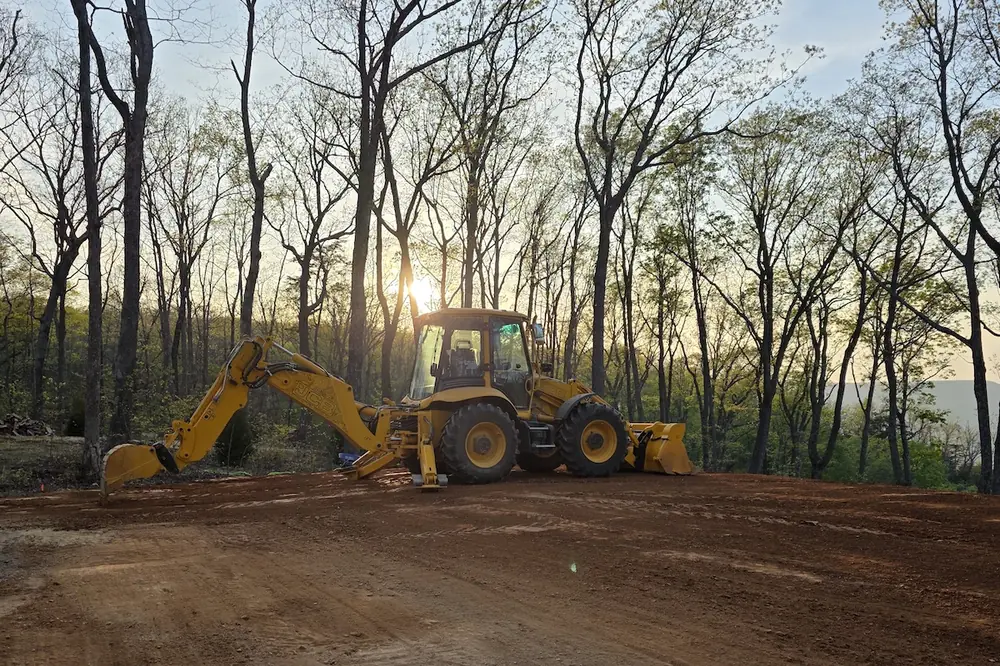
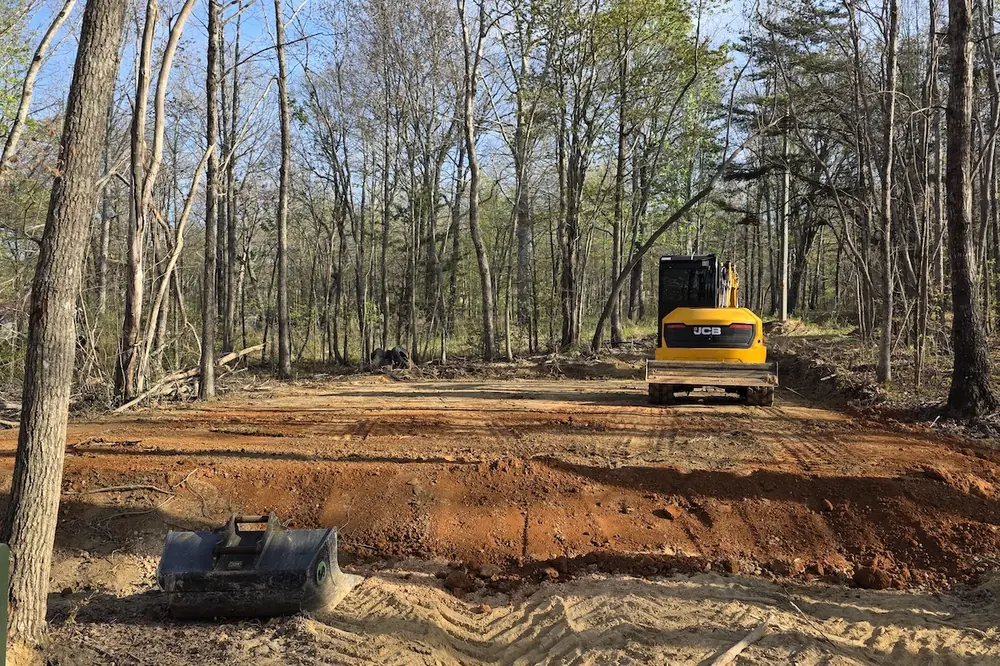
High above the valleys of northwest Georgia, Jason Koon is building roads, installing utilities, and preparing sites for a retreat-style development nestled along a mountain bluff. The project spans roughly 30 acres and presents all the challenges contractors would expect from steep terrain, changing soil conditions, and limited access.
For many contractors, work of this nature would require multiple crews and a fleet of specialized equipment. Koon has chosen a different approach.
As CEO and Owner of CSD Inc., he operates with a lean business model built around versatility, efficiency, and experience. While his current operation may be smaller than those he worked with earlier in his career, his perspective was shaped on some of the largest utility construction projects in the country.
Today, as contractors across the country grapple with workforce shortages and increasing pressure to do more with less, Koon believes many of the answers lie not in adding manpower, but in maximizing the capability of both operators and equipment.
It is a philosophy rooted in a lifetime spent in the trenches.
Construction was the family business long before it became a career.
Raised in a family-owned utility contracting business, Koon grew up around trenching crews, underground utility work, and heavy equipment. His introduction to equipment came early.
“I started running a backhoe when I was five,” Koon said. “My father would put me on his lap and let me work the controls. Before long, I was operating equipment on my own.”
Those early years provided a firsthand education in job site realities and the importance of keeping work moving efficiently.
Koon later joined one of the nation’s largest employee-owned civil contractors. Serving as Senior Project Manager, he helped establish and grow the company’s presence across the Southeast and Mid-Atlantic, supporting operations across Georgia, Virginia, North Carolina, and Maryland. Along the way, he worked on large-scale water and wastewater projects and estimates he has been involved in the installation of more than 2,000 miles of pipe.
The transition from a family contractor to a national construction firm broadened his perspective, but many of the lessons remained the same.
“No matter how big the project gets, it still comes down to productivity,” Koon said. “You still have to move dirt, install pipe, solve problems, and keep work moving.”
Throughout his career, Koon gravitated toward equipment that could adapt to the changing demands of a job site. While specialized machines became increasingly common, he continued to value equipment capable of handling multiple tasks throughout the day.
For Koon, the backhoe — the first machine he learned to operate — was the embodiment of this philosophy and an essential machine for every job site.
“Every job I had, I always had a backhoe,” Koon said. “There was always one on my projects because I knew what it could do.”
Few contractors have witnessed the industry’s evolution from as many vantage points as Koon. So, when it came time to build CSD Inc., he was determined to create a different kind of construction company.
After decades managing crews, equipment fleets, and large-scale infrastructure projects, he has witnessed firsthand how the industry was changing. Experienced operators were retiring, skilled labor was becoming harder to find, and contractors were being asked to do more with fewer resources.
Rather than recreating the large crews and operations he had managed earlier in his career, Koon built his business around efficiency, flexibility, and maximizing capability.
“The labor pool isn’t what it used to be,” Koon said. “You have to find ways to accomplish more with the people you have.”
Today, much of his work is completed with little more than himself and occasional support when needed. That approach is driven by investments in equipment, attachments, and technologies that help skilled operators accomplish more.
“I have more equipment than I do people by choice,” Koon said.
“People look at the cost of an attachment,” he added. “I look at the labor it saves.”
For Koon, productivity is not about working harder or adding more people. It is about making the people he has more effective.
That philosophy is on full display on Koon’s most recent project in the mountains of northwest Georgia.
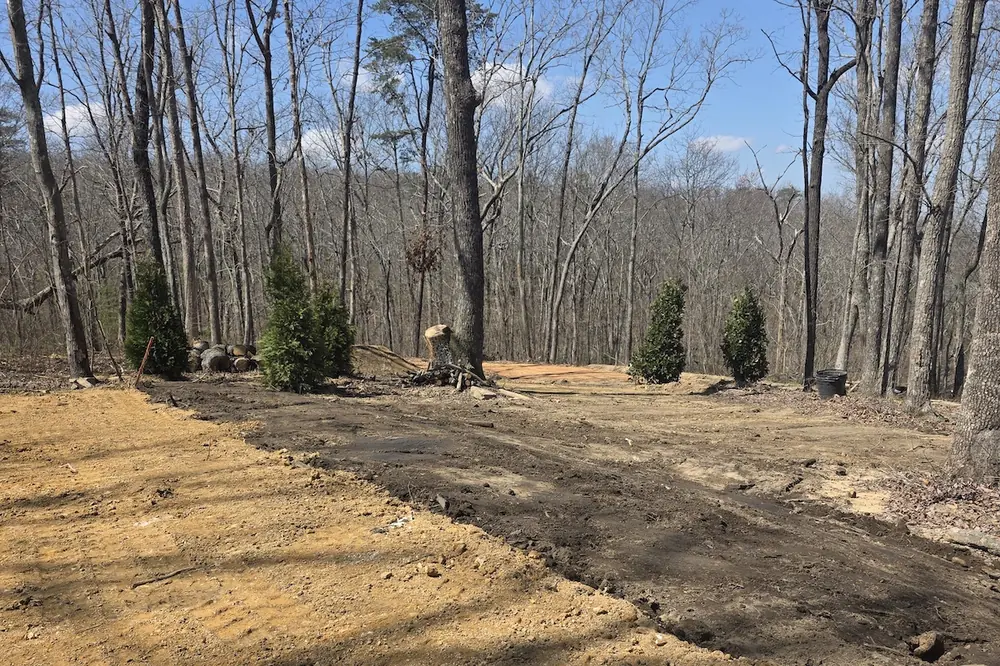
The Cloudland development spans approximately 30 acres and includes roads, utility infrastructure, and multiple cabin sites overlooking a bluff with views stretching across Georgia, Alabama, and Tennessee.
Steep grades, varying soil conditions, and limited access demand careful planning and efficient execution. Utility installation alone requires more than a mile of infrastructure throughout the property.
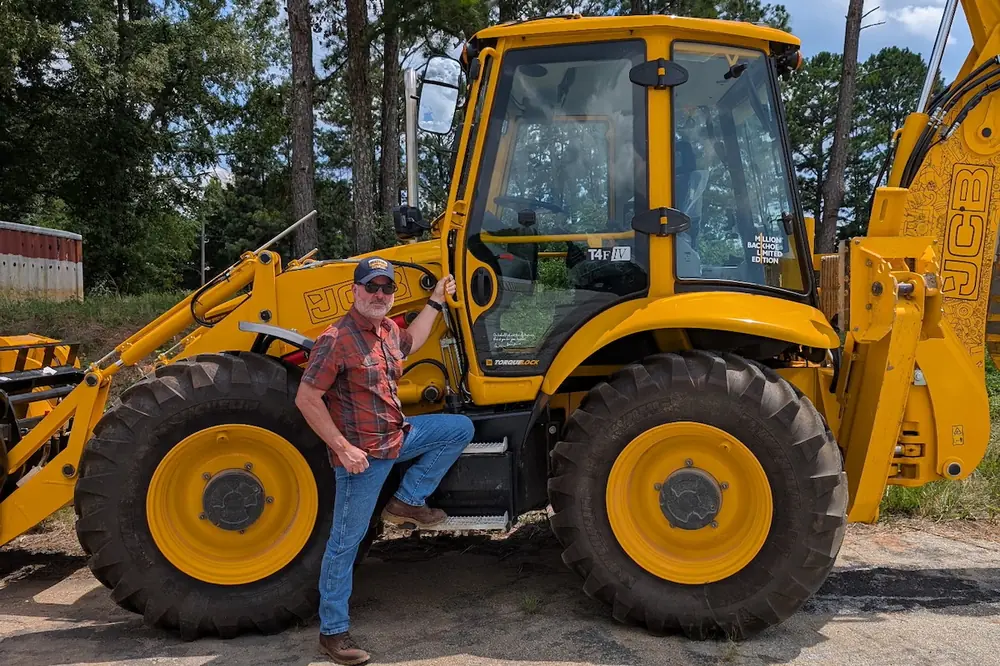
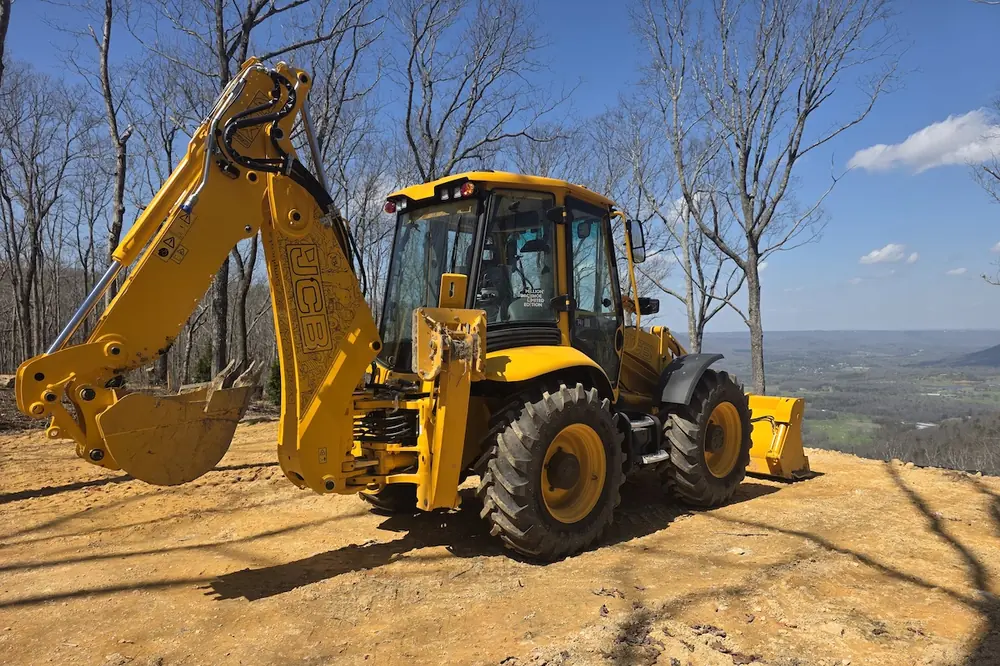
Most days, Koon is on site handling the excavation and utility work himself with a JCB 4CX. For someone who has operated nearly every generation of JCB backhoe since childhood, it is fitting that the machine is JCB’s commemorative one-millionth backhoe loader.
But for Koon, the significance of the machine extends beyond its commemorative status. The 4CX reflects the lessons he has learned over nearly five decades in construction. Capable of trenching, material handling, site preparation, and cleanup, it allows him to move quickly between tasks without constantly switching machines or relying on additional manpower.
In the challenging terrain of northwest Georgia, those capabilities become even more important.
“When I bid this project, I had a 3CX,” Koon said. “I started it with a 4CX. I’m probably 25 to 30 percent ahead of where I expected to be because of the difference in capability.”
The machine’s four equal-sized wheels, four-wheel steering, and quick-coupler attachments have allowed Koon to work confidently on terrain where he would have been reluctant to use a traditional backhoe. As a result, it has become a central part of the lean operating model he has spent years refining.
Koon has spent nearly five decades around construction equipment and utility projects. During that time, he has helped build critical infrastructure, managed large crews, and watched the industry evolve through changing technologies, equipment, and workforce challenges.
Yet many of the lessons he learned as a child in the family business remain unchanged.
“You still have to move dirt, install pipe, solve problems, and keep work moving,” he said.
As the industry looks for ways to address labor shortages and improve productivity, Koon believes the future will belong to contractors who can adapt and find more efficient ways to work.
This is a lesson he is already passing on to the next generation.
Much like his grandfather once did with him, Koon’s daughters often spend time alongside him on job sites, learning about equipment and construction firsthand. While today’s machines are far different from the ones he learned on as a child, he sees the same curiosity and excitement when they climb into the cab.
Whether his daughters ultimately choose careers in the industry remains to be seen. But if they do, Koon hopes they will carry forward the same appreciation for versatility, hard work, and continuous learning that has shaped his own career — and that they will always have a backhoe on site.