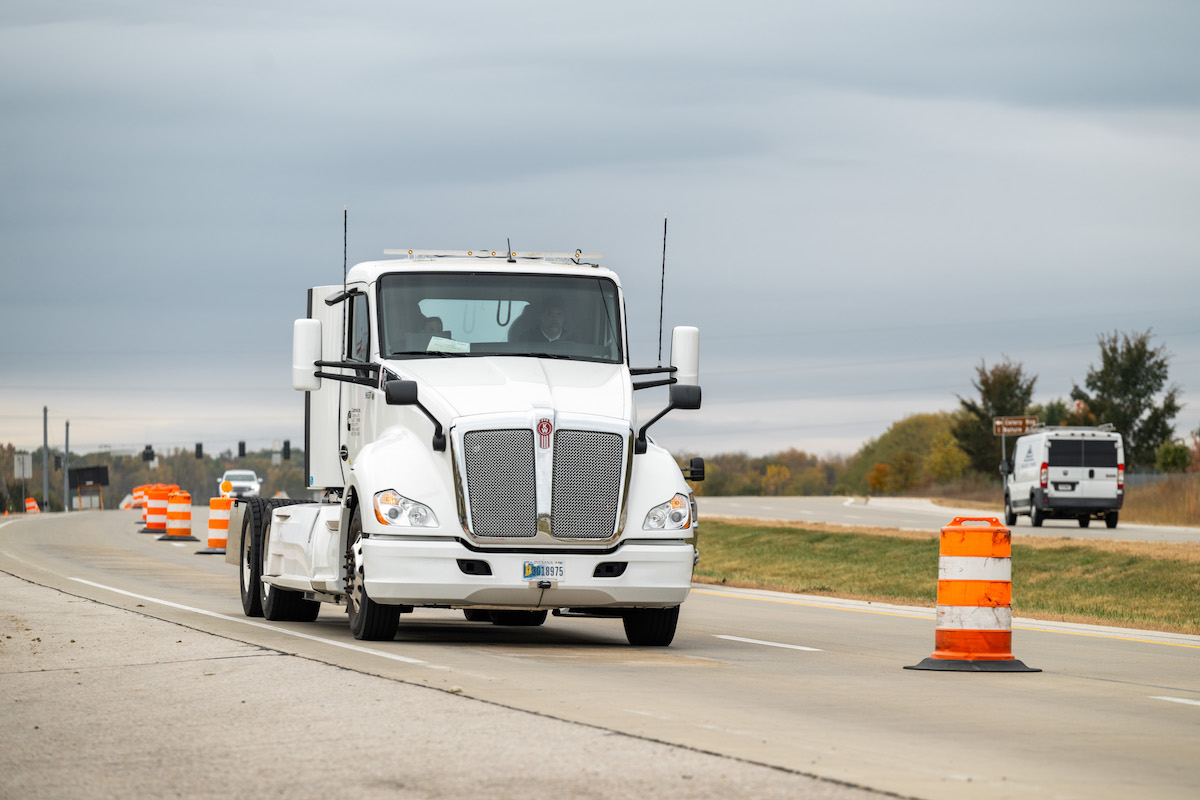

WEST LAFAYETTE, IN — For the first time in the U.S., a roadway has wirelessly charged an electric heavy-duty truck driving at highway speeds, demonstrating key technology that could help lower the costs of building electrified highways for all electric vehicles to use.
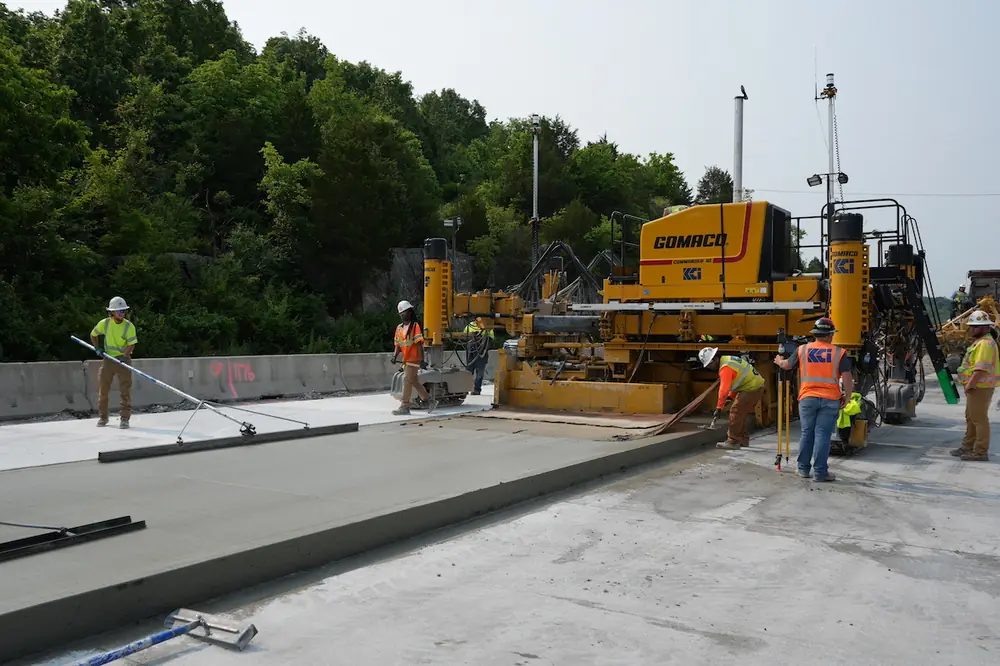
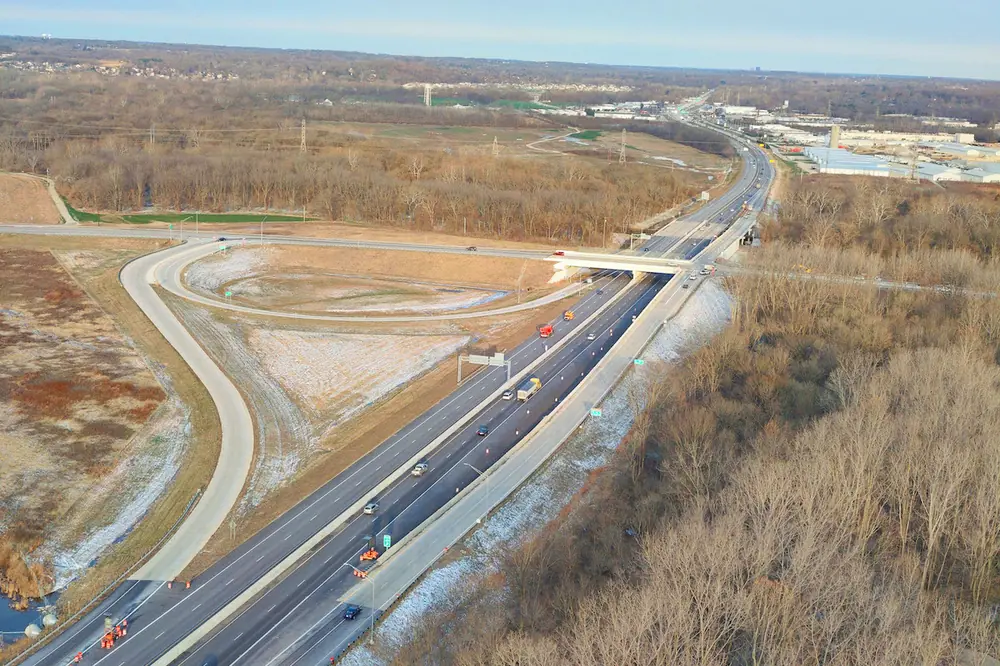
The experimental highway segment tests a patent-pending system designed by Purdue University engineers. The segment, built by the Indiana Department of Transportation (INDOT), is a quarter-mile stretch on U.S. Highway 52/U.S. Highway 231 in West Lafayette, Indiana. Purdue researchers demonstrated the wireless charging system using an electric semitractor provided by Cummins.
The team also partnered with AECOM; White Construction, Inc.; and PC Krause and Associates, Inc. on developing and implementing various parts of the system.
The demonstration is part of a multistage research project that Purdue and INDOT began in 2018. In addition to its funding from INDOT through the Joint Transportation Research Program at Purdue, the project is affiliated with a fourth-generation National Science Foundation Engineering Research Center called Advancing Self-sufficiency through Powered Infrastructure for Roadway Electrification (ASPIRE).
“INDOT is proud to partner with Purdue on this project,” INDOT Commissioner Lyndsay Quist said. “While there is still more to explore, we are seeing what the future could hold for heavy-duty EV charging and transportation.”

| Your local Sennebogen LLC dealer |
|---|
| Brandeis Machinery |
The Purdue system demonstrates “dynamic wireless power transfer,” with “dynamic” referring to vehicles in motion. A few other states and countries have also begun testing roads designed to enable dynamic wireless power transfer. But making this possible for highways — and particularly for semis and other heavy-duty vehicles — is a unique challenge. Because vehicles travel so much faster on highways than city roads, they need to be charged at higher power levels.
The Purdue-designed wireless charging system works at power levels much higher than what has been demonstrated in the U.S. so far. Using the test segment in West Lafayette, this system delivered 190 kilowatts to a truck traveling at 65 miles per hour.
“To put that in perspective, 200 kilowatts are on the scale of about a hundred homes,” said Steve Pekarek, Purdue’s Edmund O. Schweitzer, III Professor of Electrical and Computer Engineering.
By accommodating the higher power needs for heavy-duty vehicles, the Purdue design is also able to support the lower power needs of other vehicle classes.

| Your local Komatsu America Corp dealer |
|---|
| Brandeis Machinery |
“This is a system designed to work for the heaviest class of trucks all the way down to passenger vehicles,” said Aaron Brovont, a Research Assistant Professor in Purdue’s Elmore Family School of Electrical and Computer Engineering.
Since trucking contributes the most to U.S. gross domestic product compared to other modes of freight transportation, lowering costs for heavy-duty electric trucks could help attract more investment into electrifying highways that all vehicle classes would share. If electric heavy-duty trucks could charge or stay charged using highways, their batteries could be smaller in size and they could carry more cargo, significantly reducing the costs of using EVs for freight transportation.
Electrified highways could also allow the batteries of passenger cars to be smaller.
“Two of the big barriers to electric vehicle adoption, at least to the public, are range anxiety — ‘Oh, my gosh, where am I going to charge the battery on this car?’ — and the second thing is cost,” said John Haddock, a Professor in Purdue’s Lyles School of Civil and Construction Engineering. “And a lot of that cost in electric vehicles is driven by the size of the battery packs that they have to have in order to get you that 250-to-300-mile range. With this system, you’d be able to drive your vehicle down the road and it would charge the battery.”

| Your local Case Construction Equipment Inc dealer |
|---|
| Burris Equipment |
The system Purdue researchers designed allows highway pavement to provide power to EVs similarly to how smartphones use magnetic fields to wirelessly charge when placed on a pad.
“Transferring power through a magnetic field at these relatively large distances is challenging. And what makes it more challenging is doing it for a heavy-duty vehicle moving at power levels thousands of times higher than what smartphones receive,” said Dionysios Aliprantis, a Purdue Professor of Electrical and Computer Engineering.
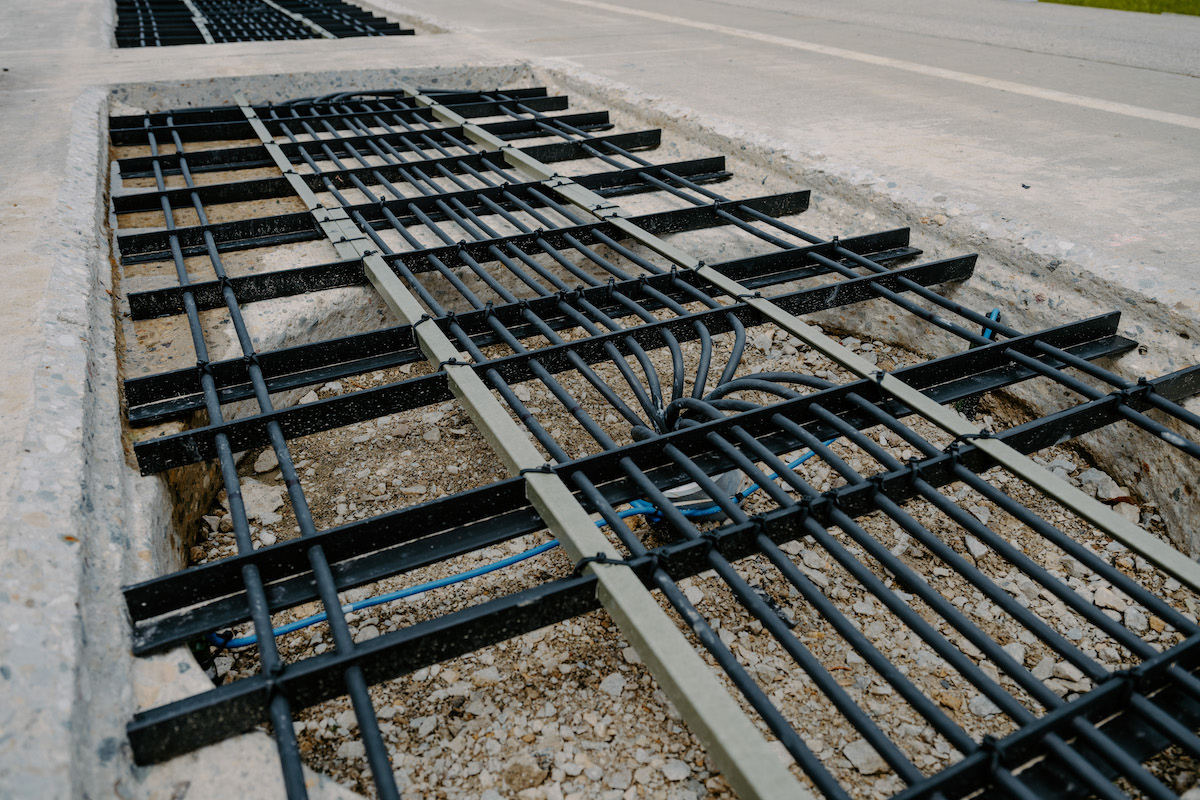
The team installed transmitter coils in specially dedicated lanes within the concrete pavement. The coils send power to receiver coils attached to the truck’s underside.
Other wireless EV charging efforts are also using transmitter and receiver coils, but they have not been designed for the higher power levels that heavy-duty trucks need. The Purdue-designed coils accommodate a wider power range — larger vehicles would not need multiple low-power receiver coils on the trailer to charge from the road, which has been proposed to meet the high-power demands. Instead, in the Purdue design, a single receiver coil assembly is placed under the tractor, greatly simplifying the overall system.

| Your local Leica Geosystems Inc dealer |
|---|
| Laser Specialist inc |
Purdue researchers have also designed the transmitter coils to work within concrete pavement, which often carries the heaviest traffic even though it only makes up 20 percent of the U.S. interstate system.
“This achievement reflects how our growing ecosystem connects public agencies, private industry, and academic research to turn electrification goals into reality, demonstrating the kind of collaboration that strengthens the foundation for scaling intelligent electrified transportation systems nationwide,” said Don Linford, ASPIRE’s Director of Industry and Ecosystem Engagement at Utah State University.
Photos courtesy of Purdue University/Kelsey Lefever