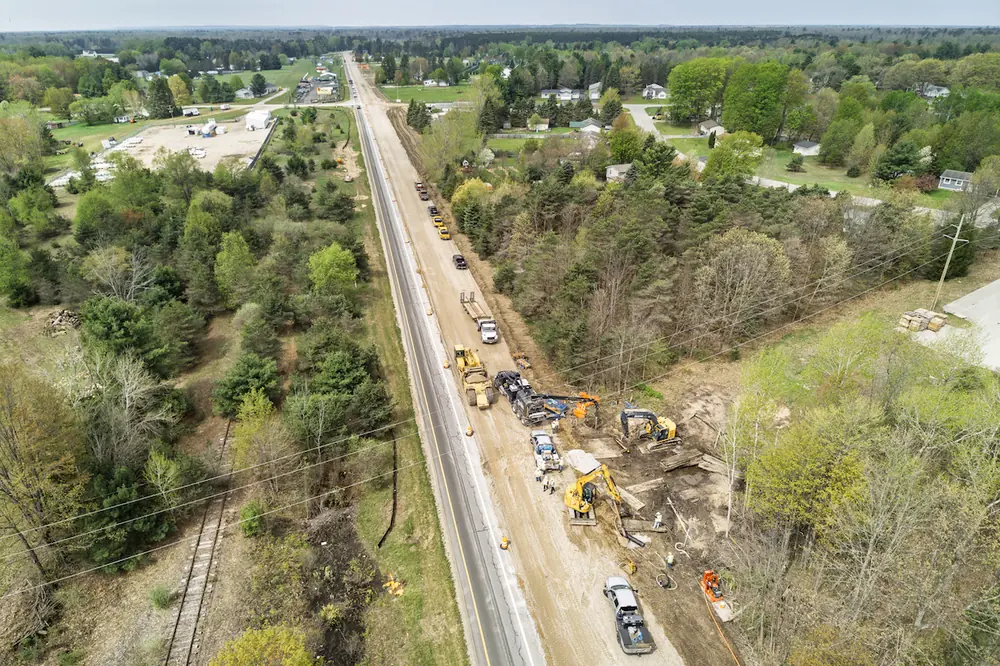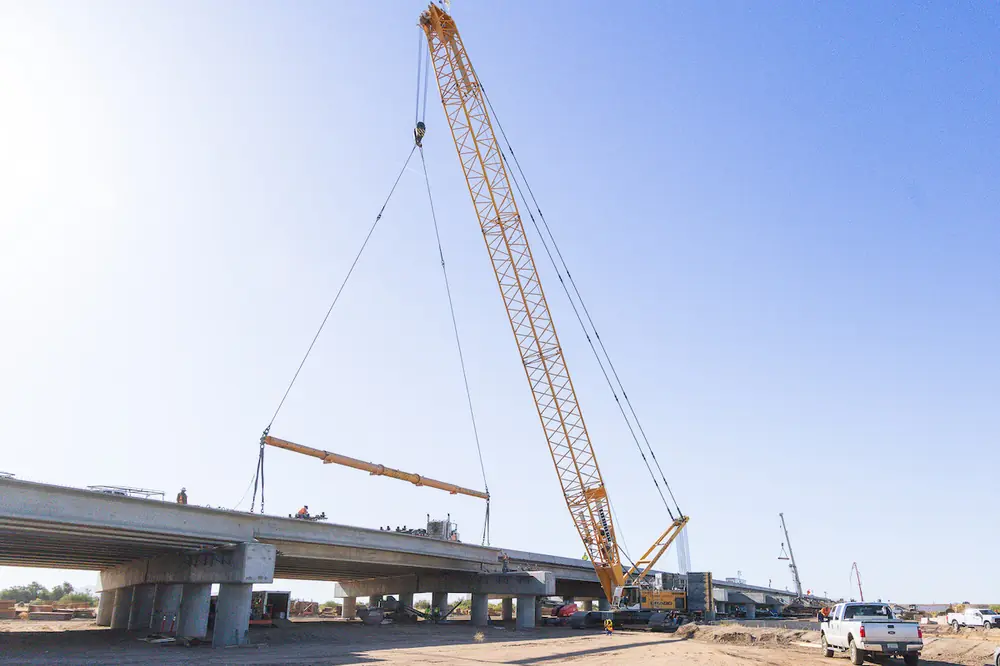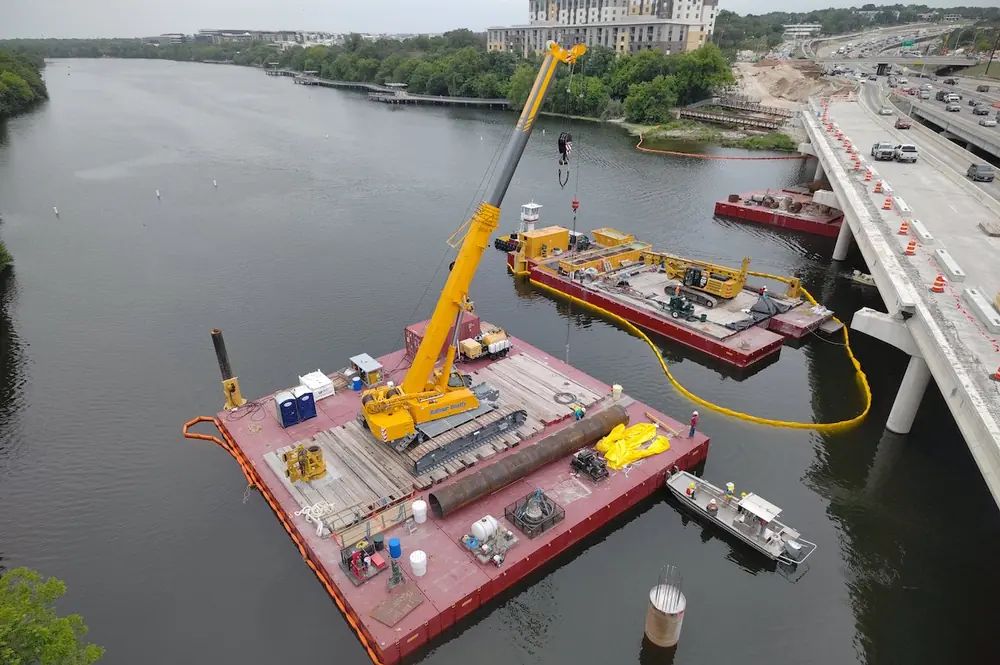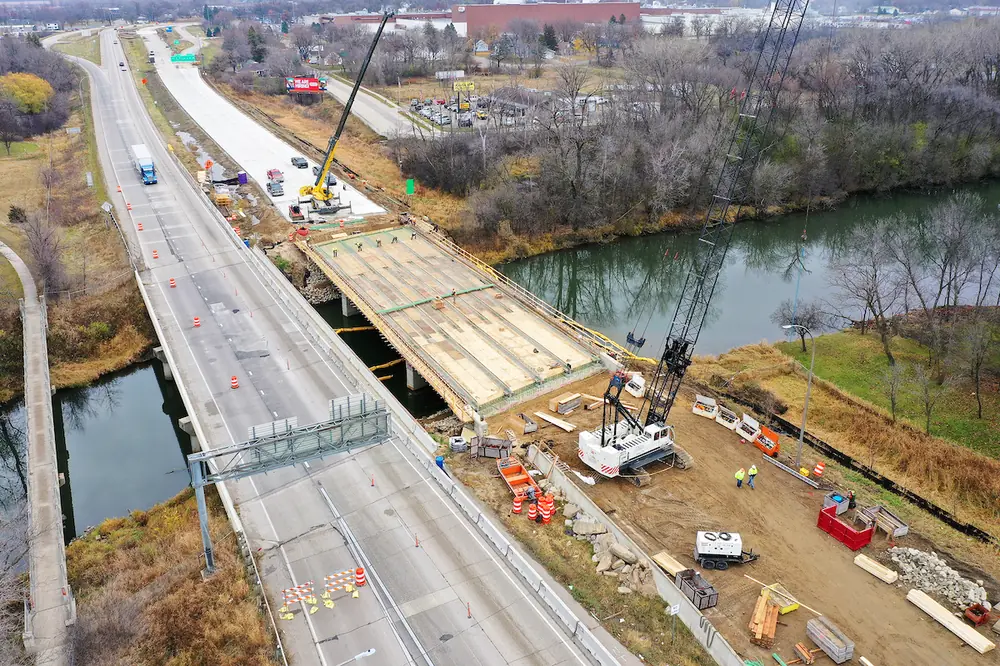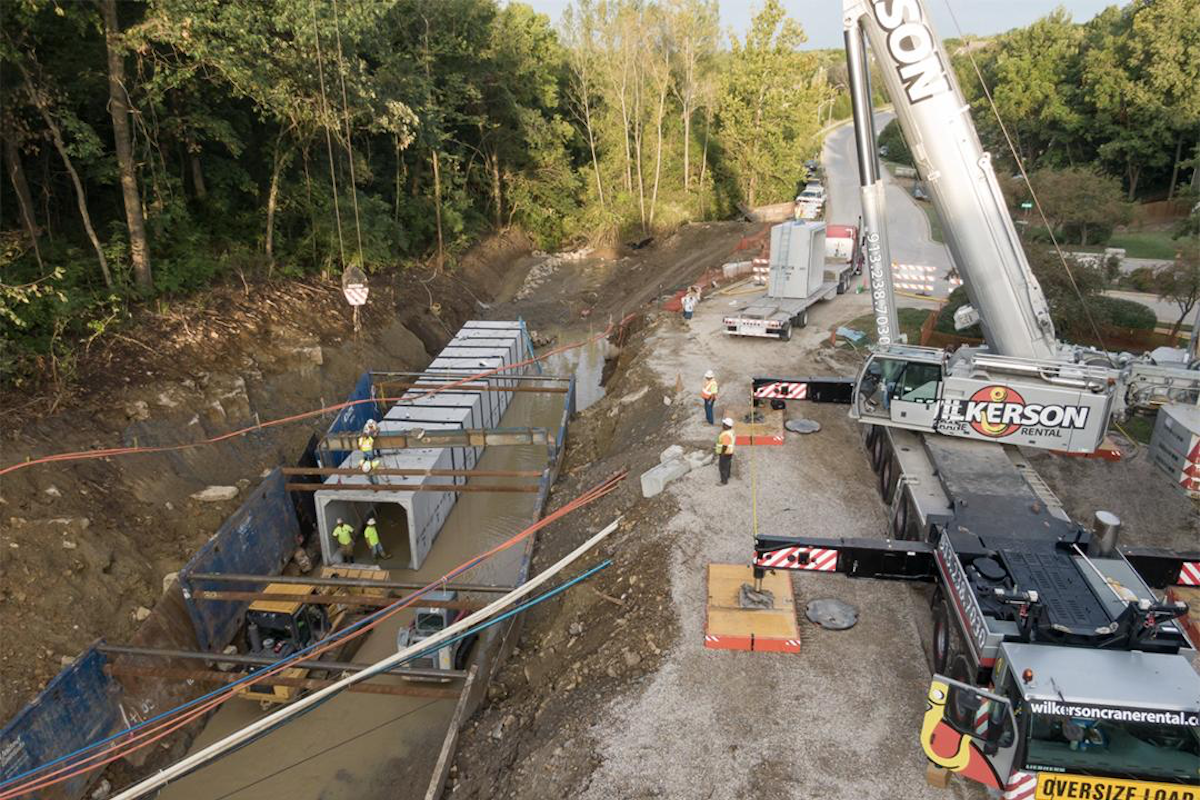
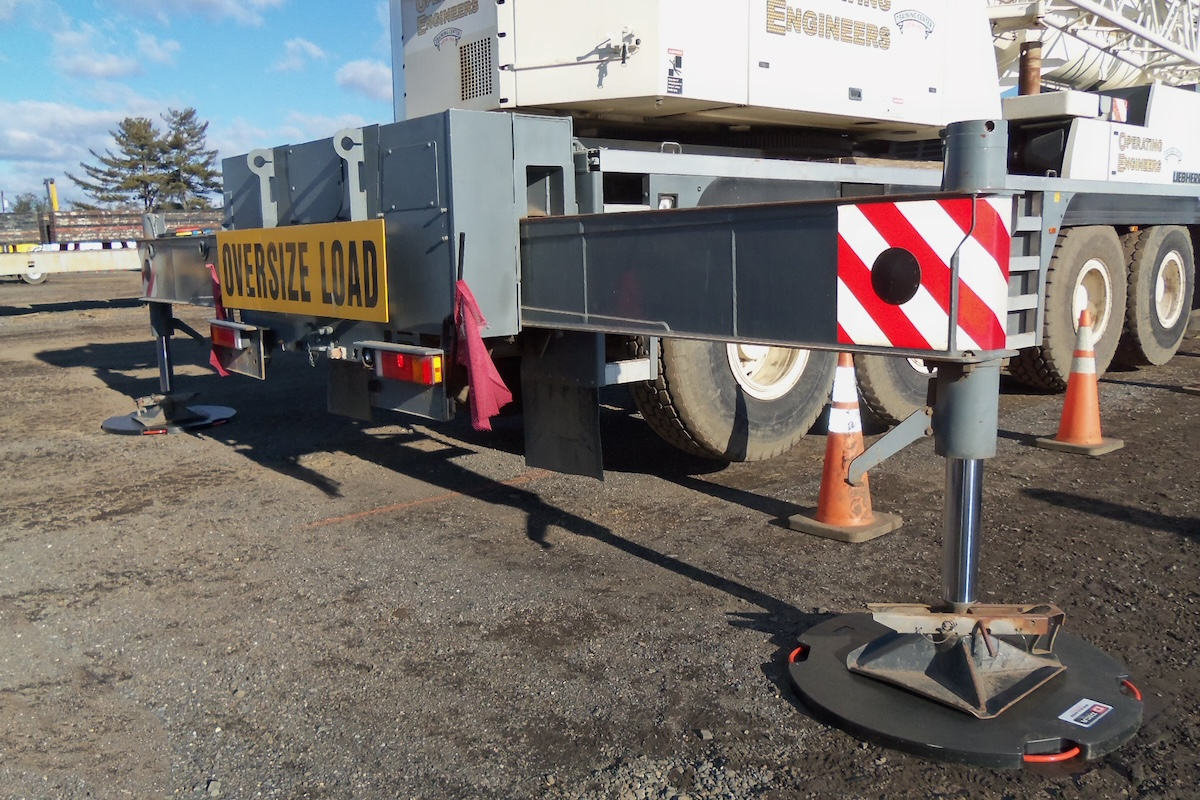

The first consideration when setting up a crane or other equipment with outriggers is to understand the ground conditions of the supporting surface. The ground conditions are a combination of ground bearing capacity and an understanding of suitable setup areas, limitations, and hazards that would affect the support of the equipment into, during operations, and out of the job site.
Ground bearing capacity is defined by the supporting surface’s ability to withstand the forces the equipment will apply. The responsibility for the ground and its capability and suitability to support equipment is assigned to the controlling entity for the project by OSHA 1926.1402(c)(1). If there is no controlling entity for the project, the responsibility for providing adequate ground conditions rests on the employer that has authority at the site to make or arrange for ground preparations.
Whether you are the contractor responsible for the site or the operator communicating with the controlling entity about ground conditions and setup needs, understanding the factors that affect safe equipment setup is essential for safe and successful operations.
The controlling entity must supply the contractor with the permissible ground bearing pressure for every setup location. If any uncertainties arise, it's important for contractors to initiate a dialogue about the permissible ground bearing pressure and to understand the extent of the controlling entity's knowledge and acknowledgment of their duties. Should the controlling entity be unfamiliar with its obligations, the contractor is advised to direct them toward the relevant regulations for clarification.
Equipment operators should perform their own visual site evaluations. Visual inspections should be focused on any presence of standing water, excavations, and indicators of underground structures such as manhole lids, utility access points, and catch basins. The intent is to ensure that all observable conditions match the information given by the controlling entity. If inconsistencies or contradictions are found, they should be immediately discussed and reconciled before operations begin.

| Your local Komatsu America Corp dealer |
|---|
| Continental Equipment Corp (CEC) |
To aid in these important communications about ground conditions, here are two of the most important terms to know:
Ultimate Ground Bearing Capacity
This is the maximum amount of vertical pressure the ground can withstand before failing. This value must be determined by a civil engineer who is trained and experienced in the science of determining the strength and stiffness of the ground.
Allowable Ground Bearing Pressure
Known as AGBP, this value is to be specified by the controlling entity to help ensure pressures imposed on the ground stay below the levels the ground is able to support. The AGBP is calculated by dividing the ultimate ground bearing capacity by a factor of safety. The generally accepted factor of safety for temporary loading is two.
When planning to operate equipment at a site, knowing just how much weight the ground can support can be challenging to determine. Methods used to identify and understand the ground bearing capacity include a geotechnical report, previously documented information, and in-the-field testing and observations. A report from a geotechnical engineer will provide ground classification information and detailed ultimate ground bearing capacity data for the site.

| Your local Deere & Co dealer |
|---|
| AIS Construction Equipment |
In the field, physical assessments such as plate or roll tests, as well as a visual inspection, can be helpful to assess the current state. However, they should only serve as a substitute of last resort. These investigations should help operators determine if the ground should be improved, if the equipment needs to be relocated, and what type of supporting materials — such as outrigger pads, mats, dunnage, or cribbing — is needed.
Manufacturers like DICA offer resources to help determine ground bearing capacity and aid in determining the difference between the ultimate ground bearing capacity of the supporting surface and the allowable ground bearing capacity for operational purposes.
There are many choices of supporting materials for cranes and other equipment with outriggers. Fundamentally, the basic area sizing evaluation is the same for all. To determine the minimum pad area, you must know the outrigger load, also known as the outrigger reaction force (ORF), and the AGBP.
The outrigger reaction force is the amount of load a crane will apply to the supporting surface during operations (typically expressed as a unit of weight such as pounds). To calculate the supporting materials minimum bearing area, divide the ORF by the AGBP (ORF/AGBP = pad area).

| Your local Trimble Construction Division dealer |
|---|
| SITECH Michigan |
For example:
- Equipment outrigger reaction force = 100,000 pounds
- Allowable ground bearing pressure = 3,500 pounds per square foot (psf)
- 100,000 pounds/3,500 psf = 29 square feet
In this instance, supporting material with the strength to withstand the imposed 100,000-pound outrigger reaction force and the stiffness to distribute the load over a minimum bearing area of 29 square feet is required. Therefore, an outrigger pad such as a 6-foot by 5-foot (30 square feet) is a viable solution.
Understanding and preparing for ground conditions is not just a safety procedure — it's a foundational aspect of successful equipment operation. Contractors and equipment operators alike must ensure that the ground can sustain the forces exerted by heavy machinery. Initiating clear communication with the controlling entity about ground bearing pressures and setup locations is imperative.
Visual site inspections by operators act as a final, crucial checkpoint to confirm that site conditions align with reported data, ensuring a secure operational environment. With the availability of resources like DICA's Ground Bearing Capacity Chart, determining the appropriate supporting materials such as outrigger pads becomes a precise, calculated decision, not guesswork.
| Your local Komatsu America Corp dealer |
|---|
| Continental Equipment Corp (CEC) |
Adhering to these practices not only upholds safety standards but also enhances the efficiency and reliability of project operations.
Kris Koberg is President and CEO of DICA. He is a contributing member of the American Society of Mechanical Engineers P30 committee, a member of the North American Matting Association technical committee, and recently chaired the Specialized Carriers & Rigging Association task force to create a guide for outrigger pad selection and use.