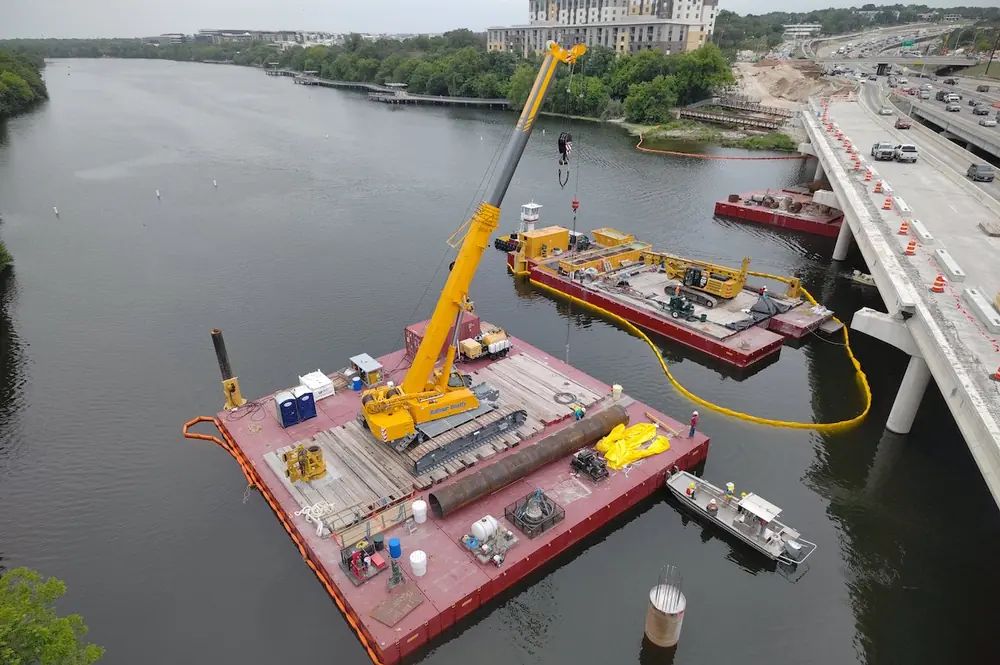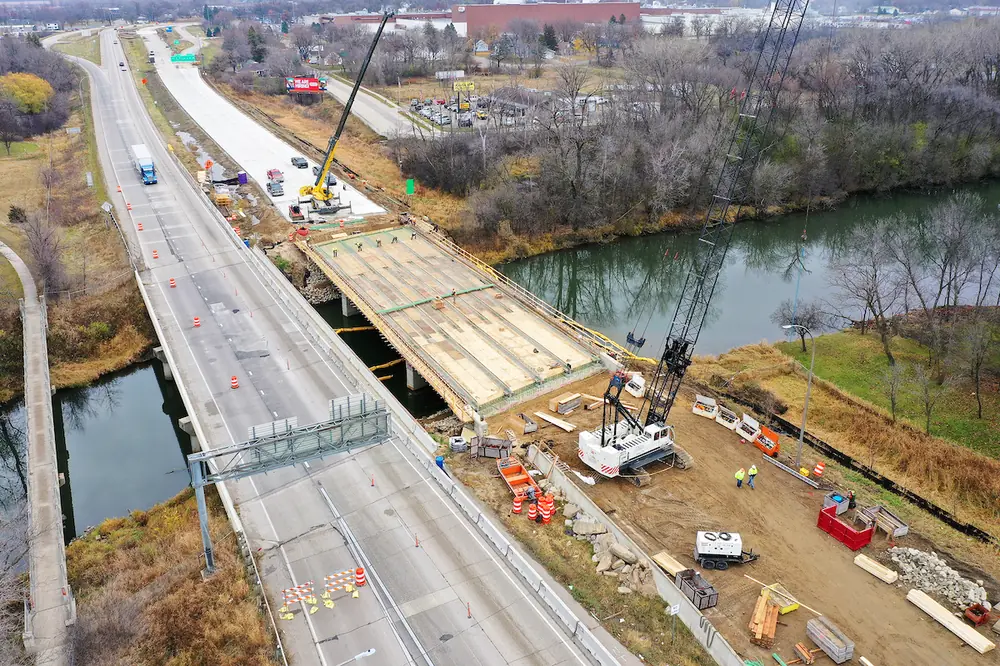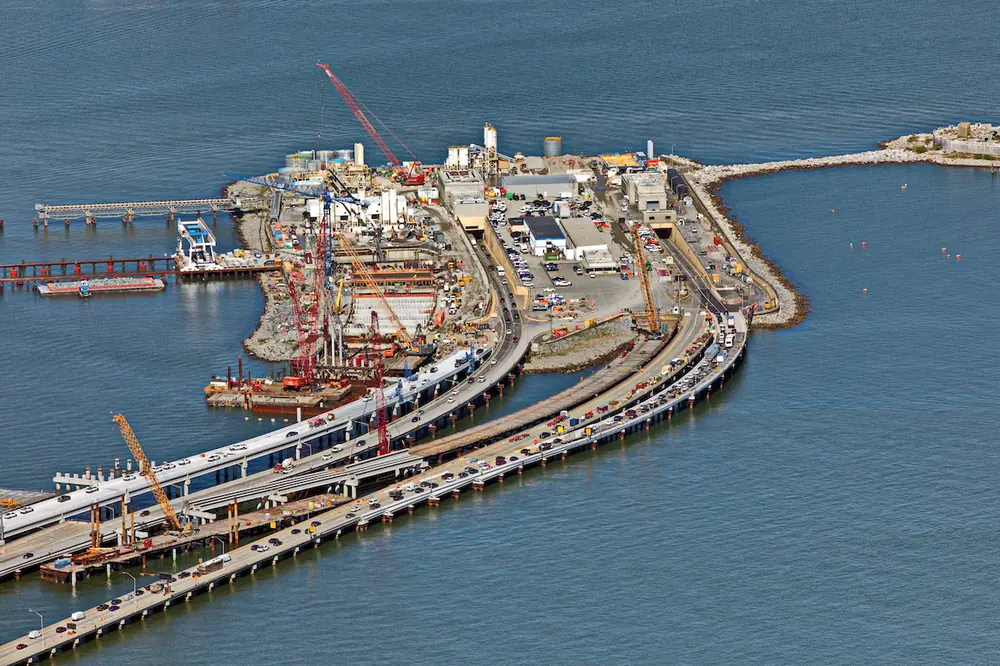
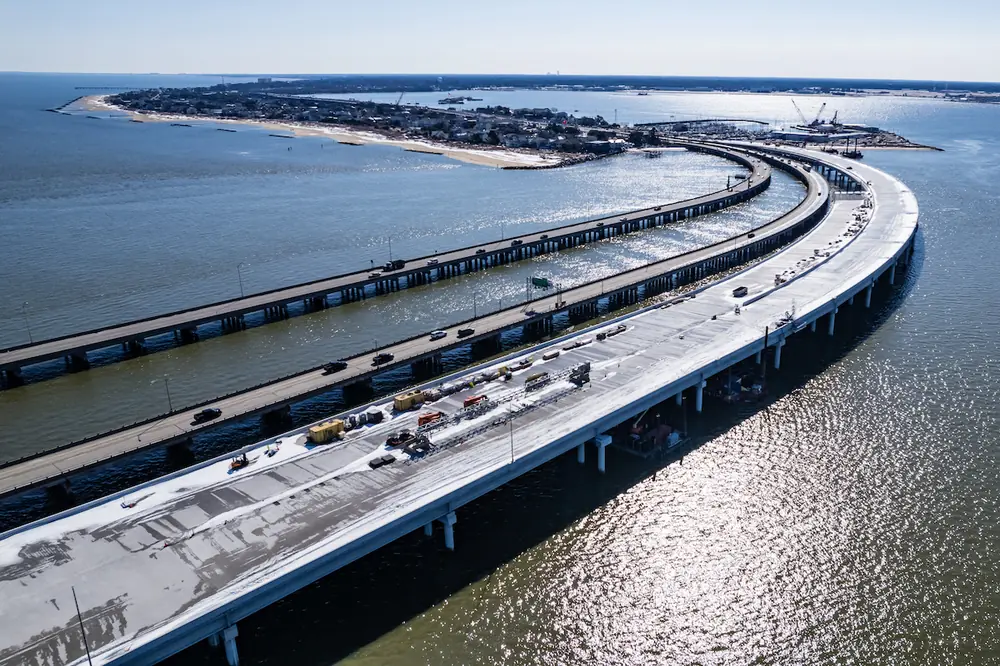
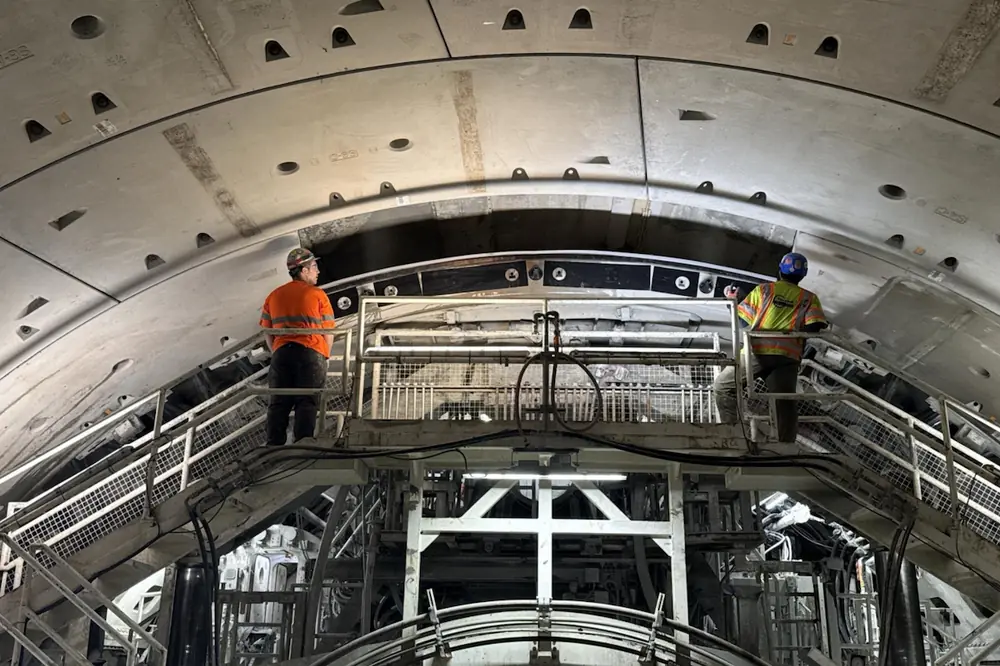
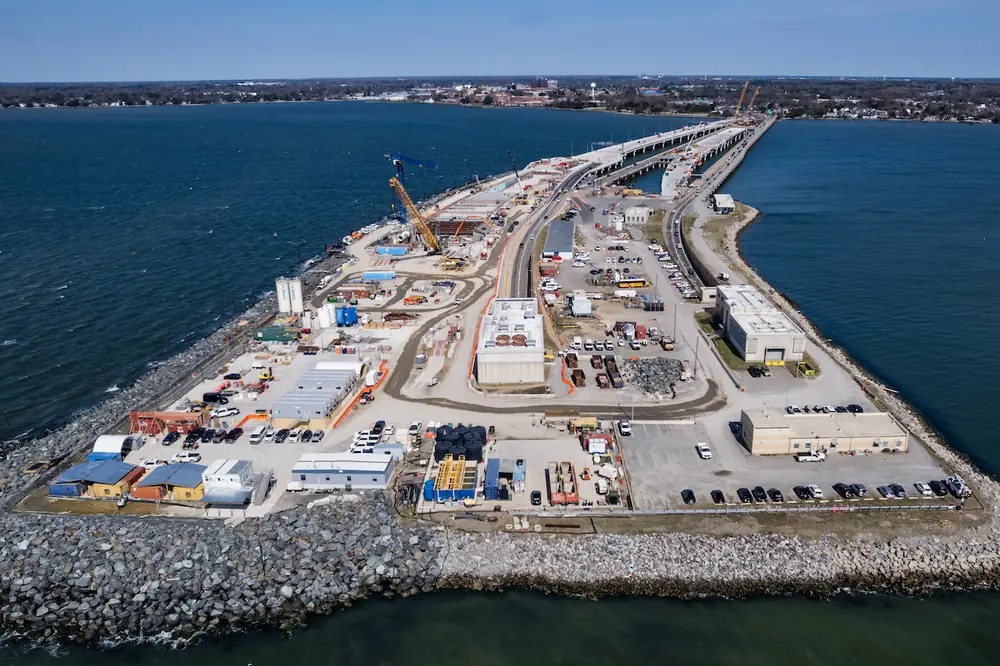
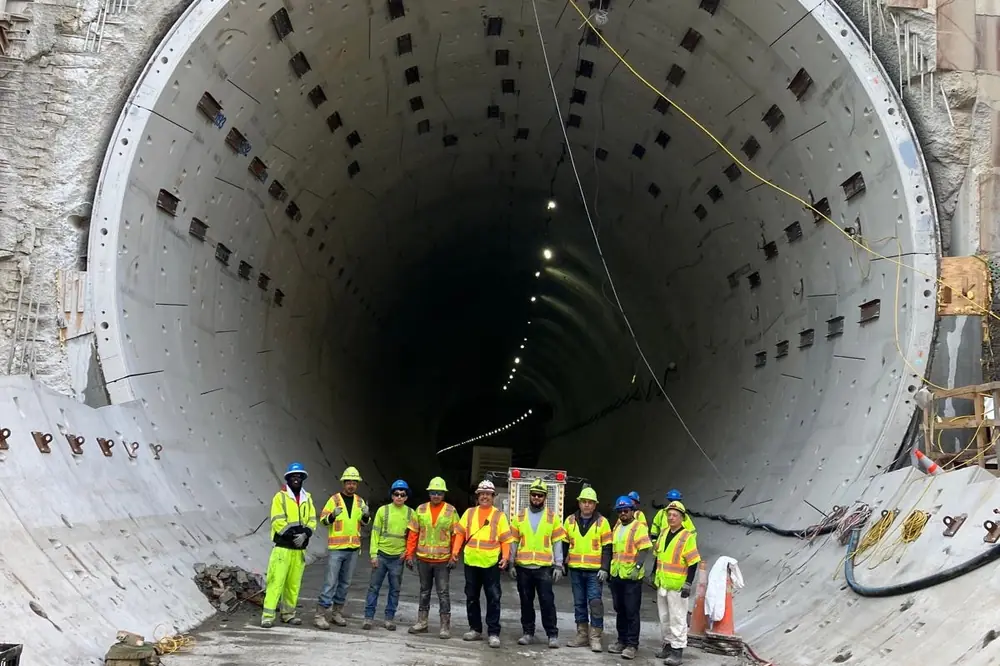
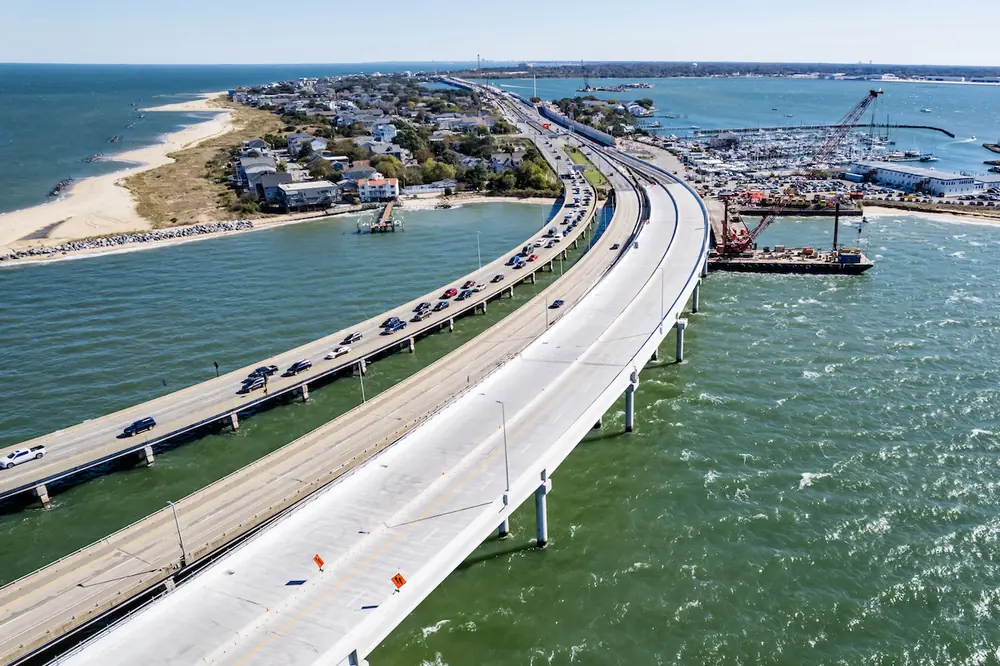
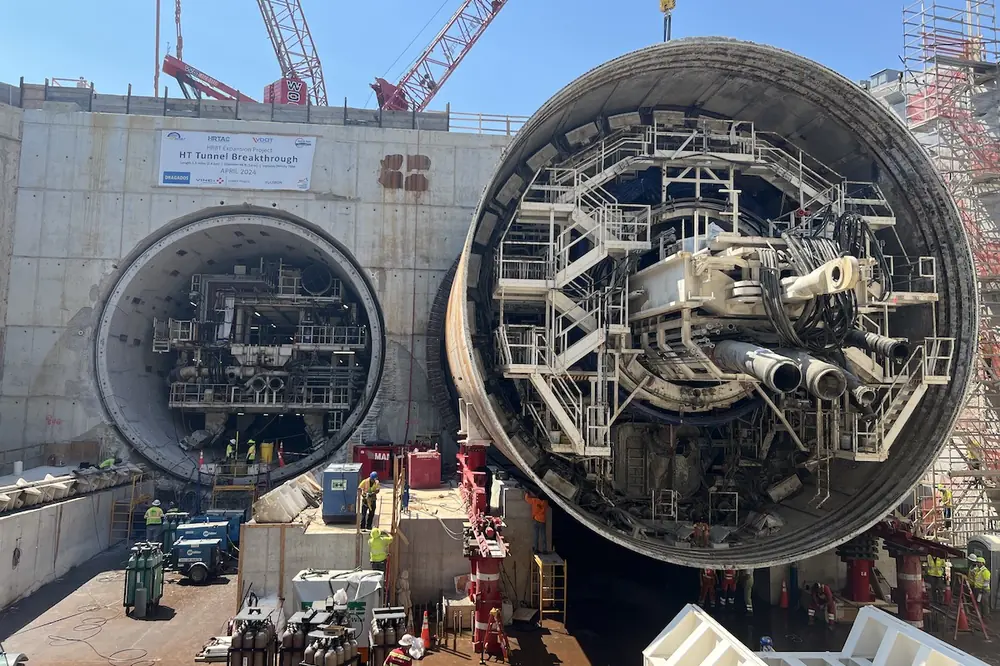

At the time of its opening in November 1957, the 3.5-mile-long Hampton Roads Bridge-Tunnel (HRBT) was the world's first, and then-longest, immersed tube tunnel to connect two man-made islands. Nineteen years later in 1976, a parallel immersed tube was added. In September 2025, the Virginia Department of Transportation (VDOT) made history again, with the final breakthrough of twin bored tunnels.
Currently undergoing expansion, the HRBT connects Hampton and Norfolk, Virginia. The construction team, under VDOT, is led by a joint venture comprising FlatironDragados USA, Vinci Construction, and Dodin Campenon Bernard.
Approximately 100,000 vehicles a day currently move through the corridor, well in excess of the 70,000 vehicles it was designed to support.
The corridor is a critical pathway for commerce from the Port of Virginia, one of the largest East Coast ports, as well as for major stakeholders including several colleges and universities, maritime businesses, and health care providers. It is a popular gateway to robust tourism in the region.
Another major stakeholder is the Navy. The United States Fleet Forces Command is based at Naval Station Norfolk, the largest naval base in the world.

| Your local Case Construction Equipment Inc dealer |
|---|
| Beauregard Equipment |
| Monroe Tractor |
“The proximity to the naval base has led to a thriving shipbuilding and repair industry in the area,” said Michael Davis, VDOT District Engineer and Senior Lead.
Traffic demands have necessitated expanding the project for decades. Davis, who grew up in the area, recalls backups dating back years that began as early as 3:30 p.m. most afternoons.
The combination of increased vehicular traffic demand throughout the corridor and ship traffic passing over the tunnel drove the need for the additional tunnels.
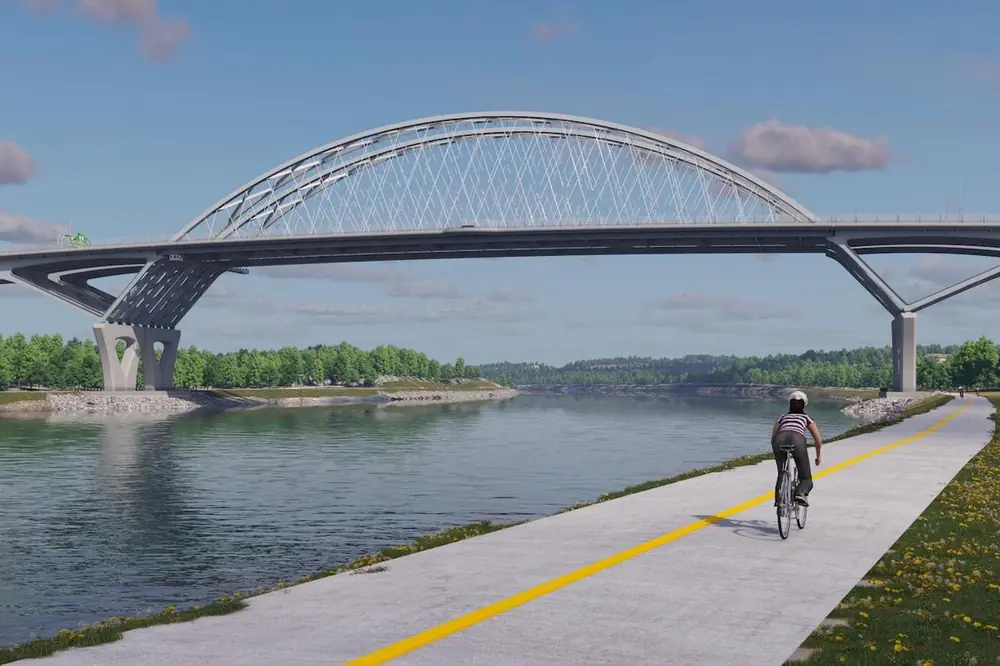
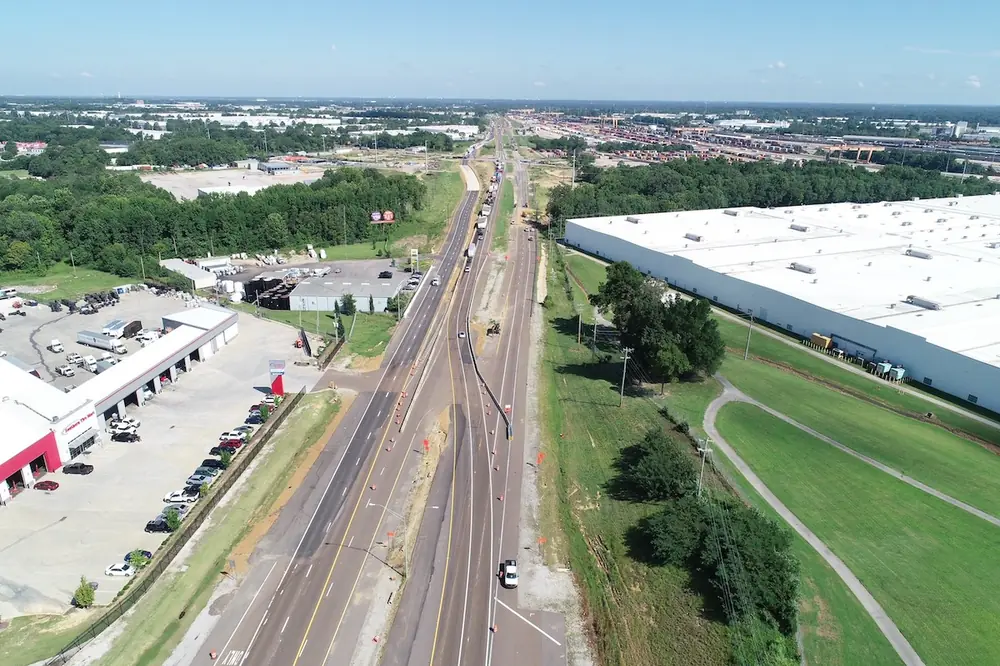
The Hampton Roads Bridge-Tunnel is part of the I-64 corridor between Norfolk and Hampton. The expansion of the HRBT goes beyond the tunnel itself and will increase capacity along the entire 10-mile project corridor.

| Your local Volvo Construction Equipment dealer |
|---|
| Tyler Equipment |
The scope includes the following:
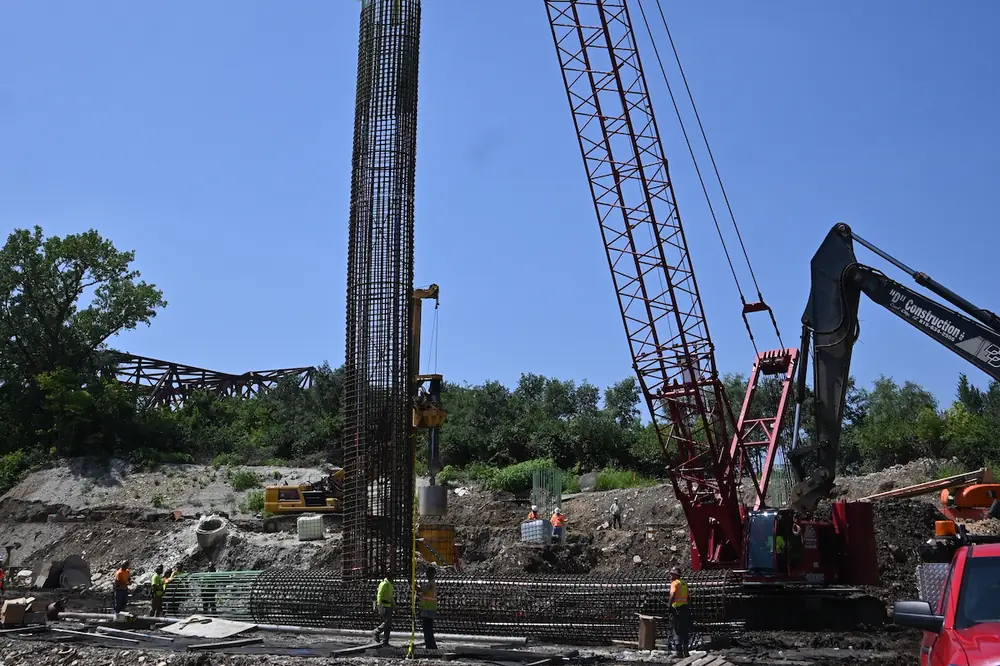
- Constructing two new 1.5-mile-long bored tunnels
- Replacing two 3,400-foot-long North Trestle bridges
- Widening and rehabilitating 25 bridges throughout the Norfolk area
- Expanding the I-64 corridor from four to eight lanes, including a part-time shoulder lane that extends for about 10 miles from Hampton to Norfolk WSP in the U.S. is supporting VDOT by ensuring the design-build contractor is delivering the project successfully. This is a legacy project for WSP, since the company designed the first two tunnel crossings in Hampton Roads.
- Owner: Virginia Department of Transportation
- General Contractor: FlatironDragados USA, Brookhaven, Georgia; Vinci Construction, Nanterre, France; Dodin Campenon Bernard, Toulouse, France
- Designer: HDR Inc., New York, New York; Mott MacDonald, London, England
- Owner’s Engineer: WSP, New York, New York
“We're adding two general-purpose lanes, an express lane, and a part-time shoulder lane throughout that whole area to ease congestion,” said Michelle Martin, Project Manager at WSP in the U.S. “The HRBT Expansion Project is part of a bigger express lane network that's being created for the region.”
Upon completion of the express lane network projects, the agency will deliver a 45-mile express lane network between Newport News and Chesapeake, Virginia.

| Your local Trimble Construction Division dealer |
|---|
| SITECH Northeast |
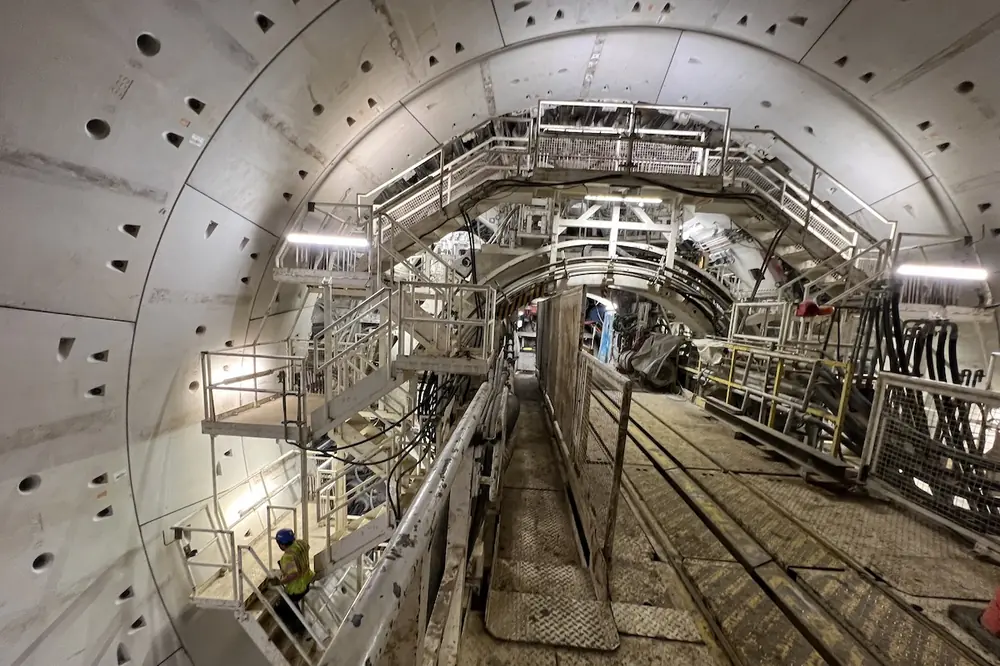
The HRBT Expansion Project includes several unique and technically challenging elements, one of which is Mary, the tunnel boring machine (TBM) named by Virginia Beach middle school students following a TBM naming contest. Mary is 4,700 tons, 46 feet in diameter, and measures 430 feet, including its four trailing gantries.
“The gantries house the TBM control room or the locations where the TBM operators navigate the machine during mining,” Martin said.
The gantries also include an emergency safe room, bathroom, equipment, and mining supplies such as tunnel segments, pipes, hydraulic fluid, and lubricants.
“The machine was able to operate 24-7, but the tunnel crews worked five days a week and performed TBM maintenance on the weekends. Crews need a workspace to maintain operations,” Martin said. “The gantries housed materials the crew needed to ensure they didn’t have to go back to the surface to continue to operate the machine.”

| Your local Wirtgen America dealer |
|---|
| WI Clark |
| Dobbs Equipment (SC) |
| United Construction & Forestry |
The TBM was built by Herrenknecht, a German engineering firm specializing in mechanized tunneling systems. Construction of the TBM took 14 months, and shipping Mary across the Atlantic Ocean took one month.
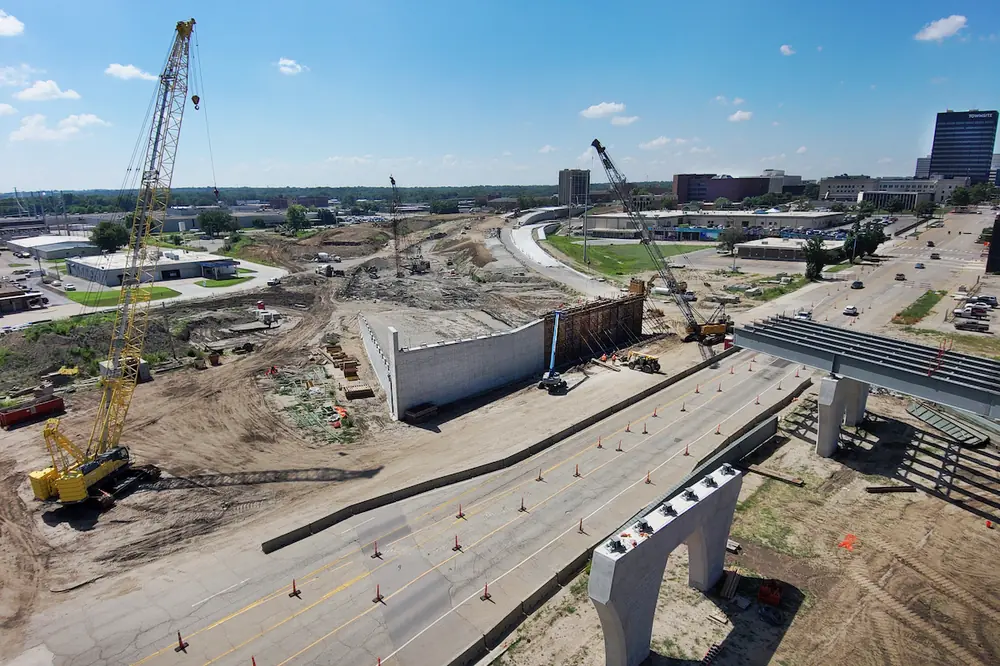
Mary’s gigantic size influenced other elements of the project. The original tunnels were built between two man-made islands, and one of the islands had to be expanded.
“There was not enough space on the North Island to receive and turn around the TBM,” Martin said. “The North Island needed to be widened to accommodate the new tunnels and tunnel approaches from the adjacent bridges.”
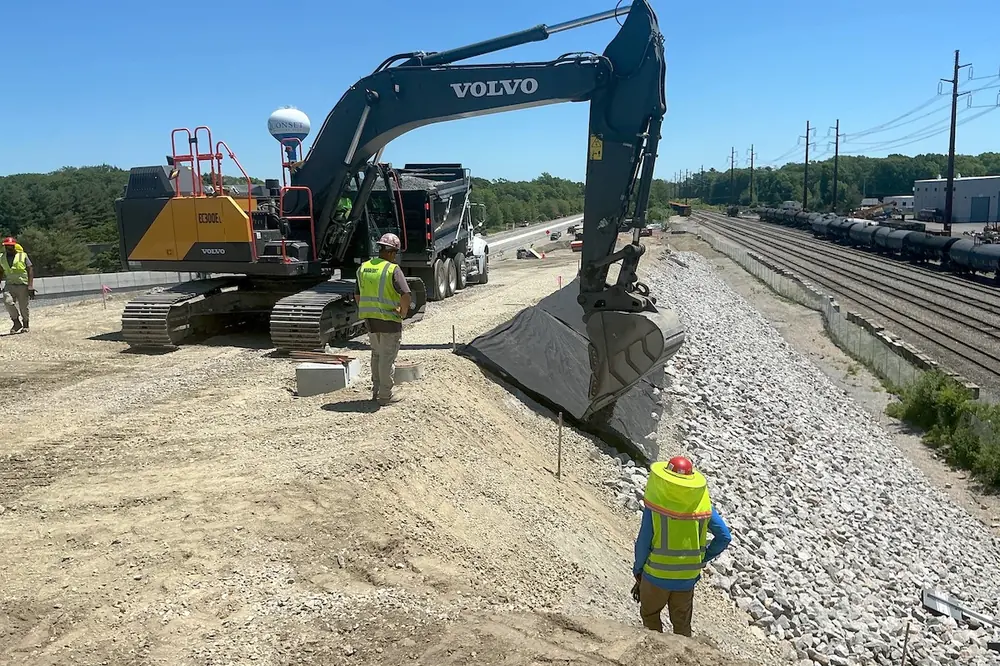
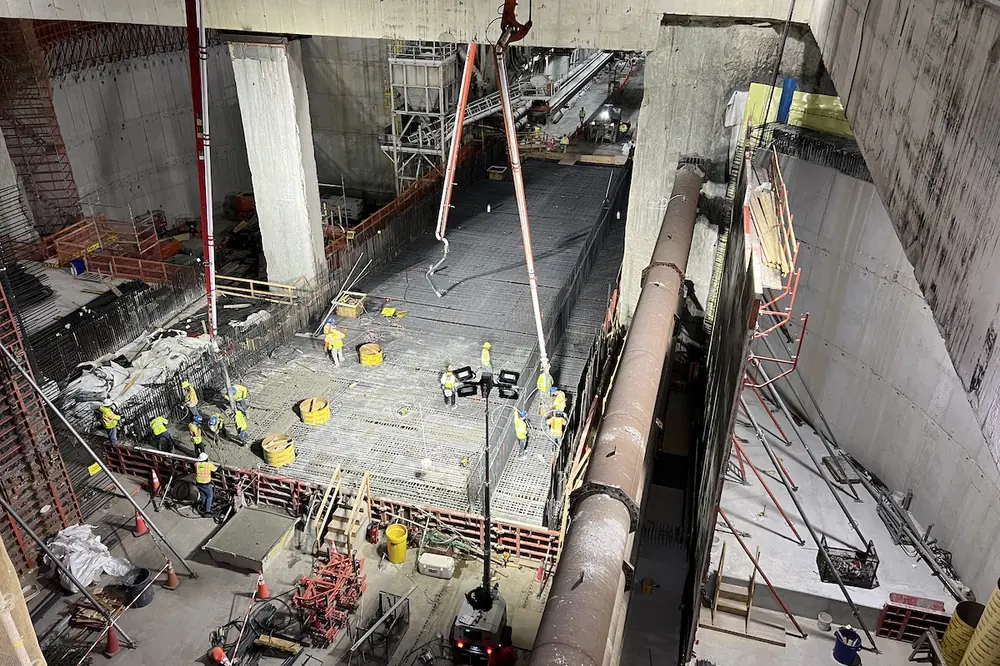
The enlargement of the North Island supports construction of two new bored tunnels. The existing North Island, originally built in the 1950s, did not have enough space to safely receive and turn around the massive TBM or to build the permanent tunnel portals needed for the expanded crossing. By adding roughly 15 acres, the project team created a stable construction platform capable of supporting deep excavation, tunnel infrastructure, and long‑term operations.

| Your local Esco Corporation dealer |
|---|
| Genalco |
The North Island expansion was built using engineered structural fill, primarily sand and armor stone placed in carefully controlled layers. The work also included reinforced concrete slurry walls to support deep excavations and control groundwater, along with a large mass concrete base slab for the tunnel receiving pit.
Turning the TBM was a significant feat. Martin explained the process of turning the TBM cutter head and shield.
“Steel plates were placed at the bottom of the receiving pit, the TBM supported by a nitrogen lift table,” she said. “Liquid nitrogen was injected to reduce friction, enabling the machine to be turned with chains and hoists. The TBM was turned around and positioned against the headwall to start boring the second tunnel. The turning of the TBM was a process that took only one 11-hour shift.”
The project required the team to tunnel down to a depth of 173 feet. The TBM extracted soil during mining that was delivered from the machine through 22-inch slurry pipes. The soils were sent back to a slurry treatment plant. During these operations at the slurry treatment plant, a crew member noticed atypical-looking material and stopped the conveyor to examine it.

| Your local Hyundai dealer |
|---|
| Equipment East |
“He started pulling off what ended up being a tooth, rib bone, limbs, and vertebrae of a mastodon,” Martin said. These are prehistoric animals that are similar to woolly mammoths.
“Because the discovery happened during the mining operation, we did not know exactly where the mastodon was encountered,” Martin added. “Upon discovery, we sought and received approvals from permitting agencies to continue our work and capture anything that we found as a result.”
No more discoveries were made.
Another challenging aspect of the project is constructing within an environmentally sensitive area that includes a habitat for protected colonial nesting birds. A dedicated bird management team is responsible for overseeing the protection of migratory birds while construction moves forward. Environmental scientists and trained bird monitors are on site throughout nesting and migration seasons to observe bird activity, document protected species, and coordinate construction work to avoid impacts to active nesting areas.
| Your local Case Construction Equipment Inc dealer |
|---|
| Beauregard Equipment |
| Monroe Tractor |
A key part of this effort is the use of professionally trained bird dogs — typically border collies — handled by specialists who humanely discourage birds from landing or nesting in active work zones before eggs are laid. This proactive, non-harmful approach helps birds relocate to safer nearby habitats while allowing the project to proceed.
“When our bird dogs and handlers are on the islands, they walk around to encourage the birds to lay their eggs in a safe location away from construction activity,” Martin said.
The dogs are maintained on site and have their own special air-conditioned trailer.
The birds are encouraged to go to nearby Fort Wool or to three barges placed adjacent to the construction site during nesting season.
| Your local Case Construction Equipment Inc dealer |
|---|
| Beauregard Equipment |
| Monroe Tractor |
“Three barges are provided by the Department of Wildlife Resources during nesting season from spring until fall,” Martin said. “They include sand and shrubs to create a habitat for the birds to lay their eggs there.”
The HRBT Expansion Project’s budget is $3.9 billion, with 92 percent being funded with a regional gas and sales tax and the remainder being financed with state and federal dollars. The Hampton Roads Transportation Accountability Commission oversees the regional funding.
As of this writing, the team anticipates the project will come in on budget, within contingency. Martin attributes this to risk management, collaboration with the design-build contractor, and proactiveness.
“The entire team's motto is, ‘Keep the project moving forward,’ and that's part of good decision-making and risk management,” she said.
| Your local Case Construction Equipment Inc dealer |
|---|
| Beauregard Equipment |
| Monroe Tractor |
The design-build contract was awarded in spring 2019, and the original completion date was scheduled for fall 2025. Challenges arose during the project, and in 2023, the design-builder requested additional time to complete it. An additional 18 months was negotiated, and now the substantial completion date is scheduled in 2027, Martin said.
Upon completion of the HRBT project, Davis anticipates that travelers will realize significant benefits as a result of reduced congestion.