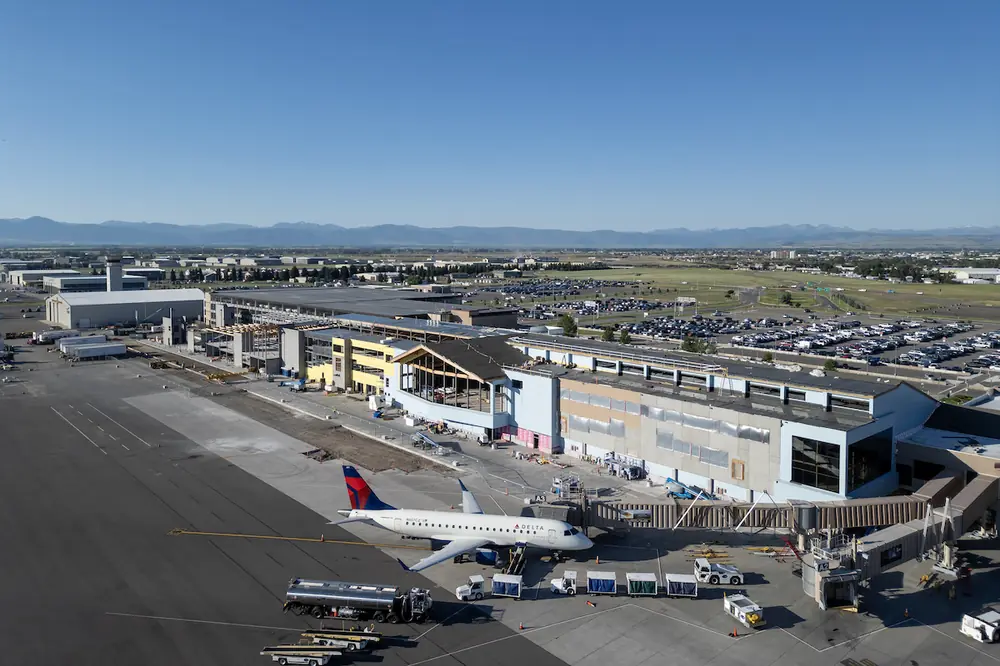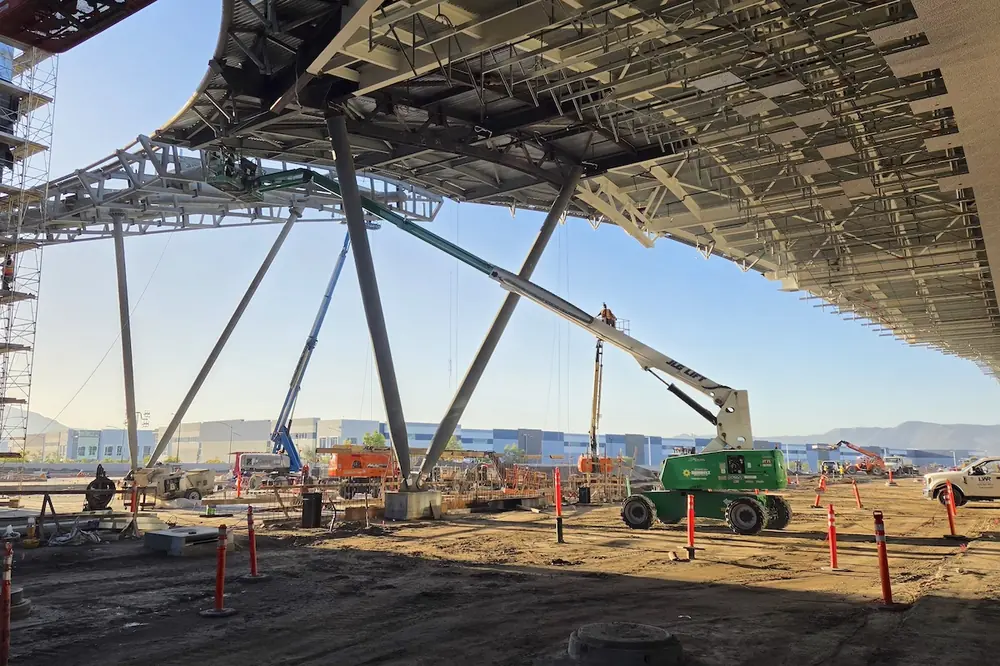
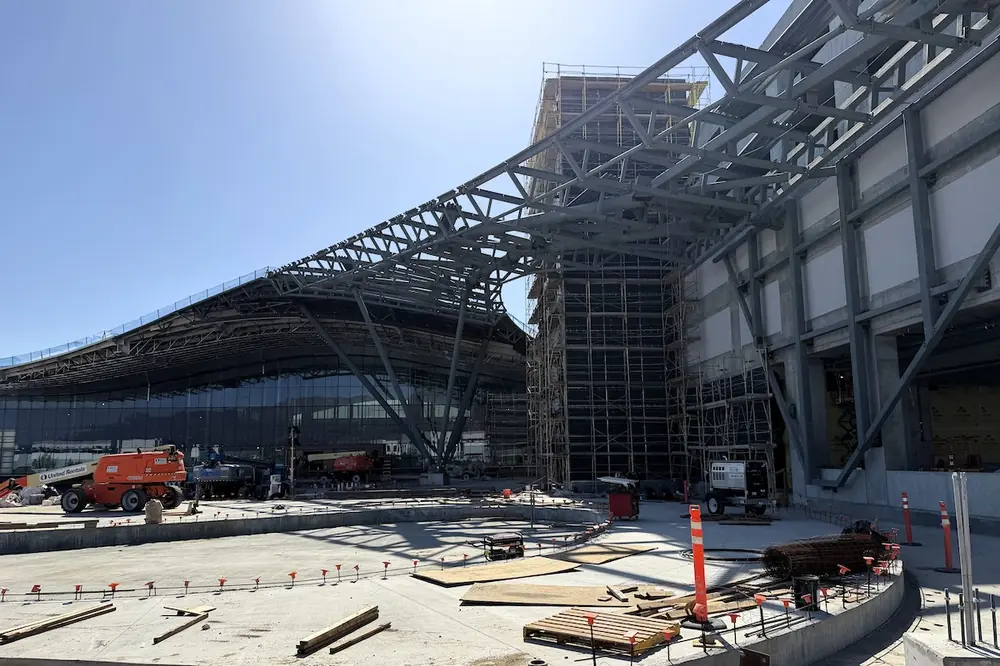
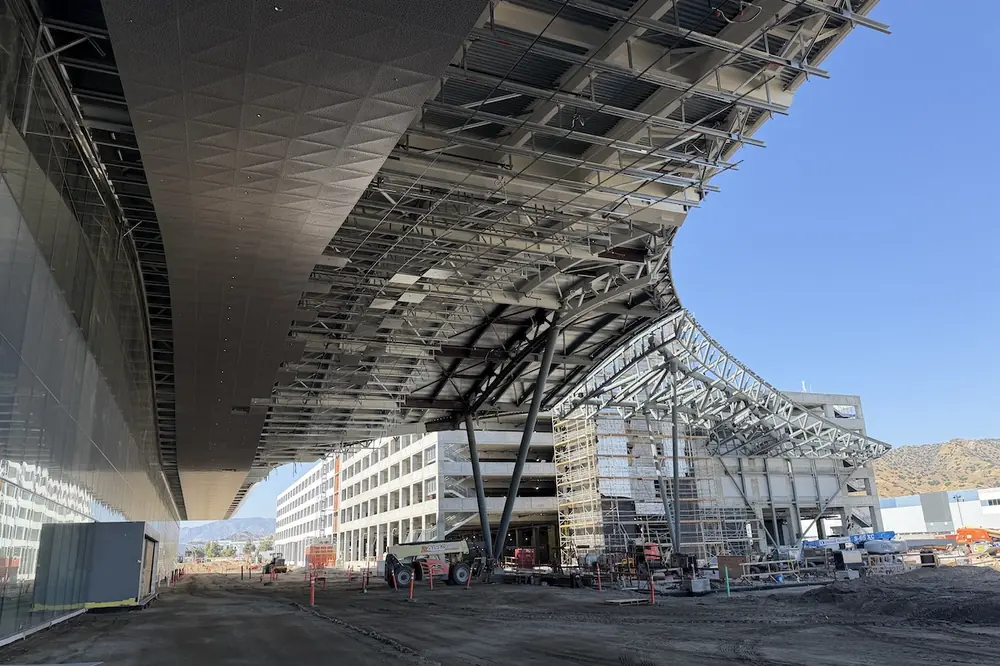
Construction is advancing on one of Southern California’s most significant aviation infrastructure projects. Crews are working to deliver a new passenger terminal at Hollywood Burbank Airport designed to improve safety, modernize operations, and elevate the traveler experience while preserving the convenience that has long defined the airport.
The Replacement Passenger Terminal project, led by the Burbank-Glendale-Pasadena Airport Authority, will replace the airport’s aging terminal with a new 14-gate facility. The work is being delivered by a joint venture of Holder Construction, Charles Pankow Builders, and TEC Constructors & Engineers, with Jacobs serving as program manager and a design team led by Corgan in association with CannonDesign and Burns & McDonnell.
The project is the culmination of a long-standing initiative to replace a facility that no longer meets today’s operational and safety demands.
“The Replacement Passenger Terminal at Hollywood Burbank Airport is a safety project that the airport authority has pursued for decades,” said John Hatanaka, Executive Director at Hollywood Burbank Airport. “The existing terminal does not meet current FAA design standards or California seismic standards, and the new facility will more than satisfy those requirements.”
At the same time, the project aims to preserve the airport’s reputation for convenience while creating a significantly improved passenger environment.

| Your local Case Construction Equipment Inc dealer |
|---|
| Beauregard Equipment |
| Monroe Tractor |
One of the main goals of the project has been to enhance the travel experience without losing the simplicity and ease of use that distinguish Hollywood Burbank Airport from larger regional hubs.
“The surrounding community made it clear they did not want to lose the process that makes Hollywood Burbank Airport a preferred airport among Los Angeles travelers,” said David Huor, Vice President and Project Manager at Corgan. “The design maintains the same ground-loaded boarding system passengers are familiar with while creating a more iconic and modern experience from check-in to boarding.”
The existing terminal includes separate checkpoints for its two concourses and undersized baggage claim areas, one of which is partially outdoors. The new facility consolidates many of those functions into a more centralized and efficient layout.
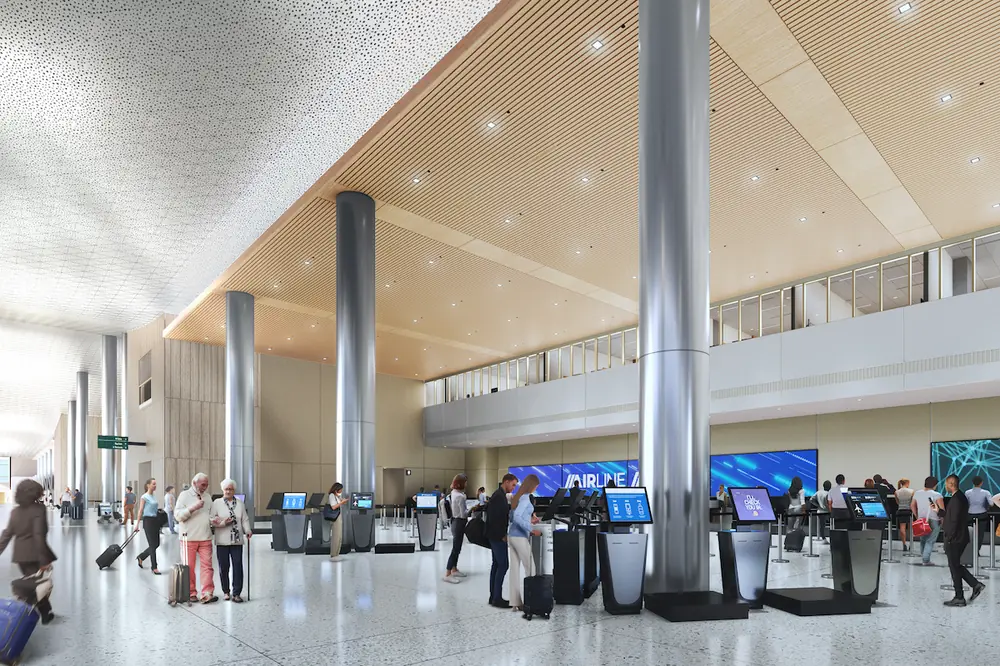
“The new passenger terminal will feature a single eight-lane central security checkpoint, three large indoor baggage claim carousels, 43 common-use ticket counters, and two large baggage make-up carousels,” Hatanaka said.

| Your local Volvo Construction Equipment dealer |
|---|
| Tyler Equipment |
Additional upgrades include new concession areas featuring local businesses, expanded airline support facilities, and redesigned curbside operations intended to improve circulation around the terminal.
“The current terminal roadway is constrained, with arrival and departure traffic all mixed together,” Hatanaka said. “The new roadway separates different vehicle types and separates arriving and departing private vehicles at the curb.”
From a design standpoint, the team focused heavily on intuitive passenger movement and ease of navigation throughout the building.
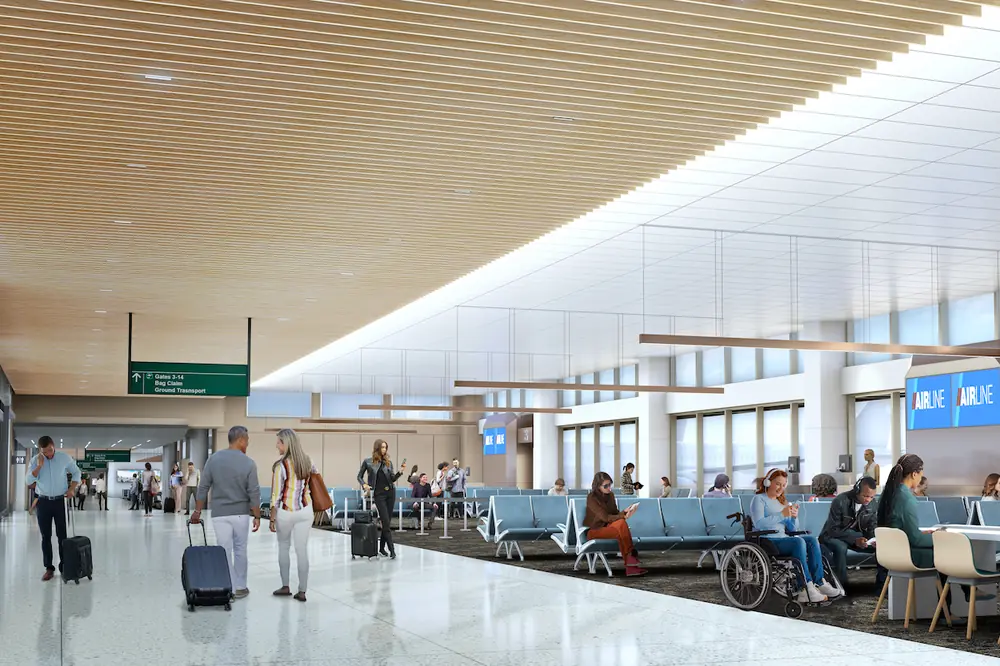
“Operational efficiency is accomplished through larger, conditioned, and centralized ticketing, security, and baggage claim spaces,” Huor said. “We designed wayfinding to be intuitive, which is reflected in the flooring, ceiling treatments, and material transitions throughout the terminal.”

| Your local Wirtgen America dealer |
|---|
| Dobbs Equipment (SC) |
| United Construction & Forestry |
| WI Clark |
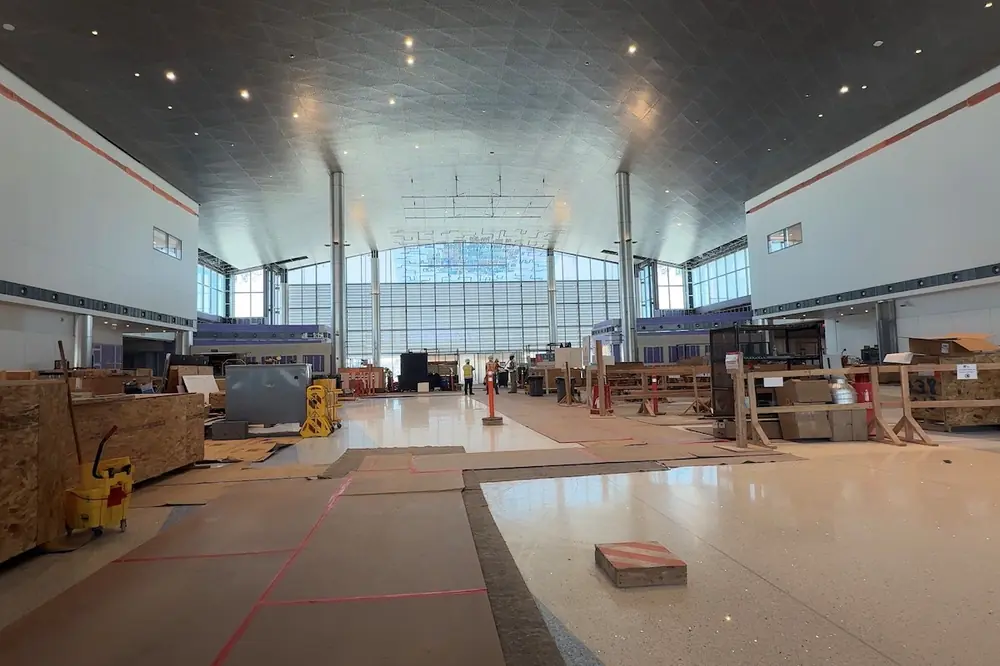
Durable materials such as terrazzo flooring and wood plank ceilings help guide circulation through major public areas, while softer finishes and sound-absorbing materials create a calmer atmosphere within gate hold rooms.
Constructing a new terminal while maintaining full airport operations has required extensive coordination among airport officials, contractors, designers, and airlines.
Unlike many aviation projects that require construction directly adjacent to active terminals, the Hollywood Burbank project has reduced impacts on passengers and daily airport operations.
“The fact that this project has a completely separate construction footprint has been the single greatest factor in minimizing disruptions,” said Jack Chapman, Construction Manager at Holder Construction. “That advantage, combined with structured weekly coordination meetings, detailed traffic management plans, and proactive public communication, has allowed Hollywood Burbank Airport to remain fully operational throughout the multi-year construction program.”

| Your local Hyundai dealer |
|---|
| Equipment East |
Even with those advantages, building within an active airport environment has presented substantial logistical and operational challenges.
“Building a new terminal on an active airport campus means every decision is filtered through the lens of safety,” Chapman said. “The biggest challenge is maintaining uninterrupted airport operations while coordinating a large workforce, surrounding active taxiways, FAA airspace restrictions, and live utility systems within a highly constrained site.”
With that in mind, the work required highly detailed sequencing of logistics, materials, and trades to avoid operational conflicts or delays.
“It takes a deeply embedded safety culture, relentless planning, and a team that understands there is no margin for error in this environment,” Chapman said.

| Your local Esco Corporation dealer |
|---|
| Genalco |
The constrained nature of the site also significantly influenced the design process.
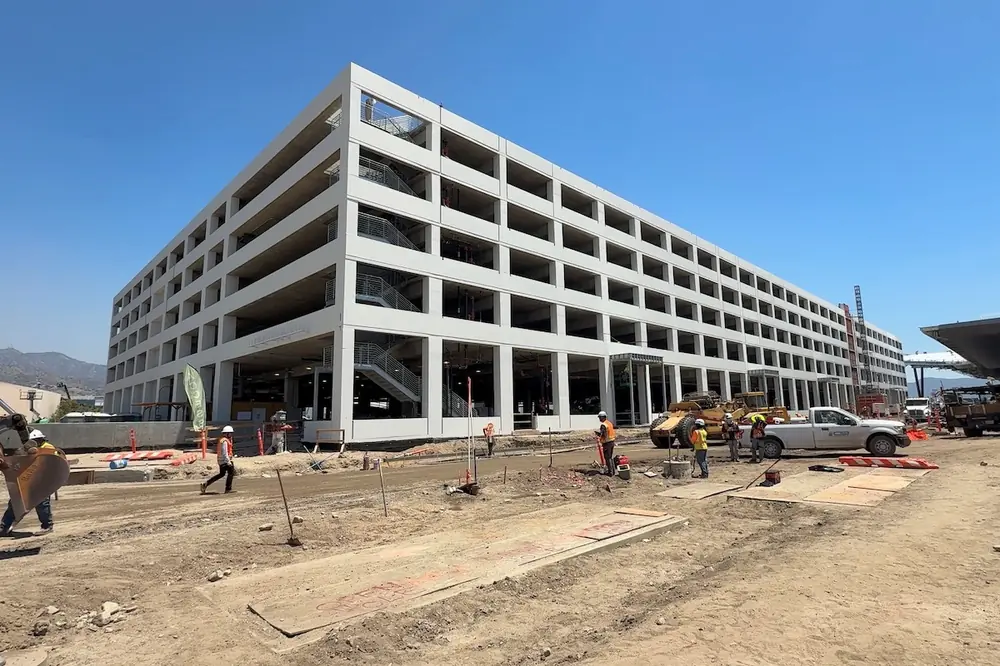
“Initially, the design included two parking towers to create a view corridor to the Verdugo Mountains,” Huor said. “As the design progressed, we were able to eliminate one of the towers by moving parking below grade and adjusting final elevations, which ultimately created a much more open and inviting arrival experience.”
That redesign helped maximize available space while improving passenger circulation and preserving views across the airport campus.
Beyond functionality, the project team sought to create a terminal that reflects the character and identity of the surrounding Burbank and greater Los Angeles region. For Corgan, that meant drawing inspiration from both Hollywood history and Southern California architecture.

| Your local Trimble Construction Division dealer |
|---|
| SITECH Northeast |
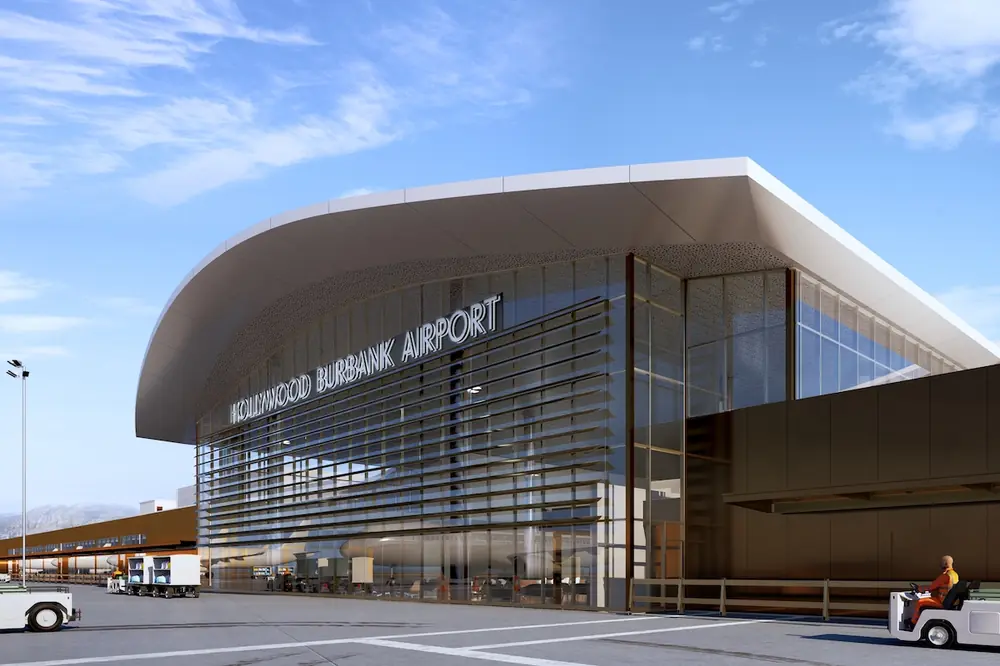
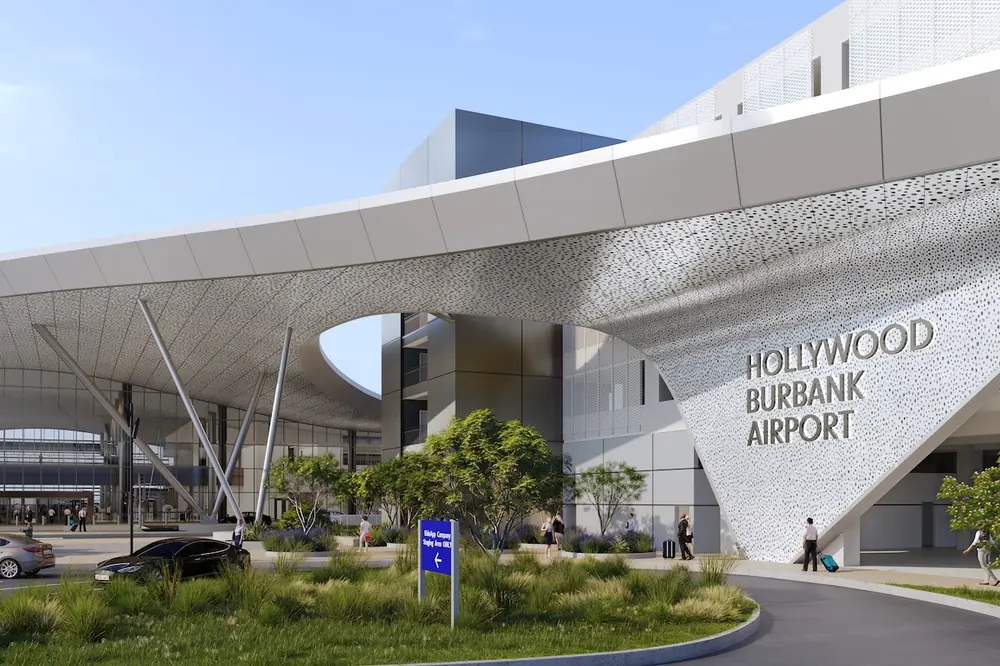
“The design is inspired by Hollywood’s iconic glitz and glamour,” Huor said. “That influence is visible in elements like the silver-screen-inspired entry sequence, spotlight columns, terrazzo patterns, and the curvature of the roof form.”
The design also incorporates bronze and champagne tones intended to reinforce the airport’s connection to the entertainment industry while maintaining a contemporary aesthetic.
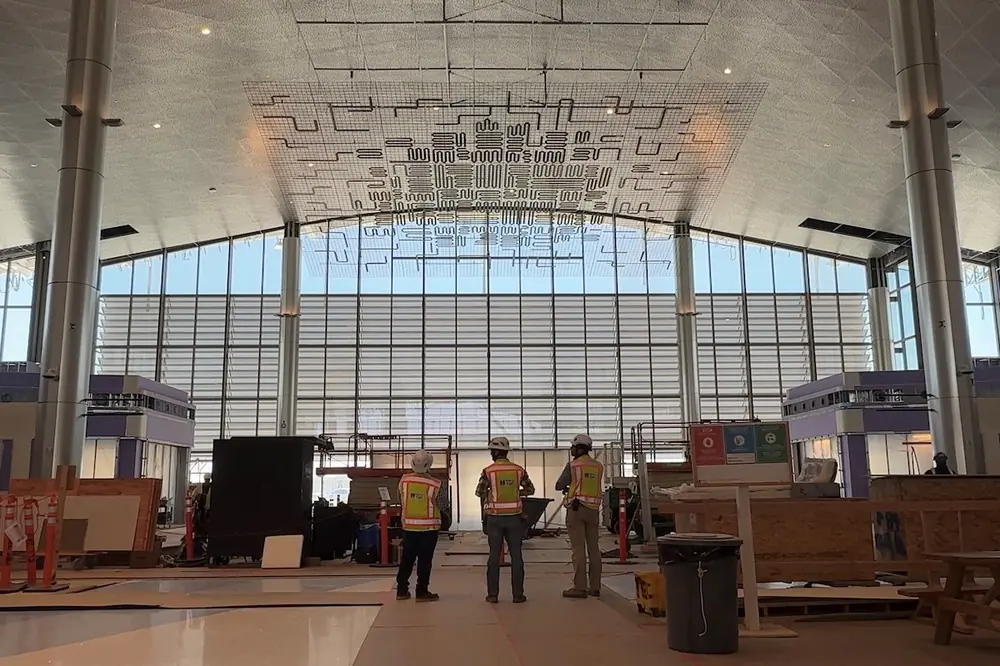
Inside the terminal, large open spaces and extensive natural light help create a brighter and more welcoming environment than the existing facility.
“The terminal is designed to be grand, light-filled, and easy to navigate,” Huor said. “Passengers will have views to the airfield throughout much of the building, and wayfinding is integrated into the experience from the campus entrance all the way to the aircraft.”
| Your local Case Construction Equipment Inc dealer |
|---|
| Beauregard Equipment |
| Monroe Tractor |
Although the airport’s development agreement limits future expansion, the design team incorporated several strategies intended to improve long-term operational flexibility.
One of the most significant improvements involves the gate layout.
“The new terminal will feature 14 equally sized common-use gates that provide airlines with scheduling and route flexibility that doesn’t exist in the current facility,” Hatanaka said.
That configuration allows airlines to serve more passengers without increasing aircraft operations, helping the airport accommodate future demand within existing operational limits.
| Your local Case Construction Equipment Inc dealer |
|---|
| Beauregard Equipment |
| Monroe Tractor |
The security checkpoint was also designed with expansion capability in mind.
“We created soft space around the checkpoint that allows for two additional screening lanes in the future if needed,” Huor said.
Project leaders said additional flexibility was built into other operational systems as well.
“The team had the foresight to design key infrastructure with built-in expandability,” Chapman said. “That includes relocatable soft spaces around the security checkpoint for future screening lanes and space for an additional baggage scanning machine position.”
| Your local Case Construction Equipment Inc dealer |
|---|
| Beauregard Equipment |
| Monroe Tractor |
The baggage screening system was similarly designed to accommodate future operational growth without requiring major reconstruction.
Environmental performance has become a defining component of the new terminal project. According to the construction team, the Replacement Passenger Terminal is currently on track to achieve LEED Gold certification and incorporates numerous features aimed at reducing long-term environmental impacts.
“The terminal has been designed and is being built in an environmentally responsible and resource-efficient manner,” Hatanaka said.
Among the most notable elements is the airport’s transition to an all-electric terminal.
| Your local Case Construction Equipment Inc dealer |
|---|
| Beauregard Equipment |
| Monroe Tractor |
“The facility will be fully electric, including food and beverage operations,” Huor said. “That’s an important step toward long-term decarbonization.”
Additional sustainability measures include reclaimed water systems for irrigation, native landscaping, low-flow fixtures, and advanced metering systems.
The terminal’s electrical demand will also be offset through a 750-kilowatt rooftop solar panel system, while the adjacent parking structure will include more than 300 electric vehicle charging stations.
To further reduce energy consumption, the design team integrated passive design strategies throughout the building.
| Your local Case Construction Equipment Inc dealer |
|---|
| Beauregard Equipment |
| Monroe Tractor |
“Solar shading canopies, overhangs, and high-performance glazing help optimize natural light and thermal comfort while reducing reliance on HVAC systems,” Huor said.
The Replacement Passenger Terminal depends heavily on coordination between multiple firms and disciplines. The construction team noted that the collaborative structure has been central to maintaining schedule and addressing issues proactively as the project advances.
“The progressive design-build model has been the backbone of this project’s success,” Chapman said. “By co-locating designers, contractors, engineers, and the airport authority from day one, we eliminated the silos that typically slow airport projects down.”
Instead of reacting to problems after they emerge, the integrated structure has allowed the team to resolve issues in real time as design and construction evolve together.
| Your local Case Construction Equipment Inc dealer |
|---|
| Beauregard Equipment |
| Monroe Tractor |
“The result is a team that doesn’t just react to problems; they anticipate them together,” Chapman said.
When complete, the Replacement Passenger Terminal will represent one of the most significant upgrades in Hollywood Burbank Airport’s history, reshaping the passenger experience while modernizing operations for decades to come.
“The new terminal will continue the airport’s reputation for convenience while offering modern amenities that elevate the passenger experience,” Hatanaka said.
For the design team, the achievement lies in creating a building that reflects both the history and future of the region it serves.
| Your local Case Construction Equipment Inc dealer |
|---|
| Beauregard Equipment |
| Monroe Tractor |
“The greatest accomplishment of the project is creating a state-of-the-art facility that truly reflects the sense of place of the region,” Huor said. “The design honors the accomplishments of the past while creating excitement for the future.”
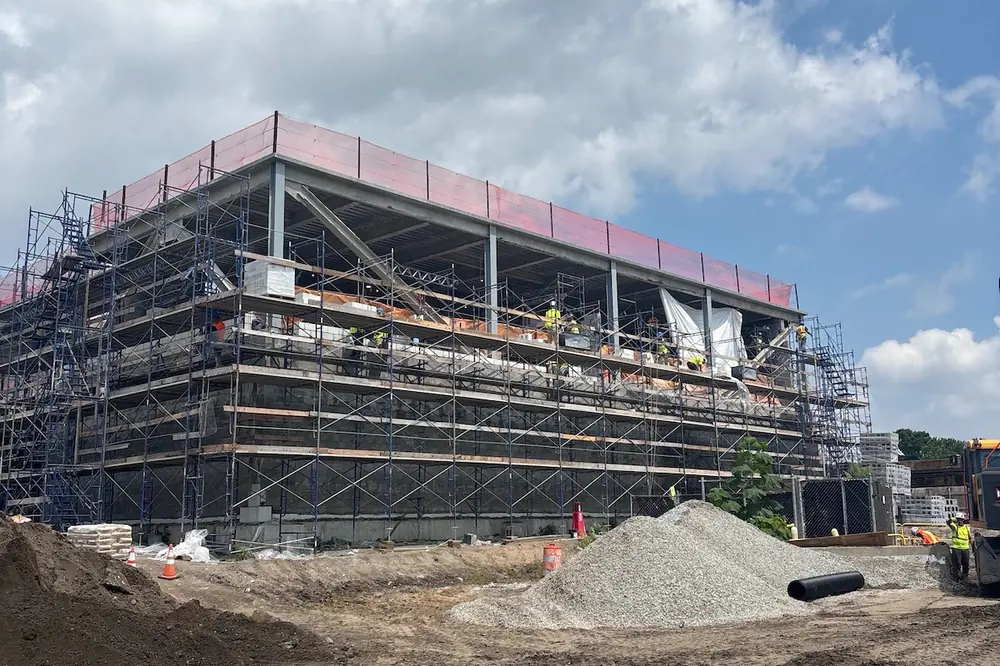
Construction began in early 2024 and the new passenger terminal is scheduled to open in October 2026, transforming an aging airport campus into a modern transportation gateway designed to serve Southern California travelers for generations to come.
- Owner: Burbank-Glendale-Pasadena Airport Authority, Burbank, California
- General Contractors: Holder Construction, Atlanta, Georgia; Charles Pankow Builders, Pasadena, California; TEC Constructors & Engineers, Inglewood, California
- Program Manager: Jacobs, Dallas, Texas
- Architects/Engineers: Corgan, Dallas, Texas; CannonDesign, New York, New York; Burns & McDonnell, Kansas City, Missouri Renderings courtesy of Corgan