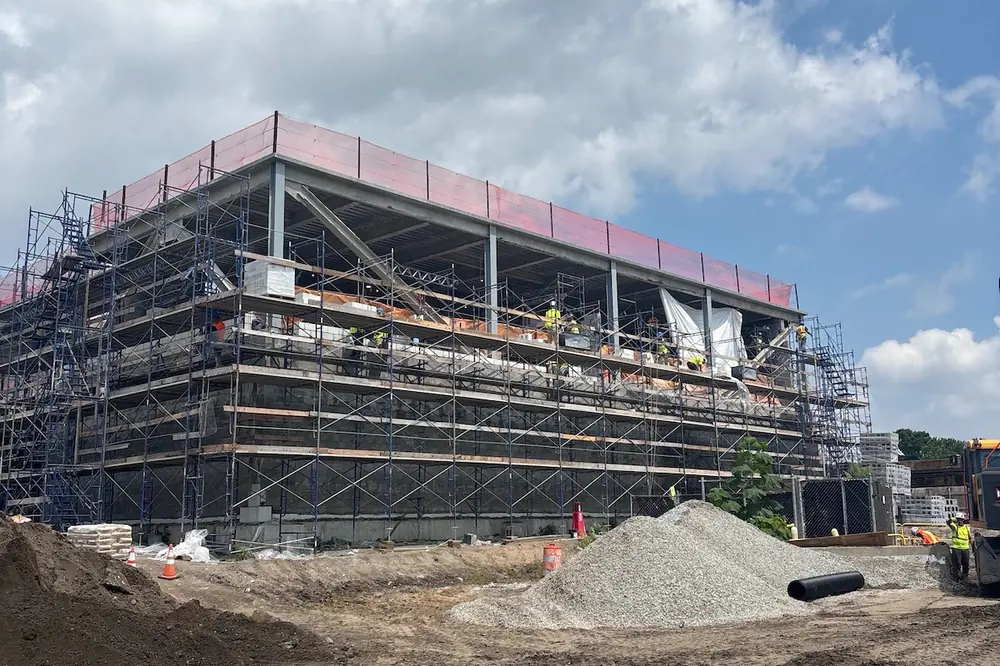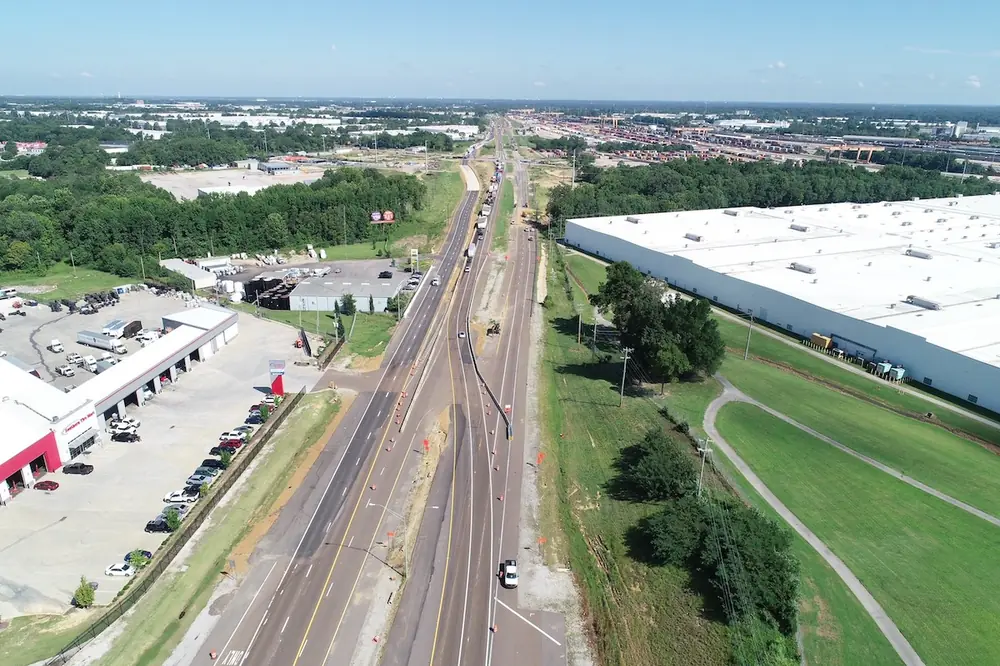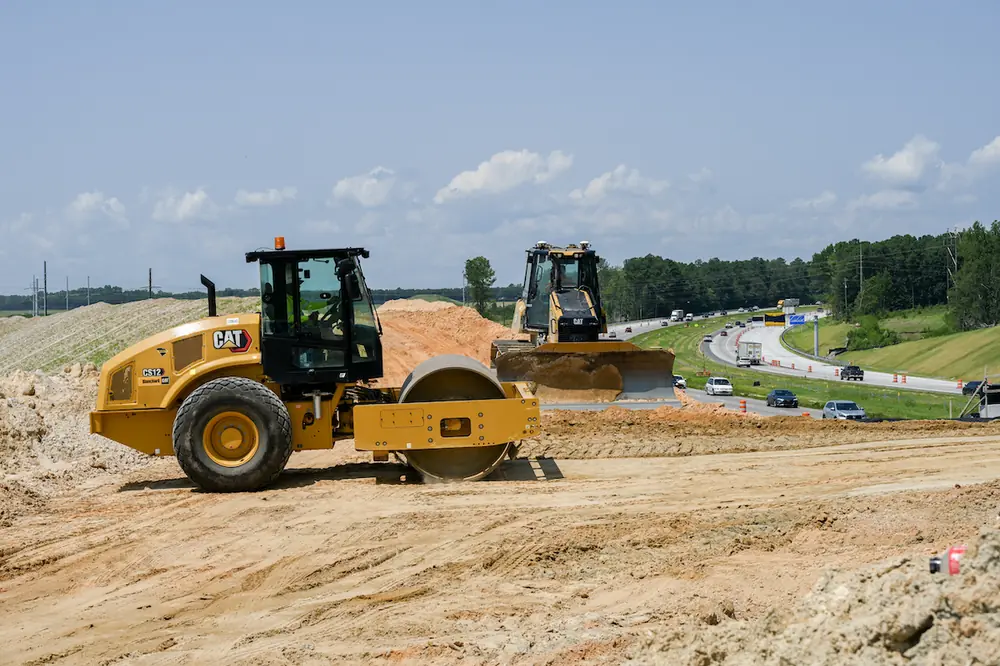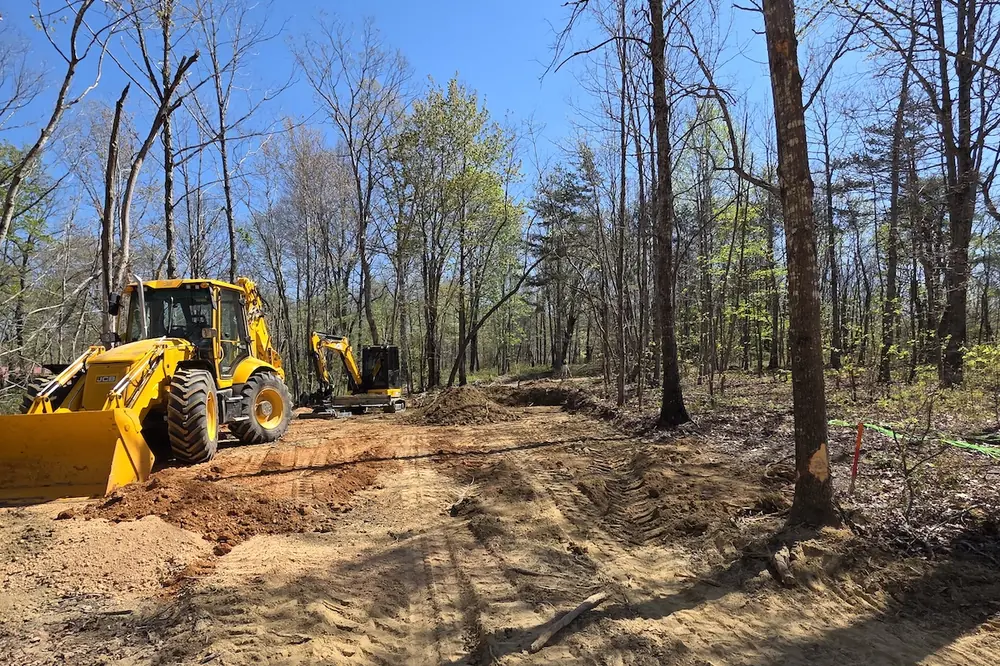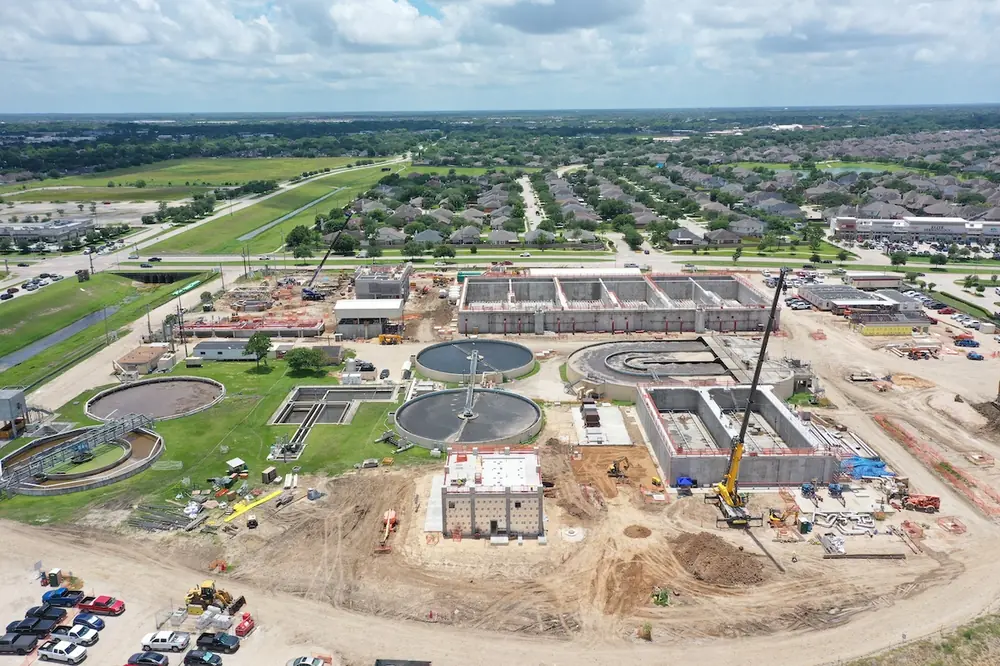
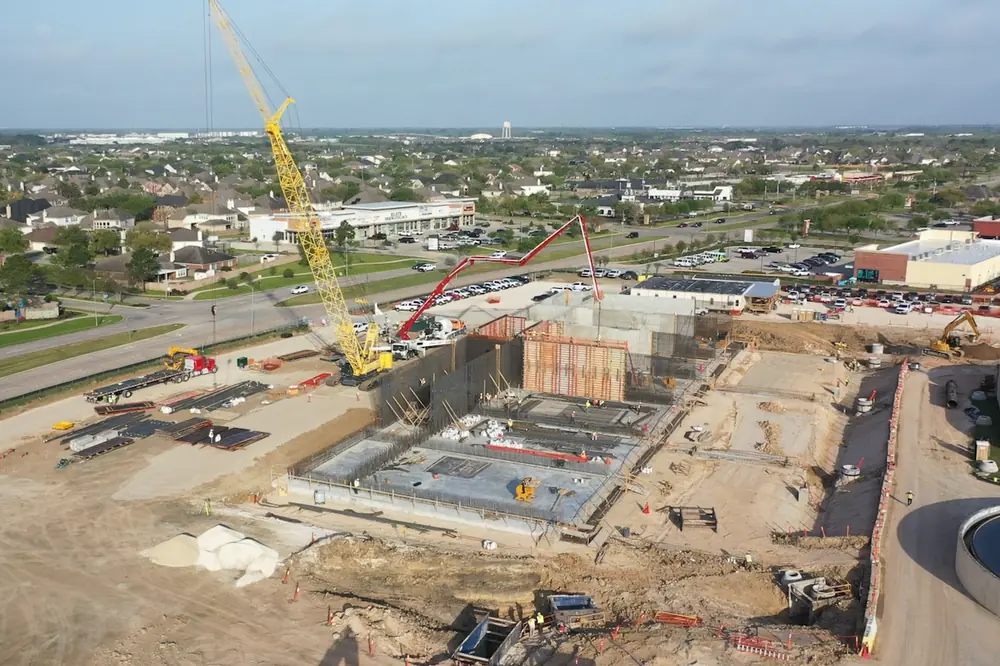
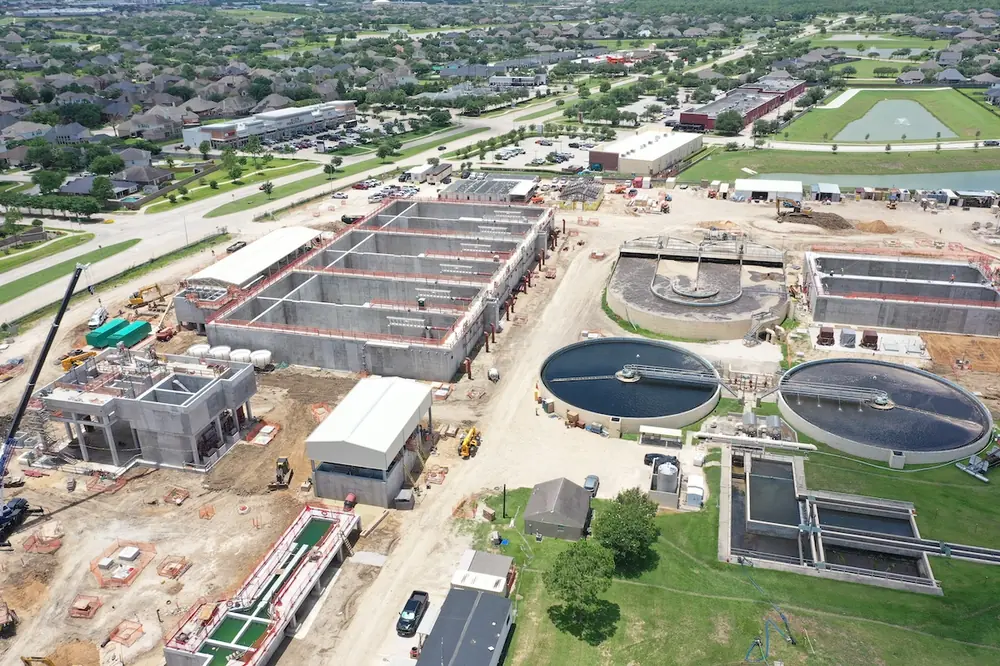

Pearland, Texas, located about 20 miles south of Houston, has grown to approximately 130,000 residents. Like many fast-growing communities across the state, that growth has placed increasing demands on the city’s wastewater facilities. To keep pace with this demand, the city and general contractor McCarthy Building Companies are replacing and expanding the Barry Rose Water Reclamation Facility (WRF).
The Barry Rose WRF has not experienced any failures, but increasing wastewater flows and the plant’s age made replacement necessary.
According to the City of Pearland website, the Texas Commission on Environmental Quality (TCEQ) rules “require the initiation of engineering design and financial planning to upgrade a water reclamation facility when the flows reach 75 percent of the plant capacity. ... The facility reached the 75 percent threshold in 2016, and this began the process as required by TCEQ to begin the engineering process. Over the last few years, Public Works has been investing in I&I [inflow and infiltration] to help reduce flows. However, during rain events we have exceeded this requirement several times, which has led to several overflow reportings to TCEQ and a potential ‘Notice of Enforcement.’”
Capacity is not the only concern. The plant is more than 60 years old and has exceeded its intended service life.
The project also includes decommissioning the Longwood WRF, located about 5 miles away. The team is installing a new lift station at the Longwood site to pump wastewater to Barry Rose via a force main.
Like Barry Rose, the Longwood WRF has aged and is beyond its useful life.
Upon completion, the new Barry Rose facility will have a treatment capacity of 5 million gallons per day, up from 3.1 million gallons per day.
Currently, Pearland has three water reclamation facilities. According to a McCarthy press release, merging two of the aging facilities “will consolidate operating costs and improve disinfection methods by using UV light instead of a chlorine process.”
The proximity of the two facilities, combined with the need for major upgrades, gave the city an opportunity to update its approach to water reclamation.
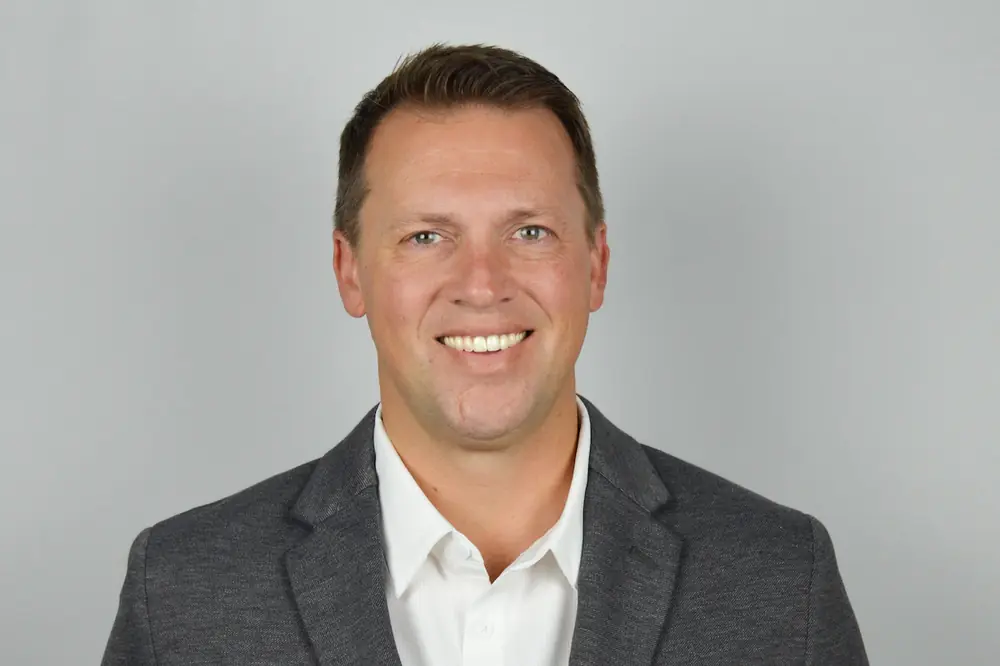
“The city chose to build on the Barry Rose site, as opposed to the Longwood site, because it has more space and they were able to purchase land to further expand the footprint,” McCarthy Project Manager John Walker said.
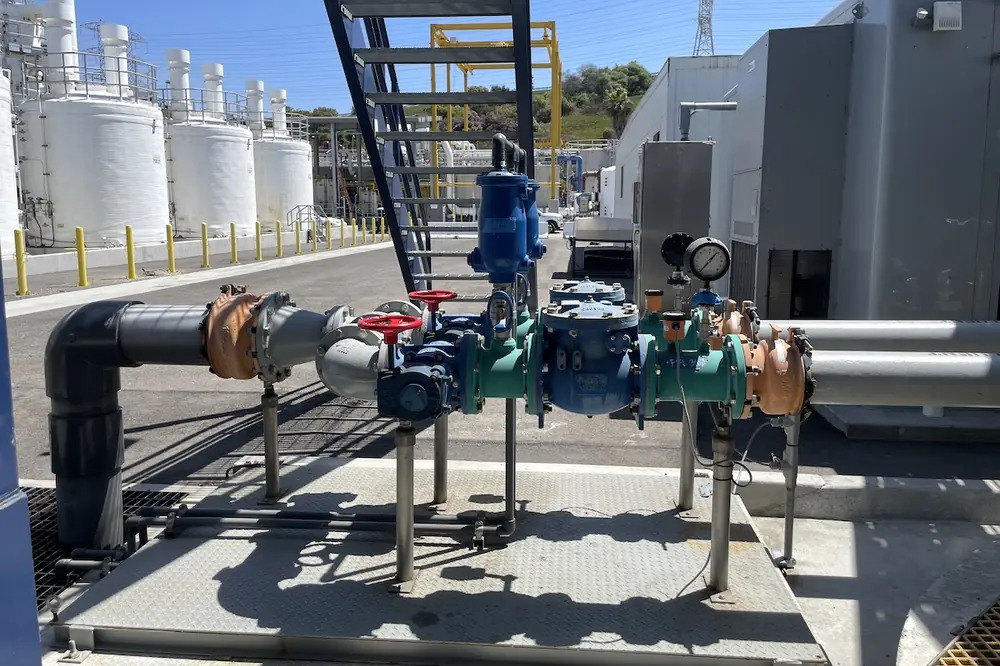
The site will include a greenfield reactor and a sequencing batch reactor facility.
Wastewater facilities need to operate 24 hours a day, seven days a week, 365 days a year.

| Your local Gomaco dealer |
|---|
| Gomaco -Contact For a Dealer Near You |
“Anytime we’re working on an active treatment plant, we need to make sure there are no interruptions or outages. ... Good sequencing has enabled us to avoid impacting the operating plant while also being good neighbors to those in the area,” Walker said.
“If it’s a brownfield project, there are more frequent opportunities for shutdowns and interactions with the existing facility,” he added. “But with this one being a full replacement, we are limited to coordinating with the city for a final rerouting of flows during commissioning and at project final completion. We’ve had regular coordinate sessions, so they understand how we’ll divert flows into the new plant.”
This challenge extends to maintaining continuous effluent discharge during construction. The team is installing a new outflow at the same location as the current one. Therefore, they are temporarily rerouting the effluent flows.
“To minimize the risk, we’ll complete the piping for the new route a year ahead of the main plant upgrades,” Walker said. “This will allow the operators to transition to using the new effluent piping system and build in a crossover system so that when we’re ready to bring the new plant online, the change is as simple as flipping a light switch or closing a valve.”
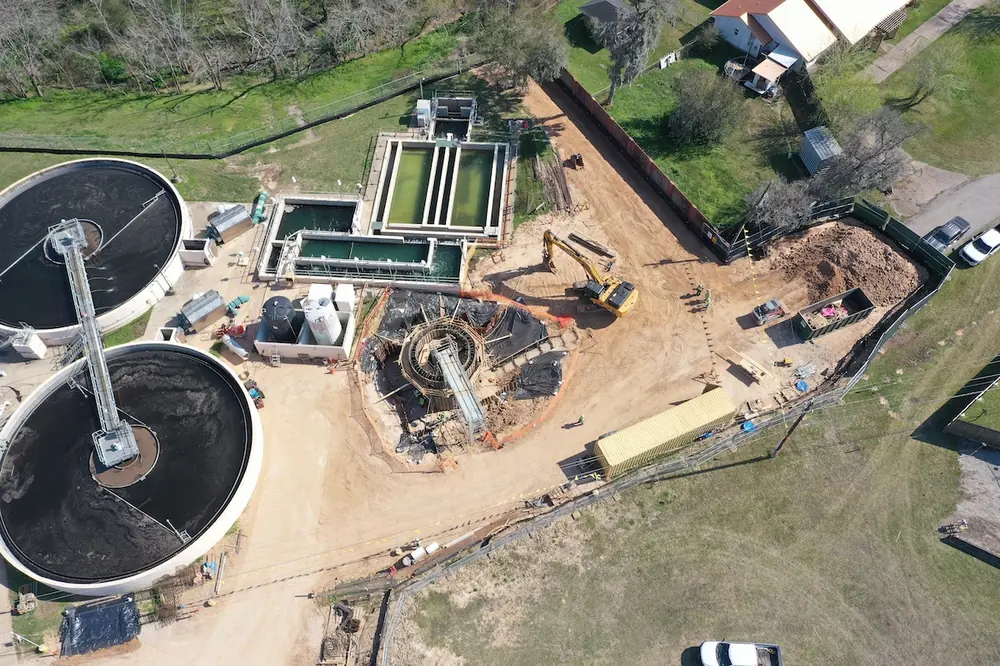
The limited site envelope associated with the Longwood WRF presents an additional challenge for the team. The new pump station is being built on a quarter acre of land, while the entire parcel is 2 acres. An existing plant is already there and will not be demolished until after the pump station is completed.
“The plant is adjacent to a residential neighborhood, and there’s only room for one excavator to navigate the space,” Walker said. “We met the neighbors ahead of time to explain the process and to tell them who to contact if there are major issues, as well as get their buy-in. The meeting helped them recognize that the project is for their benefit.”
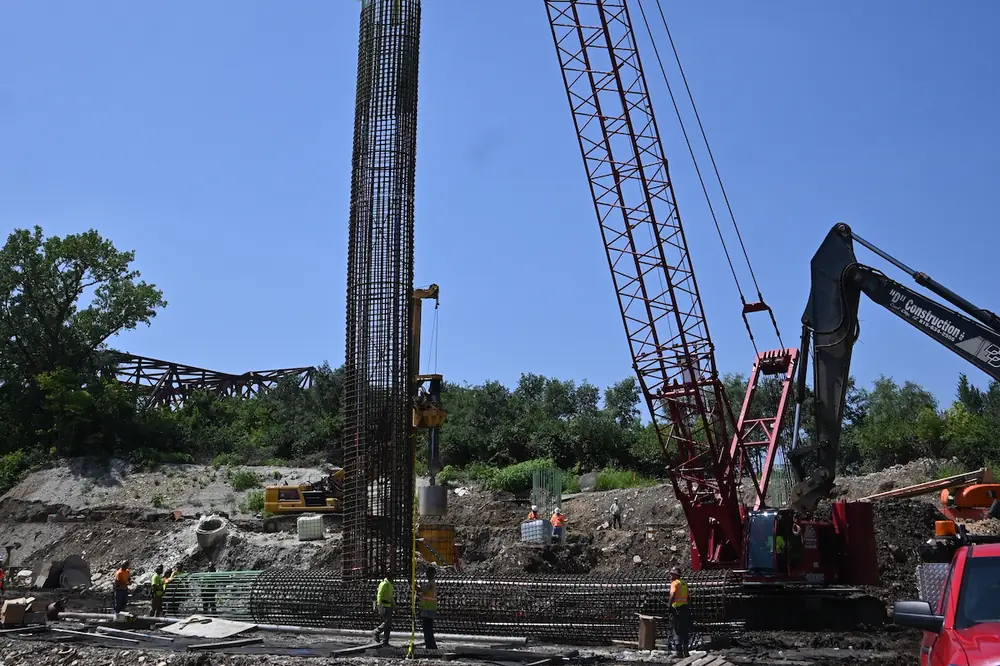
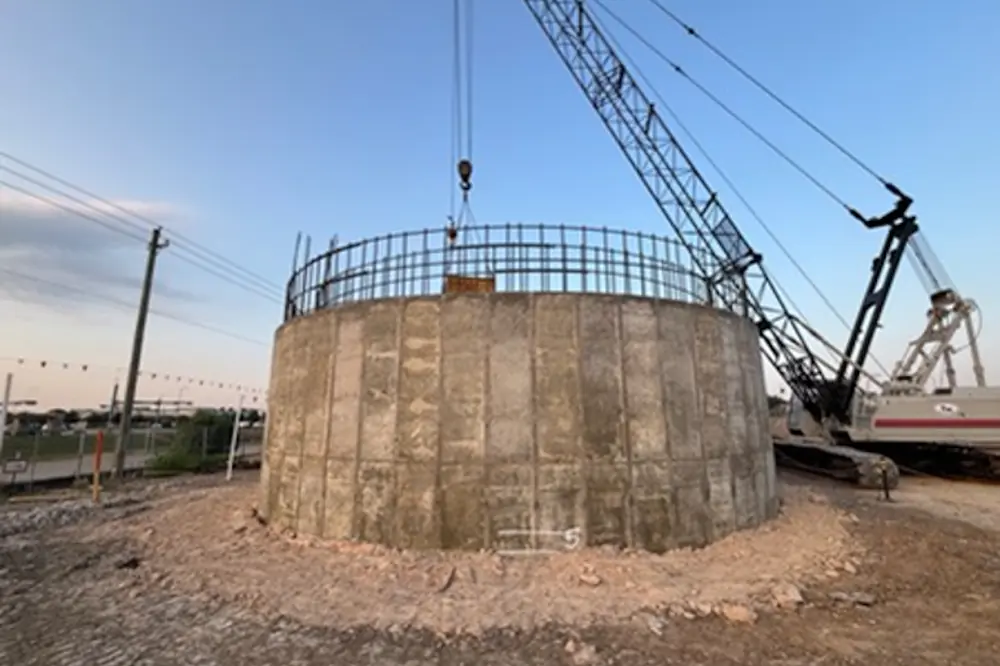
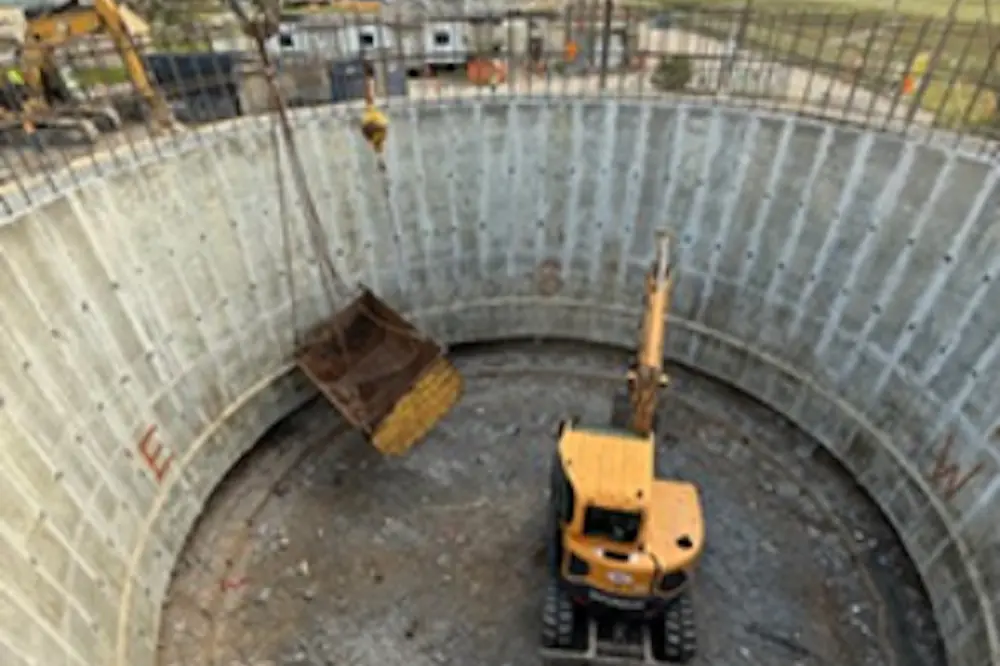
Another unique element of the project is the construction of a 40-foot-deep lift station. The team is utilizing the sunken caisson approach, which is atypical in the area. The caisson is being sunk in roughly 15-foot increments until reaching its final depth.
“The site doesn’t have rocky soil, which would impede excavation,” Walker said. “Using the sunken caisson method helps avoid opening a longer area of the project with a more typical sloped or benched excavation, allowing us to work on multiple project structures concurrently without impacting the laydown and travel area of the entire project.”
McCarthy, a 100 percent employee-owned company based in St. Louis, Missouri, has been around since 1864. The company has extensive experience delivering public infrastructure projects.
“We like collaborative delivery projects that give us a chance to work closely with an owner and design partners,” Walker said. “We appreciate the opportunity to work on projects that will impact a community for years to come. We take pride in using our expertise to help the city get the best value for the project.”
This project is being delivered via the construction manager at risk (CMAR) method. In this case, bringing McCarthy on during the design phase provided multiple benefits to the client and the project overall.
Construction on the project began in June 2024, but design began two and a half years earlier in November 2021. Because McCarthy was engaged in the project early on, the work was able to move forward as planned.
“In 2023, there were a lot of projects competing for critical equipment like electrical gear, resulting in long lead procurement times,” Walker said. “As part of committing to the multiple GMP [guaranteed maximum price] package process, we were able to focus the designers on identifying key pieces of equipment to start procurement early while the remainder of the design was being finished. We also suggested incorporating a few site work improvements into the initial early phase, including the site stormwater piping and large foundations work.”
This early procurement strategy has helped McCarthy keep the project on schedule. The new Barry Rose facility is scheduled to open at the end of 2027. Once the facility opens, the team will have an additional six months to complete the demolition of the existing Barry Rose WRF and Longwood WRF facilities.
“Diligent planning and the sequencing of the work has helped us to keep the project on schedule,” Walker said.
The project has a $216.5 million price tag and is currently on budget. Walker attributes this to thorough planning, coordination with the city, timely design delivery by the engineers, and early electrical procurement. The strategy to advance early construction of subsurface elements (civil piping and foundations) while the remainder of the project design was finalized also helped maintain schedule and control costs.

| Your local Superior dealer |
|---|
| Westate Machinery Co |
When complete, the new Barry Rose WRF will increase Pearland's wastewater treatment capacity while reducing the city's operational footprint by consolidating two aging facilities into one modern plant. The project team also worked closely with the city's architecture and beautification committee to ensure the facility complements the surrounding neighborhood.
“The new infrastructure will fit with the flavor of the neighborhood — and be a pleasant sight to see,” Walker said.
- Owner: City of Pearland
- General Contractor: McCarthy Building Companies, St. Louis, Missouri
- Designer/Engineer: Freese and Nichols Inc., Fort Worth, Texas